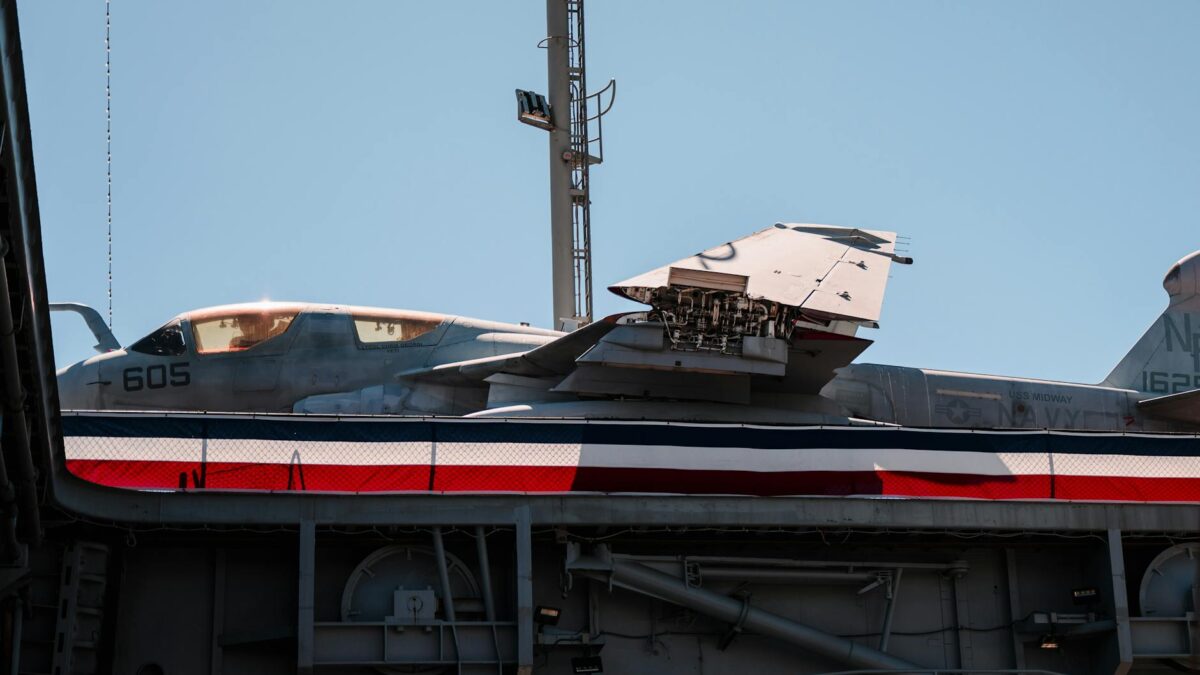
On Monday April 13, 2026 at 10:00 AM Eastern Time, the United States military began the most aggressive naval operation since the Iraq War: a full blockade of all maritime traffic entering and exiting Iranian ports through the Strait of Hormuz. Trump warned that any Iranian ships approaching the blockade zone would be ‘eliminated.’ This guide explains exactly how a naval blockade works, what assets are deployed, the legal implications, and why this could escalate into the first major naval battle of the 21st century.
What the Blockade Actually Involves
The Order
US Central Command (CENTCOM) issued the following directive effective April 13, 10 AM ET:
All maritime vessels approaching Iranian territorial waters or attempting to enter/exit Iranian ports through the Strait of Hormuz are subject to US Navy inspection, boarding, and potential seizure. Vessels that refuse to comply with inspection orders may be redirected or disabled. Iranian military vessels that approach the blockade perimeter will be treated as hostile.

The Assets
A naval blockade of this scale requires massive force projection:
| Asset Type | Estimated Number | Role |
|---|---|---|
| Aircraft carriers | 2-3 | Air superiority, strike capability |
| Guided-missile destroyers | 8-12 | Anti-ship, anti-air, boarding operations |
| Guided-missile cruisers | 3-4 | Air defense, command |
| Attack submarines | 3-5 | Anti-submarine, intelligence |
| Mine countermeasure ships | 4-6 | Mine clearing (critical given mine reports) |
| Patrol craft | 6-10 | Close-in inspection, boarding |
| Maritime patrol aircraft (P-8) | 8-12 | 24/7 surveillance |
| Carrier-based aircraft | 120-180 | Air patrol, strike |
| Logistics/support ships | 5-8 | Fuel, supplies, medical |
| Total warships | ~35-50 | |
| Total aircraft | ~150-200 |
The Cost
Operating a naval blockade of this scale costs approximately $50-100 million per day. Carrier strike group operations alone cost $6-7 million daily per group. At 2-3 groups plus support, the blockade burns through $150-200 million per week — adding to already massive US war spending.
How the Blockade Works in Practice
Step 1: Detection
Maritime patrol aircraft (P-8 Poseidon) and satellite surveillance identify all vessels within a 100+ nautical mile radius of the strait. Every ship is tracked, classified, and assigned a risk category.
Step 2: Hailing
US Navy ships hail approaching vessels by radio, demanding identification, destination, cargo manifest, and flag state. Ships heading to/from Iranian ports are ordered to stop for inspection.
Step 3: Boarding
Navy/Coast Guard boarding teams inspect suspect vessels. This involves: climbing aboard via small boats or helicopter, reviewing documentation, physically inspecting cargo holds, and verifying the ship’s AIS (Automatic Identification System) data matches its claimed route.
Step 4: Decision
Three possible outcomes:
- Clear: Ship is not Iran-bound, passes through
- Redirect: Ship is Iran-bound, ordered to turn around or divert to a neutral port
- Seize: Ship carrying contraband (weapons, sanctioned goods) is seized and crew detained
Step 5: Enforcement
Ships that refuse to comply face escalating responses: warning shots, disabling fire (targeting propulsion), and ultimately forcible boarding. Trump’s statement that Iranian ships will be ‘eliminated’ suggests lethal force authorization for Iranian military vessels.
The Legal Gray Zone
Is This Legal Under International Law?
A naval blockade is traditionally classified as an act of war under international law (specifically the San Remo Manual on International Law Applicable to Armed Conflicts at Sea). However, the US argues the blockade is:
- Enforcement of existing UN sanctions on Iran
- Protection of freedom of navigation (Iran’s earlier closure violated UNCLOS)
- Self-defense under Article 51 of the UN Charter
- Authorized by the President’s Commander-in-Chief powers
Iran argues the blockade is:
- An act of war violating the two-week ceasefire
- A violation of UNCLOS freedom of navigation for Iranian civilian vessels
- Collective punishment of the Iranian people
- A pretext for further military escalation
Neither argument is clearly wrong — which is why this operates in a legal gray zone that could be tested only by an International Court of Justice ruling (which neither side wants).
Iran’s Options
Option 1: Accept the Blockade (40%)
Iran could accept the blockade as a fait accompli, conserve its military forces, and wait for economic or diplomatic pressure to force the US to lift it. This is the safest but most humiliating option.
Option 2: Asymmetric Response (35%)
Iran could use its asymmetric warfare capabilities to harass the blockade without triggering full naval war:
- Fast-attack boats: Small, fast Iranian boats swarming near US vessels (forcing constant high-alert)
- Naval mines: Covert mining of approach routes (most dangerous — mines are indiscriminate)
- Drone swarms: Using drones to probe US defenses and conduct surveillance
- Cyber attacks: Targeting US Navy communications and navigation systems
Option 3: Direct Military Confrontation (25%)
Iran could attack US naval vessels with anti-ship missiles, submarines, or coordinated small-boat swarms. This would trigger full US retaliation and likely the destruction of significant Iranian naval assets. Iran’s navy is no match for the US Navy in conventional terms, but the confined waters of Hormuz give Iran some asymmetric advantages.
The Mine Threat
The most dangerous element of the blockade isn’t the ships — it’s the mines. Reports indicate possible mines have already been detected near the Strait of Hormuz. Naval mines are:
- Cheap to deploy ($1,000-$50,000 per mine vs $2 billion per ship)
- Difficult to detect (modern mines can sit on the seabed and activate magnetically)
- Indiscriminate (they don’t distinguish between Iranian, American, or neutral ships)
- Slow to clear (mine countermeasure operations take weeks to months)
If Iran mines the strait, the blockade becomes much more dangerous for everyone — including the US Navy ships enforcing it.
Impact on Oil Markets
| Scenario | Probability | Oil Price |
|---|---|---|
| Blockade holds, no incidents | 40% | $100-110/barrel |
| Asymmetric harassment | 35% | $110-125/barrel |
| Naval confrontation | 20% | $130-160/barrel |
| Blockade lifted (new talks) | 5% | $85-95/barrel |
What This Means for Egypt and the Gulf
Egypt: Suez Canal Beneficiary
If Saudi Arabia routes oil through its East-West pipeline to Yanbu (Red Sea), that oil then transits the Suez Canal. The blockade, paradoxically, could increase Suez Canal traffic as Gulf states route exports away from Hormuz.
Gulf States: Caught Between Allies
Saudi Arabia, UAE, Kuwait, and Qatar are US allies whose own exports may be disrupted by the blockade’s uncertainty. The US has pledged to create ‘allied shipping corridors’ but implementation is complex.
Historical Precedents
| Blockade | Year | Duration | Outcome |
|---|---|---|---|
| Cuban Missile Crisis | 1962 | 13 days | Soviet withdrawal |
| Vietnam (Operation Market Time) | 1965-72 | 7 years | Limited effectiveness |
| Iraq (Desert Shield/Storm) | 1990-2003 | 13 years | Regime change |
| Yemen (Saudi-led) | 2015-present | 11+ years | Humanitarian crisis |
| Iran (Trump) | 2026 | Ongoing | TBD |
Frequently Asked Questions
What is the blockade?
US Navy blocking all ships to/from Iranian ports through Hormuz. Started April 13, 10 AM ET.
How many warships?
~35-50 warships including 2-3 aircraft carriers, plus 150+ aircraft.
Is it an act of war?
Legally gray. US says sanctions enforcement. Iran says ceasefire violation.
What if Iran attacks?
Full naval confrontation. US has overwhelming superiority but Iran has asymmetric capabilities.
How does it affect oil?
$100-110 if calm, $130-160 if confrontation.
Related Articles
For more, see Reuters, CNN, and Al Jazeera.
Last Updated: April 14, 2026