What Happened
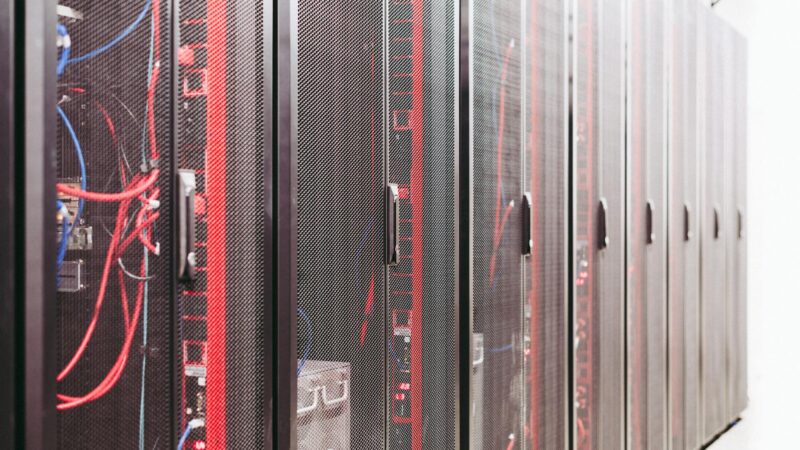
In the opening hours of the US-Israeli “Operation Epic Fury” against Iran, Tehran launched waves of drones and ballistic missiles at multiple targets across the Arabian Gulf. Among those hit: three Amazon Web Services (AWS) data centers in the UAE and a fourth in Bahrain.
The strikes caused fires and widespread cloud service outages, marking a historic first — the disruption of a major US tech company’s digital infrastructure by direct military action.
Context: The Gulf’s $2 Trillion Wager
Over the past three years, Gulf states have poured massive investments into technology and artificial intelligence as part of their economic diversification strategies. Key commitments include:

- Microsoft’s $15 billion investment in UAE cloud infrastructure.
- The “Stargate” project linking OpenAI with Gulf sovereign wealth funds.
- Amazon and Google data center expansions across Saudi Arabia, the UAE, and Qatar.
- Saudi Vision 2030 positioning AI as a core economic pillar.
The equation was straightforward: Gulf states provide land, cheap energy, and sovereign capital in exchange for advanced US technology, with an implicit assumption that American security guarantees would protect these assets.
Iran’s strikes shattered that assumption within hours.
Analysis: Why This Is Unlike Any Previous Crisis
Compute Has Become “the New Oil” — But Far More Fragile
The Center for Strategic and International Studies (CSIS) published an analysis titled “If Compute Is the New Oil, War in the Gulf Significantly Raises the Stakes.” The core insight: oil can be stored, stockpiled, and rerouted through alternative pipelines. Data centers have no immediate substitute when disabled.
When a cloud server goes down, financial services, AI applications, e-commerce operations, and digital government platforms all halt simultaneously.
Compounding Risks: Undersea Cables Too
The vulnerability extends beyond the data centers themselves. In 2024, four undersea cables were cut in the Red Sea. A significant share of international data traffic passes through cables beneath the Strait of Hormuz and the Bab el-Mandeb strait — both now active conflict zones.
In other words: even if data centers survive direct strikes, connectivity to them can be severed from underwater.
Risk Repricing
Initial estimates suggest insurance companies will reassess premiums for tech infrastructure across the entire region. Global investment funds that deployed billions into Gulf data center projects will face pressure from their investors to re-evaluate geopolitical risk.
Amazon’s stock declined notably after the strikes, while analysts raised questions about Microsoft’s $15 billion UAE commitment.
Regional Impact
UAE: Most Exposed
The UAE built its new economic identity around being a global tech hub. Strikes on data centers on its soil directly undermine that narrative and pose a sharp question: can you be a global tech hub in a geography susceptible to military targeting?
Saudi Arabia: Opportunity or Threat?
Saudi NEOM and AI projects could benefit in the short term if US firms decide to diversify infrastructure locations. But the deeper message is troubling: the entire region — not just the UAE — sits within the danger zone.
Qatar, Bahrain, and Kuwait
Damage to Amazon’s Bahrain data center proved that no small Gulf state is beyond reach. Qatar, which invested heavily in cloud projects with Microsoft and Google, faces the same equation.
What Comes Next: Possible Scenarios
Scenario One: Accelerated construction of “military-hardened” data centers — significantly raising costs and reducing economic viability.
Scenario Two: Relocating part of the infrastructure to sites far from conflict zones (Egypt, Jordan, or even North Africa), while maintaining small local processing centers.
Scenario Three: Restructuring tech investment contracts to include explicit military protection clauses — reshaping the relationship between US tech companies and Gulf governments.
In all scenarios, costs will be higher, returns less certain, and the path to a knowledge economy longer than planned.
Bottom Line
Iran’s strikes revealed a truth many had been ignoring: digital infrastructure is not immune to geopolitics. The Gulf’s bet that compute would replace oil as an economic engine now faces an existential question — not about demand for technology, but about supply security in a region that remains vulnerable to armed conflict.