Three years after it began, the war between Sudan’s regular army (SAF) under General Abdel Fattah al-Burhan and the paramilitary Rapid Support Forces (RSF) under General Mohamed Hamdan Dagalo — widely known as Hemedti — has produced the single worst humanitarian and economic collapse anywhere in the world. Over eleven million Sudanese are internally displaced. Nearly four million have crossed borders as refugees. Khartoum, the capital, has been substantially destroyed. Famine conditions have been formally declared in multiple regions. GDP has collapsed by over 40 percent. The Sudanese pound has lost most of its value. Basic state functions have ceased across much of the country.
This article maps what the war has cost Sudan’s economy, how the two sides finance themselves, what keeps the conflict moving, and what reconstruction might look like when — or if — the fighting eventually stops. For observers of Middle Eastern and African geopolitics, Sudan is both a specific humanitarian disaster and a case study in how state collapse can unfold in a modern era with active external interest from multiple regional and international actors.
The Scale of the Collapse
Pre-war Sudan had a population of approximately 46 million, a GDP of around $35 billion, a functional if troubled state apparatus under a post-2019 transitional government, and an economy based on agriculture, gold mining, oil transit from South Sudan, and remittances. None of these conditions persists at anywhere near pre-war scale three years in.

| Indicator | Pre-war (2022) | April 2026 estimate |
|---|---|---|
| Population (millions) | 46 | ~45 (net of deaths) |
| Internally displaced (millions) | 2.5 | 11.2 |
| Refugees outside Sudan (millions) | 0.8 | 3.7 |
| GDP (USD bn nominal) | 35.0 | 18-22 (est) |
| Inflation (annual %) | 140 | 200+ (est) |
| Sudanese pound (SDG/USD parallel) | 560 | 4,500+ |
| Gold exports (tonnes) | 110 | 80-120 (mostly smuggled) |
| Oil transit from South Sudan (bpd) | 150,000 | 80,000 (disrupted) |
| People facing acute food insecurity (millions) | 9.6 | ~25 |
Beyond the headline numbers, the structural collapse is substantial. Khartoum, which hosted roughly 80 percent of Sudan’s formal economy and state institutions, has been substantially destroyed. The Central Bank of Sudan fled to Port Sudan with limited archives and operational capacity. Commercial banks have ceased operation across most of the country. The education system for approximately 19 million children has been severely disrupted. Healthcare infrastructure has collapsed in conflict zones. Multiple years of economic output have been effectively destroyed.
The Origins: How the War Started
The SAF-RSF war has specific origins that connect to the broader Sudanese transition after the 2019 revolution that ended the 30-year Omar al-Bashir regime. The transitional government that followed was a joint military-civilian arrangement with Burhan as chairman of the Sovereignty Council, Hemedti as deputy chairman, and civilians including Prime Minister Abdalla Hamdok leading government.
The October 2021 military coup by Burhan and Hemedti together dissolved the civilian component but did not resolve the power balance between the two generals. Through 2022-early 2023, negotiations between SAF and RSF attempted to resolve several specific issues: integration of the RSF into the regular army, command structure, and the RSF’s independent economic base. These issues were substantively unresolvable given the divergent interests of the two factions.
On April 15, 2023, fighting broke out in Khartoum. The immediate trigger appears to have been RSF deployments to specific locations in the capital that the SAF interpreted as positioning for attack. SAF responded with air strikes and attempts to secure RSF positions. Within hours the war was general in Khartoum. Within days it had spread to Darfur, Kordofan, and beyond.
Who Is Winning: The Military Balance
The military trajectory through the three years has been non-linear but with discernible arcs. Through 2023-mid 2024, the RSF had the initiative, seizing control of most of Khartoum and pushing into SAF-held territory. The SAF’s conventional military advantages (air power, heavy weapons, organisational structure) were blunted by the RSF’s speed, local knowledge, and willingness to engage in urban combat that the SAF was less optimised for.
From mid-2024 through 2025, the military balance shifted. The SAF received substantial foreign military assistance including Iranian drones and Egyptian and Saudi technical support. It reorganised command and regained aggressive operational posture. By late 2025, the SAF had retaken most of Khartoum through a series of offensives. RSF forces withdrew to Darfur and Kordofan strongholds while maintaining operations in contested zones.
As of April 2026, the territorial map shows: SAF controlling the Nile Valley corridor from the Egyptian border through Khartoum, Port Sudan and the Red Sea coast, Kassala state, Gedaref, and most of northern Sudan. The RSF controls most of Darfur, significant portions of Kordofan, and contested zones in central Sudan. Neither side has achieved the decisive victory that would end the war. Both retain the capacity to continue military operations for the foreseeable future.
How the RSF Finances Itself: The Gold Economy
The Rapid Support Forces’ financial base has been the subject of sustained international investigation and reporting. The primary revenue source is gold mining and export, specifically from Darfur and southern regions that have hosted significant artisanal and increasingly industrial gold extraction for over a decade.
Pre-war, Sudan’s gold production was officially reported at approximately 80-110 tonnes per year, making it one of Africa’s largest gold producers. Much of this production was already informal and smuggled rather than flowing through official channels. The war has shifted the balance further toward informal extraction controlled by whichever armed faction holds specific mining areas.
The RSF controls most of the major gold-producing areas. Its gold exports are primarily smuggled to the United Arab Emirates, where Dubai’s gold trading and refining ecosystem absorbs the material without strong provenance scrutiny. Estimated RSF gold export revenue runs $2-5 billion annually depending on gold prices and volumes. At current gold prices around $2,400 per troy ounce, a conservative estimate of 50 tonnes per year generates approximately $3.85 billion. UAE authorities have formally stated commitment to tightening provenance controls but practical enforcement has been limited.
Beyond gold, the RSF generates additional revenue through transit trade taxation (border crossings under its control), protection payments from commercial interests operating in RSF-held areas, and looting of commercial and residential property. These secondary sources contribute perhaps $500 million to $1 billion annually but are sustainable only so long as the RSF maintains territorial control.
Reuters investigative reporting through 2024-2025 has documented specific RSF gold export networks including named individuals and corporate entities in Dubai. The Financial Times has similarly covered the regional gold trade dimensions of the Sudan conflict. These reporting efforts have informed international pressure on UAE authorities but have not yet translated into substantial enforcement changes.
How the SAF Finances Itself
The SAF-aligned transitional government headquartered in Port Sudan relies on a different and more constrained economic base. Primary revenue sources include:
Red Sea port operations. Port Sudan remains SAF-controlled and generates transit and port revenues from imports and limited exports. Estimated revenue approximately $300 million annually at current operational levels.
Oil transit. South Sudanese oil transits through Sudan to Port Sudan for export. Transit fees generate approximately $200 million per year, though the volume is well below pre-war levels due to general disruption.
Limited taxation. Tax collection in SAF-controlled areas including Port Sudan, Kassala, Nile Valley corridor, generates modest revenue. Most of the pre-war tax base (centred in Khartoum) has been disrupted.
Gold exports. SAF controls some gold mining areas (primarily in northern Sudan and specific Nile Valley locations). Official gold export revenue runs approximately $400-600 million per year.
Bilateral foreign support. Saudi Arabia and Egypt are the primary state sponsors of the SAF side. Saudi Arabia has provided various forms of financial and material support estimated at $1.5 billion per year. Egyptian support includes military cooperation, border facilitation, and refugee hosting.
Central bank activity. Printing of the Sudanese pound has accelerated, providing nominal government revenue but driving the massive inflation that characterises SAF-controlled areas. Real value of these printed flows is limited.
Total SAF-side revenue is estimated at approximately $3-5 billion per year, broadly comparable to RSF revenue though the composition is very different. This rough balance is part of why neither side has been able to achieve decisive victory — both can sustain military operations indefinitely on their respective resource bases.
The Humanitarian Disaster
The human cost of the war is difficult to capture in numbers but the numbers themselves are staggering. Deaths directly attributable to the fighting are estimated at 150,000 to 200,000 through April 2026, though true figures are uncertain given the destruction of civil registration systems. Indirect deaths from famine, disease, and lack of healthcare access likely exceed 500,000.
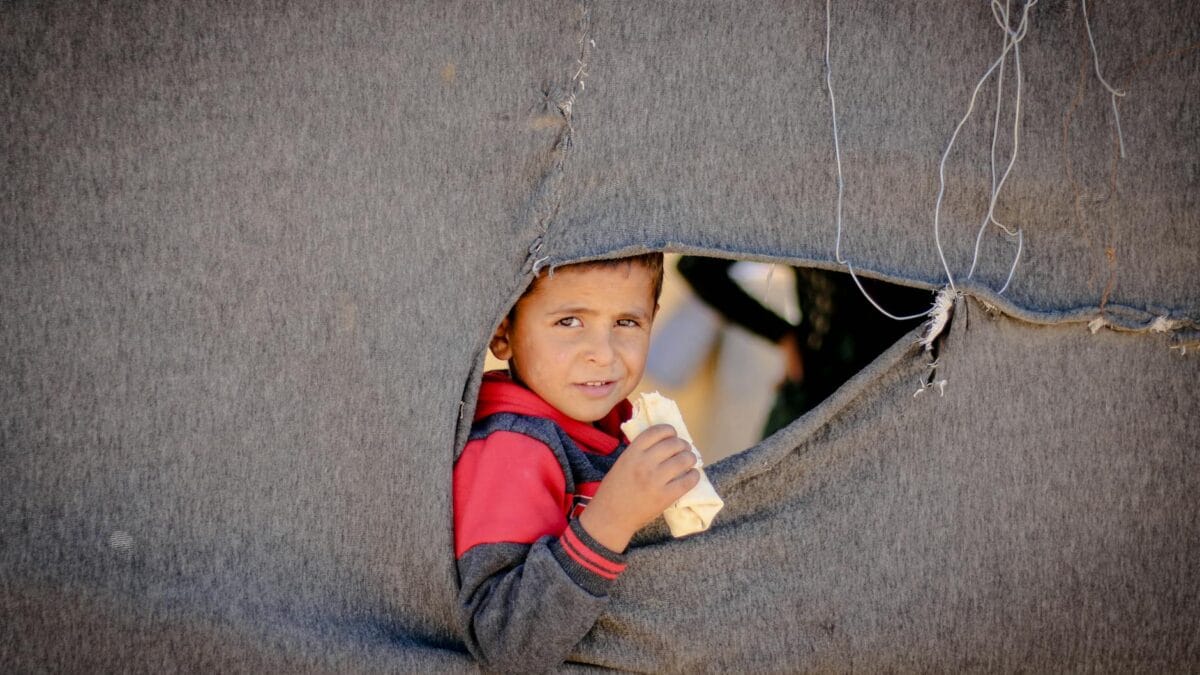
Displacement has reshaped Sudanese demographics. The 11.2 million internally displaced and 3.7 million refugees represent approximately 33 percent of the pre-war population. The refugee concentrations in Egypt (1.9 million), Chad (800,000), South Sudan (500,000), and Ethiopia (200,000) have created significant challenges for host countries, especially Egypt given its own macroeconomic situation (covered in our Egyptian Pound analysis).
Famine conditions have been formally declared by international monitoring agencies. IPC Phase 5 (catastrophic famine) has been reported in multiple Darfur localities and parts of Kordofan. An estimated 750,000 Sudanese face catastrophic famine conditions in April 2026. Approximately 25 million face acute food insecurity — over half the pre-war population. The scale of Sudan’s food crisis exceeds any other currently active humanitarian emergency globally.
Education disruption affects approximately 19 million children. Many have been out of any formal schooling for three years. Healthcare system collapse has compounded the direct war casualties with disease outbreaks, maternal and infant mortality increases, and loss of chronic disease management. The cumulative impact on Sudanese human capital is generational.
Foreign Interests and External Support
The war has attracted substantial external involvement. Several countries and actors have specific stakes:
United Arab Emirates. Widely reported as the principal external supporter of the RSF. UAE connections include alleged arms supply, financial facilitation, and the gold trading ecosystem that absorbs RSF exports. The UAE government denies direct support for the RSF. Multiple international investigations including UN panel of experts reports have documented specific connections that suggest support beyond denial.
Saudi Arabia. Primary external state supporter of the SAF side. Saudi interests in Sudan include the Red Sea strategic dimension, agricultural investments in Sudan’s Blue Nile region, and broader regional influence. Saudi-UAE competition in Sudan mirrors broader regional rivalry patterns though both states officially advocate for a negotiated political resolution.
Egypt. Primary external supporter of the SAF side through military cooperation, border facilitation, and refugee hosting. Egypt’s interests include Nile water security, border stability, and preventing further refugee flows that strain its own economy.
Russia. The Wagner Group (now under Russian Ministry of Defence control after Prigozhin’s death) has had historical presence in Sudan and specific economic interests in gold extraction. Russian presence has continued though the operational arrangements have shifted.
Iran. Has supplied drones to the SAF through 2024-2025, part of broader Iranian outreach to non-Shia partners including conservative Sunni states. Iranian support has contributed to SAF military successes against RSF forces.
Turkey. Provided specific military cooperation with SAF including training and equipment. Turkish interests include Red Sea strategic dimension and broader Islamic world leadership positioning.
United States and European Union. Both have maintained diplomatic engagement, humanitarian support, and targeted sanctions on individuals and entities associated with atrocities. Neither has provided direct material support to either military faction.
The Political Track: Negotiations That Have Not Worked
Multiple diplomatic initiatives have attempted to resolve the war. None has succeeded in producing a durable framework. The most prominent tracks have included:
Jeddah process. Saudi-hosted negotiations starting May 2023 produced several rounds of ceasefire agreements and humanitarian commitments. None held durably. Most fighting continued even when formal ceasefires were announced.
African Union and IGAD processes. Regional organisations have attempted mediation but have lacked the leverage or unity to produce breakthroughs. Individual African states including Kenya, Ethiopia, and South Africa have attempted mediation at various points.
US-led Geneva process. Under the Biden administration, specifically Special Envoy Tom Perriello, engagement focused on humanitarian access and political transition. Perriello departed in 2024; the Trump administration’s engagement has been less structured.
Egyptian-Saudi-Emirati coordination. Attempts by the three regional heavyweight backers to produce common framework have been complicated by the Saudi-Emirati divide on which side to support.
The pattern across all tracks is that both military factions have calculated that continued fighting offers better outcomes than negotiated settlement. As long as this calculation holds — and the external support enabling it continues — the war will continue in some form.
Regional Spillover
Sudan’s collapse has significant spillover consequences for neighbours and the broader region. Egypt faces the largest refugee burden with 1.9 million Sudanese refugees on its territory. This has strained public services, affected labour markets, and added to economic pressures that Egypt’s own macroeconomic adjustment has partially addressed. Chad has hosted 800,000 Sudanese refugees primarily in eastern areas, adding to existing conflict and economic stress in that country.
South Sudan has been particularly affected. The disruption of oil transit through Sudan has cut South Sudanese government revenue. South Sudan’s own fragile economy and post-conflict recovery has been set back significantly. Approximately 500,000 refugees from Sudan have also returned to South Sudan (many ethnic South Sudanese who were in Sudan).
Ethiopia has hosted smaller but meaningful refugee flows and has faced cross-border security concerns as armed groups have operated in border zones. Eritrea has reportedly played a minor support role for SAF while managing its own internal and regional considerations.
Beyond direct refugees, Sudan’s economic collapse has affected regional trade, undermined the Red Sea coast stability that several states depend on, and complicated the broader political calculations in the Horn of Africa. The ripple effects are significant but have so far been managed without triggering broader regional conflict.
Reconstruction Scenarios
Eventually the war will end, either through decisive military victory or through exhaustion-driven settlement. Specific reconstruction scenarios depend heavily on how it ends.
SAF victory scenario. If SAF achieves effective military control across all of Sudan, reconstruction would proceed under a restored but weakened transitional government structure. Expected reconstruction cost: $100-150 billion over 10-15 years. Financing would likely come from Saudi, Egyptian, and Gulf Arab state partners supplemented by multilateral lending. Political reconstruction would be complicated by the absence of meaningful civilian political structures.
Negotiated settlement scenario. A scenario in which SAF and RSF reach a genuine power-sharing agreement would allow broader international engagement but would embed political complications for decades. Reconstruction could begin somewhat faster but with less coherence.
De facto partition scenario. If neither side achieves decisive victory and the war simply winds down into frozen conflict with effective territorial control by each side, reconstruction would proceed unevenly. SAF-controlled areas could access international reconstruction support. RSF-controlled areas would face continuing international isolation.
Continued war scenario. The most likely near-term outcome remains continued conflict. This implies further economic deterioration, continuing humanitarian crisis, and deferral of reconstruction. International humanitarian response would continue but at levels insufficient to address the underlying crisis.
The Gold Question: UAE Pressure Points
International pressure on the UAE regarding RSF gold exports has increased through 2024-2025 without producing substantive enforcement changes. The UAE’s gold industry, with Dubai as the regional hub, processes approximately 25 percent of global gold trade. Tightening provenance requirements would affect the broader industry and would require significant regulatory capacity investment.
Specific pressure points that could affect UAE behaviour include: US Treasury sanctions on specific Emirati entities linked to RSF gold, coordinated G7 pressure on UAE provenance requirements, UN panel of experts reports naming specific Emirati nationals, and broader international campaign linking UAE state image to the Sudan humanitarian catastrophe.
As of April 2026, none of these pressure points has produced substantive change. The UAE remains the primary destination for RSF gold. Without disrupting this revenue stream, the RSF retains the financial base to continue the war indefinitely. Whether international pressure eventually succeeds in closing this channel is the single most consequential external policy question in the Sudan conflict.
The Humanitarian Response
The international humanitarian response to the Sudan crisis has been substantial in nominal terms but grossly inadequate relative to need. The 2026 UN Humanitarian Response Plan for Sudan requested approximately $4.2 billion; as of April it is roughly 35 percent funded. The World Food Programme faces specific funding shortfalls that affect its ability to deliver food aid to famine-affected populations. Médecins Sans Frontières and other frontline medical NGOs have struggled to maintain operations in the most affected areas due to access restrictions imposed by both warring parties.
Access remains the central humanitarian operational challenge. The SAF has restricted international organisation access to areas it controls, particularly Khartoum. The RSF has imposed its own restrictions and has been credibly accused of looting humanitarian convoys and supplies. UN agencies operate through complex negotiated access arrangements that require constant renegotiation as front lines shift.
The humanitarian response’s limitations are increasingly attributed to both funding shortfalls and to the practical impossibility of operating at scale in the conflict environment. Some observers argue that humanitarian aid has inadvertently prolonged the war by providing limited relief that allows both warring parties to continue operations without facing the full humanitarian consequences of their actions. Others argue that without humanitarian aid, the civilian mortality would be catastrophically higher. Both positions contain truth.
Impact on the Broader Middle East
Sudan’s collapse has specific implications for the broader Middle East context that readers of our Vision 2030 coverage and regional analysis should understand. Saudi-Egyptian bilateral relations have deepened specifically around Sudan policy coordination, with both states providing support to the SAF-backed government and coordinating on refugee management. Saudi investments in Egypt including the Ras El-Hekma dimension (covered in our Egyptian Pound analysis) are partly motivated by broader regional stability considerations that Sudan’s collapse threatens.
The UAE’s involvement on the RSF side has created diplomatic complications with Egypt, Saudi Arabia, and multiple Western capitals. This divergence between the UAE and other Gulf states on a specific regional file is notable given the broader pattern of GCC coordination. Managing the diplomatic fallout from the Sudan file will be one of the continuing tests of Gulf bloc coherence through 2026-2027.
Red Sea security implications extend beyond Sudan itself. The Red Sea has experienced significant disruption since 2023 through the Houthi attacks on shipping (covered in our ongoing regional analysis). Sudan’s instability compounds the regional security challenges and complicates the eventual return to normal Red Sea shipping conditions.
Darfur: The Specific Crisis Within the Crisis
Darfur deserves specific attention because the humanitarian situation there is particularly catastrophic and because it reflects the earlier Darfur conflict patterns of 2003-2008 that the International Criminal Court has investigated. The RSF has its organisational origins in the Janjaweed militias that carried out mass atrocities in Darfur in the 2000s. Its 2024-2025 operations in Darfur including the fall of El Fasher, the capital of North Darfur, have reproduced many of the same atrocity patterns that the earlier Darfur crisis featured — including reports of ethnic targeting of Masalit and other non-Arab communities.
Human rights organisations and UN investigators have documented specific patterns of atrocities in Darfur that meet the definitions of crimes against humanity and potentially genocide. The US State Department formally determined in 2025 that genocide is being committed in Darfur. The ICC’s ongoing Darfur investigation, originally opened for the 2003-2008 atrocities, has expanded to cover 2023-2026 events.
For the international community, Darfur’s specific crisis creates a moral and legal imperative that the broader Sudan war does not carry with the same intensity. Failure to act on documented genocide has specific consequences for international credibility and for future mass atrocity prevention. Whether this imperative translates into effective policy remains an open question.
Possible Political Resolution Paths
For the war to end politically rather than through military exhaustion, specific conditions would need to converge. The most plausible path involves a combination of: exhausted resources on one or both sides, shifting external support calculations, a political leadership transition in at least one faction, and diplomatic framework that provides both sides enough of what they want to accept a settlement.
None of these conditions currently appears imminent. Both sides have resource flows that sustain operations. External supporters appear committed. Leadership in both factions is stable. Diplomatic frameworks on offer have not matched either side’s minimum demands. The honest reading is that resolution is unlikely in the immediate term and the war will continue in some form for at least another twelve to eighteen months minimum.
An additional consideration for investors and policy analysts is the impact on regional commodity markets. Sudan was not a major commodity exporter outside gold, but its gold production destabilisation has contributed to specific gold market dynamics including higher premiums for provenance-verified material and increased scrutiny of Middle Eastern gold trading hubs. This is a minor but real transmission channel through which Sudan’s crisis affects distant markets. Energy markets are less directly affected given Sudan’s limited oil production, though South Sudanese oil transit disruption has minor regional implications. Agricultural commodity markets reflect the loss of Sudanese production in specific categories including sesame, gum arabic, and sorghum. Gum arabic specifically is dominated by Sudan as the global supplier and disruption has affected international soft-drink and pharmaceutical manufacturing supply chains.
The longer lessons from Sudan’s war for regional stability analysis include: the fragility of post-revolutionary transitional governments when power-sharing is contested, the role of autonomous military/paramilitary economic bases in destabilising formal state structures, the importance of early external pressure to prevent escalation, and the limits of humanitarian response when state collapse is the underlying condition. These lessons will inform analysis of comparable transitions in the Middle East and Africa for decades.
For observers tracking specific developments through the remainder of 2026, the key signals to watch include: month-to-month changes in territorial control maps published by ACLED and UN sources, updates to the IPC famine classification, RSF gold export volumes as reported by tracking organisations, diplomatic activity around the Jeddah or successor processes, and any major change in UAE regulatory posture on provenance requirements. Each of these signals has the potential to shift the trajectory meaningfully. Subscribing to updates from the UN Panel of Experts on Sudan, the Sudan Research Group, and specialist publications like Sudan Tribune provides the most efficient way to maintain situational awareness on this complex crisis.
Finally, Sudan’s war has highlighted the critical role of financial flow interdiction in modern conflict resolution. Gold smuggling networks, hawala systems, informal payment channels, and sanctions evasion techniques have evolved specifically in response to the Sudan conflict and connected regional wars. Policymakers and enforcement agencies are now actively developing frameworks to address these systems comprehensively rather than piecemeal. Sudan will be a case study in whether such comprehensive financial interdiction is possible or whether conflict economies inevitably find sustainable workarounds.
The Bottom Line
Three years into the Sudan war, the country has experienced one of the worst state collapses in modern history. The economic damage — approximately 40 percent GDP decline, currency collapse, famine conditions, massive displacement — is already at scales that will require a decade or more to reconstruct. The human cost including direct deaths, indirect mortality, educational disruption, and trauma is generational.
Neither military faction appears able to achieve decisive victory in the near term. External support flowing to both sides — Saudi, Egyptian, Iranian, Turkish support for SAF; UAE and historical Wagner support for RSF — enables continued fighting. The gold trade through the UAE remains the single most important economic pillar for the RSF side and the single most addressable external policy lever that could affect the conflict’s trajectory.
For observers of Middle Eastern and African geopolitics, Sudan is both a tragedy and a test case. It demonstrates how state collapse unfolds in a modern era with active external competition. It illustrates the limits of international diplomatic response when regional powers have divergent interests in supporting different factions. And it shows the humanitarian costs when political resolution is deferred indefinitely. For further regional context, our Saudi PIF analysis discusses how Gulf sovereign wealth flows shape regional crises. The next twelve months will determine whether any breakthrough is possible, or whether Sudan slides further into the protracted frozen conflict that now appears increasingly likely.