Iran’s nuclear program in April 2026 sits at the most advanced point it has ever reached short of a declared weapons program. The country maintains approximately 200 kilograms of 60 percent enriched uranium — one technical step from weapons-grade — across storage facilities at Natanz and Fordow. The IAEA monitoring regime that constrained this activity under the 2015 JCPOA framework has been substantially dismantled. Western intelligence agencies assess that Iran could produce fissile material for a nuclear weapon in approximately 7-12 days if the decision to break out were made, compared to the 12-month timeline the JCPOA was designed to preserve.
This article walks through what the nuclear program actually is in April 2026, what constrains it and what does not, where the diplomatic track stands, and what outcomes are plausible through the remainder of this decade.
The History of Iran’s Nuclear Program
Iran’s nuclear program dates to the 1950s under the Shah, with US support through the “Atoms for Peace” initiative. After the 1979 Islamic Revolution, the program was suspended briefly and then restarted on a covert basis from the mid-1980s. The A.Q. Khan network in Pakistan provided centrifuge designs in the late 1980s and 1990s, accelerating Iranian technical capability. The undeclared enrichment at Natanz and the suspected military dimensions of the program were revealed publicly in 2002 by Iranian opposition groups, triggering the first major international confrontation over the program.

The 2003 US National Intelligence Estimate assessed that Iran had halted its specific weapons work following the 2003 Iraq invasion, though enrichment continued at varying scales. The subsequent 15 years saw a sustained diplomatic engagement effort through the E3+3 (or P5+1) framework, culminating in the 2015 JCPOA. That agreement restricted Iran’s program to a 300 kg stockpile of low-enriched uranium, 3.67 percent enrichment ceiling, and significant centrifuge limitations in exchange for sanctions relief.
The 2018 US withdrawal under Trump triggered Iran’s gradual abandonment of JCPOA constraints starting in May 2019. Each step — breaching the stockpile ceiling, exceeding the enrichment ceiling, introducing advanced centrifuges, moving to 20 percent and then 60 percent — was framed as reciprocal response to sanctions pressure. The cumulative effect has been to dismantle the JCPOA-era constraint architecture while maintaining that the program remains non-weaponised in political terms.
The Fordow Complex in Detail
The Fordow Fuel Enrichment Plant, constructed under a mountain near Qom, deserves specific attention because it is the facility where 60 percent enriched material is produced and because its geographic and physical characteristics make it exceptionally difficult to target militarily. The facility was publicly revealed in September 2009 after Western intelligence services discovered its construction. It was subsequently integrated into the IAEA safeguards framework and was subject to JCPOA restrictions that prohibited enrichment there.
Since 2021 Fordow has hosted cascades of advanced IR-6 and IR-4 centrifuges producing material at progressively higher enrichment levels. Its underground construction provides protection against most conventional air strikes. A military operation to neutralise Fordow would require either very large bunker-busting munitions, sustained multi-strike operations, or ground operations that no plausible attacking force has publicly prepared for. This engineering reality is central to understanding why the military-denial option against the Iranian program is more constrained than public commentary sometimes suggests.
The Civil Nuclear Dimension
Alongside the contested enrichment program, Iran operates a civil nuclear infrastructure that is substantially less controversial. The Bushehr nuclear power plant, Russian-built and -fuelled, produces electricity for the Iranian grid and operates under IAEA safeguards without dispute. Research reactors at Tehran and Isfahan support medical isotope production and university research.
A second Bushehr unit is under construction with Russian cooperation. Additional research and power reactor discussions continue with Russian and occasionally Chinese partners. These civil activities are not the focus of international concern — the political and diplomatic friction is entirely about the enrichment ladder and the potential weapons trajectory. Distinguishing the two dimensions is important because any diplomatic framework must preserve Iran’s right to civil nuclear activity while constraining the weapons-capable components.
The Technical State: Enrichment, Stockpile, Infrastructure
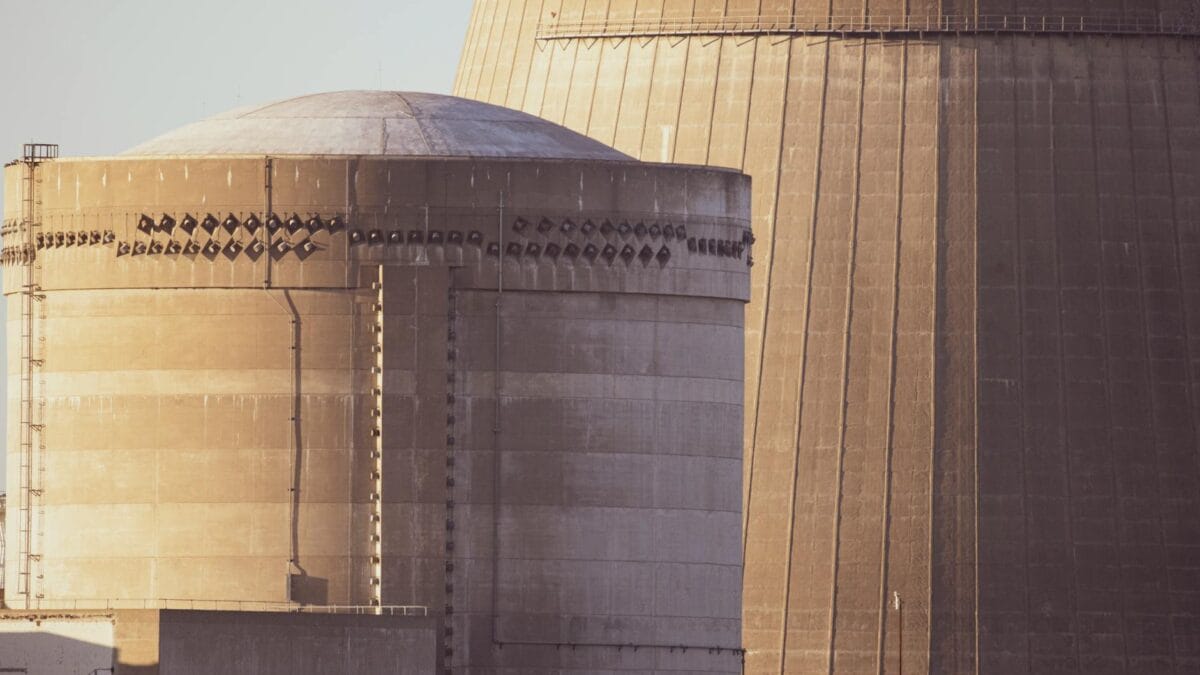
Iran’s enrichment infrastructure is centred on two major facilities. Natanz, the largest, hosts both above-ground and underground centrifuge halls with thousands of advanced centrifuges in operation. Fordow, an underground facility constructed into a mountain, is smaller but is the specific installation where 60 percent enriched material has been produced since 2021.
The enrichment ladder Iran operates runs from natural uranium at 0.7 percent U-235, through low-enriched uranium at 3.67 percent (the JCPOA ceiling), through 20 percent (exceeded in 2021), through 60 percent (reached in April 2021), to 90 percent which is weapons-grade. Iran stopped at 60 percent as the political line that signalled continued programmatic advance without crossing the declared weapons threshold. The 60 percent material has technical utility for certain reactor applications but is also the most convenient enrichment level from which to break out to weapons-grade if a political decision were taken.
The stockpile of 200 kilograms of 60 percent material is sufficient, after further enrichment, for multiple nuclear devices. Specifically, 60 percent material requires approximately 25 kilograms of weapons-grade equivalent per warhead; with the current 200 kilogram stockpile, Iran could theoretically produce material for 7-8 warheads within breakout time constraints. Actual warhead construction, however, requires additional components including non-fissile weapon design work and the weaponisation engineering that Iran is believed to have explored extensively in the early 2000s but has not publicly advanced.
| Enrichment level | JCPOA limit (2015) | Iran status April 2026 |
|---|---|---|
| Up to 3.67% U-235 | 300 kg allowed | ~10,000 kg stockpile |
| 3.67% to 20% | Not allowed | ~800 kg |
| 20% to 60% | Not allowed | ~200 kg at 60% |
| 60% to 90% (weapons grade) | Not allowed | Not publicly produced |
IAEA Monitoring: What Remains and What Has Been Lost
The International Atomic Energy Agency maintains some access to declared Iranian nuclear facilities under Iran’s continuing Safeguards Agreement obligations, but the Additional Protocol access that was part of the JCPOA framework has been suspended since February 2021. The practical effect of this difference is significant.
Under Additional Protocol access, IAEA inspectors could visit any nuclear-related facility including undeclared sites suspected of hosting illicit activity. They could review enrichment records at a granular level. They could install and maintain continuous monitoring equipment including cameras and seals. Much of this access has been lost.
The remaining access includes periodic declared-site inspections that verify material accountancy at Natanz and Fordow, routine surveillance of fuel cycle activities, and access to a subset of research reactors. Cameras at several key enrichment sites were disabled by Iran in 2022 and have not been restored. Specific facilities suspected of housing illicit enrichment work — including a set of sites where undeclared uranium particles have been found — remain substantially off-limits.
The IAEA’s Director General Rafael Grossi has repeatedly emphasised that current access is insufficient to verify Iran’s program with confidence. Each quarterly IAEA Board of Governors meeting produces documentation of the specific gaps, and the Board has formally censured Iran multiple times since 2022 for non-cooperation. None of these censures has resulted in restored access; they have functioned as diplomatic pressure signals that Iran has absorbed without changing behaviour.
Weapons Capability: The Three-Step Assessment
Converting the technical enrichment capability into an actual deliverable nuclear weapon requires three distinct steps. Iran’s progress varies significantly across these.
Step 1: Produce weapons-grade fissile material. This is the enrichment step from current 60 percent to 90 percent. Current Iranian centrifuge capacity and stockpile structure mean this could be completed in 7-12 days for sufficient material for a single warhead. This is effectively the shortest breakout timeline ever publicly estimated for Iran.
Step 2: Design and manufacture a weapon device. This covers the engineering of the nuclear device itself — the specific implosion or gun-type design, the neutron initiator, the tamper and reflector, and the integration of the fissile core with the triggering system. Iran is believed to have explored this extensively in the early 2000s as part of what IAEA documentation has called the “possible military dimensions” of its historical program. Completing a modern deliverable weapon would require an estimated 6-12 months of dedicated engineering from the point where weapons-grade material is produced.
Step 3: Integrate into a delivery system. For a weapon to be strategically useful, it must be integrated into a missile or other delivery mechanism. Iran’s Shahab series and Sejjil series ballistic missiles have the throw-weight capacity for a nuclear warhead. Specific missile-warhead integration engineering is not publicly known to be complete.
The combined assessment is therefore: fissile material in weeks, weapon in months to a year, integrated delivery system within 12-18 months of a political breakout decision. US intelligence community assessments reported through 2024-2025 have broadly consistent with this framing.
Diplomatic Track: What Has and Has Not Worked
The 2015 Joint Comprehensive Plan of Action (JCPOA) was the last formal agreement constraining Iran’s program. Its collapse began with the May 2018 US withdrawal under the Trump administration, continued through failed restoration attempts under the Biden administration (2021-2022 Vienna talks), and has been essentially replaced by ad hoc channels under the current US and Iranian administrations.
Current diplomatic activity consists of several parallel tracks:
E3 channels. The United Kingdom, France, and Germany maintain direct contact with Iranian counterparts on nuclear-specific issues. These conversations have continued through the past three years and have addressed specific IAEA cooperation questions, compliance with reporting obligations, and occasional confidence-building measures. The E3 governments have not, however, moved to the comprehensive framework negotiation that would replace the JCPOA.
US-Iran intermediary channels. The United States and Iran have no direct diplomatic relations and no embassy-level contact. All bilateral communication occurs through third-party intermediaries including Oman, Qatar, and occasionally Switzerland. These channels handle specific transactional matters — most notably the 2023 prisoner exchanges and subsequent asset unfreezing — and have been used for nuclear signalling though not for substantive negotiation.
IAEA technical track. Separate from political negotiation, IAEA-Iran technical discussions continue on specific monitoring and access issues. These discussions have produced modest incremental steps — some cameras restored in specific facilities, some additional reporting — but have not substantially restored the access that existed under the 2015-2021 regime.
Russian and Chinese channels. Both countries maintain close relationships with Iran and have mediated on occasion. Russia in particular has offered specific technical assistance on Iranian civil nuclear projects including reactor fuel and operations support. These relationships complicate Western pressure campaigns but have not produced breakthrough initiatives.
Israel’s Operational Role
Israel has actively opposed Iranian nuclear advancement for over two decades and has conducted specific operations against the program. The period 2024-2025 saw the most substantial Israeli kinetic action since earlier assassinations and sabotage operations.
The October 2024 Israeli strike on Iranian territory followed an Iranian missile attack on Israel in response to the assassination of Hamas and Hezbollah leaders. The Israeli response targeted, among other military installations, air defence systems protecting nuclear sites, missile production facilities, and specific centrifuge manufacturing capacity at Parchin. Core enrichment facilities at Natanz and Fordow were not directly targeted in the October operation, though some peripheral damage occurred.
Follow-on operations through 2025 included continued targeting of Iranian proxy infrastructure, periodic direct-action operations inside Iran including assassinations of specific nuclear-related personnel, and continued cyber operations. The cumulative effect has been to slow but not stop Iran’s nuclear advance. Enrichment has continued. Stockpile has grown. The diplomatic consequences of Israeli operations have complicated rather than simplified the political landscape for Western governments attempting to maintain negotiating space.
Israeli domestic politics under the Netanyahu coalition have continued to support direct operations against Iranian nuclear capability. Whether a more decisive Israeli strike on Natanz or Fordow occurs remains one of the most carefully-watched questions in regional security analysis. Public indicators suggest Israel has both the military capability and political authorisation to act if judgments in Jerusalem conclude that the breakout risk justifies the operation, but that the actual decision is being held in reserve pending further political and technical developments.
The Pezeshkian Presidency and Internal Iranian Politics
Iran’s political landscape shifted significantly in 2024. President Ebrahim Raisi died in a May 2024 helicopter crash, triggering a snap election that brought reformist Masoud Pezeshkian to the presidency in July 2024. Pezeshkian ran on a platform that included nuclear diplomacy, economic reform, and reduced confrontation with the West.
The presidency in Iran holds executive authority over domestic policy but does not control nuclear strategy, which is directed by the Supreme Leader Ayatollah Ali Khamenei and the Supreme National Security Council. Pezeshkian’s political influence on the nuclear file is therefore limited. His election has opened some diplomatic space — European contacts have found Iranian interlocutors more willing to engage on specific issues — but has not produced strategic redirection of the program.
Internal Iranian political balance has been affected by the broader regional situation including Israeli operations, economic pressure from sanctions (see our analysis of the Iranian dark fleet), and the post-Raisi transition dynamics. The IRGC and hardline factions continue to exercise substantial influence on nuclear and security policy. Reformist elements aligned with Pezeshkian exercise less.
The Supreme Leader is 86 years old in April 2026 and questions of succession are increasingly relevant. A future Supreme Leader transition could produce major shifts in nuclear policy — potentially toward greater accommodation with the West or toward more confrontational posture, depending on who succeeds and the broader circumstances at that point.
Sanctions Regime Effects
US-led sanctions on Iran remain substantively intact despite multiple partial easings and targeted exceptions over the past years. Major components include:
Oil export sanctions. Formally comprehensive but practically evaded at approximately 1.5 million barrels per day as documented in our Iran dark fleet analysis.
Financial sector sanctions. Iranian banks remain substantially cut off from SWIFT and correspondent banking. Renminbi-denominated financial channels through Chinese regional banks provide partial workaround.
Technology export controls. Restrictions on dual-use technology exports have become more stringent since 2023, covering both US export licensing and increasingly harmonised European controls. These affect Iran’s civil industrial capacity and some specific nuclear-related supply chains.
Individual designations. OFAC has designated hundreds of Iranian individuals and entities as part of the extended sanctions architecture. These include nuclear program officials, IRGC commanders, and specific companies linked to weapons or missile activity.
The sanctions regime’s cumulative effect has been to raise costs of Iranian nuclear advancement and regional activity without stopping it. The program has continued despite the economic pressure. Most analysts assess that sanctions alone, without diplomatic framework or more coercive action, cannot reverse the trajectory of the program.
China’s Position
China’s role in the Iranian nuclear file has grown more prominent over the past three years. The 25-year Comprehensive Strategic Partnership signed in 2021 between Beijing and Tehran formalised a wide economic and strategic relationship that includes energy, technology, and security dimensions. China purchases the majority of Iran’s sanctioned oil exports, providing the economic lifeline that keeps the regime functional under sanctions pressure.
On nuclear specifically, China has maintained a diplomatic posture that opposes further proliferation while also resisting Western-led escalation of pressure on Iran. Chinese diplomats have been active in IAEA Board deliberations and have generally voted against Western resolutions censuring Iran, though abstaining in some cases. China has not provided direct nuclear assistance to Iran — its position on proliferation remains firm — but it has not joined pressure campaigns either.
The Chinese calculation appears to balance several interests: maintaining the Iranian partnership for broader regional influence, avoiding an open nuclear Iran that would trigger Arab proliferation in response, preserving its commercial oil relationship, and managing the larger US-China strategic competition where Iran is one of several pressure points. The net effect for Iran has been significant diplomatic cover, substantial economic support, and limited but real Chinese influence on Iranian strategic calculations.
Arab States’ Position
Gulf Arab states including Saudi Arabia, the UAE, Qatar, and Bahrain have significantly evolved their position on the Iranian nuclear file since the mid-2010s when they were unambiguously opposed to any framework that did not fully roll back Iranian capability. The 2023 Saudi-Iran diplomatic normalisation mediated by China marked a major shift in the regional alignment.
Current Arab state positions broadly accept that an Iranian nuclear program with some limits is a more manageable outcome than either open nuclear proliferation or regional war triggered by kinetic denial operations. They continue to oppose Iranian weaponisation and to build their own civil nuclear capacity partly as a hedge and partly as independent energy policy. They are less willing than a decade ago to fully align with maximum-pressure US positions that could destabilise their regional diplomatic equities.
The UAE has operated commercial nuclear reactors at Barakah since 2020. Saudi Arabia is pursuing civil nuclear capacity with foreign partners including discussions with the United States, France, China, and South Korea. Egypt is constructing reactors at El Dabaa with Russian support. The regional nuclear landscape is therefore more complex than a decade ago and Arab states’ positions reflect that complexity.
The Oil Market Implication
Iranian nuclear uncertainty is structurally priced into global oil markets. Specific scenarios map to specific price outcomes:
Status quo continuation (base case). Iranian advance continues, no kinetic intervention, ongoing diplomatic track without breakthrough. This is approximately priced in current Brent levels around $80 per barrel. Risk premium attached specifically to Iranian nuclear uncertainty is estimated at $5-8 per barrel.
Kinetic action against Iranian facilities. Israeli or US-led strike on Natanz, Fordow, or equivalent targets. Immediate Brent spike of $10-20 per barrel, potentially higher depending on Iranian retaliation scope. Could persist for weeks or months depending on whether Iranian retaliation targets oil infrastructure in the Gulf.
Diplomatic breakthrough. Agreement restoring substantial constraints on Iranian program, corresponding sanctions easing. Brent declines $5-10 per barrel as Iranian oil exports normalise somewhat and regional risk premium compresses.
Iranian weapons test or declared breakout. Immediate Brent spike of $20-40 per barrel on the kinetic risk response. Political consequences beyond oil markets would be substantial including Arab state nuclear hedging and NATO policy shifts.
The base case is that status quo continues through most of 2026 with gradual advances in the program, intermittent tactical operations, and no breakthrough in either direction. Markets will continue pricing this equilibrium until a specific catalyst forces repricing.
Scenarios Through 2027
Four distinct scenarios cover most plausible outcomes through 2027.
Scenario 1: Managed escalation (40% probability). Current trajectory continues. Iranian enrichment advances further. IAEA access remains limited. Israeli operations continue at current intensity. Diplomatic tracks remain open but unproductive. By end-2027, Iran has weapons-capable enrichment infrastructure but has not declared or demonstrated weapons capability. Regional tensions continue at elevated baseline.
Scenario 2: Diplomatic framework (25% probability). A new agreement, possibly under a different brand name than JCPOA, restores meaningful constraints on Iranian program. Sanctions partially lifted. Oil markets reprice. Regional tensions ease somewhat. The agreement’s durability remains contested domestically in both the US and Iran.
Scenario 3: Kinetic denial (20% probability). Israeli-led strike on Iranian nuclear facilities, possibly with US coordination or acquiescence. Substantial regional disruption including Iranian retaliation against Arab Gulf oil infrastructure or proxy activation. Oil prices spike significantly. Nuclear program set back but not eliminated; political consequences could be transformative in either direction.
Scenario 4: Iranian breakout (15% probability). Iranian political decision to weaponise the program, either declared or demonstrated through test. Rapid regional proliferation pressure. Major diplomatic realignment. Possible kinetic response from Israel, US, or both. The lowest-probability scenario but the one with the largest potential global implications.
These probability estimates should be understood as rough guides rather than precise forecasts. Each scenario contains substantial variance in how it unfolds. What is clear is that the current equilibrium is not infinitely stable and some form of movement in one of these directions will characterise the 2026-2027 period.
What Observers Should Watch
Specific indicators worth tracking through 2026:
- IAEA quarterly reports and Board of Governors resolutions — signals of technical cooperation levels
- Iranian enrichment announcements — any movement toward 90 percent would be a major signal
- Israeli defence posture and public statements — indicators of kinetic decision-making
- US-Iran diplomatic channel activity — signs of substantive negotiation versus tactical communication
- Supreme Leader health and succession discussions — longer-term structural variable
- Oil market reaction to specific events — real-time repricing signals
Coverage from Reuters, the Financial Times, and specialised nuclear policy publications provides real-time documentation of these indicators. The IAEA’s own publications are the authoritative source for the technical program status.
Russia’s Role and Nuclear Cooperation
Russia’s position in the Iranian nuclear file is a specific and increasingly significant dimension. As the operator and fuel supplier for Bushehr and the contractor for additional civil reactor construction, Russia has institutional and commercial interests in maintaining a functioning Iranian civil nuclear sector. Russia has also been diplomatically supportive of Iran’s position at IAEA Board meetings, frequently voting against Western-led censures or abstaining in ways that help Iran resist accumulated pressure.
Since 2022, Russia-Iran cooperation has deepened across multiple dimensions beyond the nuclear file. Military-technical cooperation including the transfer of Shahed-type drones in the Russia-Ukraine context, intelligence sharing, and economic cooperation via energy and banking channels have all expanded. The nuclear cooperation has not publicly expanded into weapons-relevant areas, but the overall relationship has deepened in ways that provide Iran with additional diplomatic cover.
For Western governments attempting to manage Iranian nuclear advancement, Russia’s role is a structural complication. Any diplomatic framework that Russia opposes will face significant obstacles at the UN Security Council and in the IAEA Board. Russian-Iranian bilateral cooperation provides Iran with alternatives to Western commercial relationships that were the leverage for sanctions-based pressure.
The Arab Nuclear Hedge
Arab states’ nuclear activity has accelerated as a hedge against potential Iranian weapons trajectory. The UAE’s Barakah plant is the most established Arab civil nuclear operation, having begun commercial electricity production in 2020 and continuing through Unit 4 commissioning. Saudi Arabia is in active discussions with multiple partners — US, France, China, South Korea — on its own civil nuclear programme, with particular focus on ensuring that any agreement preserves future Saudi enrichment rights in line with what Iran has been allowed to do.
Egypt is constructing four reactors at El Dabaa in partnership with Rosatom, with the first expected to come online in 2027. Jordan has continued study reactor operations and has discussions on power reactor development. Turkey is operating a Russian-built reactor at Akkuyu with additional units planned.
The regional direction is clear: within 10-15 years, the Arab Middle East will have a substantial civil nuclear capacity that does not exist today. Some of this capacity will have theoretical latent weapons potential, adding to regional nuclear complexity. None of the announced Arab programmes have confirmed weapons intent, but the regional nuclear landscape is evolving in ways that policymakers in Washington, Brussels, Jerusalem, and Tehran are tracking carefully.
The Bottom Line
Iran’s nuclear program in April 2026 is at the most advanced state it has ever reached short of a declared weapons program. Breakout time is the shortest publicly estimated. IAEA monitoring is the most limited since 2015. Israeli operations have slowed but not stopped the advance. The diplomatic track is open but has not produced a framework that replaces the JCPOA. The political and economic equilibrium that has held through three years of accelerated enrichment is not infinitely stable.
Whether the next twelve to eighteen months produce movement toward diplomatic framework, kinetic denial, or further managed escalation will be determined by decisions in Tehran, Jerusalem, Washington, and secondarily in Beijing and Moscow. Each of these capitals has its own political calculation and internal constraints that shape the options. The cumulative result — not predictable with confidence — will significantly define Middle Eastern security and global oil market conditions through the remainder of the decade.
For observers of the Middle East political economy, the Iranian nuclear file is among the two or three most consequential policy questions on the global agenda through 2027. Understanding the current state, the competing interests, and the likely pathways forward is essential to understanding the region’s broader trajectory including the oil market, Gulf security architecture, and the future of the Arab-Iranian rapprochement that has been a quiet but significant feature of regional diplomacy since 2023.