Few topics generate more confused commentary than the wealth of Arab ruling families. Western outlets routinely conflate three different things: the personal fortunes of individual royal members, the patrimonial wealth that the ruling family treats as private but that is technically state-related, and the sovereign-wealth-fund assets that the ruling family controls strategically but does not own personally. Treat them as the same thing and you end up with the headline numbers (two trillion for the Saudis, three hundred billion for the Emiratis) that fly around social media without much rigour.
This 2026 analysis applies a tighter framework. We separate three layers of royal wealth for each of the major Gulf and Arab monarchies, present a clear methodology, and rank them according to the most defensible composite. The ranking covers Saudi Arabia (House of Saud), Abu Dhabi (Al Nahyan), Dubai (Al Maktoum), Qatar (Al Thani), Kuwait (Al Sabah), Oman (Al Said), Bahrain (Al Khalifa), Jordan (Hashemites), and Morocco (Alaouite dynasty).
The Three Layers of Royal Wealth
Layer 1: Personal wealth. The private assets held in named accounts, properties, and operating companies by individual members of the ruling family. This is what Forbes and Bloomberg try to estimate when they publish individual rich-lists.

Layer 2: Family-trust or dynastic wealth. Assets held in family vehicles that benefit current and future generations but are not formally personal. This includes large landholdings, palaces, art collections, yacht fleets, and unlisted holding companies. Most ruling families maintain such structures, though their disclosure varies enormously.
Layer 3: Sovereign-wealth-fund (SWF) and state-enterprise control. This is the largest pool by far but the most legally distinct from personal wealth. The Public Investment Fund of Saudi Arabia (~1.1 trillion USD), the Abu Dhabi Investment Authority (~1.0 trillion USD), Mubadala (~330 billion USD), the Qatar Investment Authority (~530 billion USD), the Kuwait Investment Authority (~940 billion USD), and the Investment Corporation of Dubai (~340 billion USD) are technically state vehicles, but the ruling families control them strategically through chairmanship, allocations, and appointment of senior management.
For the rankings below, we report each layer separately and then provide a composite figure. The composite is necessarily imprecise, but we identify the underlying assumptions clearly so readers can adjust them.
1. House of Saud (Saudi Arabia)
Personal wealth (estimated): The senior royals (King Salman, Crown Prince Mohammed bin Salman, the Sudairi senior princes, and the chairmen of major foundations) collectively hold personal wealth estimated at 80 to 120 billion US dollars in 2026. Mohammed bin Salman individually is variously estimated at 5 to 25 billion US dollars in strict personal terms, depending on how one treats art holdings (including the Leonardo da Vinci Salvator Mundi purchase reported in 2017) and the Serene yacht acquisition.
Family-trust / extended royal wealth: The Saudi royal family numbers approximately 7,000 to 15,000 members across all branches, depending on definition. Aggregate dynastic wealth (palaces, lands, unlisted family vehicles, allocations to junior princes) is estimated at 400 to 600 billion US dollars in 2026.
Strategic state control (SWF + Aramco): The Public Investment Fund manages ~1.1 trillion US dollars in 2026 and is chaired by the Crown Prince. The Saudi state’s Aramco shareholding (still ~90% of Aramco’s market capitalisation of ~1.8 trillion USD as of mid-2026) adds another 1.6 trillion US dollars of strategic state control. Although the ruling family does not personally own Aramco, the management and dividend-allocation decisions flow through royal-led institutions.
2026 composite: By any measure, the House of Saud sits atop the regional ranking. The often-cited ‘2 trillion’ figure for Saudi royal wealth conflates personal, dynastic, and strategic state assets. The strict personal-and-dynastic layer is more reasonably 500 to 750 billion US dollars. Add strategic-state control and the number does indeed approach the two-trillion-plus headline, but with very different interpretations of who ‘owns’ what.
2. Al Nahyan (Abu Dhabi)
Personal wealth: The senior Al Nahyan figures (the late Sheikh Khalifa, President Mohammed bin Zayed, and senior brothers) and the immediate ruling family hold personal wealth estimated at 50 to 90 billion US dollars in 2026.
Family-trust / dynastic: Combined family vehicles, palaces, land allocations, and large unlisted holdings (including the family’s private ventures in real estate, falconry, and equestrian businesses) bring dynastic wealth to an estimated 80 to 120 billion US dollars in 2026.
Strategic state control: Abu Dhabi controls one of the largest sovereign-wealth-fund clusters in the world, including ADIA (~1.0 trillion USD), Mubadala (~330 billion USD), ADQ (~250 billion USD), and the Abu Dhabi Investment Council’s residual mandates. The Al Nahyan ruling family chairs these vehicles through senior royal appointments and effectively directs their strategic allocations. Combined, strategic-state control is approximately 1.6 trillion US dollars in 2026.
2026 composite: The Al Nahyan family is the second-largest royal-wealth bloc in the region after the House of Saud, but on a per-citizen basis the Abu Dhabi sovereign-wealth pool is larger per capita than the Saudi one. The often-cited ‘300 billion through ADIA’ figure substantially understates the broader picture by including only one of several Abu Dhabi sovereign vehicles.
3. Al Maktoum (Dubai)
Personal wealth: Sheikh Mohammed bin Rashid Al Maktoum’s personal fortune is estimated at 14 to 22 billion US dollars in 2026, derived from real-estate holdings, equestrian businesses (Godolphin), and personal stakes in vehicles linked to Emaar and other developers. The Al Maktoum family’s broader senior members add another 5 to 10 billion US dollars.
Dynastic wealth: Family-trust holdings (palaces, ranches, the famed equestrian portfolio including stud farms across Newmarket, Kentucky, and Dubai, and unlisted vehicles) bring dynastic wealth to an estimated 40 to 60 billion US dollars in 2026.
Strategic state control: The Investment Corporation of Dubai (ICD), the emirate-level sovereign fund, manages approximately 340 billion US dollars in 2026, including stakes in Emirates Airline, Emirates NBD, Borse Dubai (which owns DFM and Nasdaq Dubai), DP World, and many other strategic assets.
2026 composite: The Al Maktoum family is wealthier than the Al Thani on a strict personal-plus-dynastic basis, but Qatar’s QIA controls a substantially larger pool of international financial assets per citizen. The headline ’22 billion’ figure for Sheikh Mohammed himself is widely cited but understates the family’s full economic footprint when extended dynastic and strategic state control are included.
4. Al Thani (Qatar)
Personal wealth: The Emir Sheikh Tamim bin Hamad Al Thani and senior family figures (including the former emir Sheikh Hamad bin Khalifa and Sheikha Moza) hold personal wealth estimated at 8 to 15 billion US dollars in 2026.
Dynastic wealth: Family-trust holdings, palaces, art collections (the Qatari art-acquisition programme under Sheikha Al-Mayassa has built one of the most valuable contemporary-art collections in private hands), real estate in Doha and London, and unlisted holdings bring dynastic wealth to an estimated 40 to 70 billion US dollars in 2026.
Strategic state control: The Qatar Investment Authority manages approximately 530 billion US dollars in 2026. Combined with the family’s strategic control of Qatar Energy (with North Field gas reserves valued at trillions of US dollars over the remaining production horizon), the strategic state pool effectively exceeds 1 trillion US dollars when reserves are included.
2026 composite: The Al Thani are the smallest ruling family in the GCC top three by member count (a few hundred members across all branches), which makes the per-member wealth concentration the highest in the region by a comfortable margin. The often-cited ‘335 billion through QIA’ figure substantially understates total family-controlled wealth.
5. Al Sabah (Kuwait)
Personal and dynastic wealth: The Al Sabah family, which has ruled Kuwait since the eighteenth century, holds personal and dynastic wealth estimated at 30 to 50 billion US dollars in 2026, including landholdings, palaces, and unlisted vehicles.
Strategic state control: The Kuwait Investment Authority manages approximately 940 billion US dollars in 2026 (the highest sovereign-wealth-fund total on a per-citizen basis in the world).
2026 composite: The Kuwaiti ruling family’s strategic state control per capita is the highest in the world, but the family’s direct personal and dynastic wealth is significantly smaller than the Saudi, Emirati, or Qatari equivalents because of Kuwait’s longer history of constitutional limits on royal personal wealth accumulation.
6. Al Said (Oman)
Personal and dynastic wealth: Sultan Haitham bin Tariq and the Al Said family hold personal and dynastic wealth estimated at 10 to 20 billion US dollars in 2026.
Strategic state control: The Oman Investment Authority manages approximately 47 billion US dollars in 2026, plus the state’s stake in Petroleum Development Oman (PDO). This is a much smaller sovereign-wealth pool than the upper Gulf monarchies.
2026 composite: The Al Said family is wealthy by absolute standards but operates with a notably more austere fiscal philosophy than its neighbours, in part because of Sultan Qaboos’s legacy of channelling national resources into infrastructure and education rather than royal allocation.
7. Al Khalifa (Bahrain)
Personal and dynastic wealth: The Al Khalifa family holds personal and dynastic wealth estimated at 15 to 25 billion US dollars in 2026, including significant landholdings on Bahrain main island.
Strategic state control: Mumtalakat, Bahrain’s sovereign-wealth fund, manages approximately 19 billion US dollars in 2026. The total is smaller than its Gulf neighbours because of Bahrain’s smaller hydrocarbon resource base.
8. Hashemites (Jordan)
Personal and dynastic wealth: King Abdullah II and the Hashemite royal family hold personal and dynastic wealth estimated at 0.7 to 1.5 billion US dollars in 2026. This is dramatically smaller than the Gulf royal totals, reflecting Jordan’s far smaller natural-resource base.
Strategic state control: Jordan does not have a major sovereign-wealth fund comparable to the Gulf states. The state’s strategic holdings (such as the Jordan Investment Fund) are modest by regional standards.
The Hashemite royal family’s wealth profile is closer to that of European constitutional monarchies than to its Gulf counterparts.
9. Alaouite Dynasty (Morocco)
Personal and dynastic wealth: King Mohammed VI and the Alaouite royal family hold personal and dynastic wealth estimated at 5 to 8 billion US dollars in 2026, much of it derived from the Société Nationale d’Investissement (SNI, now Al Mada) holding company that controls major stakes in Moroccan banking, telecoms, mining, and real estate.
Strategic state control: The Moroccan state holds significant assets in OCP (the world’s largest phosphate producer with reserves potentially worth trillions over its production horizon), but these are technically state-controlled rather than royal-family-owned.
Comparison Table: Arab Royal Wealth 2026
| Family | Country | Personal (USD) | Dynastic (USD) | SWF Control (USD) | Total Composite (USD) |
|---|---|---|---|---|---|
| House of Saud | KSA | ~100B | ~500B | ~1.1T (PIF) + Aramco | ~2.0T+ |
| Al Nahyan | Abu Dhabi | ~70B | ~100B | ~1.6T | ~1.77T |
| Al Thani | Qatar | ~12B | ~55B | ~530B | ~600B |
| Al Sabah | Kuwait | ~15B | ~25B | ~940B | ~980B |
| Al Maktoum | Dubai | ~22B | ~50B | ~340B (ICD) | ~412B |
| Al Said | Oman | ~5B | ~12B | ~47B | ~64B |
| Al Khalifa | Bahrain | ~8B | ~12B | ~19B | ~39B |
| Alaouite | Morocco | ~3B | ~5B | n/a (state OCP) | ~8B |
| Hashemites | Jordan | ~0.5B | ~0.7B | n/a | ~1.2B |
The Transparency Spectrum
One of the underrated dimensions of Arab royal wealth in 2026 is the variance in disclosure. Some sovereign-wealth funds publish detailed annual reports (Mubadala publishes a thorough investment-portfolio update, Mumtalakat publishes audited statements), while others provide only headline numbers or aggregate flows (the PIF publishes a summary annual report but does not disclose individual holdings below a threshold). The Al Maktoum family’s ICD publishes consolidated financials. The Qatar Investment Authority’s disclosure is improving but still less granular than ADIA’s.
For personal and dynastic wealth, the disclosure landscape is far more opaque. No Arab royal family publishes audited statements of family-trust assets in the way that, for example, the British monarchy publishes Sovereign Grant accounts. The Bloomberg and Forbes estimates that circulate in international media are therefore based on triangulation rather than primary disclosure.
Comparison With the British Monarchy
The British royal family is often used as a comparative benchmark in international wealth coverage of Arab monarchies. The comparison is misleading. The British monarchy’s official wealth (the Royal Family’s private estate at Sandringham and Balmoral, plus the personal investment portfolios of senior royals) is estimated at around 700 million to 1 billion US dollars in 2026. The Crown Estate, valued at approximately 20 billion US dollars, is technically not royal property but Crown property managed for the public benefit. By that strict definition, even the smallest Gulf ruling families (Al Khalifa, Al Said) hold larger family-private fortunes than the British royals.
What inflates Arab royal totals so dramatically is the extent to which sovereign-wealth-fund assets are operationally controlled by the ruling family even though legally separated from personal ownership. There is no equivalent in the British system because the United Kingdom’s strategic financial assets are held by HM Treasury and the Bank of England, not by the monarchy.
Palaces and Visible Spending
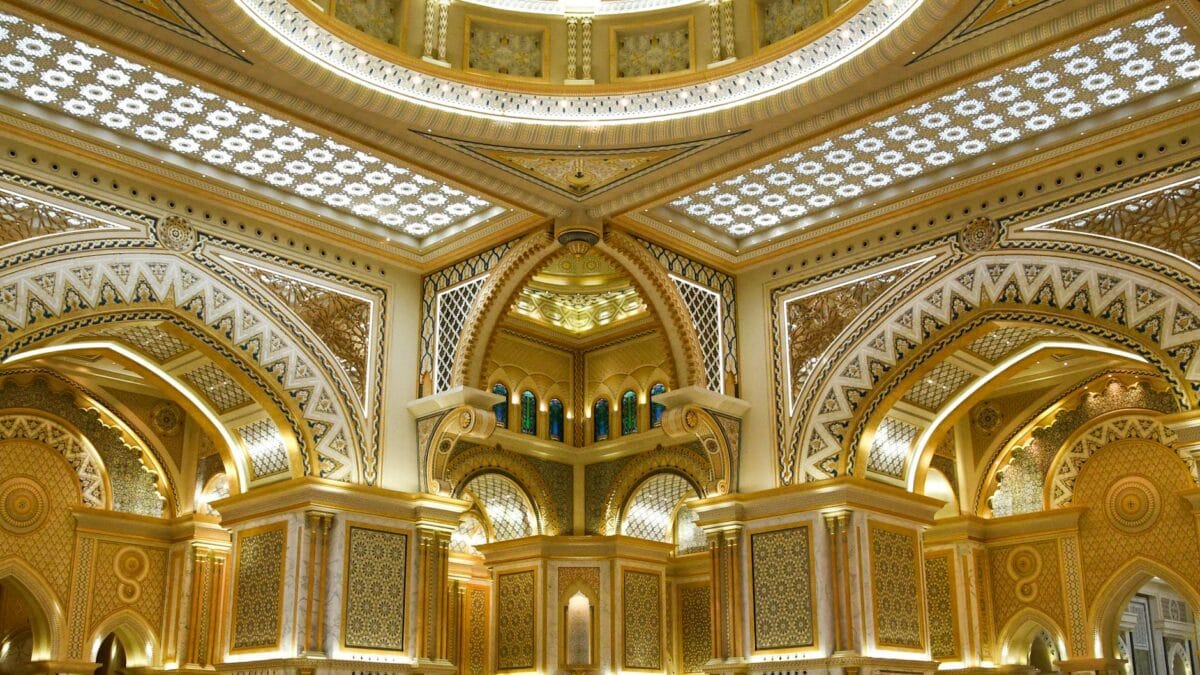
Arab royal families maintain some of the largest and most architecturally significant residences in the world. The major Saudi royal residences include the Al-Yamamah Palace and the Erga Palace in Riyadh and seasonal palaces in Jeddah and Asir; the Al Nahyan family operates the Qasr Al Watan in Abu Dhabi and significant private estates on Sir Bani Yas island; the Al Maktoum family maintains the Zabeel Palace complex in Dubai plus extensive ranches and stud farms; the Al Thani family’s properties include the Amiri Diwan in Doha and substantial residential holdings in Mayfair. The Moroccan king maintains palaces in Rabat, Marrakech, Fez, Tangier, and several other cities.
The aggregate value of Arab royal palace inventories, including art, antique furniture, and ceremonial vehicles, is conservatively estimated at 70 to 120 billion US dollars across all ruling families. This is a meaningful component of the dynastic wealth layer above and is rarely included in published rich-lists because of valuation difficulty.
Reform, Anti-Corruption, and the Changing Wealth Picture
Two events of the past decade have reshaped the Arab royal wealth picture. The first was the 2017 anti-corruption campaign in Saudi Arabia, which detained dozens of senior princes and businesspeople at the Ritz-Carlton Riyadh and recovered an estimated 100 billion US dollars in assets to the Saudi state. The second was the gradual consolidation of strategic-investment decision-making in Abu Dhabi under the leadership of President Mohammed bin Zayed after 2017. Both events redirected significant flows of royal wealth toward sovereign-vehicle control and away from individual prince-level accumulation.
The Qatari, Kuwaiti, and Bahraini ruling families have not had comparable consolidation events but have been incrementally tightening transparency and governance around major sovereign-fund decisions. Oman under Sultan Haitham has done the same.
Per-Capita Royal Wealth: A Useful Reframe
Headline totals can be misleading because royal family sizes vary enormously. The House of Saud has 7,000 to 15,000 members across all branches, depending on definition, which spreads the family wealth across more individuals than any other Arab royal household. The Al Thani family has only a few hundred members in active branches, which concentrates Qatari family wealth on a much smaller base. The Al Sabah, Al Khalifa, and Al Said families fall in between.
On a per-member basis, the Al Thani are likely the wealthiest royal family in the Arab world, with several billion US dollars of dynastic wealth per family member. The House of Saud, by contrast, ranges enormously between very senior princes with personal fortunes in the high billions and junior princes whose royal allocations are modest.
Conclusion: The Real Ranking
If we ask the strict question of which Arab royal family is the wealthiest in 2026, the answer depends on the definition. By absolute composite of personal plus dynastic plus strategic state control, the House of Saud is unambiguously the largest at over 2 trillion US dollars. The Al Nahyan family of Abu Dhabi is second at approximately 1.77 trillion. The Al Sabah of Kuwait is third at approximately 980 billion. The Al Thani are fourth at approximately 600 billion. The Al Maktoum follow at approximately 412 billion.
If we ask on a per-citizen or per-family-member basis, the order shifts dramatically. The Al Thani and Al Maktoum families come closer to the top because of their smaller family sizes and the higher per-capita wealth of their citizen bases. The House of Saud falls in the per-member ranking because of its much larger family count.
For 2026 readers seeking a definitive one-line answer: the House of Saud remains the wealthiest Arab royal family on every absolute measure, with the Al Nahyan of Abu Dhabi closing the gap and operationally controlling the most sophisticated sovereign-wealth portfolio in the region.