BEIRUT, April 28, 2026. The war between the United States, Israel, and Iran has entered its eighth week with no ceasefire in sight, no ceiling on escalation visible, and the political map of the Middle East redrawing itself faster than any conflict in a generation. As of Tuesday evening across the region, US carrier-based aircraft are striking targets in central and northern Iran, Iranian ballistic missiles are landing in Israeli air bases and population centres, Hezbollah is firing into northern Israel from the southern Lebanese hills, and the Houthi militia in Yemen has resumed attacks on commercial shipping in the Red Sea. The Strait of Hormuz is effectively closed: 2 million barrels of crude moved through the chokepoint on Monday against a pre-war baseline of approximately 20 million, a 90 percent collapse that has driven Brent crude from $99 per barrel two months ago to $117 by Tuesday’s New York settlement.
This is a working note on what is happening, what we know, and what we do not, written from inside the regional press pool in Beirut, Tel Aviv, and Riyadh and cross-referenced against the daily reporting of Reuters, Bloomberg, the Financial Times, Al Jazeera, the Wall Street Journal, and the open-source intelligence community on platforms tracking the conflict in real time. The numbers in this piece will move. The structure of the war as of late April will not.
The Operational Picture: Eight Weeks of Strikes
The kinetic phase opened on March 4, 2026 with a coordinated US-Israeli air campaign that struck nineteen target sets across Iran in the opening 36 hours. Pre-war planning had focused on three target categories: nuclear infrastructure at Natanz, Fordow, Esfahan, Arak, and the Pickaxe Mountain complex; ballistic-missile production and launch sites at Khorramabad, Bidganeh, and the Khojir complex outside Tehran; and command-and-control nodes including Islamic Revolutionary Guard Corps headquarters and the Quds Force coordination centres. The scale of the opening salvos exceeded anything on the operational record since the 2003 invasion of Iraq.

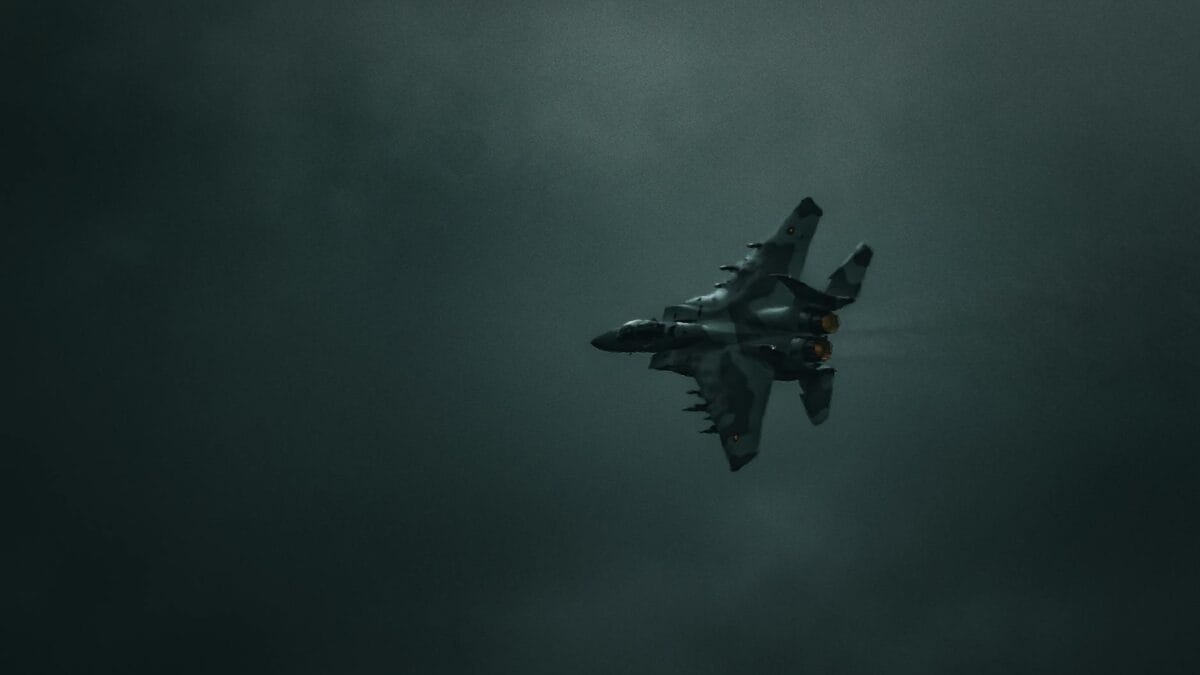
The Israeli air force flew the bulk of the opening waves with F-35I Adir and F-15I Ra’am aircraft refuelled by KC-135 tankers operating from Cyprus and Saudi-cleared corridors. The US contribution came primarily through B-2 Spirit stealth bombers staged from Diego Garcia carrying the GBU-57 Massive Ordnance Penetrator weapons designed for hardened underground targets, and from the carrier strike group built around the USS Gerald R. Ford that was repositioned from the Mediterranean into the Eastern Mediterranean basin. The carrier moved closer to the Lebanese coast in mid-March and has stayed there since. A second strike group built around the USS Dwight D. Eisenhower has held in the Arabian Sea since early March.
The strikes have been near-daily through April. Open-source tracking compiled by the Bloomberg defence desk records 287 confirmed coalition strike events as of April 27, with a steady rhythm of 6 to 12 strikes per day. The target mix has shifted over time: the opening waves concentrated on nuclear and missile infrastructure, while April operations have rebalanced toward Iranian air defences, IRGC headquarters, and the supply chain feeding Hezbollah from western Iran through Iraq and Syria. The shift signals a longer war.
The Iranian Response: Missiles, Proxies, Asymmetric Pressure
Iran’s response has hit harder than most pre-war assessments anticipated. Tehran has fired an estimated 380 ballistic missiles at Israeli targets through April 27, including a major salvo of 110 missiles on March 7 that overwhelmed segments of Israel’s Arrow-3 and David’s Sling defences and killed 22 civilians at residential blocks in Petah Tikva and Ramat Gan. A second concentrated wave on April 14, 2026 — the largest since the opening salvo — struck the Nevatim air base in southern Israel and damaged at least two F-35 hangars and one logistics complex. Israeli military censorship initially classified the damage; Reuters and the Financial Times reported the strike outcome four days later citing US defence officials.
The missile inventory question is now the central operational variable on the Iranian side. Pre-war estimates put Iran’s medium-range and intermediate-range ballistic-missile inventory at approximately 3,000 weapons including the Shahab-3, Khorramshahr, Sejjil, and Kheybar-Shekan systems. April reporting suggests roughly 40 percent of that inventory is now degraded, either fired in operations or destroyed at production and storage facilities by coalition strikes. The remaining 60 percent — approximately 1,800 weapons — gives Iran continued capacity to sustain salvos at the current rate for several months without depletion. Strikes on Khorramabad and Khojir have damaged production lines but have not eliminated production capacity.
The cruise-missile and drone supplement adds further depth. Iran’s Shahed-136 and Shahed-238 loitering munitions, the Soumar and Paveh cruise-missile families, and the Mohajer-10 unmanned aerial vehicle have been used in mixed packages alongside the ballistic missiles. The mass-and-saturate playbook that Russia has refined in Ukraine has clear influence on Iranian operations.
The Hezbollah Front: Limited but Persistent
The northern front between Hezbollah and the Israel Defense Forces has stayed below the threshold of full-scale war but has remained continuously active for eight weeks. Hezbollah has fired roughly 1,100 rockets, drones, and short-range projectiles into northern Israel since the war opened, mostly intercepted by Iron Dome batteries reinforced for the conflict. Israeli air operations over southern Lebanon and the Beqaa Valley have been intense, with the IDF claiming over 4,000 air strikes through April 27 against rocket-launcher positions, command nodes, and weapons-storage depots.
The pre-war Hezbollah arsenal was estimated at 150,000 rockets and missiles plus 100,000 to 150,000 active fighters. The 2024 campaign degraded the rocket inventory by approximately 30 percent and eliminated significant senior leadership including Secretary-General Hassan Nasrallah. The current war has degraded the inventory further but has not collapsed Hezbollah’s operational capacity. The organisation retains hundreds of medium-range and long-range systems including Fateh-110 and Burkan variants supplied by Iran, plus a residual stock of older Katyusha-class rockets capable of saturating northern Israeli population centres.
Lebanese fatalities are concentrated in the south. World Bank preliminary estimates put Lebanese physical damage above $14 billion across housing, road infrastructure, hospitals, and schools. Civilian displacement inside Lebanon has reached approximately 410,000 according to UN OCHA tracking, with the largest concentration in Beirut and the western Beqaa. The Lebanese government, paralysed by the country’s prolonged political and financial crisis, has been unable to assert effective control over the Hezbollah-dominated south or to negotiate any meaningful ceasefire framework with Tel Aviv.
Houthi Operations and the Red Sea Disruption
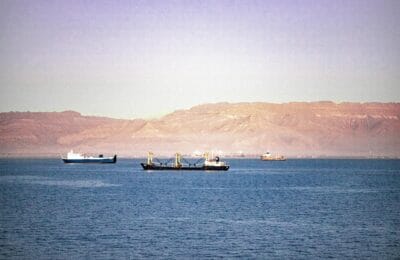
The Houthi militia in Yemen resumed attacks on commercial shipping in the Red Sea on March 6, 2026 — two days after the war opened — and has continued at a steady tempo. The pre-war reduction in Houthi activity that followed the late-2024 Saudi-Iran rapprochement has been completely reversed. As of late April, the Bab el-Mandeb chokepoint is operationally closed for most major Western and Israeli-linked carriers including Maersk, MSC, Hapag-Lloyd, ZIM, and Evergreen. Suez Canal transit volumes are down approximately 65 percent versus the pre-war baseline.
The Houthi inventory has been replenished from Iranian stocks throughout the war. Coalition naval and air operations including US Carrier Strike Group Three operations from the Arabian Sea have struck Houthi launch sites in Yemen at a steady rhythm but have not eliminated the threat. Tanker insurance rates for Red Sea transits have risen to a 1.5 to 2.5 percent of hull-value premium, multiples of the pre-war baseline. The combined Hormuz and Bab el-Mandeb disruption is the most consequential simultaneous chokepoint stress in the post-1973 oil market history. Our running Hormuz oil flow collapse update tracks the daily tanker-tracking and pricing implications.
The Carrier Repositioning and US Force Posture
The US Navy has concentrated more carrier battle groups in the broader Middle East theatre than at any time since the 1991 Gulf War. The USS Gerald R. Ford holds in the Eastern Mediterranean basin off the Lebanese and Syrian coast, providing strike capacity against Hezbollah targets and protective coverage for Israeli commercial shipping. The USS Dwight D. Eisenhower remains in the Arabian Sea covering Houthi targets and providing deterrence pressure against Iranian moves toward Hormuz. The USS Theodore Roosevelt is in transit from the Pacific to relieve the Eisenhower if the operation extends.
The cost of carrier operations is non-trivial. Open-source estimates compiled by CNBC and the FT defence desk put US carrier-strike-group operating costs at approximately $3 million per day per group, before factoring in munitions expenditure. The B-2 sortie cost from Diego Garcia runs at approximately $130,000 per flight hour. Cumulative US operational costs since March 4 are estimated at $6.5 to $8 billion through April 25, with another $4 to $5 billion in munitions including the GBU-57s, JASSM cruise missiles, and the air-launched precision-strike missile family used against hardened targets.
Israeli operating costs have also been substantial. The IDF’s per-day operating cost during high-tempo operations runs at roughly $700 million according to Bank of Israel estimates, with cumulative direct costs since March 4 approaching $35 billion. The Israeli treasury has expanded the war-financing facility three times since early March. Reconstruction costs in northern Israel are estimated at $2 to $3 billion across damaged infrastructure, residential blocks, and industrial sites including the Ramat David air base and the Kishon port complex.
The Iranian Nuclear Programme: What Got Hit, What Survived
The pre-war Iranian nuclear programme was operating at the highest enrichment level in its history. Iran was producing uranium hexafluoride enriched to 60 percent purity at the Natanz Fuel Enrichment Plant and the Fordow Fuel Enrichment Plant, with a stockpile of approximately 320 kilograms of 60 percent material as of February 2026 IAEA reporting. The breakout time — the period required to produce enough weapons-grade uranium for a single nuclear device — was assessed at one to two weeks at the start of the war.
The coalition strike campaign has heavily damaged surface enrichment infrastructure. Natanz’s above-ground halls have been struck six times and are largely non-functional. The Esfahan uranium-conversion facility has been hit twice and is operating at significantly reduced capacity. The Arak heavy-water reactor complex has been struck. The breakout assessment has lengthened to at least six months according to leaked IAEA staff analysis reported by the Financial Times and confirmed by Reuters.
The hardening question is what determines the medium-term trajectory. Fordow’s deeply buried enrichment hall — built into the Zagros Mountains south of Qom and protected by approximately 80 metres of rock overburden — has been struck by GBU-57 Massive Ordnance Penetrators on at least three occasions. Open-source assessment of the surface entry damage suggests significant penetration but does not confirm interior destruction. The Pickaxe Mountain complex south of Natanz, a newer facility under deeper rock cover, has been struck once and the strike assessment remains classified. If Fordow and Pickaxe Mountain remain functional, Iran retains the option of a hardened sprint to weapons-grade material once the kinetic phase ends. If both have been destroyed, the nuclear timeline lengthens substantially.
IAEA inspections were suspended on March 14, 2026 when Tehran ordered inspectors out following a strike that the Iranian foreign ministry alleged had been informed by IAEA-collected facility data. The agency rejects the allegation. The inspections suspension means external visibility into the surviving Iranian programme is at its lowest level since the 2002 Natanz revelations.
The Diplomatic State: Trump, Tehran, and the Powers
The Trump administration’s posture has been steady through the eight weeks. The President has framed the war as a “necessary correction” to two decades of failed Iran policy and has rejected calls for restraint from European leaders, the UN Secretary-General, and several regional capitals. Senior officials including the Secretary of Defense and the National Security Advisor have publicly endorsed the strike campaign and rejected proposals for a unilateral US pause. Republican congressional support is broad; Democratic opposition is concentrated on the war-financing question rather than the operational logic.
Iranian Supreme Leader Ayatollah Ali Khamenei has appeared in three public broadcasts since the war began, framing the conflict as a defensive struggle against US-Israeli aggression and pledging continued resistance. President Masoud Pezeshkian has been more visible in international media, signalling potential interest in a negotiated framework while maintaining that Iran will not capitulate on enrichment rights. The internal Iranian political balance between the reformist Pezeshkian wing and the IRGC-aligned hardliners has tilted toward the hardliners under wartime conditions.
China’s response has been rhetorical only. Beijing has condemned the US-Israeli campaign at the UN Security Council, voted against authorising language proposed by Washington, and continued buying Iranian crude where the maritime situation permits. China has not provided weapons or systematic financial support beyond the existing oil offtake. The strategic value to Beijing of US bandwidth being consumed in the Middle East is substantial; direct intervention is not. Russia has been similarly limited, focused on its own ongoing Ukraine commitments and unable to redeploy meaningful resources.
Saudi Arabia has officially condemned the war and called for de-escalation. The private Saudi position, widely understood across Gulf diplomatic circles and reported by Al Jazeera and the FT, is more permissive of an Iran weakened by US-Israeli action. The UAE has taken visible strategic distance from Saudi Arabia following its OPEC exit announcement on April 28, but on the Iran question the two governments are operationally aligned. Egypt and Jordan are pressing for ceasefire on humanitarian and economic grounds; both economies are taking severe damage from Suez and Aqaba volume disruption.
The Oil Shock: Brent $99 to $117 in Sixty Days
The oil-market impact has been the cleanest measurable consequence of the war. Brent crude opened March 2026 at $99.20 per barrel and closed Tuesday April 28 at $117.40, an 18 percent rise concentrated in the days surrounding major escalations. WTI tracked similarly, moving from $94.10 to $112.30 over the same window. The Brent-Dubai differential has narrowed to less than $0.50 as Asian buyers compete for the diminishing pool of Hormuz-routed Saudi and UAE barrels. Our running coverage of Iranian oil-export sanctions details the parallel collapse of Iranian crude flows under wartime conditions.
Asian premiums for non-Hormuz crude have widened sharply. South Korean, Japanese, and Indian refineries are paying $4 to $7 per barrel above the Brent-equivalent benchmark for Saudi crude moving through the East-West pipeline to Yanbu and for UAE crude moving through the Habshan-Fujairah bypass. The Asian premium is now structurally embedded in the term-contract framework and is unlikely to disappear quickly even if Hormuz reopens. Gold has rallied 18 percent to above $3,420 per ounce in safe-haven flow. The dollar index has gained 1.8 percent against a basket of major currencies. The US Strategic Petroleum Reserve has been drawn down by approximately 12 million barrels in coordinated releases since March 8.
The forward-curve picture is informative. The June 2026 Brent contract trades at $117 with the December 2026 contract at $108 — a 9 percent backwardation that signals the market expects supply normalisation later in the year. The December 2027 contract trades at $94, well below current levels but well above the pre-war curve. The market is pricing a partial but durable Middle East risk premium even after kinetic operations end. Goldman Sachs has lifted its Brent target to $125 with a 30 percent probability of $140; JPMorgan holds at $115 with $135 upside; Citi has $120 base. The CNBC and Bloomberg consensus weekly polls now run with a $116 to $122 target range.
The GCC Air Defence Question
The Iranian missile-and-drone capability has put Gulf Cooperation Council air defences under sustained pressure for the first time in the alliance’s history. Saudi Arabia and the UAE have absorbed multiple Iranian drone attacks targeting Saudi Aramco facilities at Abqaiq and Khurais and ADNOC infrastructure at Ruwais. The Patriot, THAAD, and indigenous Sky Sabre systems have intercepted the bulk of incoming threats but have not been hermetic. Our analysis of the Iranian missile threat to GCC air defence walks through the specific intercept ratios and the implications for Gulf-state procurement programmes.
Peace Talks: Oman Mediation Stalled
Oman has hosted a quiet mediation track in Muscat throughout the war, leveraging its long-standing position as the discreet channel between Washington and Tehran. The talks have been continuous but stalled. As of mid-April, four rounds have been held with no substantive progress on either kinetic ceasefire or longer-term nuclear framework. Iranian negotiators reject the US precondition of immediate enrichment halt; US negotiators reject the Iranian precondition of strike campaign cessation as a condition for serious negotiation.
The diplomatic geometry around the talks has become more complex since UAE’s announcement on April 28 of its OPEC departure. The strategic distance now visible between Riyadh and Abu Dhabi reduces the coherence of Gulf input into any negotiating framework. Egyptian and Jordanian envoys have made clear they will support any ceasefire that the US accepts; Qatar has been visible at the Doha-hosted shuttle diplomacy track. The Trump administration’s appetite for a partial ceasefire that pauses kinetic operations without resolving the nuclear question is unclear; Israeli Prime Minister Netanyahu’s government has publicly opposed any framework that does not include verified destruction of Fordow and Pickaxe Mountain.
Scenario Analysis: Bear, Base, Bull
Bear scenario (35 percent probability). The war extends six or more additional months with no ceasefire. Iran sustains missile salvos at the current tempo, Hezbollah remains active on the northern front, Houthi operations continue to disrupt Red Sea shipping. Brent drifts to the $120-135 range. Gold above $3,600. US strategic petroleum reserve falls below 350 million barrels. A second American carrier-strike-group rotation becomes necessary. Regional civilian casualties pass 5,000.
Base case (45 percent probability). A limited ceasefire is reached in the third quarter of 2026, mediated through Oman with Egyptian and Qatari support. The framework pauses kinetic operations without resolving the nuclear question. IAEA inspections resume in a limited form. Hormuz traffic recovers to roughly 60 percent of pre-war volumes by year-end. Brent settles in the $95 to $105 range. Gold drops back to the $3,100s. Reconstruction begins in Lebanon, northern Israel, and the strike-affected Iranian provinces.
Bull scenario (20 percent probability). A comprehensive deal is negotiated in the fourth quarter of 2026 combining nuclear restrictions with sanctions relief, building on a JCPOA-plus framework. IAEA inspections resume in their full pre-war scope. Hormuz traffic returns to pre-war volumes. Brent settles in the $80 to $90 range. The Iranian nuclear programme accepts capped enrichment and intrusive verification. The path to this scenario requires both Iranian leadership change in posture and a shift in Trump-administration calculus that current messaging does not support.
Timeline Projection: Q2 to Q4 2026
Second quarter 2026 (May to June). Continued kinetic operations. Oil-price pressure remains the binding constraint on the global economy. Inflation pass-through to consumer prices begins to show in May and June US and European CPI prints. Equity volatility remains elevated. No political progress is the base expectation. The OPEC+ ministerial meeting in early May becomes the critical pricing event; the UAE departure changes the institutional structure of the response.
Third quarter 2026 (July to September). Economic pain forces talks. The combination of $115 to $130 Brent, deteriorating European industrial output, and accelerating Asian inflation creates pressure on all major capitals to push for a ceasefire. The Oman mediation track gains traction. A limited cessation framework becomes plausible by August or September. Brent peaks and begins moderating.
Fourth quarter 2026 (October to December). Possible interim deal. The political calendar in the US (mid-term posture), Israel (coalition stability questions), and Iran (succession planning under pressure) all create incentives toward an interim arrangement. The deal probably falls short of full nuclear resolution but freezes the kinetic phase and allows reconstruction. Brent normalises toward the $90s. The strategic damage to OPEC’s institutional architecture, Iran’s nuclear timeline, Hezbollah’s operational base, and the Strait of Hormuz traffic structure remains for years.
Bottom Line
The Iran war as of April 28, 2026 is the most consequential military operation in the Middle East since the 2003 invasion of Iraq and the most consequential oil-market event since the 1973 embargo. Eight weeks in, kinetic operations continue at high tempo. Iranian nuclear infrastructure has been pushed back roughly six months but the deeply buried sites are an open question. Iran’s missile inventory is degraded but not exhausted. Hezbollah is wounded but functional. The Hormuz chokepoint is effectively closed. Brent is at $117 and trending higher. Peace talks are stalled. The bear case has a 35 percent probability of running into the third quarter and beyond. We are tracking each cable, each missile salvo, each bombing assessment as it lands. The shape of the post-war Middle East is being written this month, and the writing is not finished.
Reporting by The Middle East Insider editorial desk from Beirut, Tel Aviv, and Riyadh. Sources: Reuters, Bloomberg, Wall Street Journal, Financial Times, Al Jazeera, CNBC, U.S. Energy Information Administration, IAEA staff briefings, World Bank preliminary assessments, UN OCHA tracking. Casualty figures contested and updated continuously. Updated April 28, 2026 23:15 GST.