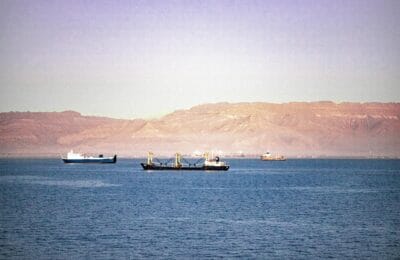
The Iran-Israel war that broke out in March 2026 and the partial closure of the Strait of Hormuz have done what nine years of cyclical wobbles in Dubai property never quite managed: pushed several developer sukuk into distressed-debt territory. As of late April 2026 the most-watched dollar issues from Damac Real Estate are bid in the high seventies, the legacy Drake & Scull paper is still sitting in workout limbo, and even names that the consensus had treated as bullet-proof — Sobha, Azizi — are seeing their secondary spreads widen by 200-400 basis points. This is a holder’s guide to the situation as it stands: what is actually distressed, what is wide but money-good, what the recovery math looks like, and what to do if you are sitting on a position that is suddenly down twenty points.
Distressed in fixed-income parlance has a technical definition. A bond or sukuk is generally considered distressed when it trades below 80 cents on the dollar in cash-price terms, or when its option-adjusted spread is more than 1,000 basis points wider than comparable-tenor risk-free benchmarks. The category exists because at those levels the price is no longer driven by interest-rate or reinvestment dynamics — it is driven by recovery expectations. In other words, the market is no longer pricing the next coupon. It is pricing how much you get back if there is no next coupon. Reaching that threshold does not mean default is imminent. It means the market has stopped extending the issuer the benefit of the doubt.
The distressed Dubai property sukuk universe in Q2 2026
Damac Real Estate USD sukuk, $500 million, 2027 maturity. This is the highest-profile name on the watch list. The issue was placed in 2022 at a 6.25% profit rate when Damac was still privately held and the Hussain Sajwani family had just taken the parent group off the Dubai exchange. As of late April the bid is 76-78, depending on the dealer, with a yield-to-worst north of 18%. The trigger for the slide was a sequence: weaker-than-expected Q4 2025 sales velocity, the Iran war suspending tourism-driven off-plan demand from non-GCC buyers, and a refinancing window that is starting to look uncomfortable given Damac’s $1.8 billion of consolidated property-development debt and the active 35,000-unit pipeline.

Drake & Scull International sukuk, defaulted 2018, ongoing restructuring. This is the legacy name. DSI is a contractor not a developer in the strict sense, but its sukuk is widely held by GCC fixed-income funds with property-sector exposure. The capital restructuring has been grinding through the courts since 2019. As of April 2026 holders have received cents-on-the-dollar in interim distributions and the tail expectation is for total recovery in the 25-40 cent range, which is roughly where the paper has been bid for the last three years. Not really actively trading; mostly held by holdouts and distressed funds.
Limitless World sukuk, legacy distressed. The Nakheel-related entity that was carved out during the 2009-11 restructurings still has paper outstanding, mostly in the hands of funds and holdouts. Bids in the 60s. Genuinely illiquid. Mentioned for completeness rather than as a tradable opportunity.
Emaar Properties USD sukuk, multiple tenors, 2027-2031. Investment grade, not distressed. The 2031 USD sukuk is bid 92-93. The shorter 2027 paper is closer to 96-97. Spreads have widened by 60-90 basis points since the war started, but the credit is solidly money-good. Emaar’s land bank, recurring rental income from the Dubai Mall and its other commercial assets, and the implicit Investment Corporation of Dubai backing put it in a different universe from the levered private developers. We mention it here so holders do not confuse a wider-trading IG sukuk with a distressed name.
Aldar Properties USD sukuk. Abu Dhabi based, government-linked, currently trading 94-96 across the curve. Aldar benefits from the Abu Dhabi sovereign-credit umbrella, the Mubadala connection, and a more diversified portfolio of recurring-revenue assets. Not distressed. Holders should not panic.
Mashreq Sukuk and DIFC infrastructure sukuk. These are bank and infrastructure issues with property-sector exposure rather than pure-play developer paper. Spreads have moved but credit quality is unchanged. Bloomberg’s GCC fixed-income desk noted in mid-April that the broader IG sukuk index has lost roughly two points on price but is recovering as buyers step in around the 95 handle.
Why now: the war, tourism, and developer cash flow
Three independent things are happening at once. First, the Hormuz disruption. Even though the strait has not been fully closed for any sustained period, shipping insurance premiums and tanker rates have spiked enough that GCC tourism has been dented. Reuters reported in early April that Dubai Q1 2026 tourist arrivals are down by approximately 25% on the first quarter of 2025, with the steepest drops in long-haul European, South Asian, and Russian visitors. That tourism flow is a significant part of off-plan demand. When the prospective Russian or Indian buyer cancels the trip, they do not buy the apartment.
Second, transaction volume. Dubai Land Department data for Q1 2026 shows residential transactions down approximately 18% on Q1 2025, and ready-property transactions down a similar amount. Off-plan sales are off more sharply because that is where the speculative end-buyer flow concentrates. Volume falls before prices, and we are still in the volume-fall phase. Headline price indices have softened by 3-5% but that understates the picture for the sub-segments where the levered developers have the largest exposure.
Third, developer cash flow. Off-plan developers in Dubai work on staged-payment models. Buyers pay 10-30% on contract and the rest in installments tied to construction milestones. When the launch flow slows, the entire forward cash-flow plan compresses. For a leveraged developer with $500M-$2B of construction-linked debt and a 35,000-unit pipeline, even six months of weaker sales translates directly into a refinancing-risk question. That is what the market is pricing.
Layer on top of this the high oil price — Brent is averaging $103 per barrel for April — and you would think the GCC overall should be flush. It is. But the GCC sovereign-balance-sheet strength does not flow through to the highly-levered private developers. ADNOC and Aramco are minting cash; Damac and Sobha and Azizi are managing through.
Damac specifically: the credit picture
Damac is the name that matters most for this article because it is the only large, actively-trading distressed Dubai property sukuk in the universe right now. The credit picture is more nuanced than the bid suggests.
The parent entity, Damac Properties Dubai Co. PJSC, was taken private in 2022 at AED 1.36 per share. The Sajwani family controls roughly 95% of the company. Privatisation removed the exchange-disclosure requirement, which means investors are working with reduced information. What is public — the sukuk-level disclosure, the filings via Nasdaq Dubai for the listed paper, the Moody’s and Fitch periodic reviews — paints a picture of a developer carrying $1.8 billion of consolidated property-development debt against a 35,000-unit forward pipeline, of which roughly 60% is sold and 40% remains to be marketed. Sales-velocity slowdown therefore directly affects the unsold tail.
The 2027 sukuk maturity is the immediate question. With approximately fifteen months until maturity and the current bid in the high seventies, the market is pricing roughly a 25% probability of restructuring or maturity extension, with recovery expectations in the 75-90 cent range if a workout becomes necessary. That is a serious price for a real-asset-backed instrument with a sponsor that has historically supported its issuance. The FT’s GCC credit desk noted in mid-April that buyers are starting to nibble in the 76-78 range on the thesis that a consensual extension at par or near-par is the more likely outcome than a hair-cut restructuring.
Our view is that the high-seventies price assumes more downside than the asset cover justifies. Damac’s land bank alone — large, contiguous, in good Dubai locations — provides meaningful liquidation cover. The asset-backed nature of the sukuk structure means holders have a theoretical claim on the underlying real-asset pool, not just an unsecured corporate IOU. For a holder who can stomach mark-to-market volatility for twelve to eighteen months, the carry is attractive at these levels. For a holder who cannot, the price gap is a problem.
Recovery math: what distressed sukuk historically pay back
Empirical recovery rates on distressed sukuk are limited because the universe of resolved cases is small, but the pattern from the 2009-12 Dubai workouts and the 2018-22 GCC restructurings is fairly clear. Asset-backed sukuk in jurisdictions with functioning insolvency frameworks have recovered in the 60-80 cent range in consensual restructurings. Outright defaults followed by court-managed liquidations have recovered 40-60 cents. The Drake & Scull case, which is now in its eighth year, is tracking toward 25-40 cents — but DSI is a contractor with limited tangible asset cover, not a property developer with a land bank.
The key analytical input is the asset cover ratio. For Damac, our rough estimate is that liquidation value of the underlying land bank, work-in-progress inventory, and operating real estate would cover the senior secured creditors plus the sukuk holders at approximately 70-80 cents in a stressed-but-orderly liquidation. In a fire-sale liquidation, that drops to 50-65. In a consensual restructuring with maturity extension and a coupon haircut, holders likely take a small principal loss (5-10%) but get carried at par on the new paper — so recovery is effectively 90-95 cents over a two-to-three year horizon.
The probability-weighted blend — putting 50% on consensual restructuring at 92, 30% on stress liquidation at 70, and 20% on muddle-through-to-maturity at par — gives an expected recovery of approximately 86 cents on the dollar. Against a current bid of 76-78, that is a meaningful positive expected return for an investor with the right time horizon and risk tolerance. The reason the market is not paying more is that the time horizon is uncertain (two to three years for a workout to play out) and the volatility is high.
The Dubai legal framework for distressed debt
Dubai’s insolvency framework was modernised by the UAE Federal Insolvency Law (Decree-Law 9 of 2016, with substantial amendments through 2024). The framework provides for preventive composition, restructuring, and bankruptcy procedures for commercial entities. The 2024 amendments specifically improved creditor-protection mechanisms and tightened director liability for trading-while-insolvent. For sukuk holders this is meaningful: the framework now provides a path to a court-supervised restructuring that is broadly recognisable to international fixed-income investors.
For sukuk specifically, the overlay is sharia compliance. A restructured sukuk needs sharia board sign-off on the new terms. This typically slows the process by three to six months but does not change the economic outcome. The Dubai International Arbitration Centre handles many of the cross-border disputes. The DIFC commercial court handles foreign-law sukuk (those issued under English law through Cayman SPVs, which is the standard structure for international issues). The framework is not Delaware Chapter 11, but it is a functioning system with a track record of resolving complex cases.
Cross-default and cross-acceleration provisions in the sukuk documentation are critical to read. Most international Dubai sukuk are issued through Cayman or Jersey SPVs with English-law governing documents. Holders therefore have English-law contractual rights overlaid on UAE-law operational reality. This combination has worked in past restructurings — Nakheel 2009-11, DSI 2018-onwards — though slowly.
What to do if you hold a distressed Dubai property sukuk
The decision tree for a holder depends on entry price, mark-to-market tolerance, total-portfolio context, and view on the underlying credit. Four broad strategies are available.
Hold to maturity. If you bought the Damac 2027 at par and the paper is now bid at 77, you are nominally down 23 points. If you hold to maturity and the issue pays at par, you have absorbed a temporary mark and recovered fully. The carry over the next 15 months adds back roughly 8 points of profit-rate income. So your total return from here is approximately +30 points if you simply sit. The risk is that maturity is not honoured and you end up in a workout that pays less than par. Probability-weighted, hold-to-maturity has a strong expected return for this credit. The non-financial cost is mark-to-market volatility for the next twelve to eighteen months and the ongoing emotional weight of holding a position that is in the news as distressed.
Sell at the bid and redeploy. If you bought at par and sell at 77, you take a 23-point loss. The capital you free up can be redeployed into IG sukuk at 95 or into something equity-flavoured. This is the right move if you cannot tolerate the volatility, if you need the liquidity, or if you have a high-conviction better-use for the capital. It is the wrong move if you are crystallising a loss to escape mark-to-market discomfort and the fundamentals do not support the sale price.
Add at distress. Buying more at 77 averages your cost down. If recovery is 90, you make 13 points on the new money plus the carry. Aggressive, requires a strong view, and only suitable for investors who already have appropriate diversification. Distressed-debt funds do exactly this — buy at the bottom, hold through workout, exit at recovery. Retail investors should be cautious; the trade is not a small-position-add but a deliberate concentration of risk.
Participate in a holder committee. If a restructuring becomes formal, sukuk holders typically organise into an ad hoc committee to negotiate with the issuer and its advisers. Larger holders sometimes get better information and better recovery terms. Smaller holders ride the committee’s outcome. Participation requires legal advice; the right move for a retail-sized position is usually to support the largest organised committee.
Our base-case recommendation for a typical fixed-income retail investor with a reasonable Dubai-property-sukuk position: hold the sukuk to maturity unless you have a specific liquidity need, do not add to the position, and accept the next twelve months of mark-to-market noise as the price of the existing carry-and-recovery thesis.
Sukuk versus conventional bonds in distress
The structural distinction between sukuk and conventional bonds matters more in distress than in normal markets. Sukuk are theoretically asset-backed: holders own a beneficial interest in the underlying asset pool through the SPV structure. Conventional bonds are unsecured corporate IOUs with no specific asset claim absent a security package. In a clean-sheet liquidation analysis the sukuk should rank higher, on the asset-backed argument.
In practice, the rank is more nuanced. Most international Dubai sukuk are structured such that, while there is technical asset ownership through the SPV, the SPV is bankruptcy-remote in name only — the underlying asset is typically leased back to the operating entity, the lease payments are the source of distributions, and in distress the sukuk holders find themselves negotiating alongside the conventional creditors of the operating entity rather than enjoying genuine secured-creditor status. The Nakheel 2009 workout established that international sukuk holders rank pari passu with conventional bondholders in practice, even though the legal structure suggests asset-backing.
The implication: do not assume your sukuk holding gives you a structural recovery advantage over a conventional bond of the same issuer. Plan recovery on a pari passu basis with whatever conventional debt the issuer has outstanding. The 60-80 cent recovery range is the right starting point for a Dubai property sukuk in a structured workout, in line with where conventional senior unsecured paper would land.
Scenarios for the rest of 2026
Bear case. The Iran war extends through the summer, Hormuz disruption continues, GCC tourism stays weak, oil softens from current levels (which would compress GCC sovereign cash flow), and one or more leveraged Dubai developers misses a coupon or extends a maturity unilaterally. In this scenario Damac trades down into the 60s, Sobha and Azizi paper goes into the 70s, and recovery expectations move down to 50-70 cents. Probability we assign: 25%.
Base case. The war becomes a slow burn rather than an escalation, tourism gradually recovers from the Q1 trough, transaction volume stabilises, and developers refinance their 2027-2028 maturities through a combination of consensual extensions, partial repayments, and new-money raises in early 2027. In this scenario Damac trades back up to the 85-90 range over twelve months and the broader sukuk index unwinds the recent widening. Probability: 50%.
Bull case. A ceasefire is announced, tourism rebounds, off-plan demand returns, and the Q1 transaction-volume drop reverses by H2. Damac and the other levered names rally into the low 90s. New issuance picks up. The whole episode is remembered as a six-month volatility window rather than a structural credit event. Probability: 25%.
The probability-weighted price for Damac twelve months out, using these scenarios, is approximately 84 — roughly 7 points above the current bid plus the carry. That is the mathematical case for holding. Arabian Business has covered the broader Dubai property sukuk watch for readers who want sector-specific reporting.
Specific developer credit watch list
Damac Real Estate. Watch list. Active sukuk in distressed range. See above analysis.
Sobha Realty. Watch list. No actively-traded public sukuk but private debt is widening. The credit is meaningfully levered and exposed to similar dynamics as Damac.
Azizi Developments. Watch list. Smaller, less liquid debt stack. Private credit lines are tightening but no public default.
Nakheel. State-backed via Dubai World holding. Safe. Implicit sovereign cover.
Meraas. State-backed via Dubai Holding. Safe.
Emaar Properties. Too large and too diversified to fail in the current cycle. Investment grade and trading near par. Not on watch list.
Dubai Holding (DH) sukuk. Sovereign-linked; safe. Spreads wider but money-good.
DAMAC Properties LLC (parent). Private; limited disclosure. Not a tradable position for retail.
Recovery timeline expectations
If a restructuring becomes formal, the typical timeline is: three to six months of preliminary negotiations between the issuer and an ad hoc holder committee; three to six months for term-sheet negotiation and sharia board sign-off; six to twelve months for documentation, court approval (if required), and execution. Total: twelve to twenty-four months from first weakness to executed restructured paper. Out-of-court consensual amendments — extending a maturity by two years, reducing the coupon by 100 basis points — can complete in six to twelve months. Court-driven processes can run two to three years.
For Damac specifically, if sales velocity does not recover by Q3 2026, we would expect preliminary holder discussions to begin in late 2026 ahead of the 2027 maturity, with a consensual amendment-and-extend solution executed in mid-2027. Holders would receive an extended-maturity instrument at par or near-par, possibly with a slight coupon adjustment. This is the most-likely path. The downside path — formal restructuring with a principal haircut — becomes likely only if the macro environment deteriorates further.
Practical takeaways for sukuk holders
If you hold a Dubai property sukuk that is in or near the distressed range, work through the following checklist. First, identify what tranche you actually hold — issuer, maturity, coupon, governing law. Second, identify your entry price and your tax treatment of any realised loss. Third, determine your liquidity needs over the next twelve to eighteen months — can you hold without needing to sell? Fourth, assess the issuer-specific credit using current public disclosure, recent rating-agency notes, and any commentary from your dealer’s research desk. Fifth, decide between the four strategies above (hold, sell, add, organise). Sixth, document the decision and stick to the plan unless something material changes.
The hardest part of holding distressed paper is psychological. The position is in the news, friends and colleagues will mention it, and every coupon payment will feel uncertain. Process discipline matters more than analytical sharpness in this kind of environment. Set the strategy, write it down, and execute against it.
For investors evaluating new sukuk allocations during this period, the broad-market ETF route is meaningfully safer than picking distressed names. Our retail sukuk playbook covers the ETF and sovereign-tranche routes that avoid issuer-specific concentration. For investors thinking about Dubai property exposure on the equity-and-asset side rather than the credit side, our pieces on off-plan versus ready property, Dubai mortgage financing for foreigners, and rental-yield district analysis give the underlying-market context that drives the sukuk credit.
The longer view
Distressed phases in Dubai property credit are not unprecedented. The 2008-09 episode was deeper, the 2014-16 oil-shock-driven episode was milder, and the current 2026 episode sits somewhere between. In each previous case, holders who maintained discipline, avoided forced selling, and either held to maturity or participated constructively in workouts came through with reasonable outcomes. The investors who lost most were those who panicked into selling at the bottom or took oversized concentrated positions ahead of weakness.
The structural arguments for Dubai property as an asset class — tax efficiency, durable expat demand, reasonable rule of law within the DIFC and broader Dubai legal framework, ongoing demographic and economic flow into the emirate — remain intact. What is being repriced is the leverage embedded in specific developer balance sheets, not the long-run asset class story. For sukuk holders, the work is to distinguish issuer-specific credit risk from broad-market noise, hold the names whose recovery math works, and avoid the temptation to either add aggressively into weakness or sell into panic. The next twelve to eighteen months will sort the analytically disciplined from the emotionally driven; the recovery from the current distressed levels, if it comes, will reward the former group meaningfully.
Reading sukuk pricing screens: the practical mechanics
One reason the distressed Dubai property sukuk story confuses retail readers is that the price quoted by financial press and the price actually transactable on the secondary market often differ by several points. Bloomberg and Refinitiv composite quotes are typically mid-market and assume institutional ticket sizes of $1 million or more. A retail investor calling a private bank or trying to transact through Nasdaq Dubai will see bid-offer spreads of 200-400 basis points wider than the screen, particularly for the less-liquid distressed names. So when the Damac 2027 is quoted as 77, a retail investor selling could realistically expect 75 and one buying could realistically expect 79. Dealers in this market take a meaningful spread to compensate for inventory risk on names where the next print may be five points lower or higher.
Practical implication: do not anchor your analysis to a single screen quote. Get two or three dealer indications, average them, and assume the actionable price is 50-100 basis points wider than the quote on each side. For position-sizing decisions, this matters less; for execution decisions, it matters a lot. The other practical point is settlement. Sukuk typically settle T+2 internationally and T+1 in some GCC jurisdictions. For a holder needing to raise cash quickly, this is a non-issue. For a holder unwinding a large position over several days, the settlement timing affects the realised price.
Information sources for ongoing monitoring
The most useful sources for monitoring distressed Dubai property sukuk are the rating-agency periodic reviews (Moody’s, Fitch, S&P), the issuer’s own quarterly disclosures via Nasdaq Dubai (where applicable for the listed paper), and the dealer research desks of the larger GCC banks (FAB, Emirates NBD, Mashreq, Saudi National Bank). Rating agencies typically refresh views every six months in normal markets and more frequently when a credit migrates into the watch list. Their notes are technical but they capture the financial-statement details that drive the recovery math. Dealer research is more market-aware and faster to react to changing conditions but skews toward the dealer’s own positioning. Cross-reference both.
The financial press — particularly the FT and Bloomberg GCC desks — runs the cleanest sector-wide commentary. Reuters covers headline news quickly. Arabian Business covers regional context that the international press misses. For sharia-specific structural questions, the AAOIFI website has the standards documentation that any restructuring will need to comply with. None of these substitute for reading the original sukuk documentation, which any serious holder should do at least once. The trust-deed level structure determines the recovery analysis, and dealer summaries can paper over critical legal mechanics.
The credit-default swap signal
For the largest Dubai property names with active CDS markets, the protection price gives a useful cross-check on the cash-bond bid. Damac five-year CDS has widened from approximately 250 basis points in February to roughly 580 basis points in late April. That move is sharper than the cash-bond price implies on a like-for-like basis, suggesting the protection-buyer market is pricing more downside than the cash holders are willing to absorb. Historically these gaps close — either CDS tightens back to cash, or cash widens to meet CDS. For holders deciding whether to add or trim, the CDS direction over the next four to six weeks is a useful tell. A continued CDS widening through the summer would argue for caution; a sharp CDS tightening would be a constructive signal that distressed funds are stepping in.
The CDS market is institutional only and not directly accessible to retail investors. But the data feeds through public sources and dealer commentary, and the directional information is valuable for informing cash-bond decisions. The same logic applies to options markets where they exist — the Damac equity is private and untraded, so equity-option signals are not available, but for Emaar and Aldar where listed equity exists, equity-volatility moves give a parallel readthrough on credit sentiment.
Final note on personal risk tolerance
The analytically correct answer for a typical Damac sukuk holder — hold to maturity — is not always the personally correct answer. If a position is large enough to keep you awake at night, if it is sized so that a worse-than-expected outcome would materially impair your overall portfolio, or if the underlying credit is outside your circle of competence, the right move can be to reduce exposure even at a loss. Distressed credit investing is not a forum for proving toughness; it is an exercise in matching position size to analytical conviction and risk tolerance. Holders who size correctly and hold through the noise tend to do well. Holders who size too large and force themselves to sell at the worst price tend to do badly. The arithmetic is unforgiving.