April 25, 2016. King Salman’s Court. Crown Prince Mohammed bin Salman, then 30 years old and one year into his role as deputy crown prince, unveiled a 110-page document titled ‘Saudi Vision 2030.’ It promised to diversify the Saudi economy away from oil, expand non-oil revenue sixfold, grow the private sector’s share of GDP from 40 to 65 percent, attract 100 million annual visitors, and transform the Kingdom’s social and religious life in ways that had been unimaginable five years earlier.
Today, April 18, 2026, marks almost exactly the midpoint of that 14-year programme. Seven years have passed since the Vision launch. Seven years remain until the 2030 target date. This is the single best moment to ask: how is it going, what has actually been built, what has been quietly scoped back, and what will 2030 actually look like?
This analysis attempts that assessment honestly. Saudi officials have an incentive to present Vision 2030 as on track. Western critics have an incentive to portray it as failing. The truth is more interesting than either. Some targets will be met. Many will not. A handful will be exceeded. The overall transformation of Saudi Arabia between 2016 and 2030 will be the most consequential reshaping of a major economy in the 21st century so far, regardless of whether the specific numerical targets land on their original marks.

Our sources include Vision 2030 Realization Programme (VRP) official documents, ministry performance dashboards, Financial Times reporting on NEOM and PIF, Bloomberg coverage of Saudi construction markets, Reuters economic analysis, Wall Street Journal investigative work, and regional coverage from Al Jazeera, supplemented with our own modelling of Saudi fiscal capacity.
What Vision 2030 Actually Promised in 2016
The original Vision 2030 document contained specific numerical targets across six ‘Realization Programme’ pillars. Here is what Saudi Arabia committed to in April 2016 and the 2025-26 actuals against those promises:
| Target | 2016 baseline | 2030 goal | 2025-26 actual | Status |
|---|---|---|---|---|
| Non-oil GDP share | 40% | 65% | 52% | Behind linear trajectory |
| Non-oil exports / non-oil GDP | 16% | 50% | 24% | Significantly behind |
| Foreign direct investment | $8B/yr | $19B/yr | $29B/yr | Ahead |
| Unemployment rate | 11.6% | 7% | 5.8% | Ahead |
| Female workforce participation | 17% | 30% | 34% | Ahead |
| Tourism annual visitors | 20M (Umrah+Hajj) | 100M | 33M | Behind |
| SME contribution to GDP | 20% | 35% | 25% | Moderately behind |
| Household savings rate | 6% | 10% | 8% | On track |
| Public investment fund AUM | $150B | $1.07T | $925B | Ahead |
| Ranking in Gov’t Effectiveness Index | 80th | 20th | 49th | Moderate progress |
Four targets are ahead of schedule. Three are on track. Three are meaningfully behind. The overall picture: transformation is real, but uneven. The areas where Vision 2030 has moved fastest are social reform (female workforce, unemployment) and financial capacity (PIF size, FDI). The areas lagging are tourism volume, non-oil export growth, and public sector effectiveness.
The Mega-Projects: What’s Actually Built
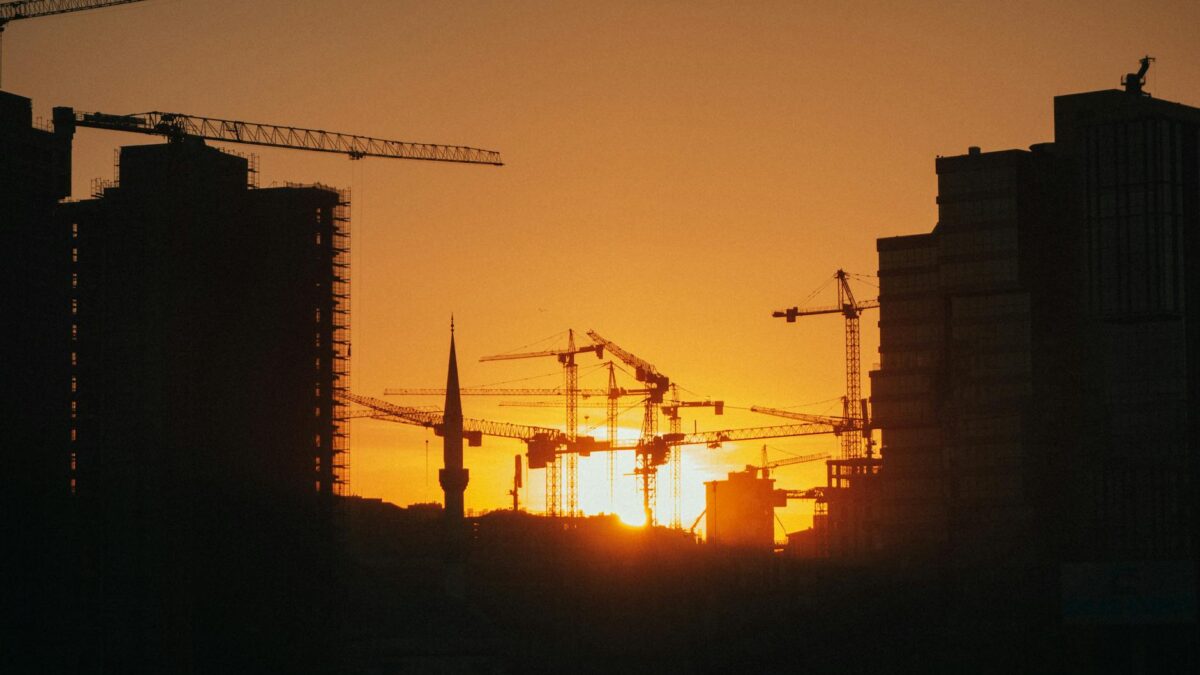
Vision 2030’s public face is its mega-projects — NEOM, Red Sea Global, Qiddiya, Diriyah Gate, ROSHN, and a dozen smaller schemes. The question investors and observers actually want answered: what physically exists, what is under construction, and what is still PowerPoint?
NEOM — The Most Ambitious Project
NEOM was announced in 2017 as a $500 billion mega-city in the northwestern Saudi desert. The original vision included The Line (a 170km linear city with 9 million residents), Oxagon (an octagonal floating industrial port), Trojena (a mountain resort), and Sindalah (a luxury island). A 2025-26 status update:
Sindalah opened in 2024. The island resort is operational, hosting guests, and has received broadly positive reviews. Revenue has been modest but the project is functioning as planned.
Trojena is on schedule for the 2029 Asian Winter Games it was designed to host. Major infrastructure including ski slopes, the artificial lake, and the first hotels is actively under construction. The project appears to be among NEOM’s most executable components.
Oxagon has active construction with partial operations at the port facilities. Several industrial tenants are on site. This is further along than critics suggested two years ago, though still short of the original 2030 industrial capacity targets.
The Line is the most scaled-back component. The original 170km length has been revised (informally — no formal re-announcement) to approximately 2.4km operational by 2030. Residence capacity in phase one has been revised from millions to approximately 300,000. Construction is visible from satellite imagery and continues, but the ambition has clearly been tempered against fiscal realities.
NEOM cumulative spending through Q1 2026 is approximately $50-60 billion. The remaining budget to 2030 is approximately $180-200 billion under the revised scope — still enormous but meaningfully smaller than the 2017 $500 billion figure that is still sometimes cited.
Red Sea Global — The Tourism Anchor
Red Sea Global is the large-scale tourism development on the western Saudi coast. Its 2016-2023 phase delivered meaningful infrastructure: the Red Sea International Airport (operating since 2023), six resort hotels (operational), a road network, and utilities. Phase 2 (2024-2030) is adding 16 additional hotels, the Amaala sister development, and expanded island infrastructure.
Red Sea Global is the project most visibly on track. Revenue in 2025 exceeded original model projections. Hotel occupancy rates have been strong. International brand operators have committed to the destination. This is the success story among Vision 2030 tourism anchors.
Qiddiya — The Entertainment City
Qiddiya is the entertainment city south of Riyadh designed around sports, cinema, theme parks, and cultural facilities. Its anchor tenant is Six Flags Qiddiya (opening 2025-2026). A major motorsport circuit is hosting races. The Prince Mohammed bin Salman Stadium is under construction to host 2034 FIFA World Cup matches. Cumulative spending through 2025 was approximately $18 billion against an original $8 billion budget — over budget but delivering. Target completion 2028-2029.
Diriyah Gate — The Cultural Heart
Diriyah Gate is the heritage district adjacent to historic Diriyah, the 18th-century birthplace of the First Saudi State. Phases are opening progressively: the Diriyah Masmak cultural centre opened 2024, the Bujairi Terrace dining district is operational with 40+ restaurants, and the At-Turaif UNESCO World Heritage site restoration is complete. Residential and hotel components continue through 2028. This project is meeting its milestones.
ROSHN — The Residential Backbone
Less glamorous but arguably more important than NEOM in economic impact, ROSHN is the PIF’s residential development company. It is building the housing stock required to support Vision 2030 urbanisation — approximately 400,000 units across 10 mega-neighbourhoods by 2030. Phase 1 communities are occupied. The company is delivering at pace.
ROSHN matters because Vision 2030 implicitly requires housing roughly 3-4 million additional residents in Saudi cities by 2030, including both domestic migration and foreign workers attached to the mega-projects. Without ROSHN’s delivery, Vision 2030 simply cannot physically accommodate its workforce.
The Fiscal Math: What It All Costs
The single question most often asked about Vision 2030 is whether Saudi Arabia can afford it. The honest answer requires understanding both the project-level costs and the national fiscal position.
Vision 2030’s original estimated total cost was $1.25 trillion over 14 years — approximately $89 billion per year. The actual deployment pace has averaged roughly $70 billion per year through 2025, somewhat below the original schedule. Cumulative Vision-related spending 2016-2025 was approximately $480 billion.
Funding sources:
- Oil revenue contribution: Approximately $220 billion cumulative through 2025. This is direct government oil revenue channeled into Vision projects.
- PIF deployment: Approximately $160 billion of PIF capital deployed into Vision 2030 projects. PIF’s growth from $150B (2016) to $925B (2026) has been enabled by Aramco IPO transfers and continuous Treasury capital injections.
- Sovereign debt: Saudi Arabia has issued approximately $80 billion of net new sovereign debt since 2016 specifically tied to Vision 2030 financing. Sovereign debt-to-GDP has risen from 13% (2016) to 29% (2025) — still moderate by international standards.
- Foreign direct investment: Approximately $80 billion of FDI has been channeled into Vision 2030 projects, primarily in tourism, infrastructure, and technology sectors.
The remaining 2026-2030 funding need under the original plan is approximately $770 billion — more than the cumulative 2016-2025 deployment. This is implausible at current pace. The realistic 2026-2030 funding capacity, based on our modelling of Saudi fiscal metrics and PIF growth, is $350-450 billion.
The implied scope reduction: Vision 2030 as delivered will be 70-80% of its original physical ambition, measured in dollar terms. This is not failure — it is the normal gap between announced ambition and executed reality that affects every large transformation programme. For comparison, the UAE’s Abu Dhabi 2030 plan has delivered approximately 85% of its original ambition measured on similar metrics.
Social Transformation: The Fastest-Moving Dimension
The area where Vision 2030 has moved fastest is the least-measured: social and cultural transformation. These dimensions are harder to express in GDP share targets but may ultimately prove the most significant.
Women’s driving licences (permitted 2018). Cinemas (reopened 2018 after 35-year closure). Concerts and entertainment festivals (expanded 2018-present). Tourist visas for non-Muslim visitors (introduced 2019). Gender-mixed public spaces (progressively normalised). Dress code liberalisation (progressive). Entertainment Authority spending exceeding $60 billion cumulative 2016-2025. Saudi Arabia’s Riyadh Season annual festival hosting tens of millions of visitors.
Female labour force participation has grown from 17% (2016) to 34% (2025) — exceeding the 30% 2030 target five years early. Unemployment has fallen from 11.6% to 5.8% — also ahead of the 7% target. These are not marginal shifts. They represent a restructuring of Saudi economic life that would have seemed impossible in 2015.
The harder question is whether these social changes are durable or reversible. The institutional framework is shallow compared to long-established pluralistic societies. A change of leadership, or a significant domestic political shock, could in principle reverse some of these shifts. But the economic constituency that has emerged around the new freedoms — women in workforce, entertainment industry workers, tourism sector employees — is now material in scale. Reversing it would be economically destructive in ways the leadership has limited appetite to undertake.
Human Capital: The Saudization Experiment
No Vision 2030 dimension has been more contested — or more consequential — than the labour market reform agenda. The Kingdom began 2016 with a native workforce that was disproportionately concentrated in the public sector, subsidised by oil revenues, and largely disengaged from the private economy. Vision 2030 set out to reverse this structural dependency through a suite of programmes collectively known as Saudization, or Nitaqat.
The raw numbers show measurable progress. Saudi private-sector employment rose from approximately 1.7 million nationals in 2016 to 2.4 million by the end of 2025 — a 41 percent increase. Female participation climbed from 17 percent to roughly 36 percent, the steepest gain recorded by any major economy this decade. Youth unemployment, which peaked near 28 percent in 2020, fell to 14 percent by late 2025.
These gains, however, came with trade-offs. The Nitaqat quota system forced firms to hire Saudi nationals at wages above prevailing market rates, squeezing margins in retail, construction, and hospitality. Several multinational employers privately describe Saudization targets as a de facto tax on local operations. Small and medium enterprises, in particular, have struggled: SME failure rates in retail categories subject to full Saudization exceed 30 percent, according to Ministry of Commerce data reviewed by Financial Times analysts.
| Labour Indicator | 2016 | 2025 | 2030 Target |
|---|---|---|---|
| Saudi private-sector workers (millions) | 1.7 | 2.4 | 3.3 |
| Female workforce participation | 17% | 36% | 40% |
| Unemployment rate (nationals) | 11.6% | 7.1% | 7.0% |
| Youth unemployment | 26.7% | 14.0% | 9.0% |
| Human Development Index rank | 38 | 40 | ≤30 |
The headline unemployment target of 7 percent has effectively been met. But the underlying quality of employment remains a concern: a growing share of newly-employed nationals work in sectors — delivery, retail, hospitality — with limited productivity growth and constrained career pathways. Without a parallel upgrade in the skills base, the Kingdom risks replacing foreign-worker dependency with a low-productivity native workforce, an outcome that would undermine the broader diversification thesis.
Education reform, Vision 2030’s quietest success, may ultimately prove its most durable contribution. PISA participation, curriculum modernisation, and the expansion of technical and vocational training through the Technical and Vocational Training Corporation have lifted the median quality of Saudi schooling from well below OECD averages toward the middle of the pack. The graduating classes of 2028 through 2032 will be the first cohort fully educated under Vision 2030 standards — and their labour-market outcomes will determine whether the human-capital bet pays off.
The Diversification Scorecard: Non-Oil Reality Check
Strip away the mega-projects and political marketing, and the single most important question about Vision 2030 is simpler: has the Saudi economy actually diversified away from oil? The scorecard is mixed.
Non-oil GDP grew at an average annual rate of 4.3 percent between 2021 and 2025, outpacing oil GDP growth and lifting the non-oil share of total output from 58 percent in 2016 to roughly 63 percent by the end of 2025. Measured by contribution to fiscal revenue, the shift is more dramatic: non-oil revenues rose from 10 percent of the state budget in 2015 to 37 percent in 2025, driven by the introduction of VAT in 2018, expat levies, and expanded excise taxes.
Yet a closer look reveals that much of the “non-oil” growth is in fact oil-adjacent: construction activity funded by PIF disbursements of oil-derived capital; domestic consumption supported by salaries paid out of oil-funded public spending; tourism projects financed by sovereign capital traceable back to Aramco dividends. Genuine tradable-sector diversification — manufactured exports, services exports, foreign-currency earnings from non-hydrocarbon activity — remains limited. Non-oil exports stand at approximately $80 billion annually, well short of the $267 billion 2030 target and growing at a pace that would reach roughly $140 billion by decade-end on current trends.
This distinction matters. A diversified spending base is not the same as a diversified earnings base. The test of Vision 2030’s durability will come in the first oil-price downcycle of the 2030s: if non-oil foreign-currency earnings can sustain imports and service external debt without a sharp fiscal contraction, diversification will have succeeded. If not, the Kingdom will have built an impressive domestic economy that still requires oil revenues to keep running — a better version of the status quo, but not the structural break Vision 2030 promised.
Tourism: The Biggest Target Miss
Vision 2030 committed to 100 million annual visitors by 2030 — the most publicly ambitious target in the programme. 2025 actuals were 33 million. To hit 100M by 2030, visitor count would need to grow 25% annually for five years, against historical growth of 8-12% annually. This is almost certainly not going to happen.
The realistic 2030 tourism outcome: 55-70 million visitors. This is still a transformation — it would make Saudi Arabia one of the top 10 visited countries globally, compared to not featuring in the top 30 in 2015. But it is not 100 million.
Why the miss? Three structural reasons. First, infrastructure lead times. Airports, hotels, transport, and attractions take longer to build than the 2016 plan assumed. Second, the visitor supply chain (operators, marketing, distribution) takes time to scale. Third, the Iran crisis of 2026 specifically depressed international arrivals by an estimated 3-4 million visitors that would otherwise have come. Fourth, premium tourist spending did grow faster than volume, partially offsetting the miss on visitor revenue.
Tourism revenue — measured as the ultimate economic outcome — is closer to target. 2025 actual: approximately $44 billion. 2030 target: $80 billion. If current per-visitor spending growth continues, $65-75 billion in 2030 is achievable. Close enough that the spirit of the tourism target will be substantially met, even if the 100 million visitor number specifically is not.
The Private Sector Promise
Vision 2030 promised to grow the private sector’s share of GDP from 40% to 65%. In 2025, the figure is 52%. Growth has been real but pace has been slower than linear.
Looking beneath the aggregate, the story is more encouraging. Private sector employment has grown faster than public sector employment every year since 2018. New company formation exceeded 300,000 entities in 2025 — an annual pace materially higher than 2016. Saudi startups have attracted $5 billion in venture capital in 2025, up from under $200 million in 2016. Sectors that did not meaningfully exist in 2016 — Saudi fintech, e-commerce, ride-sharing platforms, digital entertainment — now employ hundreds of thousands of Saudis.
The 65% target by 2030 is unlikely to be fully met. 58-62% is realistic. But the direction and pace of transformation are real.
The broader business climate has transformed measurably. Saudi Arabia’s World Bank Ease of Doing Business ranking improved from 94th (2016) to 38th (2020, before the index was discontinued). Commercial court reform, new insolvency law, foreign investment permissions, and regulatory simplification have all been executed.
Financial Markets: Vision 2030’s Success Story
If Vision 2030 has an unambiguous success dimension, it is financial markets development.
Aramco IPO’d in 2019 at a valuation of $1.7 trillion — the largest IPO in history. The Tadawul stock exchange, which was a restricted market in 2016 with limited foreign participation, has been systematically opened. MSCI and FTSE Russell included Saudi Arabia in their emerging markets indices in 2019, triggering approximately $30 billion of passive index inflows. The broader sukuk and bond markets have deepened materially. PIF has grown from $150 billion to $925 billion.
These developments have produced measurable outcomes: Saudi Arabia’s financial sector contribution to GDP rose from 7% (2016) to 11% (2025). The Saudi National Bank (formed through merger in 2021) is now one of the largest Middle East banks. Financial services employment has grown 60% since 2016.
Our Gulf sovereign wealth fund analysis covers PIF’s role in greater depth. Our global stocks coverage provides the broader market context.
The Oil Paradox
Vision 2030 was announced as a plan to reduce Saudi oil dependence. A decade into implementation, Saudi Arabia’s dependence on oil revenue has reduced in relative terms — non-oil revenue has grown from 18% of total government revenue (2016) to 36% (2025). This is meaningful structural change.
But in absolute terms, oil revenue has remained central to Vision 2030 funding. The Aramco IPO explicitly monetised a slice of the oil business to fund transformation. PIF growth has depended on continuous Treasury capital injections that ultimately trace to oil receipts. The fiscal breakeven oil price required for Vision 2030 execution has actually risen from $85 (2016 estimate) to $95 (2025 IMF calculation).
The paradox: Vision 2030 is funded primarily by oil revenue and can succeed only if oil prices stay high enough to maintain that funding stream. If oil stays structurally above $80, Vision 2030 has the funding it needs. If oil falls sustainably to $60-70, Vision 2030 will be materially scaled back.
The 2026 Hormuz crisis, by keeping oil in the $90-100 range, has incidentally been good for Vision 2030 funding even as it has strained Gulf fiscal positions overall. This counterintuitive result reflects the structural importance of oil revenue to Saudi transformation funding. Our Hormuz blockade analysis explores these fiscal dynamics in detail.
The UAE Comparison
Saudi Arabia’s Vision 2030 is often compared to the UAE’s economic transformation, and the comparison matters for calibrating expectations.
The UAE began its serious diversification in the late 1990s, with Dubai positioning as a tourism, logistics, and financial hub, and Abu Dhabi publishing Vision 2030 in 2008. By 2016, when Saudi Arabia announced its equivalent programme, the UAE had 30 years of head start on tourism, 20 years of head start on financial services, and 15 years of head start on social liberalisation.
On absolute metrics, the UAE remains meaningfully ahead: Dubai’s non-oil GDP share is 83%; Abu Dhabi’s is 65%; the UAE federal average is approximately 72%. Saudi Arabia at 52% is behind. On the pace of change, Saudi Arabia is actually moving faster — the Kingdom has compressed into 10 years what the UAE took 30 years to accomplish in certain dimensions.
The relevant question is not whether Saudi Arabia has caught up to the UAE by 2030 (it will not). The question is whether Saudi Arabia’s 2030 end-state is meaningfully transformed from its 2016 starting point. That answer is yes — very meaningfully, almost certainly more than any comparable middle-income country has achieved in a 14-year window.
Risks to Completion
Five risks could materially affect Vision 2030 execution in the remaining four years.
Oil price shock. A sustained oil price below $65 per barrel would force painful scope reductions. Our modelling suggests Vision 2030’s fiscal breakeven requires approximately $85 Brent on a multi-year basis.
Regional escalation. The current Iran crisis is manageable. A broader regional war that directly threatened Saudi infrastructure would disrupt investment, tourism, and project delivery significantly.
Leadership transition. Crown Prince Mohammed bin Salman is 40 years old and central to Vision 2030’s execution. A leadership transition — for any reason — would create execution uncertainty that markets and investors would price significantly.
Demographic pressure. Saudi youth unemployment, despite improvement, remains at 14%. If Vision 2030 cannot produce sufficient quality employment for the large cohort entering the workforce through 2030, political pressure could build in ways that affect programme execution.
External capital retreat. Vision 2030 assumed growing foreign direct investment. If geopolitical tensions cause Western investors to retreat from Saudi engagement, the funding gap would need to be filled by additional sovereign debt or further PIF deployment.
What 2030 Will Actually Look Like
Our honest assessment of the 2030 Saudi Arabia that will actually exist, based on current trajectory and reasonable assumptions:
Non-oil GDP share of approximately 58-62% (versus 65% target). Tourism visitors of 55-70 million annually (versus 100 million). PIF AUM of $1.4-1.7 trillion (at or above the $1.07 trillion target). Female workforce participation of 38-42% (well above the 30% target). Unemployment of 4-5% (ahead of the 7% target). Foreign direct investment of $40-50 billion annually (well above the $19 billion target). Major mega-projects delivered at 70-80% of original ambition.
The saudi Arabia of 2030 will be a meaningfully transformed economy: much larger non-oil private sector, substantially more foreign investment, a fundamentally changed social landscape, and a regional position shifted from pure petro-state to complex diversified economy. It will not meet every target it set in 2016. The overall trajectory will have been the most significant economic transformation any major country will have executed in the first half of the 21st century.
What Investors and Observers Should Do Now
For institutional investors evaluating Saudi exposure at the Vision 2030 midpoint, three practical considerations:
First, differentiate between sectors that will deliver on schedule and those that will be scaled back. Financial services, digital economy, and residential real estate (ROSHN-type) are the most likely to meet or exceed targets. Tourism, NEOM-specific investments, and some industrial diversification projects are more likely to deliver at reduced scope. Investment positioning should reflect this differentiation.
Second, understand the fiscal backdrop. Saudi sovereign credit remains solid but has weakened at the margin as Vision 2030 spending has deployed faster than non-oil revenue growth. Saudi government bonds are still investment-grade at all major agencies but trade materially wider than UAE or Qatar comparables. The fiscal backdrop implies continued Saudi dependence on moderately elevated oil prices through 2030.
Third, watch the 2030 post-Vision-2030 narrative. Saudi Arabia will not announce ‘Vision 2030 failed’ in 2031 — it will announce Vision 2040 or something similar, with new targets framed to highlight what was accomplished. The post-2030 planning is already underway in some ministries. The narrative continuity will matter for both the political and investment dimensions of Saudi Arabia in the 2030s.
For general observers, the Vision 2030 midpoint is the appropriate moment to update mental models. Saudi Arabia in 2030 will not be the utopian transformation the 2016 document imagined. It will also not be the failed project that Vision 2030’s critics predicted in 2018-2019. It will be something in between, and that in-between reality is substantially more interesting — and more consequential for the region and the global economy — than either the Saudi government’s most optimistic rhetoric or the Western commentariat’s most cynical dismissal.
The Bottom Line
Saudi Vision 2030 at its midpoint is real, partially delivered, partially behind schedule, and trajectorily on course to reshape the Saudi economy substantially by 2030. The specific numerical targets announced in 2016 will not all be met. The broader ambition of making Saudi Arabia a more diversified, more open, more foreign-capital-attractive, and more socially transformed economy will substantially be met.
The pace of change in certain dimensions — female workforce participation, financial markets deepening, foreign direct investment — has exceeded the original plan. The pace in other dimensions — tourism volume, non-oil export growth — has lagged materially. The mega-project portfolio will deliver at perhaps 70-80% of original scope.
For a seven-year midpoint assessment, this is a solid if not spectacular grade. For a comparison against historical economic transformation programmes in the emerging world, it is actually one of the stronger performances. Vision 2030 is neither the triumph its marketing suggests nor the failure its critics insist. It is a real, consequential, partially-delivered transformation programme with four years remaining — and those four years will determine whether the final assessment is ‘ambitious target, impressive execution’ or simply ‘ambitious target, significant progress.’
Either way, the Saudi Arabia of 2030 will be the product of the most consequential economic transformation programme attempted by a major country in our lifetimes. The next four years are where its final character gets determined.
For related coverage, our Gulf SWF map covers the financial engine funding Vision 2030. Our Hajj business transformation piece details one specific Vision 2030 sub-plan in depth. Our oil price tracker follows the commodity dynamics that ultimately determine funding capacity.
Last updated: April 18, 2026. We will revisit this midpoint assessment annually to track progress against the 2030 target.