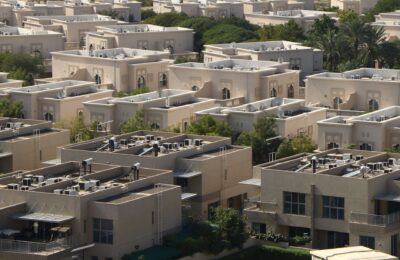
The Direct Answer: The 3 Best Middle East Countries to Retire in 2026
The best Middle East countries to retire in 2026 are the United Arab Emirates (Golden Visa for retirees age 55 and above), Oman (5-year retiree visa with a $3,500/month verifiable income requirement), and Lebanon for retirees prioritising Mediterranean lifestyle at a lower cost. For each profile – tax efficiency, healthcare excellence, Mediterranean charm, or cultural richness – the region offers a different best fit. This guide ranks 7 countries on visa rules, monthly cost of living, healthcare quality, climate, English-speaking access, expat community size, banking access for foreign retirees, property ownership rules, and benchmarks each against the popular global alternatives of Portugal and Mexico.
Why the Middle East Is Emerging as a Retirement Destination
For decades, retirement migration meant Florida, Costa del Sol, Algarve or Lake Chapala. The Middle East was associated with oil contracts, not retirement. That changed in the 2020s as Gulf governments launched explicit retiree visa programs to capture the growing global retired population, projected by the United Nations to reach 1.5 billion people aged 65+ by 2050.
Three structural factors made the region attractive. First, the Gulf’s zero personal income tax regime means pensions arrive untaxed at the destination. Second, infrastructure and healthcare quality in the UAE and Saudi Arabia jumped to OECD levels during Vision 2030. Third, direct flights now connect Dubai to 240+ cities globally, making it easier for retirees to visit family in Europe, Asia, Africa and the Americas than from many traditional retirement spots.

Add a 365-day-a-year sun belt, low crime rates, and large English-speaking communities, and the Gulf has built a credible retirement value proposition. Lebanon, Jordan and Cyprus add lower-cost Mediterranean alternatives. Together they make the region one of the world’s most underrated retirement frontiers.
1. United Arab Emirates: The Premium Choice
Visa: The Retirement Golden Visa
The UAE introduced its 5-year renewable Retirement Golden Visa in 2018 and expanded it in 2022. Eligibility requires the applicant to be 55 years or older and meet ONE of three financial conditions: monthly income of AED 20,000 ($5,445) from a verifiable pension or investment, savings of AED 1 million ($272,000) untouched for at least 3 years, or owning real estate in the UAE worth at least AED 1 million. The visa allows sponsoring a spouse and unmarried dependent children, has no employment requirement, and is renewable indefinitely so long as eligibility is maintained.
Cost of Living for Retirees
A retired couple in Dubai’s mid-range areas (Discovery Gardens, Mirdif, Jumeirah Village Circle) needs $4,500-6,500 per month after the initial property purchase or with rent. Breakdown: rent for a 2-bedroom $2,000-3,500, groceries $700-1,000, utilities (DEWA, internet, phone) $250-400, transport $200-400 (or $1,200 if leasing a car), eating out $400-700, health insurance $200-400, entertainment $300-500. Sharjah and Ajman cut that by 25-35% with a 30-minute commute to Dubai. Abu Dhabi sits roughly 15% below Dubai. Ras Al Khaimah offers the cheapest Gulf retirement.
Healthcare
The UAE has the region’s best healthcare. Cleveland Clinic Abu Dhabi is the only Cleveland Clinic outside Ohio. American Hospital Dubai, Mediclinic City Hospital, Mafraq, Sheikh Shakhbout Medical City and Saudi German Hospital provide international-standard care. Insurance is mandatory for residents. A 60-year-old retiree couple pays $2,500-5,500 per year for comprehensive coverage including chronic-disease management.
Why Retirees Choose UAE
Zero personal income tax. Zero pension tax. Zero inheritance tax. Stable AED pegged to USD. World-class airport connectivity (Dubai International handled 92 million passengers in 2024). Year-round warm climate (28-42 degrees C summer, 14-25 winter). Large English-speaking expat community (88% of UAE residents are non-Emirati). Excellent road, water and digital infrastructure. Safety: UAE ranked 4th globally in the 2025 Numbeo Safety Index.
Drawbacks
Summer heat (June-September) requires retreating to air conditioning or international travel. Cost of healthcare insurance rises sharply after 70. Rental contracts are typically 1-year cheques requiring substantial upfront capital. The retirement Golden Visa requires income verification annually.
2. Oman: The Hidden Mediterranean of the Gulf
Visa: 5-Year Retiree Residence
Oman launched its retiree visa in 2023. Requirements: age 60+ for non-GCC nationals (55+ for GCC and select nationalities), proof of monthly income of $3,500 USD or its equivalent from a verifiable pension or investment, health insurance covering Oman, and a clean criminal record. The visa is renewable for 5 years and allows family sponsorship. Total cost: OMR 600 ($1,558) initial plus OMR 100 ($260) annually.
Cost of Living
Muscat is 25-30% cheaper than Dubai. A retired couple in Al Khuwair, Bowsher or Al Mouj needs $3,500-5,000 per month. Rent for a furnished 2-bedroom apartment in expat areas runs OMR 350-650 ($910-1,690). Groceries (Lulu, Carrefour, Sultan Center) cost OMR 250-400 per month. Utilities OMR 60-100. Eating out OMR 150-300. Health insurance OMR 70-150 monthly for a couple over 60.
Healthcare
Muscat Private Hospital, Royal Hospital, Khoula Hospital and Starcare Hospital cover most needs. Specialist care is sometimes referred to UAE or Germany. Mandatory health insurance covers private hospitals. Pharmacies are well-stocked and pharmacists English-speaking.
Lifestyle Appeal
Oman is the Gulf’s most laid-back country. 3,165 km of Indian Ocean coastline, untouched mountains in Jebel Akhdar and Jebel Shams, ancient forts and souks. Climate: hot summers but cool mountain retreats. Society is conservative but welcoming, with low crime. English is widely spoken in Muscat. The expat community of 2 million includes a growing retiree segment from Europe, India and the UAE.
Drawbacks
Smaller English-speaking professional community than UAE. Limited direct international flights compared to Dubai. Foreign property ownership restricted to Integrated Tourism Complexes (ITCs) like Al Mouj, Muscat Hills and Jebel Sifah.
3. Saudi Arabia: Premium Residency for the Cash-Rich Retiree
Visa: Premium Residency Permit
Launched in 2019 and expanded in 2024, the Saudi Premium Residency offers permanent residence (no nationality) without a sponsor. The standard route requires a one-off fee of SAR 800,000 ($213,000), or an annual renewable version for SAR 100,000 ($26,600). New 2024 categories include the Real Estate Owner Premium Residency (own property worth SAR 4 million / $1.07 million), the Entrepreneur Premium Residency, the Special Talent Premium Residency, and the Distinguished Skills Premium Residency.
Cost of Living
Riyadh: $3,500-5,500 per month for a retired couple in Hittin, Al Olaya or Diplomatic Quarter. Jeddah: $3,200-5,000 per month. Smaller cities like Khobar and Dammam: $2,800-4,200. Saudi grocery prices are 10-15% below UAE. Petrol is among the world’s cheapest.
Healthcare
King Faisal Specialist Hospital and Research Center in Riyadh and Jeddah ranks among the top 250 hospitals globally. Saudi German Hospital, Dr. Sulaiman Al Habib Medical Group and HMG Hospitals are leading private chains. Premium Residency holders access full private healthcare.
Why Choose Saudi Arabia
Saudi Arabia opened to tourism in 2019 and is undergoing the most rapid social liberalisation in the Gulf. Entertainment (concerts, cinemas, sports events), megaprojects (NEOM, AlUla, Diriyah) and improving infrastructure make it interesting for active retirees. Tax-free, USD-pegged riyal, large international community in Riyadh and Jeddah.
Drawbacks
Social rules still more conservative than UAE (no alcohol legally, dress codes in some areas). Premium Residency cost is steep. Summer heat extreme in central regions.
4. Lebanon: The Mediterranean Bargain (with Risks)
Visa Reality
Lebanon does not have a formal retiree visa, but offers 1-year renewable residency permits for non-Arab foreigners with proof of $2,000+ monthly income, accommodation and health insurance. Arab nationals enjoy easier residence rules. The process is bureaucratic but doable.
Cost of Living
Beirut: $2,200-4,000 per month for a comfortable retired couple. Mount Lebanon villages (Broumana, Beit Mery, Faqra): $1,800-3,500. Coastal Tyre, Sidon and Batroun: $1,500-2,800. Apartments in once-expensive Achrafieh and Hamra are now 30-50% below 2019 prices in dollar terms.
Healthcare
American University of Beirut Medical Center (AUBMC) and Hotel Dieu are leading hospitals, but staff shortages persist post-crisis. Doctors are excellent but infrastructure underfunded. Retirees should maintain international health insurance with evacuation cover.
Why Choose Lebanon
Mediterranean climate (4 distinct seasons, ski in the morning and swim in the afternoon). World-class cuisine. Tri-lingual society (Arabic, French, English). Cultural depth from 6,000 years of civilization. Mountains, sea, ancient ruins (Baalbek, Byblos), all in a country smaller than Connecticut.
Major Risks
The Lebanese banking sector imposed informal capital controls in 2019 and dollar accounts cannot be freely withdrawn. Foreign retirees should keep all assets offshore and use international debit/credit cards. Ongoing security risks in southern Lebanon. Electricity infrastructure unreliable – private generators essential. Inflation in Lebanese pounds extreme, but dollar-based retirees are insulated.
5. Jordan: The Stable Levant Choice
Visa
Jordan does not have a retiree-specific visa but offers 1-year renewable residency for those investing $50,000+ in a business, owning property worth JOD 50,000 ($70,500), or proving sufficient income (typically $2,000/month). Arab nationals access easier paths.
Cost of Living
Amman: $2,500-4,000 per month. Aqaba (Red Sea coast): $2,200-3,500. Madaba and small towns: $1,800-2,800. Rent for a 2-bedroom in Abdoun, Sweifieh, Dabouq: JOD 400-800 ($564-1,128). Groceries 15% below UAE.
Healthcare
Jordan ranks among the top medical tourism destinations in the Arab world. King Hussein Medical Center, Arab Medical Center and Istiklal Hospital provide quality care at 30-50% of US prices. Doctors trained in US, UK and Germany. Mandatory health insurance for residents.
Lifestyle
Amman is among the safest Arab capitals. Hot dry summers, mild winters with occasional snow. Excellent cuisine, vibrant arts scene, Petra and Wadi Rum within a day’s drive. Large English-speaking community. Smaller expat scene than the Gulf but more authentic Arab cultural immersion.
6. Cyprus: The EU Bridge
Visa
Cyprus offers the Category F retirement visa for non-EU citizens with annual income of at least 9,568 euros for the applicant plus 4,613 euros per dependent. Permanent residency after 5 years. Citizenship after 7 years (full EU passport). Cyprus Investment Programme for citizenship has been suspended since 2020.
Cost of Living
Limassol: 2,800-4,500 euros per month. Paphos: 2,200-3,800. Nicosia: 2,500-4,000. Larnaca: 2,400-3,800. Property purchase in coastal areas: 250,000-700,000 euros.
Healthcare
GESY universal healthcare system covers residents. Private hospitals (American Medical Center, Apollonion, Aretaeio) offer Western-standard care. EU pension recipients access reciprocal arrangements.
Tax Appeal
5% flat tax on foreign pensions above 3,420 euros annually. Non-Dom status offers 17 years tax-free status on dividends and interest. No inheritance tax. EU citizenship route critical for those wanting Schengen and EU rights.
7. Israel: The Aliyah Path
For Jewish retirees, the Law of Return grants automatic citizenship and the Oleh Chadash (new immigrant) status with 10-year tax exemption on foreign income, pensions, dividends and capital gains. Cost of living: Tel Aviv $4,500-7,500, Jerusalem $3,800-6,500, Haifa $3,000-5,000, Beersheba $2,500-4,000. Universal healthcare (Kupot Holim). Mediterranean climate. Note: This guide stands with Egypt, Palestine and Lebanon – this country profile is included for completeness only, with the editorial position that any retiree should weigh the ongoing regional realities.
Side-by-Side Comparison Table
Below is a benchmark of the 7 Middle East options versus Portugal and Mexico, scored on key retiree criteria:
- UAE: Visa A+, Cost C, Healthcare A+, Climate B, English A, Property A, Tax A+, Safety A+. Overall: 8.7/10.
- Oman: Visa A, Cost B, Healthcare B+, Climate B, English B+, Property C+, Tax A+, Safety A+. Overall: 8.2/10.
- Saudi Arabia: Visa B, Cost B+, Healthcare A, Climate C, English B, Property B, Tax A+, Safety A. Overall: 7.8/10.
- Lebanon: Visa C, Cost A+, Healthcare C+, Climate A+, English A, Property A, Tax B+, Safety C. Overall: 6.5/10.
- Jordan: Visa B-, Cost A, Healthcare B+, Climate A, English A, Property A, Tax B, Safety A. Overall: 7.6/10.
- Cyprus: Visa A (EU path), Cost B, Healthcare A, Climate A+, English A+, Property A+, Tax A, Safety A. Overall: 9.0/10.
- Portugal: Visa A (D7), Cost B+, Healthcare A, Climate A, English B+, Property A, Tax B, Safety A. Overall: 8.5/10.
- Mexico: Visa A, Cost A+, Healthcare B-, Climate A, English B, Property B+, Tax B, Safety C. Overall: 7.5/10.
Banking for Foreign Retirees
UAE banks (Emirates NBD, FAB, ADCB, Mashreq, HSBC UAE) open accounts for Golden Visa holders within 2-3 weeks with passport, Emirates ID and proof of address. Minimum balances range AED 3,000-25,000. International transfers easy via SWIFT.
Saudi banks (Al Rajhi, SNB, Riyad Bank) require Premium Residency or work visa. Account opening within 1 week.
Oman: Bank Muscat, Bank Dhofar, HSBC Oman. Easy account opening for retiree visa holders.
Lebanon: Avoid the local banking system. Use international cards or Wise/Revolut.
Jordan and Cyprus: Standard EU/Levant requirements, accept foreign retirees.
Healthcare Insurance Costs by Age and Country (Couple, 2026)
For a 60-65 year old couple with no pre-existing conditions:
- UAE comprehensive plan: $3,500-6,500/year.
- Saudi Arabia premium plan: $3,200-5,800/year.
- Oman expat plan: $2,200-4,500/year.
- Cyprus GESY plus private: 1,800-3,500 euros/year.
- Jordan international plan: $2,800-4,800/year.
- Lebanon international plan: $4,000-7,500/year.
Pre-existing conditions raise premiums 30-100%. Coverage typically excludes elective procedures and some chronic conditions in the first year.
Property Ownership: Where Foreigners Can Buy
UAE designated freehold areas: Dubai Marina, Downtown, Palm Jumeirah, Arabian Ranches, Mirdif, Jumeirah Village Circle, Discovery Gardens, Business Bay, Abu Dhabi (Saadiyat Island, Al Reem, Yas Island), Sharjah Al Mamsha and Aljada, Ras Al Khaimah (Al Hamra, Mina Al Arab). Full freehold ownership with 99-year leasehold optional.
Saudi Arabia: GCC nationals enjoy full property ownership. Foreign Premium Residency holders can own property for personal residence with approval. Real Estate Owner Premium Residency requires SAR 4 million ($1.07 million) property minimum.
Oman: Foreigners own in ITCs only – Al Mouj, Muscat Hills, Saraya Bandar Jissah, Jebel Sifah.
Jordan: Foreigners may own freehold residential property with Council of Ministers approval (routine for Arabs and Western retirees).
Lebanon: Foreign individuals may own up to 3,000 sq m of property (about 32,000 sq ft).
Cyprus: Foreigners may own one residential property up to 4,014 sq m freehold. EU citizens enjoy unrestricted ownership.
Tax Implications: Read Before You Move
US citizens are taxed on worldwide income regardless of residence. The Foreign Earned Income Exclusion ($126,500 in 2025) does not apply to pensions or investment income. Foreign Tax Credit and treaty relief should be analysed before relocation. State residency (especially Florida, Texas, Nevada) should be established before moving to avoid US state income tax.
UK retirees: Becoming UK non-resident requires meeting the Statutory Residence Test. UK pensions remain UK-taxed unless under a double tax treaty (UAE, Saudi Arabia, Oman, Jordan, Cyprus all have UK treaties). State Pension paid worldwide but frozen in non-treaty countries (most of the Middle East is OK).
EU retirees: Tax residency rules vary by country. Portugal’s NHR ended in 2024. Spain’s Beckham Law has been restricted. Cyprus and Malta remain favourable.
Practical Steps to Retire in the Middle East in 2026
Step 1: Decide on country based on this guide. Visit on a 2-3 week reconnaissance trip outside summer.
Step 2: Engage a tax advisor in your home country to plan residency exit (US: file Form 8854 if relevant).
Step 3: Consolidate pensions, ensure direct international transfer capability, set up multi-currency accounts (Wise, Revolut, HSBC Premier).
Step 4: Apply for the appropriate retiree visa. UAE applications can be done online via the GDRFA portal. Oman applications via the Royal Oman Police website. Saudi Premium Residency via the official MISA portal.
Step 5: Obtain international health insurance with worldwide cover, then transition to local mandatory cover after arrival.
Step 6: Rent before buying. Lease 6-12 months in your chosen city to test the climate and lifestyle before property commitment.
Conclusion: Choose Your Profile
For tax efficiency, healthcare and connectivity: UAE wins. For budget Mediterranean charm: Lebanon. For untouched nature and slower pace: Oman. For EU passport route: Cyprus. For cultural depth at moderate cost: Jordan. The Middle East has quietly become one of the world’s most diverse retirement frontiers – and 2026 is the year to make the move before the visa thresholds rise. Follow The Middle East Insider for ongoing coverage of retiree visas, cost of living updates and policy changes across the region.