Twenty-six days. That is how long the United States has been conducting sustained military operations against Iran as of March 25, 2026. The price tag, by every independent estimate, has already crossed the threshold that historically marks the most expensive opening months of any American military engagement since the Iraq War.
The Pentagon has not released an official cost figure. It never does in the early stages. But the data points are not hard to find — sortie rates, missile inventories, deployment orders, and daily operating costs for carrier strike groups are all matters of public record or reasoned estimation by defense economists at institutions including the Center for Strategic and Budgetary Assessments and the Stimson Center.
Key Takeaways
- Total estimated cost — $7–15 billion in the first 26 days of the Iran campaign
- Daily carrier cost — Two carrier strike groups burning approximately $7 million per day each, or $14 million/day combined
- Tomahawk missiles — Hundreds fired at $2 million per unit; replacement production is 300–400/year
- Combat sorties — 9,000+ flown at $50,000–$100,000 each in operating costs
- US casualties — 13 KIA confirmed as of March 25, 2026
- Comparison — Iraq War first month (March 2003): ~$8 billion; Afghanistan peak: $4.5 billion/month
What Is the $15 Billion Actually Buying?
The cost of modern American war-fighting is not a single line item. It is a cascade of overlapping expenditures: fuel, ordnance, personnel hazard pay, logistics, intelligence, and the accelerated wear on equipment worth tens of billions of dollars.

Start with the carriers. The USS Gerald R. Ford and a second carrier strike group currently operating in the Arabian Sea cost approximately $7 million per day each to operate, according to Navy budget data. That is $14 million per day just to keep the two fleets at sea — or roughly $364 million over 26 days for carrier operations alone.
Then there are the missiles. The Tomahawk Land Attack Missile, the workhorse of US strikes on hardened Iranian targets, carries a unit cost of approximately $2 million per missile at current procurement prices. Analysts tracking strike reports estimate that hundreds of Tomahawks have been expended. If 300 missiles have been fired — a conservative read of available data — that represents $600 million in ordnance alone, before accounting for other precision munitions including JASSM-ER cruise missiles ($1.4 million each) and GBU-57 bunker-busters deployed against underground nuclear facilities.
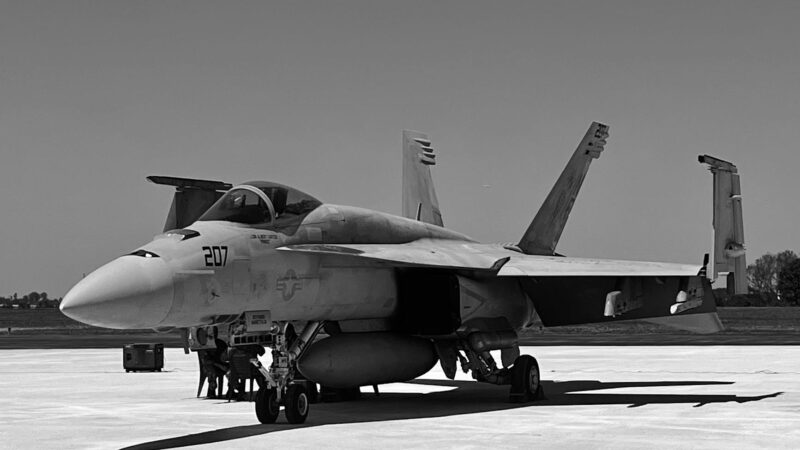
The air campaign compounds the bill rapidly. 9,000+ combat sorties have been flown since February 28, 2026. Operating costs per sortie — fuel, maintenance, aircrew support — range from $50,000 for a single F/A-18 mission to over $100,000 for a B-2 Spirit bomber sortie, which requires 30+ hours of maintenance per flight hour. Even at the conservative $60,000 average, 9,000 sorties equals $540 million in sortie operating costs.
How Does the 82nd Airborne Deployment Factor In?
The deployment of the 82nd Airborne Division to the region — approximately 4,500 paratroopers staged in Kuwait and Qatar — adds a ground-force cost layer. A full brigade combat team deployment runs approximately $1 million per day in incremental costs above baseline pay, covering airlift, equipment prepositioning, and forward basing fees paid to host nations.
Kuwait charges no direct basing fees under the Defense Cooperation Agreement, but the US pays for infrastructure upgrades and shared logistics. Qatar’s Al Udeid Air Base, which hosts the Combined Air Operations Center directing the Iran campaign, cost the US approximately $1.8 billion to build and requires ongoing annual contributions. The incremental cost of surge operations at Al Udeid for this campaign is estimated at $40–60 million per month.
How Does This Compare to Iraq and Afghanistan?
Context is everything when evaluating war costs. The first month of Operation Iraqi Freedom in March 2003 cost approximately $8 billion — a figure that included the massive logistical buildup of 130,000 troops. Afghanistan at its peak (fiscal year 2010–2011) ran $4.5 billion per month for 100,000 deployed personnel.
The Iran campaign, by contrast, is being prosecuted almost entirely with air and naval power with a minimal ground footprint. That makes it significantly cheaper per day than Afghanistan — but the intensity of precision-strike munitions usage is dramatically higher. The US is burning through Tomahawk inventory at a rate that defense planners find alarming. The US produces approximately 300–400 Tomahawks per year; restoring expended stocks will take years and cost additional billions not captured in current spending estimates.
The Watson Institute at Brown University, which tracks US war costs through its Costs of War project, has noted that official Pentagon spending figures historically undercount true war costs by 30–50% by excluding items like long-term veteran care, interest on war debt, and industrial base reconstitution. On that full-cost accounting basis, the 26-day Iran campaign may already represent a $10–20 billion economic event.
What Does This Mean for the US Deficit?
The United States entered fiscal year 2026 with a projected deficit of approximately $1.9 trillion, already elevated by Trump administration tax cut extensions and reduced IRS enforcement revenues. The Iran campaign is not being separately appropriated — it is being funded through emergency supplemental requests to Congress and reprogramming of existing Pentagon accounts.
Congress passed a $14.9 billion emergency defense supplemental in early March 2026, the bulk of which is being consumed by Iran campaign operations. If the campaign extends through summer 2026, a second supplemental — potentially in the $20–30 billion range — becomes highly probable, according to budget analysts at the Committee for a Responsible Federal Budget.
The defense budget reallocation is also creating internal Pentagon tensions. Money being spent on Tomahawk replacements and carrier operations is money not being spent on long-range procurement priorities including hypersonic weapons development, the B-21 Raider bomber program, and Pacific theater prepositioning for the China contingency that many defense planners argue is the actual strategic priority. The Iran campaign is, in effect, consuming the procurement budget of tomorrow’s deterrent.
What Is the Human Cost Alongside the Financial One?
Thirteen US service members have been killed in action as of March 25, 2026 — a figure that does not include wounded (estimated at 40+) or the psychological toll on aircrew flying repeated combat missions over one of the world’s most sophisticated air defense networks. Iranian air defense, though substantially degraded, has not been eliminated.
The $15 billion estimate does not include future costs: VA healthcare for wounded veterans, survivor benefits for the 13 KIA families, or the long-term replacement cost of equipment lost or expended. The true 20-year cost of the first 26 days of the Iran campaign, properly accounted, will likely exceed $25–40 billion — before any ground phase, if one materializes.
What This Means for US Investors
The Iran campaign is adding materially to US deficit pressure, which has historically been associated with higher long-term Treasury yields. Defense stocks — Raytheon (RTX), which makes the Tomahawk; Northrop Grumman (NOC), which makes the B-2 and GBU-57; and Lockheed Martin (LMT) — are direct beneficiaries of weapons resupply demand. However, broader market risk from a prolonged campaign includes energy price volatility, risk-off sentiment, and potential Federal Reserve policy complications if war-driven inflation re-accelerates. Monitor the next emergency supplemental request to Congress as the clearest indicator of campaign duration and cost trajectory.
Frequently Asked Questions
How much has the Iran war cost the US so far?
Independent estimates place the cost at $7–15 billion over the first 26 days, covering carrier operations, Tomahawk missiles, combat sorties, and ground force deployments. The Pentagon has not released an official figure.
How does the Iran war cost compare to Iraq and Afghanistan?
The Iraq War’s first month cost approximately $8 billion with 130,000 troops deployed. Afghanistan peaked at $4.5 billion per month. The Iran campaign is cheaper per day due to limited ground forces but is burning through precision munitions at a historically high rate.
Who benefits financially from the Iran war?
Defense contractors producing Tomahawk missiles (Raytheon/RTX), precision munitions (Lockheed Martin/LMT), and aircraft (Boeing/BA) benefit from resupply contracts. Oil-producing nations outside the Strait of Hormuz also benefit from elevated energy prices.
Will Congress need to pass more defense spending for the Iran war?
Almost certainly. The $14.9 billion emergency supplemental passed in March 2026 is likely insufficient if operations continue past May. Budget analysts project a second supplemental of $20–30 billion may be needed by summer 2026.
What is the impact of the Iran war on the US deficit?
The US entered FY2026 with a projected $1.9 trillion deficit. The Iran campaign adds an estimated $15+ billion in unplanned spending and risks crowding out long-term defense investment priorities including Pacific theater readiness.