The Abraham Accords, signed in September 2020, represent the most significant diplomatic breakthrough in the Middle East since the Israel-Jordan peace treaty of 1994. By normalizing relations between Israel and four Arab states, the agreements redrew the political map of a region long defined by the Arab-Israeli conflict. As of 2026, they continue to reshape trade, travel, security cooperation, and strategic alignment across the Middle East and North Africa.
This guide explains what the Abraham Accords are, which countries signed them, what the agreements cover, and why they matter for the future of the region.
What Are the Abraham Accords?
The Abraham Accords are a series of bilateral normalization agreements between Israel and several Arab nations, brokered by the United States under the Trump administration. The accords are named after the patriarch Abraham (Ibrahim in Arabic), a figure revered in Judaism, Christianity, and Islam, symbolizing a shared heritage.

Before the accords, only two Arab countries had formal diplomatic relations with Israel: Egypt (since 1979) and Jordan (since 1994). The broader Arab world maintained a collective stance, rooted in the 2002 Arab Peace Initiative, that normalization with Israel should only come after a resolution to the Palestinian conflict.
The Abraham Accords broke from that consensus. Rather than linking normalization to Palestinian statehood, the signatory countries pursued bilateral ties based on mutual economic and strategic interests.
Countries That Signed
| Country | Date Signed | Key Terms |
|---|---|---|
| United Arab Emirates | September 15, 2020 | Full normalization, embassy exchange, direct flights, trade agreements |
| Bahrain | September 15, 2020 | Full normalization, embassy exchange, trade and security cooperation |
| Sudan | October 23, 2020 | Normalization agreement; linked to Sudan’s removal from US state sponsors of terrorism list |
| Morocco | December 10, 2020 | Normalization in exchange for US recognition of Moroccan sovereignty over Western Sahara |
Each agreement had distinct incentives and conditions. The UAE’s deal was the most comprehensive, while Sudan’s was heavily tied to sanctions relief. Morocco’s normalization came bundled with a major concession on Western Sahara, a long-standing territorial dispute.
Timeline of Key Events
Understanding how the accords unfolded reveals how quickly the diplomatic landscape shifted:
- August 13, 2020: The UAE and Israel announce their agreement to normalize relations, with Israel reportedly agreeing to suspend annexation plans for parts of the West Bank.
- September 11, 2020: Bahrain announces it will join the normalization process.
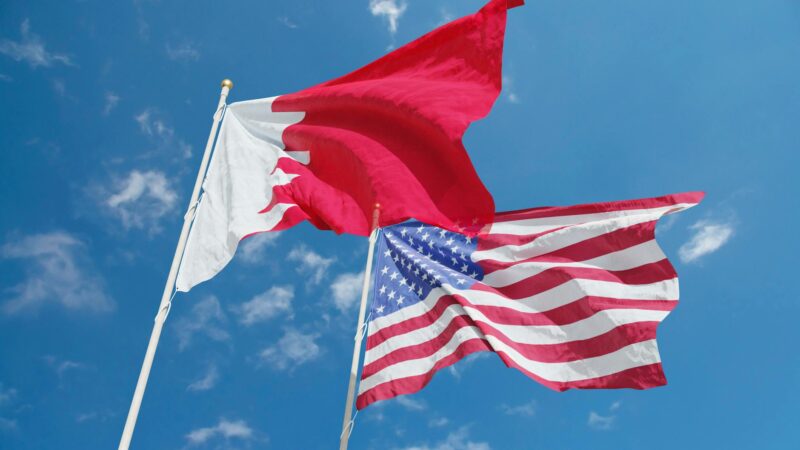
- September 15, 2020: The UAE and Bahrain sign the Abraham Accords at the White House alongside Israel and the United States.
- October 23, 2020: Sudan agrees to normalize relations with Israel. In return, the US removes Sudan from its State Sponsors of Terrorism list and provides economic aid.
- December 10, 2020: Morocco and Israel agree to normalize ties. The US recognizes Moroccan sovereignty over Western Sahara.
- January 2021: Direct commercial flights between Israel and the UAE begin operating.
- February 2022: Israeli President Isaac Herzog visits the UAE, the first official presidential visit.
- March 2022: The Negev Summit brings together foreign ministers of Israel, the UAE, Bahrain, Morocco, Egypt, and the US.
- 2023-2024: Saudi-Israel normalization talks advance significantly before being disrupted by the Gaza conflict in late 2023.
- 2025-2026: Bilateral trade between Israel and Abraham Accords nations continues to expand, though the pace of political integration has slowed amid regional tensions.
What the Agreements Include
The accords are far more than symbolic declarations. They established frameworks for practical cooperation across multiple sectors.
Diplomatic Relations
All four countries exchanged ambassadors with Israel, though the pace varied. The UAE and Bahrain opened embassies in Tel Aviv and Israel opened embassies in Abu Dhabi and Manama. Morocco and Israel upgraded existing liaison offices to full diplomatic missions.
Trade and Investment
The economic provisions are among the most consequential elements. Key developments include:
- Israel-UAE bilateral trade surpassed $3.3 billion annually by 2024, up from virtually zero before the accords. By 2025, estimates placed the figure closer to $4 billion.
- Israel-Bahrain trade has been more modest but growing, reaching approximately $250 million by 2024.
- Israel-Morocco trade expanded rapidly, exceeding $500 million by 2025, driven by agriculture, technology, and tourism.
- Free trade agreement negotiations between Israel and the UAE progressed throughout 2024-2025.
- Joint investment funds were established, with Israeli venture capital flowing into Gulf tech ecosystems and Emirati sovereign wealth funds investing in Israeli companies.
For a deeper look at the UAE’s economic landscape, see our UAE economy guide.
Direct Flights and Tourism
Direct commercial flights between Tel Aviv and Dubai, Abu Dhabi, Manama, and Marrakech transformed travel in the region. Before the accords, Israeli passport holders could not enter most Arab countries.
- Over 1 million Israelis visited the UAE between 2021 and 2025.
- Multiple daily flights now operate on the Tel Aviv-Dubai route via El Al, Emirates, flydubai, and Etihad.
- Tourism between Israel and Morocco saw substantial growth, with cultural and heritage tourism playing a major role given Morocco’s historic Jewish community.
Security and Intelligence Cooperation
While less publicly detailed, security cooperation has been a foundational pillar. The accords formalized intelligence-sharing arrangements, joint military exercises, and defense technology partnerships. Israel’s advanced cybersecurity and defense technology sectors found eager markets in the Gulf states, which face their own security threats from Iran and non-state actors.
Technology and Innovation
Israel’s technology sector and the Gulf’s capital and market access created natural synergies:
- Joint tech hubs and accelerators were launched in Dubai and Abu Dhabi.
- Agricultural technology partnerships addressed food security concerns in arid Gulf climates.
- Healthcare collaborations expanded, with Israeli medtech companies entering Gulf markets.
Economic Impact and Trade Figures
The economic transformation has been measurable and significant.
| Metric | Pre-Accords (2019) | Post-Accords (2025 est.) |
|---|---|---|
| Israel-UAE Annual Trade | ~$0 | ~$4 billion |
| Israel-Bahrain Annual Trade | ~$0 | ~$250 million |
| Israel-Morocco Annual Trade | ~$30 million (informal) | ~$500 million |
| Israeli Tourists to UAE (annual) | 0 | ~300,000 |
| Direct Flight Routes | 0 | 15+ |
The GCC countries have been the primary beneficiaries, with the UAE leading in both trade volume and depth of institutional integration.
Why the Abraham Accords Matter for the Middle East
The accords reshaped regional dynamics in several fundamental ways.
Shifting Away from the Palestinian Veto
For decades, Arab states conditioned relations with Israel on progress toward Palestinian statehood. The Abraham Accords decoupled normalization from the Palestinian issue, establishing that bilateral interests could drive diplomacy independently. This was a paradigm shift in Middle Eastern politics.
Counter-Iran Alignment
A shared concern about Iran’s regional influence was a major driver behind the accords. The UAE, Bahrain, and Israel all view Iran as a primary security threat. The accords created a framework for coordination against Iranian proxy networks, missile programs, and nuclear ambitions.
Economic Diversification
For Gulf states pursuing economic diversification away from oil, Israel’s technology, innovation, and startup ecosystem offered immediate value. The partnerships accelerated efforts already underway in the UAE and Bahrain to build knowledge-based economies.
For broader context on how these dynamics shape the region, see our Middle East geopolitics guide.
US Strategic Interests
The accords served American strategic goals by strengthening pro-US alliances in the region, creating a counterbalance to Iran, and reducing the need for direct US military engagement. The Biden administration maintained support for the accords despite not being their architect, and the returning Trump administration in 2025 has actively pursued their expansion.
Saudi Arabia Normalization: Where It Stands in 2026
The most consequential expansion of the Abraham Accords would be Saudi-Israel normalization. As the custodian of Islam’s two holiest sites and the Arab world’s largest economy, Saudi Arabia’s participation would fundamentally transform the regional order.
Progress and Setbacks
Negotiations between Saudi Arabia, Israel, and the United States progressed substantially in 2023. Saudi Arabia sought a US mutual defense pact, a civilian nuclear program, and meaningful progress toward Palestinian statehood as conditions for normalization. However, the October 2023 Gaza conflict disrupted the process significantly.
By 2025-2026, diplomatic efforts resumed. Saudi Arabia has maintained that any normalization must include a credible pathway to a Palestinian state, a condition that has proven difficult to meet given Israeli political dynamics. Nonetheless, behind-the-scenes contacts between Riyadh and Jerusalem continue, and many analysts believe some form of Saudi-Israel normalization remains likely within this decade.
What Saudi Normalization Would Mean
A Saudi-Israel deal would likely trigger a wave of additional normalizations across the Muslim world. It would reshape oil politics, defense alliances, and economic integration across the entire Middle East and beyond.
Criticism and the Palestinian Perspective
The Abraham Accords have faced significant criticism, particularly from Palestinians and their supporters.
Palestinian Opposition
The Palestinian Authority denounced the accords as a betrayal of the Arab consensus and a violation of the principle that normalization should follow, not precede, a resolution to the Palestinian question. Hamas condemned the deals outright.
Critics argue that by normalizing relations without addressing Palestinian rights, the accords removed whatever leverage Arab states had to push Israel toward concessions on settlements, borders, and statehood. The promise that the UAE deal would halt Israeli annexation plans in the West Bank was seen by many as insufficient and ultimately unenforceable.
Regional Criticism
Iran, Turkey (initially), and several Arab populations expressed opposition. Public opinion polls in signatory countries showed mixed support, with governments generally more enthusiastic than their populations. In Morocco and Bahrain, civil society groups organized protests against normalization.
The Counter-Argument
Supporters of the accords argue that decades of isolation failed to produce results for Palestinians and that engagement creates more leverage than estrangement. They point to increased trade, people-to-people connections, and the insertion of Palestinian concerns into bilateral agendas as evidence that normalization can coexist with advocacy for Palestinian rights.
Impact on Regional Dynamics in 2026
As of early 2026, the Abraham Accords have matured from headline-grabbing diplomatic events into embedded institutional relationships.
What has solidified:
– Israel-UAE economic integration is deep and broadening, with joint ventures in AI, fintech, defense, and agriculture.
– Security cooperation between Israel and Gulf states has become routine, particularly in cyber defense and intelligence sharing.
– People-to-people connections, including cultural exchanges, academic partnerships, and tourism, have created constituencies for continued normalization.
What remains fragile:
– Public sentiment in signatory countries remains divided, particularly when Israeli-Palestinian violence escalates.
– Sudan’s normalization has been the weakest link, with the country’s civil conflict since April 2023 effectively freezing implementation.
– The Palestinian issue continues to create periodic pressure on Abraham Accords governments to demonstrate solidarity with Palestinian rights.
What comes next:
– Saudi normalization remains the most significant outstanding prospect.
– Oman, Kuwait, and Qatar are potential future signatories, though each faces distinct political considerations.
– The accords’ long-term resilience depends on whether economic integration creates durable interests that can withstand political shocks.
FAQ
What are the Abraham Accords in simple terms?
The Abraham Accords are peace and normalization agreements signed in 2020 between Israel and four Arab countries: the UAE, Bahrain, Sudan, and Morocco. They established full diplomatic relations, trade ties, direct flights, and cooperation in areas like technology, security, and tourism.
Why are they called the Abraham Accords?
They are named after Abraham (Ibrahim), the patriarch recognized by Judaism, Christianity, and Islam. The name symbolizes the shared religious heritage of the peoples involved and the aspiration for coexistence.
Which countries signed the Abraham Accords?
Four countries signed normalization agreements with Israel: the United Arab Emirates and Bahrain (September 2020), Sudan (October 2020), and Morocco (December 2020). The United States brokered all four agreements.
Will Saudi Arabia sign the Abraham Accords?
As of 2026, Saudi Arabia has not signed but negotiations continue. Saudi Arabia has indicated that normalization would require a US defense pact, support for a civilian nuclear program, and a credible pathway to Palestinian statehood. Most analysts expect some form of Saudi-Israel normalization within this decade, though the timeline remains uncertain.
How have the Abraham Accords affected trade?
Israel-UAE trade alone grew from zero to approximately $4 billion annually by 2025. Combined trade across all signatory nations exceeds $5 billion. Sectors including technology, agriculture, defense, tourism, and financial services have all seen significant cross-border activity.
Key Takeaways
- The Abraham Accords normalized relations between Israel and four Arab states (UAE, Bahrain, Sudan, Morocco), breaking decades of diplomatic isolation.
- Economic impact has been substantial, with Israel-UAE bilateral trade reaching approximately $4 billion annually by 2025.
- The accords shifted Middle East diplomacy by decoupling Arab-Israeli normalization from the Palestinian issue.
- Shared concerns about Iran and mutual economic interests were primary drivers.
- Saudi Arabia’s potential normalization would be the most consequential expansion, but Palestinian statehood demands remain a key obstacle.
- Criticism centers on the marginalization of Palestinian rights and the lack of enforceable commitments on Israeli settlement policy.
- As of 2026, the accords are institutionally embedded but remain politically sensitive, particularly during periods of Israeli-Palestinian tension.
The Abraham Accords continue to reshape Middle Eastern politics, economics, and security. For related analysis, explore our Middle East geopolitics guide, UAE economy guide, and complete list of GCC countries.