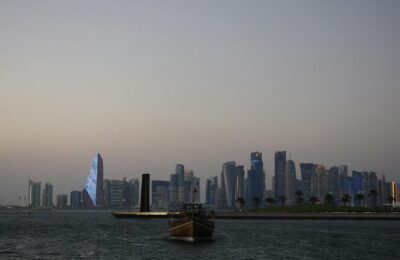
While Saudi Arabia and the United Arab Emirates dominate headlines with their mega-projects, the Sultanate of Oman is quietly and strategically building what may be the most ambitious yet realistic post-oil economy in the Gulf region. Oil and gas now account for roughly 30% of GDP — down from over 50% just a decade ago — reflecting the success of Oman Vision 2040 in reshaping the Omani economic structure toward diverse productive sectors including green hydrogen, luxury and eco-tourism, logistics, mining, and fisheries. With the Sultanate achieving a fiscal surplus for the third consecutive year and receiving successive credit rating upgrades from Fitch and Moody’s, Oman is proving that economic diversification requires not media fanfare but methodical planning and disciplined execution.
Oman Vision 2040: The Comprehensive Blueprint for a Post-Oil Economy
Oman Vision 2040 represents the most comprehensive strategic framework the Sultanate has adopted for structural economic transformation. Officially launched in January 2021 under the directives of Sultan Haitham bin Tarik, the vision targets reducing the contribution of the oil and gas sector to GDP to below 8.4% by 2040 and raising the share of non-oil sectors to over 90% of total government revenues.
According to the IMF’s Oman country report published in 2025, the Sultanate has achieved tangible progress across several dimensions:

- Non-Oil GDP Growth: The non-oil sector recorded growth of 4.2% in 2025, exceeding the overall GDP growth rate of 2.8%, signaling an acceleration in actual diversification.
- Non-Oil Revenues: The share of non-oil revenues in total government income rose to 36% in 2025, compared to approximately 20% in 2015.
- Foreign Direct Investment Inflows: Oman attracted FDI worth $4.8 billion in 2025, a 35% increase over the previous year.
- Private Sector Employment: The number of Omanis employed in the private sector increased by 12%, driven by Omanization initiatives and skills development programs.
“Oman is not trying to be Dubai or Riyadh — it is building an economic model that fits its size, resources, and unique geographic position. This realism is what makes its plan the most executable in the region.”
— Oxford Business Group — Oman Report
The Oman Investment Authority (OIA) — the Sultanate’s sovereign wealth fund — manages an asset portfolio exceeding $46 billion and plays a central role in directing investments toward the strategic sectors identified in Vision 2040. The Oman Investment Authority has restructured its portfolio to focus more heavily on locally value-generating projects while scaling back investments in traditional sectors.
Green Hydrogen and HyPort Duqm: Oman as a Global Clean Energy Hub
The green hydrogen sector represents Oman’s largest strategic bet for the post-oil era. The Sultanate possesses unique competitive advantages that position it to become one of the world’s largest green hydrogen exporters. The HyPort Duqm project — a joint venture between Belgium’s DEME and Oman’s OQ — stands as one of the largest green hydrogen projects under development globally.
HyPort Duqm targets production of up to 500,000 tons of green hydrogen annually by 2030, harnessing the abundant wind and solar energy resources in Oman’s Al Wusta region. The project encompasses:
- Renewable Energy Plants: With a combined capacity exceeding 25 GW of solar and wind power to drive electrolysis operations.
- Electrolysis Facilities: With a production capacity of up to 14 GW, ranking among the largest planned globally.
- Export Infrastructure: Facilities for converting hydrogen into green ammonia for export via Duqm Port to European and East Asian markets.
- Desalination Plants: Dedicated desalination facilities to supply the water required for electrolysis processes.
According to Reuters, Oman has signed more than 30 agreements with international companies in the green hydrogen space, with announced investments exceeding $50 billion. Bloomberg reports that Oman aims to become one of the top five global exporters of green hydrogen by 2030.
Oman’s unique competitive advantages in this sector include: one of the highest solar irradiance rates in the world, strong and consistent winds along its southern coast, vast tracts of unused desert land, and seaports on the Indian Ocean providing direct access to key export markets. The government has designated over 50,000 square kilometers for clean energy and green hydrogen projects.
The Duqm Special Economic Zone: Oman’s Window to the World
The Special Economic Zone at Duqm (SEZAD) represents the largest development project in Oman’s history, spanning 2,000 square kilometers along the Arabian Sea coast — roughly equivalent to the area of Singapore. The zone was designed to function as an integrated industrial and logistics hub serving the markets of the Middle East, East Africa, and South Asia.
The Duqm SEZAD project comprises several key components:
- Duqm Commercial Port: A multi-purpose port with a water depth of 18 meters, capable of receiving the world’s largest container ships and tankers, with a target throughput capacity of 3.5 million TEUs annually.
- Dry Dock for Ship Repair: One of the largest ship repair facilities in the Middle East, accommodating vessels of up to 600,000 deadweight tonnage, serving maritime fleets transiting the Arabian Sea and Indian Ocean.
- Duqm Oil Refinery: A joint Omani-Kuwaiti venture with investments of $8 billion and a refining capacity of 230,000 barrels per day.
- Heavy Industrial Zone: Housing steel, aluminum, petrochemical, and fertilizer manufacturing plants.
- Green Hydrogen Complex: The designated area for HyPort and other clean energy projects.
Reports from the World Bank indicate that the Duqm Special Economic Zone has attracted cumulative investments exceeding $20 billion through 2025, with more than 100 projects either operational or under construction. The zone targets the creation of over 30,000 direct and indirect jobs by 2030.
Luxury and Eco-Tourism: Oman’s Natural Treasures Generate Growing Returns
The Sultanate of Oman has adopted a unique tourism strategy focused on luxury and eco-tourism rather than mass tourism, leveraging exceptional geographic diversity that encompasses the Al Hajar Mountains, the Eastern Desert, Arabian Sea coastlines, historic aflaj irrigation systems, and the dramatic fjords of Musandam. The National Tourism Strategy 2040 targets doubling the sector’s contribution to GDP to 6% by 2040, from approximately 2.5% currently.
Major tourism projects include:
- Yenkit Tourism Project: An integrated tourism development valued at $600 million on the Arabian Sea coast, featuring luxury hotels, eco-resorts, golf courses, and water sports facilities.
- Ras Al Hadd Urban Center Project: A $1 billion redevelopment of Old Muscat’s waterfront to become a global cultural and tourism destination.
- Jebel Akhdar Development: Luxury mountain resort projects at elevations of 2,000 meters, including the Anantara Al Jabal Al Akhdar resort alongside adventure and nature tourism ventures.
- Whale and Turtle Watching Tourism: Specialized eco-tourism programs for observing humpback whales off the coast of Dhofar and green turtle nesting reserves at Ras Al Jinz.
Oman welcomed over 3.5 million tourists in 2025, generating tourism revenues exceeding $4 billion — a 22% increase over the previous year. The Oxford Business Group reports that the average tourist spend in Oman is approximately $1,150 — among the highest in the region — reflecting the success of the high-value tourism strategy.
The Sultanate is also developing luxury desert camping (Glamping) experiences in the Sharqiyah Sands and diving tourism around the Daymaniyat Islands — segments that attract affluent travelers seeking authentic experiences away from conventional commercial destinations.
Fisheries and Aquaculture: The Most Promising Food Sector
With a coastline stretching over 3,165 kilometers along the Arabian Sea, Indian Ocean, and Gulf of Oman, the Sultanate possesses one of the richest marine fisheries in the region. The fisheries and aquaculture sector represents a core pillar of the economic diversification plan, with a target to double fish production to over one million tons annually by 2030.
The transformation in this sector encompasses several tracks:
- Modern Aquaculture: Establishment of technologically advanced fish farms along the Arabian Sea coast, including cultivation of finfish, shrimp, and sea cucumber, with a target production capacity of 200,000 tons annually from aquaculture alone.
- Fishing Fleet Modernization: Replacing traditional fishing boats with modern vessels equipped with onboard cooling and freezing technology, reducing waste and improving product quality.
- Fish Processing Plants: Establishing integrated complexes for processing, canning, and exporting high-value-added seafood products.
- Marine Research: Founding specialized research centers in marine sciences and aquaculture in collaboration with international institutions.
World Bank reports estimate that Oman’s fisheries sector could contribute approximately $3.5 billion to GDP by 2030 if planned aquaculture projects are completed, compared to approximately $900 million currently. The sector also targets the creation of over 40,000 direct jobs — the majority for Omani nationals — in fishing and processing.
Mining Sector Expansion: A Newly Discovered Geological Wealth
The mining sector in Oman is undergoing significant expansion following the discovery of substantial mineral reserves across the Sultanate. The Mining Strategy 2040 targets increasing the sector’s contribution to GDP from approximately 0.5% to 3% by 2040, while attracting investments exceeding $8 billion.
Oman’s mineral wealth includes:
- Copper: Resumption of copper mining at historic sites in the Sohar and Al Batinah regions, with estimated reserves exceeding 15 million tons of copper ore.
- Chromite: Oman is among the largest chromite producers in the Middle East, with plans to increase production and process it domestically rather than exporting raw ore.
- Gypsum and Limestone: Massive reserves feeding the cement and construction materials industry for both domestic consumption and export.
- Rare Minerals: Recent geological surveys have revealed the presence of rare earth elements in the eastern region — minerals critical for clean technology industries, batteries, and electronics.
- Gold: New gold deposit discoveries at multiple sites in the interior region, with exploration licenses granted to international mining companies.
The government has announced fundamental reforms to the Mining Law, including simplified licensing procedures, tax incentives for investors, and the establishment of a General Authority for Mining to regulate the sector according to international best practices. The sector is expected to attract significant foreign investment in the coming years, particularly in sustainable mining and mineral processing.
The Logistics Axis: Sohar, Salalah, and the Oman-Saudi Rail Link
Oman is investing heavily in converting its strategic geographic position — at the crossroads of trade between Asia, Africa, and Europe — into a tangible economic advantage. Ports, free zones, and the railway project form the pillars of this logistics transformation.
Sohar Port and Free Zone stands out as one of the fastest-growing ports in the region, recording an 18% increase in container handling volume in 2025, reaching over 1.8 million TEUs. The port houses a free zone hosting more than 60 industrial projects with investments exceeding $26 billion, including iron, steel, aluminum, and petrochemical manufacturing plants.
Salalah Port in southern Oman ranks among the largest transshipment ports in the Indian Ocean, strategically positioned along major shipping lanes between Asia and Europe. Its throughput capacity has exceeded 5 million TEUs annually following recent expansions.
The Oman-Saudi railway link represents a quantum leap in the Sultanate’s logistics infrastructure. The proposed line stretches over 2,000 kilometers, connecting Oman’s southern ports (Salalah and Duqm) to the Saudi network and onward to the GCC rail network. The link is expected to reduce shipping costs by 30-40% compared to road transport and open new markets for Omani exports.
According to Reuters, the project’s estimated cost is approximately $15 billion, with expectations for the first phase to begin commercial operations by 2028. The project reinforces Oman’s ambition to become a regional logistics hub connecting maritime and overland trade routes in the region.
Fiscal Consolidation and Subsidy Reform: An Economic Success Story
The fiscal reforms implemented by Oman since 2020 represent one of the most remarkable economic success stories in the region. The Sultanate has transformed from recording a fiscal deficit of 17% of GDP in 2020 to achieving a fiscal surplus of 3.2% of GDP in 2025 — a turnaround that the International Monetary Fund has described as “exceptional in both its speed and depth.”
Key reforms include:
- Subsidy Restructuring: Implementation of targeted subsidies replacing universal fuel, electricity, and water subsidies, with savings redirected toward social safety nets for the most vulnerable households. These reforms have saved over $1.5 billion annually.
- VAT Implementation: Introduction of a 5% value-added tax in April 2021, adding a sustainable non-oil revenue source generating over $900 million annually.
- Government Spending Rationalization: A 10% reduction in operating expenditures through ministry mergers and improved government procurement efficiency.
- Public Debt Management: Reduction of the public debt-to-GDP ratio from 68% in 2020 to 37% in 2025, through a combination of early debt repayment and deployment of fiscal surpluses.
As a result of these reforms, Fitch upgraded Oman’s credit rating to BBB- (investment grade) in 2024, while Moody’s raised its rating to Ba1 with a positive outlook, citing marked improvements in fiscal discipline and economic diversification.
“Oman’s fiscal transformation demonstrates that bold structural reforms can deliver rapid and tangible results when executed in a well-sequenced manner with strong political will.”
— Annual Consultation Report, International Monetary Fund — Oman 2025
Muscat Stock Exchange Reforms: Attracting Institutional Investment
The Muscat Stock Exchange is undergoing a comprehensive modernization phase aimed at elevating corporate governance standards, increasing liquidity, and attracting international institutional investors. These reforms are part of broader efforts to transform Oman’s capital markets into an effective vehicle for financing economic diversification projects.
Key implemented and planned reforms include:
- Government IPO Program: Listing stakes of major state-owned enterprises on the exchange — including energy company OQ and telecoms firm Omantel — to broaden the market base and increase free-float trading.
- Technology Infrastructure Upgrade: Adoption of modern trading platforms supporting high-frequency trading, financial derivatives, and exchange-traded funds (ETFs).
- Updated Governance Framework: Implementation of new governance standards aligned with international best practices, including enhanced disclosure requirements and ESG (Environmental, Social, and Governance) criteria.
- Foreign Investor Facilitation: Streamlined investment procedures for foreigners and increased foreign ownership limits in numerous sectors to 100%.
- Bond Market Launch: Development of a local bond and sukuk market to provide diversified financing instruments for corporations and major projects.
Bloomberg reports indicate that the Muscat Stock Exchange’s market capitalization surpassed $75 billion in 2025, a 28% increase over the previous year, with daily trading volume rising by 45%. Analysts suggest that the anticipated government IPO program in the coming years — which may include stakes from the Oman Investment Authority and its subsidiaries — will further consolidate the exchange’s position as a primary investment destination in the Gulf region.
Challenges and Risks: What Could Slow the Omani Trajectory?
Despite notable progress, Oman’s economic diversification journey faces structural challenges that must be addressed to ensure sustained growth over the long term:
- Employment and Youth: Youth unemployment in Oman stands at approximately 13%, and the emerging sectors require time to absorb large numbers of job seekers. The government is addressing this challenge through labor market reform programs and intensive vocational training.
- Domestic Market Size: With a population of only about 5 million, Oman must focus on exports and regional markets to achieve economies of scale in new industrial sectors.
- Oil Price Volatility: Despite declining oil dependency, the sector still contributes a significant portion of government revenues, leaving the budget exposed to global price fluctuations.
- Regional Competition: Oman competes with larger and wealthier neighbors — particularly Saudi Arabia and the UAE — for the same investments and sectors, requiring clear differentiation in its investment proposition.
- Water and Energy: Water scarcity poses a fundamental challenge to industrial and agricultural expansion, requiring significant investments in renewable-energy-powered desalination.
However, Oxford Business Group reports note that Oman’s measured and realistic approach gives the Sultanate an invisible competitive advantage: rather than betting on mega-projects with astronomical budgets, Oman focuses on well-studied projects with realistic returns and calculated risks — making its trajectory more sustainable over the long run.
Ultimately, the Sultanate of Oman presents a unique and inspiring model for economic diversification that deserves close attention and study. From green hydrogen in Duqm to eco-tourism on Jebel Akhdar, from subsidy reform to credit rating upgrades, the Sultanate is demonstrating that building a post-oil economy requires not massive scale or unlimited budgets — but rather a clear vision, disciplined execution, and strategic patience. While the world’s gaze turns to the Gulf’s noisier projects, Oman is quietly building a more resilient and sustainable economic future.
Disclaimer: This article is for educational and informational purposes only and does not constitute financial or investment advice. Information presented is based on publicly available sources and may not reflect the latest developments. Please consult licensed professionals before making any investment decisions.