The Strait of Hormuz is closed again. Just 24 hours after the Iran-US ceasefire was supposed to reopen the world’s most critical oil chokepoint, Iran shut it down in response to Israel’s massive Lebanon strike (100 targets, 250+ killed). The practical impact: Suez Canal recovery is on hold, oil has rebounded to $97/barrel, and Egyptian and Gulf economies face renewed uncertainty.
This analysis breaks down what the Hormuz re-closure means specifically for Egypt (Suez Canal, pound, fuel subsidies) and for the Gulf (oil revenue, trade disruption, shipping), and what investors should watch over the critical next 12 days until the ceasefire expires on April 21.
The Hormuz Status: What’s Actually Happening
Conflicting Reports
| Source | Claims |
|---|---|
| Iran (IRGC) | Shipping stopped, strait closed, violation response |
| White House | Reports of closure are ‘false’ |
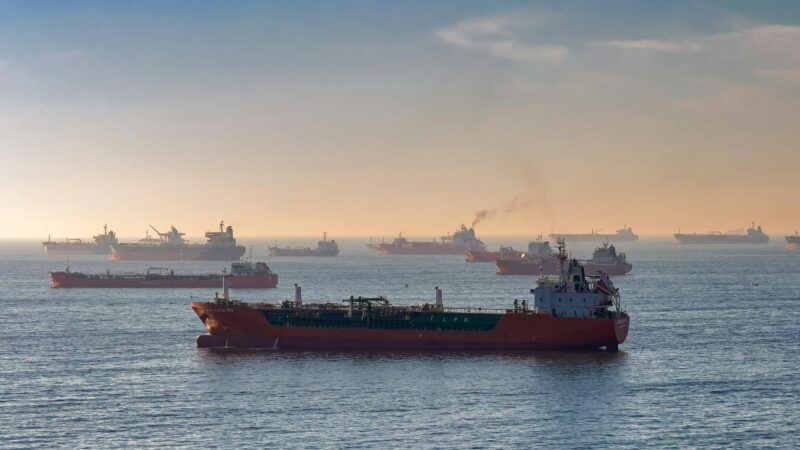
| Bloomberg | Hundreds of ships waiting, traffic at trickle |
| Shipping companies | Not transiting due to insurance concerns |
| Reports | Possible naval mines detected near strait |
The Reality
Iran may not have physically blockaded or mined the strait (the White House denial may be technically correct). But Iran has stopped coordinating with vessels for safe passage. Without Iranian coordination, shipping insurance companies won’t cover transit risk. The practical effect is identical to closure: no commercial shipping is passing through.

According to Bloomberg, hundreds of ships are waiting near the strait. Normal daily traffic is 100-120 commercial vessels. Current traffic: 2 tankers got through on April 8 morning before Iran re-closed coordination.
Impact on Egypt
Suez Canal Recovery: Delayed Again
Yesterday’s optimism about Suez Canal recovery is now premature. The recovery timeline we published assumed Hormuz would reopen and stay open. With Hormuz re-closed:
- Shipping companies won’t return to Suez: If they can’t reliably transit Hormuz, the Suez route doesn’t work for Asia-Europe trade
- Revenue recovery delayed: Instead of starting within 1-2 weeks, recovery now depends on Islamabad talks outcome
- Canal revenue continues at 38% discount: Egypt loses approximately $250 million per month in canal revenue during the disruption
Fuel Subsidy Bill: Rising Again
Oil’s rebound from $95 to $97/barrel partially erases the post-ceasefire fuel savings:
| Scenario | Annual Fuel Savings for Egypt |
|---|---|
| Oil at $85 (if ceasefire succeeded) | $2.9 billion |
| Oil at $95 (post-ceasefire low) | $1.7 billion |
| Oil at $97 (current) | $1.4 billion |
| Oil at $109 (pre-ceasefire) | $0 (baseline) |
Egypt still saves $1.4 billion annually at $97 vs $109, but this is half the savings that seemed possible just 48 hours ago.
Egyptian Pound: Renewed Pressure
The pound had strengthened from 54.45 to 54.30 on ceasefire hopes. With Hormuz re-closed and oil rebounding, expect the pound to weaken back toward 54.40-54.50. The factors that briefly supported the pound (lower oil costs, expected Suez recovery, improved sentiment) are all partially reversing.
CBE May Meeting: Rate Cut Less Likely
The aggressive 200bp rate cut scenario for May is now less likely. With oil at $97 instead of $85, inflation pressure hasn’t eased as much as hoped. The CBE may opt for a more conservative 50-100bp cut — or even hold rates if the ceasefire fully collapses.
Impact on Gulf Economies
Saudi Arabia: Revenue Partially Restored
The irony: Saudi Arabia benefits from the ceasefire cracking. Oil at $97 instead of $85 means approximately $42 billion in additional annual revenue rather than $0. While Saudi officials publicly support peace, the treasury benefits from continued tension. Vision 2030 budget pressures ease with higher oil.
UAE: Mixed Impact
UAE’s diversified economy means it benefits from both sides: higher oil revenue but also from attracting capital flight during instability. Abu Dhabi’s real estate boom may actually accelerate if investors seek stability.
Shipping: Hundreds of Ships Waiting
The immediate impact on Gulf trade is the shipping logjam. Hundreds of vessels near Hormuz waiting for safe passage means: delayed exports for Gulf producers, rising demurrage costs, inventory disruptions for importers, and higher goods prices across the region.
What Investors Should Do
For Egyptian Investors
- Gold remains #1 hedge: 21K at ~7,250 EGP/gram protects against both scenarios
- Don’t sell EGX 30 stocks: Hold defensive positions, wait for Islamabad clarity
- Avoid pound speculation: Too many variables to time currency
- Lock high-yield certificates NOW: If the CBE cuts less than expected in May, today’s rates become more attractive retrospectively
For Gulf Investors
- Energy stocks: Benefit from Hormuz uncertainty, hold positions
- Real estate: Continue to benefit from capital flight, hold
- Tourism stocks: Wait for clarity, recovery delayed
- Gold: Maintain 15-20% allocation as geopolitical hedge
Scenarios: What Happens to Hormuz Next
| Scenario | Probability | Hormuz Status | Egypt Impact |
|---|---|---|---|
| Islamabad succeeds, Lebanon included | 30% | Fully reopens within days | Major positive |
| Islamabad partial progress | 40% | Partially reopens with conditions | Modest positive |
| Islamabad fails, ceasefire expires | 20% | Remains closed, war resumes | Severe negative |
| Status quo continues indefinitely | 10% | Closed but no escalation | Continued pressure |
Frequently Asked Questions
Is Hormuz closed again?
Effectively yes. Iran stopped coordinating transit. Shipping companies won’t risk it without insurance.
How does this affect Egypt?
Suez recovery delayed, fuel savings reduced from $2.9B to $1.4B, pound under renewed pressure.
When will Hormuz reopen?
Depends on Islamabad talks Saturday April 11. If they include Lebanon, possibly within days.
Should I worry about the Egyptian pound?
Moderate concern, not panic. Gold remains best hedge.
How does this affect Gulf countries?
Saudi Arabia benefits from higher oil. UAE benefits from capital flight. Trade disrupted.
Related Articles
For more, see Reuters Middle East, Bloomberg Middle East, and Ahram Online.
Last Updated: April 9, 2026