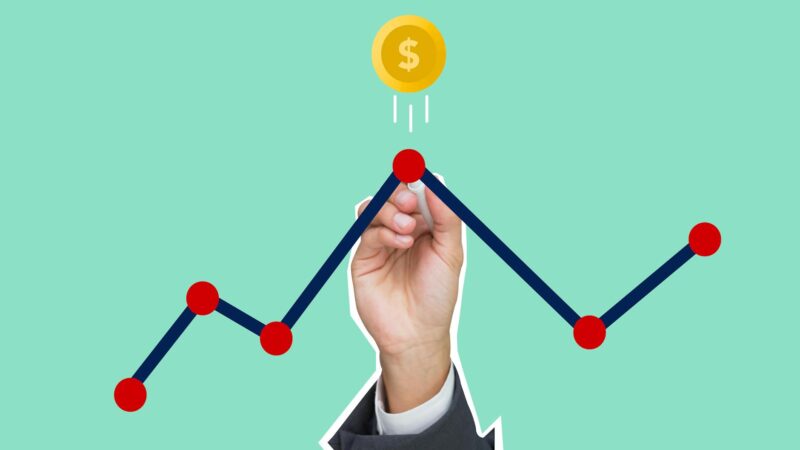
After decades of near-total dependence on oil revenues, the latest economic data shows that Gulf Cooperation Council (GCC) states are finally reaping tangible rewards from economic diversification, with non-oil GDP contributions surpassing 50% in Saudi Arabia and 70% in the United Arab Emirates. Purchasing Managers’ Index (PMI) readings consistently exceed 55 points, and sectors including tourism, technology, financial services, and retail are registering unprecedented growth. The pivotal question analysts and investors are asking today: Is this sustainable structural growth or merely a cyclical boom tied to elevated oil prices? In this in-depth analysis, we examine the evidence and figures confirming that the Gulf’s economic transformation has become an irreversible reality.
Gulf Non-Oil GDP: The Numbers That Tell the Transformation Story
The latest reports from the International Monetary Fund’s GCC outlook indicate that non-oil GDP growth in the region reached historic rates during the 2023-2025 period, repeatedly exceeding forecasts. In Saudi Arabia, non-oil sector contribution rose to over 52% of total GDP, compared to approximately 40% just a decade ago. In the UAE, this ratio exceeds 73%, making it the most diversified economy in the Gulf.
According to World Bank data, Gulf economies collectively achieved non-oil growth of 4.2% in 2024 and a projected 4.5% in 2025 — figures that significantly exceed the global average of 3.1%. This outperformance reflects the success of economic reform policies adopted by governments across the region.

“What we are witnessing in the Gulf is not a temporary boom but a deep structural transformation supported by radical regulatory reforms, massive infrastructure investments, and human capital development. Gulf economies are reinventing themselves.”
— IMF GCC Economic Outlook Report
The comparison across GCC states reveals varying levels of economic diversification:
- UAE: The most diversified with non-oil GDP exceeding 73%, supported by financial services, tourism, trade, logistics, and technology.
- Saudi Arabia: The fastest transforming with non-oil output exceeding 52%, driven by massive investments under Saudi Vision 2030 in tourism, entertainment, mining, and manufacturing.
- Bahrain: A relatively high ratio of approximately 82% non-oil GDP, though with a much smaller economic base, focused on Islamic financial services.
- Qatar: Aiming to raise non-oil GDP share from roughly 40% to 60% by 2030, leveraging tourism momentum following the successful 2022 World Cup.
- Oman and Kuwait: Still in the early stages of diversification, with non-oil GDP at approximately 60% and 40% respectively.
Purchasing Managers’ Index (PMI): The Non-Oil Private Sector Compass
The Purchasing Managers’ Index (PMI) surveys published by S&P Global are among the most important tools for gauging the health of the non-oil private sector in Gulf economies. A reading above 50 points signals expansion, and Gulf indices have remained above 55 points for most months during 2024-2025, indicating robust and sustained expansion.
In Saudi Arabia, the Riyad Bank PMI issued by S&P Global has recorded consistent readings above 56 points, driven by strong growth in new orders, output, and employment. In the UAE, the Emirates NBD PMI surpassed 57 points in several months — among the highest readings across emerging markets globally.
What makes these figures particularly compelling is their sustainability. Unlike previous booms that were linked to oil price spikes and then faded, the current expansion is characterized by three distinctive features:
- Accelerating Employment: The Saudi private sector has experienced its highest-ever job creation rates, with more than one million Saudi nationals employed in the private sector under Saudization programs.
- Diversified Demand Sources: Growth is not driven by a single sector but by a broad base spanning construction, retail, financial services, tourism, and technology.
- Export Order Growth: Export orders for non-oil goods and services have risen by 20% annually, reflecting improved regional and international competitiveness.
Gulf Tourism: The Strongest Engine of Economic Diversification
The tourism sector represents perhaps the clearest example of successful Gulf economic diversification. In the UAE, Dubai alone welcomed more than 17 million international tourists in 2024, generating tourism revenues exceeding $35 billion. Abu Dhabi recorded tourism growth of 25%, driven by Yas Island, the Louvre Abu Dhabi, and Saadiyat Island cultural projects.
On the Saudi side, Gulf tourism is achieving unprecedented qualitative leaps. The Kingdom welcomed over 100 million visitors in 2024 (domestic and international), approaching the target of 150 million visitors annually by 2030. Reports from McKinsey indicate that tourism’s contribution to Saudi GDP has risen from 3% to over 7.5% in just five years.
The most prominent tourism projects driving this growth include:
- The Red Sea Project: A luxury tourism resort spanning over 90 islands along 200 kilometers of Saudi coastline, with investments exceeding $10 billion.
- NEOM: The futuristic city costing $500 billion, featuring The Line and Trojena as a skiing and winter sports destination.
- AlUla: A world-class cultural and archaeological destination developed in partnership with the French government, featuring UNESCO World Heritage sites such as Hegra (Mada’in Saleh).
- Qiddiya: A massive entertainment and sports city southwest of Riyadh covering 334 square kilometers.
Data from Reuters shows that combined Gulf tourism revenues exceeded $120 billion in 2024, with annual growth surpassing 18%. This sector alone contributes to creating millions of direct and indirect jobs across the value chain — from hospitality to transportation to food and beverage and retail.
Technology and Financial Services: Pillars of the Gulf’s New Economy
If tourism is the most visible face of economic diversification, then technology and financial services represent its strategic depth. In the UAE, the technology sector’s GDP contribution has surpassed 5%, with the Dubai International Financial Centre (DIFC) model hosting over 5,000 registered companies and assets under management exceeding $600 billion.
In Saudi Arabia, the FinTech sector is experiencing a massive surge, with licensed companies rising from fewer than 10 in 2018 to over 200 currently. Applications like STC Pay (now stc bank) have transformed the digital payments landscape, while the Saudi Central Bank (SAMA) aims to establish the Kingdom as a regional FinTech hub.
According to Jadwa Investment research, the financial services sector’s GDP contribution in Saudi Arabia has risen from 6% to 8.5% over the past five years, with projections of reaching 10% by 2030. This includes significant growth in:
- Tadawul Stock Exchange: Saudi Arabia’s stock market capitalization has surged past $2.9 trillion, making it the largest stock exchange in the Middle East and one of the top ten globally.
- Islamic Finance: GCC states account for over 40% of the global Islamic finance market valued at $4 trillion.
- Asset Management: Assets under management in the Gulf have risen to over $1.5 trillion, attracting global asset managers including BlackRock, Goldman Sachs, and JPMorgan.
- Tech Startups: Gulf-based tech startups attracted investments exceeding $4 billion in 2024, led by Saudi Arabia and the UAE.
Adding to this is the massive expansion in cloud computing and data centers, with tech giants including Amazon Web Services, Microsoft Azure, Google Cloud, and Oracle announcing multi-billion-dollar investments in building regional data centers in Saudi Arabia and the UAE.
The Construction Boom and Retail and F&B Expansion: Real Economy Indicators
No discussion of Gulf non-oil growth is complete without examining the construction sector, which is experiencing a historic boom. Bloomberg estimates place the value of ongoing and planned construction projects in GCC states at over $3 trillion — an unprecedented figure in the region’s history.
In Saudi Arabia alone, mega-projects include:
- NEOM: Total cost estimated at $500 billion.
- The Red Sea and Amaala Projects: Costing over $15 billion.
- Qiddiya: With investments exceeding $8 billion.
- The Line: The futuristic linear city within NEOM with a target cost of $200 billion.
- World Cup 2034 Stadiums and Facilities: Investments exceeding $50 billion.
This massive capital expenditure directly impacts the retail and food and beverage (F&B) sectors. According to Emirates NBD research, the Gulf retail sector grew by 12% in 2024, driven by:
- Rising population and new expatriates entering the region.
- E-commerce growth of 30% annually.
- Expansion of international brands into Gulf markets.
- Rising consumer spending amid improved economic confidence.
The F&B sector stands as one of the fastest-growing in the region, with Dubai alone hosting over 13,000 restaurants and cafes, while Riyadh and Jeddah are experiencing an unprecedented wave of international and local restaurant openings reflecting the social and economic transformation in the Kingdom.
Services Sector Employment: The Deepest Indicator of Structural Transformation
Services sector employment is one of the strongest indicators that Gulf economic diversification represents structural change rather than a temporary boom. In Saudi Arabia, the services sector now absorbs over 55% of the total workforce, compared to approximately 40% a decade ago. World Bank data confirms that this shift in employment structure is a classic hallmark of an economy transitioning from a rentier model to a diversified productive model.
In the UAE, the services sector contributes more than 60% of GDP and employs the largest share of the workforce. The Dubai International Financial Centre and Abu Dhabi Global Market (ADGM) have successfully attracted thousands of high-value jobs in financial, legal, and consulting services.
The fastest-growing employment areas in the Gulf services sector include:
- Hospitality and Tourism: More than 2 million new jobs expected across GCC states by 2030.
- Technology and Digitization: Annual growth of 25% in demand for engineers, software developers, and data analysts.
- Financial Services and Insurance: Significant expansion with the entry of new global banks and financial institutions into the region.
- Healthcare and Education: Both sectors are seeing massive investment through partial privatization and international partnerships.
- Entertainment and Culture: An emerging sector expanding rapidly, especially in Saudi Arabia with the opening of cinemas, organization of major events, and international concerts.
Jadwa Investment research shows that labor productivity in Saudi non-oil sectors has risen by 15% over five years, indicating a qualitative improvement in the jobs being created, not merely a quantitative increase.
The Great Debate: Sustainable Structural Growth or Cyclical Boom?
This question remains central among analysts and investors. Proponents of the structural growth thesis present several compelling arguments:
- Deep Regulatory Reforms: Including new foreign investment laws, bankruptcy systems, commercial justice modernization, ease of doing business improvements, and labor market reforms.
- Physical and Digital Infrastructure: Trillions of dollars in infrastructure projects whose effects will endure for decades.
- Demographic Transformation: Over 60% of the Gulf population is under 35, providing a young consumer base and workforce.
- New Government Revenue Sources: The introduction of Value Added Tax (VAT) and new government fees reduces budget dependence on oil revenues.
Conversely, skeptics point to several remaining oil dependency risks:
- Mega-Project Financing: Most large-scale investments are funded by oil revenues or sovereign wealth funds reliant on oil, meaning a sharp oil price decline could slow execution.
- Government Spending as Primary Driver: The private sector still depends heavily on government contracts and public expenditure.
- Sector Fragility: Tourism and real estate sectors may be vulnerable to global economic fluctuations and geopolitical crises.
- Labor Market Challenges: Heavy reliance on expatriate labor creates challenges for social sustainability of growth.
The reality closest to the truth, according to McKinsey reports, is that the Gulf is in a transitional phase: Non-oil growth is real and largely structural, but it has not yet reached a stage of complete independence from the oil price cycle. The true test will come during the first sharp and sustained decline in oil prices — only then will we know whether non-oil engines are strong enough to maintain the growth trajectory independently.
“Gulf economic diversification has passed the point of no return. Even in an oil price decline scenario, tourism, technology, and financial services sectors will continue to grow because they have built their own base of customers, talent, and infrastructure.”
— McKinsey Global Institute Analysis
The Road Ahead: What Awaits Gulf Non-Oil Economies Through 2030
Several factors converge to paint a positive outlook for Gulf non-oil growth over the next five years. IMF projections forecast Gulf non-oil growth at between 4% and 5% annually through 2030, supported by:
- Mega-Project Completion: Projects like NEOM, The Red Sea, and Qiddiya entering the operational phase will generate sustainable revenues.
- Major Global Events: Hosting the 2034 World Cup in Saudi Arabia and Expo 2030 in Riyadh will reinforce the Middle East renaissance.
- Maturing Entrepreneurial Ecosystem: A growing number of billion-dollar startups (unicorns) emerging from the region.
- Energy Transition: Massive investments in renewable energy and green hydrogen are creating an entirely new industrial sector.
- Global Talent Attraction: Golden visa and long-term residency programs are drawing entrepreneurs and specialists from around the world.
However, challenges remain. A World Bank report cautions that diversification success requires continued reforms in several critical areas: education and its outcomes, developing innovation ecosystems, strengthening corporate governance, and building robust social safety nets that keep pace with economic transformation.
Ultimately, the numbers do not lie: Gulf economic diversification has moved beyond the stage of slogans and plans into the phase of tangible results. Non-oil GDP contribution is rising steadily, the private sector is growing at historic rates, and tourism, technology, and financial services sectors are building their independent foundations. The road to full independence from oil is still long, but the direction is clear and irreversible. For investors and policymakers alike, the message is singular: The new Gulf economy is not a future promise — it is a reality materializing now.
This article is for educational and analytical purposes only and does not constitute financial or investment advice. Consult a licensed financial advisor before making any investment decisions.