Kuwait Under Fire: A Comprehensive Analysis of Iran’s Attacks on Kuwait’s Oil Sector
For decades, Kuwait successfully maintained a balanced diplomatic posture in the turbulent Middle East. After the bitter experience of the 1990 Iraqi invasion, Kuwait adopted a foreign policy built on mediation and relative neutrality, deliberately avoiding direct involvement in regional conflicts. But the events of the last week of March and the beginning of April 2026 have overturned this equation entirely, as Kuwait found itself a direct target of Iranian strikes in an unprecedented wave of military escalation that hit multiple Gulf states simultaneously.
The targeting of the Kuwaiti supertanker Al-Salmi off the coast of Dubai on March 31, followed by drone strikes on Kuwait Petroleum Corporation headquarters on April 5, represents a strategic turning point that cannot be understated. Kuwait, which holds the world’s fourth-largest proven oil reserves, is now at the center of the confrontation — raising fundamental questions about the future of Gulf security, global energy markets, and whether neutrality can survive in an era of total war.
Full Timeline of Attacks on Kuwait and the Gulf
March 31, 2026: The Al-Salmi Tanker Strike
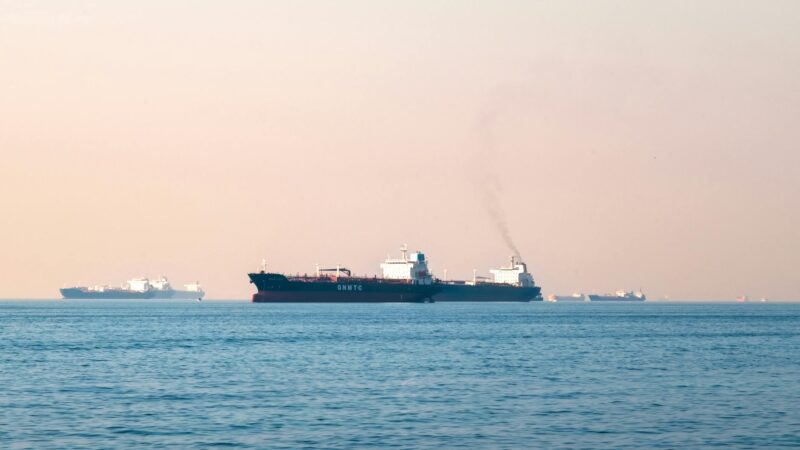
In the early morning hours of March 31, 2026, the Kuwaiti supertanker Al-Salmi was struck by an Iranian attack while sailing in waters off the coast of Dubai. The Al-Salmi is a Very Large Crude Carrier (VLCC) with a loading capacity of 2 million barrels, making it one of the largest vessels in the Kuwaiti fleet and among the biggest tankers operating in the Gulf.

A fire broke out on the tanker upon impact, but the ship’s crew and maritime firefighting teams managed to extinguish it without any oil spill occurring. Although the physical damage was relatively contained, the political and strategic message was unmistakable: no one is beyond reach, not even nations that have deliberately and consistently chosen neutrality.
Key details of the incident reveal several critically important points:
- Location: Off the coast of Dubai, in one of the world’s busiest and most strategically vital shipping lanes
- Tanker size: 2 million barrel capacity — roughly equivalent to Kuwait’s entire daily oil production loaded onto a single vessel
- Outcome: Fire extinguished, no oil spill, but the tanker was temporarily taken out of service for damage assessment and repairs
- Timing: The attack came as part of a broad, coordinated Iranian escalation wave targeting multiple Gulf states simultaneously
April 5, 2026: Kuwait Petroleum Corporation HQ Drone Strike
Less than a week after the tanker attack, Iran escalated dramatically by directing drone strikes at the headquarters of Kuwait Petroleum Corporation (KPC) in Kuwait City itself. This was not merely an attack on an ordinary oil facility — it was a direct assault on the parent organization that manages Kuwait’s entire petroleum sector, the very sector that accounts for over 90% of state revenue and forms the backbone of the national economy.
KPC is the holding company that oversees all exploration, production, refining, and export operations in Kuwait. It controls subsidiaries including Kuwait Oil Company, Kuwait National Petroleum Company, and Petrochemical Industries Company. Targeting KPC headquarters means targeting the central nervous system of the Kuwaiti economy. The building houses senior management and operational control centers whose disruption, even temporarily, can cascade through the entire production chain.
April 5, 2026: Coordinated Strike on Bahrain
At approximately the same time as the KPC attack, oil storage facilities in Bahrain were hit by drone attacks, clearly indicating that the strikes were coordinated and meticulously planned to simultaneously target the oil infrastructure of multiple Gulf states. This pattern of synchronized, multi-target operations dramatically elevates the threat level, demonstrating an Iranian capability to wage multi-front attacks simultaneously — stretching Gulf defenses thin across thousands of kilometers of coastline.
Saudi Interceptions: The Defensive Wall
During the same wave of attacks, Saudi Arabia intercepted 10 drones and 8 ballistic missiles directed at its territory. The success of these interceptions reflects the effectiveness of Saudi air defense systems, including Patriot and THAAD batteries that have been continuously upgraded over recent years. But the sheer scale of the intercepts — 18 targets in a single wave — also reveals the massive volume of the Iranian offensive. This was not a pinprick strike but a full-spectrum assault designed to overwhelm defenses across the entire Gulf simultaneously.
For broader regional developments, read our analysis on the latest Iran war updates and the war’s impact on oil prices.
Kuwait’s Neutrality Shattered: Why This Attack Changes Everything
To understand the true gravity of what happened, these attacks must be placed in their proper historical and geopolitical context. Kuwait is not a party to any military alliance hostile to Iran. Quite the opposite — Kuwait has maintained diplomatic relations with Tehran even during the darkest periods of regional tension, keeping its embassy open and its channels of communication active.
The History and Logic of Kuwaiti Neutrality
After its liberation from Iraqi occupation in 1991 by the international coalition, Kuwait adopted a diplomatic approach built on several carefully constructed pillars:
- Regional mediation: Kuwait served as mediator in multiple crises, most notably the Gulf crisis with Qatar (2017-2021), where the late Emir Sheikh Sabah Al-Ahmad Al-Jaber Al-Sabah became the face of Gulf reconciliation
- Balanced relationships: Maintained working relations with Iran despite regional tensions, hosting Iranian trade delegations and maintaining diplomatic presence
- Avoiding military blocs: Did not join offensive military alliances against any regional party, maintaining a defensive-only posture
- Quiet diplomacy: Preferred back channels, shuttle diplomacy, and dialogue over public confrontation and media wars
- Humanitarian focus: Positioned itself as a humanitarian hub, hosting major donor conferences for Syria, Yemen, and other crisis zones
This neutrality was not weakness — it was a calculated strategic choice for a geographically small nation sitting on enormous wealth. Kuwait understood that its security lay in not antagonizing any party, especially neighboring Iran, separated by nothing more than a narrow stretch of Gulf waters — less than 200 kilometers at the closest point. At that distance, Iranian missiles and drones can reach any target in Kuwait within minutes.
Why Did Iran Target Kuwait Now?
Targeting Kuwait despite its well-established neutrality carries multiple strategic messages that extend far beyond the immediate military objectives:
- A message of total reach: No Gulf state is safe, regardless of political stance. Neutrality offers zero protection
- Targeting aggregate export capacity: Kuwait is a major oil exporter; hitting it adds pressure on already-strained global supply chains
- Economic warfare by proxy: Raising insurance and shipping costs for all Gulf states, effectively imposing a war tax on Gulf oil without needing to block the strait
- Demonstrating capability: Proving that Iran can conduct precision strikes on high-value targets across the entire Gulf theater
- Dividing defenses: The more fronts Iran opens, the thinner Gulf defensive resources are stretched
Impact on Kuwait’s Oil Exports: An Existential Threat
Kuwait holds the world’s fourth-largest proven oil reserves at approximately 101.5 billion barrels. The country produces around 2.7 million barrels per day and exports most of its output through the Arabian Gulf — the very corridor that Iran is now directly threatening. Oil accounts for over 90% of government revenue and approximately 60% of GDP, meaning any export disruption constitutes a genuine existential threat to the state’s economic viability.
The Export Chain Under Direct Threat
Kuwait’s oil exports depend on three main components, and every single one is now compromised:
First: Production and Refining Facilities
The drone attack on KPC headquarters proves that onshore facilities are vulnerable to precision strikes. If Iran can hit the main corporate headquarters in the heart of Kuwait City, then the major oil fields — including the Burgan field, the world’s second-largest oil field — and the refineries at Ahmadi and Shuaiba are significantly easier targets. A successful strike on Burgan alone could take over a million barrels per day offline, with repairs potentially taking weeks or months.
Second: Ports and Export Terminals
Ahmadi Port is the primary outlet for Kuwaiti oil exports, handling the vast majority of crude shipments. Any disruption to this port — whether through direct attack, mine-laying in approach channels, or simply the threat of attack deterring tanker captains — would halt oil flows almost completely. Kuwait’s geographic position at the extreme northern end of the Gulf compounds this vulnerability.
Third: Maritime Shipping Lanes
All Kuwaiti oil exports must transit the full length of the Arabian Gulf and pass through the Strait of Hormuz before reaching open waters. The Al-Salmi attack proved these shipping lanes are no longer safe. Worse still, Kuwait’s position at the top of the Gulf means its tankers must travel the longest distance through threatened waters of any Gulf exporter — maximizing exposure time to potential attacks.
Maritime Insurance Costs Surge 400%: The Silent Economic War
One of the most devastating immediate consequences of the attacks is the explosive increase in maritime shipping insurance costs in the Arabian Gulf. Premiums have surged by 400% — an unprecedented figure that reflects the extreme risk perception among underwriters at Lloyd’s of London and other major insurance markets.
This staggering increase means in practical terms:
- Soaring export costs: Every barrel of Kuwaiti oil now carries a massive additional insurance cost that erodes profit margins significantly
- Shipping company reluctance: Some shipping companies have already begun refusing transport contracts to and from the Gulf, creating a tanker availability crisis
- Coverage refusal: Some insurers may refuse to cover Gulf voyages entirely, making shipping legally impossible for vessels requiring insurance
- Global price pressure: Elevated shipping and insurance costs feed directly into the oil price paid by end consumers worldwide
- Route diversion: Some Asian buyers are already exploring alternatives to Gulf crude to avoid the escalating risks and costs
For continuous updates on oil price developments, follow our 2026 oil price forecast.
The Ghost of 1990: Historical Parallels Between the Iraqi Invasion and Iranian Attacks
It is impossible to discuss an attack on Kuwait without invoking the memory of the Iraqi invasion of August 2, 1990 — the event that fundamentally reshaped the entire region. Despite vastly different circumstances, there are deeply troubling similarities and essential differences that deserve careful examination.
Troubling Similarities
- Targeting the oil sector: In 1990, the retreating Iraqi army set ablaze over 700 Kuwaiti oil wells in an act of scorched-earth destruction. Today, Iran targets oil infrastructure with drones and missiles — different weapons, same intent
- Existential threat: In both cases, Kuwait’s primary — indeed, almost sole — revenue source faces direct, potentially catastrophic threat
- Regional dimension: Neither attack was isolated; both were part of broader regional conflicts that transcended Kuwait itself
- Psychological shock: The Kuwaiti people, who never fully recovered from the collective trauma of 1990, are now living through fresh terror that reopens deep psychological wounds
- Element of surprise: In both cases, the attacks came with a degree of surprise despite pre-existing warning signs
Fundamental Differences
- Nature of attack: There is no ground invasion or occupation in 2026 — these are standoff strikes from hundreds of kilometers away. No Iranian soldier has set foot on Kuwaiti soil
- The attacker: Iran, not Iraq, with vastly different military capabilities including an advanced missile program and a nuclear program that adds an entirely different dimension of deterrence
- International context: The world of 2026 bears little resemblance to 1990 in terms of alliances, interests, and the willingness of major powers to intervene. The United States is far less inclined to lead another Desert Storm
- Response: No direct international military intervention has materialized yet, unlike the swift coalition-building that led to Kuwait’s liberation in 1991
- Defensive capabilities: Kuwait in 2026 possesses far superior defense capabilities compared to 1990, though clearly still insufficient against sophisticated drone and missile threats
But the painful conclusion remains the same across three decades: Kuwait, despite its small size and declared neutrality, remains perpetually vulnerable to becoming collateral damage in the power struggles between the region’s major players. Geography is destiny, and Kuwait’s geography places it squarely in the crossfire.
Fundamental Questions About GCC Solidarity
The simultaneous attacks on Kuwait, Bahrain, and Saudi Arabia raise an existential question for the Gulf: Is the collective security system capable of protecting its members when the moment of truth arrives?
The GCC Faces Its Ultimate Test
The Gulf Cooperation Council was founded in 1981 precisely because of the Iranian threat in the aftermath of the Islamic Revolution and the eruption of the Iran-Iraq War. Today, more than four decades and trillions of dollars in military spending later, the Council faces the exact challenge it was created to address.
But reality reveals significant gaps in the collective defense architecture:
- Stark capability disparity: Saudi Arabia intercepted 18 targets in the same wave using advanced Patriot and THAAD systems, while Kuwait could not repel the drone attack on KPC headquarters. This disparity is dangerous and exposes real defensive gaps
- No effective unified command: Despite decades of discussion, there is no functional unified Gulf military command capable of coordinating real-time joint defense across all member states
- Divergent political positions: Some Gulf states are far more deeply engaged in the confrontation with Iran than others, complicating any unified response
- Historical reliance on American protection: Most Gulf states built their security strategies on the assumption of a permanent American security umbrella — an assumption that erodes with each passing year
What Must Happen Now
The simultaneous targeting of three Gulf states may prove to be the long-overdue catalyst for activating joint defense mechanisms that have remained theoretical for decades. When everyone is a target, there is no room for neutrality, individual action, or diplomatic statements without teeth.
Urgent steps required:
- Immediate activation of the joint defense pact: Converting the agreement from a theoretical document into a functional mechanism with clear timelines, rules of engagement, and automatic triggers
- Air defense integration: Linking all Gulf radar systems and air defense platforms into a unified network that shares threat data instantaneously
- Joint rapid reaction force: Establishing a combined military force deployable within hours to any threatened member state
- Real-time intelligence sharing: Continuous, automatic sharing of intelligence data between all member states without political filters or delays
- Unified early warning system: Developing a shared detection network for aerial, maritime, and cyber threats across the entire Gulf theater
Kuwait Investment Authority: What Escalation Means for the World’s Oldest Sovereign Wealth Fund
The Kuwait Investment Authority (KIA) is the world’s oldest sovereign wealth fund, established in 1953 — even before Kuwait’s independence from Britain — managing assets estimated at over $800 billion spread across investments in more than 50 countries. This fund is Kuwait’s economic safety net and the guarantee protecting future generations against the eventual depletion of oil reserves.
Direct Impacts on the Fund
- Declining oil revenue: Any disruption in exports means reduced financial flows into the General Reserve Fund, which finances the government budget and feeds the Future Generations Fund
- Surging defense expenditure: Kuwait will be compelled to dramatically and urgently increase its military budget, diverting resources from investment allocations
- Reconstruction and hardening costs: Repairing damage to oil infrastructure and fortifying it against future attacks requires billions of dollars
- Capital flight: Instability and fear of future attacks may drive both domestic and foreign investors to exit the Kuwaiti market
- Credit rating risk: Rating agencies may downgrade Kuwait if attacks continue, raising borrowing costs across the economy
Global Investment Implications
KIA holds massive stakes in major global companies and markets across multiple sectors and geographies. Escalating geopolitical tensions are broadly negative for global market performance, which in turn erodes the book value of KIA’s investment portfolio.
Yet paradoxically, rising oil prices resulting from the tensions increase Kuwait’s oil revenue in the short term — a cruel irony where the product’s price surges even as the producer comes under direct attack and potential destruction. This contradictory equation encapsulates the impossible situation facing Gulf oil states today: they profit from the very chaos that threatens their existence.
For analysis of how the crisis affects financial markets, read our report on the war’s impact on Gulf markets.
Total War Casualties: More Than 3,400 Dead Across the Region
According to the latest available figures as of April 6, 2026, total casualties in the escalating regional conflict have exceeded 3,400 killed across multiple countries. This devastating number includes both military personnel and civilians who have fallen across various fronts — from ballistic missile strikes to drone attacks to naval engagements.
Every number in these statistics represents a human being who lost their life, a family shattered by grief, and a community carrying the permanent scars of war. As hostilities intensify and the circle of targeting expands, this figure is tragically certain to climb significantly — especially if strikes extend to densely populated civilian areas.
The moral and legal responsibility for these casualties falls on those who initiated the escalation and those who rejected diplomatic solutions. The international community bears an urgent obligation to act before this conflict transforms into a comprehensive humanitarian catastrophe.
What This All Means for the Future of Gulf Neutrality
The most important and most painful lesson from targeting Kuwait is straightforward: neutrality is no longer a viable survival strategy under Iran’s current escalation. Tehran has proven through action — not merely rhetoric — that it is willing to strike any Gulf state regardless of its political stance, diplomatic history, or mediation credentials.
The End of the Neutrality Era
For decades, some Gulf states believed they could avoid confrontation through neutrality, mediation, and balanced relationships. This comfortable illusion has now been permanently and irrevocably shattered. The options before Kuwait and other Gulf states have narrowed to a set of difficult, potentially irreversible choices:
- Integrated defense alliance: Forming a genuine unified Gulf front with shared defensive capabilities, unified command structures, and automatic mutual defense commitments — not mere paper agreements
- Autonomous defense buildup: Urgent, massive investment in advanced air and naval defense systems, particularly counter-drone and counter-missile technologies
- Binding international security guarantees: Obtaining clear, written, and legally binding security commitments from major powers, backed by forward-deployed forces
- Final diplomatic attempt: Opening direct dialogue channels with Iran, though success prospects appear slim given current conditions and the pattern of escalation
Oman: The Last Neutral Standing?
If Kuwait has lost its neutrality by force, the Sultanate of Oman remains the only Gulf state that has maintained relatively balanced relations with Iran up to this point. But the question that now looms large is: how long can Oman sustain this exceptional position amid escalating attacks and an expanding target list? And will Oman find itself next if the escalation continues on its current trajectory?
Future Scenarios: Where Do Things Go From Here?
Scenario One: Full-Scale Escalation
If Iranian attacks on Gulf states continue and intensify, we may witness:
- Partial or complete halt of Kuwaiti and broader Gulf oil exports
- Effective closure of the Strait of Hormuz to commercial navigation — cutting approximately 20% of global oil supply
- Oil prices surging to historic levels potentially exceeding $200 per barrel
- Major international military intervention to protect global energy corridors
- A severe global economic crisis triggered by the energy shock, potentially rivaling or exceeding the 1973 oil crisis in impact
Scenario Two: De-escalation and Negotiation
If diplomatic efforts succeed — a hope that diminishes with each passing day:
- Gradual return to normal navigation in the Arabian Gulf
- Progressive decline in maritime insurance costs as risk perceptions normalize
- Comprehensive, fundamental review of Gulf security architecture
- Massive, urgent investments in defensive infrastructure across all Gulf states
- Restructuring of regional relationships on entirely new foundations
Scenario Three: Prolonged War of Attrition (Most Likely)
The most probable scenario is the region entering a prolonged, low-to-medium intensity war of attrition:
- Intermittent, unpredictable attacks on oil facilities, tankers, and infrastructure
- Continuously rising operational and living costs throughout the region
- Gradual exodus of skilled foreign labor from Gulf states, undermining economic diversification plans
- Severe economic slowdown hitting the entire region, potentially reversing decades of development
- Diversion of national resources from development and economic diversification toward defense and security
Impact on Global Energy Markets
Kuwait produces approximately 2.7 million barrels per day, roughly 3% of global production. Any significant disruption to Kuwaiti production or exports would have a direct and immediate effect on global oil prices. But Kuwait is not alone in the crosshairs — Saudi Arabia, Bahrain, and the UAE all face escalating risks, meaning more than 20 million barrels per day of Gulf production now operates under a cloud of profound uncertainty.
The greater and more insidious impact is not in actually lost production but in the “geopolitical risk premium” that attaches to every barrel of oil transiting the Gulf. With insurance costs up 400%, the cost of every barrel rises even if production itself does not stop for a single day. This risk premium functions as an invisible tax on global energy consumers, imposed not by any government but by the reality of war.
Winners from this crisis:
- Producers outside the Gulf region — US shale, Canadian oil sands, Norway, Brazil — all benefit from elevated prices without bearing regional risks
- Major maritime insurance companies that have raised premiums to astronomical levels
- Liquefied natural gas exporting nations positioned as alternatives to Gulf oil
- The renewable energy sector, which gains additional momentum with every oil crisis and price spike
Losers:
- Oil-importing nations, especially in Asia: China, India, Japan, and South Korea face surging energy bills
- Shipping and maritime transport companies bearing direct operational risks to their vessels and crews
- Consumers worldwide paying higher prices for fuel, goods, and services
- Developing economies dependent on affordable energy to sustain growth and lift populations from poverty
- The people of Gulf states themselves, living under the shadow of permanent, unpredictable threat
To learn more about how the crisis affects gold prices as a safe haven, follow our continuously updated analysis.
Conclusion: Kuwait at a Historic Crossroads That Demands Action
The events of the first week of April 2026 have placed Kuwait before a shocking new reality that cannot be ignored, wished away, or managed with the old diplomatic toolkit. The nation that chose neutrality as a survival and prosperity strategy found itself targeted with the same ferocity as states directly engaged in the confrontation.
The challenge Kuwait now faces is three-dimensional and deeply interconnected: security (protecting oil and civilian infrastructure from near-certain future attacks), economic (ensuring continued oil flow, revenue streams, and sovereign investment protection), and strategic (decisively redefining its position on the map of regional and international alliances).
What is abundantly clear is that the Arabian Gulf has entered a dangerous new phase from which there is no returning to the status quo ante. Kuwait, with its enormous oil wealth, massive sovereign fund, and sensitive geographic position at the intersection of major power interests, will inevitably find itself at the heart of whatever security and economic arrangements emerge — whether it chooses that role or has it forced upon it.
The days and weeks ahead will reveal how Kuwait and the broader Gulf respond to this new reality. But one thing has become certain beyond all doubt: the era of Gulf neutrality is over, and the next phase demands difficult, decisive, and potentially irreversible choices. Follow our Gulf security analysis to stay informed of the latest developments as this crisis continues to unfold.