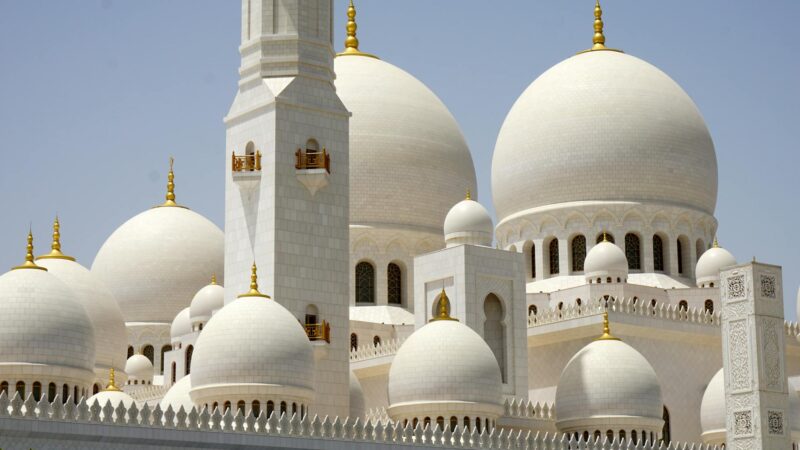
Islamic finance is a financial system built on the principles of Islamic law (Sharia). It prohibits interest (riba), excessive speculation, and investment in industries considered harmful — and instead requires that financial transactions be backed by real assets, share risk between parties, and promote economic justice.
What started as a niche alternative has grown into a $4 trillion global industry (ICD-Refinitiv, 2025 estimate), spanning banking, capital markets, insurance (takaful), and asset management. Islamic finance is not limited to Muslim-majority countries — it has attracted interest from regulators and investors in London, Luxembourg, Hong Kong, and beyond.
This guide breaks down how Islamic finance works, its core instruments, the key players driving the industry, and where it is headed.

Core Principles of Islamic Finance
Islamic finance operates on five foundational principles that distinguish it from conventional finance:
1. Prohibition of Interest (Riba)
The most fundamental rule. Charging or paying interest is forbidden in Islamic finance. Money itself is not considered a commodity that can generate returns — it is simply a medium of exchange. Any return must come from productive economic activity, not from lending money at interest.
This principle is why Islamic mortgages, loans, and bonds are structured differently from their conventional counterparts. Instead of lending money and charging interest, Islamic financial institutions use profit-sharing, leasing, or cost-plus structures.
2. Profit-and-Loss Sharing
Both parties in a financial transaction must share the risk. A bank cannot guarantee itself a fixed return while the borrower bears all the risk. This principle promotes fairness and ensures that financial institutions have a genuine stake in the success of the ventures they fund.
3. Asset-Backing
Every financial transaction must be linked to a tangible, identifiable asset or economic activity. Purely speculative instruments — such as certain derivatives — are not permissible. This requirement for real economic substance is one reason Islamic finance proved relatively resilient during the 2008 global financial crisis.
4. Prohibition of Excessive Uncertainty (Gharar)
Contracts must be clear, transparent, and free from excessive ambiguity. Both parties should know exactly what they are agreeing to. This principle restricts certain types of speculative trading, conventional insurance structures, and contracts with deliberately vague terms.
5. Ethical Screening (Haram Activities)
Islamic finance prohibits investment in industries considered harmful under Sharia law. This includes:
- Alcohol and tobacco
- Gambling
- Pork and pork-related products
- Conventional financial services (interest-based)
- Weapons and defense (in most interpretations)
- Adult entertainment
This ethical screening makes Islamic finance a natural counterpart to ESG (Environmental, Social, and Governance) investing — a connection that has driven growing crossover interest from Western institutional investors.
How Islamic Banks Work vs Conventional Banks
The fundamental difference is how money flows. A conventional bank takes deposits, pays depositors a fixed interest rate, lends money to borrowers at a higher interest rate, and profits from the spread. An Islamic bank cannot do this.
Instead, Islamic banks use a range of Sharia-compliant structures:
| Feature | Conventional Bank | Islamic Bank |
|---|---|---|
| Deposits | Pay fixed interest to depositors | Depositors share in the bank’s profits (or losses) |
| Lending | Charge interest on loans | Use cost-plus sale, leasing, or profit-sharing structures |
| Risk | Bank bears minimal risk on lending | Bank shares risk with clients |
| Oversight | Regulated by central bank | Regulated by central bank + Sharia supervisory board |
| Investment | Can invest in any legal asset | Must avoid haram sectors |
| Collateral | Financial guarantees | Asset-backed transactions |
Every Islamic bank has a Sharia supervisory board — a panel of Islamic scholars who review and approve all products, contracts, and operations to ensure compliance with Islamic law. This adds a layer of governance that does not exist in conventional banking.
In practice, many Islamic banking products achieve similar economic outcomes to conventional products but through different legal structures. For example, instead of a mortgage with interest, an Islamic bank might purchase a property and sell it to the customer at a marked-up price payable in installments (Murabaha), or buy the property and lease it to the customer with an option to purchase (Ijara).
Key Islamic Finance Instruments
Murabaha (Cost-Plus Financing)
The most widely used instrument in Islamic banking. The bank purchases an asset (a car, property, equipment) and sells it to the customer at a disclosed markup, payable in installments. The key distinction from a conventional loan: the bank takes actual ownership of the asset, even if briefly, and the markup is agreed upfront rather than calculated as a floating interest rate.
Use case: Home purchases, vehicle financing, business equipment
Mudaraba (Profit-Sharing Partnership)
One party provides the capital (the bank or investor) and the other provides the management expertise and labor. Profits are shared according to a pre-agreed ratio. Losses are borne by the capital provider, unless the manager was negligent. This structure is commonly used for investment accounts and venture funding.
Use case: Investment deposits, venture capital, fund management
Musharaka (Joint Venture)
Both parties contribute capital and share profits and losses proportionally. A common variation is diminishing Musharaka, where one partner gradually buys out the other — frequently used for home financing. The customer and the bank co-own the property, and the customer gradually acquires the bank’s share through regular payments.
Use case: Home financing, business partnerships, project finance
Ijara (Leasing)
The bank purchases an asset and leases it to the customer for a fixed period. The bank retains ownership and bears the risks of ownership (maintenance, insurance), while the customer pays regular lease payments. At the end of the lease, the customer may have the option to purchase the asset.
Use case: Equipment leasing, vehicle financing, property
Sukuk (Islamic Bonds)
Sukuk are the Islamic equivalent of bonds and the most important instrument in Islamic capital markets. Unlike conventional bonds, which represent debt obligations with interest payments, sukuk represent proportional ownership in an underlying asset and the returns are derived from that asset’s performance.
A sukuk issuance works like this:
- A company or government creates a special purpose vehicle (SPV)
- The SPV acquires an asset or portfolio of assets
- Sukuk certificates are issued to investors, representing ownership shares in those assets
- Returns to investors come from the asset’s income (rent, profit, etc.)
- At maturity, the assets are sold or transferred back, and investors receive their principal
Global sukuk issuance reached approximately $230 billion in 2024, according to S&P Global Ratings. Saudi Arabia and Malaysia are the two largest sukuk markets, followed by the UAE, Indonesia, and Turkey.
| Sukuk Type | Structure | Return Source |
|---|---|---|
| Sukuk al-Ijara | Lease-based | Rental income from leased assets |
| Sukuk al-Murabaha | Cost-plus sale | Profit from sale of commodities |
| Sukuk al-Musharaka | Partnership | Profit from joint venture |
| Sukuk al-Wakala | Agency | Returns from managed investment portfolio |
Sovereign sukuk are particularly significant. Saudi Arabia, the UAE, Malaysia, Indonesia, Turkey, and even the UK (which issued a sovereign sukuk in 2014) have used sukuk to raise capital in Sharia-compliant markets.
Size of the Global Islamic Finance Market
Islamic finance has grown from a niche concept into a major global industry.
| Segment | Estimated Size (2025) |
|---|---|
| Islamic Banking | ~$2.7 trillion in assets |
| Sukuk Outstanding | ~$850 billion |
| Islamic Funds | ~$250 billion |
| Takaful (Islamic Insurance) | ~$60 billion |
| Total Industry | ~$4+ trillion |
Sources: ICD-Refinitiv Islamic Finance Development Report, S&P Global Ratings, Bloomberg
The industry has been growing at approximately 10-12% annually, outpacing conventional finance in many markets. The Gulf Cooperation Council (GCC) states and Malaysia are the two dominant hubs, together accounting for the majority of global Islamic financial assets.
Key Players in Islamic Finance
Al Rajhi Bank (Saudi Arabia)
The world’s largest Islamic bank by market capitalization, listed on the Tadawul stock exchange. Al Rajhi is a pillar of Saudi Arabia’s financial system and has been expanding across the GCC and Southeast Asia. It offers a full range of retail and corporate banking products, all Sharia-compliant.
Dubai Islamic Bank (UAE)
Founded in 1975, Dubai Islamic Bank (DIB) was the world’s first fully-fledged Islamic bank. It is now one of the largest in the world, with assets exceeding $80 billion. DIB is listed on the Dubai Financial Market and is a key player in the UAE’s Islamic finance ecosystem.
Kuwait Finance House (Kuwait)
One of the largest Islamic financial institutions globally, with operations spanning Kuwait, Turkey (via its subsidiary, now rebranded as KFH Turkey), Bahrain, Malaysia, and Germany. KFH’s acquisition of Ahli United Bank in 2022 created one of the world’s largest Islamic banking groups.
Other Major Players
- Bank Rakyat and Maybank Islamic (Malaysia) — Malaysia is the world’s leading sukuk market and a hub for Islamic finance regulation and innovation
- Qatar Islamic Bank — the largest Islamic bank in Qatar
- Bahrain Islamic Bank and Al Baraka Banking Group — Bahrain positions itself as a regulatory center for Islamic finance
- HSBC Amanah, Standard Chartered Saadiq — global conventional banks with dedicated Islamic finance units
Islamic Fintech
The convergence of Islamic finance and financial technology is one of the industry’s most dynamic frontiers. Key developments include:
- Digital Islamic banks. Several fully digital Sharia-compliant banks have launched across the GCC and Southeast Asia.
- Robo-advisory for halal investing. Platforms like Wahed Invest offer automated, Sharia-screened investment portfolios to retail investors globally.
- Blockchain sukuk. Experiments in issuing sukuk on blockchain platforms are underway, with potential to reduce costs and increase transparency.
- Sharia-compliant crowdfunding. Platforms enabling Musharaka and Mudaraba-based crowdfunding for SMEs and real estate projects.
- Islamic buy-now-pay-later (BNPL). Sharia-compliant BNPL products have been launched by several GCC fintech companies.
The Islamic fintech market is estimated to be worth over $120 billion by 2025 (DinarStandard), driven by a young, digitally native Muslim population and supportive regulatory environments in the GCC and Southeast Asia.
The Gulf States’ Role in Islamic Finance
The GCC states are central to the Islamic finance ecosystem for several reasons:
-
Regulatory frameworks. Bahrain’s Central Bank and the UAE’s regulators have built comprehensive Islamic finance regulatory environments. The Accounting and Auditing Organization for Islamic Financial Institutions (AAOIFI), headquartered in Bahrain, sets global Sharia accounting standards.
-
Sovereign issuance. Saudi Arabia and the UAE are among the world’s largest sovereign sukuk issuers, providing benchmarks for the broader market.
-
Institutional demand. GCC sovereign wealth funds, pension funds, and insurance companies represent massive pools of capital that require or prefer Sharia-compliant instruments.
-
Cross-border growth. GCC-based Islamic banks are expanding into Southeast Asia, Turkey, Africa, and even Europe — exporting Islamic finance expertise globally.
For a deeper look at Gulf financial markets, see our Middle East Stock Markets Guide.
Challenges and Misconceptions
Common Misconceptions
“Islamic finance is only for Muslims.” It is not. Islamic finance is an ethical financial system that anyone can use. Many non-Muslim investors are attracted to its emphasis on asset-backing, risk sharing, and ethical screening. The UK, Luxembourg, and Hong Kong have all issued sovereign sukuk to tap Islamic capital pools.
“It is just conventional finance with different labels.” Critics argue that some Islamic products replicate conventional outcomes through complex structures. This criticism has validity in certain cases, but the industry has been moving toward more genuinely equity-based and partnership-based products.
“It is less regulated.” In fact, Islamic banks face dual regulation: conventional banking regulation plus Sharia governance. This adds oversight, not reduces it.
Genuine Challenges
- Standardization. Sharia interpretation varies across scholars and jurisdictions. A product approved in Malaysia may not be approved in Saudi Arabia, creating fragmentation.
- Liquidity management. Islamic banks cannot use conventional interbank lending markets (which are interest-based), making liquidity management more complex.
- Scale. Despite rapid growth, Islamic finance still represents only about 2-3% of global financial assets, limiting economies of scale.
- Talent. There is a global shortage of professionals who understand both modern finance and Islamic jurisprudence.
- Product complexity. The requirement to structure transactions around assets rather than simple lending adds legal and operational complexity.
Frequently Asked Questions (FAQ)
What is the main difference between Islamic and conventional finance?
The core difference is the prohibition of interest (riba). In conventional finance, money is lent at interest. In Islamic finance, returns must come from real economic activity — through profit-sharing, asset sales, or leasing. All transactions must be backed by tangible assets, and both parties share risk.
What are sukuk and how are they different from bonds?
Sukuk are Islamic investment certificates that represent proportional ownership in an underlying asset. Unlike conventional bonds, which are debt instruments paying interest, sukuk returns are derived from the performance of real assets — such as rental income, profit from trade, or returns from a business venture. Global sukuk outstanding exceed $850 billion.
Is Islamic finance only available in Muslim-majority countries?
No. Islamic finance products are available in the UK, Germany, Luxembourg, Singapore, Hong Kong, the United States, and many other non-Muslim-majority jurisdictions. Major global banks like HSBC and Standard Chartered offer dedicated Islamic finance units, and sovereign sukuk have been issued by non-Muslim governments.
How big is the Islamic finance industry?
The global Islamic finance industry is valued at over $4 trillion in total assets (2025 estimate), including approximately $2.7 trillion in Islamic banking assets, $850 billion in outstanding sukuk, $250 billion in Islamic funds, and $60 billion in takaful (Islamic insurance). The industry has been growing at 10-12% annually.
What is takaful?
Takaful is the Islamic alternative to conventional insurance. Instead of paying premiums to an insurance company that profits from the pool, takaful participants contribute to a mutual fund. Claims are paid from this pool, and any surplus is shared among participants. The concept is based on mutual assistance (ta’awun) and shared responsibility.
Key Takeaways
- Islamic finance is a $4+ trillion global industry built on the prohibition of interest, risk-sharing, asset-backing, and ethical investment screening.
- Instead of interest-based lending, Islamic banks use instruments like Murabaha (cost-plus sale), Mudaraba (profit-sharing), Musharaka (joint venture), and Ijara (leasing).
- Sukuk are the Islamic equivalent of bonds, representing ownership in real assets rather than debt obligations. The global sukuk market exceeds $850 billion.
- Key players include Al Rajhi Bank (Saudi Arabia), Dubai Islamic Bank (UAE), and Kuwait Finance House (Kuwait), along with Islamic units of global banks.
- The GCC states are central to Islamic finance through regulation (AAOIFI in Bahrain), sovereign sukuk issuance, and institutional demand.
- Islamic fintech is a rapidly growing segment, with digital banks, robo-advisory, and blockchain-based sukuk emerging across the industry.
- Challenges include lack of standardization across jurisdictions, liquidity management constraints, and a shortage of qualified professionals.
- Despite representing only 2-3% of global finance, Islamic finance is growing significantly faster than conventional finance, driven by demographic trends, regulatory support, and increasing crossover interest from ESG-focused investors.
- For more on the financial landscape of the Gulf, see our Saudi Arabia Economy Guide and Middle East Stock Markets Guide.