Dubai Bling is coming back for a fourth season — and it arrives as the centrepiece of the most aggressive Arabic content slate Netflix has ever committed to the region.
The streamer has confirmed a 2026 lineup spanning drama, thriller, romantic comedy and reality: Chasing Shadows, From The Ashes: The Pit, Love in Slow Motion, and the psychological thriller Obsess, alongside returning hits Dubai Bling and Love Is Blind: Habibi. On paper it is a content announcement. In practice it is a statement about where the economics of Arabic entertainment are heading, and who intends to own them.
Most coverage of this slate will tell you what to watch. That is the least interesting part of it. The more useful question is why a global platform with finite commissioning budget keeps increasing its Arabic bet, what a reality show about Dubai wealth actually reveals about the city’s economy, and what the competitive response from Shahid and OSN+ means for anyone selling to or investing in this market.

Below: everything confirmed on the slate, why Dubai Bling functions as an economic document rather than a guilty pleasure, the commissioning economics driving the push, and where the regional streaming war stands going into the second half of 2026.
What Netflix Has Confirmed for 2026
The slate breaks into two categories, and the balance between them is itself informative.
Returning titles
- Dubai Bling — Season 4. The reality series tracking the social and business lives of Dubai’s wealthy expatriate and Gulf elite. Its renewal to a fourth season makes it one of the most durable Arabic-language reality franchises on any platform.
- Love Is Blind: Habibi — Season 2. The regional adaptation of Netflix’s dating format, returning after a first season that demonstrated the format travels into Gulf cultural context with adjustment.
New titles
- Chasing Shadows. A crime drama built around a con artist whose schemes bring him into conflict with a determined investigator.
- From The Ashes: The Pit. A sequel continuing the story of three young women navigating shifting loyalties in the aftermath of a fire.
- Love in Slow Motion. A romantic comedy starring Noor Alghandour and Ali Kakooli.
- Obsess. A psychological thriller following a man confronting unresolved elements of his past, structured so that the boundary between reality and perception stays deliberately unstable.
Netflix has not published a full episode-level release calendar for every title, and readers should treat any specific date circulating on aggregator sites as unconfirmed until it appears on the platform’s own official channels. What is confirmed is the slate itself and the renewals.
What the genre mix signals
Four of the six titles are scripted; two are reality. Three of the four scripted titles are thriller or crime. That is not an accident of taste — it is a commissioning strategy.
Thrillers and crime dramas travel. They subtitle cleanly, they depend less on culturally specific humour than comedy does, and they perform in the algorithmic recommendation systems that determine whether a title finds an audience outside its home market. A platform building an Arabic slate for regional consumption alone would commission more comedy and more family drama. A platform building an Arabic slate it hopes will export commissions exactly this ratio.
Why Dubai Bling Is an Economic Document
It is easy to dismiss Dubai Bling as an ostentatious reality series. That reading misses what makes it genuinely interesting, and why it has outlasted almost every other Arabic reality format.
The show is, functionally, a rolling ethnography of how wealth is displayed, converted and legitimised in the Gulf’s most internationalised city. Its cast are not primarily inherited-wealth aristocrats. They are entrepreneurs, brokers, influencers and business owners — people whose income depends on visibility, and for whom appearing on the show is itself a business decision with a measurable return.
The visibility economy
Dubai runs an economy in which personal brand converts directly into deal flow. In property brokerage, luxury retail, private wealth advisory and the influencer-adjacent service industries that surround them, being known is not vanity. It is customer acquisition.
This is why cast members treat the programme as a channel rather than a credit. A season of exposure to a global Netflix audience is worth more to a Dubai property broker than most paid media they could otherwise buy, and it is worth it specifically because the audience arrives pre-sorted for aspiration.
Readers interested in the underlying market that generates these fortunes should see our complete guide to Dubai real estate in 2026, which covers the transaction data behind the lifestyle.
What the show gets right
Two things, and they are not trivial.
First, it accurately depicts Dubai’s wealth as substantially earned and mobile rather than inherited and static. The city’s defining economic characteristic is that it imports wealthy people rather than only producing them, and the cast composition reflects that: Lebanese, Egyptian, Indian, Iraqi and Gulf nationals whose fortunes were made in trade, property, services and media.
Second, it captures the speed at which status is renegotiated. In an economy with high in-migration of capital, social hierarchy is unusually fluid. The show’s interpersonal volatility, which reads as manufactured drama, is partly a genuine feature of a place where relative standing genuinely resets every few years.
What it distorts
The distortion is one of composition. The show samples the most visible tier of Dubai wealth — the tier that wants to be seen. That is a specific and unrepresentative slice.
The largest fortunes in the Gulf are conspicuously absent from reality television, and their absence is deliberate. Family offices, trading houses and sovereign-adjacent capital operate on the opposite principle: discretion as a competitive asset. A viewer who takes Dubai Bling as a map of Gulf wealth will systematically overweight visible consumption and underweight the far larger pools of capital that never appear on camera.
The Business Behind Netflix’s Arabic Push
Commissioning budgets are finite and allocated competitively across regions. Arabic content has been taking a growing share for reasons that have little to do with cultural goodwill.
Why Arabic, why now
Three structural factors converge.
Demographics. The Arabic-speaking world is young, heavily mobile-first, and has high smartphone penetration relative to income. That is the ideal profile for streaming adoption, and it contrasts sharply with the ageing subscriber bases in the platforms’ mature markets.
Under-served supply. For decades, premium Arabic scripted content clustered around Ramadan, when the overwhelming majority of drama budget was spent and consumed in a single month. That created eleven months of relative scarcity — an obvious commissioning opportunity for a platform that does not organise its calendar around a single season.
Price of attention. Subscriber acquisition cost in saturated Western markets has risen sharply. Content that acquires subscribers in growth markets at lower cost per addition is disproportionately valuable, even at lower absolute revenue per subscriber.
The MBC and Shahid dynamic
Netflix is not operating in an empty field. Shahid, MBC’s platform, remains the largest Arabic streaming service by library depth and holds structural advantages a global platform cannot easily replicate: decades of archive, established relationships with Egyptian and Gulf production houses, and a Ramadan slate that functions as an annual audience event.
The competitive relationship between these platforms has become considerably more complex than simple rivalry, as we examined in our analysis of the Netflix and Shahid arrangement reshaping Arab streaming. Content partnership and competition now run simultaneously, which is characteristic of markets where no single player can afford to fully fund the content arms race alone.
The Regional Streaming Scoreboard
Where the major platforms stand going into the second half of 2026, on the dimensions that actually determine subscriber decisions.
| Platform | Core strength | Principal weakness | Best for |
|---|---|---|---|
| Shahid | Deepest Arabic library; Ramadan slate; regional production relationships | Interface and discovery lag global platforms | Arabic drama depth, Egyptian and Gulf archive |
| Netflix | Production values; global format adaptations; recommendation engine | Thinner Arabic back catalogue | Premium originals, international plus Arabic mix |
| OSN+ | Premium Western licensing, including HBO output | Highest price point; narrower Arabic originals | Prestige Western content |
| Starzplay | Sports bundling and competitive pricing | Less distinctive scripted slate | Sport plus general entertainment |
Our full side-by-side breakdown of pricing, library size and Arabic content depth is in the Shahid vs Netflix vs OSN+ vs Starzplay comparison, and the earlier Arabic streaming wars analysis tracks how the positioning has shifted.
What This Means for Advertisers and Investors
The slate matters commercially well beyond the entertainment pages.
For advertisers
Reality formats set in Dubai deliver something unusually valuable: a wealthy, aspirational, regionally concentrated audience watching content that is itself about consumption. Product placement in this environment does not fight the content; it is continuous with it.
The constraint is measurement. Streaming platforms remain considerably less transparent on audience composition than traditional broadcasters, and brands buying into these environments are frequently buying on reputation rather than verified delivery. That gap will close, but it has not closed yet.
For investors
The relevant exposure is rarely the streaming platforms themselves. It is the production ecosystem: studios, post-production facilities, equipment rental, and the increasingly substantial soundstage capacity being built in Saudi Arabia, the UAE and Jordan.
Content commissioning is cyclical and platform budgets contract. Physical production infrastructure, by contrast, captures value from whoever is commissioning that year. In a content arms race, the reliable position is rarely the combatant — it is the supplier.
What It Means for Dubai’s Image Economy
There is a strategic dimension that regional governments understand well, even when audiences do not.
Dubai has spent two decades building an economy in which perception is infrastructure. Tourism, property demand from foreign buyers, and the ability to attract mobile high-net-worth residents all depend on a globally legible image of the city as prosperous, safe and glamorous. A Netflix reality series broadcasting that image to a worldwide audience performs a function no tourism campaign can buy at comparable cost or credibility.
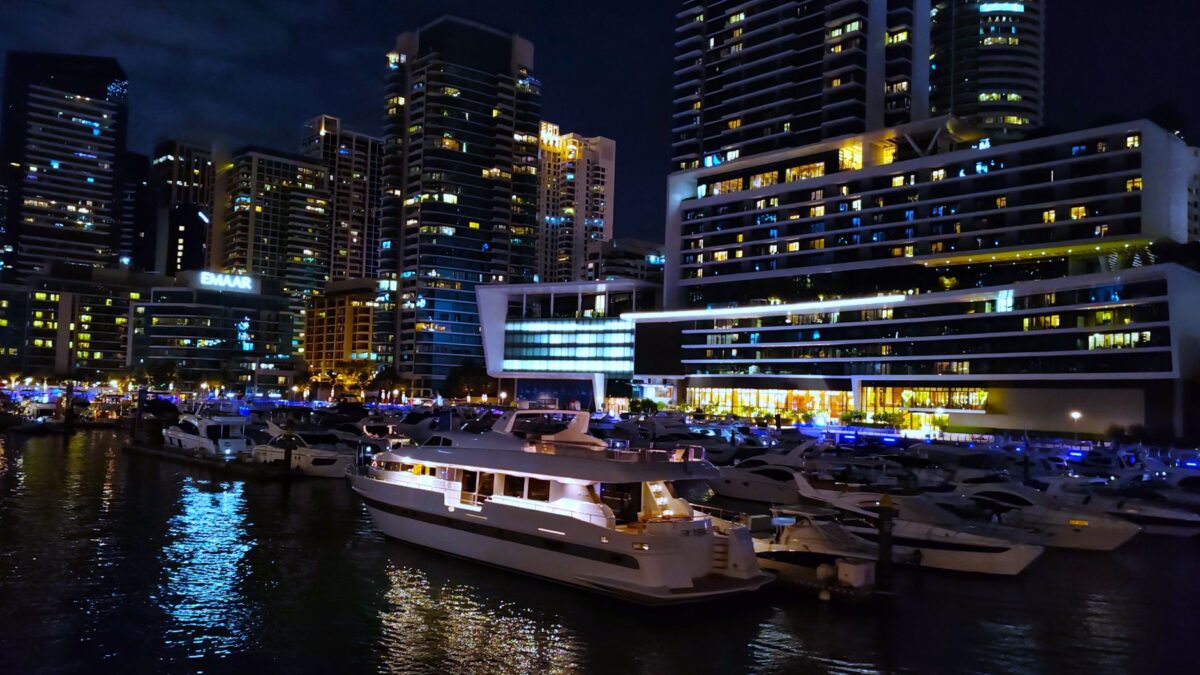
This is why the show’s occasional depiction of interpersonal conflict is largely tolerated. The conflict is incidental. The wide shots of the skyline, the marina, the retail and the residential product are the payload, and they arrive wrapped in entertainment rather than advertising, which is precisely what makes them effective.
The Ramadan Question
Every Arabic content strategy eventually confronts the same structural fact: Ramadan dominates the calendar.
The overwhelming majority of premium Arabic drama has historically been commissioned, produced and consumed around the holy month, when viewing rises sharply and families watch together. Ramadan 2027 begins in mid-February, which means commissioning decisions for that slate are being made now.
The strategic tension for a global platform is whether to compete inside that window against broadcasters with decades of incumbency, or to deliberately counter-programme the other eleven months. The 2026 slate suggests Netflix is choosing the second path, spreading releases across the year rather than concentrating them. That is the correct decision for a subscription business, which needs continuous engagement rather than a single annual spike, even though it means ceding the highest-attention month.
Readers planning ahead can find the confirmed dates and fasting calendar in our guide to when Ramadan 2027 begins.
Where the Regional Hit Bar Now Sits
Context for judging whether any of these titles succeeds: the bar has risen considerably.
The regional benchmark for a genuine crossover hit is no longer domestic viewership alone. It is whether a title generates sustained international search interest and completion rates strong enough to justify renewal. Fauda remains the reference point for how far a Middle East-set series can travel, and its performance established expectations that regional commissioners now work against.
For a reality format, the bar is different and in some ways easier: reality succeeds on repeatability and cast chemistry rather than critical reception, which is precisely why Dubai Bling has reached a fourth season while more prestigious scripted projects have not been renewed.
How Dubai Bling Got to Four Seasons
Reaching a fourth season is genuinely unusual for an Arabic-language reality format, and the path there explains a good deal about what the show has become.
The first season functioned as a proof of concept. The premise — follow a group of wealthy Dubai residents through their social and professional lives — was borrowed structurally from established Western franchises, and the open question was whether Gulf audiences would accept a format built on candid interpersonal conflict, and whether participants would tolerate the exposure. Both questions were answered affirmatively, though not without friction.
Subsequent seasons refined the formula in a predictable direction: more business, less pure socialising. As cast members recognised the show’s value as a commercial channel, their on-screen activity shifted toward the ventures they were actually promoting. That evolution is why the programme has aged into something closer to a business documentary with interpersonal drama attached, rather than the reverse.
The cast has also turned over meaningfully. That churn is a feature. A format dependent on aspiration requires participants whose fortunes are visibly moving; a cast that becomes static becomes uninteresting. Rotating in new entrants preserves the sense of a city where standing is perpetually contested.
What appearing on the show is actually worth
Participants are compensated, but talent fees are not the primary economics for most of them, and understanding why clarifies the whole enterprise.
For a broker, boutique owner or advisory principal, the meaningful return is downstream: enquiries, client acquisition, brand partnerships and speaking opportunities that follow global exposure. A single season places a participant in front of an audience that no regional media buy could reach at equivalent cost, pre-filtered for interest in luxury and Dubai specifically.
This creates an unusual incentive structure. Participants are not primarily performers being paid to appear. They are business owners buying marketing with their privacy, and the exchange rate is favourable enough that the queue to join is long. It also explains the show’s characteristic tonal quality: everyone on screen is simultaneously living their life and running a campaign.
Why Reality Travels Where Scripted Struggles
A persistent puzzle in regional content strategy is that Arabic scripted drama, despite enormous domestic audiences, rarely achieves international crossover, while Arabic reality formats do so more readily. The reasons are structural rather than qualitative.
Format familiarity. International audiences already understand the grammar of a wealth-and-lifestyle reality series. They need no cultural onboarding to follow it. Scripted drama, by contrast, asks viewers to invest in specific historical, political or social context, which raises the barrier considerably.
Subtitle tolerance. Reality dialogue is conversational, repetitive and heavily supported by visual context. It survives subtitling with far less loss than scripted dialogue, where nuance, wordplay and register carry meaning that translation flattens.
Setting as protagonist. In a Dubai-set reality series, the city itself is a draw independent of the cast. Viewers with no interest in any individual participant will watch for the architecture, the interiors and the spectacle. Scripted drama cannot rely on that; it must earn attention through story.
The implication for commissioners is uncomfortable but clear. If the objective is international reach, reality formats set in visually distinctive locations are a more reliable investment than scripted prestige. If the objective is domestic cultural significance, the calculation reverses entirely. The 2026 slate is attempting both simultaneously, which is expensive.
The Production Infrastructure Behind the Slate
None of this content gets made without physical capacity, and the regional build-out has been substantial.
Saudi Arabia, the UAE and Jordan have all invested materially in soundstage capacity, post-production facilities and crew training over recent years. The strategic logic is straightforward: a region that imports its content production exports the economic value of that production. Building local capability retains it.
Jordan has the longest track record, having served as a location and production base for international productions for decades. The UAE offers infrastructure and rebates alongside the practical advantage that senior international crew will readily relocate there. Saudi Arabia is deploying the largest capital commitments, tied to broader diversification objectives.
For investors, this is the more durable exposure. Platform commissioning budgets expand and contract with subscriber economics and corporate strategy, and a slate announced this year can be quietly cut next year. Studio capacity, equipment inventories and trained crews earn from whichever platform is spending, which makes the infrastructure layer structurally less volatile than the content layer above it.
The Content Standards Question
Any discussion of streaming in this region eventually reaches content standards, and it is worth handling directly rather than euphemistically.
Platforms operating across Gulf markets navigate regulatory frameworks and audience expectations that differ materially from their home markets. In practice this shapes commissioning at the concept stage rather than through post-production editing — projects that would create difficulty are generally not greenlit, rather than being made and then cut.
For reality formats the constraint is comparatively light, since the genre’s subject matter tends toward commerce, social dynamics and lifestyle. For scripted drama it is more consequential, particularly for thrillers and crime narratives that touch on institutions, and it is one reason regional scripted output skews toward interpersonal and family conflict rather than institutional critique.
This is a genuine creative constraint and it has a commercial cost, since the scripted work most likely to travel internationally is frequently the work that engages difficult subject matter directly. It is also a stable and well-understood parameter that producers in this market plan around rather than fight.
Expert Perspectives
Industry trade coverage has consistently framed the Gulf as the highest-growth streaming region outside Asia, with the caveat that subscriber growth has outpaced monetisation. Reporting from Variety and The Hollywood Reporter on regional commissioning has repeatedly noted the same structural issue: platforms are winning subscribers faster than they are raising average revenue per user, which puts pressure on content budgets even in a growing market.
That tension is the single most important variable for the sustainability of this slate. A platform can outspend competitors in a growth market for a period. It cannot do so indefinitely without either price rises, advertising tiers, or both — and both carry adoption risk in price-sensitive segments of the regional audience.
What the Show Reveals About Wealth Migration
Strip away the production values and Dubai Bling documents one of the most consequential economic stories in the region: the movement of wealthy people, and their capital, into the Gulf.
The cast’s national mix is the tell. Lebanese, Egyptian, Iraqi, Indian and Gulf participants share screen time not because a producer engineered diversity but because that is who now holds discretionary wealth in Dubai. Each nationality on that list represents a distinct migration story: capital flight from currency and banking instability, entrepreneurs relocating for regulatory clarity, professionals following the industries that moved first.
This matters far beyond entertainment. A city that accumulates mobile wealth acquires characteristics that show up directly in asset prices: sustained residential demand at the premium end, a services economy weighted toward wealth management and luxury retail, and a population unusually willing to spend on visible consumption because much of it arrived recently and is establishing position rather than maintaining one.
It also carries a structural vulnerability worth naming. Mobile wealth is, definitionally, mobile. The same qualities that made Dubai attractive — tax treatment, residency access, regulatory predictability, security — must be continuously maintained, because the population that responded to them can respond equally quickly to a better offer elsewhere. Competing jurisdictions across the Gulf are actively making those offers.
Why the cast keeps changing
Cast turnover, usually read as production churn, tracks something real. Participants exit when ventures fail, when they relocate, or when the exposure stops serving them commercially. In a city where fortunes are made and unmade on shorter cycles than in established wealth centres, a static cast would be an inaccurate portrait.
The show is, in that narrow sense, more honest than its critics allow. It does not present Dubai wealth as permanent. It presents it as contested, recent and precarious — which, for the tier of wealth it actually samples, is accurate.
How and Where to Watch
All titles on this slate are Netflix exclusives and will stream on the platform in the region, with Arabic audio and subtitle options standard and English subtitles available for the scripted titles.
For viewers weighing whether a Netflix subscription is the right primary service, the honest answer depends on library preference rather than price. A household whose viewing is predominantly Arabic drama and archive will extract more value from Shahid. A household mixing international and Arabic premium content will do better on Netflix. Our ranked guide to Arabic Netflix originals is the practical starting point for the latter.
What to Expect From Season Four
Netflix has not released detailed synopses, so anything specific about storylines is speculation. But the structural direction of the franchise supports a few reasonable expectations.
Expect further drift toward business content. Each season has increased the proportion of screen time devoted to ventures, launches and deals, because that is what the cast is actually there to promote. Season four will likely continue that trajectory, with more of the interpersonal conflict arising from professional competition rather than purely social friction.
Expect at least some cast rotation. The format depends on new entrants to sustain the sense of contested status, and four seasons is long enough that several original participants will have exhausted their commercial return from exposure.
Expect the city itself to receive more polished treatment. As the show has become recognised as a de facto promotional vehicle for Dubai, access to locations, developments and venues has become easier to secure, and the production has visibly used it.
What would genuinely surprise: a substantive engagement with how the featured fortunes were actually built. Reality formats in this genre consistently avoid the provenance question, and there is no commercial incentive for this one to break the pattern.
What To Watch Next
- Release pacing. Whether Netflix spreads these titles across the year or clusters them will confirm or refute the counter-programming thesis.
- Renewal speed. How quickly the new scripted titles are renewed or quietly dropped is the clearest available signal of actual performance, since platforms rarely publish meaningful viewership data.
- Shahid’s response slate. Whether MBC answers with increased non-Ramadan commissioning would indicate the counter-programming window is being contested.
- Advertising tier adoption. If ad-supported pricing expands regionally, it changes the economics underpinning every commissioning decision above.
Three Questions Readers Usually Ask
Is the show representative of Dubai? No, and it is not intended to be. It depicts a narrow slice of a population exceeding three million, the overwhelming majority of whom live lives bearing no resemblance to what appears on screen. The city known to labourers, salaried professionals and middle-income families is entirely absent from the frame.
Are the scenes staged? Reality formats operate in a grey zone: situations are arranged and meetings scheduled, but reactions are largely genuine. “Structured reality” is the more accurate description — neither documentary nor scripted drama.
Does it damage the region’s image? This is a legitimate disagreement. Arab critics argue it reduces the Gulf to material spectacle and reinforces stereotypes of shallow affluence. Others counter that exporting an image of a modern, prosperous, globally connected Arab city beats having no image at all, or ceding the regional narrative entirely to foreign coverage. Both positions have merit, and the honest answer is that the show does both simultaneously.
The Bottom Line
Dubai Bling returning for a fourth season is, on its surface, a modest piece of entertainment news. Read properly, it is a signal that the most-watched Arabic-language export from the Gulf is not a prestige drama or a historical epic. It is a reality show about money.
That is not a criticism. It is an accurate reflection of what the region’s most internationalised city actually sells, and of what global audiences are actually willing to watch. The scripted titles alongside it — the thrillers, the crime drama, the romantic comedy — represent the more ambitious bet. Whether they travel as far will determine whether the Arabic commissioning budget keeps growing after this cycle, or whether the region settles into being a reliable producer of one specific, highly exportable genre.
Last Updated: 5 August 2026. Slate details reflect Netflix’s published 2026 Arabic content announcement. Episode-level release dates were not confirmed at time of writing.