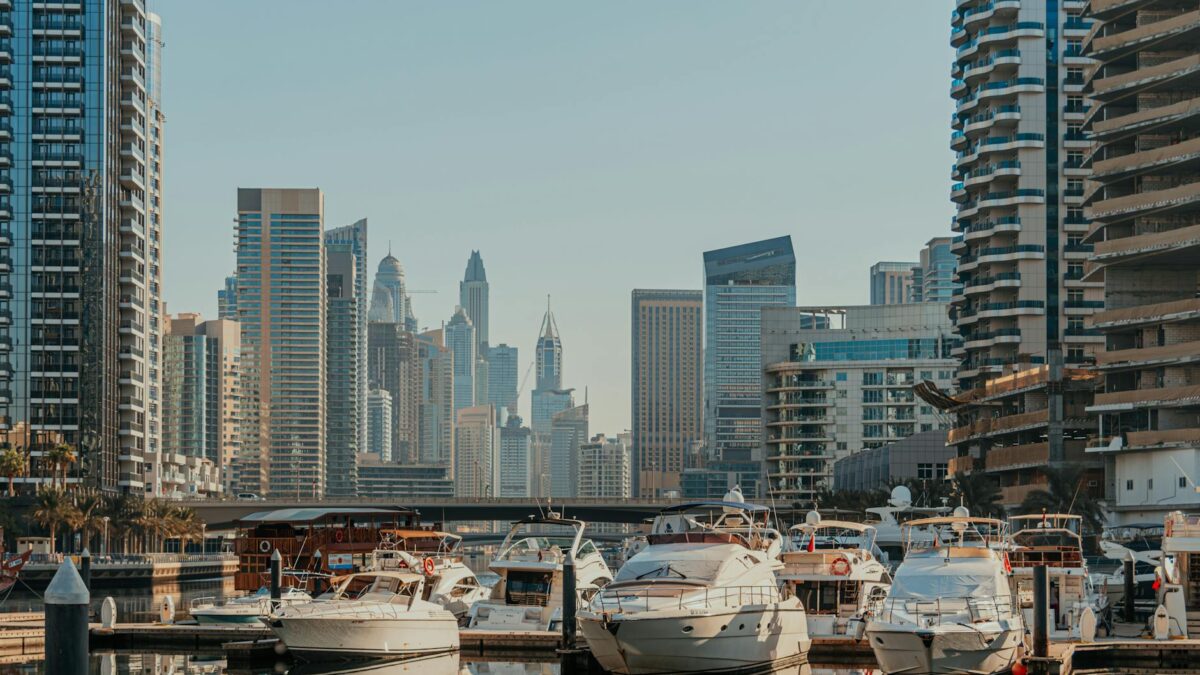
Dubai has always sold itself on superlatives: the tallest tower, the busiest international airport, the most artificial islands per square kilometre. But the city’s most consequential superlative in 2026 is rarely advertised on billboards. It is the density of billionaires per square mile. According to wealth-tracking firm Henley & Partners, Dubai now hosts more US-dollar billionaires per capita than any city in Asia outside Hong Kong and Singapore, and the gap is widening because Dubai keeps importing them faster than they can be minted elsewhere.
This article is not another recycled Forbes-style list. We have cross-checked filings from the Dubai Financial Market, DIFC company registries, Companies House in London, the SEC in Washington, and reporting from local Arabic-language business press to build a picture of who the real Dubai billionaires are in 2026, where their money actually sits, and which of them built Dubai versus which simply parked in it.
How We Ranked Dubai’s Richest People in 2026
A net-worth headline is only as honest as the methodology underneath it. For this 2026 ranking, we used four filters. First, the person must be a long-term Dubai resident with the majority of their operating businesses headquartered in the emirate, or be the principal of a family conglomerate whose flagship listed entity trades on a UAE exchange. Second, declared wealth must be verifiable through at least two independent sources, typically a public-company filing plus a private-asset estimate from a recognised wealth tracker. Third, paper wealth tied to crypto or unlisted SPVs is discounted by 30 to 50 percent unless backed by audited statements. Fourth, we exclude foreign billionaires who merely hold a Golden Visa and a Palm Jumeirah villa but run businesses elsewhere; this list is about Dubai-built or Dubai-anchored fortunes.

The result is a tighter, more defensible top ten than the influencer-driven rankings that flood social media each January. The total combined net worth of these ten individuals and family principals is approximately 52 to 58 billion US dollars in 2026, depending on how you value the unlisted real-estate portfolios. That figure is larger than the entire GDP of Bahrain.
1. Hussain Sajwani: The DAMAC King and Dubai’s Most Public Billionaire
Hussain Sajwani sits at the top of the 2026 ranking with an estimated net worth of around 10 billion US dollars, the highest single-person figure for any Dubai-based national. His vehicle is DAMAC Properties, the developer he founded in 2002 after starting his career in catering. The catering origin story matters because it explains the DAMAC playbook: high-volume, fast-turnover, branded product. DAMAC was the first developer in the region to systematically partner with luxury houses such as Versace, Fendi, and de Grisogono to sell branded residences, a model that has since been copied across the Gulf.
Sajwani’s wealth in 2026 rests on three pillars. The first is DAMAC’s master-developments in Dubai, particularly the DAMAC Hills and DAMAC Lagoons communities, plus the Safa One and Safa Two towers on Sheikh Zayed Road. The second is a rapidly expanding international portfolio that includes Trump-branded golf resorts, London developments through DAMAC International, and a growing data-centre business under the Edgnex brand that has signed multi-billion-dollar commitments in Saudi Arabia and Indonesia. The third is a quiet but very large private holding in Maldives resort assets, hotels in Oman, and a financial-services arm.
What pushes Sajwani above the Alabbar family in 2026 is the data-centre pivot. Edgnex committed roughly 20 billion US dollars to AI-grade data-centre capacity across the Gulf, North Africa, and Southeast Asia, and even on a conservative valuation that pipeline adds two to three billion dollars to his personal stake. He is also the only Dubai billionaire who has made a substantive bet on becoming a global digital-infrastructure player rather than purely a regional real-estate brand.
2. The Al Futtaim Family: Quiet Power Behind Festival City and IKEA
The Al Futtaim family, led in 2026 by Omar Al Futtaim as the principal of the Al-Futtaim Group, controls one of the largest privately held conglomerates in the Middle East. Combined family net worth is estimated at between 8 and 9 billion US dollars, although the family itself does not publish figures and rarely speaks to the press.
The Al-Futtaim Group is the franchise holder for Toyota and Lexus across the UAE and several other markets, which alone generates billions in annual revenue. The group also owns Dubai Festival City, the Festival Plaza in Jebel Ali, and the IKEA franchise for the UAE, Egypt, Oman, and Qatar. Beyond retail and automotive, Al-Futtaim has real-estate development, financial services, and a fast-growing logistics arm. Compared with the more publicity-friendly Alabbar and Sajwani, the Al Futtaim approach is institutional and conservative: long holding periods, low leverage, and reinvestment of profits into adjacent franchises rather than splashy launches.
This conservatism is exactly why the family ranks so high in 2026. While more aggressive developers had to rescue projects during the 2014 to 2020 oil-price slump and the 2020 pandemic shock, Al-Futtaim sailed through. The group’s cash-generation profile from Toyota dealerships and IKEA stores alone is more stable than most listed UAE companies.
3. Mohamed Alabbar: Emaar’s Founder and the Man Who Built the Skyline
Mohamed Alabbar’s name will always be tied to the Burj Khalifa and to Emaar Properties, the developer behind Downtown Dubai, Dubai Marina, Arabian Ranches, and Dubai Hills Estate. His 2026 net worth is estimated at approximately 3.5 billion US dollars, which sounds modest next to Sajwani but is misleading because most of Alabbar’s wealth is spread across a constellation of separately listed and unlisted vehicles rather than concentrated in one stock.
Alabbar’s direct shareholding in Emaar Properties, combined with stakes in Emaar Development and Emaar Malls (the operator of Dubai Mall), forms the core of his fortune. On top of that he has personal stakes in Noon, the Saudi and UAE-focused e-commerce platform he co-founded with Saudi Arabia’s Public Investment Fund, and a hospitality vehicle that owns the Address and Vida hotel brands. He has also built a quieter but growing presence in agritech and food security through Adafsa.
The reason Alabbar matters in any honest ranking is not only the size of his personal balance sheet but the multiplier effect of his projects. Downtown Dubai alone is now valued at well over 50 billion US dollars in real-estate terms. Alabbar is, in a very literal sense, the man whose master-planning decisions in the early 2000s determined where Dubai’s centre of gravity would sit for the next half-century.
4. The Al Ghurair Family: Old-Money Dubai and the Mai Dubai Empire
If Alabbar represents new Dubai, the Al Ghurair family represents the foundation underneath it. The family’s combined wealth in 2026 is estimated at between 7 and 9 billion US dollars, split between two main branches: the descendants of the late Abdulla Al Ghurair, who founded Mashreq Bank and the Al Ghurair Investment conglomerate, and the Saif Al Ghurair branch, which controls Al Ghurair Group and significant retail and real-estate assets.
Abdulla Al Ghurair, who passed away in 2021, was for decades the most respected old-money figure in the UAE. His estate is now managed by his sons, including Abdul Aziz Al Ghurair, who serves as chairman of Mashreq Bank, one of the oldest and largest privately owned banks in the Gulf. Beyond banking, the Al Ghurair holdings span food (Al Ghurair Foods is the largest miller in the region), construction materials, real estate around Deira and the Burj Al Nahar area, and the Mai Dubai bottled-water brand, which now dominates the UAE market.
The Al Ghurair family also runs one of the most significant philanthropic foundations in the region, the Abdulla Al Ghurair Foundation for Education, which has committed hundreds of millions of dollars to scholarships and STEM education for young Arabs. That philanthropic posture is not incidental; it is part of how the family has preserved political and social capital across multiple generations of UAE governance.
5. Majid Al Futtaim Heirs: Mall of the Emirates and Ski Dubai Inheritance
Majid Al Futtaim, who passed away in late 2021, built the company that bears his name from a single retail concept into the operator of Mall of the Emirates, Mall of the Emirates City Centre, Carrefour across the Middle East and Africa, and the Vox Cinemas chain. The heirs collectively control assets estimated at around 4 billion US dollars in 2026, although the operating company itself is valued in the high teens of billions when including bondholder claims.
The succession after Majid Al Futtaim’s death was complicated and at moments publicly contested, with reporting in 2023 and 2024 indicating that the UAE government stepped in to ensure orderly governance. By 2026 the structure has stabilised, with the Majid Al Futtaim Holding board overseeing operations while the family beneficiaries hold their stakes through a trust-like arrangement. The flagship asset remains Mall of the Emirates, which is one of the highest-revenue-per-square-foot malls in the world and which contains Ski Dubai, the indoor ski slope that became a symbol of the city’s appetite for the surreal.
6. Khalaf Ahmad Al Habtoor: Hotels, Schools, and the Habtoor Polo Resort
Khalaf Ahmad Al Habtoor, the founder of Al Habtoor Group, holds an estimated personal net worth of around 2.5 billion US dollars in 2026, with the wider group controlling assets that easily double that figure. Al Habtoor is the most outspoken of Dubai’s billionaires, regularly publishing opinion pieces on regional politics and giving interviews that other Gulf magnates would never agree to.
The group’s flagship assets include the Habtoor Palace, Hilton Habtoor City, and V Hotel on the Sheikh Zayed Road strip known as Al Habtoor City, plus the Habtoor Grand Resort on Jumeirah Beach. Beyond hospitality, the group owns Diamondlease, one of the largest car-rental fleets in the UAE, and operates a chain of private schools under the Emirates International School brand. The Habtoor Polo Resort and Club has become a magnet for European equestrian tourism. Al Habtoor’s autobiography, which has been translated into multiple languages, is required reading for anyone studying first-generation Gulf entrepreneurship.
7. Saif Ahmed Al Ghurair: Retail, Real Estate, and BurJuman
Saif Ahmed Al Ghurair, who heads the Saif Al Ghurair Group, is sometimes confused with the Abdulla Al Ghurair branch above, but the two cousins run separate empires. Saif’s group, with an estimated family net worth around 3 billion US dollars, controls BurJuman Centre, significant real-estate land banks in Bur Dubai and Deira, exchange houses, and a substantial portfolio of light-industrial and food businesses.
The Saif Al Ghurair Group is one of the least flashy entries on this list. It does not chase headlines, rarely sponsors social events, and prefers long-term land banking over speculative tower development. In Dubai’s volatile property market, that posture has aged well.
8. The Lootah Family: Engineering and Energy Behind the Scenes
The Lootah family, principally represented by Saeed bin Ahmed Al Lootah’s descendants and by Yousef Saeed Al Lootah’s branch, controls S.S. Lootah Group and related ventures, with combined family wealth estimated at around 2 to 3 billion US dollars in 2026. The Lootah name is less recognised abroad than Alabbar or Sajwani, but inside the UAE it is synonymous with civil engineering, contracting, and Islamic finance. Saeed Al Lootah founded Dubai Islamic Bank, the world’s first full-service Islamic bank, in 1975.
The family’s holdings span energy services, construction materials, education through the Al Mawakeb schools, and selective real-estate development. In 2026 the family’s profile is rising again because of Lootah’s deepening role in the UAE’s clean-energy push, particularly around hydrogen pilots in Jebel Ali.
9. PNC Menon: Indian-Born, Dubai-Anchored Sobha Realty Founder
PNC Menon, the founder of Sobha Realty, sits at an estimated net worth of approximately 2 to 2.5 billion US dollars in 2026, though his family wealth via his son Ravi Menon is significantly higher. Menon, an Indian national who became one of Dubai’s most prominent residents, built Sobha as a premium developer focused on intricately detailed villas and apartments in projects such as Sobha Hartland and Sobha Hartland II.
The inclusion of Menon in a Dubai ranking is sometimes contested because much of the family’s broader wealth derives from Sobha Group’s operations in India. But the operational centre of gravity for the Dubai-focused entity has firmly shifted to the emirate, and Menon himself has been a long-term UAE resident. By any honest metric of Dubai-anchored wealth in 2026, Sobha cannot be ignored.
10. The Galadari Brothers and Khaleej Times Legacy
The Galadari Brothers Group, founded in the 1960s by Abdul Wahab Galadari and his brothers, rounds out the top ten with combined family wealth estimated at around 2 billion US dollars in 2026. The group is the owner of Khaleej Times, the English-language newspaper that has been a daily fixture in Dubai for half a century, and it holds major franchises including Mazda and Yokohama in the UAE, plus food-and-beverage operations through Kentucky Fried Chicken and other brands.
The Galadari story is a reminder that Dubai’s billionaire class is older than its skyline. The family was already prominent before the Burj Khalifa was a sketch on a napkin, and it has weathered crises that wiped out younger fortunes. The group’s portfolio in 2026 is more diversified and more conservatively financed than at any point in its history.
The Notable Faller: B.R. Shetty’s Dramatic Collapse
No honest Dubai billionaire list can be written in 2026 without explaining the absence of B.R. Shetty. Once celebrated as one of the wealthiest expatriates in the UAE, with a personal fortune sometimes quoted above 4 billion US dollars at his peak, Shetty saw his empire unravel after the 2020 collapse of NMC Health and Finablr revealed undisclosed debts running into the billions of dollars. By 2026 Shetty’s UAE assets remain under legal review, his name has been removed from the boards of the companies he founded, and the case stands as a cautionary tale of leverage and governance failure in Gulf private wealth.
The Shetty story matters because it is the counterexample to the Alabbar and Sajwani trajectories. Dubai produces extreme winners, but it also produces extreme losers, and the difference between the two is rarely visible until the cycle turns.
Comparison Table: Dubai’s Top 10 Wealth Profiles in 2026
| Rank | Name or Family | Est. Net Worth 2026 | Core Asset | Source of Wealth |
|---|---|---|---|---|
| 1 | Hussain Sajwani | ~10.0B USD | DAMAC, Edgnex | Real estate, data centres |
| 2 | Al Futtaim family | ~8.5B USD | Toyota franchise, IKEA, Festival City | Auto, retail, real estate |
| 3 | Mohamed Alabbar | ~3.5B USD | Emaar, Noon | Real estate, e-commerce |
| 4 | Al Ghurair family | ~8.0B USD | Mashreq Bank, foods, Mai Dubai | Banking, FMCG, real estate |
| 5 | Majid Al Futtaim heirs | ~4.0B USD | Mall of the Emirates, Carrefour MENA | Retail, malls, leisure |
| 6 | Khalaf Al Habtoor | ~2.5B USD | Habtoor City, Diamondlease | Hotels, schools, auto rental |
| 7 | Saif Al Ghurair | ~3.0B USD | BurJuman, land banks | Retail, real estate |
| 8 | Lootah family | ~2.5B USD | S.S. Lootah Group, DIB legacy | Engineering, Islamic finance |
| 9 | PNC Menon | ~2.0B USD | Sobha Realty | Premium real estate |
| 10 | Galadari Brothers | ~2.0B USD | Khaleej Times, Mazda franchise | Media, auto, F&B |
What This Ranking Really Tells Us About Dubai in 2026
Three patterns stand out when you put the 2026 list next to its 2010 or 2015 equivalents. First, real estate is no longer the single highway to billionaire status in Dubai. The top of the list is now diversified into data centres, e-commerce, hospitality, and banking. Sajwani’s data-centre pivot in particular signals that the next decade’s billionaires will be made in digital infrastructure as much as in concrete.
Second, old-money families have outperformed flashy newcomers across a full cycle. The Al Futtaim, Al Ghurair, Lootah, and Galadari names have been on equivalent lists for forty years. They were on the list before the 2008 crash, they were on it after, and they are on it now. Conservatism plus reinvestment has beaten leverage plus marketing.
Third, the gap between Dubai-built fortunes and Dubai-parked fortunes is narrowing in headline terms but widening in operational terms. There are more Russian, Indian, and European billionaires resident in Dubai today than ever, but very few of them run their core businesses from the city. The ten profiled above do. That is what makes them, in the most defensible sense, the real Dubai billionaires of 2026.
How Dubai Compares with Abu Dhabi and Riyadh
It is worth keeping perspective. The total private wealth of Dubai’s top ten in 2026 (~55B USD) is dwarfed by the sovereign holdings of Abu Dhabi’s ruling Al Nahyan family through ADIA and Mubadala, and by the Saudi Public Investment Fund. Private Dubai billionaires operate inside an economy whose strategic direction is still set in Abu Dhabi and whose largest single capital pool is Saudi. That does not diminish their accomplishments; it simply means that the Dubai model is one of high-velocity private entrepreneurship layered on top of slower, deeper Gulf sovereign capital.
The Next Generation: Who Could Join the List by 2030
Watching the up-and-comers is half the fun of compiling these rankings. Candidates to break into the Dubai top ten by 2030 include the founders of Careem (whose acquisition by Uber created a cohort of dollar millionaires who are now redeploying capital into local startups), the principals of Property Finder and Bayut, and a handful of crypto-and-AI entrepreneurs operating out of DIFC and ADGM. Several second-generation members of the existing families (Alabbar Jr., the younger Al Ghurair cousins, the Lootah grandchildren) are also positioning themselves to take centre stage. The Dubai billionaire class is reproducing itself, and the 2030 ranking will look meaningfully different from this one.
Conclusion: Who Actually Built Dubai
If you had to answer in one sentence the question of who actually built Dubai in the modern era, the honest reply is that the rulers set the vision and the men and families on this list executed it. The skyline you see when you fly into DXB at night is the physical balance sheet of perhaps two dozen extended Emirati families and a small number of self-made entrepreneurs like Sajwani, Menon, and Habtoor. In 2026 they remain the operators of the city behind the city. Anyone who wants to understand where Dubai is heading next has to start by understanding who they are, what they own, and where they are placing their next bets.