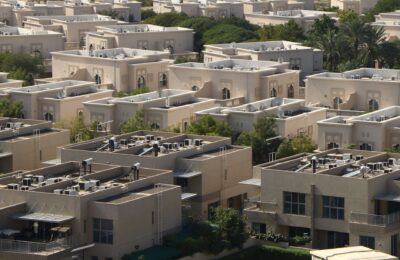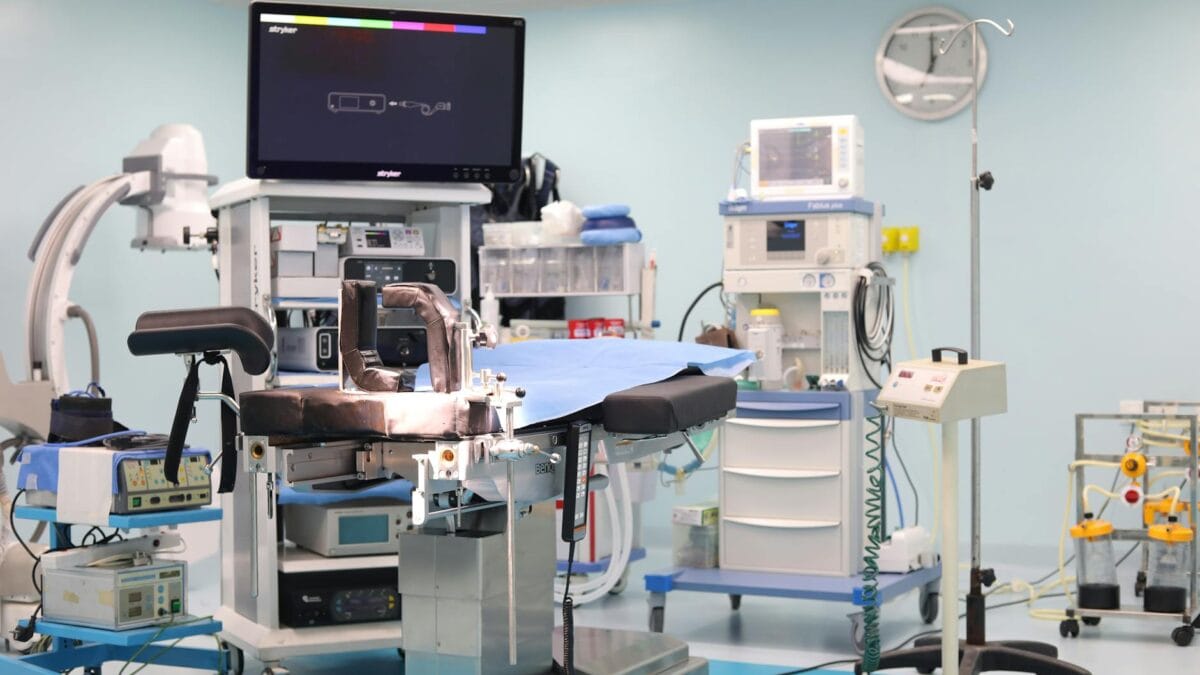
Dubai Healthcare City and Saudi Health Holding are the two most important institutional vehicles for thinking about Gulf Cooperation Council healthcare investment in April 2026. They sit at opposite ends of the GCC healthcare maturity curve. Dubai Healthcare City is a 24-year-old free zone cluster, fully licensed and operational since 2002, hosting roughly 140 facilities and 5,000 beds across two phases at Oud Metha and the Mohammed Bin Rashid Healthcare District. Saudi Health Holding is a Public Investment Fund-owned consolidator of national specialty hospitals being prepared for one of the largest healthcare initial public offerings in emerging market history, scheduled for a 2027 to 2028 window. The first is a real-estate and regulatory platform that licenses third-party operators. The second is a balance sheet of state hospital assets that is on the runway towards a public listing.
This piece is written for an institutional audience evaluating GCC healthcare allocations: family offices weighing initial positions, emerging market dedicated mandates building healthcare exposure, and private equity sponsors looking at concession and minority stake opportunities. It walks through the structure of each platform, the listed and private investment vehicles that exist today, the comparison set on scale and growth, the regulatory architecture, the differentiated risk profiles, and the practical investor profiles that make sense for either or both. It is deliberately neutral on advocacy because both platforms have their place in a properly diversified GCC healthcare basket. The question is not whether to choose DHCC over Saudi Health Holding or the reverse. The question is how to size each correctly.
Dubai Healthcare City: The Free Zone Model
Dubai Healthcare City was launched in 2002 by the Dubai government as the world’s first free zone dedicated specifically to healthcare and medical services. It was conceived as part of a broader Dubai diversification strategy that also produced the Dubai International Financial Centre, Dubai Internet City, and Dubai Media City as sectoral free zones. The healthcare cluster was designed around three pillars: medical tourism, specialised tertiary care for the Gulf region’s expat and high-net-worth populations, and clinical research and education partnerships with international institutions.

The cluster spans two phases. Phase 1 is the original Oud Metha development on the south bank of Dubai Creek, anchored by American Hospital Dubai, Mediclinic City Hospital, and the Imperial College London Diabetes Centre. Phase 2 is the larger Mohammed Bin Rashid Healthcare District, located adjacent to Phase 1, which has expanded the cluster to its current footprint of more than 140 licensed entities. The legal structure provides 100 percent foreign ownership, full repatriation of capital and profits, exemption from corporate income tax for licensed activities, and a streamlined healthcare regulatory framework administered through the Dubai Healthcare City Authority.
The anchor tenants have shifted materially over the cluster’s history. NMC Healthcare, which was once one of the largest tenants and operated multiple hospitals across the wider UAE, collapsed into administration in 2020 after a multi-billion dollar accounting fraud was uncovered. The business was restructured under Mubadala stewardship and now operates under new governance. Mediclinic Middle East was itself taken private in 2023 when the South African-listed parent group accepted a buyout from Remgro and a Public Investment Corporation consortium, removing one of the most accessible listed exposures to the cluster. Aster DM Healthcare relisted on the Dubai Financial Market in 2024 after splitting its Indian and GCC operations, and is now the most liquid Dubai-listed hospital operator. The Imperial College London Diabetes Centre and Boston Children’s Specialty Center remain anchor specialty operators.
Ownership of the cluster itself sits with TECOM Group, the master concession holder, which itself listed on the Dubai Financial Market in 2022 under the ticker TECOM. TECOM operates DHCC alongside several other Dubai free zones including Dubai Internet City, Dubai Media City, and Dubai Industrial City, so an investor buying TECOM is buying a basket of Dubai sectoral free zone exposures rather than a pure healthcare bet. That said, healthcare is one of the most strategically important growth segments inside the TECOM portfolio and benefits from the broader Dubai medical tourism strategy targeting 750,000 international medical visitors annually by 2030.
For the broader Dubai listed equity context, our Saudi Tadawul guide for foreign investors covers comparable cross-border listing access mechanics that apply, with appropriate adjustment, to DFM and ADX listings.
Saudi Health Holding: The PIF Consolidator Model
Saudi Health Holding sits at the centre of one of the most ambitious healthcare privatisation programmes anywhere in the world. It was established as a Public Investment Fund subsidiary to consolidate the national specialty hospital footprint that the Saudi Ministry of Health has historically operated directly. The expected portfolio includes King Faisal Specialist Hospital and Research Centre, the flagship tertiary care institution in Riyadh and Jeddah, King Khalid Eye Specialist Hospital, King Fahd Medical City, and a long list of specialty institutes covering oncology, cardiology, paediatrics, and rehabilitation. The aggregate scale is significant: these institutions collectively employ tens of thousands of clinical staff and treat substantial volumes of complex tertiary cases.
The strategic rationale is two-fold. The first is to professionalise the operation of these assets by separating the regulatory and policy functions of the Ministry of Health from the operational and commercial functions of the hospitals themselves. The second is to prepare the consolidated holding for a public listing that would crystallise the value of the asset base, attract institutional capital to fund expansion, and create a market price discovery mechanism that the rest of the Saudi healthcare privatisation programme can benchmark against. The expected listing window is 2027 to 2028, which would make the SHH initial public offering one of the largest healthcare listings in emerging market history.
Saudi Health Holding sits inside a broader privatisation architecture that includes 21 regional health clusters covering the entire Kingdom geographically. The clusters are being progressively corporatised as stand-alone legal entities, allowed to contract directly with the Council of Health Insurance, and ultimately either sold to private operators under long-dated operational concessions or listed on Tadawul. Riyadh Cluster 3 is widely expected to be the first listed cluster, with a fourth-quarter 2026 IPO targeted. The sequencing matters because the pilot cluster IPO will set comparable benchmarks that frame the SHH parent valuation when it lists 12 to 24 months later.
For the deeper context on the Saudi privatisation programme overall, see our Saudi healthcare privatisation 2026 investor playbook, which sets out the Tadawul listed equities, the cluster IPO calendar, and the regulatory architecture in detail.
Scale Comparison
The scale comparison favours Saudi Arabia decisively on every absolute measure that matters for an investor. Saudi Arabia has a resident population of approximately 36 million today and has committed to extending mandatory health insurance to the entire 60 million-person resident base by 2030 under the Council of Health Insurance framework. Dubai has a resident population of approximately 3.7 million, sitting inside a UAE-wide population of roughly 10 million. The annual healthcare spend gap is similarly material: Saudi total healthcare spending is on track to grow from approximately 50 billion US dollars in 2024 to roughly 80 billion US dollars by 2030, while UAE total healthcare spending sits closer to 25 billion US dollars annually with growth projections in the high single digits.
The privatisation pipeline scale is also dramatically asymmetric. Saudi Arabia has announced more than 60 billion US dollars of planned healthcare capital investment through 2030, encompassing the cluster privatisations, hospital concessions, specialty centre rollouts, and the SHH listing. The comparable UAE figure is closer to 20 billion US dollars, of which DHCC-related investment is a meaningful but not dominant share. Saudi Arabia is simply a much bigger market with a much larger pipeline at this point in the cycle. The UAE counter-argument is that the existing private healthcare base in Dubai and Abu Dhabi is more developed and more international, with established quality standards and pricing power that are more comparable to OECD private healthcare benchmarks than the still-evolving Saudi private sector.
Where Dubai genuinely leads is in the medical tourism segment. The cluster has hosted hundreds of thousands of international medical visitors annually for the past decade, supported by the broader Emirate of Dubai positioning as a global hospitality and lifestyle hub. The Dubai Health Authority has set a 2030 target of 750,000 medical tourists annually, with associated revenue contribution of more than 5 billion US dollars. Saudi Arabia has medical tourism ambitions of its own through Vision 2030 and is investing heavily in elective procedure infrastructure, but it starts from a much lower base and faces incumbent competition from Dubai, Bangkok, and Istanbul among others. For investors who want exposure specifically to international medical tourism revenues, DHCC and the wider Dubai healthcare ecosystem are the more direct play.
Investment Vehicles: What You Can Actually Buy
The single most important practical question for an institutional investor is which vehicles are actually purchasable today and at what liquidity. The answer differs materially between the two platforms.
Dubai Healthcare City vehicles
The cleanest listed exposure is TECOM Group on the Dubai Financial Market. TECOM is the master free zone authority that owns and operates DHCC alongside Dubai Internet City, Dubai Media City, and several other clusters. The 2022 IPO priced at the upper end of the marketed range and has traded as a steady free zone real estate and licensing business since. Investors get blended exposure to Dubai sectoral growth across technology, healthcare, media, and industry rather than pure healthcare exposure. For investors who specifically want healthcare-weighted exposure, TECOM is a partial proxy that needs to be supplemented with operator-level positions.
Aster DM Healthcare relisted on the Dubai Financial Market in 2024 after the parent company demerged its Indian and GCC operations. The Dubai-listed Aster GCC entity is the largest publicly traded pure-play GCC hospital operator with significant footprint inside DHCC alongside operations in Sharjah, Abu Dhabi, Oman, Bahrain, Qatar, and Saudi Arabia. The free float is meaningful, the daily liquidity is real, and the dividend track record is consistent. Aster is the most direct listed equity expression of the DHCC operator thesis and is widely held by regional family offices and emerging market dedicated funds.
Mediclinic Middle East was historically a publicly traded equity through the South African-listed parent group, but the 2023 take-private by Remgro and a Public Investment Corporation consortium removed that route. American Hospital Dubai is a private subsidiary of Mohamed and Obaid Al Mulla Group and is not directly investable on a stock exchange. The Imperial College London Diabetes Centre is a Mubadala Health asset and is held inside the Mubadala Health platform. Boston Children’s Specialty Center operates under partnership arrangements with Mubadala Health. For listed equity exposure, the practical options are TECOM and Aster DM, supplemented by selective DIFC or ADGM private deals for sponsors who can access them.
For broader context on Mubadala-anchored Abu Dhabi healthcare, see our Cleveland Clinic Abu Dhabi 2026 analysis, which sets out the operational model, partnership economics, and the wider Abu Dhabi healthcare ecosystem context that complements the Dubai-listed exposures.
Saudi Health Holding vehicles
Saudi Health Holding itself is not yet listed and will not be investable as a public equity until 2027 to 2028. Until then, the Saudi healthcare investment thesis runs through the existing Tadawul listed equity universe and through pre-IPO positioning in the cluster pipeline. The eight liquid Tadawul names with combined market capitalisation of more than 25 billion US dollars provide real exposure today.
Sulaiman Al Habib Medical Services trades under ticker 4013 and is the largest pure-play hospital company on Tadawul, operating a premium hospital chain that listed in March 2020. The yield is the lowest in the sector at approximately 1.5 percent because the market correctly values the group as a high-quality compounder with industry-leading operating metrics, premium pricing, and a long runway of new hospital openings including the announced Khobar tertiary hospital with capital expenditure budgeted around 800 million US dollars. Mouwasat Medical Services trades as 4002 and is the most consistently profitable hospital operator with a 3.5 percent dividend yield, conservative balance sheet, and a credible Eastern and Central provinces footprint of more than eight hospitals and 1,200 beds. Dallah Healthcare is 4004 and is Riyadh-focused with a 2.8 percent yield. Saudi German Health is 4009 with a German joint venture model and 3.0 percent yield.
Care Hospital trades as 4007 and is a smaller Riyadh hospital with niche positioning and a 3.5 percent yield. Al Hammadi Holding is also 4007-classified as a diversified group with hospital exposure and a 3.0 percent yield. Nahdi Medical Company is 4005 and is the GCC’s largest pharmacy chain operating more than 2,500 stores, with a 2.0 percent yield reflecting the market’s growth-compounder valuation rather than yield positioning. Najm for Insurance Services trades as 8311 and provides health insurance exposure with the highest dividend yield in the cluster at approximately 5.5 percent.
For pre-IPO positioning into the SHH listing, foreign investors typically combine three approaches. The first is overweighting the listed Tadawul healthcare names that act as comparable peers and are likely to re-rate when SHH and the cluster IPOs price. The second is participating directly in the cluster IPOs as they come to market through the Qualified Foreign Investor regime, which gives institutional investors direct primary market access on Tadawul. The third is private equity participation in concessions and minority stakes via DIFC or ADGM holding vehicles, which is the route that sponsors such as TPG, Apollo, KKR, and Mubadala are reportedly using for the Saudi healthcare opportunity according to Arabian Business and other regional sources.
Foreign Investor Access
The mechanics of foreign capital access differ between the two markets and matter for institutional allocators with cross-border mandates. The Dubai Financial Market and Abu Dhabi Securities Exchange have allowed foreign ownership of UAE-listed equities for years subject to per-stock foreign ownership limits, which are typically 49 percent but vary by issuer. There is no equivalent of the Qualified Foreign Investor regime; non-resident accounts are opened directly with licensed UAE brokers or through international custodians with UAE market connectivity. The currency is dollar-pegged at 3.6725 dirhams per US dollar with no signal of any change to the peg, which removes one common emerging market risk.
Tadawul access for foreign investors runs through four standard routes. The Qualified Foreign Investor regime is the most common institutional route, requiring formal registration with the Saudi Capital Market Authority and a relationship with a licensed Saudi authorised person such as HSBC Saudi or SNB Capital. Total return SWAP arrangements through authorised persons are an alternative for investors who want synthetic exposure without direct registration. The Custodial Settlement Custody route works for smaller institutional accounts. Indirect exposure is available via the iShares MSCI Saudi Arabia ETF, which trades on NYSE Arca under ticker KSA and is the most commonly used vehicle for retail and small institutional investors. The Saudi riyal is pegged at 3.75 to the US dollar, similarly stable to the UAE dirham peg.
Reuters has covered the practical mechanics of foreign access to Saudi listings in detail through its Middle East market coverage and is the benchmark source for institutional investors tracking the regulatory architecture. See Reuters Middle East for ongoing coverage. Bloomberg’s regional desk provides comparable depth on UAE and Saudi listings and is the second standard institutional source. See Bloomberg Middle East for ongoing coverage of the IPO pipeline and listed equity flow.
For broader Saudi sovereign and capital market context underpinning the SHH listing pipeline, see our PIF portfolio holdings 2026 briefing, which sets out the funding architecture behind the Saudi healthcare privatisation and the broader sectoral programme that contains it.
Tax Treatment and Operating Cost Comparison
Both jurisdictions are tax-friendly for healthcare operators, but the structures differ. Dubai Healthcare City as a free zone provides a 50-year exemption from corporate income tax for licensed activities inside the cluster, full repatriation of capital and profits, no personal income tax for staff, and no withholding tax on dividends paid to non-resident shareholders subject to the relevant double taxation treaty network. The 2023 introduction of UAE federal corporate income tax at 9 percent does not generally apply to qualifying free zone activities, which preserves the cluster’s tax advantage subject to the qualifying income rules issued by the Federal Tax Authority.
Saudi Arabia applies a 20 percent corporate income tax to non-Saudi shareholders’ share of profits in foreign-invested companies, but the rate is effectively reduced through the Zakat treatment for Saudi shareholders and through double taxation treaty relief for non-residents in jurisdictions that have a treaty with Saudi Arabia. There is no personal income tax on individual income. Withholding tax on dividends paid to non-resident shareholders is 5 percent, subject to treaty reduction. The effective tax burden on a foreign institutional investor in a Saudi listed healthcare equity is typically lower than in most emerging markets and broadly comparable to the UAE in net terms after structuring.
Operating costs differ materially. Dubai operating costs for healthcare are higher than Saudi equivalents on a like-for-like basis. Hospital staff salaries in Dubai run roughly 20 to 30 percent above Saudi equivalents reflecting the international labour market and the cost of living premium. Real estate and utilities costs are also higher in Dubai. The offset is that pricing power for premium services is greater in Dubai given the medical tourism and international expat demand profile, so blended operating margins for the leading operators are competitive with Saudi peers despite the cost gap. Saudi operators benefit from a lower cost base but compete in a market where insurance reimbursement rates set by the Council of Health Insurance increasingly cap the ceiling on pricing power.
Regulatory Architecture
The regulatory frameworks have similarities but key differences. Dubai healthcare is regulated by the Dubai Health Authority for the wider Emirate, with DHCC operations specifically falling under the Dubai Healthcare City Authority’s licensing and quality regime. Drug approvals and pharmaceutical regulation sit with the UAE Federal Ministry of Health and Prevention. The system has evolved over more than two decades and is generally regarded by institutional investors as transparent, predictable, and reasonably fast on licensing decisions for established operators.
Saudi healthcare regulation is split across several authorities. The Council of Health Insurance, known as CCHI, is the body that sets the mandatory health insurance benefit structure, approves insurance product pricing, and adjudicates disputes between insurers, hospitals, and members. The Saudi Food and Drug Authority regulates pharmaceutical approval, importation, and distribution, including the rapidly growing local manufacturing footprint. The Saudi Health Council coordinates strategic planning across the ministry, the regulator, the regional clusters, and the holding companies. The Capital Market Authority oversees the listed Tadawul names and any future cluster or SHH listing. The Saudi Ministry of Investment licenses foreign-invested healthcare entities. The system has been undergoing continuous evolution to support the privatisation programme, with the most important pieces of secondary legislation issued across 2024 and 2025.
The practical investor implication is that the Dubai regulatory environment is more stable and predictable in the near term, while the Saudi regulatory environment offers more upside through reform but more execution risk through pace of change. Sophisticated investors track the official communications from CCHI and CMA closely because regulatory clarity is the single most important driver of both timing and pricing for the Saudi IPO pipeline.
Risk Profile Comparison
The risk profiles differ in character even where they are similar in absolute terms. The five risks that matter for both markets are reimbursement pricing pressure as insurance coverage scales, talent shortage given the dependence on foreign clinical staff, execution slippage on the privatisation and concession pipeline, market volatility tied to broader macro factors, and concentration risk in a small number of family-controlled or state-controlled groups whose governance and capital allocation track records vary widely.
Dubai is more proven on each of these. The reimbursement system has been in mandatory employer-funded operation for the better part of a decade in Abu Dhabi and Dubai, the labour market has stabilised around international clinical recruitment patterns, the privatisation pace is slower and more deliberate, and the listed-equity universe is governance-mature. The Dubai trade-off is a smaller absolute pipeline, more mature multiples, and less call optionality on transformative re-rating events.
Saudi Arabia carries higher growth potential and higher execution risk. The reimbursement architecture is still being calibrated, with the Council of Health Insurance pricing decisions setting ceilings that operators are still adjusting to. Talent shortages are real because more than half of Saudi physicians and a substantial share of nurses are foreign nationals subject to evolving Saudisation rules. Execution slippage on the privatisation pipeline is a recurring theme; bankers and government statements have already moved several milestones by quarters or years. Tadawul market volatility tied to crude oil prices drives index-level multiples for healthcare regardless of sector fundamentals. Concentration risk in family-controlled groups means investors should read every annual report and corporate governance disclosure carefully.
The Financial Times and other institutional sources have covered both markets in depth across 2024 and 2025, and the standard institutional view is that the right approach is a basket holding both rather than picking one. See FT Middle East for ongoing coverage of the regulatory and IPO calendar for both jurisdictions.
Investor Profiles: Who Should Hold What
The right allocation depends substantially on investor profile, time horizon, and yield versus growth preferences. Four profiles cover the bulk of the institutional and high-net-worth investor universe.
The income investor
The income investor wants reliable cash distributions backed by defensive operating businesses. The natural anchors on the Saudi side are Mouwasat Medical Services and Najm for Insurance Services, with possible top-ups in Saudi German Health or Al Hammadi Holding. The combined Saudi yield from a balanced basket should run in the 3.5 to 4.5 percent range. On the Dubai side, Aster DM Healthcare provides a competitive dividend yield with a more diversified operating base across the GCC, while TECOM offers blended free zone exposure with a steady distribution history. A balanced cross-border income basket might run roughly 50 percent Saudi names, 30 percent Aster DM, and 20 percent TECOM, delivering a blended yield in the 3.0 to 4.0 percent range with diversified operating risk.
The growth investor
The growth investor wants compounding revenue and operating profit at attractive valuations. Nahdi Medical is the cleanest growth candidate on the Saudi side because the prescription drug volume story, the digital pharmacy capability, and the BinDawood acquisition synergies provide multiple layers of upside through the rest of the decade. Sulaiman Al Habib is the second growth anchor on the basis of premium hospital expansion and operating leverage at scale. On the Dubai side, Aster DM Healthcare provides the same growth profile with a more international operating base. The growth basket accepts a lower yield in exchange for materially higher expected total return, with typical positioning at 60 to 70 percent Saudi names and 30 to 40 percent Aster DM.
The IPO speculator
The IPO speculator is positioning for the privatisation pipeline rather than the existing listed names. The relevant catalysts are the Riyadh Cluster 3 pilot IPO targeted for the fourth quarter of 2026, the King Saud Medical City concession signing in the second quarter of 2026, and the expected Saudi Health Holding listing in 2027 to 2028. Positioning ahead of these events typically involves either holding cash or short-duration sukuk to deploy at IPO, or holding existing listed names that act as comparable peers. The Dubai equivalent of an IPO speculator opportunity is more limited because the Dubai healthcare cluster is mature and the next listed exposure is more likely to come from a private operator rolling up smaller clinics rather than a transformational IPO.
The M&A speculator
The M&A speculator is betting on private equity or strategic acquisitions of smaller assets in either market. In Saudi Arabia, Care Hospital and Al Hammadi Holding are the most plausible take-private targets given their relatively small market capitalisations and concentrated ownership structures. In Dubai, the cluster contains a long list of smaller specialty clinics that fit the profile of M&A targets for Apollo, KKR, TPG, and other global private equity sponsors who have been circling the GCC healthcare opportunity for several years. Mubadala Health is itself an active acquirer at the larger asset level. The M&A speculator should size positions modestly because timing is highly uncertain and the bid premium that ultimately materialises depends on factors the speculator cannot directly control.
The Mubadala Health Cross-Read
No GCC healthcare investor analysis is complete without acknowledging Mubadala Health, the Abu Dhabi sovereign wealth fund’s healthcare arm that operates a substantial portfolio of assets including Cleveland Clinic Abu Dhabi, Healthpoint, the National Reference Laboratory, the Imperial College London Diabetes Centre inside DHCC, and the post-collapse rebuilt NMC Healthcare. Mubadala Health is private and not directly investable as a listed equity, but its portfolio decisions are leading indicators for the wider GCC healthcare investment cycle. When Mubadala expands an asset, builds a new partnership, or signals an exit, the implications ripple through the listed and private operator universe across both Dubai and Saudi Arabia. Tracking Mubadala Health is not optional for serious GCC healthcare investors; it is a core part of the analytical workflow.
The Strategic Comparison
The strategic positioning of the two platforms is genuinely different even where the operating models overlap. DHCC is built on luxury medical tourism and expat plus high-net-worth resident care, with international quality standards and pricing power that reflect those segments. Saudi Health Holding is being built on mandatory insurance coverage, privatised government capacity, and the Vision 2030 ambition to flip the private sector share of healthcare delivery from approximately 25 percent at the start of the programme to 65 percent by 2030. The Dubai story is mature, international, and incremental. The Saudi story is transformational, domestic-led, and front-loaded with execution risk.
The investor implication is that these are different theses for different investor profiles. An investor who wants a steady-state mature private healthcare exposure with limited execution risk should overweight Dubai. An investor who wants exposure to one of the largest healthcare privatisation programmes in emerging market history with the call optionality of a major IPO calendar should overweight Saudi Arabia. An investor who wants both, which is what most institutional GCC healthcare allocations look like in practice, should hold a basket weighted dynamically based on relative valuation and pipeline visibility at each point in the cycle.
Pricing Both Sectors In April 2026
Sector valuations in April 2026 trade at premium multiples to global emerging market healthcare benchmarks in both jurisdictions. Forward earnings multiples for the listed Saudi healthcare names range from approximately 14 times for the more mature insurance and pharmacy names through to 25 times or higher for Sulaiman Al Habib and the premium growth franchises. Enterprise value to EBITDA multiples cluster between 10 and 18 times depending on growth profile. Dubai-listed Aster DM trades at a forward earnings multiple in the high teens to low twenties depending on the assumed growth trajectory, which puts it broadly in line with the Saudi peer group average. TECOM trades at multiples reflecting its blended free zone real estate and licensing model rather than a pure healthcare comparable.
The premium versus other emerging markets reflects the genuine fundamentals: faster top-line growth, better demographic tailwinds, an active privatisation pipeline that creates new investable assets in the Saudi case, dividend yields that are competitive with global hospital peers, and a structural insurance roll-out that locks in revenue base growth in Saudi Arabia and a structural medical tourism roll-out that supports premium pricing in Dubai. The premium versus developed markets reflects the same growth gap. Value-oriented investors who anchor on absolute multiples will find both markets expensive. Growth-oriented investors who care about the gap between current valuation and the realistic 2030 earnings trajectory will find the multiples defensible in both jurisdictions.
The 2026 Catalyst Calendar
For investors managing positions actively in either or both markets, the 2026 catalyst calendar is the practical roadmap. The second quarter is dominated on the Saudi side by the King Saud Medical City concession signing, expected to mark the first major privatisation milestone of the year and to set the template for subsequent concession structures. The third quarter centres on Mouwasat Phase 5 expansion completion and continuing earnings releases from the listed Saudi names. The fourth quarter is the headline event with the Riyadh Cluster 3 pilot IPO targeted for that window. Across the year, ongoing announcements from CCHI on reimbursement structures and from the Ministry of Investment on foreign ownership approvals will drive sentiment.
The Dubai calendar is more incremental. The Dubai Health Authority continues to push toward the 2030 medical tourism target of 750,000 international visitors annually. TECOM continues to deliver Mohammed Bin Rashid Healthcare District build-out across Phase 2, Aster DM continues to roll out new hospitals across the GCC, and the broader Dubai healthcare ecosystem continues to add specialty centres and clinical research partnerships. There is no transformational IPO catalyst on the Dubai healthcare calendar in 2026, which contrasts sharply with the Saudi calendar but is consistent with the maturity profile of the Dubai cluster.
Bottom Line
Dubai Healthcare City and Saudi Health Holding represent two different points on the GCC healthcare maturity curve. DHCC is mature, international, free zone-licensed, hosts third-party operators, and is investable today through TECOM Group, Aster DM Healthcare, and selective DIFC or ADGM private deals. Saudi Health Holding is the consolidator of the Kingdom’s national specialty hospital footprint, owned by the Public Investment Fund, and on the runway towards a transformational 2027 to 2028 IPO that will be one of the largest healthcare listings in emerging market history. The Saudi ecosystem is investable today through the eight Tadawul listed healthcare equities and through pre-IPO positioning into the cluster pipeline.
The right institutional approach is a diversified GCC healthcare basket that holds both, weighted dynamically. A typical institutional allocation runs 40 to 60 percent in Saudi listed healthcare names sized for either income or growth depending on investor profile, supplemented by selective participation in the cluster IPO pipeline and ultimately the SHH parent listing as it materialises. A 20 to 30 percent allocation in Dubai-listed names, primarily Aster DM Healthcare and TECOM Group, provides exposure to the more mature and international segment of the GCC healthcare market. The remainder typically goes to private deals in DIFC or ADGM holding structures, regional ETFs such as iShares MSCI Saudi Arabia, or pre-IPO positioning in cluster listings as they come to market.
The structural thesis behind both markets is robust. Dubai has decades of demonstrated execution and a clear medical tourism roadmap to 2030. Saudi Arabia has the largest healthcare privatisation programme anywhere in the world by capital scale and a multi-decade demographic and insurance tailwind that creates the kind of secular growth runway that defines the most attractive emerging market healthcare investment opportunities. The question for foreign investors in April 2026 is no longer whether to invest in GCC healthcare. The question is how to size the cross-border basket so that both the Dubai stability and the Saudi optionality are properly captured. The answer that most institutional allocators are converging on is some version of a balanced basket that holds both DHCC-linked vehicles and Saudi Health Holding-linked vehicles, sized to reflect the risk and growth gap rather than picking one country over the other.