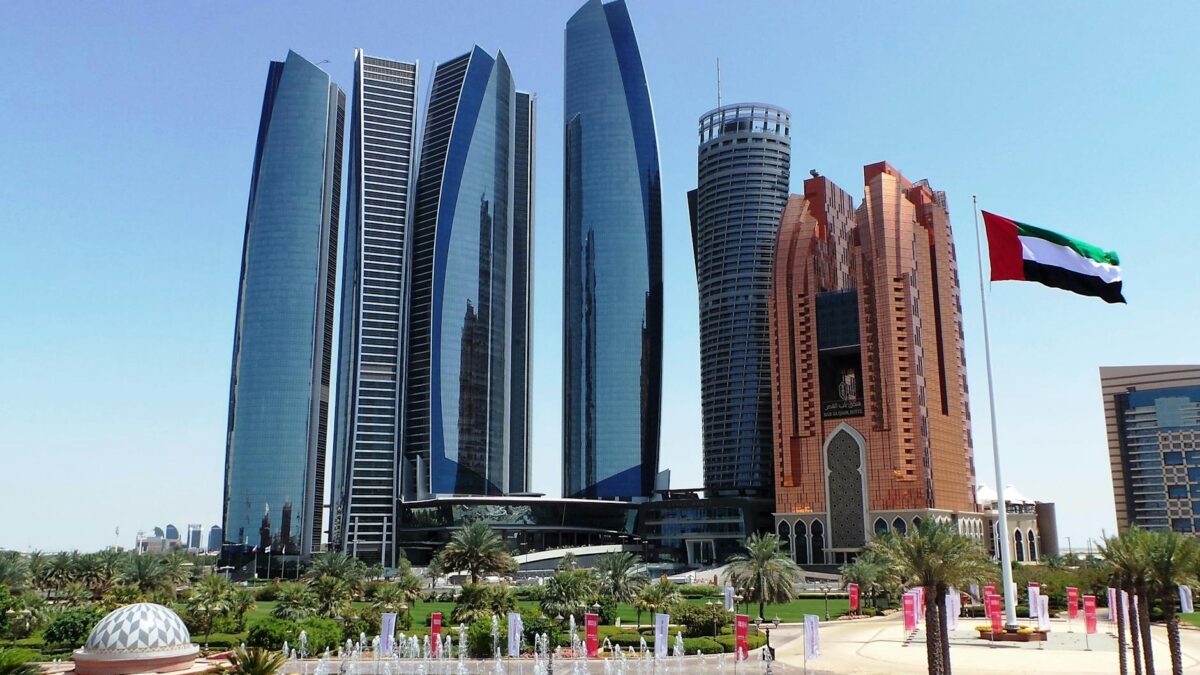
Abu Dhabi Global Market (ADGM) has established itself as the leading crypto licensing jurisdiction in the Middle East, and by April 2026 it commands a dominant position in institutional virtual asset infrastructure across the region. The Financial Services Regulatory Authority (FSRA), ADGM’s independent regulator, introduced one of the world’s first comprehensive virtual asset frameworks in June 2018, and through iterative updates in 2020, 2022, and 2024, the regime has matured into a rigorous, risk-based, activities-focused regulatory architecture that institutional operators specifically seek out. If you are an international exchange, custody platform, tokenization company, crypto fund manager, or digital asset adviser considering Middle East establishment, ADGM is almost certainly part of your evaluation.
This article provides the detailed April 2026 guide to ADGM’s crypto licensing regime: the five license categories and which activity each covers, the specific fees and capital requirements, the realistic 6-9 month timeline, the substance requirements, the list of approved firms, and the comparison against Dubai’s VARA and DIFC alternatives. The content assumes the reader is a serious operator evaluating the jurisdiction — legal counsel, compliance officer, founder, or strategy executive — not a casual observer. Dollar figures are expressed in USD and AED. Regulatory citations reference specific FSRA instruments where useful.
The ADGM FSRA Virtual Asset Framework
The foundation of ADGM’s crypto regime is the Financial Services and Markets Regulations (FSMR) 2015, amended in June 2018 to explicitly include Virtual Assets within the financial services perimeter. FSRA’s specific Virtual Asset Regulatory Framework was published in June 2018 and has been iteratively updated: 2020 amendments brought stablecoin clarity, 2022 amendments added custody-specific rules, and 2024 amendments introduced tokenization-specific provisions.

The architecture is fundamentally activities-focused rather than entity-focused. A firm does not apply for a generic “crypto license.” Instead, it applies for specific Financial Services Permission covering the specific activities it will perform — operating a trading facility, providing custody, advising, arranging, or managing assets. This activities-based structure aligns with international best practice and allows ADGM to regulate specific risks without imposing uniform burdens on firms with different risk profiles.
The regime is also risk-based. FSRA distinguishes between activities by their risk intensity and applies proportionate requirements. A boutique crypto adviser with small client accounts faces lower capital and compliance burden than a multilateral trading facility handling billions in daily volume. This proportionality is a genuine feature of the framework and prevents the regulatory cost from being so uniform that small operators cannot afford to enter.
Finally, the framework is whitelist-based for accepted virtual assets. Not every cryptocurrency can be traded or custodied by an ADGM-licensed firm. FSRA maintains an Accepted Virtual Assets list that includes major assets reviewed and approved for regulatory purposes. Firms wanting to add new assets must submit them to FSRA for review before offering them to clients.
The Five License Categories
ADGM’s crypto framework maps to five specific Financial Services activities, each with distinct requirements:
| License Category | Activity | Typical Firm | Prudential Category |
|---|---|---|---|
| Operating an MTF | Running a crypto trading venue | Binance, Kraken, MidChains | Category 3A |
| Providing Custody | Safeguarding client crypto assets | Copper, Zodia, Fireblocks | Category 3C |
| Advising on Investments | Providing crypto investment advice | Crypto advisory firms | Category 4 |
| Arranging Deals in Investments | Brokering crypto transactions | Crypto brokers | Category 4 |
| Managing Assets | Running crypto investment funds | Laser Digital, crypto hedge funds | Category 3C |
Operating a Multilateral Trading Facility (MTF). This is the license required to run a crypto exchange. An MTF is a system that brings together multiple buyers and sellers in crypto assets and matches orders according to pre-determined rules. Binance, Kraken, and MidChains all hold this type of permission. It is the most complex and expensive category because it involves market integrity, client money, order handling, and systemic risk. Minimum base capital is AED 1.47 million (USD 400,000) plus operational capital sized to business volume.
Providing Custody. This covers firms that hold virtual assets on behalf of clients. A custody license is specifically for institutional safekeeping — think Zodia Custody (a Standard Chartered joint venture with Northern Trust and SBI), Copper.co, or Fireblocks. The 2022 amendments to the framework introduced specific client asset segregation rules, insurance requirements, and operational standards for custodians. Capital minimum is AED 923,000 (USD 250,000) base plus operational capital.
Advising on Investments or Credit. This is for crypto advisory firms that provide specific investment recommendations to clients without taking custody or executing trades. The advisory license is lower burden than MTF or custody but requires specific suitability, disclosure, and client categorization rules. Capital minimum is AED 36,900 base (USD 10,000) but firms must maintain Expenditure-Based Capital Minimum equal to six months’ fixed operating expenses.
Arranging Deals in Investments. This is the broker license — firms that facilitate client transactions without taking principal risk or custody. Often combined with Advising. Similar capital and compliance requirements to the advisory license.
Managing Assets. This covers crypto fund managers running discretionary portfolios for clients, including crypto hedge funds, crypto venture funds, and diversified digital asset managers. Laser Digital (Nomura’s digital asset arm) and several specialized crypto asset managers hold this license. Capital minimum is AED 923,000 (USD 250,000) base plus operational capital.
Many firms combine multiple licenses. An integrated crypto firm might hold Providing Custody plus Managing Assets plus Advising, reflecting a full-service institutional offering. Each additional activity adds incremental regulatory fees and compliance burden but enables broader business scope.
Accepted Virtual Assets: The Whitelist Approach
FSRA’s whitelist approach is a defining feature of the ADGM regime. Not every token can be offered. The Accepted Virtual Assets list has evolved over time and now includes:
Established cryptocurrencies. Bitcoin (BTC), Ethereum (ETH), Litecoin (LTC), Bitcoin Cash (BCH), and several other established proof-of-work and proof-of-stake chains are accepted. These are treated as lower regulatory risk given their market depth, established infrastructure, and extensive historical data.
Stablecoins. USDC and USDT are accepted with specific segregation and risk management rules. The 2020 and 2024 amendments clarified stablecoin treatment including the requirement to match reserves appropriately and the specific client disclosure obligations. USDC’s native issuance in ADGM (announced 2025) represents a significant regulatory development. Other stablecoins like DAI face additional review requirements.
Privacy coins — not permitted. Monero (XMR), Zcash (ZEC), Dash in privacy mode, and other privacy-focused cryptocurrencies are not permitted under the ADGM regime because of concerns about AML traceability. FSRA has been explicit on this exclusion.
Memecoins — generally not permitted. Meme-style tokens with limited economic substance are generally not permitted unless they meet specific acceptance criteria including market depth, holder distribution, legitimate use case, and established exchange listings. Dogecoin has been treated case-by-case. Newer meme tokens launched in 2024-2025 have largely not been accepted.
New tokens — case-by-case review. New tokens can be submitted to FSRA for review and potential inclusion. The review process considers technical architecture, governance, market dynamics, regulatory clarity in other jurisdictions, and specific risk characteristics. Review takes 6-12 weeks and requires specific documentation.
The whitelist approach is conservative but provides clarity to operators and investors. It contrasts with jurisdictions that allow any token to be listed subject to firm-level due diligence. ADGM-licensed firms can only offer whitelist-approved assets, which means operators need to plan their asset coverage carefully.
Fee Schedule: What You Actually Pay
ADGM crypto licensing fees come in several layers. Detailed coverage from Reuters and Bloomberg has documented specific licensing developments, but the current fee schedule as of April 2026 is broadly as follows:
| Fee Item | Amount (USD) | Amount (AED) | Frequency |
|---|---|---|---|
| Application fee — Category 3A (MTF) | 50,000 | 183,500 | One-time |
| Application fee — Category 3C (Custody, Asset Management) | 30,000 | 110,100 | One-time |
| Application fee — Category 4 (Advising, Arranging) | 20,000 | 73,400 | One-time |
| Annual supervision fee — Category 3A | 125,000 | 458,750 | Annual |
| Annual supervision fee — Category 3C | 85,000 | 311,950 | Annual |
| Annual supervision fee — Category 4 | 60,000 | 220,200 | Annual |
| ADGM commercial license — base | Varies | 17,000-30,000 | Annual |
| Office space lease — Al Maryah Island | Varies | 180-280/sqft/yr | Annual |
| Authorized Individual approval — each person | 5,000 | 18,350 | One-time |
These are the direct regulatory and commercial fees. They do not include legal fees, compliance consulting, technology build-out, or staffing — which are typically the larger cost categories for most operators. A realistic full-year-one budget for a new Category 3C firm (say, a crypto custody operator) would look roughly as follows: FSRA application fee USD 30,000, annual supervision fee USD 85,000, ADGM commercial license AED 25,000, office lease (2,000 sqft at AED 230/sqft) AED 460,000, 3 senior-executive salaries plus benefits AED 2.5 million, legal and compliance consulting AED 800,000 to 1.5 million during setup, technology infrastructure USD 300,000 to USD 1 million, and operational capital AED 1 to 3 million. Total year-one cash requirement: approximately AED 6 to 12 million (USD 1.6 to 3.3 million).
Budget is critical because FSRA requires demonstrable financial resources for the business plan throughout the licensing process. Many applications have been delayed or rejected because projected capital was inadequate for the proposed activity scope.
The 6-9 Month Licensing Timeline
Realistic end-to-end timeline for a well-prepared application is 6 to 9 months. The process has four phases:
Phase 1: Pre-application engagement (2-3 weeks). Informal discussions with FSRA Authorization team to confirm activity scope, jurisdiction fit, and high-level business plan. This is not a formal process step but it is effectively required — submitting a cold application without pre-engagement is discouraged and often unsuccessful. The output is an informal green light to proceed with formal application.
Phase 2: Regulatory Business Plan (RBP) submission and review (6-12 weeks). Formal application with full documentation: detailed business plan, three-year financial projections, compliance manual, risk framework, AML/CFT program, IT security architecture, senior management details and CVs, group structure documentation, and shareholding information. FSRA reviews and typically issues clarifying questions over 2-3 rounds.
Phase 3: In-principle approval with conditions (4-6 months in). Once FSRA is substantively comfortable, it issues In-Principle Approval with specific conditions that must be satisfied before full license is granted. Typical conditions include: appointment and approval of all Authorized Individuals (typically CEO, CCO/MLRO, and Senior Executive Officer), execution of office lease, full capital injection, and implementation of all compliance systems. Applicant has typically 3-6 months to satisfy conditions.
Phase 4: Full license grant (month 6-9). Upon FSRA’s satisfactory review of evidence of all conditions met, the full Financial Services Permission is issued. The firm can commence licensed activity from this date.
Experienced practitioners with well-prepared applications have completed the process in under 6 months; complex applications — novel activities, significant group structure complexity, or large cross-border elements — can extend beyond 12 months. Legal counsel with specific ADGM experience is essential; most firms use one of the established Dubai or Abu Dhabi law firms with dedicated ADGM financial services practices.
Substance Requirements
ADGM’s licensing regime includes specific substance requirements that must be met and maintained:
Physical presence in ADGM. The licensed entity must have its principal place of business physically located within ADGM, which is Al Maryah Island in Abu Dhabi. This is not a virtual address arrangement — FSRA expects actual office space with actual senior executives present. Office lease typically minimum 2 years.
Senior executive hires. At minimum three senior executives resident in the UAE with substantive day-to-day presence in ADGM. The three mandatory roles are typically: Senior Executive Officer (SEO) — effectively the CEO with overall responsibility, Chief Compliance Officer (CCO) with specific compliance and money laundering reporting responsibility (often dual-hatted as MLRO), and one additional Authorized Individual in a senior executive capacity. For larger firms, additional hires may be required — CTO, CFO, Head of Risk, Head of Client Money, etc.
Client money segregation. For firms holding client assets (MTF, Custody, Asset Management), strict segregation rules apply. Client crypto assets must be held in segregated wallets with specific signing arrangements. Client cash must be held in segregated bank accounts at FSRA-approved banks. Daily reconciliation is required.
AML/CFT compliance. Full compliance with UAE Federal AML/CFT laws and FSRA’s specific rules. KYC procedures for all clients (individual and corporate), ongoing transaction monitoring, suspicious activity reporting to UAE FIU, sanctions screening, and specific travel rule compliance for crypto transfers above USD 1,000. FSRA has been explicit that AML is a primary regulatory focus area.
Data retention. Transaction records, client records, and compliance documentation must be retained for minimum 6 years. Most firms retain longer as standard practice.
Reporting requirements. Monthly, quarterly, and annual reporting to FSRA on specific operational and financial metrics. For MTFs: daily trading data, client money positions, market abuse monitoring. For custodians: client asset holdings, insurance positions. For asset managers: NAV calculations, client transactions.
Notable Licensed Firms: Who Is Actually in ADGM
The list of ADGM-licensed crypto firms has grown substantially since the regime launched in 2018. As of April 2026, public license holders include several globally-significant firms:
Binance. The world’s largest crypto exchange received its ADGM Financial Services Permission in 2022 through a restructured local entity. Reuters reporting documented the specific licensing arrangement. Binance operates regulated spot trading, custody, and related services for regional clients under the ADGM framework.
Kraken. Payward Inc.’s Kraken subsidiary received ADGM licensing in 2023, establishing Kraken as one of the primary regulated spot exchanges in the region. The license covers MTF operation for institutional and qualifying retail clients.
HTX (formerly Huobi). The major Asian-origin crypto exchange received ADGM licensing as part of its post-rebrand institutional strategy. Coverage from Financial Times has documented the regulatory restructuring.
MidChains. An Abu Dhabi-native crypto exchange founded with ADGM licensing from inception, targeting regional institutional clients with emphasis on Sharia-compliance considerations.
Matrix. A regulated exchange serving institutional clients with focus on market infrastructure for professional traders.
Rain Financial. Bahrain-headquartered with ADGM operations, Rain provides trading and custody services across Gulf markets.
Copper.co. UK-headquartered institutional custody platform with ADGM custody license. Copper serves hedge funds, family offices, and asset managers with specific emphasis on governance-focused custody.
Zodia Custody. A joint venture between Standard Chartered, Northern Trust, and SBI Holdings, Zodia is one of the most institutionally-oriented custodians and its ADGM license covers Gulf and broader institutional clients.
Laser Digital. Nomura’s digital asset arm, Laser operates under ADGM Asset Management license focused on institutional crypto investment products including regulated funds.
Fireblocks. US-headquartered institutional infrastructure provider with partial ADGM licensing covering specific activities. The firm provides custody and transaction infrastructure to many other ADGM-licensed and global institutional clients.
Additional firms have In-Principle Approval and are completing build-out; several more are in active application. The trajectory of licensed firms continues to grow at approximately 40-60 percent year-on-year as institutional demand for regulated Middle East crypto infrastructure increases.
ADGM vs VARA vs DIFC: The Comparison
The three UAE crypto regulatory frameworks differ meaningfully and serve different operator profiles. For the full comparison of the two main UAE financial centres, see our DIFC vs ADGM 2026 analysis. For crypto specifically:
| Aspect | ADGM FSRA | VARA Dubai | DIFC DFSA |
|---|---|---|---|
| Regulatory approach | Financial services regulator with crypto integrated | Dedicated virtual assets regulator | Financial services regulator with Crypto Tokens framework |
| Best for | Institutional custody, tokenization, fund management | Retail exchanges, brokers | ITOs, STOs, institutional crypto |
| Capital minimum (MTF) | AED 1.47M base | AED 1.5M | AED 2M+ |
| Timeline | 6-9 months | 4-6 months | 6-9 months |
| Annual fees (MTF) | USD 125K | USD 100K-200K | USD 100K-150K |
| Major licensees | Binance, Kraken, Zodia, Copper, Laser | Binance, Bybit, OKX, Crypto.com, Kraken | Smaller regulated crypto firms |
| Legal framework | English common law | Dubai federal + VARA | English common law |
| Institutional focus | High | Moderate | High |
| Retail focus | Limited | High | Limited |
| Tokenization infrastructure | Deep (DLT Foundation regime) | Developing | Developed |
Choose ADGM if: You are an institutional custody firm, a tokenization platform, a regulated crypto fund manager, a crypto infrastructure provider serving institutional clients, or an enterprise DeFi business. ADGM’s FSRA is the preferred regulator for these activities given its common-law framework, institutional orientation, and integration with broader financial services regulation.
Choose VARA if: You are primarily a retail-facing crypto exchange, a broker-dealer focused on retail and professional individual clients, a licensed crypto card or payment service provider, or a crypto media and education business. VARA’s faster timelines and more retail-oriented framework suit these operators better. VARA is also the regulator for crypto firms operating outside DIFC in Dubai.
Choose DIFC if: You are already operating a DIFC-based financial services firm and want to add crypto activities, or you are a specific type of token issuer (ITO, STO) targeting institutional clients through DIFC’s Crypto Tokens framework. DIFC’s DFSA regime is less commonly chosen for pure crypto firms but is excellent for integrated financial services firms adding crypto.
Several firms hold licenses in multiple jurisdictions — Binance and Kraken operate in both ADGM and VARA reflecting different activity scopes. Integrated Gulf crypto strategy typically involves careful jurisdiction selection for specific activities rather than choosing only one.
Tokenization and RWA: ADGM’s Specific Advantage
ADGM has developed specific infrastructure for tokenization and Real-World Asset (RWA) tokenization that provides a meaningful competitive advantage over other Middle East jurisdictions.
DLT Foundation regime. Since 2017, ADGM has had specific regulations for Distributed Ledger Technology (DLT) Foundations — legal entities designed for governance of blockchain protocols and tokenized assets. This regime predated the broader virtual asset framework and provides the legal architecture for tokenized investments, DAO structures, and RWA issuance.
Tokenized equity. ADGM permits tokenized equity issuance subject to specific rules. Several firms have issued tokenized shares under ADGM regime; the structure has been used for both public and private equity.
Tokenized funds. ADGM has specific rules for tokenized funds. Franklin Templeton’s OnChain US Government Money Fund has explored ADGM deployment; BlackRock’s BUIDL tokenized fund has been a reference for the tokenization infrastructure development. The tokenized fund structures integrate with ADGM’s custody framework to provide end-to-end institutional-quality tokenization.
Tokenized real estate. RWA tokenization for real estate has been active in ADGM. Several firms have tokenized commercial real estate using ADGM structures, leveraging the common-law jurisdiction for property rights and smart contract enforcement.
Q3 2026 tokenization framework. FSRA has announced plans for a comprehensive Tokenization Regulatory Framework in Q3 2026 that will further formalize and extend tokenization infrastructure. This is expected to cement ADGM’s position as the Middle East’s leading tokenization jurisdiction.
For tokenization-focused operators, ADGM’s combination of common-law legal certainty, established crypto framework, specific DLT Foundation infrastructure, and institutional regulatory culture is specifically differentiated from regional alternatives.
Recent Developments 2025-2026
Several specific 2025-2026 developments have shaped the current ADGM crypto landscape:
USDC native issuance (2025). Circle announced native USDC issuance through ADGM regulated entity in early 2025. This represented a significant development — previously USDC was accepted on ADGM exchanges but not natively issued. Native issuance improves regulatory certainty and provides specific features for institutional users. Coverage from Wall Street Journal documented the Circle strategic expansion.
Tokenized fund partnerships. Specific partnerships between tokenization infrastructure providers and traditional asset managers have been established. Franklin Templeton has actively explored ADGM deployment for its OnChain US Government Money Fund. BlackRock’s BUIDL product has been reference for ADGM tokenization deployments. These are specific institutional tokenization developments with meaningful capital flows.
Updated Prudential rules (April 2025). FSRA released updated Prudential rules in April 2025 that adjusted capital requirements for certain categories. Category 3C capital requirement was increased modestly for certain activities; Category 4 expenditure-based capital was clarified. Existing licensees had 12 months to adjust to new requirements.
Stablecoin framework revisions. 2024 amendments brought clarifications on stablecoin reserve requirements, disclosure obligations, and operational standards. Reserves must be held in specific high-quality liquid assets; monthly attestation is required; client disclosures must be specific on redemption rights.
Accepted Virtual Assets additions. Several new tokens were added to the whitelist in 2025-2026 following FSRA review. Specific additions included certain large-cap proof-of-stake chains and several stablecoins. Others were reviewed and rejected.
Q3 2026 Tokenization Framework. FSRA has formally announced plans for a comprehensive Tokenization Regulatory Framework effective Q3 2026. This will add specific rules for tokenized funds, tokenized bonds, tokenized commodities, and tokenized real estate. Implementation details are being finalized with industry consultation.
Global Jurisdiction Comparison
For operators considering jurisdictions globally, ADGM should be compared against major alternatives:
Singapore (MAS under Payment Services Act). MAS Singapore regulates digital payment tokens under the Payment Services Act. Capital requirements are similar; licensing timeline is 4-6 months; regulatory reputation is among the strongest globally. Singapore is often considered the regional competitor to ADGM for Asian crypto business. Both jurisdictions are institutionally-oriented and the choice often comes down to specific business geography and client base.
Hong Kong (SFC VASP licensing). Hong Kong introduced its VASP licensing regime in June 2023 requiring SFC licensing for crypto activities. Capital requirements and compliance burden are comparable to ADGM; the Hong Kong framework is more retail-restrictive in certain respects. For Asian crypto business specifically, Hong Kong competes with ADGM.
Switzerland (FINMA). FINMA operates under Switzerland’s 2021 DLT Act which created specific categories for distributed ledger securities. FINMA licensing is rigorous with strong reputation; capital requirements for specific activities are among the highest. Swiss crypto firms include SEBA Bank, Sygnum, Taurus. For specific institutional custody and tokenization business, Switzerland remains a key comparator.
Dubai (VARA). As discussed, VARA is the UAE alternative to ADGM for retail-focused activities. VARA timelines are faster (4-6 months); institutional infrastructure is less developed than ADGM.
Bermuda (BMA). Bermuda Monetary Authority operates under the Digital Asset Business Act. Capital requirements are moderate; timeline is 3-6 months; reputation is strong for specific activities. Several global firms use Bermuda for specific crypto activities.
Cayman Islands (CIMA). CIMA operates under the Virtual Asset Service Provider law. Primarily attractive for specific fund structures and fund management activities. Capital requirements moderate; timeline 4-6 months; specific focus on fund structures.
For institutional crypto operators with Middle East focus, ADGM is typically the preferred choice. For operators primarily serving Asian clients, Singapore is a competitor. For European operators, Switzerland is a competitor. The choice depends on specific business needs.
Tax Treatment for ADGM Crypto Firms
Tax treatment is a significant consideration for operators selecting a jurisdiction. For context on UAE corporate tax generally, see our UAE corporate tax 2026 analysis.
Corporate tax. ADGM entities qualifying as Qualifying Free Zone Persons (QFZP) are subject to 0 percent corporate tax on Qualifying Income. Most crypto licensed entities will qualify subject to meeting specific substance and compliance requirements. Non-qualifying income is taxed at 9 percent.
VAT. UAE VAT at 5 percent applies to specific crypto-related services. Basic crypto trading between parties is outside VAT scope; advisory and some brokerage services may be within scope. Specific VAT advice is required for each business model.
Personal income tax. UAE has no personal income tax. ADGM senior executives receive full gross salary. For context on residency for tax purposes, see our UAE tax residency certificate guide.
Employee tokens. Crypto compensation for employees is generally treated as employment income at the time of grant or vesting (depending on structure). Specific structuring considerations apply.
Capital gains. No UAE federal capital gains tax on crypto or other assets. Individual UAE tax residents are generally not taxed on capital appreciation.
International tax treaties. UAE has treaties with major jurisdictions. Specific treaty considerations apply for cross-border crypto flows. Client-by-client tax structuring is recommended.
Who Should Choose ADGM
Based on the framework specifics, ADGM is particularly well-suited for:
Institutional custody providers. Copper, Zodia, Fireblocks, and similar firms have chosen ADGM for institutional custody operations. The combination of common-law legal framework, integrated financial services regulation, client money segregation rules, and institutional reputation is specifically strong for custody.
Tokenization platforms. ADGM’s DLT Foundation regime, tokenization-specific legal infrastructure, and upcoming Tokenization Regulatory Framework make it the Middle East leader for tokenization. Operators in tokenized funds, tokenized equity, tokenized bonds, and tokenized RWA should evaluate ADGM first.
Regulated crypto fund managers. Crypto hedge funds, crypto venture funds, and diversified digital asset managers targeting institutional LPs benefit from ADGM’s established fund framework, professional reputation, and regulatory depth. Laser Digital (Nomura) and similar institutional fund managers operate in ADGM.
Enterprise DeFi infrastructure. Infrastructure providers serving enterprise blockchain applications — middleware, oracle providers, specific enterprise chain infrastructure — benefit from ADGM’s broader financial services ecosystem and regulatory sophistication.
Family offices holding digital assets. Family offices adding meaningful crypto allocations can structure through ADGM entities with specific advantages for custody, tax treatment, and governance. For broader Gulf family office considerations including residency, see our UAE Golden Visa analysis.
Not ideal for: Pure retail-focused crypto exchanges with minimal institutional business would typically prefer VARA’s faster retail framework. Very small single-adviser operations may find ADGM’s capital and substance requirements burdensome relative to their revenue scale.
Common Friction Points
Operators pursuing ADGM licensing frequently encounter specific friction points:
Lengthy engagement phase. The pre-application and formal application process takes 6-9 months of management attention during which licensed operations cannot commence. Operators need to plan business launch with explicit account of this delay.
High AML/CFT documentation burden. FSRA requires extensive AML/CFT documentation, and specific implementation details need to be demonstrated in practice, not just on paper. Many firms need to bring in specialized compliance advisors specifically for the AML build-out.
Senior-hire requirement. The 3+ senior executive hire requirement is substantive. These executives need to be resident in UAE, FSRA-approved Authorized Individuals, and genuinely present in ADGM. Payroll for 3 senior executives in UAE runs AED 2-4 million annually, a meaningful ongoing cost.
Capital requirements versus business scale. Minimum capital requirements may exceed what small operators have readily available. While some categories have lower capital thresholds, the combination of capital plus operating reserves plus business runway creates substantial cash requirements.
Ongoing Prudential fees. Annual supervision fees of USD 60K-125K are a meaningful recurring cost, and these escalate somewhat with specific prudential category. Operators need to factor this into ongoing cost projections.
Asset whitelist constraints. Operators may need to offer specific tokens that are not on FSRA’s accepted list. The process to add new tokens is structured but takes time and is not guaranteed to succeed.
Interaction with group-level operations. For multinational crypto firms, specific intragroup service arrangements, client onboarding flows, and operational governance need careful structuring to respect ADGM rules while enabling group-level operational efficiency.
Practical Next Steps for Operators
For operators serious about ADGM licensing, the practical path forward:
1. Engage ADGM-specialist legal counsel. One of the established Dubai or Abu Dhabi law firms with dedicated financial services practice. Budget AED 500K-2M for legal fees depending on complexity.
2. Pre-application engagement with FSRA. Informal discussion of proposed activity, business model fit, and jurisdictional appropriateness. This typically happens through legal counsel and takes 2-3 weeks.
3. Develop detailed Regulatory Business Plan. Comprehensive document covering business model, target clients, revenue projections, compliance framework, risk management, operational procedures, and technology architecture. Typically 60-150 pages.
4. Financial planning and capital raise. Secure committed capital for the first 18-24 months of operation plus required minimum capital. Specific evidence of funding availability is required for the application.
5. Senior executive identification. Identify and secure commitment from senior executives who will be named as Authorized Individuals. Their CVs, experience, and regulatory history will be reviewed by FSRA.
6. Compliance framework development. Detailed AML/CFT procedures, conduct rules, client categorization, complaint handling, and specific operational policies. Specialist compliance consultants are typically engaged for this phase.
7. Technology architecture. Specific systems for trading (if MTF), custody (if custody license), client management, reporting, and monitoring. Technology due diligence forms part of the FSRA review.
8. Office selection and commercial licensing. Lease execution on ADGM premises, commercial license application, and operational setup.
9. Formal application submission. Through FSRA portal with all supporting documentation. Application fee is paid at this stage.
10. Iterative regulatory engagement. Multiple rounds of clarifying questions and responses. Professional, thorough, and specific responses accelerate progress.
11. Conditional approval and build-out. Execution on all conditions including full capital injection, Authorized Individual approvals, and systems implementation.
12. Full license grant and launch. Commence licensed operations.
For companies that want to understand the broader UAE business environment beyond the financial free zones, see our Dubai free zone vs mainland analysis.
The Bottom Line
ADGM’s FSRA virtual asset framework has become one of the world’s most sophisticated crypto regulatory regimes and the clear leader in the Middle East for institutional crypto infrastructure. Its combination of English common law jurisdiction, activities-based regulation, proportionate risk treatment, whitelist approach to accepted assets, and specific institutional orientation has attracted a growing list of globally-significant crypto firms including Binance, Kraken, HTX, Copper, Zodia, Fireblocks, and Laser Digital. For 2026, ADGM licensing is the strategic choice for operators in institutional custody, tokenization, regulated fund management, and enterprise crypto infrastructure.
The specific investment required is substantial — typically AED 6-12 million in year-one cash requirements plus ongoing regulatory and operational costs. Timeline from first engagement to full license is 6-9 months for well-prepared applications. Substance requirements including three senior executives and physical ADGM presence are genuine and non-negotiable. But for operators serving institutional clients with meaningful scale, these requirements map well to the business case — sophisticated clients specifically demand the regulatory rigor that ADGM provides, and the licensing infrastructure is priced for operators who can support the investment.
For broader context on global crypto regulation and the trajectory of UAE financial infrastructure, authoritative coverage from Financial Times, Bloomberg, Reuters, and Arabian Business provides ongoing context. The Middle East Insider continues to track specific licensing developments, fee changes, and firm activity across ADGM, VARA, and DIFC. For operators making the jurisdictional choice, the combination of specific regulatory framework, growing list of licensed firms, proximity to capital and clients, and integration with broader Gulf financial infrastructure makes ADGM an anchor option in any serious Middle East crypto strategy.