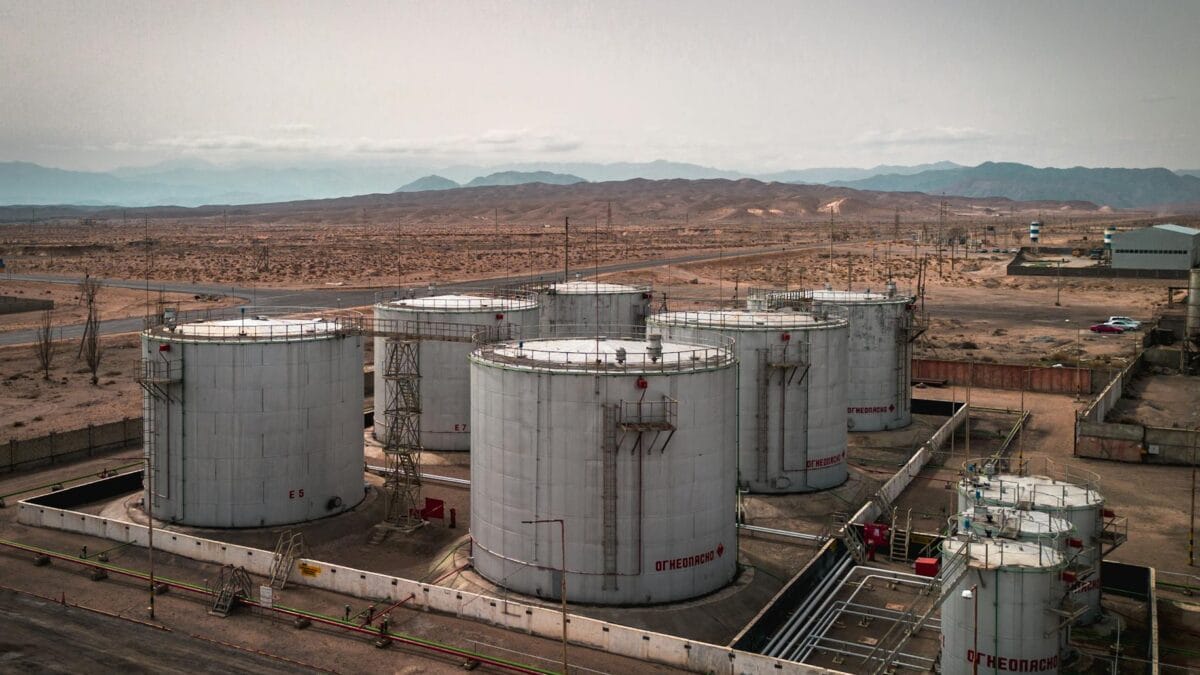
The Iraq-Turkey Pipeline has been sitting empty since March 25, 2023. Every day it remains closed, approximately 420,000 barrels of Kurdish oil stay in the ground or move by truck at severe discounts. Every day, the Kurdistan Regional Government in Erbil foregoes operating revenue that funded roughly 85 percent of its fiscal base before the shutdown. Every day, international oil companies with Kurdish production — Genel Energy, DNO, Gulf Keystone, HKN Energy, and others — carry wells that produce no export revenue while continuing to incur operating costs. Three years of this has cost the regional economy approximately $22 billion in lost direct revenue and substantially more in compounding fiscal and political effects.
In April 2026, after a winter of accelerated negotiation between Baghdad, Erbil, and Ankara, the pipeline remains closed. But the structure of discussions has shifted. A restart in 2026 is no longer the distant-hope scenario it looked like in 2024; it is one of the three plausible outcomes for the remainder of the year. This article walks through what closed the pipeline, why it has stayed closed for three years, where the negotiations actually stand, and what a 2026 restart would mean for the oil market, the Iraqi federal budget, the Kurdish regional economy, and the foreign operators with positions on the ground.
The March 2023 Arbitration That Stopped Everything
To understand the current impasse, start with the International Chamber of Commerce arbitration ruling of March 23, 2023. The case had been filed by the Iraqi federal government in 2014, arguing that Turkey had violated the 1973 pipeline treaty by accepting Kurdish oil shipments that were not authorised by Baghdad. The case dragged through nine years of proceedings. The Paris tribunal ruled substantially in Iraq’s favour, ordering Turkey to pay $1.47 billion in damages for the period 2014 to 2018.

The ruling did not mandate pipeline closure. It ordered compensation and signalled that Turkey needed explicit Baghdad authorisation for future Kurdish shipments. Turkey’s operational response, however, was to close the pipeline entirely rather than continue operations under unclear legal terms. On March 25, 2023, BOTAS, the Turkish state pipeline operator, stopped accepting inbound flows from Kurdistan. The Ceyhan loading terminal wound down. The 400,000-plus barrels per day flow stopped.
Turkey’s position since 2023 has been that it will resume operations only once Baghdad and Erbil reach a comprehensive agreement on export arrangements, compensation, and pipeline governance. Turkey also raised separate concerns about the pipeline’s operational condition after three years of non-use and the need for any restart to be preceded by inspection and possibly maintenance work. These concerns became part of the negotiation rather than clearly distinct operational matters.
The 450,000 Barrels Per Day That Disappeared
Pre-shutdown Kurdish export volumes had settled into a reasonably consistent pattern. In the six months before the closure, Kurdish crude exports through the Iraq-Turkey Pipeline averaged approximately 420,000 barrels per day, with peaks near 450,000 bpd. The mix was predominantly Kurdish Blend, a medium-light sour crude with specific characteristics suited to Mediterranean and Asian buyers. The volume constituted roughly 10 percent of Iraq’s total oil exports (which include the much larger southern flow through Basra) and perhaps 25 percent of regional Middle Eastern export volume not directly controlled by OPEC+ quota allocation mechanisms.
Revenue flows were correspondingly significant. At average realised prices in the $70-90 per barrel range that prevailed through 2022-2023, 420,000 bpd translates to $30-37 million per day, or roughly $11-13 billion per year. This revenue flowed through KRG-controlled trading channels to regional operators and the Kurdish government. Despite ongoing disputes about allocation between the KRG and federal Iraqi accounts, the money was moving and funding operations across the regional government, provincial administrations, and the payroll of approximately 1.3 million public-sector employees in Iraqi Kurdistan.
The immediate closure eliminated this revenue. The Kurdish regional budget, which had been running persistent deficits even with the pipeline operating, collapsed into severe stress. Public sector salaries were delayed or paid partially. Contractor payments stopped. The KRG’s accumulated arrears to foreign operators grew from approximately $2 billion at shutdown to over $4 billion by end-2025. Humanitarian conditions in parts of the region deteriorated as the fiscal emergency spread into healthcare delivery, electricity supply, and other state functions.
The Three Parties and Their Hard Positions
Any restart requires agreement among three parties with genuinely different interests. Understanding each stance is essential to handicapping the probability and timing of resolution.
Baghdad’s position. The Iraqi federal government, under the Shia coalition-led administration in power since late 2022, has consistently insisted that all Iraqi oil exports must flow through the federal state oil marketing company SOMO. The Kurdistan independent marketing channel that operated before March 2023 — in which the KRG signed its own offtake agreements with international traders and shipped directly to buyers — is specifically what Baghdad’s interpretation of Iraqi constitutional law and the 2005 oil law framework prohibits. For Baghdad, accepting a restart that continued Kurdish independent marketing would concede the very principle that the ICC ruling vindicated. Any restart Baghdad will agree to must feature SOMO as sole marketer of Kurdish exports.
Erbil’s position. The Kurdistan Regional Government is negotiating from a position of severe fiscal weakness, but with genuine leverage on two dimensions: it controls the oilfields and the intra-regional pipeline infrastructure to the Turkish border, and it has foreign operator contracts that were signed under KRG authority. The KRG’s preferred outcome is a restart that preserves enough of the independent marketing framework to allow continued payment of foreign operators under existing contract terms while accepting that SOMO formally approves shipments and handles the final export leg. A total conversion to SOMO control, which Baghdad demands, would require KRG acceptance of revenue sharing formulas that the regional government has historically resisted.
Ankara’s position. Turkey’s public stance is that it will operate the pipeline once Iraqi parties reach agreement. Behind this stance are several specific concerns. First, the $1.47 billion damages award remains an open financial obligation Turkey has not yet paid, and Turkey would prefer to resolve that alongside a pipeline restart agreement rather than as a separate settlement. Second, Turkey wants legal clarification that it will not face additional damages claims for Kurdish shipments post-2023, which requires an updated treaty or agreement framework. Third, Turkey has operational interest in ensuring that any restart at volume is preceded by pipeline inspection and potentially maintenance spending that the restart counterparties may be expected to cover.
Foreign Oil Company Exposure
A significant portion of Kurdish oil production is operated by international companies with long-standing positions in the region. Their financial stake in a restart is substantial and their political voice has been part of the diplomatic calculation.
| Operator | Main Fields | Pre-2023 production (bpd) | Listed status |
|---|---|---|---|
| Genel Energy | Tawke, Taq Taq | ~65,000 | LSE listed |
| DNO | Tawke, Peshkabir, Benenan | ~110,000 | Oslo listed |
| Gulf Keystone Petroleum | Shaikan | ~40,000 | LSE listed |
| HKN Energy (formerly WesternZagros) | Sarta, Kurdamir | ~25,000 | Private |
| Shamaran Petroleum | Atrush | ~30,000 | TSX listed |
| Rosneft Kurdistan | Various equity | indirect | Sanctioned |
| Pearl Petroleum (Dana/Crescent) | Khor Mor, Chemchemal (gas) | gas dominant | Private |
The foreign operators have pursued several responses to the 2023 shutdown. Genel Energy and DNO have reduced operating activity, written down Kurdish asset values, and focused cash conservation. Gulf Keystone has shed staff and minimised spending while maintaining the Shaikan field in producing condition ready for restart. Pearl Petroleum, whose gas-focused operations at Khor Mor supply much of the regional electricity generation, has managed through the crisis by shifting sales to domestic markets at lower realised prices. Each company has accrued KRG receivables — arrears owed by the regional government for production during and before the shutdown period — that now total approximately $4.2 billion across the foreign operator group.
Equity performance for listed Kurdish operators has tracked the shutdown. Genel Energy’s London-listed stock declined approximately 65 percent from pre-shutdown levels through 2024-2025 before partial recovery on restart-negotiation optimism in Q1 2026. Gulf Keystone and DNO have shown similar patterns. The equity market is effectively pricing an option on restart: if it happens at reasonable terms, stocks should appreciate 40-80 percent from current levels. If it does not happen or happens only at terms that force operators to renegotiate existing contracts at haircuts, equity could decline further.
The State of Play: April 2026
Active negotiation between Baghdad, Erbil, and Ankara has intensified since late 2025. Three trilateral summits have been held since October, with the most recent taking place in mid-March 2026. Multiple working groups operate between summits, handling specific technical and commercial details including the SOMO marketing framework, revenue sharing percentages, pipeline maintenance requirements, and the legal framework for foreign operator contracts.
The core issues on the table in April 2026 are:
Restart volume. Discussions focus on a phased restart rather than immediate return to full pre-2023 volumes. An initial tranche of 150,000 to 200,000 bpd is the most frequently discussed opening volume, with subsequent increases over 6-12 months to the full 400,000-450,000 bpd range. This approach gives all parties time to monitor the operational framework’s functioning and allows pipeline condition verification before full capacity loads.
SOMO marketing. The agreed framework appears to include SOMO as nominal marketer with revenues flowing first to SOMO before distribution to KRG and federal budget accounts. This preserves the constitutional principle Baghdad requires while providing the Kurdish region practical revenue access through a share formula.
Revenue sharing. The formula under discussion reportedly provides the KRG with approximately 75 percent of Kurdish export revenue net of agreed operating and pipeline costs, with 25 percent flowing to federal accounts. This is materially higher than Baghdad’s initial demand of 50-50 sharing and reflects recognition of the regional government’s operational role in fields and upstream logistics.
Foreign operator treatment. Existing foreign operator contracts, signed under KRG authority before 2023, would be recognised by the new framework with federal endorsement. Production sharing agreement terms may be reviewed but not fundamentally renegotiated. Past KRG arrears to operators are expected to be addressed through a specific claims process funded from restart revenues.
Turkey’s role. BOTAS will receive updated operational terms for the pipeline, including a new transit fee arrangement and clarification of liability for operational incidents. The $1.47 billion ICC damages award is expected to be netted against Turkish accumulated transit fees across the restart period, effectively allowing Turkey to pay the award through operational offsets rather than cash.
Revenue Impact Modelling: What a Restart Delivers
Under a realistic restart scenario beginning Q3 2026 at 200,000 bpd, ramping to 400,000 bpd by Q2 2027, the financial impact on all parties can be estimated:
| Beneficiary | Year 1 (USD bn) | Year 2 run-rate (USD bn) |
|---|---|---|
| KRG regional budget (75% share) | 5.1 | 8.7 |
| Iraq federal budget (25% share) | 1.7 | 2.9 |
| Foreign operators (operating revenue) | 2.3 | 3.5 |
| Turkey (transit fees + ICC offset) | 0.5 | 0.8 |
| Total additional regional oil revenue | 9.6 | 15.9 |
These numbers assume Brent realised prices of $75 per barrel average. Higher prices linearly scale the revenue outcomes; lower prices scale them down proportionately. At $90 Brent, total additional regional revenue could run closer to $18 billion annually once at full capacity.
Impact on Baghdad’s Fiscal Position
Iraq’s federal budget has been running persistent deficits since the 2014 oil price crash, managed through combinations of debt issuance, central bank reserves drawdown, and informal arrears to contractors. A Kurdish restart bringing $2-3 billion of additional federal revenue annually is material in the context of a federal budget of approximately $150 billion. It does not solve Iraq’s structural fiscal issues — public-sector salary commitments alone consume over 40 percent of spending — but it removes one persistent drag.
The broader political implication for Baghdad is significant. A successful restart on SOMO-controlled terms would vindicate the legal position the federal government has held since 2014 and would be framed politically as a win for the Shia coalition’s negotiation approach. It would also normalise federal-regional relations in a way that has not been possible for most of the Maliki-era aftermath.
The Reuters energy desk has been tracking Iraq’s fiscal balance closely and has highlighted that restart at 400,000 bpd would be the single most significant fiscal positive for the federal budget since 2023. Other publications including Financial Times have noted the parallel political implications.
Impact on KRG: Existential
For the Kurdistan Regional Government, the restart is existential in a way the Baghdad dimension is not. The KRG has been running on humanitarian emergency budgeting for three years. Public-sector salary payments have been delayed for months at a time. Contractors have gone months without payment, causing infrastructure maintenance to deteriorate. The two largest political parties in the KRG — the Kurdistan Democratic Party and the Patriotic Union of Kurdistan — have been holding together an uneasy political arrangement that has strained under the fiscal pressure.
A restart delivering $5-9 billion annually to the regional budget transforms this situation. Salary arrears can be cleared. Public services can be restored. Infrastructure investment can resume. The political dynamics within the KRG become manageable again rather than constantly threatened by fiscal collapse.
Beyond the immediate fiscal rescue, a successful restart on SOMO-controlled terms would also settle the longer-term question of KRG-Baghdad relations in a direction that requires the regional government to accept federal oversight of its oil revenue channel. This is a material political concession. The KRG has historically resisted this arrangement as a matter of constitutional principle about Kurdish self-rule. Accepting it now — under fiscal duress — is likely to be controversial internally, and managing that political transition will be a significant challenge for the regional leadership.
The Oil Market Implication
Returning 400,000 bpd of Kurdish crude to global markets is material but not transformative for the broader oil market. The volume represents roughly 0.4 percent of global consumption. It affects OPEC+ calculations indirectly because Iraq is an OPEC+ member and Kurdish exports are counted in Iraq’s quota. Any restart means Iraq either increases its OPEC+ quota or its federal (Basra) export allocation decreases by the Kurdish restart volume.
Current OPEC+ discussions already incorporate scenarios for Kurdish restart volume. The cartel’s April 2026 ministerial has reportedly built in flexibility for up to 250,000 bpd of Kurdish export restart without requiring Iraq to reduce southern exports. Volumes above 250,000 would require either additional quota flexibility or offsetting cuts elsewhere in the Iraqi production.
Pricing impact of the restart is likely to be modest in isolation — maybe $1-2 per barrel softening on Brent in the restart week. But combined with other 2026 supply developments (Saudi capacity decisions, Iran production changes, Russian post-sanctions adjustments), the Kurdish restart is one of the inputs analysts are using to model the Q3-Q4 2026 Brent trajectory. For coverage of the broader oil supply situation, see our Aramco Q1 2026 earnings preview which examines Saudi capacity decisions in the same timeframe.
The Pipeline Infrastructure: A Physical Constraint
A technical complication that can delay restart regardless of political agreement is the physical state of the Iraq-Turkey Pipeline after three years of non-use. Pipelines designed for continuous flow experience specific degradation when left static for extended periods. Internal corrosion can develop in segments where residual crude remains. Pump stations may require maintenance before operation. Control and monitoring infrastructure may need updating.
BOTAS has reportedly conducted inspection work on the Turkish section during 2025 and has indicated that the pipeline is operationally ready for restart, subject to specific maintenance tasks that can be completed within 60-90 days of an agreement signing. The Iraqi and Kurdish sections have had less public disclosure of their condition status. Some industry sources suggest additional maintenance spending of $150-250 million may be required before full-capacity operation is feasible.
The 60-90 day technical window between political agreement and actual flow restart is one of the specific details that affects any timing projection for a 2026 restart. An agreement signed in May 2026 translates to first flow in August 2026 at earliest. Agreement signed in July 2026 pushes first flow to October 2026. This technical latency should be factored into any outlook.
US Policy Angle
The United States has been a significant behind-the-scenes participant in the Kurdish restart discussions. US interests include maintaining stable Iraqi oil exports to support global supply, preserving the economic base of Iraqi Kurdistan as a strategic partner in northern Iraq and Syria, and managing the broader Iran-influence dynamic in Iraq where the Shia coalition government has ties with Iran that US policymakers monitor carefully.
Specific US policy moves during 2025 included sanctions designation of certain entities believed to facilitate illicit crude trade that developed during the pipeline closure, visa restrictions on named individuals judged to be obstructing restart negotiations, and quiet diplomatic pressure on Ankara regarding pipeline operation. These steps have been part of a broader US objective of moving the restart toward completion on terms that preserve Iraqi territorial integrity while sustaining Kurdish regional viability.
Under any 2026 restart scenario, US involvement in the detailed commercial arrangements will be minimal but policy support for the overall framework will continue. The State Department has a specific Iraq-focused team that has been engaged throughout the three-year closure period and retains a persistent role even through administration transitions.
The Historical Arc: How We Got to March 2023
The origins of the Iraq-Turkey Pipeline dispute reach back to the 1973 treaty between Iraq and Turkey that established pipeline operations. The treaty anticipated federal Iraqi control of all oil exports moving through the system. After the 2003 US-led invasion and the subsequent Kurdish autonomy arrangement, the Kurdistan Regional Government began signing independent production sharing agreements with international operators during 2007-2011. These agreements were legally contested by Baghdad from the outset. By 2013-2014, Kurdish independent exports to Turkey had begun in meaningful volume, triggering the Iraqi federal lawsuit that reached its 2023 conclusion.
The 2014-2017 period saw Kurdish exports rise while Baghdad-Erbil negotiations repeatedly broke down over budget allocations, oil revenue sharing, and the constitutional status of the independent marketing channel. The 2017 Kurdish independence referendum escalated tensions further, leading to federal military action to retake Kirkuk’s oil fields from Kurdish control and the subsequent decade of adversarial fiscal relations. The ICC arbitration ruling of March 2023 was therefore the delayed conclusion of a dispute that had been building for over a decade rather than a sudden event.
The Humanitarian Cost of Three Closed Years
The headline fiscal numbers tell only part of the story. The human impact of three years of KRG budget emergency includes specific consequences that observers of regional stability have highlighted:
Public sector wage delays. Civil servants including teachers, healthcare workers, and security forces have experienced payment delays ranging from one month to seven months across the period, with partial payments covering typically 50-70 percent of nominal salary in months when any payment was made.
Healthcare system deterioration. Public hospitals in Erbil, Sulaymaniyah, and Duhok have seen medicine shortages, equipment maintenance backlogs, and senior physician emigration to Europe and the Gulf. Private healthcare has expanded to fill gaps for residents who can afford it; those who cannot have experienced measurable declines in care quality.
Education system strain. Universities and schools have operated under reduced budgets with visible impact on facilities, staff morale, and programme offerings. The broader generational effect on Kurdish educational outcomes will take years to fully assess.
Displacement and emigration. Anecdotal reports of accelerated emigration from Iraqi Kurdistan to Europe and other Gulf states have multiplied through 2024-2025. Precise emigration data is limited but consular activity at Erbil’s diplomatic posts has increased meaningfully.
Risk Factors and What Could Go Wrong
Even with all three parties appearing to converge toward a framework, specific risks could delay or derail the restart.
Iraqi political instability. The federal government coalition is fragile. A cabinet reshuffle, parliamentary crisis, or corruption scandal could disrupt the negotiating team and push completion of any agreement back by months.
Kurdish internal politics. The KDP-PUK balance within the KRG is also fragile. If one party perceives the restart terms as politically disadvantageous, internal disputes could block KRG endorsement. The regional parliament itself has not met in its full constitutional form since 2022.
Turkish economic priorities. Turkey’s broader economic situation (see our analysis of the Turkish Lira in April 2026) affects Ankara’s bandwidth for extended negotiations. If Turkish domestic political pressures demand attention, the restart file could lose priority.
Foreign operator disputes. If the KRG arrears resolution mechanism is not acceptable to the major foreign operators, those operators could refuse to restart production even under a Baghdad-Erbil-Ankara agreement. Operator participation is technically voluntary; without production, the pipeline has nothing to transport.
Global oil prices. A sustained Brent collapse below $60 would weaken the fiscal case for all parties and could pause the restart discussions in favour of waiting for better prices. Conversely, a sustained rally above $95 could reduce the urgency perceived by the federal government to finalise arrangements quickly.
Trading and Investment Implications
For commodities traders, the Kurdish restart is a specific catalyst worth tracking. Futures market option pricing on Brent and Med-delivered crude has incorporated modest probability of Q3-Q4 2026 restart. Any concrete agreement announcement would trigger rapid repricing across the term structure.
For equity investors, the listed Kurdish operators (Genel Energy, Gulf Keystone Petroleum, DNO) offer direct leverage to restart outcomes. A conservative probability-weighted valuation exercise suggests these stocks could move 40-60 percent on confirmation of restart terms favourable to foreign operators. They could move down 20-30 percent on confirmation of restart terms that force contract renegotiation at significant haircuts.
For fixed-income investors, Iraqi sovereign debt has gradually recovered from peak stress levels of 2020-2023 and currently trades at reasonable spreads. A successful Kurdish restart would further support the sovereign credit profile, potentially compressing spreads by 25-50 basis points over the subsequent six months.
Scenarios Through End-2026
Three scenarios encompass most plausible outcomes for the remainder of 2026.
Base case — phased restart (55% probability). Agreement reached in Q2 or Q3 2026, phased restart beginning Q3 or Q4 at 150,000-200,000 bpd, ramping through Q1-Q2 2027 toward 400,000 bpd. Full restart by mid-2027. KRG fiscal position begins recovering in Q4 2026.
Delay case — no 2026 restart (30% probability). Political complications or operator disputes prevent agreement through 2026. Pipeline remains closed through year-end. KRG fiscal emergency continues. Foreign operators continue managing on minimal budgets. Restart pushed into 2027 with uncertain timing.
Rapid restart case (15% probability). Unexpected breakthrough in Q2 2026 enables accelerated restart at full 400,000 bpd by Q4 2026. Regional fiscal recovery accelerates. Oil market absorbs additional volume with modest price softening.
None of these scenarios is guaranteed. The complexity of the three-party negotiation and the internal political dynamics within each party make prediction inherently uncertain. What is certain is that the current equilibrium — closed pipeline, $22 billion in lost revenue, KRG fiscal emergency — is not sustainable indefinitely. Some form of resolution within the next 12-18 months is the practical expectation.
A final consideration worth highlighting for energy analysts: Kurdish restart outcomes will inform broader Middle East precedents. Other contested export arrangements — from Libyan oil facing internal fragmentation to Yemen’s Marib gas production, to the longer-term question of Syrian reconstruction energy policy — follow structurally similar patterns. The precedent set by the Kurdish-Baghdad-Ankara settlement will influence how similar disputes resolve across the region through the next decade.
The Bottom Line
The Iraq-Turkey Pipeline closure since March 2023 is the most significant sustained oil infrastructure disruption in the Middle East in recent years. It has cost the Kurdistan Regional Government approximately $22 billion in forgone revenue, triggered a fiscal emergency in Iraqi Kurdistan, disrupted the business plans of major listed oil companies, and removed 400,000 barrels per day from global oil markets at a time when supply-demand balance has been genuinely contested.
The negotiation to restart is now substantially more advanced than it has been at any point since the closure. A 2026 partial restart is the base case scenario, with first flow potentially arriving in Q3 or Q4 of this year. The detailed terms will determine the revenue split between Baghdad and Erbil, the treatment of foreign operator contracts, and the pricing framework for future Kurdish exports.
For observers of the Middle East energy sector, the Kurdish restart is one of the three most consequential files on the regional agenda through 2026-2027, alongside Iran’s oil export trajectory (covered in our Iran dark fleet analysis) and Saudi production discipline under the OPEC+ framework. Understanding how each resolves, and how they interact, is essential to understanding the oil market and regional political economy through the rest of this decade.