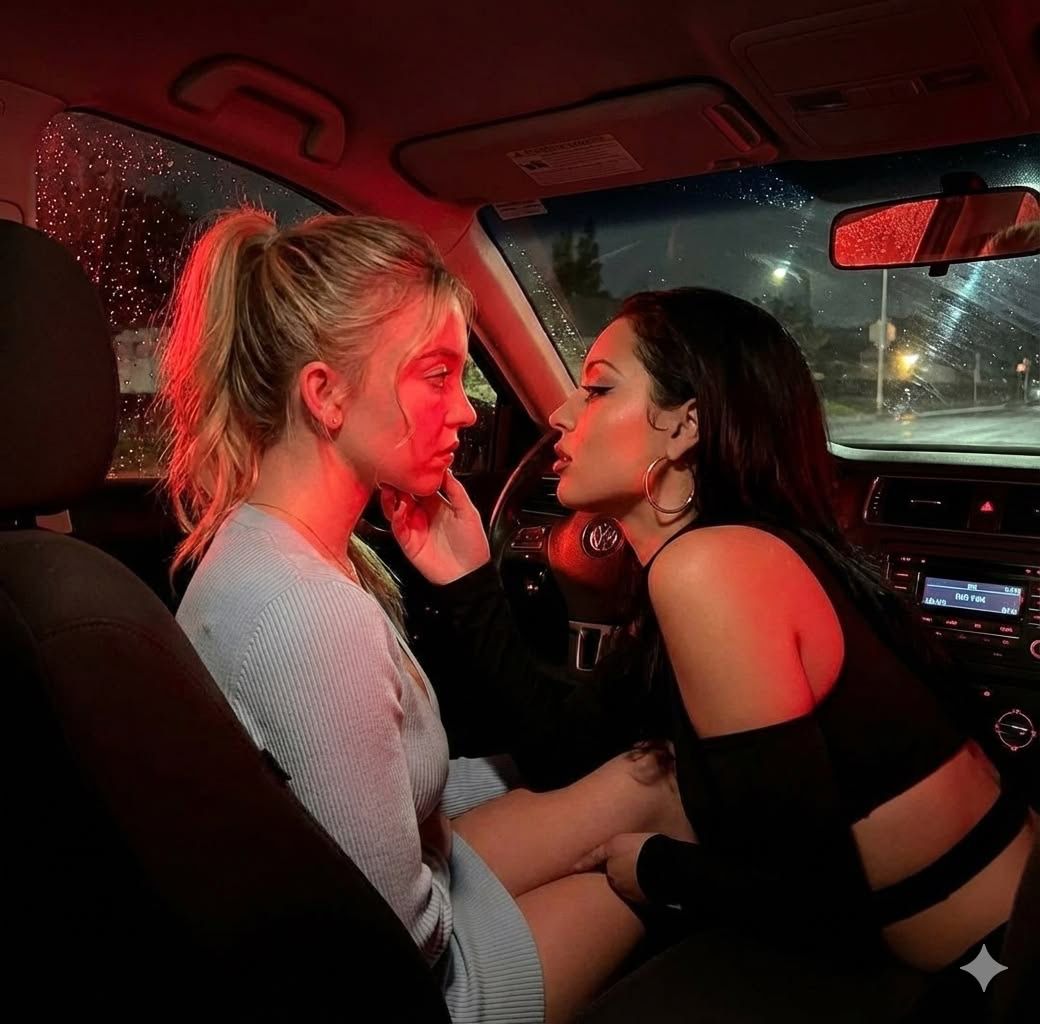
Euphoria Season 3 premiered on April 12, 2026. Four days later, HBO quietly deleted its own promotional trailer and re-uploaded a modified version. The scene that caused the deletion — Sydney Sweeney’s character in lingerie and canine accessories, drinking from a bowl — sparked a critical response so severe that even the show’s own audience called it a ‘humiliation ritual’. This is not a moral essay. It is a simple observation about where a once-celebrated drama has landed and what it says about the television industry that made it.
Our position is straightforward. Just because something happens in real life does not automatically make it acceptable material for a mainstream television production marketed partly to young viewers. The fact that OnlyFans exists, that humiliation kinks exist, that teens experiment with substances — none of that obliges a cable network to escalate these themes into ever more explicit on-screen images every season. The test of a show’s artistic seriousness is not whether it shocks. It is whether the shock serves a purpose the audience could not get from the simpler truth.
We draw our analysis from reporting by Variety, critical reviews collected on IMDb, the Time magazine review titled ‘Older But Not Wiser’, Hollywood Reporter coverage of the trailer controversy, and the unusual cross-publication consensus that Season 3 represents the show’s lowest point.

What Changed in Season 3: The Five-Year Jump and What Filled It
Season 3 picks up five years after the Season 2 finale. The characters are no longer high school students — they are adults navigating relationships, careers, and unresolved traumas. On paper, this time jump could have matured the show: adult problems, adult stakes, more sophisticated storytelling. In execution, the writers treated the age reset as a licence to escalate rather than deepen.
The premiere’s central plotline has Cassie (Sydney Sweeney) becoming what the show calls an ‘erotic influencer’, turning to OnlyFans to pay for her and Nate’s wedding. The choice is framed as empowered autonomy. Visually, the episode frames the choice through the pet-play scene that drew the subsequent backlash. Rue (Zendaya) is dealing with aftermath from her addiction arc, but her storyline takes a back seat to the explicit-content subplots across the ensemble. Jules, previously the show’s most critically praised character, appears intermittently.
The tonal shift is unmistakable to viewers who watched the previous seasons. Season 1 (2019) was rooted in specific portrayals of adolescent emotional life. Season 2 (2022) leaned more theatrical but kept character interiority at the centre. Season 3 (2026) largely substitutes provocation for interiority. The Time magazine review’s title — ‘Older But Not Wiser’ — captures the consensus with unusual precision.
The Content in Plain Terms
For parents and viewers who want a clear-eyed account of what Season 3 actually contains, here is the content with no euphemism:
- Explicit nudity including choreographed sexual scenes.
- A pet-play sequence involving canine accessories and submission imagery.
- OnlyFans-centred subplot with extended erotic-content filming scenes.
- Ongoing drug use depictions including injection scenes.
- Sustained use of profanity in teen and young-adult dialogue.
- Sexual violence, including coercive dynamics in multiple relationships.
- Self-harm imagery that mental-health advocates say can trigger vulnerable viewers.
This is the TV-MA rating doing exactly what it is designed to warn about. The rating exists for a reason. That reason is that the content is explicitly unsuitable for the audience most culturally attached to the show’s aesthetic — the teen audience that has built its social-media identity around Euphoria fashion, makeup, and dialogue since 2019.
How the content escalated season by season
| Season | Rotten Tomatoes | IMDb user rating | Core criticism |
|---|---|---|---|
| Season 1 (2019) | 80% | 8.4/10 | Intense but dramatically purposeful |
| Season 2 (2022) | 78% | 8.2/10 | Theatrical but still character-driven |
| Season 3 (2026) | 44% | 6.8/10 (premiere) | Shock content over story |
The numbers are not ambiguous. Critical and audience evaluation of the show has collapsed in parallel, and the specific thing that collapsed is the same thing: Season 3 substitutes explicit content for the emotional precision the earlier seasons delivered. This is not a conservative reading of the show. It is the view of Variety, of Time, of Rolling Stone, of the online critical community that championed the earlier seasons.
The Early-Exposure Problem: Why Blocking HBO Is Not Enough
The most important thing parents need to understand about Euphoria in 2026 is that blocking HBO Max does not block Euphoria. The show’s visual and verbal language has leaked into adolescent social-media platforms for seven years. A twelve-year-old who has never watched a single episode can accurately imitate Cassie’s dialogue patterns, knows the main character archetypes, recognises the makeup signatures, and can describe the basic story arcs. She learned all of it on TikTok, Instagram Reels, and Snapchat.
When Season 3’s pet-play sequence aired, clips of that scene circulated across social platforms within hours. Some platforms moderated the clips; most did not. The explicit frames were repackaged as memes, reaction videos, fashion commentary, and discourse clips. A parent who successfully blocked HBO Max on the family router nevertheless had no meaningful way to prevent their child from encountering the scene in a thirty-second Instagram clip embedded in an influencer’s story.
This is not a hypothetical. The IMDb parental guide for the show explicitly discusses this leakage dynamic. Multiple media-literacy organisations have flagged the same mechanism. Parents who understand the problem generally shift their strategy from prevention (impossible) to preparation (possible) — teaching children to recognise manufactured provocation, to understand why adult content is age-restricted, and to develop a vocabulary for discussing media that targets them.
Three Reasons the ‘But It Reflects Reality’ Defence Fails
Every season of Euphoria triggers a version of the same defence: these things happen to young people, and pretending they do not is the real harm. Season 3 has already activated that argument in early social-media discourse. It deserves a careful response.
First, reflection is not escalation. A show can acknowledge that addiction, sexual pressure, and digital exploitation exist without producing progressively more explicit visual representations of them each season. Season 1 addressed these themes with restraint that critics called powerful. Season 3’s treatment of the same themes uses progressively more graphic imagery while the underlying argument has not evolved. That is escalation, not reflection.
Second, context matters. A documentary about OnlyFans that interviews content creators about their economic decisions is journalism. A fictional narrative that stages extended scenes of a character filming OnlyFans content is a commercial product designed to retain viewers through arousal and provocation. The two things share a subject but serve different functions. One might educate; the other sells subscriptions.
Third, the audience is not the audience the defence assumes. The defence assumes that the audience is adults who need these difficult topics engaged. The actual audience, as HBO’s own internal viewing data has been reported to show, skews much younger than the TV-MA rating presumes. The show’s cultural footprint sits heavily in the fifteen-to-twenty-two demographic. That is the demographic for whom explicit-content reflection can cause measurable harm, according to mental-health research on media exposure.
The Commercial Logic Behind the Content
A useful question to ask of any media product is: who benefits if this specific choice was made? In Season 3’s case, the beneficiaries are clear.
HBO Max needs subscriber growth. The platform has been losing ground to Netflix, Disney+, and Amazon Prime Video in the prestige-drama category. Euphoria is one of its most-talked-about properties. A quieter, more mature Season 3 — one that honoured the five-year time jump with grown-up restraint — would have generated less social-media discourse, fewer viral clips, and fewer new subscribers. A louder, more provocative Season 3 generates exactly what HBO Max’s subscriber funnel rewards: attention at any cost.
The show’s director and creator, Sam Levinson, has an artistic reputation that leans heavily into provocation. His previous project, The Idol, also collapsed critically for the same reason: explicit content without story architecture to hold it. Critics who have watched Levinson’s trajectory note that Season 3 feels more like an Idol extension than a Euphoria continuation. That is a creator-level observation, not a network-level one.
Sponsors and advertisers sit uncomfortably with this arrangement. Multiple brand-safety analysts have flagged Season 3 as a risk category for advertisers wanting to reach young audiences without association with explicit content. The tension between the show’s audience and its content is not resolved; it is managed through advertising placement choices that work only until they don’t.
The Cultural Lens: What This Looks Like From Here
Our audience sits across Egypt, the Gulf, the Levant, and the global Arab diaspora. From here, the cultural distance between Euphoria’s content and the media environment most of our readers expect their children to grow up inside is not small. Gulf broadcast standards, family viewing norms in Egypt, and the broader cultural expectation that media aimed at young audiences should not be explicit — these are not niche positions. They are majority positions in the region, and they are widely shared across religious, secular, conservative, and progressive households.
This does not mean Euphoria does not have viewers in the region. It does. HBO Max is available across the Middle East and North Africa through OSN and direct subscription. The show’s social-media ripple reaches adolescent users on TikTok and Snapchat in Riyadh, Cairo, Dubai, and Beirut with the same fidelity it reaches them in Los Angeles. The regional cultural position on explicit content aimed at young audiences is simply that there should be more of a cordon between the two — more parental awareness, stronger platform moderation, clearer labelling, and more adult conversation about what gets consumed.
For Arab parents specifically navigating this, our best Turkish series 2026 guide and our best Ramadan TV series 2026 guide offer family-appropriate alternatives. Our Fauda Season 5 Arab viewer guide addresses a different controversial show with the same critical lens.
What Parents Can Actually Do
We are not going to pretend there is a simple solution. There is not. What follows is a practical set of options that families across our region have found workable:
- Accept that prevention is almost impossible. The show’s content will reach your child in fragments regardless of platform blocks. Your goal is not zero exposure; it is informed exposure.
- Watch one scene together — not a full episode. Pick a discussed scene, watch it once, then discuss: what are the creators trying to produce in the viewer, what is the scene missing, how does it differ from storytelling that respects its subject?
- Name the commercial logic. Teens understand money. Explaining that HBO profits from controversy, that specific scenes are designed for TikTok virality, and that the show’s 44% critical score reflects widespread dissatisfaction — this turns the show from forbidden fruit into a commercial product to be analysed.
- Offer alternatives with depth. Euphoria’s initial appeal was its emotional seriousness. Shows like Normal People, Halt and Catch Fire, Better Things, and select Turkish family dramas offer the emotional seriousness without the escalating explicit content.
- Protect the mental-health-vulnerable. Teens with histories of self-harm, addiction, or eating disorders are at elevated risk from Euphoria’s imagery. Mental-health professionals have specifically flagged this show as trigger-heavy. This is not moralising; it is published clinical guidance.
- Be comfortable saying ‘this is not for you right now’. Not every show needs to be accessible to every age. The adult argument that ‘my teen watches everything anyway’ is often a parent’s avoidance of a difficult conversation. The conversation is worth having.
The Anatomy of a ‘Humiliation Ritual’ Discourse
The phrase ‘humiliation ritual’ emerged across social-media discourse within hours of the Season 3 premiere. It is worth understanding where the phrase came from and why it stuck. The term carries a specific critique: that the scene in question is not about the character at all, but about placing a well-known actress in a visually degrading set-up that generates controversy-driven viewership. That argument, once articulated, spread because it explained something the critical community was feeling but had not yet named.
The sharpness of the phrase comes from its industrial reading. A humiliation ritual, in the discourse sense, is a scene designed primarily to generate social-media reaction, secondarily to generate buzz for the production, and only incidentally to serve the character or the story. That framework becomes usable once you watch the scene and try to list what the character gained from it narratively. In the Sydney Sweeney pet-play scene, the answer is close to nothing — the scene does not move her arc in any direction the dialogue alone could not have accomplished. What it does do is generate a month of discourse.
Whether the phrase is fair to the creators is a separate question from whether it is analytically useful. It is analytically useful because it names the exact pattern audiences and critics have been trying to describe: the disconnect between the explicit content and the story purpose. Once that disconnect is named, the conversation shifts from ‘is this scene too much?’ to ‘what is this scene even for?’. The show’s defenders have not yet produced a strong answer to the second question.
What Good Adolescent Drama Actually Looks Like
Part of our critique depends on claiming that better alternatives exist. That claim needs to be substantiated. Here are the shows that have handled adjacent themes without the escalation trap:
Normal People (Hulu, 2020). Sally Rooney’s novel adapted for television with exceptional care. The show depicts young adult sexuality with directness and emotional seriousness, and it is explicit in places. But every sexual scene advances character and reveals the internal lives of two specific people. The explicit content is a tool, not a destination. The show won critical acclaim without a single ‘humiliation ritual’ discourse moment.
Halt and Catch Fire (AMC, 2014-2017). A show about technology, ambition, and damaged people that never needed shock to hold an audience. Its character work across four seasons offered a template for how adult drama can be serious without being exploitative.
Better Things (FX, 2016-2022). Pamela Adlon’s show about single motherhood and adult relationships dealt with difficult topics — infidelity, adolescent drug use, sexual exploration — in ways that demonstrated why the quiet treatment is sometimes more powerful than the loud one.
Reservation Dogs (FX, 2021-2023). A show about Indigenous teenagers in rural Oklahoma that captured the texture of adolescent life with humour, heart, and respect. No explicit content, no humiliation arc, consistent critical adoration.
These shows were successful commercially and critically. They did not need to escalate. The existence of these alternatives is itself a rebuttal to the argument that Season 3’s content is necessary for ‘telling adult truths’. Other shows have told adult truths without any of the content Season 3 depends on.
The Social-Media Ecosystem Problem
Every Euphoria season has been a case study in how a premium-cable production becomes a social-media ecosystem. Season 3 is the apex of that pattern. Within three days of the premiere, the following content types had populated TikTok, Instagram, and X (Twitter):
- Raw clips of the controversial scenes, often with slight alterations to bypass platform moderation.
- Reaction videos from creators who describe the content to viewers who have not watched.
- Fashion breakdowns identifying specific items worn on screen.
- Makeup tutorials replicating the Season 3 looks.
- ‘Explained’ videos summarising the plot for audiences without HBO Max subscriptions.
- Reaction memes that use still images from provocative scenes as visual jokes.
This ecosystem moves faster than any moderation system. A scene that HBO delayed or modified in its official release can still circulate in near-original form within a content creator’s TikTok hours after the episode airs. For parents, this means the relevant question is not ‘what is my child watching on HBO Max?’ but ‘what is my child seeing on their social feed today?’. That is a much harder question to answer and a much harder surface to moderate.
The Mental-Health Angle: Published Clinical Concerns
Mental health professionals have written extensively about Euphoria’s impact on adolescent viewers. The consistent findings across clinical commentary are four: that the show’s depiction of substance use can be triggering for viewers in recovery, that its self-harm imagery can be triggering for viewers with such histories, that its romanticisation of chaotic relationships shapes adolescent expectations of intimacy in unhealthy ways, and that its aesthetic glamorisation of very thin actresses can intersect with body-image concerns in vulnerable viewers.
None of these concerns require banning the show. They require honest labelling and informed consumption. Parents with adolescents in active treatment for any of these conditions should treat Euphoria the way they would treat any other acknowledged trigger: with clear communication, structured exposure if any, and adult support. Multiple US-based clinical organisations have published specific guidance on how to discuss Euphoria with patients in recovery.
For regional audiences, this clinical landscape translates directly. The prevalence of adolescent mental-health conditions in Gulf states and in Egypt is rising, as documented by regional health ministries. The specific interaction between high-access smartphone media and adolescent mental health is an active area of research. Nothing about regional culture makes this population less vulnerable to the mechanisms Euphoria operationalises. If anything, the novelty of explicit Western content in regional adolescent media diets may amplify some of the effects.
Where We Stand
The Middle East Insider covers entertainment because entertainment shapes how millions of young people understand themselves, their relationships, and their futures. We do not apologise for content warnings when they are warranted. We do not treat mainstream prestige television as automatically immune to criticism because it wins awards. We do not substitute shock for seriousness in our own coverage, and we do not defer to industry defences that dissolve under basic scrutiny.
Euphoria Season 3 is not banned in our region and should not be. Adult viewers who choose to watch it have every right to. What we are saying is narrower and, we hope, harder to argue with: the show is not what its defenders claim, the content does not serve the purposes its creators claim, and the audience that consumes the show’s ripple effects is younger, more vulnerable, and less equipped than the show’s TV-MA rating pretends.
Just because something happens in the world does not mean it belongs escalated on screen. That is not a conservative position; it is a media-literacy position. Season 3’s own collapse in critical reception suggests even the show’s longtime champions are starting to agree.
The Regional Economics of Explicit Streaming Content
From a business angle, the economics of explicit content in global streaming is more nuanced than it appears. HBO Max, Netflix, and Amazon Prime Video all operate in markets with radically different cultural and regulatory environments. A single title like Euphoria generates different revenue profiles in the United States than it does in Saudi Arabia, Egypt, the United Arab Emirates, or Morocco. The platforms know this and structure their content mix accordingly.
In the Gulf region, OSN has historically operated as the primary Middle Eastern HBO distributor, with specific content classification processes that filter or edit material considered unsuitable for regional broadcast standards. HBO Max’s direct-to-consumer expansion has complicated that model, but the underlying tension — content that works in the US market may not clear in regional markets — remains active.
For subscribers in Egypt, the UAE, Saudi Arabia, and elsewhere, this means the Euphoria you see is not necessarily the Euphoria that airs in Los Angeles. Some scenes may be edited, some entirely removed. But the unedited versions are available to the same audiences through VPN-based access, through torrents, and through the social-media fragments that no licensing agreement can contain. The illusion of regional content control coexists with the reality of borderless social-media distribution, and families navigate both simultaneously.
The Parenting Conversation That Actually Works
Media-literacy researchers studying adolescent content consumption have converged on a small set of practices that produce measurably better outcomes than either permissive or restrictive parenting styles. Summarising the consistent findings:
Curious rather than judgmental. Adolescents respond to adult curiosity about what they consume. A parent who asks ‘what did you think of that scene?’ gets a different answer than a parent who says ‘that was inappropriate’. The first creates a conversation; the second shuts one down.
Specific rather than general. ‘I’m worried about the messages this show sends’ is too general to respond to. ‘I noticed that scene framed OnlyFans as empowering — how did you read it?’ is specific enough that a teenager can actually engage with the question.
Acknowledging appeal. The shows that adolescents return to are genuinely appealing — they capture something true about adolescent emotional life. Denying that appeal makes the parent unreliable. Acknowledging it while still questioning the overall package makes the parent a useful conversation partner.
Connecting to their own judgment. ‘What do you notice is missing from how these characters handle relationships?’ invites the teenager’s analytical capacity. Most adolescents have sharper media-literacy instincts than adults give them credit for.
These are not novel techniques. They are the same media-literacy practices that worked for parents navigating MTV in the 1990s and for parents navigating cable internet in the 2000s. The delivery mechanism has changed; the communication principles have not.
A Final Note on Critical Consistency
We want to be consistent. The Middle East Insider has not hesitated to engage with controversial content when we believed it had genuine craft and purpose. Our Fauda Season 5 Arab viewer guide, published this morning, engages seriously with another politically contested show. Our Turkish series coverage regularly treats adult drama with adult analysis. Our entertainment coverage does not collapse into conservative reflex.
What we are doing with Season 3 of Euphoria is applying the same critical lens to a show that the critical community is itself now turning against. The Rotten Tomatoes collapse, the IMDb decline, the Variety and Time critical reviews, the Goldderby Emmy downgrade — all of these are signals from an industry that championed the earlier seasons. The show has lost its defenders not because of cultural pressure but because of its own choices. Our role is simply to report the pattern honestly, explain what it means for regional audiences and families, and note the alternatives that treat similar material with more skill.
If Season 3 improves as the season progresses — and shows do sometimes recover — we will update this assessment. If it does not, the critical consensus will continue to harden, and the commercial and industry consequences will reveal what the TV business has learned from this experience. Either way, we will keep watching and reporting.
The Industry Picture and What Comes Next
The commercial fate of Euphoria Season 3 will tell us more about the TV business in 2026 than almost any other release this year. HBO’s linear viewership for the premiere was reported by Showbiz411 at 356,000 — an astonishingly low number for a flagship show featuring A-list stars. Streaming numbers on HBO Max are stronger because of the delayed-viewing pattern of Gen Z audiences, but the critical collapse is already filtering into Emmy prediction models. Goldderby analysts now place the show outside the likely Best Drama nominees for the first time in its existence.
If Season 3 underperforms commercially — if the subscription lift does not materialise, if the advertising conversations get more uncomfortable, if Emmy campaigns fail — the industry lesson will be that shock content has a ceiling. If Season 3 over-performs despite the critical drubbing, the lesson will be the opposite: that controversy pays, and future prestige shows will push further. Either outcome tells us something. The first outcome is probably healthier for the medium.
For coverage of the broader regional media landscape, our daily markets tracker and our gold tracker continue, and our entertainment coverage will keep watching this story as it unfolds across the remaining episodes through May 31.
For families navigating these questions in regional context, the broader picture matters. Adolescent media consumption is now a primary cultural input alongside school, peer groups, and family. Pretending otherwise — or delegating the entire question to platform moderation — has produced the current environment. A more intentional approach, practised consistently across households, is the realistic path to healthier outcomes. The show itself will continue on HBO until May 31; parents and young adult viewers will continue to navigate its after-effects for much longer.
Last updated: April 16, 2026. We will revisit this analysis as Season 3 progresses and as the industry response clarifies.