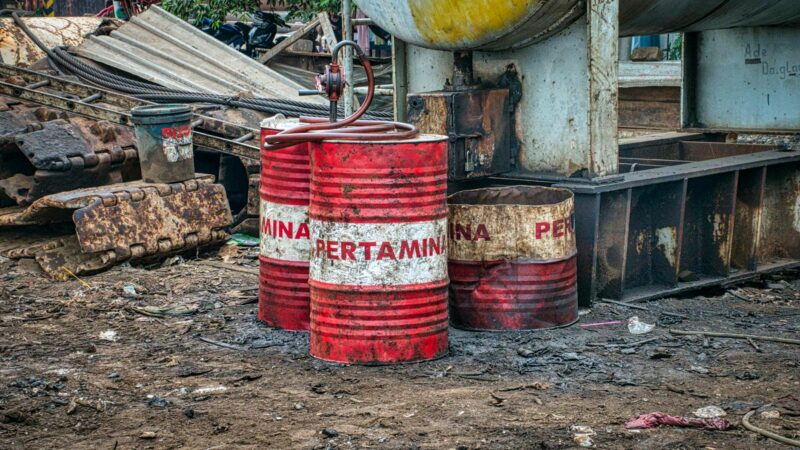
Brent crude oil is trading at $109.53/barrel on April 7, 2026 — down marginally from yesterday’s intraday high of $111.25 but still elevated by approximately $35/barrel above pre-war levels. WTI crude trades at $112.01/barrel. With the Iran war in its 38th day, OPEC+ announcing a modest production increase, and Trump’s Tuesday deadline for Iran approaching, the oil market is at a critical inflection point.
This forecast covers all three scenarios for April 2026 with specific price targets and probability estimates. Unlike many oil forecasts that focus on supply-demand fundamentals, this analysis prioritizes the geopolitical and diplomatic catalysts that are actually driving prices right now. We use real-time data on Hormuz shipping, OPEC production, US strategic petroleum reserve releases, and futures positioning to map exactly where Brent could go.
Where Brent Stands Right Now
Current Price Levels
| Benchmark | Price (April 7) | Pre-War (Feb 26) | War Premium |
|---|---|---|---|
| Brent crude | $109.53/barrel | $74.50/barrel | +$35.03 (47%) |
| WTI crude | $112.01/barrel | $71.20/barrel | +$40.81 (57%) |
| Dubai crude | $108.20/barrel | $73.10/barrel | +$35.10 (48%) |
| OPEC basket | $110.30/barrel | $75.20/barrel | +$35.10 (47%) |
The 47% rise in Brent is the largest 6-week gain since 2008. This is a wartime market — and like all wartime markets, it’s both very high and very fragile. The same forces that pushed prices up could reverse just as quickly.
What’s Driving the Price Right Now
Three forces are pushing Brent higher:
1. Physical supply disruption. The Strait of Hormuz has been effectively closed since February 27. Approximately 12 million barrels per day of export capacity is offline. Strategic petroleum reserve releases and rerouted pipelines cover only about 14% of the gap.
2. War risk premium. Markets are pricing in roughly $25-30/barrel of pure war premium — money that would evaporate the moment a credible ceasefire is announced. We saw a preview today when Bitcoin jumped 4% on Pakistan’s ceasefire proposal hopes. Oil would react 10x more violently.
3. Speculative positioning. Hedge funds hold their largest net-long positions in crude futures since 2008. This adds approximately $8-12/barrel and will unwind violently on any bearish catalyst.
The Three Scenarios for April 2026
Scenario 1: Bear Case (35% probability) — Brent to $75-85/barrel
Trigger: Iran accepts a modified ceasefire framework (perhaps 30 days with stronger guarantees instead of 45). Trump claims diplomatic victory. Strait of Hormuz reopening confirmed within 2 weeks.
Path: Initial gap down on ceasefire announcement: -$15 to -$20 within 24 hours. Continued decline as Hormuz reopens and shipping insurance premiums normalize. Speculator long liquidations accelerate. End of April target: $80-85/barrel. Stabilization at $75/barrel as some war premium remains while trust rebuilds.
Egypt impact: Major positive. Oil import costs drop, fuel subsidy relief, Suez Canal traffic begins to recover. The pound stabilizes. Egyptian inflation forecasts revised lower.
Gulf impact: Mixed. Saudi Arabia and UAE lose budget windfall but gain economic stability. Vision 2030 timelines may slow.
Scenario 2: Base Case (45% probability) — Brent in $100-115/barrel range
Trigger: Trump’s deadline passes without dramatic escalation OR resolution. Iran makes a slightly modified counter-proposal. Diplomacy continues at a slow pace. Hormuz remains closed but no new escalation occurs.
Path: Range-bound trading $100-115/barrel throughout April. Brief spikes on headlines but no sustained breakout. Volatility remains elevated. End of April target: $108-112/barrel.
Egypt impact: Continued pressure on the pound and fuel subsidies. Economic stress remains elevated but manageable.
Gulf impact: Continued budget windfalls but persistent regional uncertainty.
Scenario 3: Bull Case (20% probability) — Brent to $130-160/barrel
Trigger: Trump executes military escalation. Iran retaliates against Gulf bases or shipping. Strait of Hormuz physically attacked (mines, naval action). Saudi Arabia or UAE oil infrastructure directly threatened.
Path: Immediate spike of $20-30/barrel on first escalation news. Continued grinding higher as supply disruption intensifies. Brent reaches $140 within days, potentially $160 within 2 weeks if Saudi infrastructure is hit. Global recession fears emerge.
Egypt impact: Severe. Fuel subsidy bill explodes. Pound crashes. Inflation accelerates to 30%+. Possible IMF intervention required.
Gulf impact: Initial budget bonanza turns into security crisis. Stock markets crash on infrastructure attack fears. Real estate transactions freeze.
The OPEC+ Variable
April-May Production Decisions
OPEC+ announced on April 5 a 206,000 b/d production increase for May 2026. Eight countries — Saudi Arabia, Russia, Iraq, UAE, Kuwait, Kazakhstan, Algeria, and Oman — agreed to the modest hike. Let’s be clear about what this means in context:
| Metric | Volume (b/d) | % of Disrupted Supply |
|---|---|---|
| Hormuz daily flow (normal) | 21,000,000 | 100% |
| Supply actually disrupted | ~12,000,000 | 57% |
| OPEC+ production increase | 206,000 | 1.7% |
| SPR releases (US + allies) | ~1,500,000 | 12.5% |
| Total offset | ~1,706,000 | 14.2% |
OPEC’s production increase covers less than 2% of disrupted supply. This is symbolic, not substantive. The cartel cannot meaningfully offset Hormuz closure even if it wanted to — and most member countries don’t want to, since they benefit from high oil prices.
OPEC+ in May: What to Expect
The next OPEC+ meeting is scheduled for early May 2026. Possible outcomes:
- Status quo (most likely): Maintain the 206,000 b/d increase, no further changes
- Larger increase: Add another 200,000-400,000 b/d if the war ends and prices crash
- Production cut: Cut output if prices drop below $80/barrel due to ceasefire
Key Catalysts for April 2026
Tuesday April 7-8: Trump’s Hormuz Deadline
The most important event of the month. At 8:00 PM ET Tuesday, Trump’s deadline for Iran to reopen the Strait of Hormuz expires. Three possible outcomes:
- Deadline extended (40% probability): Trump cites “progress” and extends the deadline another week. Oil flat to slightly higher.
- Iran counter-proposal (35% probability): Tehran proposes modified terms. Markets remain in uncertainty. Oil trades in range.
- Military escalation (25% probability): Trump orders additional strikes. Oil spikes $10-15 within hours.
Mid-April: Pakistan/Egypt/Turkey Mediation Update
The three mediating countries are scheduled to provide updates on the ceasefire framework throughout the month. Any breakthrough would be immediately bullish for risk assets and bearish for oil.
April 30: OPEC+ Pre-Meeting Signals
OPEC+ delegates typically signal their intentions through anonymous Reuters and Bloomberg leaks 7-10 days before official meetings. Watch for these in the last week of April.
For Egyptian Investors
Why oil prices matter for Egypt
Egypt is a net oil importer. Every $10 increase in Brent costs the Egyptian government approximately $1.2 billion per year in additional fuel subsidy expenses. With Brent at $109/barrel — about $35 above pre-war levels — the annual subsidy cost increase exceeds $4.2 billion. This is a major driver of pressure on the Egyptian pound and the central bank’s recent rate cut.
What to do if oil stays high
If you’re an Egyptian investor and you expect oil to remain elevated, position for:
- Continued pound weakness — buy gold (21K) as a dual hedge
- Higher inflation — invest in EGX 30 stocks with pricing power
- Tourism stocks underperformance — Gulf visitors will continue to decline
- Cement and real estate stocks — benefit from accelerating government infrastructure spending
What to do if oil crashes
If a ceasefire materializes and oil drops to $80 or below:
- Pound strengthens — partially reverse pound hedges
- Tourism stocks rally — Gulf visitors return
- Inflation expectations drop — bond yields fall
- EGX 30 may rally further on improved economic outlook
For Gulf Investors
The Saudi position
Saudi Arabia’s fiscal breakeven oil price is approximately $85/barrel. Every dollar above that threshold generates approximately $3.5 billion in annual additional revenue. At $109/barrel Brent, the kingdom is earning roughly $84 billion in additional annual revenue compared to budget assumptions. This funds Vision 2030 projects, defense spending, and sovereign wealth fund investments.
UAE benefits
The UAE’s fiscal breakeven is around $65/barrel. With Brent at $109, the additional annual revenue is approximately $44 billion. This is funding the explosive growth in Abu Dhabi real estate, infrastructure, and tourism investments.
Risk to watch
The war risk premium is real for Gulf stocks. Any escalation that brings the war closer to UAE or Saudi territory would trigger immediate capital flight. The current market is pricing in low escalation probability — any change in this assumption would be very bearish for Gulf assets.
Brent Forecast Summary Table
| Period | Bull Case | Base Case | Bear Case |
|---|---|---|---|
| End of April | $140-160 | $108-112 | $80-85 |
| End of May | $150-170 | $105-115 | $75-80 |
| End of Q2 (June 30) | $160-180 | $95-110 | $70-78 |
| End of 2026 | $180-220 | $85-100 | $65-75 |
The wide range reflects the binary nature of this market. Oil’s direction depends almost entirely on the Iran war’s resolution path. Fundamentals are secondary right now.
Frequently Asked Questions
What is the Brent oil forecast for April 2026?
Base case: $100-115/barrel range. Bull case (escalation): $130-160. Bear case (ceasefire): $75-85.
Will oil prices go down?
Only with a credible ceasefire or Hormuz reopening. Without those catalysts, oil stays elevated.
Brent vs WTI today?
Brent at $109.53, WTI at $112.01. WTI trading above Brent is unusual and reflects unique war dynamics.
How does OPEC affect oil prices in 2026?
OPEC’s 206k b/d increase covers less than 2% of disrupted supply. OPEC is now reactive, not proactive.
When will oil prices normalize?
2-4 weeks after a credible ceasefire. Most likely timeline: Q3 2026.
Related Articles
For more, see US Energy Information Administration, Bloomberg Oil, and Reuters Commodities.
Last Updated: April 7, 2026