The Paradox of an Economy That Refuses to Die
There is a profound contradiction embedded in every economic statistic about Palestine: the numbers describe destruction so complete that no economy should survive it, yet an economy persists. The Palestinian economy in 2026 exists as both a testament to human resilience and an indictment of a system designed, with meticulous precision, to prevent an entire people from prospering. When you examine the data—the GDP figures, the unemployment percentages, the trade volumes, the destruction estimates—you are not merely reading economic indicators. You are reading the story of what happens when a modern economy is systematically dismantled while the world watches, debates, and ultimately does far too little.
This article presents that story through numbers, because numbers are harder to dismiss than narratives. Every statistic cited here comes from international institutions—the World Bank, the International Monetary Fund, the United Nations, the Palestinian Central Bureau of Statistics—organizations that have no interest in exaggeration and every incentive toward conservative estimation. If anything, the reality is worse than what the data shows, because the most devastated areas are precisely the areas where data collection has become impossible.
We owe it to the Palestinian people to look at these numbers honestly, to understand what they mean, and to recognize that behind every percentage point of GDP decline, there are families, children, teachers, doctors, farmers, and entrepreneurs whose lives have been upended by forces entirely beyond their control.

The Macroeconomic Picture: An Economy in Freefall
To understand where the Palestinian economy stands in 2026, you must first understand where it stood before October 2023—and how far it has fallen since.
Pre-Crisis Baseline (2022)
In 2022, the Palestinian economy was already constrained but functioning. Key indicators painted a picture of a developing economy operating under severe structural restrictions:
- GDP: Approximately $19.1 billion (nominal)
- GDP per capita: Approximately $3,660
- Population: 5.35 million (West Bank: 3.19 million, Gaza: 2.16 million)
- Unemployment: 24.4% (West Bank: 13.1%, Gaza: 45.3%)
- Poverty rate: 29.2% (West Bank: 13.9%, Gaza: 53.0%)
- Annual growth rate: 3.9%
These numbers already told a story of inequality and constraint. Gaza, under blockade since 2007, had an unemployment rate more than three times that of the West Bank and a poverty rate nearly four times higher. But the economy was functioning. People were working, trading, building, and planning for the future.
The Collapse (October 2023–2026)
What followed October 2023 was not merely a recession or an economic downturn. It was an economic annihilation without modern precedent in terms of speed and totality. According to the World Bank’s assessments and UNCTAD reports:
- Gaza GDP decline: Estimated 80-85% contraction from 2022 levels
- West Bank GDP decline: Estimated 25-30% contraction
- Overall Palestinian GDP (2026 estimate): $13-14 billion, down from $19.1 billion
- GDP per capita (2026 estimate): Below $2,500, approaching levels last seen in the early 2000s
To put this in perspective: an 80-85% GDP contraction in Gaza means that an economy which was already one of the poorest in the Middle East has lost four-fifths of its productive capacity. This is not comparable to the 2008 financial crisis (which caused single-digit GDP declines in affected countries) or even to the COVID-19 recession (which caused temporary 5-15% contractions). This is comparable to the economic destruction of wartime Germany or post-siege Aleppo—events that the international community rightly recognized as catastrophic.
Unemployment: When Work Itself Becomes Impossible
Employment statistics in Palestine tell one of the most devastating stories in global economics. The numbers are not merely high—they represent a fundamental breakdown in the ability of millions of people to sustain themselves and their families through productive work.
Gaza: Near-Total Economic Paralysis
In Gaza, meaningful employment statistics have become almost irrelevant, because the concept of “employment” requires a functioning economic infrastructure that largely no longer exists. Before October 2023, Gaza had approximately 280,000 workers in its formal economy and tens of thousands more in the informal sector. The destruction of commercial establishments, factories, agricultural land, and service infrastructure has rendered the vast majority of these jobs nonexistent.
Current estimates suggest unemployment in Gaza stands at 85-90%, with the small percentage of employed individuals primarily working in emergency humanitarian operations, basic healthcare, and survival-level informal trade. The International Labour Organization (ILO) has described the situation as “the most rapid and complete destruction of an employment base in modern history.”
West Bank: The Slow Strangulation
The West Bank’s employment crisis is different in nature but devastating in its own right. Three interconnected factors have driven unemployment from approximately 13% in 2022 to an estimated 30-35% in 2026:
- Loss of Israeli work permits: Before October 2023, approximately 150,000 Palestinians from the West Bank worked inside Israel and in Israeli settlements, earning salaries 2-3 times higher than those available in the Palestinian economy. The mass revocation of work permits eliminated a critical income source, with the World Bank estimating the annual income loss at approximately $1.5-2 billion.
- Intensified movement restrictions: The expansion of checkpoints, road closures, and movement barriers throughout the West Bank has fragmented the territory into isolated economic zones. A manufacturer in Nablus may be unable to transport goods to Ramallah—a journey of 60 kilometers—without spending hours at multiple checkpoints, if passage is permitted at all. These restrictions add enormous costs and unpredictability to all economic activity.
- Investor and consumer confidence collapse: Private investment, which was growing steadily before the crisis, has effectively frozen. Palestinian banks report dramatic increases in non-performing loans, construction projects have stalled, and consumer spending has contracted sharply as families prioritize essential needs.
Youth Unemployment: A Generation Without Prospects
Perhaps the most alarming employment statistic is youth unemployment. Among Palestinians aged 15-29, unemployment is estimated at 60-70% across both territories. In Gaza, youth unemployment approaches 95%. This means an entire generation is growing up with no opportunity to develop professional skills, build careers, or contribute productively to their economy. The long-term economic implications are staggering: human capital development, which economists recognize as the single most important driver of economic growth, has been arrested for an entire generation of Palestinians.
The Physical Destruction: Counting What Has Been Lost
Economic analysis typically focuses on flows—GDP, trade, employment. But the Palestinian economic catastrophe is fundamentally about the destruction of stocks—the physical capital, infrastructure, and productive assets that an economy requires to function.
Gaza Infrastructure Destruction
Multiple international assessments, including those by the World Bank, UNDP, and independent engineering firms, have documented the following destruction in Gaza:
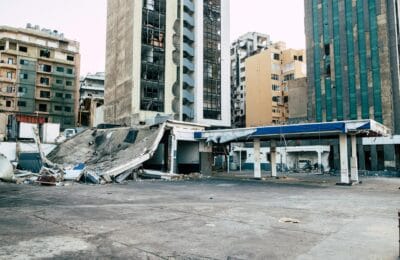
- Housing: An estimated 70-80% of all residential buildings damaged or destroyed, displacing over 1.9 million people (more than 85% of Gaza’s population)
- Healthcare: More than 80% of health facilities damaged or destroyed, including major hospitals that served as the backbone of Gaza’s healthcare system
- Education: Over 90% of school buildings damaged or destroyed, affecting more than 625,000 students
- Water and sanitation: Over 70% of water and sewage infrastructure damaged, creating a public health emergency
- Agriculture: An estimated 60-70% of agricultural land damaged, including the destruction of orchards, greenhouses, and irrigation systems that took decades to develop
- Commercial and industrial: More than 80% of commercial establishments damaged or destroyed, including factories, workshops, markets, and retail businesses
- Roads and transportation: Major road networks extensively damaged, making movement and trade within Gaza extremely difficult
The total cost of physical destruction has been estimated at $40-50 billion by international assessments, with some estimates reaching higher. To put this in context, Gaza’s entire pre-crisis annual GDP was approximately $6.5 billion. The destruction represents roughly 6-8 years of Gaza’s total economic output—an almost incomprehensible scale of devastation. For detailed assessments, see the World Bank’s West Bank and Gaza page.
Trade Under Blockade: The Architecture of Economic Suffocation
International trade is the lifeblood of any modern economy. For Palestine, trade has been systematically constrained by an architecture of control that predates October 2023 but has intensified dramatically since.
The Paris Protocol: An Economic Prison Disguised as an Agreement
The 1994 Paris Protocol on Economic Relations, signed as part of the Oslo Accords, was intended as a temporary five-year arrangement to govern Israeli-Palestinian economic relations during a transitional period. Three decades later, it remains in effect, binding the Palestinian economy to Israeli economic policy while providing none of the benefits of genuine economic integration.
Under the Paris Protocol:
- Palestine cannot set its own tariff rates, effectively surrendering trade policy to Israel
- Palestine cannot independently control its borders or establish direct trade routes
- Israel collects Palestinian import duties and VAT (“clearance revenues”), transferring them to the Palestinian Authority—a system that gives Israel fiscal leverage over the PA, as demonstrated by repeated instances of revenue withholding
- Palestine cannot issue its own currency, making monetary policy impossible
These structural constraints mean that even before any military action, the Palestinian economy operated under conditions that no other economy in the world faces. No country achieves economic prosperity when another country controls its borders, its trade policy, its fiscal revenues, and its monetary system.
The Gaza Blockade: Sealing an Economy
Since 2007, Gaza has been under a comprehensive land, sea, and air blockade that has progressively strangled its economy. The blockade controls what enters and exits Gaza, severely restricting:
- Raw materials needed for manufacturing and construction
- Exports of Gazan products (which had effectively ceased even before October 2023)
- Movement of people, preventing Gazan businesses from accessing markets, attending trade fairs, or meeting partners
- Fishing zones (restricted to 6-15 nautical miles, far below the 20 nautical miles agreed in Oslo)
Since October 2023, the blockade has tightened further, with humanitarian aid delivery severely restricted. The economic consequences extend beyond direct destruction: even if physical reconstruction were to begin immediately, the blockade infrastructure makes importing construction materials, machinery, and expertise extraordinarily difficult.
West Bank Trade Barriers
The West Bank faces different but equally debilitating trade constraints. The separation wall, checkpoint system, and controlled movement zones (Areas A, B, and C under Oslo classifications) fragment the territory into economic islands. Palestinian businesses report that transporting goods between West Bank cities can take 3-5 times longer than the actual driving distance due to checkpoint delays, adding 30-50% to logistics costs.
Area C, which constitutes approximately 60% of the West Bank’s land area and contains its most valuable agricultural and resource assets, remains under full Israeli control. Palestinian economic activity in Area C is severely restricted, with building permits almost never granted and existing structures frequently demolished. The World Bank estimates that unrestricted Palestinian access to Area C would increase Palestinian GDP by approximately 35%—a figure that illustrates the enormous economic cost of the territorial fragmentation. More data is available from UNCTAD’s Palestinian economic reports.
The Fiscal Crisis: When a Government Cannot Function
The Palestinian Authority (PA), which provides government services in the West Bank and (nominally) in Gaza, faces a fiscal crisis that threatens its ability to function as a governing entity.
Revenue Collapse
The PA’s revenues come from two primary sources: clearance revenues collected by Israel (approximately 65% of total revenue) and domestic taxes and fees (approximately 35%). Both sources have been severely disrupted:
- Clearance revenue withholding: Israel has repeatedly withheld or deducted from Palestinian clearance revenues, using various justifications. In 2024-2025, withheld amounts reached record levels, depriving the PA of its primary revenue source precisely when needs were most acute.
- Domestic revenue decline: The economic contraction has reduced taxable economic activity, shrinking the domestic revenue base. VAT receipts, income tax collections, and fee revenues have all declined sharply.
Expenditure Pressures
While revenues have collapsed, expenditure needs have surged:
- Public sector salaries: The PA employs approximately 150,000 people (including security forces), making it the largest employer in the Palestinian territories. Salary payments have been partial and irregular, creating hardship for hundreds of thousands of dependents.
- Social transfers: Poverty has increased dramatically, expanding the population eligible for social assistance at precisely the time when funding is most constrained.
- Healthcare and education: Demand for public services has surged while the ability to provide them has declined.
The PA’s budget deficit is estimated at $1.5-2 billion in 2026, a gap that international donors have not adequately addressed. The PA has resorted to borrowing from domestic banks, accumulating arrears to private sector suppliers, and cutting non-essential services. Without a resolution to the clearance revenue issue and substantial international budget support, the PA’s ability to maintain basic governance is at risk.
International Aid: Promises, Politics, and Inadequacy
International aid has been a defining feature of the Palestinian economy for decades, reflecting both the world’s recognition of Palestinian needs and its failure to address the root causes of those needs.
Aid Before the Crisis
In the decade before October 2023, Palestine received approximately $2-2.5 billion annually in international assistance, including:
- Direct budget support to the PA (primarily from the EU, Arab states, and the US)
- UNRWA services (education, healthcare, social services for registered refugees)
- Development project funding (infrastructure, institution building, private sector support)
- Humanitarian assistance (primarily for Gaza)
This aid, while significant, was never sufficient to offset the economic costs of occupation. The World Bank estimated in 2022 that the occupation’s direct and indirect economic costs exceeded $3.5 billion annually—meaning that international aid was, in effect, subsidizing the economic damage caused by the occupation without addressing its root cause.
The Aid Crisis Since 2023
The period since October 2023 has exposed the fragility and politicization of the international aid architecture. Several critical developments have occurred:
- UNRWA funding cuts: Multiple Western nations suspended or reduced funding to UNRWA, the agency that provides education, healthcare, and social services to 5.9 million registered Palestinian refugees. These cuts came at the moment of greatest need and have been described by the UN Secretary-General as potentially catastrophic for refugee populations.
- Humanitarian access restrictions: Even when aid has been pledged and funded, delivery into Gaza has been severely restricted. International organizations report that the volume of aid entering Gaza represents a fraction of what is needed, with bureaucratic obstacles, security concerns, and physical infrastructure destruction all impeding distribution.
- Pledging vs. delivery gap: International conferences have generated impressive pledging figures, but the gap between pledged and delivered aid remains enormous. Much of what has been pledged comes with conditions, timelines, and bureaucratic processes that delay actual disbursement by months or years.
The Reconstruction Question
As of 2026, serious reconstruction of Gaza has not begun, and credible estimates suggest it cannot begin at scale without fundamental changes to the political and security situation. The estimated cost of reconstruction—$50-80 billion for Gaza alone, according to various international assessments—dwarfs anything the international community has previously attempted in the region.
For context, the Marshall Plan, which rebuilt Western Europe after World War II, cost approximately $13 billion (roughly $170 billion in today’s dollars) spread across 16 countries. Gaza reconstruction would require a comparable per-capita investment concentrated in a territory of 365 square kilometers—an unprecedented challenge even under favorable conditions. See the latest updates from the UN Information System on the Question of Palestine.
Agriculture: The Sector That Embodies Palestinian Resilience
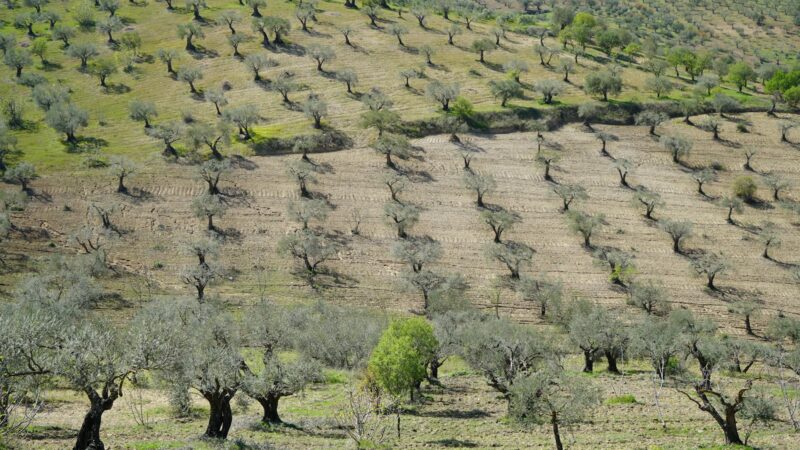
If there is one sector that captures both the tragedy and the resilience of the Palestinian economy, it is agriculture. The olive tree—which can live for centuries, survives in harsh conditions, and has been central to Palestinian culture for millennia—serves as an apt metaphor for the Palestinian economic experience.
Agriculture Before the Crisis
Agriculture contributed approximately 7-8% of Palestinian GDP and employed about 10-13% of the workforce. But its importance transcended economic statistics: agriculture was central to Palestinian identity, food security, and connection to the land. Key products included:
- Olive oil: Palestine produces some of the world’s finest olive oil, with approximately 10 million olive trees across the territories. Annual olive oil production averaged 25,000-30,000 tons.
- Dates: Particularly in the Jordan Valley and Gaza, date palm cultivation was economically significant.
- Vegetables and fruits: Gaza’s greenhouse agriculture produced high-quality strawberries, tomatoes, peppers, and flowers for export.
- Livestock: Sheep, goat, and poultry farming provided food security and income, particularly in rural West Bank areas.
Agricultural Destruction
The destruction of agricultural assets has been catastrophic, particularly in Gaza:
- An estimated 60-70% of Gaza’s agricultural land has been damaged or rendered unusable due to bombardment, military vehicle movement, and contamination
- Irrigation systems, greenhouses, and processing facilities have been extensively destroyed
- Livestock populations have been decimated, with animal feed supplies cut off by the blockade
- In the West Bank, settler violence against Palestinian farmers has intensified, with olive tree uprooting and harvest disruption documented by international observers
Despite this devastation, agriculture remains one of the most resilient sectors of the Palestinian economy. In the West Bank, farmers continue to cultivate their land under extraordinary difficulties. In Gaza, even amid destruction, small-scale urban farming and subsistence agriculture have emerged as survival strategies, demonstrating the ingenuity and determination that characterize the Palestinian economic spirit.
The Technology Sector: What Could Have Been
One of the most painful aspects of the Palestinian economic story is what was emerging before the crisis. In the years preceding October 2023, Palestine—particularly Ramallah and, to a lesser extent, Gaza—was developing a technology sector that showed remarkable promise.
The Palestinian Tech Ecosystem
By 2022, the Palestinian technology sector had grown into a $500+ million industry employing thousands of skilled professionals. Key developments included:
- Outsourcing and freelancing: Palestinian developers and designers were increasingly integrated into global freelancing platforms, earning international-rate incomes that far exceeded local salary levels.
- Startup ecosystem: Ramallah-based startups attracted international venture capital, with companies in fintech, edtech, and e-commerce gaining traction.
- Gaza’s coder community: Despite the blockade, Gaza had developed a notable community of software developers who worked remotely for international clients, demonstrating that digital connectivity could partially overcome physical isolation.
- Institutional support: Organizations including the Palestinian Investment Fund, international development agencies, and private accelerators were building an institutional framework to support tech entrepreneurship.
The Impact of Crisis
The crisis has severely disrupted this progress. In Gaza, the destruction of infrastructure—including telecommunications networks, power systems, and the physical spaces where tech workers operated—has decimated the digital economy. In the West Bank, movement restrictions, economic uncertainty, and the emigration of skilled professionals have slowed momentum. Brain drain—the departure of educated and skilled Palestinians for opportunities elsewhere—represents perhaps the most significant long-term economic loss, as it removes the human capital necessary for future recovery.
Banking and Finance: The System Under Stress
The Palestinian banking sector, which had been one of the best-regulated and most stable in the region, faces unprecedented pressures in 2026.
Pre-Crisis Banking Strength
Palestinian banks had approximately $20 billion in total assets before the crisis, with the sector regulated by the Palestine Monetary Authority (PMA). The banking system was characterized by conservative lending practices, strong capital adequacy ratios (typically above 15%), and growing digital banking services. Several Palestinian banks—including Bank of Palestine, Al Quds Bank, and the National Bank—were regarded as well-managed institutions.
Current Pressures
The crisis has created multiple pressures on the banking system:
- Non-performing loans: With businesses destroyed and individuals unable to service debts, non-performing loan ratios have risen sharply, threatening bank solvency.
- Deposit withdrawals: Economic uncertainty has driven deposit withdrawals, reducing banks’ lending capacity at precisely the time when credit is most needed.
- Correspondent banking relationships: International banks have become increasingly cautious about maintaining correspondent relationships with Palestinian banks, citing compliance and risk concerns. This threatens Palestine’s connection to the global financial system.
- Cash circulation challenges: Physical cash distribution in Gaza has become extremely difficult, creating a parallel crisis of liquidity.
The Human Cost: Behind Every Statistic
Economic analysis risks reducing human suffering to numbers on a page. It is essential to remember what these statistics mean in human terms.
When we say unemployment is 85-90% in Gaza, we mean that fathers and mothers wake up each morning with no way to provide for their children through dignified work. When we say 70-80% of housing is damaged or destroyed, we mean that families are living in tents, in rubble, in the shells of buildings, with no safe shelter from weather or violence. When we say GDP has contracted by 80-85%, we mean that an entire economy—the bakeries, the workshops, the clinics, the schools, the markets, the small businesses that constituted daily life—has been erased.
These are not abstract statistics. They represent the lived experience of 2.3 million people in Gaza and 3.2 million people in the West Bank who are enduring economic conditions that the international community would find intolerable if they occurred anywhere else on earth.
The resilience of the Palestinian people in the face of these conditions is not merely admirable—it is historically extraordinary. Economies under siege typically collapse entirely; populations facing this level of destruction typically fragment. That Palestinian social structures, cultural institutions, and economic activity continue to function at any level is a testament to a collective strength that no economic model can adequately capture.
What Recovery Requires: The Conditions for Economic Renewal
Any honest discussion of Palestinian economic recovery must begin with the conditions that make recovery possible. These are not aspirational wishes—they are the minimum prerequisites that any economist would identify as necessary for economic reconstruction:
- Ceasefire and cessation of destruction: Economic recovery cannot begin while destruction continues. This is not a political statement but an economic reality—you cannot rebuild what is still being demolished.
- Lifting the Gaza blockade: Reconstruction requires the free flow of materials, equipment, expertise, and people. The current blockade is fundamentally incompatible with economic recovery.
- Release of Palestinian fiscal revenues: The withheld clearance revenues belong to the Palestinian people and are essential for maintaining basic government services during the transition to recovery.
- Freedom of movement and trade: The West Bank’s economic potential cannot be realized while the territory remains fragmented by checkpoints, settlements, and movement restrictions. Palestinian access to Area C is particularly critical.
- Massive international investment: Reconstruction of Gaza alone will require $50-80 billion over 10-20 years—an investment comparable to post-war reconstruction programs but focused on a much smaller territory.
- Economic sovereignty: The Paris Protocol must be replaced with arrangements that give Palestinians control over their own trade policy, borders, and monetary system. No economy can develop under another country’s economic control.
- Addressing brain drain: Creating conditions that encourage skilled Palestinians—both those abroad and those in the territories—to invest their talents in building the Palestinian economy.
Resilience Economy: How Palestinians Survive and Adapt
Despite the overwhelming scale of economic destruction, Palestinian economic life continues through remarkable adaptation and resilience. Understanding these survival strategies is important both for appreciating Palestinian agency and for informing future recovery planning.
Informal Economy and Community Networks
The informal economy—always significant in Palestine—has expanded dramatically as formal economic structures have collapsed. Family and community networks serve as social safety nets, redistributing resources among extended family members and neighbors. The Islamic tradition of zakat (charitable giving) and waqf (endowment) provides additional support structures that operate independently of formal institutions.
Remittances
Palestinian diaspora communities worldwide have increased remittance flows to support families in the territories. While exact figures are difficult to determine, remittances are estimated to have increased by 30-50% since the crisis began, providing a critical lifeline for many families. The Palestinian diaspora, estimated at 6-7 million people worldwide, represents both a source of immediate financial support and a potential driver of future economic recovery through investment, knowledge transfer, and advocacy.
Digital Economy Adaptation
Where connectivity exists, Palestinians have shown remarkable innovation in using digital platforms for economic activity. Freelance work, online education, telemedicine, and digital commerce have provided income and services that bypass physical restrictions. This digital resilience suggests that technology could play a central role in future economic recovery, provided infrastructure is rebuilt.
Agricultural Persistence
Palestinian farmers continue to cultivate land under extraordinary conditions, adapting techniques to work with limited water, damaged soil, and restricted access to inputs. Small-scale urban farming has emerged in Gaza as a survival strategy, with families growing vegetables in available spaces. The olive harvest—deeply embedded in Palestinian cultural identity—continues in the West Bank despite settler violence and military restrictions, representing an act of economic production and cultural resistance simultaneously.
The International Responsibility: What the World Owes Palestine
The Palestinian economic crisis did not occur in a vacuum. It is the result of a 75+ year history of displacement, a 57+ year military occupation, a 17+ year blockade of Gaza, and a catastrophic escalation since October 2023. The international community bears responsibility not only for humanitarian response but for addressing the structural conditions that created this crisis.
This responsibility is not charity—it is obligation. International law, including the Fourth Geneva Convention, requires occupying powers to ensure the welfare of occupied populations. The international community’s obligation under the UN Charter to maintain international peace and security extends to ensuring that economic destruction of this magnitude is not permitted to continue without consequence.
The Palestinian people do not lack the talent, determination, or vision to build a thriving economy. They lack the freedom to do so. Every economic indicator in this analysis—every GDP figure, every unemployment rate, every destruction estimate—ultimately traces back to a single cause: the denial of Palestinian economic sovereignty and freedom.
The numbers in this article will change as new data becomes available. Some may improve marginally; others may worsen. But until the fundamental conditions change—until Palestinians have the freedom to trade, to move, to build, to invest, and to govern their own economic destiny—these numbers will continue to tell the same story: the story of an economy that should not survive, sustained by a people who refuse to disappear.
Palestine’s economy is not just numbers on a spreadsheet. It is the daily act of a people choosing to live, to work, to educate their children, and to plant olive trees that their grandchildren will harvest—even when the world seems determined to prevent it. That is not just economic resilience. That is the deepest form of human dignity.