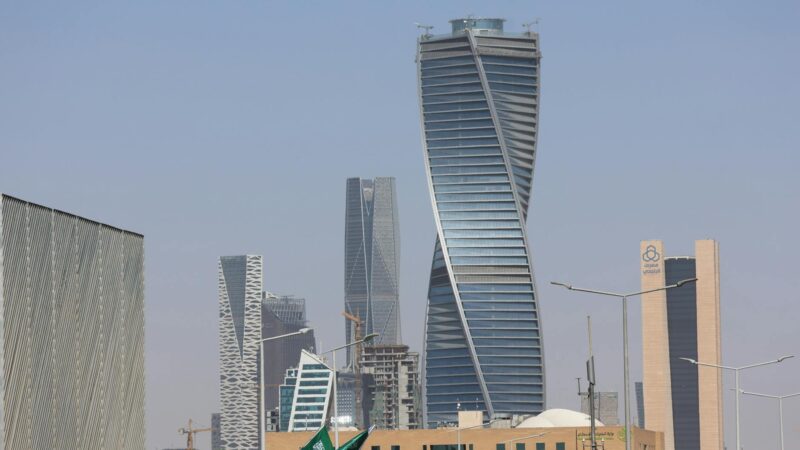
Just two weeks ago, the Saudi economy was the shining star among emerging economies. GDP growth of 4.5%, a non-oil sector comprising 55.6% of the economy, and foreign direct investment inflows rising quarter after quarter. Then the war came.
On February 28, 2026, armed conflict erupted between Iran on one side and the United States and Israel on the other, upending every economic equation in the region. For Saudi Arabia, the impact is not unidirectional — it is a complex mix of gains and losses that makes any definitive judgment difficult.
Before the War: An Economy at Its Peak
To understand the scale of impact, we must first grasp where the Kingdom started. In Q4 2025, the Saudi economy posted remarkable figures:

- Real GDP growth: 4.5% year-over-year
- Non-oil sector growth: 6.2%
- Non-oil sector share of GDP: 55.6%
- Saudi unemployment rate: at historic lows
- Consumer spending: at record highs
The Kingdom was on a steady path toward achieving Vision 2030 targets, and analysts were raising their 2026 growth forecasts. Then everything changed.
Aramco and Ras Tanura: The Direct Hit
Perhaps the most direct war impact on the Saudi economy is the Ras Tanura facility going offline. This facility — one of the world’s largest oil export complexes — was shipping approximately 550,000 barrels per day.
The full reasons have not been officially disclosed, but reports point to a combination of physical damage and precautionary shutdown. The result is the same: an estimated loss of $55 million daily in revenue at current prices.
However, Aramco — with its crisis management experience dating back to the Abqaiq attacks of 2019 — has the capability to reroute exports through alternative facilities. The question is: how long will that take?
The Oil Paradox: When War Is Profitable
This is where the great paradox emerges. Oil prices that stood at $67 per barrel before the war surged to $120 at their peak, and are currently oscillating between $77 and $100. This means every barrel Saudi Arabia sells generates significantly higher revenue.
Even with the loss of 550,000 barrels per day from Ras Tanura, total revenues may be higher than pre-war levels. A simple calculation:
- Pre-war: ~9.5 million bpd x $67 = ~$636 million daily
- Post-war (estimated): ~9 million bpd x $88 (average) = ~$792 million daily
The war may have added approximately $156 million daily to Saudi oil revenues — despite reduced production.
The Dark Side: Frozen Investments and Tourism
But these oil gains do not tell the complete story. The sectors Saudi Arabia worked hard to develop are taking significant hits:
Tourism: A Sudden Collapse
The tourism sector — which had been growing at over 20% annually — experienced a sharp decline. With 23,000 flights cancelled across the region and travel advisories issued by most Western nations, international tourist flows have effectively dried up.
Foreign Direct Investment: The Wait-and-See Stance
Foreign capital hates uncertainty more than anything. In a regional war environment, even the most optimistic companies prefer to wait. Several financial advisors reported that major investment deals on the verge of closing were frozen at the last moment.
Real Estate: A Rapid Correction
The real estate sector — particularly in Riyadh and Jeddah — saw transaction volumes drop an estimated 25-30% during the first two weeks of war. For comparison, Dubai’s real estate index fell 20% in just five days.
Tadawul: The Financial Market’s Reaction
The Tadawul (TASI index) — the region’s largest financial market — experienced sharp volatility since February 28. In the first three days of war, the index lost approximately 12% of its value before partially stabilizing.
The hardest-hit sectors were:
- Tourism and hospitality: down approximately 18%
- Real estate: down approximately 15%
- Retail: down approximately 10%
Conversely, energy and petrochemical stocks posted strong gains, with Aramco shares rising 8% driven by higher oil prices.
This market split reflects the broader paradox: the old economy (oil) thrives while the new economy (diversification) suffers.
Saudi Budget 2026: Does It Need a Rewrite?
The Kingdom set its 2026 budget based on an estimated oil price of $60-65 per barrel. With prices significantly exceeding this level, oil revenues will surpass projections.
But spending will also rise. Security and defense costs will inevitably increase in a volatile regional environment. Economic support programs for affected sectors — tourism, real estate, SMEs — will require additional allocations.
The likely outcome: a higher-than-expected budget surplus in H1 2026, but at a structural cost of delayed diversification goals.
The Non-Oil Sector: The Real Resilience Test
The 55.6% non-oil share of GDP is a historic achievement. But can this sector withstand its first real crisis?
The answer is premature, but early indicators are mixed. The digital and technology sector appears less affected, while sectors dependent on physical movement — tourism, retail, logistics — are suffering tangibly.
The bright spot is that domestic consumption has not been significantly impacted so far. Saudi citizens continue spending, and the banking sector is operating normally. This suggests the economic impact may be less severe than the headlines imply.
Historical Comparison: Lessons From Past Crises
This is not the first time the Saudi economy has faced a geopolitical shock. The Abqaiq attacks in September 2019 temporarily knocked out 5.7 million barrels per day — far larger than the current Ras Tanura impact. Yet production recovered within weeks.
The difference this time is that the crisis is not a single event but an ongoing war. This makes recovery more complex and less predictable.
Forward Look: Revised Growth Projections
Before the war, the consensus pointed to 4.5-5% growth for the Saudi economy in 2026. Now, revised estimates range between 2.5% and 4%, depending on the conflict’s duration.
In the best case — a short war and rapid recovery — growth may decline to 3.5%. In the worst case — an extended conflict with escalation — it could drop to 2% or below.
But even in the worst-case scenario, the Saudi economy remains in better shape than most regional economies. Massive financial reserves, robust infrastructure, and decisive economic leadership give the Kingdom a safety margin unavailable to many other countries.
Conclusion
The Saudi economy in March 2026 is a story of contradictions: higher oil revenues but stalling diversification, a split financial market, and growth that is slowing but not collapsing. The real paradox is that the war — which was supposed to prove the importance of ending oil dependence — is actually reinforcing oil’s importance as a financial safety net.
The question that should occupy policymakers in Riyadh is not how long the war will last, but how they ensure that short-term oil gains do not turn back the clock on the long journey of economic diversification.