What Happened
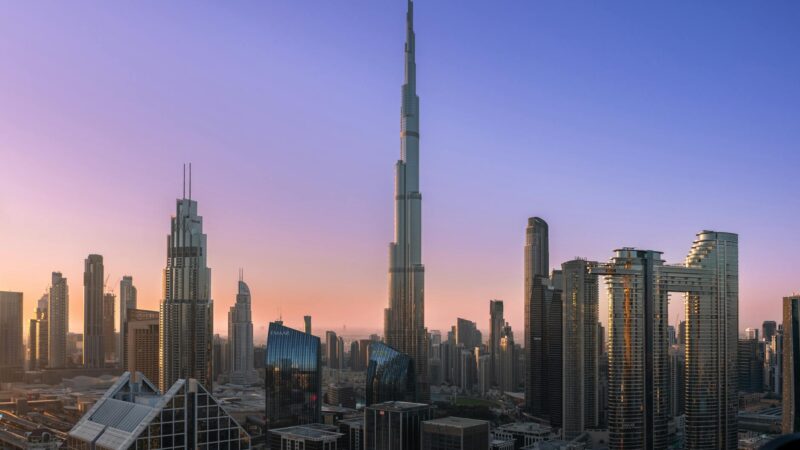
Within 72 hours of military operations beginning, Dubai — the city that built its identity as a safe haven for business, tourism, and luxury — became an economic crisis zone. The numbers are staggering:
- 80% of hotel bookings canceled.
- Over 11,000 flights disrupted.
- One million travelers affected.
- UAE stock exchanges closed for two consecutive days — an unprecedented move.
- The Fairmont Palm — recently sold for $325 million — sustained damage from Iranian strikes.
- The Burj Al Arab was damaged, and Jebel Ali Port was hit.
Maersk and Hapag-Lloyd announced a complete suspension of Gulf shipping transit.
Context: The Dubai Economic Model
Over two decades, Dubai built an economy designed to be “crisis-proof” — one that doesn’t depend on oil but rather on:

- Tourism and hospitality: 17.15 million international visitors in 2023.
- Aviation: Dubai International Airport is the world’s third-busiest, and Emirates airline is a backbone connecting Asia with Europe and Australia.
- Logistics: Jebel Ali Port is the ninth-largest container port globally.
- Real estate and financial services: A global magnet for investment and regional headquarters.
This model was presented as proof that economic diversification works in an oil-dependent region. Today, it’s being tested across every dimension simultaneously.
Analysis: Every Pillar Under Pressure
Tourism: Immediate Collapse
Cancellation rates hit 80% according to Arab News reports. The UAE government is covering accommodation and meal costs for stranded travelers — an open-ended financial commitment.
Initial estimates suggest hotel revenues could drop 50% in Q1. But the deeper impact isn’t just financial: it’s the erosion of Dubai’s brand image as a safe, stable destination.
Aviation: Paralysis of a Global Hub
Emirates and Qatar Airways aren’t just regional carriers — they’re essential links between continents. Flight suspensions affect Australia-Europe, Asia-Africa, and Asia-Europe routes that transit through Dubai and Doha.
Canceling 11,000 flights means losses not only for Gulf airlines but disruption to a global travel network that depends on these hubs.
Logistics and Shipping: A Double Crisis
The Hormuz closure doesn’t only affect oil — it affects all container shipping. Jebel Ali Port, which handles approximately 14 million containers annually, has become nearly paralyzed. Maersk and Hapag-Lloyd suspending Gulf transit operations means entire supply chains are seeking alternatives.
Real Estate: From Symbol of Prosperity to Symbol of Risk
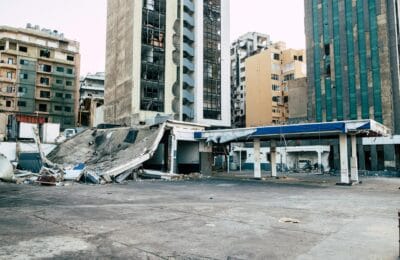
The $325 million Fairmont Palm deal was a recent headline for Dubai’s booming luxury property market. Now, images of the damaged hotel spread as the exact opposite symbol.
Damage to the Burj Al Arab — Dubai’s most iconic landmark — carries symbolic significance beyond material value. It’s a blow to the brand itself.
Insurance companies will reprice premiums for luxury real estate and infrastructure in the UAE, potentially raising costs for every new development project.
The Deeper Question
The issue isn’t the scale of current damage — Dubai will undoubtedly rebuild. The issue is a larger structural question:
Can you build a successful post-oil economy in a geography that makes you a military target?
Dubai’s model implicitly assumes the region is stable enough to attract tourists, investors, and businesses. The Iran war puts that assumption to a real test for the first time in decades.
This question extends beyond Dubai — it applies to every Gulf state pursuing economic diversification through tourism, technology, and services. If a diversified economy is just as vulnerable to war as an oil-based one, what has really changed?
Regional Impact
Saudi Arabia and Vision 2030
Every Saudi project dependent on attracting tourism and foreign investment — from NEOM to the Red Sea project — faces the same question. If the Iran war proves the region unsafe for tourists, these multi-billion-dollar projects may need fundamental reassessment.
Qatar and Bahrain
Qatar invested heavily in tourism after the 2022 World Cup, and Bahrain is developing its financial sector as an alternative to oil. Both face the same structural vulnerability: economic diversification doesn’t protect you from geography.
What Comes Next
In the short term, Dubai’s government will move quickly to contain damage and restore confidence. Economic stimulus packages, tax exemptions for the tourism sector, and intensive marketing campaigns — all are expected.
But in the long term, investors, tourists, and international companies will factor “geopolitical risk” into their calculations regarding Dubai in ways they never did before. This shift may prove more costly than any physical damage.
The coming weeks will reveal whether Dubai’s model is resilient enough for a rapid recovery — or whether the Iran war has created a crack in the economic narrative upon which the city was built.