On the morning of Saturday, February 28, 2026, the Middle East woke to the sound of explosions rocking Iranian cities from Tehran to Isfahan in one of the most dangerous military escalations in the region’s modern history. The United States and Israel launched Operation Epic Fury — a joint military campaign targeting Iran’s nuclear program and military infrastructure — as Tehran retaliated with ballistic missiles striking American bases in four Gulf states. The Arabian Gulf now stands at a historic crossroads, and what happens in the coming hours and days could reshape the entire region.
What Is Operation Epic Fury?
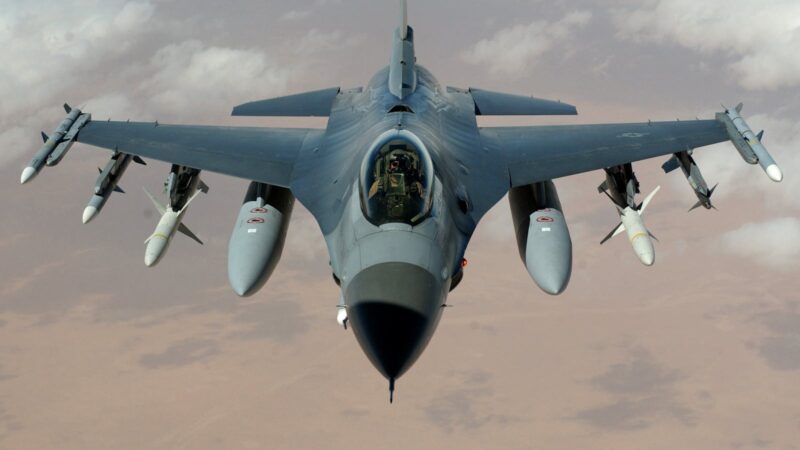
U.S. President Donald Trump announced Saturday that the United States had begun “major combat operations” against Iran, confirming the objective is to “destroy Iran’s nuclear program” and “eliminate imminent threats from the Iranian regime.” The Pentagon designated the operation Operation Epic Fury.
Unlike the limited strikes carried out in June 2025, these attacks came in broad daylight — the early hours of Saturday morning — while millions of Iranians were heading to work and school, signaling an intent to deliver a strategic shock.

Key Targets of the Strikes
- Nuclear facilities: Fordow, Natanz, and Isfahan — Iran’s three primary uranium enrichment sites
- Missile infrastructure: Ballistic missile launch platforms and command-and-control systems
- Military compounds: Satellite imagery showed black smoke rising from Supreme Leader Ayatollah Ali Khamenei’s compound, with visible damage to several buildings
“Our objective is to defend the American people by eliminating threats from the Iranian regime” — President Trump
Iran’s Response: Missiles Into the Heart of the Gulf
Tehran’s retaliation was swift. Within hours, the Iranian government confirmed retaliatory strikes targeting U.S. military bases across several Arab states:
- Qatar: Al Udeid Air Base — the largest U.S. military base in the Middle East
- Bahrain: U.S. Fifth Fleet headquarters — Manama condemned the strike as a “blatant violation of sovereignty”
- UAE: Al Dhafra Air Base — one civilian killed in Abu Dhabi from falling missile debris
- Kuwait: Ali Al Salem Air Base
- Jordan: Muwaffaq Al-Salti Air Base
According to Iran’s Fars News Agency, the IRGC targeted all Gulf states hosting U.S. military assets except Oman.
Saudi Arabia’s Stance: Unequivocal Condemnation and a Warning to Retaliate
Saudi Arabia issued a powerful statement through its foreign ministry condemning “in the strongest terms the blatant Iranian aggression and flagrant violation of sovereignty” of the UAE, Bahrain, Qatar, Kuwait, and Jordan.
Key points from Saudi Arabia’s response:
- Full solidarity with affected nations, pledging to “place all its capabilities at their disposal”
- Warned of “dire consequences” for continued violations of sovereignty and international law
- Crown Prince Mohammed bin Salman called Qatar’s Emir reaffirming full solidarity and support
Both Qatar and Saudi Arabia stated they reserve the right to retaliate against Iran under international law.
Timeline: How We Got Here
This crisis didn’t emerge from a vacuum. Here is the sequence of events leading to this dangerous escalation:
| Date | Event |
|---|---|
| June 2025 | Israel strikes Iranian nuclear facilities; U.S. follows with strikes on Fordow, Natanz, and Isfahan |
| January 2026 | U.S.-Iran nuclear talks begin, mediated by Oman |
| February 2026 | Trump warns “bad things” will happen if Iran doesn’t agree to a deal |
| Feb 18 | Iran partially closes Strait of Hormuz for live-fire naval drills |
| Feb 25 | Washington imposes sanctions on 30+ entities supporting Iranian oil and weapons sales |
| Feb 26 | Third round of Geneva negotiations — the “most intense” — ends without a deal |
| Feb 27 | Iran says U.S. must drop “excessive demands” — Trump says he’s “not happy” with talks |
| Feb 28 | Operation Epic Fury: U.S. and Israel launch massive strikes — Iran retaliates hitting Gulf bases |
Sticking Points: Why Negotiations Failed
The U.S.-Iran nuclear talks had seen “significant progress” according to U.S. officials, but the gap between demands remained wide:
U.S. Demands
- Complete dismantlement of three nuclear facilities (Fordow, Natanz, Isfahan)
- Surrender of all enriched uranium stockpile — Iran holds 441 kg enriched to 60%, one technical step from weapons-grade (90%)
- Halt ballistic missile development
- Cut support for regional armed groups
Iran’s Position
- Showed flexibility on civilian enrichment limits only
- Refused to ship uranium abroad
- Called missiles and proxies “non-negotiable red lines”
Impact on Oil Prices and Markets
As expected, oil markets reacted sharply to the escalation:
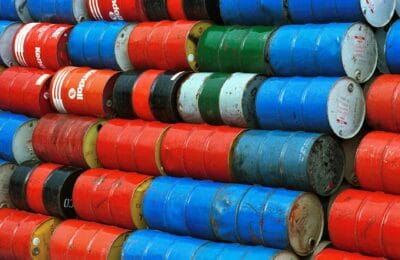
- Brent crude surged past $72.50/barrel — a seven-month high
- WTI topped $67
- Analysts expect an immediate jump to $80 if operations continue into next week
- In a prolonged war scenario, Brent could reach $100/barrel with 20% of global supply disrupted
Strait of Hormuz: The World’s Most Dangerous Chokepoint
The Strait of Hormuz is the lifeline of global energy markets, with approximately 20 million barrels of oil transiting daily — one-fifth of world consumption. Multiple oil tankers have already begun avoiding the strait following the strikes.
Iran had previously seized two oil tankers ahead of negotiations, while a former Iranian official threatened to make the strait a “massacre and hell” for U.S. forces.
Impact on GCC Countries
Even limited strikes on Gulf states can disrupt:
- Aviation: Airspace closures and flight diversions
- Shipping lanes: Port delays and surging maritime insurance costs
- Oil infrastructure: Direct threat to facilities if escalation continues
- Investor confidence: Capital flight and Gulf stock market declines
UAE
The UAE condemned the “flagrant violation” of its sovereignty after a civilian was killed in Abu Dhabi by missile debris. The crisis directly impacts the Dubai real estate market and tourism sector.
Bahrain
Manama described the attack on the Fifth Fleet headquarters as a “blatant violation of sovereignty” — the most serious direct targeting of a U.S. naval base in the region.
Qatar
Doha issued strong condemnation and reserved its full right to respond under international law after Al Udeid Air Base was targeted.
Civilian Casualties
In the day’s most tragic incident, Iran’s state-run IRNA news agency reported an Israeli strike hit a girls’ elementary school in Minab, Hormozgan province, killing at least 53 students. In Abu Dhabi, one civilian was killed by Iranian missile debris.
Analysis: What Lies Ahead
What’s happening today isn’t a passing escalation — it’s a fundamental shift in the regional security equation. Here are the likely scenarios:
Scenario 1: Limited Escalation Then De-escalation
If operations are limited to a few days with international mediation (via Oman, China, and Europe), we could see a return to negotiations with more realistic terms from both sides. This scenario means oil prices gradually retreating and relative stability returning.
Scenario 2: Prolonged Conflict
If strikes continue and Iranian retaliation expands, the region faces: disruption of the Strait of Hormuz pushing oil above $100, a global energy crisis hitting Europe and Asia, mass displacement, and direct impacts on Vision 2030 and Gulf economic megaprojects.
Scenario 3: Alliance Realignment
This crisis could accelerate the formation of a unified Gulf defense alliance with U.S. backing and bring Saudi-Israeli normalization back to the forefront as a strategic option against the shared Iranian threat.
Impact on the Saudi and Gulf Economies
Although Saudi Arabia wasn’t directly targeted, the economic fallout is broad:
- Oil revenue: Price spikes boost short-term revenue, but instability threatens OPEC+ strategy
- TASI index: Expect a sharp 2-5% decline when markets open Sunday
- Foreign investment: Concerns about crisis impact on capital flows to NEOM and megaprojects
- Technology sector: Digital transformation plans may be affected if the crisis drags on
International Reactions
- United States: Trump confirmed operations are “massive and ongoing” and called on the Iranian people to overthrow their regime
- Israel: Launched its own operation dubbed “Operation Lion’s Roar”
- G7: Urgent calls for de-escalation and civilian protection
- China and Russia: Condemned the strikes and called for restraint
What You Need to Know Right Now
This is a pivotal moment in Middle East history. Here’s what to watch in the coming days:
- Will Iran close the Strait of Hormuz? — This is the most critical question. Closure means an immediate global energy crisis
- Will Iranian retaliation expand? — Targeting Saudi or Emirati oil infrastructure would be the point of no return
- What will TASI and Gulf markets do on Sunday? — Expect a sharp 2-5% drop at opening
- Will international mediation intervene? — Oman, China, and Europe are in a race against time
- How will oil prices move on Monday? — If operations continue, expect Brent above $80
Disclaimer: The Middle East Insider team is monitoring developments in real time and will continue updating this analysis as new information emerges. Follow us on @meinsider for the latest updates.
Last updated: February 28, 2026 — 15:00 Riyadh time