Introduction: Oil at Levels Not Seen Since 2022
On April 6, 2026, oil prices trade at levels that are raising alarms in every economic capital around the world. West Texas Intermediate (WTI) crude registers $111.81/barrel, while the Brent benchmark trades at $109.03/barrel. These figures represent roughly a 40% increase from pre-war levels before the Iran conflict erupted on February 28, and are the highest oil prices since the peak of the 2022 energy crisis.
What makes this rally fundamentally different from any previous oil surge is that it is driven by an unprecedented combination of factors: an active war in the world’s largest oil-producing region, the actual closure of the most critical oil shipping lane (the Strait of Hormuz), direct attacks on oil infrastructure in producing nations (Kuwait and Bahrain), and a US presidential deadline that has been extended for the third time to Tuesday, April 7.
This report provides a comprehensive analysis of everything you need to know about oil’s surge past $111: the causes, the consequences, the OPEC+ response, and the scenarios that could unfold after Tuesday.

| Crude | Price ($/barrel) | Change Since Pre-War |
|---|---|---|
| West Texas Intermediate (WTI) | $111.81/barrel | ~+40% |
| Brent Crude | $109.03/barrel | ~+40% |
Why Oil Jumped Past $111: Dissecting the Causes
A 40% oil price increase in five weeks is not a normal event — it is a classic supply shock amplified by extraordinary geopolitical risk. Let us break down the primary causes:
1. The Strait of Hormuz Closure — The Severed Artery
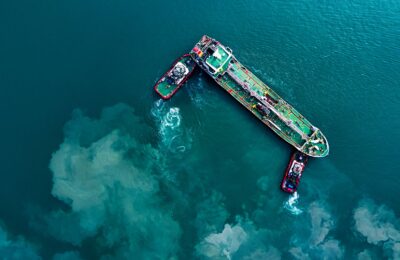
On March 27, 2026, Iran’s Islamic Revolutionary Guard Corps (IRGC) executed what had been considered for decades a merely theoretical threat: the complete closure of the Strait of Hormuz. This narrow waterway connecting the Persian Gulf to the Gulf of Oman and the Indian Ocean carries approximately 20–21 million barrels per day — roughly one-fifth of global oil consumption.
The closure did not happen overnight. It began gradually in mid-March when the IRGC blocked approach routes to the strait, before escalating to full closure on March 27. The result was immediate: Brent crude jumped to $112 and WTI to $100 on March 28 alone.
The impact extends far beyond the volume of blocked oil. The Hormuz closure also means:
- Disruption of liquefied natural gas (LNG) exports from Qatar — the world’s largest exporter
- Complete halt of tanker traffic in the Persian Gulf
- Maritime shipping insurance premiums surging to record levels
- Tankers forced to use longer, costlier alternative routes
For more detailed coverage of the Hormuz crisis, read our comprehensive Strait of Hormuz analysis.
2. Attacks on Oil Infrastructure
What dangerously compounds the supply crisis is the direct targeting of oil facilities in Gulf states — a development nobody anticipated at this scale:
- March 30: Iran strikes a Kuwaiti oil tanker — the first direct attack on a Gulf tanker in this war
- April 5: Strikes on Kuwait Petroleum Corporation headquarters in Kuwait City — the heart of Kuwait’s oil industry
- April 5: Strikes on Bahrain oil storage facilities — threatening Bahrain’s production and export capacity
These attacks transform the crisis from a “shipping lane closure” into a direct threat to production infrastructure. If they continue at this pace, Gulf states’ ability to resume production and exports — even after Hormuz reopens — will be in serious question. For the latest on the Kuwait strikes, see our Kuwait and Bahrain attacks report.
3. The Broader Iran War
The wider context for everything unfolding is the Iran war that began on February 28, 2026, with US-Israeli strikes that killed Supreme Leader Khamenei. Since then, the conflict has escalated to include:
- Broad Iranian retaliation including missiles on Tel Aviv and Haifa
- Hezbollah’s entry into combat and Israeli ground invasion of Lebanon
- Iranian strikes on AWS data centers (early March)
- UAE intercepting 23 missiles and 56 drones (April 4)
- Assassination of the IRGC intelligence chief (April 6)
- Haifa struck and American F-15 pilot rescued (April 6)
Each escalation adds a fresh risk premium to oil prices. The market is not only pricing in current supply disruption but also the probability of further deterioration — a probability that appears to grow by the day.
4. Trump’s Third Deadline Extension
On April 6, President Trump extended his Iran deadline to Tuesday, April 7. This is the third extension (after the initial March 24 deadline and two extensions on March 25–26). The repeated extensions send mixed signals to the market:
- On one hand, they suggest Trump may not be ready for full escalation — slightly easing pressure
- On the other, each extension means the crisis continues unresolved — keeping prices elevated
- Most importantly, uncertainty about what happens after the deadline keeps the risk premium high
OPEC+ Response: Are 206,000 Barrels/Day Enough?
On April 1, OPEC+ decided to increase production by 206,000 barrels per day. This decision came in response to mounting pressure on oil prices, but the critical question is: is this volume sufficient to offset the shortfall?
The short answer: no, not even close.
The Strait of Hormuz carries approximately 20 million barrels per day. An increase of 206,000 barrels represents less than 1% of that volume. Even adding OPEC+ spare capacity from non-Gulf members, full compensation is practically impossible.
| Item | Volume (barrels/day) |
|---|---|
| Oil blocked by Hormuz closure | ~20 million |
| OPEC+ production increase (Apr 1) | +206,000 |
| Remaining shortfall | ~19.8 million |
| Available global strategic reserves | Limited and short-term |
Why did OPEC+ not increase production more aggressively? Several reasons:
- Capacity location: Most OPEC+ spare capacity is in Saudi Arabia, the UAE, and Kuwait — nations that export through Hormuz. Increasing their production is pointless if there is no route to ship it.
- Political balancing: OPEC+ attempts to balance supporting the global economy with maintaining high prices that serve its revenues.
- Uncertainty: Nobody knows when Hormuz will reopen. A massive production increase could cause a price crash if the strait reopens suddenly.
The Global Impact of the Hormuz Closure on Oil Markets
The Strait of Hormuz closure does not merely affect the price per barrel — it is redrawing the entire global energy map. Here is how:
Rerouting Oil Flows
With the primary route closed, alternatives are being explored:
- Saudi East-West Pipeline: Connects eastern oil fields to Yanbu port on the Red Sea, with capacity of approximately 5 million barrels/day. But it is not currently operating at full capacity.
- UAE Habshan-Fujairah Pipeline: Bypasses Hormuz via Fujairah port on the Gulf of Oman, with 1.5 million barrels/day capacity.
- Iraq’s Al-Faw port: Exports directly through the Persian Gulf south of Hormuz, but faces security risks.
Even with these alternatives, the capacity to replace 20 million barrels per day remains severely limited.
Impact on Importing Nations
Nations most dependent on Gulf oil are the hardest hit:
- China: Imports roughly 40% of its oil through Hormuz. Finding immediate alternatives is costly.
- India: Heavily dependent on Gulf oil. Price increases pressure its economy.
- Japan and South Korea: Nearly entirely import-dependent. The shock is severe.
- Europe: Despite diversifying sources after the Ukraine crisis, still relies significantly on Gulf oil.
Impact on Non-Gulf Exporters
Conversely, some nations benefit substantially:
- United States: World’s largest oil producer. Higher prices boost shale oil production.
- Russia: Despite sanctions, benefits from elevated prices reflected in its exports.
- Norway and Canada: Major producers capitalizing on high prices.
- Nigeria and Angola: African producers experiencing a revenue boom.
Kuwait and Bahrain Attacks: A Dangerous Escalation
The events of April 5 represented a qualitative escalation in the war. For the first time, oil infrastructure in Gulf states was directly and successfully targeted:
The Kuwait Petroleum Corporation Strike
Kuwait Petroleum Corporation (KPC) is the parent company overseeing Kuwait’s entire oil sector — from extraction to refining to exports. Targeting its headquarters in Kuwait City sends an unmistakable message: no oil facility in the Gulf is safe.
Kuwait produces approximately 2.7 million barrels per day and holds roughly 6% of global proven reserves. Any disruption to its production significantly worsens the global shortfall.
The Bahrain Oil Storage Strike
Bahrain is a relatively small producer (approximately 200,000 barrels/day), but the strike’s significance extends beyond volume. Bahrain hosts the US Navy’s Fifth Fleet, and targeting its oil facilities signals Iran’s willingness to expand its economic warfare.
The immediate market impact was swift — reflected in oil climbing to current levels. But the psychological impact matters more: traders and investors are now pricing in the possibility of similar attacks on Saudi or Emirati facilities, which would push prices even higher if realized.
F1 Cancellations: Symbolic and Economic Consequences
The decision to cancel Formula 1 races in Saudi Arabia and Bahrain (April 5) might seem peripheral, but it carries significant implications:
- Message to the world: When global sporting events are canceled due to security risks, it sends a powerful signal about the crisis’s severity
- Economic losses: Each F1 race generates hundreds of millions of dollars for the local economy (tourism, hotels, entertainment)
- Investment impact: Cancellations discourage foreign investment and erode confidence in regional stability
- Tourism: Saudi Arabia and Bahrain were working to diversify their economies through tourism and entertainment — the war sets these efforts back years
UAE Fuel Prices: 31–72% Increases
Among the most direct impacts of rising oil prices on ordinary citizens is the surge in fuel prices across the region. The UAE, which adjusts fuel prices monthly based on global rates, has experienced increases ranging from 31% to 72% depending on fuel grade.
| Fuel Type | Price Increase | Impact |
|---|---|---|
| Super 98 | +72% | Most affected |
| Special 95 | +55% | Significantly affected |
| E Plus 91 | +45% | Moderately-to-significantly affected |
| Diesel | +31% | Least affected relatively |
These fuel price increases directly translate to:
- Higher daily transportation and commuting costs
- Rising food and consumer goods prices
- Increased delivery and logistics costs
- Higher electricity bills (in nations relying on gas and oil for power generation)
For details on how fuel price increases are affecting the UAE, see our UAE fuel prices report.
Global Inflation: Winners and Losers
Oil above $111/barrel is not just a trading screen number — it is an inflationary bomb slowly detonating in every economy on earth. But the impact is uneven — some nations and sectors suffer acutely while others benefit.
The Losers: Who Suffers Most?
- Major importing nations: China, India, Japan, and Europe face dramatically higher energy bills
- Airlines: Fuel represents 25–35% of operating costs. Some smaller carriers may face bankruptcy
- Maritime shipping: Higher fuel costs + shipping risks through the region = record freight rates
- Ordinary consumers: Everywhere, people pay more for gasoline, food, and goods
- Emerging markets: Nations with weak currencies and large debts (Egypt, Turkey, Pakistan) face dual pressure
The Winners: Who Benefits?
- Non-Gulf producers: The US, Russia, Canada, and Norway achieve record revenues
- Major oil companies: ExxonMobil, Chevron, and Shell post exceptional profits
- Renewable energy producers: Higher oil makes solar and wind more competitive
- Gulf states (theoretically): Higher prices mean greater revenues — but only if they can export, which is the problem with Hormuz closed
Three Scenarios for Tuesday, April 7
With Trump’s deadline expiring Tuesday, oil markets watch with intense anticipation. Three paths are possible:
Scenario 1: A Fourth Deadline Extension (Most Likely — 50%)
Based on the repeated pattern, extension remains the most probable scenario. In this case:
- Oil may dip slightly (2–5%) temporarily as immediate tension recedes
- But it will bounce back quickly since the fundamental crisis (Hormuz closed, war ongoing) remains unresolved
- Expected range: $105–112/barrel for Brent
Scenario 2: Major US Military Escalation (35%)
If Trump follows through on his threats with a sharp escalation:
- Oil could jump to $120–130/barrel or higher
- If the escalation includes striking Iranian oil facilities, we could see even higher numbers
- Market panic would be severe
- Possible Strategic Petroleum Reserve (SPR) releases to cap prices
Scenario 3: Diplomatic Breakthrough (15%)
Especially with the Pakistan “Islamabad Accord” offering a ceasefire framework:
- Oil could retreat to $85–95/barrel
- But reopening Hormuz would take time — it would not be instantaneous
- Markets would need weeks to fully normalize prices
| Scenario | Probability | Expected Brent ($/barrel) | Expected WTI ($/barrel) |
|---|---|---|---|
| Deadline extension | 50% | $105–112 | $108–115 |
| Military escalation | 35% | $120–135 | $123–140 |
| Diplomatic breakthrough | 15% | $85–95 | $88–98 |
Impact on Egypt and Arab Importing Nations
While Gulf producing states theoretically benefit from higher prices (despite export challenges), Arab importing nations face severe challenges:
Egypt
Egypt produces natural gas but is a net importer of petroleum products. Higher oil means:
- Rising fuel subsidy bills or consumer price hikes
- Pressure on the trade balance and current account
- Higher inflation burdening citizens
- Additional pressure on the Egyptian pound (currently at 54.35 against the dollar)
On the other hand, Egypt benefits from Suez Canal revenues, which may rise if tankers reroute away from Hormuz. But this benefit is limited compared to oil import costs. To understand the broader impact on Egypt’s economy, read our Iran war impact on Egypt analysis.
Jordan, Lebanon, Tunisia, and Morocco
These nearly entirely import-dependent nations face a genuine energy crisis:
- Lebanon, already suffering from a crushing economic crisis and the Israeli war, receives yet another blow
- Jordan imports approximately 97% of its energy needs
- Morocco and Tunisia face sharp increases in energy bills
Technical Outlook: Critical Price Levels
From a technical perspective, WTI crude trades at important resistance levels:
- Current resistance: $112/barrel — a sustained break targets $118–120
- First support: $105/barrel — a psychological level and accumulation zone
- Second support: $100/barrel — a major level whose breach would signal a sentiment shift
- 50-day moving average: Supports the current uptrend
The Relative Strength Index (RSI) approaches overbought territory, suggesting the possibility of a short-term correction. However, in geopolitically driven markets, technical indicators are often less effective.
Historical Oil Shocks in Context
To provide historical perspective, let us compare the current situation with the most significant oil shocks of the past:
| Crisis | Year | Price Increase | Duration |
|---|---|---|---|
| Arab Oil Embargo | 1973 | +300% | 6 months |
| Iranian Revolution | 1979 | +150% | 12 months |
| Iraq Invasion of Kuwait | 1990 | +130% | 7 months |
| Ukraine Crisis | 2022 | +65% | 4 months |
| Iran War (current) | 2026 | +40% (so far) | 5 weeks (ongoing) |
What distinguishes the 2026 crisis is that the actual closure of Hormuz never occurred in any previous crisis. This means the potential price ceiling is significantly higher than anything we have seen historically.
Conclusion: What You Need to Know
Oil above $111 is not the result of a single factor — it is the product of a perfect storm of interlocking forces: an ongoing war, a closed shipping lane, targeted infrastructure, and diplomatic uncertainty. OPEC+ is attempting to respond but its tools are limited against the scale of this crisis.
Tuesday, April 7, will be a pivotal moment. What happens after Trump’s deadline expires will determine whether we are heading toward oil above $120 or toward the beginning of de-escalation. In all scenarios, the effects of the current oil surge will be felt for months — even if prices retreat tomorrow.
What is certain: the world is experiencing a genuine oil shock, and current prices are only the beginning if Hormuz does not reopen soon and the war does not abate. Watch Tuesday closely.