Every January the same articles circulate on social media, each one claiming a different Middle Eastern country as the richest in the region. One blog puts Qatar first, the next puts the UAE, a third inexplicably puts Israel, a fourth puts Kuwait because of its sovereign-wealth assets. They cannot all be right, and most of the time the disagreement is not a matter of facts but of definitions.
This article fixes that. We rank the fifteen most economically significant countries in the Middle East across five separate dimensions in 2026: nominal GDP per capita, GDP per capita at purchasing-power parity, sovereign-wealth assets per citizen, energy reserves per capita, and a composite quality-of-life index. Then we combine those five into a single fair-weighted score so you can see, in 2026 terms, which country actually deserves the title of richest in the region and why.
How We Define ‘Richest’ in 2026
‘Richest’ is a slippery word. A country can be flow-rich (high annual income) but stock-poor (few accumulated assets), or the reverse. Qatar and the UAE are flow-rich. Kuwait and Saudi Arabia are stock-rich. Lebanon and Egypt are neither, although they sometimes look wealthier than their per-capita statistics suggest because of remittances and informal economies.

To resolve this, we use five components.
1. Nominal GDP per capita: the most-quoted headline number, useful for international purchasing power on imported goods.
2. GDP per capita at purchasing-power parity (PPP): adjusts for local price levels, gives a better sense of in-country living standards.
3. Sovereign-wealth-fund assets per citizen: measures inherited or accumulated national wealth, not just current production.
4. Hydrocarbon reserves per capita: a proxy for future income that has not yet been monetised.
5. Quality-of-life composite: built from life expectancy, healthcare access, education attainment, and infrastructure quality, drawing on UNDP, World Bank, and Numbeo data.
The five components are then standardised and combined with weights of 25%, 25%, 20%, 15%, and 15% respectively. Sources are cross-checked across the IMF World Economic Outlook April 2026 update, the World Bank’s WDI database, and the Sovereign Wealth Fund Institute.
The 2026 Middle East Wealth Ranking: Top 15
1. Qatar: Still the Wealth King of the Middle East
Nominal GDP per capita in 2026: approximately 83,000 US dollars. PPP-adjusted: approximately 124,000 US dollars. Sovereign-wealth assets per citizen (through QIA): approximately 1.05 million US dollars. Hydrocarbon reserves per capita: among the highest in the world.
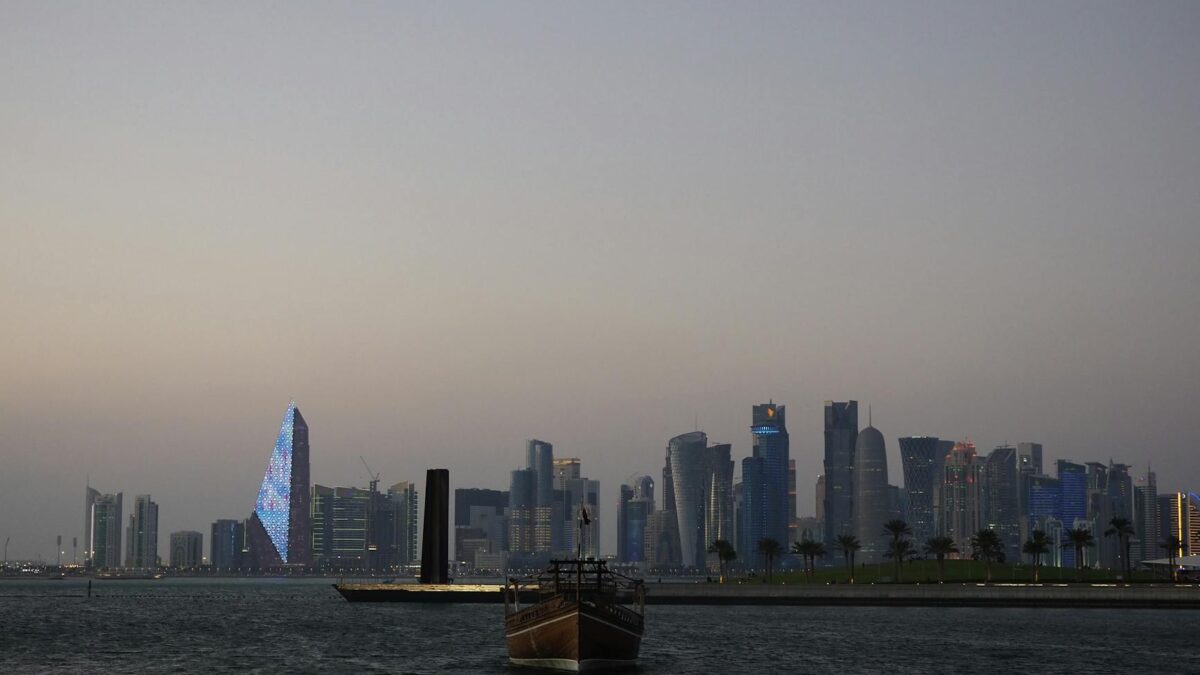
Qatar keeps its crown in 2026 for one simple reason: it has 2.9 million residents (of whom roughly 350,000 are citizens) sitting on top of the world’s third-largest proven gas reserves. The North Field expansion phases have continued through the 2020s, lifting LNG export capacity above 142 million tonnes per year by 2026 and locking in long-term supply contracts with European and Asian buyers. The Qatar Investment Authority’s assets are now estimated above 530 billion US dollars, much of it deployed in marquee London real estate, Volkswagen and Glencore stakes, and a fast-expanding US infrastructure portfolio.
Quality of life in Doha continues to improve, with universal healthcare for citizens, no personal income tax, and one of the highest urban-infrastructure scores in the world after the 2022 World Cup investment cycle. The main weakness of Qatar’s wealth model remains its dependence on a single export (LNG) and the extreme tilt of citizen-to-expat ratio, which complicates any pure per-capita comparison.
2. United Arab Emirates: The Diversified Challenger
Nominal GDP per capita: approximately 53,000 US dollars. PPP: approximately 82,000 US dollars. Sovereign-wealth assets per citizen (through ADIA, Mubadala, ICD): approximately 1.4 million US dollars.
The UAE in 2026 is the most economically diversified country in the Gulf. Oil still contributes a meaningful share of federal revenue, but non-oil sectors (tourism, logistics, financial services, real estate, and a rapidly growing AI and semiconductor cluster led by G42 and TII) now account for roughly three quarters of GDP. Abu Dhabi’s sovereign vehicles collectively manage somewhere between 1.5 and 1.7 trillion US dollars by 2026, the largest sovereign capital pool in the region.
Quality of life is high but uneven; citizens enjoy among the most generous welfare packages in the world (housing grants, marriage funds, free education through university), while the expatriate majority sees a more two-tier experience depending on income bracket. The UAE’s main edge over Qatar is breadth: more cities, more industries, more universities, more international air links.
3. Kuwait: Stock-Rich, Flow-Slow
Nominal GDP per capita: approximately 36,000 US dollars. PPP: approximately 56,000 US dollars. Sovereign-wealth assets per citizen (KIA): approximately 1.6 million US dollars, the highest in the region.
Kuwait is the textbook case of stock-rich, flow-slow. The Kuwait Investment Authority manages assets estimated at 940 billion US dollars in 2026, which on a per-citizen basis is the highest in the world. But annual GDP growth has been chronically slow because of political deadlock between the elected National Assembly and the appointed cabinet, which has delayed major projects such as the Silk City and refinery upgrades.
Reform efforts since 2024 have started to unlock spending. By 2026 there are signs of acceleration, including a long-awaited mortgage law and the launch of the Northern Region development. Quality of life metrics are strong by global standards but have not improved as fast as in neighbouring UAE or Saudi Arabia. Kuwait’s hydrocarbon reserves per capita remain enormous (about 100 years of production at current rates).
4. Saudi Arabia: The Sleeping Giant Awake
Nominal GDP per capita: approximately 33,500 US dollars. PPP: approximately 67,000 US dollars. PIF assets per citizen: approximately 38,000 US dollars (the per-citizen ratio is lower because of Saudi Arabia’s population of 36 million).
Saudi Arabia’s total economy is by far the largest in the region, with nominal GDP exceeding 1.2 trillion US dollars in 2026. The Public Investment Fund’s assets have grown past 1.1 trillion US dollars under the Vision 2030 deployment programme, with significant stakes in EV maker Lucid, golf (LIV / PGA combined entity), gaming (Savvy Games), and the Neom and Diriyah giga-projects. Tourism revenue from religious and leisure travel has surged following the post-pandemic recovery, and the country opened to broader tourism with the e-visa regime that now covers more than 70 nationalities.
Per-capita figures are diluted by the kingdom’s large population, but absolute wealth concentration in Riyadh and Jeddah is approaching Dubai levels. Quality of life has improved markedly since the social reforms of the late 2010s, with new entertainment, sports, and cultural offerings that did not exist a decade ago.
5. Bahrain: Small Island, Big Ambitions
Nominal GDP per capita: approximately 30,500 US dollars. PPP: approximately 56,000 US dollars.
Bahrain has the smallest economy among the GCC six but punches above its weight in financial services, regulation (it was the first Gulf country to license cryptocurrency exchanges and Islamic insurance pioneers), and quality of life. The kingdom does not have the hydrocarbon reserves of Qatar or Kuwait, and its public debt has historically been high, but the 2018 GCC support package and the post-2024 fiscal-balance programme have stabilised the situation.
Quality of life in Manama is excellent on a value-for-money basis: housing is significantly cheaper than in Dubai or Doha, the cosmopolitan expat community is large and integrated, and the causeway to Saudi Arabia provides a weekend escape valve for residents on both sides.
6. Oman: The Quiet Performer
Nominal GDP per capita: approximately 22,500 US dollars. PPP: approximately 42,000 US dollars.
Oman has avoided the boom-bust cycles of its neighbours through a deliberately conservative fiscal policy and a diplomatic posture that prioritises balance over taking sides. Under Sultan Haitham bin Tariq, Vision 2040 has accelerated diversification into logistics (Duqm), tourism (Salalah and Musandam), and downstream petrochemicals. Quality of life rankings consistently place Oman near the top of the region for safety, environmental quality, and social cohesion.
7. Israel: The Tech-Heavy Outlier
Nominal GDP per capita: approximately 56,000 US dollars. PPP: approximately 56,000 US dollars (the smaller PPP gap reflects Israel’s higher cost-of-living relative to Gulf peers).
Israel does not have hydrocarbon wealth on a Gulf scale, although the Leviathan and Karish gas fields have added meaningfully to GDP since 2019. Its wealth model rests on a tech-export sector that punches several orders of magnitude above its size, with cybersecurity, semiconductor design, agritech, and defence technology generating substantial annual export receipts. By any quality-of-life measure that emphasises healthcare, education, and life expectancy, Israel ranks at or near the top of the Middle East. Geopolitical and security volatility remain a discount factor on the wealth score; the post-October-2023 period has slowed growth meaningfully relative to the 2010s.
8. Turkey: Largest Population, Middle-Tier Wealth
Nominal GDP per capita: approximately 14,500 US dollars. PPP: approximately 41,000 US dollars.
Turkey is sometimes excluded from Middle East rankings and sometimes included; we include it because of its economic and diplomatic centrality to regional affairs. With a population above 86 million, Turkey has by far the largest absolute economy outside Saudi Arabia in the region. The 2022-2024 currency crisis, however, sharply reduced dollar GDP per capita. By 2026, with the new monetary framework in place since mid-2023, inflation has come down from triple digits to roughly 25%, and the lira has stabilised. Wealth per citizen remains far below Gulf levels, but the depth of Turkish manufacturing and consumer markets is unmatched in the region.
9. Lebanon: Wealth Held Abroad
Nominal GDP per capita: approximately 4,800 US dollars (post-crisis recovery base). PPP: approximately 14,500 US dollars.
Lebanon’s official figures dramatically understate Lebanese wealth because so much of it is held abroad. The Lebanese diaspora wealth pool, particularly in West Africa, Brazil, the Gulf, Europe, and the United States, runs into the hundreds of billions of dollars. Domestically, Lebanon is recovering from the 2019-2023 banking and currency crisis and the broader regional conflict spillovers. By 2026 there are tentative signs of stabilisation under the new central-bank framework, though the country remains far from its pre-2019 living standards.
10. Jordan: Stability Premium
Nominal GDP per capita: approximately 4,800 US dollars. PPP: approximately 12,500 US dollars.
Jordan is not a wealthy country in the strict per-capita sense, but it commands what economists call a ‘stability premium’: donor aid, security cooperation, and remittances from Jordanians working in the Gulf flow steadily in. Tourism in Petra and Aqaba has recovered from regional shocks. The country’s wealth model is structurally service-oriented (healthcare tourism, IT services, education) with relatively few natural resources.
11. Iraq: Reserves Rich, Living-Standards Poor
Nominal GDP per capita: approximately 5,800 US dollars. PPP: approximately 12,000 US dollars.
Iraq has the fifth-largest proven oil reserves in the world. Per-capita reserves are enormous. The challenge has always been converting that geological wealth into living standards, given decades of conflict, sanctions, and chronic governance issues. The 2023-2025 budget cycle saw a record investment programme, and electricity supply has improved measurably, but quality-of-life metrics remain well below Gulf neighbours.
12. Egypt: The Demographic Heavyweight
Nominal GDP per capita: approximately 3,500 US dollars (after the 2024 currency adjustment). PPP: approximately 15,500 US dollars.
Egypt’s economy is the second-largest in the Arab world by nominal GDP, but with a population now exceeding 110 million, per-capita figures stay low. The 2024 IMF-supported reform programme finally normalised the foreign-exchange market, which had been the major drag on dollar GDP. The Ras El-Hekma deal with the UAE in 2024 injected substantial foreign currency and has been followed by additional Gulf investment commitments. By 2026 there is cautious optimism, but the wealth gap between Egypt and the GCC remains the structural fault line of regional economics.
13. Algeria: Hydrocarbon Wealth, Cautious Spending
Nominal GDP per capita: approximately 5,300 US dollars. PPP: approximately 14,000 US dollars.
Algeria has substantial gas reserves and was a major beneficiary of the European energy reorientation away from Russian supply after 2022. The Sonatrach-led gas-export drive has generated significant fiscal surpluses, which are being deployed cautiously into infrastructure and import substitution. Per-capita living standards remain modest, but the country has zero net external debt and large foreign-exchange reserves.
14. Morocco: Diversification Without Oil
Nominal GDP per capita: approximately 4,200 US dollars. PPP: approximately 11,500 US dollars.
Morocco is often cited as the most diversified non-hydrocarbon economy in the wider region. Automotive exports (from Renault and Stellantis plants in Tangier and Kenitra), aeronautics, phosphates (the country sits on most of the world’s reserves), and tourism combine to give the country a steady growth profile. The 2030 World Cup co-hosting with Spain and Portugal is already attracting infrastructure investment.
15. Tunisia: Recovery Story
Nominal GDP per capita: approximately 3,800 US dollars. PPP: approximately 12,000 US dollars.
Tunisia closes the top 15 with the smallest economy of the included countries, recovering slowly from the political and economic difficulties of the post-2011 period. Tourism has rebounded to the Mediterranean coast, and remittances from Tunisians in Europe remain a stable source of foreign currency.
Comparison Table: Middle East Wealth Ranking 2026
| Rank | Country | Nominal GDP/capita (USD) | PPP GDP/capita (USD) | SWF assets/citizen (USD) | Composite Score |
|---|---|---|---|---|---|
| 1 | Qatar | 83,000 | 124,000 | 1,050,000 | 96.5 |
| 2 | UAE | 53,000 | 82,000 | 1,400,000 | 93.2 |
| 3 | Kuwait | 36,000 | 56,000 | 1,600,000 | 84.7 |
| 4 | Saudi Arabia | 33,500 | 67,000 | 38,000 | 76.4 |
| 5 | Bahrain | 30,500 | 56,000 | 20,000 | 71.0 |
| 6 | Israel | 56,000 | 56,000 | n/a | 69.2 |
| 7 | Oman | 22,500 | 42,000 | 34,000 | 62.8 |
| 8 | Turkey | 14,500 | 41,000 | 2,500 | 48.5 |
| 9 | Lebanon | 4,800 | 14,500 | n/a | 27.3 |
| 10 | Jordan | 4,800 | 12,500 | n/a | 26.1 |
| 11 | Iraq | 5,800 | 12,000 | n/a | 23.5 |
| 12 | Egypt | 3,500 | 15,500 | 500 | 21.4 |
| 13 | Algeria | 5,300 | 14,000 | n/a | 22.0 |
| 14 | Morocco | 4,200 | 11,500 | n/a | 20.8 |
| 15 | Tunisia | 3,800 | 12,000 | n/a | 18.7 |
Tax Advantages and Expat Salaries: The Hidden Wealth Premium
Headline GDP figures undercount how wealthy life actually feels in some of these countries because they exclude the impact of tax policy. The UAE, Qatar, Kuwait, Bahrain, and Oman maintain zero personal income tax in 2026 (the UAE corporate-tax regime introduced in 2023 does not apply to individual salaries). Saudi Arabia and Bahrain also exempt personal income, although they have introduced VAT. An expat earning 100,000 US dollars in Doha or Dubai keeps the entire amount net, whereas an equivalent salary in London or New York would be taxed at roughly 35 to 45%. That tax differential alone is worth a 50% effective uplift in disposable income, which is a major driver of why the Gulf can attract talent at salary levels that look modest on paper.
For specific salary tiers in 2026, average financial-services compensation in Dubai is now roughly 175,000 US dollars total package, in Doha about 165,000 US dollars, in Riyadh approximately 155,000 US dollars, and in Manama about 110,000 US dollars. Tech and AI roles in Abu Dhabi (driven by G42 hiring) command premiums that can exceed equivalent London packages on a take-home basis.
Sovereign Wealth Funds: The Multi-Generational Wealth Layer
If you removed sovereign-wealth-fund assets from the ranking, the order changes meaningfully. Without SWFs, Israel rises sharply, Egypt and Turkey rise modestly, and the UAE-Qatar-Kuwait premium narrows. With SWFs included, the Gulf widens its lead because those funds represent saved-up future income that has already been converted into productive global assets.
The five largest SWFs in the region in 2026 are: Abu Dhabi Investment Authority (~1.0 trillion USD), Saudi Public Investment Fund (~1.1 trillion USD), Kuwait Investment Authority (~940 billion USD), Qatar Investment Authority (~530 billion USD), and Mubadala (~330 billion USD). Together these funds manage approximately 4 trillion US dollars, which is more than the entire annual GDP of Germany. They are arguably the most consequential pools of capital in global financial markets after the major US asset managers.
The Quality of Life Question
Wealth is not just income or assets; it is also experience. By a composite of life expectancy (Qatar 82.0, UAE 79.5, Israel 83.5), healthcare access, education attainment, urban infrastructure, and personal safety, the regional ranking shifts somewhat. Qatar, the UAE, and Israel form the top tier. Bahrain and Oman come next. Saudi Arabia has improved dramatically but still trails on social-life-quality metrics. The remaining countries face larger gaps that no amount of headline GDP growth can quickly close.
So, Which Is the Richest Country in the Middle East?
Putting all five components together with our weighting, Qatar finishes first in 2026 with a composite score of 96.5 out of 100. The UAE is a very close second at 93.2, and on some specific sub-metrics (sovereign-wealth assets per citizen, breadth of non-oil economy) it overtakes Qatar. Kuwait is a clear third because of its enormous accumulated assets, even though current flows are slower. Saudi Arabia, despite the gigantic size of its absolute economy, is fourth on a per-citizen basis. Israel is sixth on the composite score, although it would rise higher on a pure quality-of-life basis.
For 2026 readers searching for a one-sentence answer: Qatar is the richest country in the Middle East by the most defensible composite measure, with the UAE only a few points behind and likely to overtake within the next three to five years if its non-oil diversification continues at the current pace.