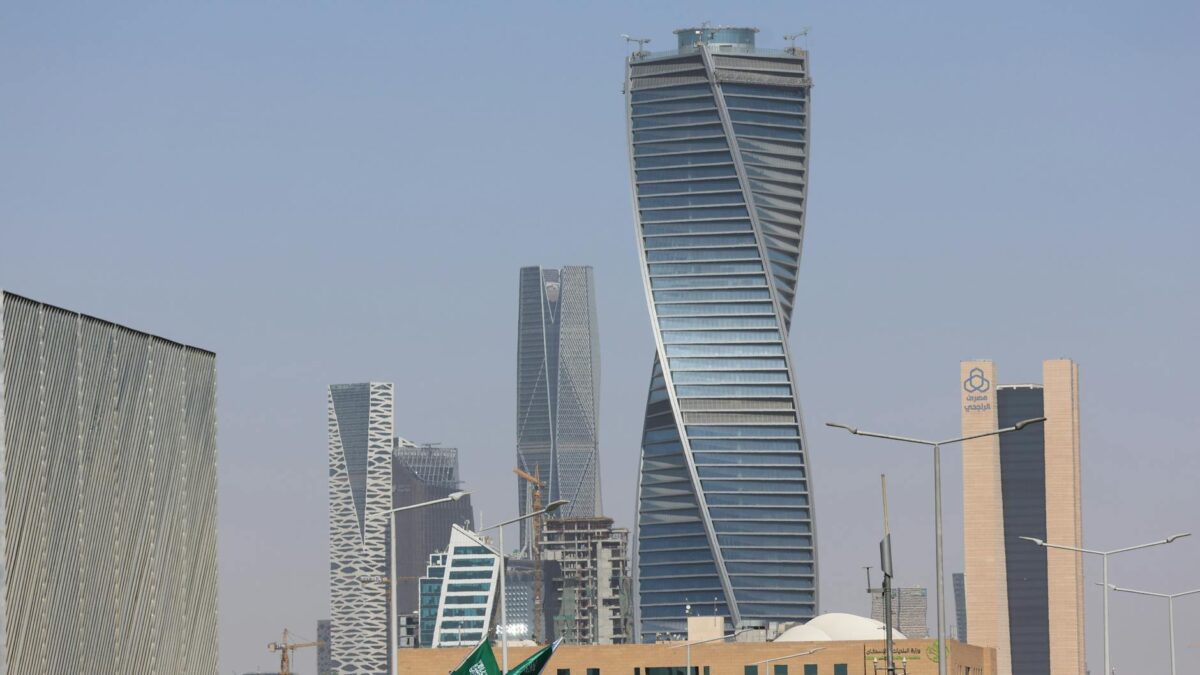
The Saudi Stock Exchange, traded under the Tadawul brand and benchmarked by the Tadawul All Share Index, is no longer the closed and lightly understood market that defined investor perception a decade ago. By April 2026 it stands as the largest equity venue in the Middle East and North Africa, the second-largest emerging market exchange after India by total capitalisation, and a structural pillar of the global oil and energy complex through the listed presence of Saudi Aramco. Yet for many international investors the practical questions remain the same: how big is it really, what trades there, who can access it, and what does an intelligent allocation look like in 2026 against a Vision 2030 reform programme that is reshaping the listed universe.
This guide is a comprehensive briefing on the Saudi stock market for foreign and regional investors in April 2026. It walks through the market’s scale and structure, the TASI index and sector breakdown, the top stocks by market capitalisation, the dividend stocks worth attention, the foreign-investor access routes, the IPO pipeline shaped by Vision 2030, the comparison against other Middle East exchanges, and the specific risks every committee should price honestly. The voice is that of a working market analyst rather than a tourist, and the level of detail is calibrated for an EM allocator, a regional family office, or a sophisticated retail investor sizing exposure for the first time.
Tadawul In Outline: Three Trillion Dollars Of Capitalisation
The Saudi Exchange operates as the consolidated trading venue for Saudi-listed equities, sukuk, exchange-traded funds, and parallel-market growth shares. It is the dominant Arab exchange by every meaningful metric. As of April 2026 the total market capitalisation across the main board sits at approximately three trillion US dollars, with the parallel Nomu market adding a further fifteen to twenty billion. Combined, this figure is roughly ten times the aggregate of the Dubai Financial Market and Abu Dhabi Securities Exchange and several multiples of the Qatar, Kuwait, and Egyptian exchanges combined. Tadawul accounts for more than seventy percent of all Arab listed-equity capitalisation.

The headline benchmark is the Tadawul All Share Index, universally referred to as TASI, which is a free-float adjusted market-capitalisation weighted index covering approximately 280 listed ordinary shares on the main market. As of late April 2026 the index sits in the eleven-thousand-five-hundred range, up roughly six percent year-to-date and approximately fourteen percent above the levels prevailing at the start of 2024. The index reached its all-time high near twelve thousand five hundred in mid-2022 during the post-Covid commodity surge that drove Aramco to record valuations; the subsequent multi-year consolidation has been digestion of that gain rather than a fundamental derating.
Average daily traded value on Tadawul runs between two and four billion US dollars, varying with Aramco news flow, oil-price volatility, and the broader EM risk regime. This puts Saudi Arabia in the major emerging market peer group on a turnover basis, comfortably ahead of all Arab peers and within range of Indonesia, Thailand, and Mexico. The free float across the main market is approximately forty percent, depressed by large strategic state holdings in Aramco and the banking sector and lifted by higher floats among consumer and industrial names. Foreign ownership of the free-float pool stands at approximately seventeen percent and has been rising consistently since MSCI inclusion in 2019.
Tadawul has been a member of the MSCI Emerging Markets index since the staged inclusion completed in August 2019, with FTSE Russell adding Saudi Arabia to its FTSE Emerging benchmark on a parallel timeline. Today Saudi Arabia carries approximately a five percent weight in MSCI EM, making it one of the larger constituents alongside India, China, Taiwan, Korea, and Brazil. The 2019 inclusion drove an estimated twenty-five-to-thirty billion US dollars of passive and active foreign inflow during the transition window, and ongoing rebalancing flows continue to provide a structural bid floor at index events. Reuters Middle East has tracked the foreign flow data through every major reweighting.
The TASI Sector Map: Energy Anchors, Banks Anchor, And A Diversifying Tail
The first thing any allocator needs to internalise about the Saudi market is the sector concentration. The headline sector weights as of April 2026 are approximately energy at sixty percent of total market capitalisation, banks and financials at fifteen to twenty percent, materials and petrochemicals at five to seven percent, telecommunications at three percent, healthcare at two to three percent, real estate at two to three percent, consumer staples and discretionary at two percent, and a long tail across utilities, transport, insurance, and emerging technology names.
The energy weight is overwhelmingly driven by Saudi Aramco, which alone accounts for approximately two trillion US dollars of market capitalisation. This single-stock concentration is the defining feature of the Saudi market and the reason TASI moves with crude oil prices and Aramco-specific flows more than any typical emerging market index. For an allocator running against MSCI EM, the Aramco weight decision is effectively the entire Saudi positioning decision.
The banking sector forms the second pillar. Saudi banks are well-capitalised by global standards, with sector-average CET1 capital adequacy ratios of eighteen to twenty percent, return on equity in the thirteen-to-sixteen percent range for the best franchises, and net interest margins around three to three-and-a-half percent in the current rate environment. Foreign ownership of Saudi banks is capped at forty-nine percent of free float, but this is rarely a binding constraint and does not affect economic exposure.
Materials and petrochemicals, dominated by SABIC, Saudi Kayan, Yansab, and the Aramco-controlled downstream complex, provide a feedstock-advantaged play on global chemicals demand. Telecommunications is led by Saudi Telecom Company, which has evolved from a traditional carrier into a regional technology holding company with stakes in STC Pay, STC Bank, Careem, and adjacent platforms. Healthcare and consumer-facing names are growing faster than the index but from a small base, and Vision 2030 privatisation flow is set to push these weights materially higher over the next five years.
Top 10 Saudi Stocks By Market Capitalisation, April 2026
The ten largest names on Tadawul account for approximately seventy-five percent of total main-market capitalisation. Understanding these anchor stocks is the foundation of any thoughtful Saudi book.
1. Saudi Aramco (2222)
Saudi Aramco is the single most important listed company in the Middle East and one of the largest by market capitalisation globally. With approximately two trillion US dollars of market value, Aramco offers direct exposure to Saudi crude and gas production, downstream refining and petrochemicals through its majority stake in SABIC, and a dividend stream that combines a base level with performance-linked top-ups. The implied 2026 dividend yield runs near six-and-a-half percent. For any serious Saudi allocation, the Aramco weight decision is the single most consequential choice; our Saudi Aramco vs ExxonMobil 2026 comparison walks through the supermajor-level analysis in detail.
2. Al Rajhi Bank (1120)
Al Rajhi is the global leader in Islamic retail banking and the largest privately listed bank in the Arab world by deposits. The franchise is built on an extraordinary domestic deposit base, the deepest Islamic mortgage book in the kingdom, and a digital-first execution layer that has consistently outpaced regional peers. Return on equity sits in the high teens, the dividend yield is approximately four percent, and the price-to-book multiple of around three times reflects franchise scarcity. Al Rajhi is the natural anchor of any Saudi banking allocation.
3. SABIC (2010)
Saudi Basic Industries Corporation is the second-largest chemicals company in the Middle East and one of the largest globally by capacity. Aramco acquired majority control of SABIC in 2020 for sixty-nine billion US dollars, integrating the petrochemicals platform tightly with upstream feedstock. SABIC offers cyclical exposure to global chemicals demand, particularly Chinese industrial activity, with structural feedstock advantage from discounted ethane supply. The dividend yield runs around four to four-and-a-half percent.
4. Saudi National Bank / SNB (1180)
Saudi National Bank was formed through the 2021 merger of the National Commercial Bank and Samba Financial Group. SNB is the largest Saudi bank by total assets and the strongest corporate and private banking franchise in the kingdom. The dividend yield approaches five percent, return on equity sits in the mid-teens, and the bank serves as a natural complement to Al Rajhi in a balanced banking sleeve.
5. STC / Saudi Telecom Company (7010)
Saudi Telecom Company is the incumbent telecom operator with the largest mobile and fixed-line market share in the kingdom. STC has progressively transformed into a technology holding company with material stakes in STC Pay (the largest fintech in Saudi Arabia), STC Bank (the new digital banking license), Careem regional ride-hailing, and a portfolio of regional carrier stakes. The dividend yield runs around five percent and the market has been progressively repricing the technology optionality higher.
6. Maaden / Saudi Arabian Mining Company (1211)
Maaden is the largest mining company in the Middle East, with operations in gold, phosphates, aluminium, and increasingly battery metals tied to the Vision 2030 industrial strategy. The PIF holds a controlling stake. Maaden offers thematic exposure to the energy transition and industrial diversification narrative, with operational gearing to gold prices through its mining portfolio.
7. Riyad Bank (1010)
Riyad Bank is the third-largest Saudi bank by assets, with strong corporate and trade-finance franchises and a yield of approximately five-and-a-half percent. The bank has been a consistent dividend distributor through every Saudi cycle and offers a higher-yielding tilt within the banking sleeve.
8. ACWA Power (2082)
ACWA Power is the flagship renewable and independent power producer in the region, with a global portfolio of solar, wind, desalination, and combined-cycle gas projects across Saudi Arabia, the broader Middle East, Southeast Asia, and Africa. The PIF holds the controlling stake. ACWA is one of the cleanest ways to play the Saudi energy transition theme within the listed equity market and trades at a growth-stock multiple reflecting the project pipeline.
9. Banque Saudi Fransi (1050)
Banque Saudi Fransi is a mid-sized Saudi bank with strong corporate banking, Islamic banking, and SME franchises. The dividend yield approaches six percent, putting it at the higher end of the Saudi banking sleeve. The bank is partially owned by Crédit Agricole, providing a French-Arab capital markets bridge.
10. Alinma Bank (1150)
Alinma is a fully Sharia-compliant bank that has grown rapidly to become a top-ten Saudi bank by assets. The bank’s all-Islamic model has proven structurally attractive to retail depositors and has driven consistent above-system loan and deposit growth.
Saudi Dividend Stocks 2026: Yield Map
For income-focused foreign investors, Saudi Arabia offers one of the highest aggregate dividend yields in the EM complex. The TASI dividend yield runs approximately three-and-a-half to four-and-a-half percent in early 2026, comfortably ahead of the MSCI EM average. Within that, the highest-yielding pockets are the banks, telecoms, and the regulated utilities.
The current 2026 yield map across blue-chip Saudi names runs approximately as follows. Saudi Electricity Company yields seven percent, reflecting its regulated utility profile. Banque Saudi Fransi runs around six percent. Saudi Aramco’s hybrid base-plus-performance dividend implies six-and-a-half percent. Riyad Bank yields five-and-a-half percent. Saudi National Bank and Saudi Telecom Company both deliver approximately five percent. Al Rajhi runs around four percent on a higher payout multiple. SABIC yields four to four-and-a-half percent. The aggregate yield on a balanced basket of these names sits at five to five-and-a-half percent, with strong sustainability metrics across the board given the capital ratios at the banks and the cash generation at Aramco. For investors building Saudi-specific income exposure alongside a broader portfolio, our Saudi PIF portfolio holdings 2026 analysis covers the institutional shareholding overlay that often signals where capital is positioned for the next cycle.
Foreign Investor Access: Four Routes Into The Market
Foreign investors cannot simply walk into a Riyadh branch and open a retail brokerage account. Access is structured through four main channels, each with different eligibility, cost, and operational profile.
Route 1: Qualified Foreign Investor (QFI)
The Qualified Foreign Investor regime is the flagship direct-access pathway introduced in 2015 by the Capital Market Authority and progressively liberalised since. Under QFI, a foreign institution opens its own account at a Saudi custodian and trades directly on Tadawul in its own name. The investor is the beneficial owner of the shares, holds full voting rights, and receives dividends directly. QFI eligibility is institutional: minimum assets under management of approximately five hundred million US dollars, a five-year operating history, and a regulated home-jurisdiction status. Approval is granted by the Capital Market Authority through an authorised Saudi sponsor; onboarding typically runs three to six months. For multi-billion-dollar EM funds and dedicated Saudi mandates, QFI is the natural choice; deeper mechanics on the entry process are covered in our Saudi Tadawul guide for foreign investors 2026.
Route 2: Total Return Swap (SWAP)
For investors who do not qualify for QFI or do not wish to bear the operational setup, total return swaps with a licensed Saudi authorised person provide a cleaner alternative. Under a SWAP the foreign investor enters a derivative contract that delivers full economic exposure to the underlying Saudi shares — dividends, capital appreciation, and losses — without holding the shares directly. The main SWAP providers are HSBC Saudi Arabia, Al Rajhi Capital, SNB Capital (the investment arm of Saudi National Bank), and EFG Hermes KSA. Spreads typically run twenty-five to seventy-five basis points depending on size, tenor, and underlying basket. SWAPs can be activated in days rather than months. For Saudi books below fifty million US dollars, SWAP is usually more economic than QFI on an all-in cost basis.
Route 3: Client Segregated Custody (CSC)
Client Segregated Custody is a hybrid structure that allows non-QFI foreign investors to access Saudi shares through an authorised person while maintaining clearer beneficial ownership than a SWAP. Under CSC the Saudi authorised person holds the shares in a segregated client account on behalf of the foreign investor, avoiding co-mingling with the firm’s proprietary book. CSC is primarily used by family offices, smaller institutional investors, and specific strategic positions where the investor wants legal ownership of the shares without the QFI setup.
Route 4: ETFs And Cross-Listed Instruments
For retail foreign investors and smaller institutional allocators, ETF access is the practical route. The iShares MSCI Saudi Arabia ETF (ticker KSA on NYSE Arca) tracks the MSCI Saudi Arabia index and is the largest dedicated Saudi Arabia ETF globally, with assets under management above one billion US dollars and adequate intraday liquidity for private-investor sized positions. The Franklin FTSE Saudi Arabia ETF (ticker FLSA on NYSE Arca) offers a competing product with a slightly different index methodology and somewhat lower expense ratio. Broader ETF access through the iShares MSCI Emerging Markets ETF (ticker EEM) and Vanguard FTSE Emerging Markets ETF (ticker VWO) provides Saudi exposure at the index weight of roughly four-to-five percent. Active EM mutual funds run by Aberdeen, Schroders, Templeton, Fidelity, and others typically hold Saudi exposure in line with or slightly above benchmark.
The IPO Pipeline: Vision 2030 Reshapes The Listed Universe
The Saudi IPO calendar over the past three years has been the busiest in the kingdom’s history and the deepest in the wider Arab world. Total IPO proceeds on Tadawul reached approximately five billion US dollars in 2024 and seven billion in 2025, with multiple large deals queueing for 2026 and 2027. Aramco’s twelve-billion-dollar follow-on offering in May 2024 was the single most important capital markets event in the region in a decade. Bloomberg Middle East has tracked each milestone in detail.
The pipeline now is heavily dominated by privatisation flow tied to Vision 2030. Healthcare is the largest single theme: the King Saud Medical Cluster privatisation is expected to launch in late 2026, with the broader Saudi Health Holding listing targeted for 2027. The deeper analysis on this catalyst is covered in our Saudi healthcare privatisation 2026 analysis. PIF-backed names dominate the rest of the queue: NEOM-related infrastructure entities, the Diriyah Gate Development Authority financial vehicle, Royal Reserves tourism platforms, and several sports privatisation listings tied to the Saudi Pro League ownership reforms. On the corporate side, several mid-cap industrial and consumer names are working with EFG Hermes, HSBC Saudi, and SNB Capital on book-building processes for late-2026 launches.
The major IPOs of 2024 and 2025 included Almoosa Health Group, Lumi Rental, Modern Mills, Avalon Pharma, Saudi Real Estate Refinance Company, and several smaller specialty names. The Aramco follow-on of May 2024 was a landmark deal that placed twelve billion US dollars of stock with global investors at a tight discount to market and demonstrated the scale of capital available for high-quality Saudi names.
Vision 2030 Reform Impact: Why The Equity Story Has Changed
Vision 2030 is the unifying policy framework launched by Crown Prince Mohammed bin Salman in 2016 and now firmly embedded as the kingdom’s economic operating system. For listed equities the impact runs through several distinct channels. Privatisation flow is the most visible: the systematic transfer of state-owned assets onto the public market creates a steady supply of new IPOs and broadens the listed universe beyond the traditional energy-and-banks core. Tourism sector growth tied to Diriyah, the Red Sea Project, AlUla, and the broader Royal Reserves programme is creating new listed entities and lifting demand for hotel, retail, and consumer-facing names. Sports privatisation tied to the Saudi Pro League ownership reforms is creating a new asset class. Financial Times Middle East has covered the reform programme’s market implications in depth.
The broader Vision 2030 reforms — the white land tax that has reshaped real estate, the foreign property ownership legislation covered in our Saudi Arabia foreign property ownership 2026 analysis, healthcare privatisation, and the broader liberalisation of consumer-facing sectors — are all visible in the listed market through specific names. Dar Al Arkan, the largest listed Saudi developer, has gained exposure to the new property regime. Cenomi Retail and Jarir Marketing have benefited from rising consumer formalisation. Mouwasat, Dallah, and Al Hammadi have positioned for the healthcare privatisation flow. The structural case for raising Saudi weight in an EM portfolio is the breadth of these reforms across multiple sectors, not just the Aramco anchor.
Investor Profile Match: How To Build A Saudi Book
For a foreign allocator considering Saudi exposure, the right portfolio construction depends on the investor profile. For income-focused investors, the natural core is a balanced basket of Saudi banks (Al Rajhi, SNB, Riyad, Banque Saudi Fransi) plus Saudi Telecom Company and Saudi Aramco at the chosen weight. The aggregate yield on this basket runs five-percent-plus with strong sustainability. For growth-focused investors, the core tilts towards ACWA Power, Saudi Tadawul Group itself, Maaden, and selected smaller specialty names. For total-return investors, an Aramco core plus a diversified Tadawul ETF wrapper provides the cleanest single-decision exposure.
Sector-specific exposure is also possible. SABIC and the petrochemicals complex provide cyclical exposure to global chemicals demand. Cenomi Retail, Jarir Marketing, and Almarai provide consumer-facing exposure. Elm and Tadawul Group itself provide listed technology exposure within the Saudi market. Maaden provides mining and battery metals exposure. The Saudi REIT sleeve, covered in detail in our Saudi REITs foreign investor guide 2026, provides yielding real-estate exposure for foreign accounts.
Risks: What Every Allocator Must Price
The Saudi equity story is not without risks, and any disciplined committee will price each carefully. The first and most significant is oil-price volatility. With energy at sixty percent of TASI capitalisation and Aramco the dominant single name, the Saudi market is correlated to Brent crude in a way that no other major emerging market is. A sustained drop in Brent below sixty US dollars per barrel would pressure Aramco earnings, the broader fiscal position, and the implied dividend trajectory. The second is Vision 2030 execution risk. The reform programme is ambitious, the IPO pipeline depends on continued government commitment, and any meaningful slippage on flagship projects could weigh on sentiment.
The third is geopolitical. Tensions with Iran, the Israel-Gaza spillover question, and broader regional security tail events all carry the potential to disrupt Saudi capital flows. The 2019 Abqaiq attack on Aramco facilities is a case study in how a single security event can move the market. The fourth is sector concentration: with energy alone at sixty percent of TASI, true diversification within Saudi requires conscious sector tilting away from the index. The fifth is the Saudi riyal-US dollar peg, which has been stable since 1986 but is a theoretical risk in any prolonged oil downturn. The sixth is the relative illiquidity of small-cap and mid-cap names outside the top thirty, where exit on size requires patient execution.
Saudi Versus Other MENA Exchanges
For an EM allocator weighing where to place capital within the Middle East, Saudi Arabia is the dominant but not the only choice. The Dubai Financial Market is materially smaller, more cyclical, and weighted heavily to financial services and real estate. Abu Dhabi Securities Exchange is also smaller but features the dominant International Holding Company complex that has become a mega-cap in its own right. Qatar Stock Exchange is banking-heavy and tightly correlated to LNG dynamics. Kuwait Stock Exchange offers strong banking franchises but lower liquidity. The Egyptian Exchange offers EM small-cap value at a deep discount but with higher currency and political risk.
Within this peer group Saudi Arabia stands out on three dimensions: scale (ten times the next-largest Arab market), depth (real liquidity in two-to-four billion US dollars per day), and reform momentum (the Vision 2030 pipeline). The natural EM portfolio construction within MENA places Saudi Arabia at sixty-to-seventy percent of the regional sleeve, with UAE, Qatar, Egypt, and Kuwait sharing the balance. The IMF’s Saudi Arabia country page provides authoritative macro context for the relative-value comparison.
For US And UK Investors Specifically
For US-based investors, the practical entry point depends on size and structure. Retail and smaller HNW investors are best served by the iShares MSCI Saudi Arabia ETF (KSA on NYSE Arca) or a broader EM fund. Larger HNW accounts can consider opening a managed account with a firm offering QFI or SWAP capability — major US private banks all provide some level of access. Tax treatment for US persons follows US worldwide income rules: Saudi withholding tax on dividends is creditable against US tax liability under the foreign tax credit, capital gains are taxed in the US at standard rates, and the Saudi tax position itself is favourable for QFIs.
For UK-based investors, the position is similar but with the UK-Saudi tax treaty providing slightly different relief on dividend withholding. UK investors can access the KSA ETF directly through US brokerage relationships or through several UK-listed emerging market funds. London-listed cross-listings of Saudi names exist but are typically thinly traded.
Timing And Cyclical Considerations For 2026
Where we sit in the cycle matters for tactical positioning. Brent crude has been range-bound between seventy-five and ninety US dollars per barrel through most of 2025 and into 2026, supporting Aramco earnings without driving any commodity-cycle blow-off. The Saudi fiscal position is approximately balanced at this oil price band, which removes the macro tail risk that defined earlier cycles. Vision 2030 milestone delivery has been broadly on schedule with NEOM, Red Sea, and Diriyah all hitting their 2025 commercial operation date targets. The IPO pipeline catalysts run through the second half of 2026 and into 2027 and provide multiple specific entry points.
For new entrants to Saudi exposure in April 2026, the structural case is straightforward: largest and deepest Arab market, highest-quality banking sector in EM, structurally cheap dividend yield, deep IPO pipeline, and visible reform momentum. The tactical case rests on Brent stability, Vision 2030 delivery cadence, and the IPO catalyst calendar. A typical allocation framework would size Saudi at five-to-eight percent of an EM portfolio, with the bulk in Aramco and the major banks and a tactical sleeve in Vision 2030 themes through ACWA Power, Maaden, and selected consumer names. The Saudi market in 2026 has matured into a strategic allocation rather than a tactical bet.
Sources And Further Reading
Authoritative coverage of Saudi listed-equity dynamics is available across Reuters Markets, Bloomberg Middle East, Financial Times Middle East, and Arabian Business. Macro and structural-reform context is covered in detail by the IMF’s Saudi Arabia country page. The Saudi Exchange itself publishes daily turnover, sector breakdowns, and corporate-action calendars that are essential reading for any active Saudi allocator.