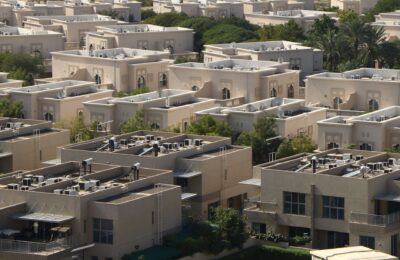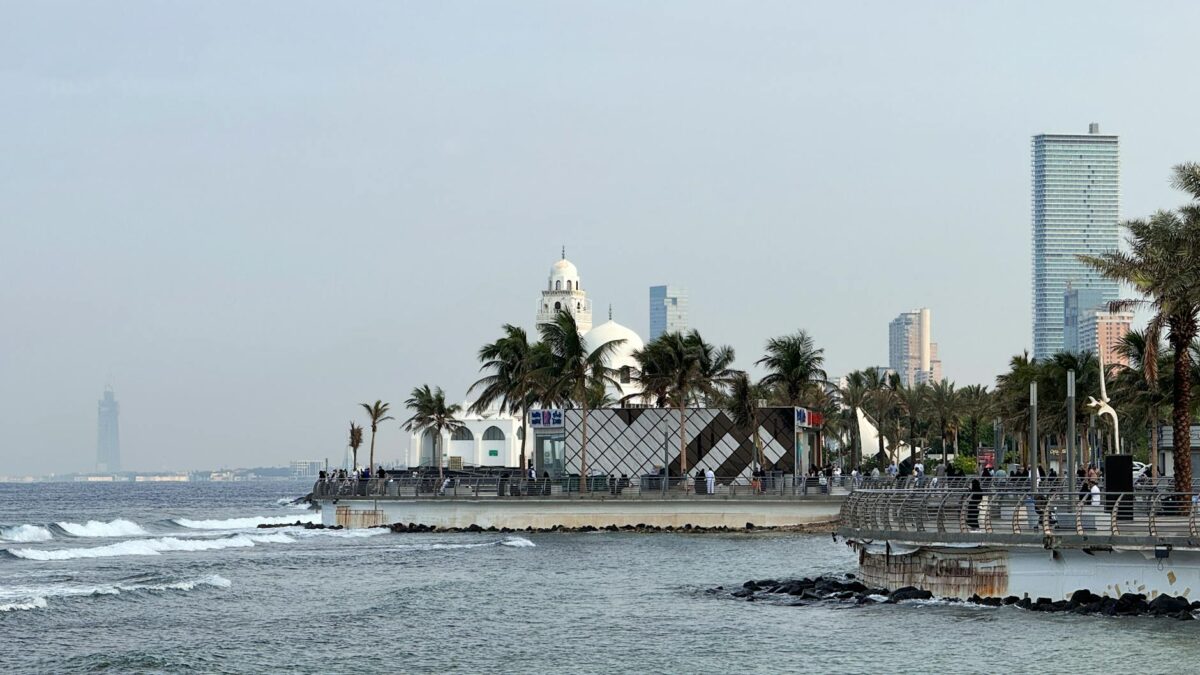
Saudi Arabia opened the gates on 4 January 2026 when the Council of Ministers’ foreign property ownership law took effect, ending more than two decades of de facto restriction on non-GCC residential buyers and introducing — for the first time in the modern history of the Kingdom — a structured freehold and usufruct regime that explicitly targets foreign capital. For the American, British, Indian, Egyptian, and European professional class that has spent the last five years watching Dubai compound and Abu Dhabi mature, the question stops being whether Saudi Arabia is investable and starts being where inside Saudi Arabia to deploy. This guide answers that question for the three cities that account for the overwhelming majority of early foreign-buyer transaction volume: Riyadh, Jeddah, and the Dammam-Khobar Eastern Province twin-city complex.
The pitch from the tourism ministry and the investment promotion arms is uniformly bullish. The reality on the ground is more textured. Riyadh is the political, business, and diplomatic capital with a 7.5 million population and the deepest employment market in the Gulf outside Dubai. Jeddah is the coastal Red Sea commercial port and Hajj gateway at 4.5 million, with a more liberal social register and the closest thing Saudi Arabia has to a beach-city lifestyle. Dammam and Khobar together house roughly two million people in the oil-industrial heart of the Eastern Province, anchored by Aramco’s Dhahran headquarters, King Fahd University of Petroleum and Minerals, and the King Fahd Causeway to Bahrain. Each city has a distinct price structure, yield profile, tenant base, and risk set. Treating the three as interchangeable because they share a flag is the most expensive mistake a foreign buyer can make.
This article lays out the price-per-square-metre bands, gross rental yields, best neighbourhoods, developer concentration, supply pipeline, and honest downside risks for each city in April 2026. It finishes with a buyer-profile decision tree, a tax and transaction-cost walkthrough, and a timing framework anchored to Expo 2030, Red Sea Global deliveries, and the Aramco investment cycle.

The Legal Starting Point: What Changed on 4 January 2026
Before the January 2026 law, foreign property ownership in Saudi Arabia was a patchwork. GCC nationals enjoyed near-citizen privileges. Non-GCC foreigners could own a primary residence under narrow circumstances (residency tied to employment, approval from the Ministry of Interior, restrictions on holy-city locations) and could invest through corporate vehicles with licensing from the Ministry of Investment. The practical result was that a retail foreign buyer — an American consultant on a three-year assignment, a British executive relocating from Dubai, an Indian family office looking for yield diversification — had no clean path to ownership. Dubai and Abu Dhabi captured the entire Gulf foreign-buyer flow because they were the only jurisdictions with a legible freehold regime.
The January 2026 law formalised three changes. First, it established designated zones in Riyadh, Jeddah, Dammam, and selected giga-project footprints (NEOM, Red Sea Global, Qiddiya, Diriyah) where non-Saudi individuals can hold full freehold title to residential units with no time limit, full transferability, full mortgageability, and full inheritance rights under Saudi succession law. Second, it established a lighter usufruct regime of up to 99 years for zones outside the designated foreign-ownership band, giving non-Saudi buyers a leasehold-equivalent instrument with standardised terms. Third, it maintained a narrow exclusion for Mecca and Medina — no foreign freehold inside the holy-city boundaries — with usufruct and corporate-structured ownership still available subject to specific ministerial approval.
Coverage by Reuters Middle East tracked the enactment as a structural turning point for the Gulf property story, and Bloomberg Middle East chronicled the immediate response from the major Saudi developers — ROSHN, Dar Al Arkan, Retal Urban Development, and the government-backed National Housing Company — which reorganised sales and marketing stacks within weeks to capture the incoming foreign-buyer flow. Analysis from the Financial Times Middle East and the Arabian Business real estate desk has mapped the first wave of launches explicitly priced for a foreign audience in Northern Riyadh and the Jeddah Corniche belt. For the detailed legal mechanics, our Saudi Arabia foreign property ownership 2026 guide walks the statute clause by clause. The interaction with the White Land Tax regime matters for buyers considering land banking or large-plot villa purchases.
Riyadh: The Political and Business Deep Market
Riyadh is the Saudi capital and the country’s largest urban economy, with a population of roughly 7.5 million projected to reach 10 million by 2030 under the Riyadh Region development strategy. It houses the Royal Court, every major ministry, the headquarters of Saudi Aramco’s downstream businesses, the Saudi Central Bank (SAMA), the Public Investment Fund (PIF), Tadawul (the Saudi stock exchange), and — from the progressive headquarters-relocation programme running since 2021 — the regional bases of most multinational firms operating in the country. The employment base is by far the deepest in Saudi Arabia, the diplomatic corps is concentrated in the Diplomatic Quarter (Hay Al Safarat), and the Expo 2030 award to Riyadh has pulled forward a substantial infrastructure build-out including the now-operating Riyadh Metro, the King Salman Park project (the largest urban park in the world by design), and the Diriyah Gate heritage precinct.
Prices in April 2026 sit in two broad bands. Apartments in the better districts trade at SAR 8,500 to SAR 18,000 per square metre, with the premium clustered in the Northern Expansion belt around KAFD, Al Malqa, and Qurtuba, and the Diriyah Gate precinct at the top of the range. Villas — the format most Saudi families prefer and that foreign buyers are increasingly acquiring — trade at SAR 6,000 to SAR 12,000 per square metre depending on district, plot size, and specification. Gross rental yields run 6 to 8 percent on apartments in the stronger mid-tier districts and compress to 5 to 6 percent on premium KAFD and Diriyah inventory where capital values carry the return.
Northern Expansion: KAFD, Al Malqa, Qurtuba, Al Nakheel
The Northern Expansion districts are the foreign-buyer entry point in Riyadh. King Abdullah Financial District (KAFD), completed in phases through the early 2020s and now the operational financial-services core of the capital, anchors premium apartments at SAR 14,000-18,000 per square metre with direct metro connectivity on the Blue Line. Al Malqa and Qurtuba sit immediately north, offering high-specification apartments and villas at SAR 10,000-15,000 per sqm with the strongest international school density in the city (the International School System campuses, the British International School Riyadh, Multinational School Riyadh). Al Nakheel provides mid-market value at SAR 8,500-12,000 per sqm, with a younger professional tenant base and strong rental demand from the finance and consulting workforce. The area around King Salman Park — as the park’s residential hinterland matures through 2026-2028 — is the most actively watched near-term appreciation play, with prices currently SAR 9,000-13,000 per sqm and clear catalyst optionality from the park opening phases.
Diriyah Gate: The Heritage Premium Precinct
Diriyah Gate is the heritage-adjacent premium precinct being developed by the Diriyah Gate Development Authority (DGDA) as a masterplanned mixed-use district anchored by the UNESCO-listed At-Turaif district, the original seat of the Saudi royal family. The residential component — Diriyah Square residences, Wadi Safar branded homes, and the forthcoming Bujairi Terrace extensions — carries top-end pricing above SAR 16,000 per square metre for apartments and above SAR 15 million for premium villas. Gross yield compresses to 5.0-6.0 percent, typical premium-market yield compression where capital appreciation and scarcity premium carry the return. The tenant base is the narrowest and highest quality in Riyadh: diplomatic postings, senior sovereign wealth fund staff, and C-suite relocations attached to the Expo 2030 delivery programme.
Central and Older Districts: Olaya, Sulaymaniyah, Al Muruj
Olaya and Sulaymaniyah are the older central business districts along the King Fahd Road spine. Pricing is lower at SAR 6,500-10,000 per square metre for apartments, gross yields are higher at 7-9 percent on well-located inventory, but the resale market for foreign buyers is thinner because the new-build pipeline is concentrated in the Northern Expansion and the tenant base in the central districts skews more local and lower-income. Foreign buyers should treat central Riyadh as a yield play with capital-appreciation optionality rather than a core hold. Al Muruj and the corridor east of Olaya offer the best central-district value for yield-focused buyers.
Jeddah: The Coastal Commercial Port
Jeddah is Saudi Arabia’s second-largest city, the historic commercial capital, the Red Sea port that still handles most of the Kingdom’s maritime trade, and the Hajj gateway — more than two million pilgrims pass through Jeddah’s King Abdulaziz International Airport during the annual pilgrimage season, and the city maintains a year-round Umrah flow. The 4.5 million population skews younger, more international, and materially more liberal in social register than Riyadh. The UNESCO-listed Al-Balad old town, the 30-kilometre Corniche seafront, and the proximity to Red Sea Global’s luxury tourism developments give Jeddah an identity Riyadh cannot manufacture: a coastal Gulf city with swimmable water, a genuine leisure economy, and a cultural heritage that predates Saudi unification.
Prices in April 2026 sit in the SAR 10,000-16,000 per square metre band for apartments in the better coastal districts, with premium villas running SAR 12,000-20,000 per sqm. Gross rental yields run 5-7 percent, softer than Riyadh on like-for-like specification, reflecting a slightly smaller employment base and the capital premium attached to coastal inventory. The foreign-buyer mix here skews toward lifestyle-oriented purchasers, Gulf-neighbour Saudis and Emiratis with second homes, and Muslim buyers from Southeast Asia, Turkey, and Europe prioritising Mecca proximity for Umrah travel.
Corniche North and Obhur: The Premium Coastal Belt
The Corniche stretches roughly 30 kilometres along the Red Sea from the central waterfront north to the Obhur Creek. The northern end — Obhur North, Al Shati, and the emerging marina-focused precincts — carries the premium residential pricing in Jeddah at SAR 13,000-16,000 per sqm for apartments and well above SAR 18,000 per sqm for the top-end beachfront villas. The tenant base is expatriate professionals, Gulf second-home owners, and senior Saudi family-business households. Short-term rental demand is structural, supported by the domestic tourism push and the proximity to Red Sea Global resort inventory, though the short-term regulatory regime is still maturing. Coverage in Arabian Business and CNBC Middle East has tracked the post-law acceleration in Obhur North transaction volume.
Al Rawdah and Al Zahra: The Inland Family Districts
Al Rawdah and Al Zahra are the established upper-middle-class residential districts inland from the Corniche, with a villa-and-mid-rise mix, strong school density, and a family-oriented tenant base. Prices in April 2026 run SAR 9,000-13,000 per square metre for apartments and SAR 8,000-12,000 per sqm for villa plots. Gross yields are 5.5-7.0 percent. These districts are the clearest Jeddah equivalent to Al Malqa in Riyadh — stable, family-oriented, and resilient across cycles. Al Hamra, immediately north, offers a similar profile at slightly higher pricing anchored to its hospital and retail amenity density.
Al-Balad and the Central Waterfront: Heritage and Risk
Al-Balad is the UNESCO-listed old town, recently the beneficiary of a major heritage-restoration programme under the Jeddah Historic District Programme. Foreign freehold is available but the inventory is structurally limited to restored heritage units, the tenant pool is narrow (heritage-oriented expatriates, cultural-sector professionals), and the resale liquidity is thin. Treat Al-Balad as a passion purchase with capital-preservation characteristics rather than a yield play. The central Corniche south of Al-Balad, around the King Fahd Fountain, is an older mid-market district with soft yields and limited foreign-buyer appetite — avoid unless you have specific local knowledge.
Dammam and Khobar: The Yield Play of the Eastern Province
The Eastern Province twin cities of Dammam and Khobar are the industrial and energy heart of Saudi Arabia. Dammam is the provincial capital and main port, Khobar is the more cosmopolitan sister city along the coast, and Dhahran — technically a distinct city but integrated into the urban fabric — houses Saudi Aramco’s main campus and King Fahd University of Petroleum and Minerals (KFUPM). The combined metropolitan population is roughly two million. The King Fahd Causeway, a 25-kilometre bridge and causeway complex, connects the Eastern Province to Bahrain — a weekend escape for residents and a structural driver of cross-causeway commuter demand for Khobar housing from Bahrain-based workers who prefer Saudi’s lower cost of living.
Prices in April 2026 sit in the SAR 5,500-9,000 per square metre band for apartments, making Dammam-Khobar materially cheaper than Riyadh or Jeddah. Villa pricing is similarly compressed at SAR 4,500-8,000 per sqm. Gross rental yields run 7-9 percent — the highest of any major Saudi city — driven by the Aramco workforce, KFUPM academic staff, subcontractor professionals attached to the oilfield-services ecosystem, and the Bahrain-commuter overlay. Vacancy rates on well-specified units in the better Khobar corniche districts are structurally low because the tenant pool is deep and renewal rates are high.
Khobar Corniche and Al Aqrabiyah: The Premium Belt
The Khobar Corniche runs along the Arabian Gulf from the King Fahd Causeway approach north to the Half Moon Bay area. The corniche-adjacent residential belt — particularly Al Aqrabiyah, Al Rawabi, and the newer developments around the Khobar waterfront park — carries the premium pricing at SAR 7,500-9,000 per sqm for apartments with Gulf views. Gross yields run 7-8 percent. Tenant base is expatriate Aramco staff, senior oilfield-services professionals, and Bahrain commuters. This is the clearest entry point for foreign buyers in the Eastern Province.
Dhahran and Aramco-Adjacent: Al Doha, Al Taawun
Al Doha, Al Taawun, and the districts immediately west of the Dhahran Aramco compound cater specifically to Aramco and KFUPM staff. Prices run SAR 5,500-7,500 per sqm for apartments, with strong rental demand from the Aramco non-compound workforce (the compound itself houses only a fraction of the total Aramco professional staff in Dhahran). Gross yields 8-9 percent. The tenant base is the most stable in Saudi Arabia — Aramco employment tends to run decade-long with family tenure — making these districts particularly attractive for yield-and-hold investors.
Dammam Central and the Port Belt: Avoid
The older central Dammam districts around the port and the Prince Muhammad bin Fahd road spine are structurally lower-quality foreign-buyer territory. Yields look high on paper but tenant quality is lower, resale markets are thin, and building-stock condition varies widely. Foreign buyers should stay in Khobar and Dhahran-adjacent districts unless they have deep local knowledge and are pricing specifically for opportunistic redevelopment plays.
The Complete Comparison Table — Price, Yield, Pros, Cons
| City | Price SAR/sqm (apartment) | Gross Yield | Core Pros | Core Cons |
|---|---|---|---|---|
| Riyadh (Northern Expansion) | 8,500-18,000 | 6-8% | Largest employment market, diplomatic density, Expo 2030 catalyst, strongest appreciation track record, rising school inventory | Hot climate, water scarcity, more conservative social register, large 2026-28 supply pipeline |
| Jeddah (Coastal) | 10,000-16,000 | 5-7% | Red Sea coastline, more liberal register, Mecca proximity, UNESCO heritage depth, cooler climate | Infrastructure gaps, smaller employment base, periodic flooding concerns, developer ecosystem thinner than Riyadh |
| Dammam-Khobar | 5,500-9,000 | 7-9% | Highest yields, Aramco-anchored tenant base, Bahrain causeway, affordability, value-investor entry point | Extreme heat and humidity, industrial aesthetic, smaller international community, limited lifestyle upside |
| Dubai (comparison) | ~12,000-30,000 AED/sqft equiv | 5-7% | Deepest liquidity, flip market, short-term rental depth | Later-cycle, higher entry, softer appreciation runway |
| Abu Dhabi (comparison) | ~10,000-22,000 AED/sqft equiv | 5.5-7.5% | Mature freehold regime, strong tenant quality | Thinner than Dubai, slower pace |
The Buyer-Profile Decision Tree
City choice should follow buyer profile, not the reverse. Five archetypes capture roughly 85 percent of the foreign-buyer inquiries we have tracked in the post-law window.
Profile 1: The Vision 2030 Professional. A finance, consulting, or technology executive on a multi-year Saudi assignment, Riyadh-based employer, income in the SAR 600,000-2,000,000 range, looking for primary residence with ownership upside. This profile lands in Al Malqa, Qurtuba, or the KAFD residential belt — apartment SAR 10,000-15,000 per sqm, three or four bedrooms, strong school proximity. Our NEOM investment scorecard Q2 2026 provides the broader Vision 2030 execution framework for evaluating this trade.
Profile 2: The Yield-First Value Investor. A family office, small institutional allocator, or individual investor deploying SAR 2-10 million specifically for gross rental yield with a 5-10 year hold horizon. This profile lands in Khobar or Dhahran-adjacent Dammam — apartment SAR 6,000-8,000 per sqm, 7-9 percent gross yield, Aramco tenant base. Capital appreciation is secondary; tenant quality and renewal rates are the primary variables. The comparison against Dubai districts at equivalent yield bands is worth running before committing — JVC and Dubai South deliver 6.5-7.5 percent at higher absolute prices and deeper liquidity.
Profile 3: The Lifestyle-Coastal Buyer. A buyer — often Muslim, often Gulf or Southeast Asian, often with a second-home intent — prioritising Red Sea coastline, Mecca proximity, and a more relaxed social register than Riyadh. This profile lands in Jeddah’s Obhur North or Al Shati — apartment SAR 12,000-15,000 per sqm, marina or corniche proximity, strong short-term rental demand. Dual-use (personal occupancy part of the year, rented the balance) is the dominant pattern.
Profile 4: The Aramco-Bahrain Commuter. An oilfield-services professional, subcontractor, or Bahrain-based worker looking for a primary residence with cross-causeway optionality. This profile lands in Khobar — apartment SAR 6,500-8,500 per sqm, causeway-adjacent district, access to Bahrain on weekends. The employment thesis is the most durable in Saudi Arabia; the yield-and-stability combination is the cleanest.
Profile 5: The Heritage-Cultural Buyer. A culturally engaged buyer — often European, sometimes American — prioritising Diriyah Gate in Riyadh or Al-Balad in Jeddah for the heritage density and cultural amenity. This profile is price-insensitive within reason; the purchase is a statement and a hold rather than a yield trade. Diriyah Gate apartment at SAR 16,000-18,000 per sqm or Al-Balad restored heritage unit at variable pricing.
Developer Ecosystem: Who to Buy From
The Saudi developer landscape is more concentrated than Dubai’s. Four major developers account for the overwhelming majority of foreign-buyer-targeted inventory in April 2026.
ROSHN is the PIF-owned master-developer responsible for the largest share of the government’s million-home delivery programme under Vision 2030. ROSHN’s Sedra community in north Riyadh is the flagship suburban-scale masterplan, and Marafy in Jeddah is the flagship coastal-waterfront masterplan. Construction quality is solid, delivery reliability is the highest in the market (the PIF backing effectively eliminates completion risk), and pricing is competitive. For first-time Saudi buyers, ROSHN is the lowest-risk developer to start with.
Dar Al Arkan is the publicly listed legacy developer with the longest track record in the Saudi market. Its newer launches — particularly the I Love Florence Tower in Riyadh and the Pagani Residences in partnership with the Italian supercar brand — target the premium foreign-buyer segment explicitly. Construction quality and delivery timelines have historically been solid; the publicly listed status provides an additional layer of governance visibility through Tadawul disclosure requirements.
Retal Urban Development is the Saudi-listed mid-market developer with a strong track record in Dammam and Khobar, and an expanding Riyadh presence. Its Khobar inventory is particularly relevant for yield-focused buyers. Delivery quality is consistent though less premium-oriented than ROSHN or Dar Al Arkan.
The National Housing Company (NHC) is the government-backed affordable and mid-market housing delivery vehicle. NHC pricing is competitive but the target segment skews Saudi citizen rather than foreign buyer; relevance for this audience is limited to specific Dammam and Jeddah mid-market communities.
Boutique developers and project-level special-purpose vehicles round out the market. Foreign buyers should stick to the top four for first purchases — completion risk on boutique developers is materially higher and the Saudi developer regulation framework is still maturing.
Infrastructure and Transport: The Underappreciated Variable
The infrastructure overlay varies materially by city and is the single most underappreciated variable in foreign-buyer city choice.
Riyadh is the clear winner. The Riyadh Metro, operating at full network capacity since late 2024 across six lines and 176 kilometres of track, has restructured the city’s geography — KAFD, the Diplomatic Quarter, Olaya, and the southern transit-oriented development precincts are now directly connected by high-frequency rail. The King Khalid International Airport expansion, the new Riyadh Air airline, and the Expo 2030-linked road investments round out the picture. Commute times are structurally falling.
Jeddah’s infrastructure is mid-cycle. The Haramain High Speed Rail connects Jeddah to Mecca and Medina — a structural advantage for Hajj and Umrah business — but the intra-city public transport remains road-dependent. The Jeddah Central Project, a major waterfront redevelopment along the central Corniche, is reshaping the urban core through 2026-2028. Flooding concerns during the winter rainy season remain a real risk for lower-lying central districts.
Dammam-Khobar is the weakest on intra-city public transport but the strongest on specific long-haul links: the King Fahd Causeway to Bahrain, the King Fahd International Airport connection to regional hubs, and the Riyadh-Dammam rail corridor. The urban fabric is car-dependent with low walkability, which matters for lifestyle-oriented buyers.
Tax, Fees, and Transaction Costs: What You Actually Pay
Saudi Arabia’s property tax structure is materially lighter than most foreign buyers expect.
Real Estate Transaction Tax (RETT): 5 percent of the contract value, paid by the seller on title transfer under Royal Decree A/84. For new off-plan purchases from a registered developer, the RETT is typically absorbed into the headline price.
Capital Gains Tax: None for individuals disposing of residential property. This is a material structural advantage over jurisdictions like the United States (where federal capital gains tax applies to non-primary residences), the United Kingdom (where non-resident CGT has been tightened since 2019), and most European countries.
Annual Property Tax: None on residential property held by individuals. The White Land Tax applies to large undeveloped plots at 2.5-10 percent of land value depending on location and status — relevant for land-banking plays but not for a standard residential purchase. Our dedicated White Land Tax guide breaks out the mechanics.
Title Registration and Administrative Fees: Roughly 1-2 percent of contract value in combined registration, notarisation, and legal fees. Developer handover fees on new builds typically add another 1-2 percent for service-charge prepayment and utility connections.
Financing: Saudi banks — SNB (Saudi National Bank), Al Rajhi, Riyad Bank, SABB, and the newer digital entrants — now offer mortgages to non-resident foreigners under the January 2026 framework, typically at 60-70 percent loan-to-value, 15-25 year tenors, and variable rates benchmarked to SAIBOR plus 150-300 basis points. Rates in April 2026 run roughly 6-7 percent for foreign-buyer mortgages, compared with 5.5-6.5 percent for resident Saudi buyers.
The Catalyst Calendar: Expo 2030, Red Sea Global, and Aramco Cycles
Each city has a distinct catalyst calendar that shapes the optimal entry timing.
Riyadh has the cleanest catalyst stack. Expo 2030 construction ramps through 2026-2029, the King Salman Park phases open sequentially through 2026-2028, the Qiddiya entertainment city delivers its first phase in 2027-2028, and the ongoing PIF headquarters-relocation programme continues pulling multinational employment into the capital. The structural demand curve rises through 2029. The supply response from ROSHN, Dar Al Arkan, and the broader developer stack is substantial — the 2027-2028 delivery pipeline will pressure pricing in mid-tier districts but premium inventory (KAFD, Diriyah Gate, Al Malqa) should hold capital values. Our NEOM investment scorecard provides the giga-project tracking framework.
Jeddah has a softer catalyst overlay. Red Sea Global’s first Phase 1 resorts opened in 2024 and continue expanding through 2026-2028, pulling upper-middle-class domestic and Gulf tourism into the Jeddah-Red Sea corridor. The Haramain rail network continues expanding. The Jeddah Central Project reshapes the central waterfront. But there is no single equivalent to Expo 2030 — demand growth is steady rather than catalysed.
Dammam-Khobar has the weakest catalyst stack for capital appreciation. The Aramco investment cycle continues running at capacity, the King Fahd Causeway remains a structural advantage, and KFUPM’s expansion is ongoing. But there is no equivalent giga-project or mega-event programmed for the Eastern Province in the 2026-2030 window. The yield thesis holds; the appreciation thesis is modest. For foreign buyers prioritising income over capital gains, this is a feature rather than a bug.
Comparison to Dubai and Abu Dhabi
The most common question from foreign buyers evaluating Saudi for the first time is how it compares to the mature UAE freehold markets. The honest answer: Saudi is earlier-cycle, cheaper, and less liquid; Dubai and Abu Dhabi are later-cycle, more expensive, and more liquid.
On pricing, Riyadh premium apartments at SAR 14,000-18,000 per sqm (roughly AED 13,700-17,600 per sqm, or AED 1,275-1,635 per sqft) trade at a 30-50 percent discount to Dubai Marina or Business Bay equivalents at AED 2,000-3,000 per sqft. Jeddah coastal premiums at SAR 13,000-16,000 per sqm are broadly level with or slightly below Abu Dhabi’s Al Reem Island at AED 1,100-1,700 per sqft. Dammam-Khobar at SAR 5,500-9,000 per sqm is the cheapest major-city Gulf inventory by a clear margin.
On yields, Saudi premium Riyadh districts deliver 6-8 percent versus Dubai premium at 5-7 percent — a modest Saudi premium. Dammam-Khobar at 7-9 percent beats any UAE equivalent. On liquidity, Dubai is the deepest and most liquid Gulf market by an order of magnitude, Abu Dhabi sits in the middle, and Saudi is structurally the thinnest — resale times are longer, foreign-buyer volume is newer, and off-plan flip culture is less developed.
For comparison benchmarking, Dubai price per sqft by district April 2026 lays out the direct UAE comparable, and the Abu Dhabi freehold zones 2026 guide maps the Abu Dhabi foreign-buyer entry points.
The Risk Set: Honest Downside Cases
Every foreign buyer should pressure-test three risk scenarios before deploying.
Execution Risk on Vision 2030. The entire Saudi property thesis rests on continued execution of the Vision 2030 economic diversification programme. Slippage on giga-projects, a sustained oil-price drawdown that squeezes the PIF budget, or a shift in political priorities could dampen the structural demand curve. The risk is lowest in Riyadh (deepest employment base, least dependent on single catalysts), middle in Jeddah (Red Sea Global exposure), and — counterintuitively — also relatively low in Dammam-Khobar, where Aramco employment provides a structural floor independent of giga-project execution.
Supply Overshoot Risk. The Saudi developer pipeline is substantial. ROSHN alone has delivered or committed roughly 400,000 units across its master-plan portfolio. If the foreign-buyer demand curve undershoots the supply curve in 2027-2028, mid-tier apartment pricing could soften materially. The premium districts (KAFD, Diriyah Gate, Obhur North) are less exposed because land constraints limit new supply. Mid-tier Northern Riyadh and mid-tier Jeddah coastal inventory are most exposed.
Regulatory Iteration Risk. The January 2026 law is new, and the implementing regulations are still being refined. Foreign buyers should expect some regulatory iteration over 2026-2027 — administrative fees may adjust, designated zones may expand or contract at the margin, and mortgage regulations for non-residents may tighten or loosen. The direction of travel is broadly liberalising, but near-term frictions are plausible. The mature UAE freehold regime, by contrast, has been stable for more than a decade.
The Bottom Line
Saudi Arabia’s January 2026 foreign property ownership law created the cleanest structural entry point for non-resident buyers in the Gulf since the UAE opened freehold in 2002. Riyadh is the deep market and the Vision 2030 primary play — Northern Expansion apartments at SAR 10,000-15,000 per sqm with 6-8 percent gross yields, strong school density, and the clearest catalyst stack running to Expo 2030. Jeddah is the coastal-lifestyle and Hajj-gateway play — Obhur North apartments at SAR 12,000-15,000 per sqm with 5-7 percent yields and a more relaxed social register. Dammam-Khobar is the pure yield play — Khobar corniche apartments at SAR 6,500-8,500 per sqm with 7-9 percent yields and the most stable tenant base in the Kingdom.
The right choice depends on buyer profile, not city marketing. Vision 2030 professionals belong in Riyadh. Yield-first investors belong in Dammam-Khobar. Lifestyle and heritage buyers belong in Jeddah. The post-law window running through roughly Q3 2026 offers the cleanest pricing before news-cycle demand compresses premium inventory. After that, the market will still be investable, but the early-mover arithmetic — a 30-50 percent discount to equivalent UAE specification with comparable or higher yields — will narrow. The decision to buy is a bet on Vision 2030 execution. The decision on where to buy is a bet on matching city to intent.