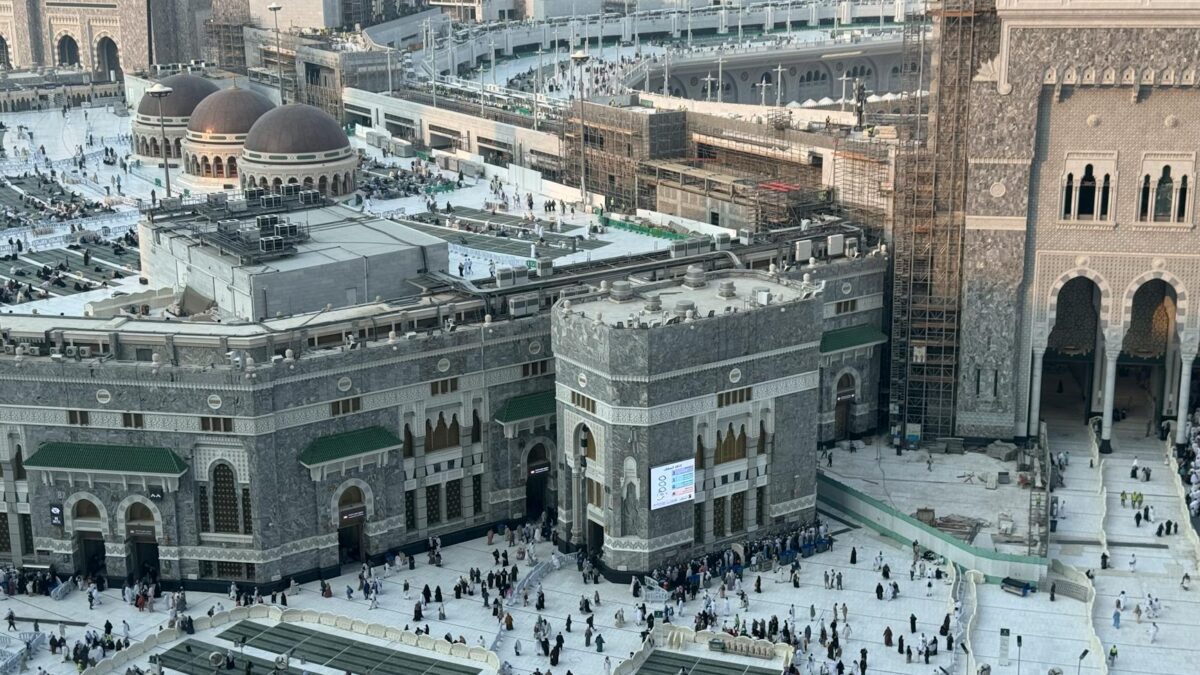
In 2019, the Saudi government set a target: 30 million Umrah pilgrims per year by 2030, combined with 6 million Hajj pilgrims. The economic scale of that target is staggering. The physical infrastructure required is unprecedented. And the transformation of the world’s largest recurring religious event into a trillion-riyal industry is one of the biggest under-covered business stories of this decade.
The business of Hajj does not fit neatly into any standard industry category. It combines religious obligation, mass logistics, luxury hospitality, technology platforms, airline capacity management, crowd engineering, and sovereign planning. It generates revenue for thousands of Saudi companies and hundreds of thousands of Saudi workers. And it is being reshaped faster than at any time in the 1400 years of Islamic pilgrimage history.
This analysis examines the transformation from a business and economic angle. We are respectful of the religious dimension — Hajj is a spiritual obligation that the Saudi government, the Organization of Islamic Cooperation, and the global Muslim community take seriously as religious practice. Our coverage is additional to that religious treatment, not in place of it. We draw on Saudi government disclosures, industry data from Bloomberg, analysis from Reuters, reporting from the Financial Times, and regional coverage from Al Jazeera.

The Scale: By the Numbers
Hajj in 2024 hosted 1.8 million pilgrims. Hajj in 2025 hosted 2.1 million. Hajj 2026 is on track for approximately 2.3 million. The Vision 2030 target is 6 million — nearly three times current capacity. Umrah in 2025 reached 18 million pilgrims for the full year. The 2030 target is 30 million — nearly double current flow.
The economic value per pilgrim varies substantially by tier. A budget Hajj package for a Southeast Asian pilgrim might cost $3,500-$4,500 all-in. A standard package for a Gulf-based pilgrim runs $8,000-$12,000. A premium package with five-star accommodation and VIP services ranges $15,000-$40,000. A luxury package with the most desirable hotel locations, private transportation, and bespoke services can exceed $100,000.
The average spending per Hajj pilgrim in 2025 was approximately $5,400, yielding total Hajj spending of roughly $11.3 billion. Including Umrah at approximately $1,100 per pilgrim, 2025 religious tourism revenue was approximately $30 billion. Vision 2030 targets more than double this by decade end.
The Hajj economy at a glance
| Year | Hajj pilgrims | Umrah pilgrims | Est. revenue | Target 2030 |
|---|---|---|---|---|
| 2019 (pre-COVID) | 2.5M | 19M | $28B | — |
| 2020 (COVID) | 10k | 2M | $5B | — |
| 2023 | 1.8M | 13M | $23B | — |
| 2024 | 1.8M | 15M | $27B | — |
| 2025 | 2.1M | 18M | $30B | — |
| 2026 (projected) | 2.3M | 20M | $34B | — |
| 2030 target | 6M | 30M | $55B | — |
Infrastructure: Building to Meet the Target
Achieving Vision 2030’s pilgrim capacity requires physical infrastructure on a scale that defies normal construction timelines. Mecca’s hotel room capacity in 2019 was approximately 200,000. The 2030 target is approximately 500,000 — adding 300,000 new hotel rooms in eleven years. This is the equivalent of adding more hotel capacity to Mecca than the total hotel capacity of the entire city of Dubai today.
The major hotel developments include the Jabal Omar master plan adjacent to the Grand Mosque (80,000+ rooms across multiple hotels), King Abdulaziz Road development (40,000+ rooms in premium towers with direct Haram views), Ajyad and Misfalah district expansions (60,000+ rooms in mid-tier and budget segments), and numerous smaller projects throughout Mecca’s expanding urban footprint.
The Haramain High-Speed Rail between Mecca, Medina, and Jeddah has transformed pilgrim mobility. Daily capacity exceeds 60,000 passengers. The rail has made multi-city pilgrimage itineraries practical for the first time at scale. Future expansion connecting to Riyadh and to the Yanbu port is under study.
Mecca’s transit infrastructure includes the existing Mashair Metro (a specialized line operating during Hajj for inter-sites movement) and the broader Mecca Metro project (four lines, 150+ stations, under phased construction). King Abdulaziz International Airport in Jeddah, the primary gateway for Hajj and Umrah pilgrims, has been expanding terminal capacity continuously since 2014 and now handles over 100 million passengers annually.
Hotels and Hospitality: The Margin Story
Hajj hotels do not operate on normal hotel economics. For the approximately four weeks of the Hajj season, Mecca hotel rates rise 300-800% above off-season rates. Rooms that cost $150/night in February can cost $800-$1,500/night during Hajj. The most desirable locations — direct Haram views, walking distance to the Mosque — reach $2,500-$4,500/night.
This compression of an entire year’s occupancy premium into four weeks creates distinctive business economics. Mecca hotels typically generate 40-60% of their annual revenue during Hajj alone, with Umrah season contributing another 25-35% and off-season filling the remainder. Operating margins during Hajj often exceed 70%, a figure that would be unimaginable in any other hotel market.
The premium-tier expansion under Vision 2030 has attracted major international brands. Four Seasons, Raffles, Waldorf Astoria, Fairmont, and others have all opened or announced Mecca properties in the last five years. Saudi hospitality groups — including the Jumeirah parent company’s Dubai Holding — have made massive commitments to Mecca and Medina properties as part of their regional expansion.
The budget and mid-tier segments remain dominated by Saudi-owned operators. Hajj group operators from pilgrim-origin countries — Indonesia, Malaysia, Turkey, Pakistan, the UAE, Egypt — often own or operate dedicated properties for their nationals, creating a fragmented competitive landscape.
Airlines: The Capacity Constraint
The single largest operational constraint on Hajj expansion is airline capacity into Jeddah. During the Hajj period, Jeddah airport handles 3,000+ flights and over 1 million passengers in approximately ten days. This is the peak traffic density of any airport in the world during that window.
Saudia (the national carrier) operates the largest Hajj-specific operation, typically flying 2.5 million pilgrim round-trips annually through its dedicated Hajj terminal. Flyadeal (Saudia’s low-cost subsidiary) provides budget service. Foreign carriers including Garuda Indonesia, Malaysia Airlines, Turkish Airlines, EgyptAir, Pakistan International Airlines, and Emirates run coordinated Hajj programs serving their home markets.
The 2030 target of 6 million Hajj pilgrims (plus 30 million Umrah) implies airline capacity that does not currently exist. Saudia is expanding its Hajj-dedicated fleet. Flyadeal is growing rapidly. Foreign carriers are committing new aircraft to the route. But the physical limits of Jeddah airport gate capacity, runway slots, and ground handling will become binding constraints by 2028 unless infrastructure catches up.
The King Salman International Airport project in Riyadh, though not primarily a Hajj airport, is part of the broader Saudi aviation capacity expansion. Taif Regional Airport (closer to Mecca than Jeddah) is being studied for Hajj traffic diversion. Yanbu (closer to Medina) may also play a larger role.
Visa and Regulatory Reform
Until 2019, Umrah required a dedicated Umrah visa with specific requirements and time limits. A Western tourist who wanted to visit Mecca’s Grand Mosque could not simply obtain a tourist visa — only Muslim pilgrims could obtain Umrah visas, and the process was administratively cumbersome.
Vision 2030 changed this. The tourist e-visa introduced in 2019 permits Umrah for Muslim tourists, dramatically simplifying access. For Hajj specifically, the visa is still separate and still tied to authorized travel agents — this reflects the quota system’s need to verify pilgrim identity and itinerary — but the overall process has been streamlined.
The quota system itself is a source of political negotiation. Each country with a significant Muslim population receives an annual Hajj quota roughly proportional to its Muslim population. Indonesia (largest Muslim population globally) gets the largest quota. But the allocation involves bilateral diplomatic dimensions — Saudi Arabia uses quota flexibility as a soft-power tool, and quota disputes occasionally become flashpoints in Saudi relations with specific countries.
Technology: The Digital Hajj
Hajj 2026 will be the most technology-enabled Hajj in history. Every pilgrim carries a ‘Nusuk’ digital card that combines identification, booking confirmation, location tracking for safety, and access permissions for specific sites. Biometric entry systems have reduced congestion at major pilgrim waypoints. Real-time crowd density monitoring allows authorities to dynamically route pilgrim flows away from danger zones.
The Nusuk app — developed by the Saudi Ministry of Hajj — serves as the primary interface for pilgrim services. It handles accommodation check-in, transportation booking, meal provisions for group pilgrims, and emergency communication. The app’s 2025 release supported 12 languages; 2026 expanded to 25 languages covering all major pilgrim origin countries.
Saudi technology companies have emerged around the Hajj ecosystem. Reservatly (hotel booking platform), Nuqta (pilgrim group management), Hajj Pulse (health and safety monitoring), and Pilgrim Wise (financial services including currency exchange and remittance) are all Saudi-based platforms that have built businesses specifically around Hajj and Umrah workflows.
The broader technology dimension includes AI-powered translation for pilgrim customer service, drone monitoring of crowd density at key sites, and increasing automation of guest services in major hotels. These technology layers make the 6 million Hajj target technically feasible in ways that pure physical infrastructure expansion could not alone achieve.
The Regional Political Economy
Hajj is not purely a Saudi domestic industry — it is a structural feature of Saudi Arabia’s regional political relationships. The quota system gives the Kingdom diplomatic leverage with every Muslim-majority country. The logistics chain requires Saudi coordination with 50+ national Hajj authorities. The financial flows create interdependencies between Saudi tourism operators and their counterparts in pilgrim-origin countries.
This political dimension produces specific business outcomes. Indonesian and Malaysian hotel chains have been able to secure preferential positions in Mecca because of their home countries’ large quotas. Turkish Airlines has expanded its Hajj operation partly through diplomatic support from Ankara. Egyptian hospitality operators have deepened their Mecca presence as part of Saudi-Egyptian economic cooperation agreements.
The Iran dimension is worth noting separately. Iranian pilgrims have historically had a complicated Hajj relationship with Saudi Arabia — occasional diplomatic tensions, quota negotiations, and logistical coordination challenges. Despite the April 2026 Iran war, Iranian pilgrim arrangements for Hajj 2026 have been maintained through Saudi-Iranian coordination channels. This is one of several practical cooperation points that have persisted across broader geopolitical tension.
Environmental and Sustainability Questions
Scaling Hajj from 2.5 million to 6 million pilgrims raises environmental and sustainability questions that the Saudi government has begun to address explicitly. Water consumption in Mecca during Hajj exceeds normal daily demand by 10-15x. Waste management handles thousands of tonnes of material across the pilgrimage sites. Energy consumption for hotel cooling during the summer Hajj season is enormous.
The Saudi Green Initiative incorporates Hajj-specific sustainability targets: reducing Mecca’s per-pilgrim water consumption, expanding renewable energy for Hajj-period electricity demand, improving waste sorting and recycling, and reducing single-use plastics. Progress has been real but uneven.
Climate change is another dimension. Mecca is already one of the hottest major pilgrimage destinations globally. Summer Hajj seasons (when Hajj falls in the lunar calendar during Northern Hemisphere summer) have produced heat casualties. The 2024 Hajj saw over 1,300 heat-related deaths. Saudi authorities have responded with expanded cooling infrastructure, revised pilgrim movement protocols during peak heat hours, and ongoing research into climate adaptation for the Hajj environment.
Who Else Is in the Business
Beyond Saudi domestic operators, a global ecosystem of Hajj-related businesses generates substantial revenue.
International tour operators. Dawn Travels (Pakistan), Ebad Travel (Indonesia), Dar al Salam (Egypt), and dozens of others run integrated Hajj programs — visa processing, flight coordination, accommodation, in-Mecca transportation, religious guidance. These operators serve as the primary interface between pilgrims and Saudi infrastructure for the vast majority of international pilgrims.
Islamic finance. Most pilgrims save for Hajj over years through Islamic finance savings accounts. Malaysian, Indonesian, and Turkish Islamic banks run dedicated Hajj savings products. Total global Hajj-dedicated savings exceed $40 billion across all jurisdictions. This savings pool represents a substantial capital base that flows into broader Islamic finance markets.
Religious education services. Every pilgrim requires religious preparation. This has created a substantial industry of books, courses, online resources, and in-person training that precedes the physical journey. Some of this is delivered by Saudi religious institutions, much by domestic religious education providers in pilgrim-origin countries.
Specialty retail. The ihram (pilgrim clothing), prayer supplies, religious books, zamzam water containers, and other specialty items form a retail category that operates year-round with a Hajj-season spike. Chinese, Turkish, and Pakistani manufacturers supply much of this category at scale.
The Investor Angle
For investors interested in the Hajj economy, the access points are limited but real.
Saudi public markets offer exposure through hospitality sector names listed on Tadawul, including operators with significant Mecca/Medina hotel exposure. Saudi Airlines (now 100% state-owned) is not publicly tradable, but state-linked sukuk and Sabics by Saudi hospitality groups are available.
UAE-based hospitality groups with Mecca properties provide indirect exposure. Jumeirah (parent Dubai Holding) and Rotana are the most significant examples, each with growing Mecca portfolios. International chains including Accor, Marriott, and Hilton have limited but growing Mecca presence.
For private market investors, direct Mecca real estate is tightly controlled by Saudi regulation limiting non-Muslim ownership. However, Mecca-adjacent real estate in Jeddah, Taif, and Medina’s outer districts is more accessible. Islamic finance plays — particularly banks with strong Hajj savings franchises — provide exposure to the broader pilgrim financial services market.
What 2030 Actually Looks Like
If Vision 2030 Hajj targets are met — and our view is that they will be mostly met, though perhaps with a 2-3 year delay on some infrastructure — the 2030 Hajj experience will look substantially different from 2024.
Mecca will have 500,000+ hotel rooms compared to 250,000 today. Annual Hajj pilgrims will approach 6 million versus 2.5 million today. Umrah pilgrims will exceed 30 million annually. Saudi religious tourism revenue will exceed $55 billion annually. The average Hajj cost per pilgrim will have declined in real terms even as premium segments expand, because scale economics and Saudi infrastructure investment will have reduced the per-pilgrim cost baseline.
This is not speculation. It is the clearly articulated Saudi government strategy, backed by visible physical infrastructure construction, regulatory reform, and capital commitment. Barring major geopolitical disruption (a regional war significantly larger than the current Iran crisis, for example), these numbers are achievable. The question is not whether the Saudi Hajj transformation happens — it is how fast, how smoothly, and which businesses capture the most value.
The Bottom Line
The business of Hajj is simultaneously the oldest continuous annual gathering in human history and one of the most innovative industrial transformations of the 2020s. Saudi Arabia is doubling the physical capacity of the world’s most important religious pilgrimage. The economics attached to that transformation — hotels, airlines, hospitality, technology, religious finance, retail — touch every Muslim-majority country and many others besides.
For business observers, the Hajj transformation is a case study in how a sovereign state can reshape an industry through coordinated infrastructure, regulatory, and capital commitment. For economists, it demonstrates how sectoral growth of this scale can be engineered within an eleven-year window. For Muslim pilgrims, it represents both opportunity (more Muslims able to perform Hajj) and challenge (commercialization of a spiritual practice).
The Saudi Vision 2030 Hajj project is on track. It will reshape the religious tourism industry. And its $55 billion annual steady-state revenue by 2030 will make it one of the most significant industrial transformations in Middle East business history.
For related coverage, our Hormuz blockade analysis covers the broader Saudi fiscal picture. Our Gulf sovereign wealth map explains the capital base funding Vision 2030 implementation. Our oil price tracker follows the commodity dynamics that shape Saudi investment capacity.
Last updated: April 18, 2026. We will refresh this analysis as Hajj 2026 season approaches and new infrastructure completion milestones are announced.