The Egyptian King’s Fortune: How a Boy from Nagrig Built a $200 Million Empire
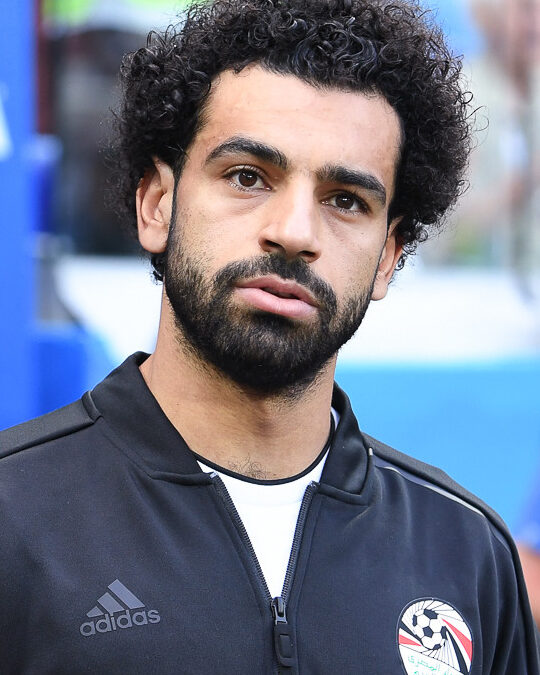
When Mohamed Salah signed his first professional contract with Al Mokawloon Al Arab in the Egyptian Premier League, his weekly wage was reportedly less than $1,000. Today, less than fifteen years later, his weekly salary at Liverpool FC exceeds $400,000 — and that number represents barely half of his total income. The boy from the tiny Nile Delta village of Nagrig, Gharbia Governorate, has built a financial empire that extends far beyond the football pitch: endorsement deals that rival the biggest names in global sport, real estate investments spanning three countries, business ventures in technology and entertainment, and a charitable portfolio that has transformed his hometown beyond recognition.
Mohamed Salah’s estimated net worth in 2026 stands at $200 million to $230 million, making him not just the wealthiest Egyptian athlete but one of the richest Arab sports figures in history. This is the complete breakdown of how the Egyptian King’s fortune was built — from his salary history to his endorsement empire, from his property portfolio to the charitable giving that has made him a national hero in ways that transcend football.
Salary History: From Cairo to Merseyside
The Complete Earnings Timeline
Salah’s salary progression tells the story of one of football’s most dramatic financial ascents. From his modest beginnings in Egypt to his current status as one of the highest-paid players in Premier League history, every contract negotiation has reflected his growing stature in the game:

| Period | Club | Weekly Salary (Est.) | Annual Salary (Est.) | Key Context |
|---|---|---|---|---|
| 2010-2012 | Al Mokawloon (Egypt) | $800-1,200 | $42,000-62,000 | First professional contract; discovered by scouts |
| 2012-2014 | FC Basel (Switzerland) | $15,000-25,000 | $780,000-1.3M | Champions League breakout; attracted top-5 league interest |
| 2014-2016 | Chelsea FC (England) | $55,000-70,000 | $2.9M-3.6M | Struggled for playing time under Mourinho |
| 2015 (loan) | Fiorentina (Italy) | $60,000 | $3.1M | Loan spell; partial salary paid by Chelsea |
| 2015-2017 | AS Roma (Italy) | $90,000-120,000 | $4.7M-6.2M | Career revival; 34 goals in final Roma season |
| 2017-2022 | Liverpool FC (initial) | $200,000 | $10.4M | Initial contract; quickly became club’s best player |
| 2022-2025 | Liverpool FC (extension) | $350,000 | $18.2M | Record-breaking extension; highest-paid in club history at the time |
| 2025-present | Liverpool FC (new deal) | $400,000 | $20.8M | Final major contract; reportedly includes performance bonuses up to $5M/year |
Total Career Earnings from Football
Based on publicly reported salary figures and standard contract structures, Salah’s total pre-tax earnings from football contracts alone are estimated at:
| Source | Estimated Total |
|---|---|
| Al Mokawloon (2010-2012) | ~$120,000 |
| FC Basel (2012-2014) | ~$2.2 million |
| Chelsea FC (2014-2016) | ~$6.5 million |
| Fiorentina loan (2015) | ~$1.5 million |
| AS Roma (2015-2017) | ~$11 million |
| Liverpool FC (2017-present) | ~$130 million |
| Total pre-tax football salary | ~$151 million |
After UK taxes (approximately 45% on earnings above the higher threshold), agent fees (typically 5-10%), and other deductions, Salah’s take-home from football salaries is estimated at approximately $75-85 million over his career. This represents roughly 35-40% of his total net worth, with the remainder coming from endorsements, investments, and business ventures.
The Liverpool Contract: Anatomy of a Mega-Deal
Salah’s current Liverpool contract, signed in 2025, deserves detailed examination because it represents the financial ceiling for a player of his profile in the modern Premier League:
- Base weekly salary: approximately $400,000 (£350,000)
- Signing bonus: reported at $10-15 million, spread over the contract term
- Performance bonuses: up to $5 million per season, triggered by goals scored, assists, appearances, and team qualification for Champions League
- Image rights: Salah retains a significant percentage of his image rights (reported at 80%), which is unusual for Premier League contracts and reflects his massive commercial value. This allows him to negotiate personal endorsement deals independently of the club.
- Loyalty bonus: a reported $5-8 million payable at the end of the contract term if Salah sees out the full deal
The contract was the subject of intense negotiation through 2024 and into 2025, with Saudi Pro League clubs — particularly Al Hilal and Al Ittihad — reportedly offering packages worth $60-80 million per year (salary plus image rights) to lure Salah to Saudi Arabia. Liverpool’s ability to retain him at “only” $400,000 per week reflects Salah’s stated desire to remain in the Premier League and compete at the highest European level rather than maximizing short-term income.
Endorsement Deals: The Brand of Mohamed Salah
Current Major Endorsements
Salah’s endorsement portfolio is one of the most lucrative in global football, reflecting his unique position as both a Premier League superstar and the most famous person from the Arab world’s most populous country. His endorsement appeal crosses boundaries that most athletes cannot: he is simultaneously a sports icon in Europe, a national hero in Egypt, a cultural figure across the Muslim world, and an increasingly recognized face in Asia and Africa.
| Brand | Category | Estimated Annual Value | Duration | Scope |
|---|---|---|---|---|
| Adidas | Athletic footwear & apparel | $5-8 million | Long-term (2020-2027) | Global; personal boot line (X Speedportal Salah) |
| Vodafone Egypt | Telecommunications | $3-4 million | Multi-year | Egypt & MENA region |
| Pepsi | Beverages | $2-3 million | Campaign-based | Global campaigns, emphasis on Middle East |
| EG Bank | Banking & finance | $1.5-2 million | Multi-year | Egypt |
| Uber | Transportation | $1-2 million | Campaign-based | Global & MENA |
| DHL | Logistics | $1-1.5 million | Multi-year | Global |
| Various regional brands | Multiple categories | $3-5 million (combined) | Various | Egypt, Gulf states, North Africa |
| Total endorsement income | $15-20 million/year |
The Adidas Partnership: A Deep Dive
Salah’s relationship with Adidas is his most valuable single endorsement. The partnership, which began in 2018 when he switched from his previous boot sponsor, has evolved into one of Adidas’s most important football partnerships globally. The deal includes:
- Personal boot line: The Adidas X Speedportal “Salah” edition, with designs incorporating Egyptian-inspired motifs and Arabic script. These limited editions sell out consistently and command resale premiums of 200-300% on secondary markets.
- Apparel collection: A Salah-branded clothing line sold primarily in MENA markets but increasingly available globally through Adidas online.
- Campaign appearances: Salah features in Adidas global campaigns alongside stars like Jude Bellingham, Lionel Messi (who returned to Adidas), and other top athletes.
- Community initiatives: Part of the deal funds Adidas-Salah community football programs in Egypt, providing equipment and coaching to youth football academies in underserved areas.
The Adidas deal is estimated to be worth $5-8 million annually, with performance escalators tied to individual awards (Ballon d’Or nominations, Premier League Golden Boot) and team achievements (Champions League progression). Some industry sources suggest the deal’s total value, including bonuses and merchandise royalties, could reach $10-12 million in peak years.
Why Brands Pay Premium for Salah
Salah’s endorsement value exceeds what his on-pitch performance alone would justify because he occupies a unique marketing position. Several factors contribute to his premium:
- Muslim market access: Salah is the most visible Muslim athlete in the world. For global brands seeking to connect with the 1.8 billion Muslim consumer market — estimated at $2.3 trillion in spending power — Salah is an irreplaceable ambassador. He is devout without being controversial, successful in the West without being Westernized, and respected across Sunni and Shia communities.
- Egyptian population leverage: Egypt has 110 million people, the largest Arab market and one of the youngest demographics globally. Any brand with Salah’s face reaches this entire market with immediate recognition and trust. Vodafone’s Egyptian market share increased measurably after signing Salah.
- Cross-cultural appeal: Unlike many athletes whose appeal is concentrated in one cultural sphere, Salah resonates across Europe (Liverpool and Premier League fans), the Arab world (Egyptian national identity), Africa (continental pride and aspiration), and increasingly Asia (Liverpool’s massive Asian fanbase).
- Character premium: In an era of athlete scandals, Salah’s public image is virtually spotless. He does not generate negative headlines, his personal conduct aligns with family values important in his key markets, and his charitable work provides a positive narrative that brands can associate with safely.
- Social media scale: Salah’s combined social media following exceeds 100 million across platforms (Instagram alone surpasses 60 million), giving brands direct access to one of sport’s largest audiences.
Business Investments and Real Estate
Real Estate Portfolio
Salah’s real estate investments reflect a diversified, geographically spread approach common among high-net-worth athletes seeking to preserve and grow wealth beyond their playing careers:
| Property/Investment | Location | Estimated Value | Type |
|---|---|---|---|
| Primary residence | Cheshire, England | $5-7 million | Luxury home near Liverpool training ground |
| London property | London, England | $8-12 million | Investment property in prime London |
| Cairo development stake | New Administrative Capital, Egypt | $3-5 million (stake) | Reported investment in luxury residential development |
| Nagrig properties | Gharbia, Egypt | $1-2 million | Family compound and community facilities |
| Dubai property | Dubai, UAE | $3-5 million | Luxury apartment investment |
| Total real estate | $20-31 million |
Business Ventures
Beyond real estate, Salah has made selective business investments, typically through advisors and managers rather than direct operational involvement:
- Sports technology: Reported investment in a London-based sports analytics startup that uses AI to analyze player performance data. The specific company has not been publicly confirmed, but Salah’s management team has acknowledged technology investments.
- Egyptian banking sector: Rumored stake in an Egyptian digital banking initiative. Egypt’s fintech sector has grown rapidly, and several high-profile Egyptians have invested in digital banking platforms targeting the country’s large unbanked population.
- Media and entertainment: Salah’s team has explored media opportunities including documentary rights and production involvement in football-related content. The success of documentary series about other Premier League stars (Amazon’s “All or Nothing” series) suggests this could become a significant revenue stream.
- Agricultural investments: Reports of investments in Egyptian agricultural technology, consistent with Salah’s rural background and interest in developing Gharbia Governorate’s agricultural sector.
Financial Management
Salah’s financial affairs are managed by Ramy Abbas Issa, his long-time agent and business manager. Abbas Issa has been credited with maximizing Salah’s commercial value while maintaining the clean public image that makes that commercial value possible. The management approach is characterized by:
- Selective endorsements: Salah does not accept every deal offered. His team reportedly turns down more offers than they accept, prioritizing long-term partnerships with global brands over one-off appearances with regional companies. This selectivity maintains the premium value of his endorsement.
- Tax-efficient structuring: Like most high-earning Premier League players, Salah’s financial structure likely involves image rights companies and other legal vehicles designed to manage tax obligations across multiple jurisdictions (UK, Egypt, global endorsements).
- Post-career planning: With Salah now in his mid-thirties, financial planning increasingly focuses on income streams that will persist after retirement: real estate, business investments, brand consulting, and potential coaching or media roles.
Charity and Philanthropic Work
The Nagrig Transformation
Salah’s most visible charitable impact has been the transformation of his hometown Nagrig, a village of approximately 4,000 people in the Gharbia Governorate of Egypt’s Nile Delta. His investments in the community are estimated at $5-8 million and include:
- School construction: A modern school serving hundreds of students, replacing outdated facilities that Salah himself attended as a child
- Medical facility: A community hospital providing healthcare services that previously required travel to larger cities
- Ambulance service: Funded ambulances and emergency medical services for the village and surrounding areas
- Water treatment: Investment in clean water infrastructure for the village
- Youth football academy: A training facility that provides coaching, equipment, and pathways for talented young players from the Delta region
- Sewage system: Funded modern sewage infrastructure, addressing one of rural Egypt’s most persistent quality-of-life challenges
The Nagrig transformation is remarkable not just for its scale but for its comprehensiveness. Salah has not simply built a school and moved on — he has attempted to address the systemic infrastructure failures that characterize rural Egypt, from healthcare to sanitation to education to economic opportunity. Villagers in Nagrig report that the standard of living has improved more in the years since Salah became famous than in the previous several decades combined.
National Cancer Institute Donation
Following the 2019 bombing outside Cairo’s National Cancer Institute that killed at least 20 people, Salah donated $3 million toward rebuilding and medical equipment — one of the largest individual charitable donations in Egyptian history. The donation was particularly significant because it came during a period when the Egyptian government’s response was widely criticized as insufficient, and Salah’s contribution filled a gap that public institutions could not.
Palestinian Relief
Salah has been vocal in supporting Palestinian rights and has donated to Palestinian relief organizations, particularly during periods of escalated conflict. His public statements on Palestine — including social media posts expressing solidarity with Palestinian civilians — carry enormous weight given his global profile and have been credited with shifting public discourse in the UK and Europe, where his voice reaches audiences that traditional Palestinian advocacy cannot.
His support for Palestine is consistent with his broader identity as an Egyptian public figure: Egypt has historically been one of the most vocal Arab nations on Palestinian rights, and Salah’s position reflects deep Egyptian cultural solidarity with the Palestinian cause.
Total Charitable Giving
| Category | Estimated Total Giving | Key Contributions |
|---|---|---|
| Nagrig development | $5-8 million | School, hospital, ambulance, water, sewage, football academy |
| National Cancer Institute | $3 million | Post-bombing reconstruction and equipment |
| Palestinian relief | $1-2 million | Multiple donations during conflicts |
| Egyptian children’s hospitals | $1-2 million | Regular donations and equipment funding |
| Community football programs | $1-2 million | Youth academies, equipment, scholarships |
| Other (COVID relief, flood relief, etc.) | $1-2 million | Various emergency and community donations |
| Total estimated charitable giving | $15-20 million |
Salah’s charitable giving represents approximately 7-10% of his estimated total net worth — a percentage that places him among the most generous active athletes globally relative to earnings. For comparison, many athletes and celebrities of similar wealth donate 1-3% of their net worth. Salah’s generosity is particularly notable because it is directed primarily at structural community development rather than the foundation-based approach (often criticized as tax optimization) common among Western athletes.
Comparison: Salah vs. Other Arab Athletes
Wealth Rankings Among Arab Athletes (2026)
| Rank | Athlete | Sport | Nationality | Est. Net Worth | Primary Wealth Source |
|---|---|---|---|---|---|
| 1 | Mohamed Salah | Football | Egyptian | $200-230M | Salary + endorsements + investments |
| 2 | Riyad Mahrez | Football | Algerian | $70-80M | Al Ahli salary + previous PL earnings |
| 3 | Achraf Hakimi | Football | Moroccan | $40-50M | PSG salary + endorsements |
| 4 | Sadio Mane | Football | Senegalese (Muslim) | $35-45M | Al Nassr salary + previous earnings |
| 5 | Hakim Ziyech | Football | Moroccan | $25-35M | Club salaries + endorsements |
Note: This ranking excludes sports team owners and members of royal families who participate in sports. Sheikh Mansour (Manchester City owner, UAE) and other Gulf-based sports investors have personal fortunes in the billions, but these are inherited wealth rather than athletic earnings.
What Makes Salah’s Wealth Unique
Salah’s wealth is distinctive among Arab athletes for several reasons:
- Self-made: Unlike many wealthy Gulf-based sports figures, Salah’s fortune is entirely self-made through athletic achievement and brand building. He comes from a modest family in rural Egypt, not from inherited wealth or business connections.
- Sustained peak earning: Salah has maintained top-tier earning power for nearly a decade at Liverpool, which is unusual for football where injuries, form loss, or tactical changes can rapidly reduce a player’s market value.
- Dual-market premium: Salah earns premium rates in both European and Arab markets simultaneously. Most Arab athletes earn well in one market or the other; Salah commands top rates in both, because he plays for a top European club while being the most famous person from the Arab world’s largest country.
- Cultural capital conversion: Salah has converted cultural significance (Egyptian identity, Muslim faith, African pride) into financial value more effectively than perhaps any athlete in history. His cultural capital is not just an add-on to his athletic brand — it is an independently valuable asset that global brands pay to access.
The Saudi Question: What Salah Left on the Table
The Offers That Were
No analysis of Salah’s finances would be complete without addressing the Saudi Pro League offers that he turned down. During 2023 and 2024, when the Saudi Public Investment Fund was aggressively recruiting global football stars, Salah was reportedly offered packages from Al Hilal and Al Ittihad worth between $60 million and $80 million per year — roughly triple his Liverpool earnings at the time.
The math was staggering. A two-year Saudi deal at $70 million per year would have earned Salah $140 million — nearly as much as his entire career earnings from Liverpool. The tax advantage was equally dramatic: Saudi Arabia’s 0% income tax versus the UK’s 45% top rate meant the take-home difference was even larger than the headline numbers suggested.
Why He Stayed
Salah’s decision to remain at Liverpool — accepting a contract worth roughly one-third of what Saudi clubs offered — reflects priorities that transcend financial maximization:
- Legacy at the highest level: Salah wants to be remembered as one of the greatest Premier League players in history, a legacy that a Saudi move would have diluted regardless of the salary.
- Champions League competitiveness: Liverpool competes annually for football’s most prestigious club trophy. Saudi clubs, for all their investment, remain years away from genuine Champions League competitiveness.
- Global brand maintenance: Salah’s endorsement value depends on visibility in the world’s most-watched league. A move to Saudi Arabia would reduce his exposure to European and global audiences, potentially decreasing his endorsement income by more than the salary increase would compensate.
- Family stability: Salah’s family is settled in Cheshire, England, with established schooling, social networks, and lifestyle infrastructure that a Saudi move would disrupt.
- Egyptian perception: In Egypt, Salah’s status as a Premier League star is a source of national pride that a Saudi move would complicate. Egyptians view Salah competing against the world’s best as evidence of Egyptian capability on the global stage — a narrative that a move to a league perceived (rightly or wrongly) as a retirement destination would undermine.
Net Worth Breakdown: Where Salah’s $200M+ Sits
| Category | Estimated Value | % of Total |
|---|---|---|
| Cash and liquid investments | $50-70 million | ~30% |
| Real estate portfolio | $20-31 million | ~12% |
| Brand and image rights value | $40-50 million | ~22% |
| Business investments and stakes | $15-25 million | ~10% |
| Future contract earnings (guaranteed) | $40-55 million | ~23% |
| Other assets (cars, memorabilia, etc.) | $5-8 million | ~3% |
| Total estimated net worth | $200-230 million | 100% |
What Comes Next: Salah’s Post-Football Financial Future
The Transition Plan
At 33 years old in 2026, Salah’s playing career at the highest level has perhaps 2-4 years remaining. The post-career financial transition is already being planned by his management team, with several likely revenue streams:
- Coaching and ambassadorial roles: Liverpool FC has historically offered club ambassador positions to retiring legends (Kenny Dalglish, Steven Gerrard before his management career). A similar role for Salah would provide steady income plus continued brand association with the club.
- Media and broadcasting: Arabic and English-language football broadcasting is a growing market, and Salah’s bilingual ability and global recognition make him a premium potential pundit or presenter. The Arabic sports broadcasting market alone (beIN Sports, SSC, etc.) would pay significant fees for Salah’s regular involvement.
- Brand consulting: Salah’s experience building a global brand from a non-traditional market (Egypt to global stardom) makes him valuable as a consultant or advisor to brands seeking Middle Eastern and African market entry.
- Continued endorsements: Many athlete endorsement deals continue well beyond playing retirement, particularly for athletes like Salah whose brand is built on character and cultural significance rather than purely on-pitch performance. Expect Adidas and Vodafone partnerships to continue in some form post-retirement.
- Egyptian business development: Salah’s name carries extraordinary commercial weight in Egypt. Any business venture with his name attached — from restaurants to fitness clubs to real estate developments — would attract immediate market attention and investment.
The Salah Effect: Economic Impact Beyond Personal Wealth
Impact on Egyptian Football Economics
Mohamed Salah s success has had measurable economic effects that extend far beyond his personal fortune. His impact on Egyptian football, the broader Egyptian economy, and the global perception of Arab athletes represents a case study in how individual athletic success can generate systemic economic change.
The Salah Effect on Egyptian football is quantifiable across several dimensions. Youth football academy enrollment in Egypt surged by an estimated 35 to 40 percent between 2018 and 2022, directly attributable to Salah s visibility and the aspiration he represents. Egyptian football kit sales both national team and Liverpool FC merchandise generate an estimated 30 to 50 million dollars annually in the Egyptian market, with Liverpool jerseys bearing Salah s number consistently outselling every other European club in the country. The Egyptian Football Association s commercial value has increased substantially since Salah became the team s global face, with national team sponsorship deals reportedly doubling in value between 2017 and 2024.
The Egyptian government has recognized Salah s economic value explicitly. In 2019, the Egyptian Tourism Authority launched campaigns featuring Salah to promote Egyptian tourism internationally, leveraging his global recognition to attract visitors. The campaigns were credited with contributing to a measurable increase in British tourist arrivals to Egypt, demonstrating the commercial value of Salah s image extending well beyond football and endorsements into national economic development.
Impact on Liverpool FC Brand Value
Salah s impact on Liverpool FC s commercial operations has been transformative, particularly in markets where the club had limited presence before his arrival. Liverpool s commercial revenue from the Middle East and North Africa region increased by an estimated 300 to 400 percent between 2017 when Salah joined and 2024. The club opened commercial offices in Dubai and has pursued sponsorship deals specifically targeting Arab and Muslim markets, strategies that would have been commercially marginal without Salah s presence on the squad.
Liverpool s social media following in Arabic has grown from negligible to several million followers across platforms, driven almost entirely by Salah s popularity. The club s Arabic social media accounts regularly outperform those of rival clubs in engagement, and Liverpool merchandise with Arabic language customization including Salah s name in Arabic script has become one of the club s best-selling product categories globally.
Industry analysts estimate that Salah s direct and indirect commercial value to Liverpool FC exceeds 50 million dollars annually when accounting for increased sponsorship values, merchandise sales, broadcasting rights premiums in MENA markets, and the general brand elevation that comes with having one of the world s most recognizable athletes on the roster. This figure suggests that Liverpool s investment in Salah s salary while substantial at 20.8 million dollars per year generates a return on investment of approximately 2.5 to 3 times the cost.
Changing Global Perceptions of Arab Athletes
Salah s broader cultural impact includes a measurable shift in how Arab and Muslim athletes are perceived in Western sports media and public discourse. Academic research conducted by Stanford University s Immigration Policy Lab in 2019 found that Salah s presence at Liverpool was associated with a statistically significant decrease in anti-Muslim hate crimes in the Merseyside region, and that Liverpool fans including those who reported previously negative attitudes toward Muslims showed more positive attitudes toward Islam and Muslim communities after Salah joined the club.
This Salah Effect on social attitudes has economic implications. It has made global brands more willing to partner with Muslim athletes, it has increased the visibility and acceptability of Islamic faith expression in professional sports, and it has created commercial pathways for the next generation of Arab and Muslim athletes who will follow in his footsteps.
For Arab athletes specifically, Salah has demonstrated that global superstardom is achievable from a non-traditional pathway. Before Salah, the most commercially successful Arab athletes were either based in domestic leagues or competed in individual sports where the economics are fundamentally different. Salah proved that an Arab player from a modest background could reach the absolute pinnacle of the world s most popular team sport and build a commercial empire to match, a proof of concept that is already inspiring the next generation of Egyptian, North African, and broader Arab footballers pursuing careers in European top leagues.
Salah Cultural Significance in Egypt
National Hero Status
In Egypt, Mohamed Salah occupies a cultural position that transcends celebrity or athletic fame. He is by virtually any measure the most popular living Egyptian, a status that carries enormous social and commercial weight in a country of 110 million people. His image appears on murals across Cairo, his name is given to newborn boys at a rate that spiked measurably after his arrival at Liverpool, and his charitable work in Nagrig has become a national narrative about what is possible when individual success is channeled back into community development.
Salah s significance in Egypt is amplified by the country s economic challenges. In a nation where youth unemployment remains stubbornly high, where inflation has eroded purchasing power, and where many young Egyptians feel that the path to prosperity is blocked by systemic barriers, Salah represents a counter-narrative: proof that extraordinary talent combined with relentless work ethic can transcend circumstance. Whether this narrative is entirely fair Salah s path required not just talent but specific opportunities that most talented Egyptian youth never receive it nonetheless functions as a powerful motivational force in Egyptian culture.
His relationship with Egyptian fans is notably different from his relationship with Liverpool fans. For Liverpool supporters Salah is a beloved player who has delivered historic moments on the pitch. For Egyptians he is something closer to a national symbol, a source of pride, a proof of Egyptian capability on the world stage, and a bridge between Egypt and global culture that functions in ways no politician or diplomat can replicate.
Frequently Asked Questions
What is Mohamed Salah’s net worth in 2026?
Mohamed Salah’s estimated net worth in 2026 is between $200 million and $230 million. This includes approximately $75-85 million in career football earnings (after taxes), $15-20 million annual endorsement income, $20-31 million in real estate, and the remainder in business investments, brand value, and future guaranteed contract earnings.
How much does Mohamed Salah earn per week at Liverpool?
As of his 2025 contract extension, Salah earns approximately $400,000 per week (around 350,000 pounds sterling), making him the highest-paid player in Liverpool FC history. His total annual compensation from Liverpool, including performance bonuses, can reach $25 million.
What are Mohamed Salah’s biggest endorsement deals?
Salah’s biggest endorsements include Adidas ($5-8 million/year), Vodafone Egypt ($3-4 million), Pepsi ($2-3 million), and EG Bank ($1.5-2 million). His total endorsement income is estimated at $15-20 million annually.
Does Mohamed Salah have business investments?
Yes, Salah’s investment portfolio includes real estate in England, Egypt, and Dubai, a reported stake in a sports technology startup, Egyptian agricultural technology investments, and rumored involvement in Egyptian digital banking. Total non-football investments are estimated at $35-56 million.
How does Mohamed Salah’s net worth compare to other Arab athletes?
Salah is the wealthiest active Arab athlete. His $200-230 million net worth significantly exceeds Riyad Mahrez ($70-80 million), Achraf Hakimi ($40-50 million), and other top Arab footballers. His wealth is distinctive for being entirely self-made through athletic achievement and brand building.
How much has Mohamed Salah donated to charity?
Salah has donated an estimated $15-20 million to charitable causes, representing approximately 7-10% of his total net worth. Major contributions include $5-8 million to develop his hometown Nagrig (school, hospital, ambulance service, water infrastructure), $3 million to Egypt’s National Cancer Institute, and significant donations to Palestinian relief and Egyptian children’s hospitals.
Last Updated: April 10, 2026