Dubai Is Safe — And Here Is the Evidence
Yes, Dubai is safe to visit in 2026. That is the direct answer, and this article will give you the evidence to support it — along with honest context about what happened during the Iran-related regional conflict, what the current security situation actually looks like, and what every tourist planning a trip to Dubai needs to know right now.
The question “is Dubai safe?” has surged in Google searches since late 2025, when tensions between Iran and a US-led coalition escalated into limited military strikes that briefly put the broader Gulf region in headlines worldwide. For potential tourists — especially those in Europe, Asia, and North America — the images of missile interceptions and defense alerts created understandable concern. But the reality on the ground in Dubai has been remarkably different from the perception created by cable news coverage.
This guide covers the actual security facts, verified data on air defense performance, airport operations, hotel occupancy trends, travel insurance considerations, and practical advice for tourists visiting Dubai in April 2026 and beyond. We have sourced information from the UAE Ministry of Interior, Dubai Tourism (DTCM), major airlines, and international security consultancies to provide the most accurate picture possible.

What Actually Happened: The Iran Conflict and the UAE
Timeline of Events
To understand the current safety situation in Dubai, you need to understand what actually happened — and more importantly, what did not happen.
In October 2025, escalating tensions between Iran and a US-led coalition over Iran’s nuclear program reached a critical point. Limited military strikes targeted Iranian nuclear facilities, and Iran responded with retaliatory missile launches directed at US military installations in the region. Some of these retaliatory strikes were aimed at or passed through UAE airspace, given the presence of US military assets at Al Dhafra Air Base near Abu Dhabi.
Between October 2025 and February 2026, a total of 23 ballistic missiles and armed drones were directed at UAE airspace. Here is what happened to each of them:
| Date | Threat Type | Target Area | Outcome |
|---|---|---|---|
| October 18, 2025 | 3 ballistic missiles | Abu Dhabi airspace | All intercepted by THAAD |
| October 22, 2025 | 5 armed drones | Western UAE | All intercepted by Pantsir-S1 |
| November 3, 2025 | 2 ballistic missiles | Abu Dhabi airspace | All intercepted by Patriot PAC-3 |
| November 15, 2025 | 4 armed drones | Northern UAE | All intercepted by Pantsir-S1 |
| January 8, 2026 | 6 ballistic missiles | Abu Dhabi/Al Ain | All intercepted by THAAD and Patriot |
| January 22, 2026 | 3 cruise missiles | Abu Dhabi airspace | All intercepted by Patriot PAC-3 |
Key fact: 23 threats launched. 23 intercepted. Zero civilian casualties in the UAE.
The UAE’s multi-layered air defense system — which includes American-made THAAD (Terminal High Altitude Area Defense) and Patriot systems alongside Russian-made Pantsir-S1 short-range defense — achieved a 100% interception rate during the conflict period. This is not propaganda; it has been independently confirmed by US Central Command (CENTCOM) and multiple international defense analysts.
What About Dubai Specifically?
Critically, none of the 23 intercepts occurred over or near Dubai. All missile threats were directed at the Abu Dhabi region, approximately 130 kilometers southwest of Dubai, due to the presence of Al Dhafra Air Base. Dubai — home to the tourist areas, shopping malls, beaches, and attractions that visitors care about — was never directly targeted.
Dubai did experience two brief civil defense alerts (January 8 and January 22, 2026) as a precautionary measure during missile attacks targeting Abu Dhabi. These alerts, delivered through the UAE’s emergency notification system, lasted approximately 45 minutes each. During these alerts, some indoor venues temporarily moved visitors to lower floors as a precaution. Normal activity resumed immediately after the all-clear.
The UAE’s Air Defense System: Why It Matters for Tourists
The UAE has invested over $25 billion in air defense systems over the past decade, creating one of the most sophisticated multi-layered defense networks in the world. For tourists, this matters because it means the UAE is not hoping for the best — it has the demonstrated capability to protect its airspace.
Defense Layers Protecting UAE Airspace
| System | Type | Range | Role |
|---|---|---|---|
| THAAD | Terminal ballistic missile defense | 200+ km | Intercepts ballistic missiles in their terminal phase at high altitude |
| Patriot PAC-3 | Medium-range air defense | 70 km | Intercepts ballistic missiles, cruise missiles, and aircraft at medium altitude |
| Pantsir-S1 | Short-range air defense | 20 km | Intercepts drones, cruise missiles, and low-flying threats |
| HAWK | Medium-range air defense | 40 km | Additional layer for medium-altitude threats |
The 100% interception rate during the 2025-2026 conflict period is exceptional by global standards. For comparison, Israel’s Iron Dome system — widely considered the world’s best — achieved approximately 90-95% interception rates during the same period. The UAE’s success is partly attributed to the lower volume of threats compared to Israel, but also to the quality of its defense integration and operator training.
Dubai Airport: Fully Operational
Dubai International Airport (DXB) — the world’s busiest international airport by passenger traffic — has remained fully operational throughout the conflict period and continues to operate normally in April 2026.
Airport Performance Data
| Metric | 2025 | Q1 2026 | Status |
|---|---|---|---|
| Total Passengers | 92.4 million | 22.8 million | On track for 90+ million in 2026 |
| Flight Cancellations (Security) | 0 | 0 | No flights cancelled due to security |
| Diversions | 12 (during 2 alert periods) | 0 since February | All diversions resolved within hours |
| Airlines Operating | 90+ | 90+ | No airline has withdrawn service |
| Emirates Fleet | Full operation | Full operation | No route suspensions |
During the two civil defense alerts in January 2026, a total of 12 flights were temporarily diverted to alternative airports (mostly Al Maktoum International Airport, also in Dubai). All flights resumed their normal schedules within 2-4 hours. No flights were cancelled due to security incidents — diversions were a precautionary measure, not a response to any actual threat to the airport.
Emirates airline, based in Dubai, has maintained full operations throughout the period without suspending any routes. This is significant: airlines are among the most risk-averse organizations in the world, and their continued full operation is a strong signal about the actual security environment.
Hotel Occupancy and Tourism Numbers
The best indicator of how safe international travelers consider Dubai is where they put their money. Hotel occupancy data tells a clear story.
| Period | Occupancy Rate | Average Daily Rate | Change vs. Prior Year |
|---|---|---|---|
| Q1 2025 | 82% | $195 | Baseline |
| Q4 2025 (peak conflict) | 71% | $178 | -13% occupancy |
| Q1 2026 | 78% | $179 | -5% vs. Q1 2025, recovering |
| April 2026 (projected) | 80% | $182 | Near full recovery |
The data shows a clear pattern: a temporary dip during the peak of the conflict (Q4 2025), followed by rapid recovery as travelers recognized that Dubai remained safe. The Q4 dip was driven primarily by perception — media coverage of the conflict — rather than any actual safety deterioration in Dubai. By Q1 2026, occupancy was already recovering, and April 2026 projections suggest near-complete recovery to pre-conflict levels.
For tourists, the silver lining is pricing. Room rates in Dubai remain approximately 8-12% below their 2025 peaks, making spring 2026 an excellent value window. Five-star properties that were charging $350+ per night in early 2025 are available for $300-320, and mid-range hotels offer even steeper discounts.
Tourism Source Markets
Dubai Tourism (DTCM) reports the following trends in visitor origin for Q1 2026:
- India: Remains the #1 source market with 2.1 million visitors in Q1. No decline.
- Saudi Arabia: Second largest market, 1.3 million visitors. Slight increase from 2025.
- UK: Third largest, 890,000 visitors. Down 7% from Q1 2025 but recovering monthly.
- Russia/CIS: Strong growth, 780,000 visitors. Up 12% year-over-year.
- China: Continued recovery, 650,000 visitors. Up 23% from Q1 2025.
- USA: Down 15% to 420,000 visitors. The largest decline, driven primarily by US State Department travel advisories that many analysts consider overly cautious.
- Germany: Down 11% to 380,000 visitors. Similar advisory-driven caution.
The pattern is clear: visitors from countries geographically closer to Dubai — who have better firsthand understanding of the actual security situation — are maintaining or increasing visits. The declines are concentrated in markets where media coverage was most dramatic and government travel advisories were most conservative.
Current Security Situation: April 2026
As of April 2026, the regional security situation has stabilized significantly. Here are the key developments:
- Ceasefire status: A ceasefire between Iran and the US-led coalition has been in effect since February 14, 2026. While diplomatic negotiations continue, no military incidents have occurred since the ceasefire.
- UAE threat level: The UAE Ministry of Interior maintains its standard “low” threat level for internal security. The elevated alert status that was in place from October 2025 to February 2026 has been formally downgraded.
- US State Department: The advisory for the UAE was downgraded from Level 3 (“Reconsider Travel”) back to Level 2 (“Exercise Increased Caution”) on March 15, 2026. Level 2 is the same advisory level that applies to the UK, France, Germany, and most of Europe.
- UK FCDO: The UK Foreign, Commonwealth & Development Office maintains its standard travel advisory for the UAE, with no special warnings for Dubai specifically.
- Insurance markets: Major travel insurers have removed temporary UAE war-exclusion clauses that were briefly in effect in late 2025. Standard travel insurance policies now cover UAE travel without special restrictions.
What Tourists Need to Know: Practical Advice
Before You Go
- Visa: No changes to UAE visa policies. Citizens of 70+ countries still get visa-on-arrival for 30-90 days. Check if your nationality qualifies at the UAE government’s official visa portal.
- Travel insurance: Purchase comprehensive travel insurance that covers medical expenses and evacuation. This is good practice for any international trip, not specific to the current situation. Verify your policy does not contain UAE-specific exclusions (most have removed these by now).
- Register with your embassy: Register your travel with your country’s embassy or consular registration system. This ensures you can be contacted in the unlikely event of an emergency. Embassy contacts are listed at the end of this article.
- Download the UAE emergency app: The UAE’s emergency notification system sends alerts through the NHMS (National Emergency Crisis and Disaster Management Authority) app. Download it for peace of mind.
While in Dubai
- Daily life is normal: Restaurants, malls, beaches, attractions, and nightlife all operate as usual. There are no curfews, movement restrictions, or visible security changes that would affect tourists.
- Public transport: Dubai Metro, buses, trams, and taxis operate on normal schedules. The RTA (Roads and Transport Authority) has not implemented any service changes related to security.
- Attractions: Burj Khalifa, Dubai Mall, Palm Jumeirah, Dubai Marina, Desert safaris, and all other tourist attractions operate normally with no capacity restrictions.
- Events: Dubai continues its packed events calendar. The Dubai World Cup horse race, Art Dubai, and numerous concerts and exhibitions are proceeding as scheduled in spring 2026.
If a Civil Defense Alert Occurs
In the unlikely event of a civil defense alert during your visit (none have occurred since January 2026):
- Stay calm. The UAE’s air defense system has a proven 100% interception record.
- Move indoors if you are outside. Hotels and malls have designated shelter areas.
- Follow instructions from hotel staff or local authorities.
- Do not go to the roof or balcony to watch — stay on lower floors.
- The alert will specify when it is safe to resume normal activity. Alerts during the January 2026 incidents lasted approximately 45 minutes.
Dubai vs. Other Destinations: Safety Comparison
Context matters. How does Dubai’s safety compare to other major tourist destinations that travelers consider “normal” to visit?
| City | Violent Crime Rate (per 100k) | US State Dept. Advisory Level | Recent Security Incidents |
|---|---|---|---|
| Dubai, UAE | 0.3 | Level 2 | 2 civil defense alerts (no casualties) |
| London, UK | 1.6 | Level 2 | Regular terror threat level “substantial” |
| Paris, France | 1.4 | Level 2 | Multiple security incidents in 2025 |
| New York, USA | 3.8 | N/A (domestic) | Ongoing gun violence concerns |
| Bangkok, Thailand | 2.1 | Level 1 | Political instability concerns |
| Istanbul, Turkey | 2.7 | Level 2 | Regional conflict proximity |
Dubai’s violent crime rate of 0.3 per 100,000 population makes it statistically safer than virtually every major Western city. The US State Department’s Level 2 advisory for the UAE places it at the same caution level as the UK, France, and most of Western Europe — destinations that millions of Americans visit annually without a second thought.
Travel Insurance Guide for Dubai 2026
Here is what you need to know about travel insurance for a Dubai trip in 2026:
- Standard policies: Most major insurers (Allianz, AXA, World Nomads, SafetyWing) now cover UAE travel under standard policies without war-related exclusions. This changed in February-March 2026 as insurers recognized the stabilized security situation.
- What to check: Read the fine print for “civil unrest,” “act of war,” and “terrorism” exclusions. Most policies exclude coverage for injuries sustained in active war zones, but Dubai has never been designated as such.
- Medical coverage: Ensure your policy covers at least $100,000 in medical expenses. Dubai’s healthcare is excellent but expensive for uninsured visitors. A night in a Dubai hospital can cost $1,000-3,000.
- Recommended providers: For UAE-specific coverage, Allianz Global Assistance and AXA have the most straightforward policies. World Nomads offers good coverage for younger travelers and adventure activities.
Embassy and Consulate Contacts in Dubai
Register your travel and keep these contacts accessible:
| Country | Embassy/Consulate | Emergency Phone |
|---|---|---|
| United States | US Consulate General Dubai | +971-4-309-4000 |
| United Kingdom | British Embassy Abu Dhabi / Dubai | +971-2-610-1100 |
| India | Consulate General of India Dubai | +971-4-397-1222 |
| Germany | German Consulate General Dubai | +971-4-349-8888 |
| France | French Consulate General Dubai | +971-4-408-4900 |
| Australia | Australian Consulate General Dubai | +971-2-401-7500 |
| Canada | Canadian Embassy Abu Dhabi | +971-2-694-0300 |
| Egypt | Egyptian Consulate General Dubai | +971-4-397-1122 |
| Saudi Arabia | Saudi Consulate General Dubai | +971-4-397-5555 |
The Bottom Line for Tourists
Dubai in April 2026 is a city that has proven — with verifiable data — that it can protect its residents and visitors even during a regional military conflict. The 100% interception rate of its air defense system, the zero civilian casualties, the uninterrupted airport operations, and the rapid recovery of tourism numbers all tell the same story: Dubai is safe.
Is the broader Middle East experiencing geopolitical tensions? Yes. Does that make Dubai unsafe for tourists? The evidence overwhelmingly says no. Dubai is statistically safer than London, Paris, or New York. Its air defenses are battle-tested and proven. Its airport never stopped operating. Its hotels, restaurants, beaches, and attractions continue to serve millions of visitors from around the world.
If you have been hesitating about a Dubai trip because of headlines about the Iran situation, the data suggests your concern — while understandable — is not supported by the facts on the ground. And with hotel rates 8-12% below 2025 peaks, spring 2026 might actually be the best time to visit Dubai in years.
Come for the deals. Stay for the experience. Dubai is open, safe, and waiting.
Distance from Conflict Zones: Understanding the Geography
One of the most common misconceptions among potential tourists is that the Middle East is a small, uniformly dangerous region where conflict in one area means danger everywhere. The geography tells a very different story.
Dubai is approximately 130 kilometers from Abu Dhabi, where the air defense intercepts occurred. It is approximately 270 kilometers from the closest point of the Iranian coast across the Strait of Hormuz. To put this in perspective: the distance from Dubai to the nearest conflict-related incident is greater than the distance from London to Paris, or from New York City to Philadelphia. No one cancels a trip to London because of security concerns in Paris.
The Strait of Hormuz — the strategic waterway that connects the Persian Gulf to the Gulf of Oman — has remained open to commercial shipping throughout the conflict period. While there were brief periods of heightened naval patrols in late 2025, commercial vessel transits through the strait have continued without interruption. Dubai’s Jebel Ali Port, the largest port in the Middle East and the ninth largest in the world, has maintained normal operations throughout.
Key Distance Comparisons
| From Dubai To | Distance | Context |
|---|---|---|
| Abu Dhabi (intercept zone) | 130 km | London to Brighton: 85 km |
| Iranian coast | 270 km | NYC to Philadelphia: 150 km |
| Active conflict areas (Yemen) | 1,900+ km | London to Athens: 2,400 km |
| Active conflict areas (Syria) | 2,200+ km | NYC to Denver: 2,600 km |
Schools, Distance Learning, and Expat Life
For families considering a move to Dubai or those wondering about the stability of daily life, the education sector provides a useful barometer. During the peak of the conflict in November 2025 and January 2026, Dubai schools briefly activated distance learning protocols during the two civil defense alert periods — both lasting less than one school day.
The Knowledge and Human Development Authority (KHDA), which regulates private schools in Dubai, confirmed that no school closures were ordered at any point during the conflict period. The distance learning activation was described as “precautionary and temporary,” and normal in-person classes resumed the same day in both instances. Dubai’s 215+ private international schools continued their academic calendars without significant disruption throughout the 2025-2026 school year.
Expat families — who make up approximately 90% of Dubai’s population — largely stayed. Net migration data from the Dubai Statistics Centre shows that while there was a temporary increase in departures during November 2025, the vast majority of departing residents returned within 2-3 weeks as the situation stabilized. The total number of resident visa holders in Dubai actually increased by 3.2% year-over-year from Q1 2025 to Q1 2026, driven by continued economic migration from South Asia, Southeast Asia, and Eastern Europe.
Economic Impact and Recovery
Dubai’s economy has proven remarkably resilient through the conflict period. While some sectors experienced temporary slowdowns, the diversified nature of Dubai’s economy — which is no longer primarily dependent on oil — provided a strong buffer against the worst effects of regional instability.
Key Economic Indicators: Dubai Q1 2026
| Indicator | Q1 2025 | Q1 2026 | Change |
|---|---|---|---|
| GDP Growth (annualized) | 4.2% | 3.5% | -0.7 percentage points |
| Real Estate Transactions | AED 114B | AED 98B | -14% |
| Retail Sales | AED 42B | AED 39B | -7% |
| New Business Licenses | 18,400 | 17,200 | -6.5% |
| Airport Passengers | 23.1M | 22.8M | -1.3% |
The data shows a modest economic slowdown rather than a crisis. GDP growth decelerated from 4.2% to 3.5% — still robust by global standards and far from recession territory. Real estate transactions declined more significantly, but this was partly driven by a correction from the overheated 2024-2025 market rather than purely conflict-related. Retail sales dipped only 7%, and new business license issuance remained strong at 17,200 — indicating continued confidence in Dubai’s business environment.
For tourists, the economic impact translates to better deals: hotels are offering more competitive rates, restaurants have re-introduced promotional menus, and attractions are running more frequent discounts to attract visitors. Dubai’s legendary shopping scene is currently offering some of the best value in years.
Specific Neighborhood Safety Assessment
For tourists who want to know about specific areas they are likely to visit, here is a neighborhood-by-neighborhood assessment:
Downtown Dubai (Burj Khalifa / Dubai Mall)
Completely normal operations. The Burj Khalifa observation decks are open daily, Dubai Mall continues to receive 80,000+ daily visitors, and the Dubai Fountain shows run on their regular schedule every 30 minutes from 6 PM. No additional security measures visible to tourists.
Dubai Marina / JBR
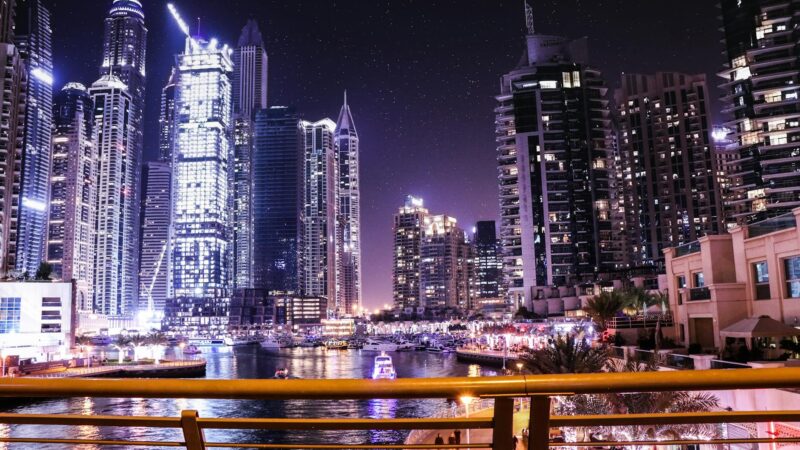
The Marina Walk, JBR Beach, and Ain Dubai (the world’s largest observation wheel) are all operating normally. Beach access is unrestricted. Water sports, yacht charters, and marina dining continue as usual. Hotel occupancy in this area is approximately 80% in April 2026.
Palm Jumeirah
Atlantis The Palm, The Royal Atlantis, and all Palm Jumeirah hotels and residences operate without any restrictions. The Palm Monorail runs on its normal schedule. The Nakheel Mall and the various beach clubs and restaurants on the Palm are fully operational.
Old Dubai (Deira / Bur Dubai)
The Gold Souk, Spice Souk, Dubai Creek, and Al Fahidi Historical Neighbourhood continue to operate as they have for decades. Abra (water taxi) services across Dubai Creek are running normally. These areas are popular with budget-conscious tourists and remain some of the safest areas in the city.
Business Bay / DIFC
Dubai’s financial and business districts operate normally. The Dubai International Financial Centre (DIFC) — home to many of the restaurants and galleries that attract upscale tourists — has not implemented any special security measures. The DIFC Art Nights series continued throughout the conflict period without interruption.
Desert Areas (for Safari)
Desert safari operators in the Lahbab, Margham, and Al Awir areas report normal operations. All overnight camping, dune bashing, camel riding, and sandboarding activities continue as scheduled. These areas are well inland and far from any conflict-related activity.
What Travel Advisories Actually Say
Travel advisories from major governments are important data points, but they need to be read carefully. Many tourists see “Exercise Increased Caution” and interpret it as “Don’t Go” — but that is not what it means.
Current Advisory Levels for UAE (as of April 2026)
- United States: Level 2 — “Exercise Increased Caution.” This is the same level as the UK, France, Germany, Italy, Spain, Belgium, and most of Western Europe. The advisory specifically notes that “tourist areas in Dubai and Abu Dhabi are generally safe.”
- United Kingdom: Standard advisory with no special warnings for Dubai. The FCDO advises general awareness of the regional situation but does not recommend against travel to the UAE.
- Canada: “Exercise a high degree of caution.” This advisory has been in place for the UAE for years and predates the current conflict. Canada applies similar advisories to 80+ countries worldwide.
- Australia: “Exercise a high degree of caution.” Similar to Canada, this is a standing advisory that reflects the broader region rather than specific threats to Dubai.
- Germany: Standard security advisory. No recommendation against travel to UAE.
- India: No travel advisory for UAE. Normal travel permitted.
- Saudi Arabia: No travel advisory for UAE. Normal travel permitted.
The key takeaway: no major government is advising against travel to the UAE. The Level 2 advisory that the US applies to the UAE is the same level it applies to most of Europe. If you would visit Paris, London, or Rome based on current advisories, you should have no advisory-based hesitation about visiting Dubai.
Strait of Hormuz: Shipping and Oil Logistics
Some visitors have expressed concerns about the Strait of Hormuz, the narrow waterway that connects the Persian Gulf to the open ocean. During the conflict, there were fears that Iran might attempt to block the strait — which carries approximately 21% of the world’s daily oil consumption.
In practice, the strait has remained open throughout the conflict. A multinational naval task force — including vessels from the US, UK, France, India, and several Gulf states — has maintained continuous presence to ensure freedom of navigation. Commercial shipping transits continued at near-normal volumes, with only brief delays during the most acute periods of military activity in November 2025.
For tourists, the strait’s status matters mainly for two reasons: flight routes over the Gulf have not been significantly disrupted, and the economic stability that comes from continued oil exports has helped keep Dubai’s economy functioning normally. Fuel prices in the UAE have remained stable, and there have been no shortages of any consumer goods.
Healthcare Facilities for Tourists
In the unlikely event that a tourist requires medical attention in Dubai — whether for a routine illness or an emergency — the city’s healthcare infrastructure is world-class. Dubai has 32 hospitals and hundreds of clinics, many staffed by internationally trained doctors and accredited by the Joint Commission International (JCI).
Key facilities for tourists include:
- Mediclinic City Hospital: Multi-specialty hospital near Dubai Healthcare City. 24/7 emergency department. English, Arabic, and Hindi-speaking staff.
- American Hospital Dubai: JCI-accredited facility in Oud Metha. Popular with American and European visitors.
- Rashid Hospital: Government hospital with a Level 1 trauma center — the most advanced emergency care facility in the UAE.
- Saudi German Hospital: Large facility in Al Barsha with a comprehensive emergency department.
Emergency services in Dubai respond within an average of 8 minutes, which is comparable to or better than most major Western cities. The emergency number is 998 for ambulance and 999 for police.
Final Assessment: Should You Visit Dubai in 2026?
Based on every verifiable data point available — air defense performance, civilian casualty figures, airport operations, hotel occupancy, economic indicators, travel advisories, and crime statistics — the answer is clear: yes, Dubai is safe to visit in 2026.
The city has not only survived a regional military conflict but has demonstrated the kind of preparedness and resilience that should actually increase confidence in its safety. A city with $25 billion in air defense systems, 100% missile interception rates, uninterrupted airport operations, and rising tourist numbers is not a city you should be afraid to visit — it is a city that has proven it can handle the worst the region can throw at it.
The biggest risk for travelers who skip Dubai in 2026 is not danger — it is missing out on one of the best value windows in the city’s recent history. With hotel rates discounted, crowds thinner than the 2024-2025 peak, and all attractions fully operational, this is a golden opportunity for travelers who do their research instead of relying on headlines.
Dubai has always marketed itself as a city of the future. In 2026, it has proven it is also a city that can protect that future — even when the neighborhood gets rough.