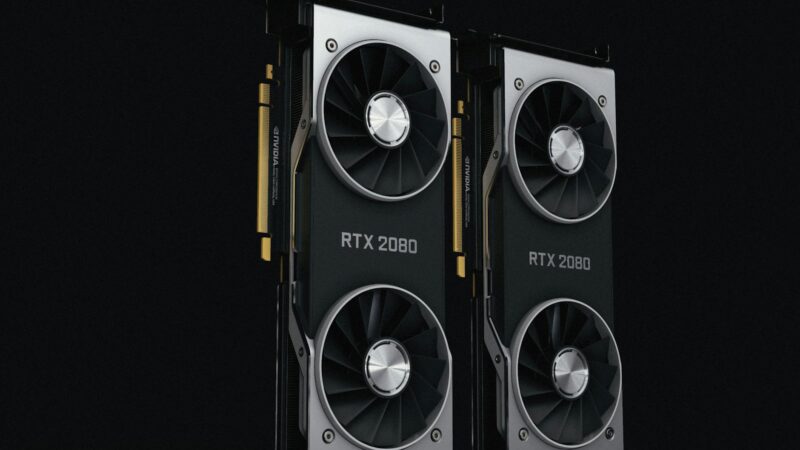
Nvidia is one of the most important investment stories of the decade — and Arab investors are sitting on a massive opportunity they’re largely not taking. The company’s stock has risen over 800% in three years, driven by insatiable demand for its GPU chips that power artificial intelligence training and inference across the globe. With Saudi Arabia investing $5 billion in NEOM AI data centers using Nvidia hardware, UAE’s G42 partnering with Nvidia, and Egypt building national AI capabilities, the Middle East is becoming a major Nvidia customer — yet most Arab retail investors have zero exposure to AI stocks.
This guide is the definitive Arabic-first resource for understanding Nvidia, the AI investment opportunity, and how Egyptian, Gulf, and Levantine investors can participate. We cover what Nvidia does, why its stock has risen so dramatically, how to buy from the Arab world, the risks, the alternatives, and the Middle East’s growing role in the AI economy.
What Is Nvidia and Why Does It Matter?
The Company
Nvidia Corporation (NASDAQ: NVDA) is an American semiconductor company founded in 1993 by Jensen Huang. Originally known for graphics cards used in gaming, Nvidia’s GPUs (Graphics Processing Units) have become the backbone of artificial intelligence. Why? Because training large AI models (like ChatGPT, Gemini, Claude) requires massive parallel computing — exactly what GPUs excel at.

As of April 2026, Nvidia is one of the three most valuable companies in the world, with a market capitalization exceeding $3 trillion. Annual revenues have surpassed $130 billion. The company effectively monopolizes the AI training chip market, with an estimated 80-90% market share in data center GPUs for AI workloads.
The AI Chip Monopoly
Every major tech company in the world is buying Nvidia chips:
| Customer | Estimated Annual Nvidia Spend | Use Case |
|---|---|---|
| Microsoft/OpenAI | $15-20 billion | ChatGPT, Azure AI, Copilot |
| Google/Alphabet | $10-15 billion | Gemini AI, search AI, Cloud |
| Meta | $10-12 billion | LLaMA AI, Instagram/FB recommendation |
| Amazon AWS | $8-12 billion | Bedrock AI, cloud AI services |
| Tesla | $3-5 billion | Full Self-Driving, Dojo training |
| Saudi Arabia (NEOM/DataVolt) | $1-2 billion | AI data center campus |
| UAE (G42) | $500M-1B | Regional AI infrastructure |
The Numbers Behind the Rise
| Metric | 2023 | 2024 | 2025 | 2026 (est.) |
|---|---|---|---|---|
| Revenue | $27B | $61B | $113B | $140B+ |
| Net Income | $4.4B | $29.8B | $67B | $75B+ |
| Stock Price | ~$50 | ~$130 | ~$165 | ~$150-170 |
| Market Cap | $1.2T | $3.2T | $4T | $3.7T |
The AI Revolution Explained Simply
What Is AI and Why Does It Need Special Chips?
Artificial Intelligence in its current form works by training massive mathematical models on enormous datasets. Think of it like teaching a student by showing them millions of examples. The ‘learning’ process involves billions of mathematical calculations happening simultaneously — and that’s exactly what Nvidia’s GPUs do best.
A single AI training run for a large language model (like GPT-5 or Gemini Ultra) can cost $100 million to $500 million in compute costs, primarily paid to Nvidia for chips and to cloud providers for hosting. As AI models get larger and more capable, the demand for Nvidia’s chips continues to grow.
Why Nvidia Specifically?
Three reasons Nvidia dominates:
1. CUDA ecosystem lock-in. Nvidia developed CUDA, a software platform that allows developers to program GPUs for AI workloads. Over 15 years, millions of AI researchers and engineers have built their code on CUDA. Switching to a competitor (AMD, Intel) requires rewriting code — a massive undertaking that most companies avoid.
2. Hardware performance leadership. Nvidia’s latest chips (H100, H200, Blackwell B200) consistently outperform competitors by 30-50% in AI training speed. When training costs millions of dollars, a 30% speed advantage translates to millions in savings.
3. Full-stack approach. Nvidia doesn’t just sell chips — it sells complete systems including networking (InfiniBand/NVLink), software (CUDA, cuDNN, TensorRT), and cloud services (DGX Cloud). This full-stack integration makes Nvidia’s solutions easier to deploy than competitors’ hardware-only offerings.
Nvidia and the Middle East
Saudi Arabia: The $5 Billion NEOM Deal
NEOM’s $5 billion partnership with DataVolt to build an AI data center campus in Oxagon is one of the largest single AI infrastructure investments in the Middle East. The campus will use Nvidia GPUs as its primary computing platform, making Saudi Arabia one of Nvidia’s largest government customers globally.
This deal signals Saudi Arabia’s strategic pivot from speculative residential megaprojects (The Line) toward practical, revenue-generating technology infrastructure. For Arab investors, it validates the AI investment thesis: if Saudi Arabia’s sovereign wealth fund is betting billions on AI, the trend is real.
UAE: G42 Partnership
Abu Dhabi-based G42, backed by the Mubadala sovereign wealth fund, has established a significant partnership with Nvidia for AI infrastructure across the UAE. G42 operates one of the largest AI computing clusters in the Middle East and provides AI services to government and enterprise customers. The partnership includes access to Nvidia’s latest chip generations and co-development of AI applications for Arabic language processing.
Egypt: National AI Strategy
Egypt has launched a national AI strategy targeting education, healthcare, agriculture, and government services. While smaller in scale than Gulf investments, Egypt’s AI ambitions create demand for Nvidia-class computing infrastructure. Egyptian AI startups are increasingly using Nvidia GPUs for training Arabic-language AI models.
How to Invest in Nvidia from the Arab World
Option 1: Direct Stock Purchase (Intermediate)
Buy NVDA shares through an international brokerage:
- Interactive Brokers: Professional-grade, lowest fees, accepts Egyptian and Gulf residents
- eToro: User-friendly, social trading features, accepts most Arab nationalities
- Saxo Bank: Premium platform, strong in UAE and Gulf markets
- Trading212: Low-cost, commission-free stock trading
Requirements: Passport, proof of address, minimum deposit $500-1,000. Account setup takes 2-5 business days.
Current NVDA price: Approximately $150-170 per share (April 2026). You can buy fractional shares on most platforms.
Option 2: AI-Focused ETFs (Recommended for Beginners)
Instead of buying individual Nvidia stock, consider ETFs that hold Nvidia plus other AI companies:
| ETF | Nvidia Weight | Other Holdings | Expense Ratio |
|---|---|---|---|
| QQQ (Nasdaq 100) | ~8-9% | Microsoft, Google, Meta, Apple | 0.20% |
| VGT (Tech ETF) | ~12% | Microsoft, Apple, Broadcom | 0.10% |
| BOTZ (Robotics & AI) | ~8% | ABB, Intuitive Surgical, Fanuc | 0.68% |
| AIQ (AI & Big Data) | ~5% | Alphabet, Amazon, Palantir | 0.68% |
| SMH (Semiconductors) | ~20% | TSMC, Broadcom, ASML, AMD | 0.35% |
Why ETFs are better for beginners: Diversification across multiple AI companies reduces single-stock risk. If Nvidia disappoints, your ETF still holds Microsoft, Google, and other AI leaders. Lower volatility than individual stocks.
Option 3: CFDs (Advanced Traders Only)
Contracts for Difference allow leveraged trading on Nvidia’s price movements. Available through platforms like eToro, Plus500, and IG. Warning: CFDs are extremely risky — 70-80% of retail CFD traders lose money. Only use if you’re an experienced trader with capital you can afford to lose entirely.
Option 4: Gulf-Listed Tech Exposure
For investors who prefer to stay within regional markets:
- STC (Saudi Arabia): Benefits from AI infrastructure spending
- Etisalat/e& (UAE): Cloud and AI services exposure
- G42 (if IPO’d): Direct Nvidia partner in the UAE
- Egyptian tech startups (EGX): Limited options, but growing
The Risks: What Could Go Wrong
Risk 1: Valuation Premium
Nvidia trades at 35-40x earnings — expensive by any measure. If AI spending growth slows (companies realize they’ve over-invested), the stock could correct 30-40%. This happened briefly in late 2024 and could repeat.
Risk 2: Competition Emerging
AMD’s MI300 series is gaining market share. Google’s TPU chips are competitive for inference workloads. Intel is investing heavily in AI chips. Amazon has developed custom Trainium chips. If Nvidia’s market share drops from 85% to 65%, the growth narrative weakens.
Risk 3: Regulatory Risk
US government restrictions on AI chip exports to certain countries could affect Nvidia’s growth. China restrictions are already in place. Any expansion of export controls to Middle Eastern countries (unlikely but possible) would directly impact regional AI investments.
Risk 4: AI Winter
If AI delivers less economic value than expected, corporate AI spending could slow dramatically. This is the tail-risk scenario — unlikely in the medium term but historically, technology hype cycles do correct.
Portfolio Allocation for Arab Investors
Recommended AI/Tech Allocation by Investor Type
| Investor Type | AI/Tech Allocation | Nvidia-Specific | Strategy |
|---|---|---|---|
| Conservative Egyptian | 5-10% | Via QQQ ETF | Small allocation, diversified |
| Balanced Gulf | 10-15% | 5% direct NVDA + ETF | Core position with upside |
| Aggressive growth | 15-25% | 10% direct NVDA | Concentrated tech bet |
| Saudi/UAE tech-focused | 20-30% | 15% NVDA + regional AI | Full AI conviction |
Important Context for Egyptian Investors
Before allocating to international tech stocks, Egyptian investors should ensure they have:
- Gold: 15-25% of portfolio (inflation + pound hedge)
- EGX 30 defensive stocks: 20-30% (CIB, STC, Edita)
- Emergency fund: 3-6 months expenses in EGP
- Then consider 5-10% international tech/AI allocation
Don’t put money into Nvidia before you have gold and local defensive stocks. The currency risk (EGP/USD) adds another layer of complexity for Egyptian investors.
The Bigger Picture: AI as an Economic Revolution
AI is not just a tech trend — it’s an economic revolution comparable to the internet, electricity, and the printing press. McKinsey estimates AI could add $13-22 trillion to the global economy by 2030. The companies building AI infrastructure (led by Nvidia) are the equivalent of the railroad and oil companies of the 19th and 20th centuries.
For Arab investors, the question isn’t whether AI matters — it’s how to participate. The options range from conservative (tech ETFs) to aggressive (direct Nvidia stock) to regional (Gulf AI companies). The worst option is zero exposure — missing the biggest economic transformation of the 21st century.
Frequently Asked Questions
What is Nvidia?
American semiconductor company making GPUs that power AI. One of world’s 3 most valuable companies.
How can Egyptian investors buy Nvidia?
Through international brokers (Interactive Brokers, eToro). Minimum $500-1,000. Or via QQQ/VGT ETFs.
Is Nvidia overvalued?
Debatable. 35-40x earnings is high but below peak. AI demand still growing. Competition emerging.
What’s Nvidia’s Middle East connection?
NEOM $5B deal, G42 UAE partnership, Gulf sovereign fund investments in AI infrastructure.
Best alternatives to Nvidia?
AMD, Microsoft, Google, Meta, or diversified ETFs like QQQ, BOTZ, AIQ.
Related Articles
For more, see Bloomberg Technology, Reuters Technology, and CNBC Technology.
Last Updated: April 9, 2026