Introduction: 37 Days That Shook the World
In the early hours of February 28, 2026, the world awoke to news that permanently altered the map of the Middle East: surprise joint US-Israeli strikes targeting Iran’s supreme leadership resulted in the death of Supreme Leader Ayatollah Ali Khamenei. What followed was 37 days of relentless escalation and rapid-fire events unlike anything the Middle East had witnessed in decades.
This comprehensive chronicle tracks every major event day by day and week by week, following the impact on oil and gold prices, documenting human and material losses, and recording diplomatic milestones. It is the most complete record of a war that will require history books to be rewritten.
| Metric | Figure |
|---|---|
| War Duration | 37 days (Feb 28 — Apr 6) |
| Total Deaths | 3,400+ |
| Oil Price (Brent) | $109.03/barrel (+40%) |
| Oil Price (WTI) | $111.81/barrel (+40%) |
| Gold Price | $149–150/gram |
| Trump Deadline Extensions | 3 times |
| Strait of Hormuz Status | Closed since March 27 |
| Directly Involved Nations | US, Israel, Iran, Lebanon (Hezbollah) |
| Militarily Affected Nations | UAE, Kuwait, Bahrain, Saudi Arabia |
Week 1: The Shock (February 28 — March 6)
February 28, 2026 — Day Zero: The Strike That Changed Everything
In a military operation described as the most audacious and consequential of the 21st century, the United States and Israel launched surprise joint strikes on strategic Iranian targets. The most shocking result: the death of Supreme Leader Ayatollah Ali Khamenei.

Khamenei’s assassination was not merely the removal of a military commander — it was a decapitation strike against the entire Iranian system of governance. Iran’s Supreme Leader is not just a head of state — he is the supreme religious, political, and military authority, and his elimination created an enormous leadership vacuum.
Immediate reactions:
- Global markets in shock — oil futures jump immediately
- Iran vows a “devastating response” to the assassination
- UN Security Council convenes emergency session
- Regional militaries raise maximum alert levels
March 1–2 — First Responses: Iran Retaliates and Hezbollah Enters the Fight
Iran did not wait long. Within less than 48 hours:
- March 1: The IRGC launches waves of ballistic missiles and drones at US and Israeli targets across the region
- March 1: Hezbollah officially declares entry into the war and begins intensive bombardment of northern Israel
- March 2: Israel begins a ground operation in southern Lebanon — the first Israeli invasion of Lebanon since 2006
Within days, what was supposed to be a surgical strike had transformed into a multi-front regional war. Lebanon — which had not recovered from its economic crisis — found itself once again at the center of a war it did not choose. For more on the early weeks, see our week 5 war report.
Early March — The War Expands: AWS Data Centers Struck and Oil Passes $100
In a development nobody anticipated, Iran expanded the scope of its retaliation to include technological targets:
- Iranian missiles strike Amazon Web Services (AWS) data centers — an attempt to disrupt digital infrastructure
- The targeting sent shockwaves through global technology markets
- Major tech stocks plunge sharply
March 8 — Oil Breaks $100/Barrel
By March 8 — just one week after the war began — oil surpassed the $100/barrel threshold. This psychologically important level reflected the mounting fear of global energy supply disruption and the markets’ realization that this was not a limited skirmish but a protracted war.
| Date | Event | Brent ($/barrel) |
|---|---|---|
| Feb 27 (pre-war) | Normal conditions | ~$78 |
| Feb 28 | Strikes begin | ~$85 |
| Mar 1–2 | Iran + Hezbollah respond | ~$90 |
| Early March | AWS data centers hit | ~$95 |
| March 8 | Oil breaks $100 | $100+ |
Weeks 2–3: Escalation and Collapse (March 9–21)
Mid-March — Gold Crashes 23%: The Margin Call Day
In one of the most shocking financial events of the war, gold prices collapsed by 23% in mid-March. This may seem contradictory — why would the safe haven collapse at the height of a crisis?
The answer: margin calls. When stock markets crashed sharply due to the war, leveraged investors were forced to sell everything they owned — including gold — to cover their losses. This forced selling created a massive wave of liquidation that pressured gold severely.
But the crash was temporary. Once the forced selling wave subsided, gold resumed its climb rapidly because the fundamental drivers of demand (war, inflation, uncertainty) remained unchanged. This event taught markets an important lesson: during acute crises, even safe havens can experience temporary crashes due to financial mechanics. For a detailed analysis of the gold crash, read our gold crash report.
Mid-March — IRGC Closes Hormuz Approach Routes
In a preliminary step toward what was to come, the IRGC began closing approach routes to the Strait of Hormuz. This was not yet full closure, but it delivered a clear message: Iran was prepared to weaponize Hormuz as a strategic tool.
This move sharply raised maritime insurance premiums, and some shipping companies began preemptively diverting tankers away from the region.
Week 4: The Point of No Return (March 22–28)
March 24 — Iranian Missiles Strike Tel Aviv; Trump Sets First Deadline
In a dramatic escalation, Iranian missiles successfully struck Tel Aviv — Israel’s economic heart. The attack caused human and material casualties and delivered a severe psychological shock to Israeli society.
On the same day, President Trump emerged to set the first deadline for Iran, threatening major escalation if attacks did not cease.
March 25–26 — Two Consecutive Deadline Extensions
Instead of escalating, Trump extended the deadline twice in two consecutive days:
- March 25: First extension — raising questions about the seriousness of the US threat
- March 26: Second extension — markets began pricing in a pattern of “threat without follow-through”
These extensions revealed that the US administration faced a genuine dilemma: escalation could catastrophically worsen the crisis, but failing to escalate undermines credibility.
March 27 — The Day Hormuz Closed: The IRGC Executes Its Threat
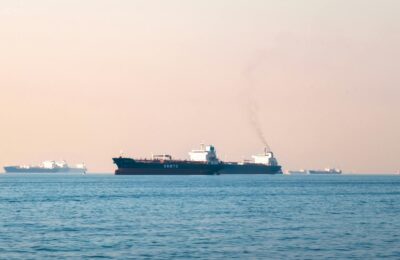
In the most economically consequential event since the war began, the IRGC announced the complete closure of the Strait of Hormuz. The closure included:
- Deployment of naval mines in shipping lanes
- Deployment of fast attack boats and coastal anti-ship missiles
- Declaration of the area as a “war zone” with warnings to all vessels
This decision transformed the war from a regional military conflict into a global economic crisis. For a full analysis of the Hormuz closure, see our detailed report.
March 28 — Oil Spikes: Brent $112, WTI $100
As an immediate reaction to the Hormuz closure, oil prices surged sharply:
- Brent: $112/barrel
- WTI: $100/barrel
This single-day jump was among the largest daily moves in oil market history.
| Date | Event | Brent ($/barrel) | WTI ($/barrel) |
|---|---|---|---|
| March 24 | Missiles hit Tel Aviv | ~$105 | ~$95 |
| March 27 | Hormuz closed | ~$108 | ~$97 |
| March 28 | Market reaction | $112 | $100 |
Week 5: Expansion and Pain (March 29 — April 4)
March 30 — Iran Strikes a Kuwaiti Oil Tanker
In the first direct targeting of a Gulf state’s interests, Iranian missiles or mines struck a Kuwaiti oil tanker. The attack did not sink the vessel but caused severe damage and sent an unambiguous message: nobody in the Gulf is beyond the reach of war.
This event pushed maritime insurance premiums in the region to record highs and raised fears of a tanker war reminiscent of the 1980s.
March 31 — Worst Month for S&P 500 Since 2022
As March closed, the S&P 500 recorded its worst monthly performance since 2022. The causes extended beyond the war alone:
- Rising oil prices threatening corporate earnings
- Surging inflation concerning investors about interest rates
- AWS data center strikes affecting the technology sector
- Geopolitical uncertainty driving investors toward safe havens
April 1 — OPEC+ Increases Output; Iraq Qualifies for World Cup
April 1 brought two significant developments:
- OPEC+ decided to increase production by 206,000 barrels/day — a symbolic gesture more than a practical one given the scale of the shortfall
- In a rare positive headline amid the turmoil, Iraq qualified for the 2026 FIFA World Cup — a moment of joy in a sea of tension
For details on the OPEC+ decision, read our oil price analysis.
April 4 — UAE Under Fire: 23 Missiles and 56 Drones Intercepted
In the most dangerous escalation targeting a Gulf state, the United Arab Emirates came under a massive attack:
- 23 missiles launched toward Emirati territory
- 56 attack drones deployed
- The UAE’s air defense system successfully intercepted the entire attack
The successful interception demonstrated the capability of the UAE’s defense systems, but the attack’s scale also showed that Iran was prepared to target any nation in the region. The UAE — which had attempted to maintain balanced relations with Iran — found itself a direct target.
Week 6: The Gulf Ablaze (April 5–6)
April 5 — A Dark Day: Kuwait, Bahrain, and Formula 1
April 5 was among the most event-dense days of the war:
Kuwait Petroleum Corporation Headquarters Struck
Iranian missiles or drones struck the Kuwait Petroleum Corporation (KPC) headquarters in Kuwait City — the company overseeing Kuwait’s entire oil sector. The attack sent an unmistakable message about the vulnerability of Gulf oil infrastructure to Iranian strikes.
Bahrain Oil Storage Facilities Hit
In a simultaneous attack, Bahrain oil storage facilities were targeted. Bahrain, which hosts the US Navy’s Fifth Fleet, became a direct target — raising questions about the ability of US military bases to protect their host nations.
Formula 1 Cancels Saudi Arabia and Bahrain Races
Due to escalating security risks, Formula 1 announced the cancellation of the Saudi Arabia and Bahrain Grand Prix races. The decision confirmed to the world that the Gulf region was no longer safe for major sporting events — a symbolic and material blow to economic diversification efforts in the region.
April 6 — Rapid-Fire Events in a Single Day
The final day in our timeline carries several landmark events:
Trump Extends Deadline a Third Time to Tuesday
In what has become a familiar move, Trump extended his Iran deadline to Tuesday, April 7. The third extension raised serious questions about the US administration’s strategy: is the deadline a genuine pressure tool or merely a time-buying tactic?
IRGC Intelligence Chief Assassinated
In a precision strike, sources reported the death of the IRGC intelligence chief. This assassination — if fully confirmed — represents the second most significant blow to Iranian leadership after Khamenei’s death, and weakens the IRGC’s planning and coordination capabilities.
Haifa Struck and F-15 Pilot Rescued
Iranian missiles struck the Israeli city of Haifa — Israel’s second-largest coastal city. Meanwhile, an American F-15 fighter pilot was rescued after being shot down during operations over or near Iran — the first such incident to be publicly acknowledged.
The Islamabad Accord — A Glimmer of Hope?
In a significant diplomatic development, Pakistan announced the “Islamabad Accord” — a ceasefire framework negotiated through Pakistani mediation. Details are still emerging, but this accord represents the first serious diplomatic attempt to halt the war.
The question remains: can any agreement hold given the scale of current escalation and the number of parties involved? For details on the Islamabad Accord, read our special coverage.
The Toll: More Than 3,400 Dead
By April 6, the war’s total death toll exceeded 3,400 — and this figure includes only officially documented casualties. The actual numbers may be significantly higher.
| Party | Deaths (Est.) | Notes |
|---|---|---|
| Iran (military & civilian) | 1,200+ | Hardest hit by US-Israeli strikes |
| Israel | 400+ | From Iranian and Hezbollah strikes |
| Lebanon (civilians & fighters) | 800+ | Ground invasion and airstrikes |
| US Forces | 150+ | At bases and in air operations |
| Gulf States (civilians) | 100+ | From attacks on Kuwait, Bahrain, UAE |
| Others | 750+ | Sailors, contractors, other civilians |
| Total | 3,400+ | Actual figures likely higher |
Oil Price Tracker Through the War
| Date | Key Event | Brent ($/barrel) | WTI ($/barrel) |
|---|---|---|---|
| Pre-war | Normal conditions | ~$78 | ~$75 |
| Feb 28 | War begins | ~$85 | ~$82 |
| Mar 8 | Breaks $100 | $100+ | ~$95 |
| Mar 27 | Hormuz closed | ~$108 | ~$97 |
| Mar 28 | Hormuz aftermath | $112 | $100 |
| Apr 6 | Current | $109.03 | $111.81 |
Gold Price Tracker Through the War
| Period | Event | Gold ($/gram) | Egypt 24K (EGP) |
|---|---|---|---|
| Pre-war | Normal conditions | ~$92 | ~3,500 |
| Feb 28 | War begins | ~$100 | ~3,800 |
| Early March | Escalation | ~$120 | ~4,200 |
| Mid-March | 23% crash (margin calls) | ~$92 (low) | ~3,500 |
| Late March | Recovery + Hormuz | ~$135 | ~4,600 |
| Apr 6 | Current | $149–150 | ~5,000 |
Diplomatic Milestones: From Threats to Negotiation Attempts
Despite the predominantly military character of events, the five weeks saw several diplomatic milestones:
- Repeated Security Council sessions: Calls for ceasefire yielded no binding resolutions due to the US veto
- Trump’s three deadlines: A “carrot and stick” tactic that has not produced results thus far
- Regional mediation: Attempts by Oman, Qatar, and Iraq to mediate between parties
- The Islamabad Accord (April 6): The first serious ceasefire framework — brokered by Pakistan
The Islamabad Accord is considered the most serious diplomatic attempt to date. Pakistan — which maintains relationships with Iran, the United States, and even Israel indirectly — appears uniquely positioned to mediate. But any agreement’s success depends on all parties’ willingness to compromise — which does not appear imminent.
Conclusion: Where Do We Go From Here?
In 37 days, the Middle East has transformed in ways that may prove irreversible. A war that began with a surgical strike evolved into a broad regional conflict involving at least six nations and affecting the entire global economy. More than 3,400 people have lost their lives, oil has jumped 40%, gold has reached record levels, and the Strait of Hormuz — the world’s energy artery — remains closed.
Tuesday, April 7, will be a pivotal moment. Will Trump extend the deadline again? Will he escalate? Can the Islamabad Accord open a door to negotiations? The answers to these questions will determine whether the war’s seventh week sees de-escalation or unprecedented escalation.
What is certain: the world will not return to what it was before February 28, 2026. And history will record these five weeks as a turning point for the Middle East and the world.