Nine days. Nine days is all it took to remind the entire world of a simple, brutal truth: the global economy hangs by a thread that passes through a waterway just 21 miles wide. Since Iran’s Islamic Revolutionary Guard Corps (IRGC) declared the Strait of Hormuz closed on March 27, 2026 to any vessel traveling “to and from” ports of the United States, Israel, and allied nations, this narrow strip of water has become the epicenter of a global crisis unseen since the 1973 Arab oil embargo.
The numbers do not lie: 21 million barrels of oil per day — roughly 20% of the world’s daily oil supply — are now hostage to a single Iranian decision. Annual trade exceeding $2 trillion in value has been halted or rerouted through longer, costlier alternatives. Oil prices have surpassed $111 per barrel after peaking at $126. Insurance costs for tankers have exploded. And the entire world watches, visibly powerless.
What Is the Strait of Hormuz? The Geography That Governs the Global Economy
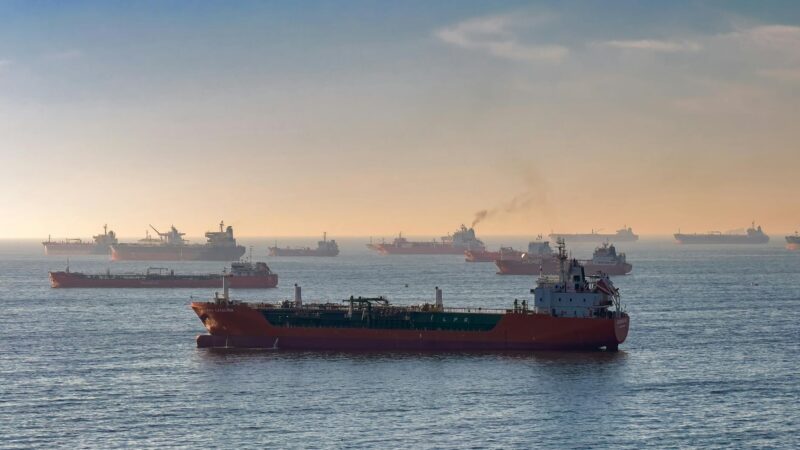
The Strait of Hormuz is the strategic waterway separating Iran to the north from Oman and the United Arab Emirates to the south, connecting the Persian Gulf to the Gulf of Oman and, beyond it, the open Indian Ocean. At its narrowest point, the strait measures just 21 miles (33 kilometers) across, with the actual navigable shipping lanes spanning only a few hundred meters in depth.

These geographic figures may seem simple, but they conceal an astonishing economic reality. Through this narrow passage, the following flows daily:
| Indicator | Volume | Share of Global Total |
|---|---|---|
| Crude Oil | 17-18 million barrels/day | ~20% of global consumption |
| Liquefied Natural Gas (LNG) | ~14 billion cubic feet/day | ~25% of global LNG trade |
| Total Tanker Traffic | 21 million barrels of oil equivalent/day | Largest oil transit chokepoint in the world |
| Annual Trade Value | Over $2 trillion | No competing waterway comes close |
| Daily Tanker Transits | 50-60 oil tankers | Approximately one tanker every 25 minutes |
The major exporting nations that depend on this passage include Saudi Arabia, Iraq, the UAE, Kuwait, Qatar, and Iran itself. Without this strait, most of the Persian Gulf’s oil — which accounts for roughly one-third of global production — remains landlocked.
The Timeline: From Closure Day to Day 9
Day 1 — March 27, 2026: The Announcement That Shook Markets
At precisely 6:00 AM Tehran time, Admiral Ali Reza Tangsiri, commander of the IRGC Navy, announced that Iran would block the passage of any commercial or military vessel traveling “to or from” ports of the United States, Israel, and their allied nations. The decision came as a direct response to the ongoing American-Israeli strikes on Iranian territory that began on February 28.
Within one hour of the announcement, Brent crude surged 8% in Asian trading. By the end of the first day, West Texas Intermediate (WTI) had climbed from $94 to $108 per barrel.
Day 2 — March 28: The First Interception
IRGC fast boats intercepted a Marshall Islands-flagged tanker loaded with Kuwaiti crude bound for South Korea. The tanker was detained for six hours before being allowed to pass after its final destination was verified. The message was unmistakable: Iran was serious.
Day 3 — March 29: The Price Peak
Brent crude reached $126 per barrel — the highest level since the Ukraine crisis of 2022. Maritime insurance firms raised war-risk premiums for tankers transiting the strait by 400% in a single day. Lloyd’s of London officially classified the strait as a “war zone.”
Day 4 — March 30: Alternatives Activate
Saudi Arabia announced full-capacity operation of the East-West Pipeline (Petroline) to divert oil to the port of Yanbu on the Red Sea. The UAE began diverting exports through the Habshan-Fujairah pipeline to the Arabian Sea coast. But the capacity of these alternatives is limited.
Day 5 — March 31: The Coalition Forms
Britain announced leadership of a 40-nation coalition to discuss options for reopening the strait. The UN Security Council convened in an emergency session. Russia and China vetoed any resolution condemning Iran.
Day 6 — April 1: The Houthi Warning
In a dramatic escalation, a senior Houthi official warned that Ansar Allah could close the Bab el-Mandeb Strait if Gulf states joined the American-Israeli strikes on Iran. Bab el-Mandeb — the southern gateway to the Red Sea — represents the second chokepoint through which most oil diverted via the Saudi Petroline must pass. The double-chokepoint scenario was suddenly on the table.
For more on the Bab el-Mandeb threat and its impact on global trade, read our detailed analysis: Bab el-Mandeb Strait: The Gateway Controlling Global Trade.
Day 7 — April 2: Asia’s Fuel Crisis Hits
Japan declared an “energy emergency” and began drawing from its strategic reserves. South Korea imposed fuel consumption restrictions on its industrial sector. India raised petrol prices by 12% in a single move.
Day 8 — April 3: Negotiation Attempts
Oman — the traditional mediator between Iran and the West — hosted secret talks between Iranian diplomats and representatives of the British-led coalition. Leaks suggest Iran demands a complete cessation of military strikes as a precondition for reopening the strait.
Day 9 — April 4 (Yesterday): The Current Situation
Oil has stabilized around $111 per barrel, down from the $126 peak. The British-led coalition has taken no actual military action. Iran continues deploying its fast boats and midget submarines in the strait. The world watches and waits.
Who Is Hurt Most? A Global Pain Map
The closure of the Strait of Hormuz is not merely a Middle Eastern crisis — it is an economic earthquake striking every corner of the planet. But the pain is not evenly distributed.
Asia: The Biggest Victim
| Country | Oil Imported via Hormuz | Strategic Reserve (Days) | Impact Level |
|---|---|---|---|
| Japan | ~80% | ~200 days | Critical |
| South Korea | ~70% | ~90 days | Severe |
| India | ~60% | ~65 days | High |
| China | ~40% | ~80 days | Elevated |
| Taiwan | ~75% | ~120 days | Critical |
Japan and South Korea are the most directly vulnerable. Japan imports roughly 80% of its oil through Hormuz, and although it holds a strategic reserve theoretically sufficient for 200 days, drawing from it heavily raises costs and pressures the economy. South Korea is in a worse position: its reserves last only about 90 days, and its heavy industry — from Samsung to Hyundai — depends almost entirely on Gulf oil.
India faces a dual challenge: heavy dependence on Gulf oil and limited reserves. The 12% petrol price increase has sparked protests across several Indian states. As for China, while its percentage dependence is relatively lower (40% of oil imports via Hormuz), the absolute volume is massive — approximately 4 million barrels per day.
Europe: An Additional Shock on Top of the Ukraine Crisis
Europe, which has not fully recovered from the energy shock of the Russia-Ukraine war, now faces a double blow. Roughly 15-20% of European oil imports transit through Hormuz, and the price surge is pressuring inflation that had only recently begun to recede. Germany, Italy, and France have all announced emergency energy conservation plans.
Gulf States: Losses Despite Alternatives
Saudi Arabia, the UAE, Kuwait, and Qatar — despite being oil exporters — are suffering significant losses. While higher prices appear theoretically positive, the inability to export full volumes means massive revenue losses. Qatar, in particular, faces an acute crisis in LNG exports — most of its gas shipments pass through Hormuz and it has no pipeline alternative.
Available Alternatives: Pipelines and Their Limits
When the main door closes, everyone rushes to the back doors. But these back doors have clear limitations.
Saudi East-West Pipeline (Petroline)
This pipeline stretches 1,200 kilometers from the oil fields in the Eastern Province to the port of Yanbu on the Red Sea. Its maximum capacity is approximately 5 million barrels per day, but the actual available capacity does not exceed 3.5-4 million barrels/day after years of not operating at full capacity.
The major problem: oil diverted to Yanbu reaches the Red Sea, and from there it must pass through the Bab el-Mandeb Strait to reach Asian markets. The Houthi threat to close Bab el-Mandeb puts this entire alternative under a question mark.
Habshan-Fujairah Pipeline (UAE)
This pipeline connects Abu Dhabi’s fields to the port of Fujairah on the Arabian Sea, bypassing the Strait of Hormuz entirely. Its capacity is 1.5 million barrels/day. Its advantage is that it discharges into the open Arabian Sea, away from any chokepoint. However, its capacity is limited and cannot accommodate the UAE’s full exports of approximately 2.8 million barrels/day.
Iraq-Turkey Pipeline (Kirkuk-Ceyhan)
In theory, pumping through this pipeline could be increased to export Iraqi oil via the Turkish port of Ceyhan on the Mediterranean. However, the line already operates at limited capacity (roughly 0.5 million barrels/day) and expansion would require months.
| Alternative | Maximum Capacity | Actual Available Capacity | Destination | Risk Factor |
|---|---|---|---|---|
| Petroline (Saudi Arabia) | 5 million b/d | 3.5-4 million b/d | Yanbu (Red Sea) | Houthi threat to Bab el-Mandeb |
| Habshan-Fujairah (UAE) | 1.5 million b/d | 1.5 million b/d | Fujairah (Arabian Sea) | Limited capacity |
| Kirkuk-Ceyhan (Iraq) | 1 million b/d | ~0.5 million b/d | Ceyhan (Mediterranean) | Requires maintenance and expansion |
| Total Available | — | ~5.5-6 million b/d | — | 15 million b/d gap |
The harsh conclusion: even with all alternatives running at full capacity, a gap of approximately 15 million barrels per day remains — meaning the alternatives cover barely a quarter of the oil volume that used to transit through Hormuz.
To understand how this crisis is part of a broader reshaping of the region’s entire energy map, see our comprehensive analysis: Middle East Energy Map 2026.
The Insurance and Shipping Cost Explosion
Maritime insurance may not make front-page headlines, but it tells the real story of this crisis. When the cost of insuring a single oil tanker rises by hundreds of thousands of dollars, that cost inevitably passes through to the end consumer.
| Metric | Before Closure (March 26) | After Closure (April 4) | Change |
|---|---|---|---|
| War Risk Insurance (VLCC) | $150,000-200,000 | $750,000-1,200,000 | +400-500% |
| Freight Rates (Suezmax) | $35,000/day | $95,000/day | +171% |
| Freight Rates (VLCC) | $45,000/day | $180,000/day | +300% |
| Per-Barrel Shipping Cost (Gulf to Asia) | $1.5-2.0 | $6.0-8.5 | +300-325% |
| General Cargo Insurance Through Strait | 0.05% of cargo value | 0.5-1.0% of cargo value | +900-1,900% |
Major insurers — Lloyd’s of London, Allianz, and Zurich — have all classified the Strait of Hormuz area as a “war zone,” the highest risk classification that means exorbitant premiums and stringent conditions. Some insurers have refused to cover vessels transiting the strait entirely.
The practical result: even if a tanker can physically cross, the cost of crossing has risen to a level that makes every barrel of oil arriving from the Gulf to its destination significantly more expensive. This additional cost is layered on top of already-elevated oil prices.
Historical Lessons: Is History Repeating Itself?
The Strait of Hormuz is no stranger to tensions. But what is happening today exceeds every historical precedent.
The 1973 Arab Oil Embargo
In October 1973, Arab oil-producing nations imposed an export embargo on countries supporting Israel during the October War. Oil prices quadrupled — from $3 to $12 per barrel. This triggered a global recession and fuel queues across America and Europe.
The comparison: the 1973 embargo was a political decision by several producing nations and affected approximately 5 million barrels/day. The 2026 Hormuz closure affects 21 million barrels/day — four times the volume. As a percentage, the 1973 embargo represented roughly 10% of global supply, while the Hormuz closure represents 20%.
The Tanker War (1980-1988)
During the Iran-Iraq War, both sides targeted oil tankers in the Persian Gulf in what became known as the “Tanker War.” More than 540 vessels were attacked, and dozens were sunk. However, the strait itself was never fully closed, and oil continued to flow, albeit with elevated insurance costs.
The comparison: the Tanker War was a partial and intermittent threat. What is happening today is a complete, declared closure backed by actual military force.
The 2019 Aramco Drone Attacks
In September 2019, drone attacks targeted Saudi Aramco’s Abqaiq and Khurais facilities, temporarily cutting Saudi production by approximately 5.7 million barrels/day — roughly half of Saudi output. Oil surged 15% in a single day but recovered within two weeks once the facilities were repaired.
The comparison: the 2019 attacks were momentary and repairable. The Hormuz closure is ongoing and does not depend on repairing a facility but on a political-military decision.
| Crisis | Year | Volume (b/d) | Duration | Peak Price | Outcome |
|---|---|---|---|---|---|
| Arab Oil Embargo | 1973 | ~5 million | 5 months | $12 (+300%) | Global recession |
| Tanker War | 1980-88 | Intermittent | 8 years | $40 | 540 vessels hit |
| Aramco Attacks | 2019 | 5.7 million | 2 weeks | $72 (+15%) | Swift recovery |
| Hormuz Closure | 2026 | 21 million | Ongoing (Day 9) | $126 (+34%) | Largest since 1973 |
The British-Led Coalition: 40 Countries and Zero Action
The past nine days have exposed an uncomfortable reality: a coalition of 40 nations has been unable to do anything about the closure of a waterway just 21 miles wide. But the truth is that the options before this coalition are limited, and all carry significant risks.
The Military Option: Costly and Dangerous
In theory, an international naval force could impose a safe passage through the strait. In practice, Iran has deployed a formidable arsenal to defend it: Noor and Qader anti-ship missiles along the Iranian coast, Ghadir-class midget submarines, naval mines, fast attack boats, and mobile shore-to-sea missile batteries.
The Pentagon’s “Millennium Challenge 2002” war game — in which General Van Riper played the role of an Iranian commander — resulted in the sinking of 16 American ships in a single day. While technology has advanced since then, the geography has not changed: the strait is narrow, and the Iranian coastline is elevated, providing excellent positions for ambushes.
The Diplomatic Option: Slow but Least Risky
Negotiations via Oman are underway but proceeding slowly. Iran demands a complete cessation of military strikes as a precondition — a demand rejected by Washington and Tel Aviv. The gap between the two sides is wide, and mediators are searching for a compromise formula.
The Economic Option: Sanctions Upon Sanctions
Imposing additional sanctions on Iran appears futile — Iran is already under the harshest sanction packages, and it is in an actual state of war. More sanctions will not change Tehran’s calculations.
For the full context of the war that led to this closure, see our ongoing coverage: Complete Timeline of the Iran War 2026.
The Double-Chokepoint Scenario: What If Bab el-Mandeb Closes Too?
The Houthi threat to close the Bab el-Mandeb Strait is not an empty one. The Houthis have demonstrated over the past two years their ability to disrupt Red Sea shipping through anti-ship missiles, drones, and naval mines. A scenario in which both straits are closed simultaneously would be catastrophic:
The scenario: If Bab el-Mandeb closes alongside Hormuz, the Saudi Petroline — the primary alternative that discharges into the Red Sea — becomes useless for exporting oil eastward. The only remaining route would be around the Cape of Good Hope in South Africa, adding 15-20 days to a tanker’s journey and raising shipping costs to extreme levels.
In this scenario, analysts project oil prices would exceed $180-200 per barrel, with the potential to surpass $220 if the dual closure persists for more than two weeks.
Oil Price Scenarios: Three Possible Paths
Based on analysis of the current situation and potential variables, we outline three scenarios for oil prices in the coming weeks:
Scenario 1: Strait Reopens (20% Probability)
If negotiations succeed in convincing Iran to reopen the strait — whether through a partial ceasefire or a diplomatic deal — prices would retreat quickly but would not return to pre-crisis levels. Forecast: $85-95 per barrel. A “risk premium” would remain elevated because Iran has proven its ability to close the strait at will.
Scenario 2: Current Closure Continues (55% Probability)
If the status quo persists — Hormuz closed with partial pipeline alternatives operating — prices would stabilize in the $110-140 per barrel range, with sharp daily fluctuations driven by headlines. Every military escalation would push prices higher, and every positive diplomatic signal would temporarily lower them.
Scenario 3: The Double Chokepoint (25% Probability)
If the Houthis follow through on their threat to close Bab el-Mandeb — whether because Gulf states join the strikes or as a solidarity move with Iran — prices would explode. Forecast: $180-200 per barrel initially, with potential to exceed $220 if the dual closure persists for more than a week.
| Scenario | Probability | Expected Oil Price | Impact on Global Inflation | Key Trigger |
|---|---|---|---|---|
| Strait Reopens | 20% | $85-95 | +0.5-1% | Diplomatic deal |
| Current Closure Continues | 55% | $110-140 | +2-3% | Stalemate persists |
| Double Chokepoint | 25% | $180-220+ | +5-8% | Houthi escalation |
Impact on GCC Economies
It may seem paradoxical that Gulf oil-exporting nations are being harmed by rising oil prices. But the reality is far more complex.
Saudi Arabia: Estimated daily losses of $200-300 million from oil that cannot be exported through Hormuz and exceeds the Petroline’s capacity. While the price is higher, the exported volume is lower. The net result is negative. Vision 2030 and its mega-projects like NEOM require stable cash flows, and the crisis threatens that.
UAE: Dubai specifically — as a global logistics and trade hub — suffers a multiplied impact. Not only are oil exports disrupted, but port activity and trade through Jebel Ali are affected. The tourism sector is declining amid regional security concerns.
Qatar: Arguably the hardest hit. Approximately 80% of Qatar’s LNG exports pass through Hormuz, and Qatar has no pipeline alternative. Qatar’s daily losses are estimated at $150-200 million.
Kuwait: Almost entirely dependent on Hormuz for its oil exports with no pipeline alternative whatsoever. Kuwait is perhaps the most exposed among Gulf states.
For updates on how this crisis is affecting gold prices and capital flows in the region, see: Gold Prices in Egypt — April 2026.
Impact on Asian Economies
Asia is the largest consumer of Gulf oil, and the Hormuz closure strikes at its core.
Japan: Declared an “energy emergency” for the first time since the 2011 Fukushima disaster. Drawing from strategic reserves at a rate of 500,000 barrels/day. Emergency restart of additional nuclear reactors initiated. The Japanese yen has fallen 4% against the dollar since the crisis began.
South Korea: Imposed industrial fuel consumption restrictions. Samsung and Hyundai have announced 15% production cuts. The KOSPI index has fallen 8% since the strait’s closure.
India: The 12% petrol price hike has triggered widespread protests. Inflation has jumped to 8.5%. The Reserve Bank of India raised interest rates by 50 basis points in an emergency meeting. The Indian rupee has lost 6% of its value.
China: Beijing’s position is the most complex. On one hand, China is economically harmed. On the other, it used its veto to shield Iran at the UN Security Council. Beijing is negotiating with Tehran through back channels to ensure continued Iranian oil supply to China — which may actually happen since ships bound for China are not on Iran’s blacklist.
Impact on Global Inflation
Rising oil prices do not just affect the cost of gasoline — they seep into every corner of the economy. Oil is a fundamental input in transportation, petrochemicals, plastics, fertilizers, pharmaceuticals, and dozens of other industries.
Every $10 increase in the oil price adds approximately 0.3-0.4% to the global inflation rate after 3-6 months. With oil up roughly $20-30 from pre-crisis levels, an additional 0.7-1.2% can be expected on global inflation — which means undoing months of central banks’ efforts to tame prices.
The US Federal Reserve has scrapped any plans for rate cuts. The European Central Bank has warned of a “dual inflationary shock.” The Bank of Japan is caught between a weakening yen and the need to support the economy.
What Traders and Investors Should Watch
In a crisis of this magnitude and complexity, every day brings new variables. But there are specific indicators worth monitoring:
1. Omani Negotiations
Any leak about progress in the talks will move markets immediately. Watch for statements from Oman’s foreign ministry and Iran’s foreign ministry spokesperson.
2. Houthi Movements
Any attack on a ship in the Red Sea or an official statement about closing Bab el-Mandeb would trigger an immediate price spike. Monitor Al Masirah (Houthi media) and statements from Yemen’s military command.
3. Strategic Petroleum Reserve Draws
The International Energy Agency’s (IEA) weekly reports on OECD strategic reserve levels. Any major drawdown signals a worsening crisis.
4. Maritime Insurance Premiums
An unconventional but critically important indicator. If insurance premiums begin to decline, it signals the market expects a resolution soon.
5. Chinese Naval Movements
China has a vital interest in reopening the strait. Any unusual Chinese naval activity in the Arabian Sea or the Gulf could signal a shift in Beijing’s stance.
6. US Production Data
The United States — the world’s largest oil producer — may increase output to offset some of the shortfall. Track the weekly Baker Hughes rig count data.
7. Futures Curve Structure
The spread between near-term and far-term futures contracts reveals market expectations. Steep backwardation (near-term contracts priced higher than distant ones) indicates the market expects an immediate shortage but a future resolution.
For traders and investors seeking specific strategies during this crisis, we recommend reading: Oil Above $111: The Complete Investor Guide.
The Geopolitical Dimension: Why No One Can Force Iran’s Hand
The question many are asking: if a coalition of 40 nations possesses massive naval fleets, why can they not open the strait by force?
The answer is multilayered:
First — Geography favors Iran: The Iranian coastline overlooking the strait is elevated and rocky, stretching for hundreds of kilometers and providing countless positions for mobile anti-ship missiles that are difficult to target. Any naval convoy crossing the strait would face constant threat.
Second — Naval mines: Iran possesses a massive arsenal of naval mines — estimated at 5,000-10,000. Deploying these mines is quick and easy. Clearing them is slow, complex, and dangerous. Even if the coalition secures a corridor, the presence of mines means no commercial tanker would agree to transit.
Third — Mutual escalation: Any military action against Iranian positions along the strait could provoke a broader Iranian escalation — targeting oil facilities in Saudi Arabia and the UAE, launching missiles at American bases in the region, or activating sleeper cells. The worst-case scenario is a full-scale regional war that plunges the entire Middle East into chaos.
Fourth — International division: Russia and China stand with Iran diplomatically. Any military action without UN cover would heighten international tensions and bring the world closer to a great-power confrontation.
Looking Ahead: Beyond Day 9
Nine days of the Strait of Hormuz closure have exposed the fragility of the global energy system. The world built its economy on the assumption that this narrow waterway would remain open forever — and that assumption has proven wrong.
In the short term (coming days and weeks), the most likely trajectory is continued stalemate. Iran has no incentive to reopen the strait while military strikes continue. The coalition has neither the capacity nor the will to open it by force. Pipeline alternatives will partially ease pressure but will not resolve the crisis.
In the medium term (weeks to months), mounting economic pressure on all parties — including Iran itself — may push toward a compromise. Perhaps a partial reopening in exchange for a limited ceasefire, or a mechanism to regulate transit under international supervision.
In the long term, this crisis will accelerate three major shifts: first, massive investment in alternative infrastructure (pipelines, export terminals away from chokepoints). Second, accelerated transition toward renewable energy in importing nations. Third, a fundamental reassessment of geopolitical risk in energy markets.
Ultimately, the Strait of Hormuz has reminded the world of an old and painful lesson: geography still governs. All the algorithms, markets, and alliances in the world cannot change the fact that 20% of the world’s oil passes through a channel just 21 miles wide. And as long as this fact remains, the Strait of Hormuz will endure as — in the words of one analyst — “the most important 21 miles on Earth.”
Frequently Asked Questions
What is the Strait of Hormuz and why is it important?
The Strait of Hormuz is the waterway connecting the Persian Gulf to the open Indian Ocean. Approximately 21 million barrels of oil pass through it daily — 20% of global oil supply — making it the world’s most important energy transit chokepoint.
When was the Strait of Hormuz closed and by whom?
Iran’s IRGC declared the strait closed on March 27, 2026 to any vessel traveling to or from ports of the United States, Israel, and their allies, in response to ongoing military strikes on Iran.
How has the Hormuz closure affected oil prices?
Oil prices surged from approximately $94 to a peak of $126 per barrel before stabilizing around $111. The spike reflects the massive supply disruption and uncertainty about how long the closure will last.
Are there alternatives to the Strait of Hormuz?
Alternative pipelines exist (Saudi Petroline, UAE’s Habshan-Fujairah, Iraq’s Kirkuk-Ceyhan) but their total capacity does not exceed 5.5-6 million barrels/day, leaving a massive gap of approximately 15 million barrels/day.
What is the double-chokepoint scenario?
This refers to the potential closure of the Bab el-Mandeb Strait (the Red Sea gateway) by the Houthis in addition to the Hormuz closure. This scenario would cut off the Saudi pipeline alternative via Yanbu and push oil prices above $180-200 per barrel.
How does the 2026 Hormuz closure compare to the 1973 oil embargo?
The 2026 closure is larger in scale — 21 million barrels/day versus 5 million in 1973, a fourfold difference. However, the 1973 embargo lasted five months while the 2026 closure is in its ninth day. The ultimate impact depends on how long the closure lasts.
Can the British-led coalition force the strait open?
Theoretically yes, but the practical cost is enormous: Iranian anti-ship missiles, thousands of naval mines, midget submarines, and the risk of a full regional escalation. The Pentagon’s “Millennium Challenge 2002” war game demonstrated that geography heavily favors Iran.
What should investors be watching?
Seven key indicators: Omani negotiations, Houthi movements, strategic reserve levels, maritime insurance premiums, Chinese naval activity, US production data, and the structure of oil futures curves.