The Challenge of Neutrality Under Fire: When Staying Out of a War Doesn’t Keep the War Out
Kuwait has tried to stay out of this war. The tiny Gulf state, still bearing the institutional memory of its own invasion and liberation three decades ago, has maintained a carefully neutral posture since the US-Iran conflict erupted in late February 2026. It has not publicly endorsed the American military campaign. It has not provided bases for offensive operations. It has sought, with the quiet diplomacy that characterizes Kuwaiti foreign policy, to position itself as a mediator rather than a belligerent.
None of that mattered to the drones that struck the Mina Al-Ahmadi refinery on April 3, 2026 — the third such attack in five weeks. The message, delivered in fire and shrapnel rather than diplomatic cables, is brutally simple: in a regional war, geography is destiny, and Kuwait’s destiny places it squarely in the crosshairs.
This analysis examines what happened, why Mina Al-Ahmadi keeps getting hit, what it means for Kuwait and the global energy market, and why this small country’s suffering deserves the world’s full attention.

The Attack: What We Know
Third Strike on the Same Target
At approximately 0230 local time on April 3, 2026, multiple unmanned aerial vehicles (UAVs) — commonly referred to as drones — penetrated Kuwaiti airspace and struck the Mina Al-Ahmadi refinery complex on Kuwait’s southeastern coast. According to initial reports compiled by Reuters, at least four drones reached the facility, with two successfully striking processing infrastructure and two being intercepted or crashing short of their intended targets.
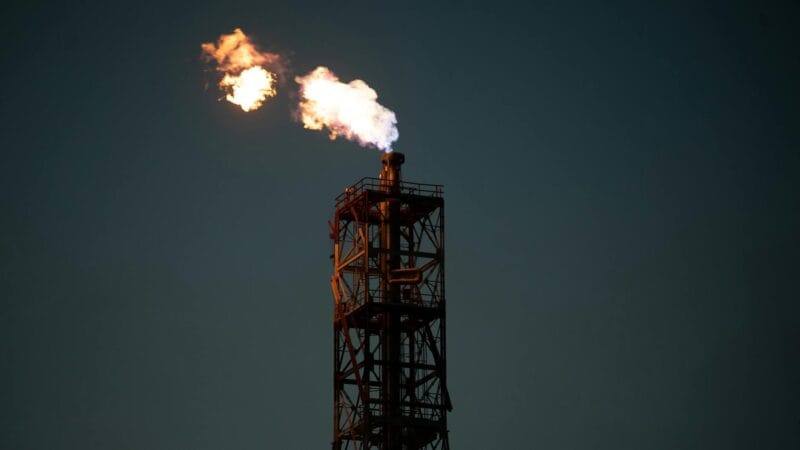
The attack caused fires in at least one processing unit, triggering emergency shutdown procedures across portions of the refinery. Kuwait National Petroleum Company (KNPC), which operates the facility, activated its emergency response protocols immediately. Firefighting teams, supported by Kuwait Fire Service units, worked through the early morning hours to contain the blazes.
Remarkably, no fatalities were reported in the initial aftermath, though several workers sustained injuries — primarily from smoke inhalation and falls during emergency evacuation. This is consistent with the timing of the attack: the predawn hours when staffing levels are at their lowest, suggesting the attackers may have been primarily targeting infrastructure rather than personnel.
This was the third drone attack on Mina Al-Ahmadi since the Iran conflict began. The first occurred on March 8, causing minor damage to a storage tank. The second, on March 21, was more serious, hitting a distillation column and forcing a partial shutdown that took 10 days to fully repair. The April 3 attack appears to be the most sophisticated and damaging of the three, targeting deeper into the facility’s processing core.
The Drones: Origin and Capability
The specific type of drone used in the April 3 attack has not been officially disclosed by Kuwaiti authorities, who have been cautious about releasing technical details that might reveal intelligence capabilities or sources. However, regional defense analysts, speaking to Al Jazeera, have assessed that the drones are likely variants of Iranian-designed one-way attack UAVs — sometimes called “kamikaze drones” or “loitering munitions” — similar to the Shahed-136 or its derivatives that have been proliferated to various Iranian-allied groups across the region.
These drones are relatively simple, inexpensive (estimated at $20,000-50,000 per unit), and can be launched from improvised sites with minimal infrastructure. They navigate using a combination of GPS waypoints and inertial guidance, flying at low altitudes to avoid radar detection. Their simplicity is their strength — they are essentially flying bombs, difficult to detect, cheap enough to use in swarms, and capable of carrying warheads sufficient to damage industrial infrastructure.
The launch site for the April 3 attack has not been publicly identified. Previous attacks on Gulf infrastructure have been launched from multiple locations, including southern Iraq (where Iranian-aligned militias maintain significant presence), Yemen (where Houthi forces possess Iranian-supplied drone technology), and potentially from vessels in the Persian Gulf itself. The flight path and timing of the attack are subjects of intense intelligence analysis.
Mina Al-Ahmadi: Why This Refinery Matters
Kuwait’s Industrial Crown Jewel
The Mina Al-Ahmadi refinery is not merely one of Kuwait’s industrial facilities — it is the beating heart of the nation’s economy. With a processing capacity of approximately 450,000 barrels per day (bpd), it is Kuwait’s largest refinery and one of the largest in the entire Middle East. The facility processes a substantial portion of Kuwait’s crude oil production, converting it into refined products including gasoline, diesel, jet fuel, and petrochemical feedstocks for both domestic consumption and export.
The refinery’s strategic importance extends beyond its processing capacity. Mina Al-Ahmadi is integrated into Kuwait’s broader petroleum infrastructure, connected to production fields, storage facilities, and export terminals that together form the backbone of the Kuwaiti economy. Damage to the refinery ripples through this entire system, affecting not just refining output but potentially upstream production and downstream exports as well.
Located on the coast south of Kuwait City, Mina Al-Ahmadi has been in operation since the 1940s, though it has been extensively modernized and expanded over the decades. The facility has survived wars, political crises, and the catastrophic damage inflicted during the 1990 Iraqi invasion and subsequent liberation. Its resilience is a point of national pride — and the repeated drone attacks are an affront to that pride as much as they are a threat to the economy.
The Numbers: What 450,000 BPD Means
To understand the significance of threats to Mina Al-Ahmadi’s capacity, consider the numbers in context:
- Kuwait’s total refining capacity: Approximately 800,000 bpd across three refineries. Mina Al-Ahmadi represents roughly 56% of this total.
- Kuwait’s crude production: Approximately 2.7 million bpd (OPEC+ quota as of early 2026). The refinery processes about 17% of total production.
- Kuwait’s GDP dependence on oil: Oil revenues account for approximately 90% of government income and 40% of GDP. Any disruption to production or refining capacity has immediate fiscal consequences.
- Global context: 450,000 bpd represents roughly 0.45% of global oil demand (approximately 103 million bpd). While small in percentage terms, in a market already strained by conflict-related disruptions, even marginal losses can move prices.
The Escalation Pattern: From Nuisance to Serious Threat
Attack 1 (March 8): The Warning Shot
The first attack on Mina Al-Ahmadi was relatively minor — a single drone struck a peripheral storage tank, causing a small fire that was quickly contained. Damage was minimal and production impact was negligible. At the time, Kuwaiti officials downplayed the incident, characterizing it as an isolated event and assuring markets that the facility was fully operational.
In retrospect, the first attack was a proof of concept — a demonstration that drones could reach Mina Al-Ahmadi and strike with reasonable accuracy. It was, in military terms, a reconnaissance by fire.
Attack 2 (March 21): The Escalation
The second attack was significantly more serious. Multiple drones targeted the refinery, with at least one striking a distillation column — a critical processing component that is far more difficult and time-consuming to repair than a storage tank. The hit forced a partial shutdown of the facility, reducing output by an estimated 120,000 bpd for 10 days while repairs were completed.
The March 21 attack demonstrated two concerning developments: first, the attackers had improved their targeting, hitting more consequential infrastructure; second, they were willing and able to sustain a campaign against the same facility over time. This moved the threat from “nuisance” to “operationally significant.”
Attack 3 (April 3): The Pattern Solidifies
The third attack confirms that Mina Al-Ahmadi is not being targeted opportunistically but systematically. The attackers are conducting a deliberate campaign against Kuwait’s most important industrial facility, with each attack more sophisticated and damaging than the last. The April 3 strike hit processing units that are more central to the refinery’s operations than the targets in previous attacks, suggesting improving intelligence about the facility’s layout and vulnerabilities.
This pattern of escalation — from peripheral targets to core infrastructure, from minor damage to significant operational impact — is deeply concerning for several reasons. It suggests the attackers are learning from each operation, improving their tactics and targeting. It demonstrates sustained operational capability, meaning this is not a group that exhausted its resources in a single strike. And it implies that future attacks are not just possible but likely, and may be even more damaging.
Impact on Kuwait: Economy, Security, and National Psychology
Economic Consequences
The economic impact of the attacks on Mina Al-Ahmadi operates on multiple levels, some immediate and some cumulative:
Direct production losses: Each attack that forces a shutdown or reduction in refinery operations directly reduces Kuwait’s output of refined products. The March 21 attack alone cost an estimated 1.2 million barrels of lost production over the 10-day repair period. The April 3 attack’s impact is still being assessed but is expected to be at least comparable.
Repair costs: Modern refinery equipment is extraordinarily expensive and often custom-manufactured. Damage to distillation columns, catalytic cracking units, or other processing equipment can cost tens or hundreds of millions of dollars to repair, with lead times for replacement components measured in months. The cumulative repair bill from three attacks is estimated at $200-400 million and growing.
Insurance and financing: The repeated attacks are affecting the insurance landscape for Kuwaiti energy infrastructure. War risk premiums have increased dramatically, and some insurers are reportedly reconsidering coverage terms. This affects not just Mina Al-Ahmadi but Kuwait’s entire petroleum sector and, by extension, the country’s ability to finance maintenance and expansion of its energy infrastructure.
Investor confidence: Kuwait has been actively pursuing economic diversification through its Vision 2035 strategy, seeking to attract foreign investment in non-oil sectors. The visible vulnerability of the country’s core infrastructure to drone attacks undermines the narrative of stability and security that is essential to attracting international investment.
The price paradox: Ironically, the attacks have contributed to higher global oil prices — Brent crude has been trading above $105/barrel, well above pre-conflict levels. For Kuwait, which earns the vast majority of its revenue from oil exports, higher prices partially offset lost production volume. But this silver lining is thin: the long-term damage to infrastructure, reputation, and investor confidence far outweighs the short-term price benefit.
Security Implications
The repeated successful attacks on Mina Al-Ahmadi expose significant gaps in Kuwait’s air defense posture against the specific threat of low-cost, low-altitude drone attacks. This is not unique to Kuwait — drone defense is a challenge that has confounded military planners worldwide, as demonstrated by the 2019 attacks on Saudi Arabia’s Abqaiq facility, the use of drones in the Nagorno-Karabakh conflict, and their extensive deployment in the Russia-Ukraine war.
Kuwait has responded to the attacks by deploying additional air defense assets around its critical energy infrastructure, including Patriot missile batteries for higher-altitude threats and short-range counter-drone systems for the low-altitude attack profiles used by one-way attack UAVs. However, the fundamental challenge remains: defending a large industrial complex against small, low-flying, GPS-guided drones that approach from unpredictable directions is extraordinarily difficult with current technology.
The cost asymmetry is particularly daunting. A Patriot missile costs approximately $3-4 million per round. The drones it defends against cost $20,000-50,000 each. Using a $4 million missile to shoot down a $30,000 drone is economically unsustainable, which is why militaries worldwide are racing to develop more cost-effective counter-drone technologies including directed energy weapons, electronic warfare systems, and purpose-built counter-UAS missiles.
Kuwait has also increased its intelligence coordination with US military forces and other Gulf Cooperation Council (GCC) partners to improve early warning of incoming drone threats. The US military’s extensive ISR (intelligence, surveillance, and reconnaissance) network in the Gulf region provides some capability to detect drone launches, but the small size and low flight profiles of attack drones make detection challenging even for sophisticated sensor systems.
National Psychology and Public Resilience
For Kuwaitis, the attacks on Mina Al-Ahmadi carry emotional weight that transcends their economic or military significance. Kuwait’s experience of the 1990 Iraqi invasion — the occupation, the oil well fires, the liberation — is not ancient history but living memory for the majority of the adult population. The sight of fires burning at a national oil facility triggers deep collective trauma and reinforces a sense of vulnerability that Kuwait has spent three decades trying to overcome.
Public reaction to the attacks has been a mixture of anger, anxiety, and determination. There is anger at the attackers, whoever they may be. There is anxiety about what comes next and whether the country’s defenses are adequate. And there is a characteristically Kuwaiti determination to endure, to rebuild, and to refuse to be intimidated — a resilience forged in the fires of 1990-91.
The Kuwaiti government has sought to balance transparency about the attacks with reassurance about the country’s ability to manage the threat. Official statements have acknowledged the incidents while emphasizing the rapid response of emergency services, the effectiveness of air defense systems in intercepting some drones, and the ongoing efforts to enhance protective measures.
The Broader Energy Security Picture
Gulf Infrastructure Under Threat
The attacks on Mina Al-Ahmadi are not isolated incidents but part of a broader pattern of threats to Gulf energy infrastructure that has accelerated since the Iran conflict began. Saudi Arabia’s Eastern Province facilities, UAE port infrastructure, and Bahraini installations have all faced increased threat levels, though not all have been attacked.
The vulnerability of Gulf energy infrastructure to drone and missile attacks has been a known concern since the September 2019 attacks on Saudi Aramco’s Abqaiq processing facility and Khurais oil field, which temporarily knocked out approximately 5.7 million bpd of Saudi production — roughly 5% of global supply at the time. Those attacks, attributed to Iran by the US and Saudi Arabia (Iran denied involvement), demonstrated that even the most heavily defended energy facilities in the Gulf were vulnerable to precision strikes by relatively low-cost weapons.
The current conflict has amplified this vulnerability exponentially. Iranian-aligned forces possess a significant inventory of drones and missiles capable of reaching Gulf energy targets, and the ongoing war provides both motivation and cover for attacks. The result is an unprecedented threat environment for the energy infrastructure that supplies a substantial portion of global oil and gas.
Global Oil Market Impact
The attacks on Mina Al-Ahmadi have contributed to sustained elevation of global oil prices, though their impact must be understood in the context of the broader market disruption caused by the Iran conflict. As of early April 2026:
- Brent crude: Trading above $105/barrel, approximately 35-40% above pre-conflict levels.
- WTI crude: Trading above $100/barrel.
- Risk premium: Analysts estimate that the conflict-related risk premium in oil prices is approximately $20-30/barrel, reflecting both actual supply disruptions and the fear of further escalation.
- Strait of Hormuz: The partial disruption of shipping through the Strait of Hormuz — through which approximately 20% of global oil trade passes — remains the single largest factor in elevated prices.
Each attack on Mina Al-Ahmadi has triggered a brief price spike of $2-5/barrel as markets react to the news, followed by a partial retreat as the immediate operational impact is assessed. However, the cumulative effect of repeated attacks is more significant than any individual spike: it adds a persistent uncertainty premium to prices and reinforces the market’s assessment that Gulf energy infrastructure faces sustained risk.
According to analysis by The Wall Street Journal, the repeated targeting of Kuwaiti infrastructure has also complicated OPEC+ production management. Kuwait, as an OPEC+ member, has production quotas that it may struggle to meet if refinery damage persists, potentially requiring the organization to adjust its output management framework to account for conflict-related production losses.
Who Is Responsible? Attribution and Accountability
The Attribution Challenge
No group has formally and credibly claimed responsibility for all three attacks on Mina Al-Ahmadi, and the question of attribution is both technically complex and politically sensitive. The drones used in the attacks are derived from Iranian designs, but variants of these drones have been proliferated to numerous groups across the region, making it difficult to determine the specific launching entity based on technology alone.
Intelligence assessments, shared among Gulf Cooperation Council members and their Western allies, point to Iranian-aligned militia groups as the most likely perpetrators. The specific group or groups involved may include:
- Iraqi militias: Iranian-aligned Popular Mobilization Forces (PMF) factions in southern Iraq, particularly Kata’ib Hezbollah and Harakat Hezbollah al-Nujaba, possess drone capabilities and have the geographic proximity to launch attacks against Kuwait.
- Houthi forces in Yemen: The Ansar Allah (Houthi) movement has demonstrated long-range drone attack capabilities, having targeted Saudi infrastructure repeatedly since 2019. However, the distance from Yemen to Kuwait makes this origin somewhat less likely for the specific attacks on Mina Al-Ahmadi.
- Direct Iranian operations: While less likely due to the political risks of direct attribution, the possibility that Iranian military or intelligence assets directly conducted or closely directed the attacks cannot be excluded.
Iran’s Position
Iran has not commented directly on the attacks against Mina Al-Ahmadi. This silence is characteristic of Iran’s approach to regional operations conducted through allied groups — maintaining what intelligence analysts call “plausible deniability” by neither claiming responsibility nor explicitly denying involvement. This ambiguity serves Iran’s strategic interests: the attacks pressure Gulf states without providing a clear casus belli for retaliation against Iran directly.
From Iran’s strategic perspective, attacks on Gulf energy infrastructure serve multiple purposes. They demonstrate Iran’s ability to impose costs on countries that support or facilitate the US military campaign. They create economic pressure that may eventually lead Gulf states to reconsider their positions. They complicate the US military’s operational environment by forcing defensive resource allocation. And they remind the world that a war against Iran affects not just Iran but the entire region’s stability and energy security.
Kuwait’s Response: Diplomacy, Defense, and Determination
Diplomatic Efforts
Kuwait has pursued a diplomatic response to the attacks that reflects its traditional role as the Gulf’s foremost mediator and its understandable desire to avoid being drawn deeper into the conflict. The Emir has engaged in direct communication with Iranian leadership through established back-channel mechanisms, conveying Kuwait’s position that attacks on Kuwaiti territory are unacceptable regardless of their origin and that Kuwait’s neutral posture in the conflict should be respected.
Simultaneously, Kuwait has engaged with the United States and other Western partners to strengthen defensive cooperation while carefully avoiding any steps that could be characterized as joining the US military campaign against Iran. This is a delicate balancing act: Kuwait needs American military technology and intelligence to defend itself, but it does not want to be seen as an American ally in the war against Iran, which would potentially invite even more aggressive targeting.
Within the GCC framework, Kuwait has pushed for a collective statement condemning attacks on Gulf energy infrastructure and calling for international protection of these facilities. However, the divergent positions of GCC members on the Iran conflict — ranging from the UAE’s quiet support for US operations to Qatar’s maintained diplomatic ties with Tehran — have complicated consensus.
Enhanced Defense Measures
Since the first attack in March, Kuwait has significantly enhanced the defensive posture around its critical energy infrastructure:
- Additional Patriot batteries: Kuwait has activated reserve Patriot missile batteries and repositioned existing ones to provide layered coverage over Mina Al-Ahmadi and other key facilities.
- Counter-drone systems: Short-range counter-UAS (unmanned aircraft systems) technologies have been deployed, including electronic warfare systems capable of jamming GPS signals (which the drones rely on for navigation) and dedicated counter-drone interceptor missiles.
- Radar upgrades: Low-altitude radar coverage has been enhanced to improve detection of small, slow-flying drones that conventional air defense radars are not optimized to detect.
- Physical hardening: Critical refinery components are being protected with blast walls, reinforced enclosures, and fire suppression systems designed to limit the damage from drone strikes.
- Operational security: Refinery operations have been modified to reduce the number of personnel in exposed areas during high-threat periods, and emergency response drills have been intensified.
The Resilience of Kuwait’s Oil Workers
Behind the statistics and strategic analysis are the thousands of Kuwaiti and expatriate workers who report to Mina Al-Ahmadi every day, knowing that their workplace has been attacked three times in five weeks and may be attacked again. Their continued dedication to keeping the refinery operational — repairing damage, maintaining safety standards, and processing the crude oil that sustains Kuwait’s economy — is a form of courage that deserves recognition.
These workers are not soldiers. They did not sign up for a war. They are engineers, technicians, operators, and maintenance workers whose skill and dedication keep one of the world’s most important industrial facilities running. The fact that they continue to show up, day after day, in the face of a sustained drone campaign is a testament to their professionalism and to Kuwait’s national resilience.
International Law and the Attacks on Kuwait
The Legal Framework
The attacks on Mina Al-Ahmadi raise significant questions under international law. Kuwait is not a party to the US-Iran conflict and has explicitly maintained its neutrality. Under international humanitarian law, attacks on the territory or infrastructure of a neutral state constitute a violation of that neutrality and are prohibited.
Furthermore, even if one were to argue that Mina Al-Ahmadi is a legitimate military target (which it is not — it is a civilian industrial facility), the attacks would still need to satisfy the principles of distinction, proportionality, and precaution that govern the conduct of hostilities under the Geneva Conventions and their Additional Protocols.
The deliberate targeting of civilian energy infrastructure in a neutral country violates multiple provisions of international law, including: the prohibition on attacks against civilian objects (Additional Protocol I, Article 52); the prohibition on attacks designed to cause excessive damage to the natural environment (Additional Protocol I, Article 55); and the general prohibition on the use of force against the territorial integrity of states (UN Charter, Article 2(4)).
The Accountability Gap
The challenge, as with many violations of international law in the Middle East, is enforcement. The deliberate ambiguity surrounding the attribution of the attacks — the use of proxy forces, the absence of formal claims of responsibility — creates an accountability gap that the perpetrators exploit. Without clear attribution, diplomatic and legal responses are complicated, and the attacking parties face minimal consequences for their actions.
This accountability gap is not merely a legal abstraction — it has real consequences for Kuwait and for the broader international order. If attacks on neutral states’ civilian infrastructure can be conducted with impunity through proxy forces, the foundations of both the laws of armed conflict and the international energy security framework are undermined.
Standing With Kuwait: A Call for International Solidarity
Kuwait deserves better than this. A country that has consistently advocated for peaceful resolution of regional disputes, that has provided humanitarian aid to conflict-affected populations across the Middle East, and that has maintained diplomatic relationships across the region’s deepest divides should not be subjected to repeated military attacks on its sovereign territory and critical infrastructure.
The international community’s response to the attacks on Mina Al-Ahmadi has been inadequate. Statements of concern are not enough. Kuwait needs concrete international support in the form of enhanced defense cooperation, intelligence sharing, diplomatic pressure on the perpetrators, and a clear message from the international community that attacks on neutral states’ civilian infrastructure will not be tolerated.
The United Nations Security Council, which authorized the liberation of Kuwait in 1990, has a particular responsibility to address attacks on Kuwaiti sovereignty in 2026. The fact that geopolitical divisions on the Council — particularly between Western members supporting the US campaign and Russia and China opposing it — have prevented meaningful action is a failure of the international system that Kuwait’s defenders warned about when the conflict began.
What Comes Next: Outlook and Scenarios
The Likelihood of Further Attacks
Based on the established pattern — three attacks of increasing sophistication and damage over five weeks — further attacks on Mina Al-Ahmadi and potentially other Kuwaiti energy facilities should be considered highly probable. The attackers have demonstrated sustained capability, improving tactics, and clear strategic motivation to continue.
The question is not whether there will be a fourth attack but when, and how damaging it will be. Kuwait’s enhanced defensive measures may succeed in intercepting more drones, reducing the damage from future attacks. But the fundamental asymmetry — cheap, numerous drones versus expensive, limited defenses — favors the attacker in a sustained campaign.
Scenarios for Escalation
Several escalation scenarios are worth considering:
Expanded targeting: If attacks continue to successfully damage Mina Al-Ahmadi, the attackers may expand their target set to include other Kuwaiti energy facilities — the Mina Abdullah refinery, the Al-Zour refinery (Kuwait’s newest), or export terminal infrastructure at Mina Al-Ahmadi port.
Mass attack: Rather than incremental escalation, the attackers could attempt a mass drone attack using dozens of drones simultaneously, attempting to overwhelm Kuwait’s air defenses through saturation.
Combined arms: Drones could be combined with ballistic or cruise missiles for a more devastating combined attack, though this would represent a significant escalation that would likely trigger international response.
Diplomatic Resolution
The attacks on Kuwait’s infrastructure add urgency to diplomatic efforts to resolve or de-escalate the broader US-Iran conflict. Kuwait itself is actively engaged in back-channel diplomacy, and the country’s suffering provides compelling evidence for the argument that the war’s costs extend far beyond the primary belligerents.
If a ceasefire or diplomatic framework can be established, the attacks on Kuwait would presumably cease as well. Conversely, if the conflict escalates further, Kuwait’s energy infrastructure — and by extension the global oil market — faces increasing risk.
The Human Story Behind the Headlines
In the aftermath of each attack on Mina Al-Ahmadi, the international media coverage focuses — understandably — on oil prices, production numbers, and strategic implications. These are important. But they obscure the human reality of what it means for a community when the facility that employs thousands of people and sustains the national economy is repeatedly attacked.
The workers at Mina Al-Ahmadi live in nearby residential communities. Their families hear the explosions. Their children go to schools that practice drone attack drills. Their lives are disrupted not just by the attacks themselves but by the constant anxiety of wondering when the next one will come.
Kuwait is a small country with a close-knit society. When Mina Al-Ahmadi is hit, the entire nation feels it — not as an abstraction about oil prices or energy security, but as an attack on their home, their livelihood, and their sense of safety. The resilience they have shown is remarkable, but resilience should not be confused with acceptance. Kuwait did not choose this war, and it should not have to bear its costs.
Conclusion: The Unacceptable Targeting of a Neutral Nation
The third drone attack on the Mina Al-Ahmadi refinery represents an escalation that demands international attention and action. Kuwait — a neutral nation that has sought peace and mediation throughout this conflict — is being systematically targeted in a campaign that threatens its economic lifeline, endangers its citizens, and violates fundamental principles of international law.
The 450,000 barrels per day that Mina Al-Ahmadi processes are not just economic statistics. They represent Kuwait’s ability to fund its schools, hospitals, infrastructure, and future. They represent the livelihoods of thousands of workers and their families. They represent a sovereign nation’s right to conduct its economic affairs without being subjected to military attack.
The world cannot afford to look away. Not because of oil prices — though those matter. Not because of strategic calculations — though those are important. But because a principle is at stake: that neutral countries should not be targeted in other nations’ wars, and that civilian infrastructure should be protected, not destroyed.
Kuwait has earned the world’s solidarity. The question is whether the world will provide it.