Oil at $111 — OPEC Meets Today Amid the Most Dangerous Energy Crisis in Decades
On April 5, 2026, OPEC+ oil ministers sit down for a meeting unlike any since the 1973 crisis. West Texas Intermediate (WTI) crude trades at $111.54 per barrel — up $11.90, a 12% surge in a single week. Brent crude sits at approximately $109 per barrel, having touched $126 at the peak of the Hormuz crisis.
The circumstances surrounding this meeting are extraordinary by any standard: the Strait of Hormuz has been closed since March 27, disrupting 20% of global oil supply; a war with Iran rages in its fifth week; UAE fuel prices have spiked by up to 72%; and global inflation threatens a return to levels not seen since the 1980s.
The decision made today regarding May production levels will directly affect the fuel bill of every person reading this article. Let us analyze every dimension of this crisis.

Oil Prices Today — The Numbers
| Benchmark | Price ($/barrel) | Weekly Change | Monthly Change |
|---|---|---|---|
| WTI Crude | $111.54 | +$11.90 (+12%) | +$26.40 (+31%) |
| Brent Crude | ~$109.00 | +$10.50 (+10.7%) | +$24.00 (+28%) |
| Peak (Hormuz crisis) | $126.00 (Brent) | — | — |
| Pre-war (March 27) | ~$85.00 | — | — |
Important note: The WTI-Brent spread has inverted. Normally Brent trades at a premium to WTI. Currently, WTI is approximately $2.50 higher — reflecting extraordinary pressure on US market pricing specifically. This inversion is a marker of severe market dislocation.
How We Got From $85 to $111 in 9 Days
| Date | Event | Oil Price |
|---|---|---|
| March 27 | Iran war begins | ~$85 |
| March 28 | Strait of Hormuz closes | $95 |
| March 30 | Full closure confirmed | $105 |
| April 1 | Peak panic — Brent touches $126 | $118 |
| April 2-3 | Alternative pipelines activated | $108-112 |
| April 5 | OPEC meeting | $111.54 |
The $85-to-$126 move in just five days was one of the fastest surges in oil market history. The partial retreat to $111 came only after alternative pipeline routes were activated, but the market remains under immense pressure.
Today’s OPEC Meeting — What’s on the Agenda
This is not a routine meeting. OPEC+ had previously agreed to increase production by 206,000 barrels per day starting in April. The question on the table today: what about May?
The Positions Inside OPEC+
Camp 1 — Increase production (led by UAE and Iraq):
These nations want to pump more for several reasons: compensate for Hormuz-related losses, calm global markets, and capitalize on elevated prices to maximize revenue. The UAE specifically has significant spare production capacity it wants to deploy.
Camp 2 — Hold steady (led by Saudi Arabia and Russia):
Saudi Arabia historically favors price stability over maximum output. Russia benefits from high prices to fund expenditures amid Western sanctions. Their argument: the market is too volatile and any hasty decision could backfire.
Camp 3 — Cut production (minority view):
Some smaller members see oil above $100 as a golden opportunity to maximize revenue and fund development projects. This position is unlikely to prevail given the enormous international pressure.
Factors Driving the Decision
1. The Hormuz closure: With 20% of global supply disrupted, any further supply reduction would be catastrophic. OPEC understands that triggering a full-scale global energy crisis would harm all parties long-term.
2. US pressure: Washington is pressing hard on Gulf allies to increase production and lower prices. The US relationship remains a factor no Gulf state can ignore.
3. The April 6 deadline: Tomorrow brings a critical deadline related to Iran crisis negotiations. OPEC’s decision will be influenced by expectations about what happens in 24 hours.
4. Recession risk: Oil above $100 for an extended period threatens to push the global economy into recession. A global recession would destroy oil demand — which is in nobody’s interest.
Three Scenarios for the May Production Decision
Scenario 1: Significant Production Increase (30% probability)
| Detail | Value |
|---|---|
| Increase size | 400,000-500,000 barrels/day |
| Price impact | Drop $8-15 (to $96-103/barrel) |
| Timeline | Effective May 1 |
| Winner | Consumers, importing nations |
| Loser | High-cost producers |
This scenario requires broad consensus within OPEC+ and positive signals from the April 6 negotiations. Possible but not the most likely outcome.
Scenario 2: Modest Increase with Monthly Review (50% probability)
| Detail | Value |
|---|---|
| Increase size | 200,000-250,000 barrels/day |
| Price impact | Stabilize at $105-115/barrel |
| Timeline | Effective May 1 with weekly review |
| Winner | Producers (high prices + more volume) |
| Loser | Consumers (elevated prices persist) |
This is the most probable outcome. OPEC will attempt to balance maintaining high prices while avoiding a full-blown global energy crisis. A modest increase with a flexible review mechanism is the classic OPEC compromise.
Scenario 3: No Change or Production Cut (20% probability)
| Detail | Value |
|---|---|
| Change size | 0 or -100,000 barrels/day |
| Price impact | Spike to $120-135/barrel |
| Timeline | Immediate |
| Winner | Producers (short-term) |
| Loser | Everyone (long-term recession risk) |
This scenario would shock markets and could push oil above $130 rapidly. But it carries enormous risk for OPEC itself — a global energy crisis would accelerate the transition to renewable energy and destroy long-term demand.
The Hormuz Closure — The Variable That Changes Everything
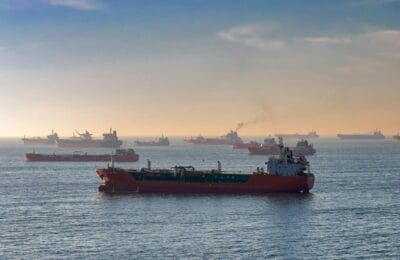
The Strait of Hormuz is not just a shipping lane — it is the lifeline of the global oil market. Before its closure on March 27, the strait carried:
– 20-21 million barrels per day (approximately 20% of global consumption)
– The majority of oil exports from Saudi Arabia, Iraq, Kuwait, UAE, Qatar, and Iran
– 30% of global LNG trade
The Alternatives — And Why They’re Not Enough
Since the Hormuz closure, alternative pipelines have been activated, but they cover only a fraction of the shortfall:
| Pipeline | Capacity (million bpd) | Route | Status |
|---|---|---|---|
| East-West Pipeline (Saudi) | 5.0 | Abqaiq to Yanbu on Red Sea | Running at maximum |
| Habshan-Fujairah (UAE) | 1.5 | Abu Dhabi to Fujairah on Gulf of Oman | Running at maximum |
| Iraq-Turkey Pipeline | 0.5 | Kirkuk to Ceyhan, Turkey | Limited capacity |
| Total alternative capacity | ~7.0 | — | — |
| Remaining shortfall | ~13-14 | — | Uncovered |
The math is unforgiving: alternatives cover less than one-third of what Hormuz carried. The remaining shortfall of approximately 13-14 million barrels per day has no immediate solution.
Read our detailed analysis: Strait of Hormuz Closure — Everything You Need to Know
What If Bab el-Mandeb Also Closes?
This is the nightmare scenario. The Bab el-Mandeb strait connects the Red Sea to the Gulf of Aden and is the primary alternative route for Saudi Arabia’s East-West Pipeline exports. If it too closes — whether through Houthi escalation or war spillover — then:
– Virtually all Gulf oil exports would be landlocked
– Oil could spike to $150-200 per barrel
– A genuine global energy crisis — not just high prices, but physical shortages
The probability is low (10-15%) but its mere possibility adds a significant “risk premium” to current oil prices.
UAE Fuel Price Shock — A Preview of What May Spread Regionally
The UAE — typically a low-fuel-cost environment — has experienced an unprecedented price shock:
| Fuel Type | Previous Price (AED/liter) | Current Price (AED/liter) | Increase |
|---|---|---|---|
| Super 98 | 2.59 | 3.39 | +31% |
| Special 95 | 2.48 | 3.19 | +29% |
| E-Plus 91 | 2.37 | 3.05 | +29% |
| Diesel | 1.97 | 3.39 | +72% |
The 72% diesel spike is the most consequential because diesel powers commercial transport and shipping. This means the cost of every good transported by truck will increase — from food to construction materials to consumer electronics.
Impact Calculator: UAE Household Budget
Here is the real-world impact on a typical UAE household with two vehicles:
| Item | Last Month (AED) | This Month (AED) | Difference |
|---|---|---|---|
| Vehicle 1 (SUV, 80 liters/week) | 828 | 1,084 | +256 |
| Vehicle 2 (sedan, 50 liters/week) | 496 | 638 | +142 |
| Total monthly fuel | 1,324 | 1,722 | +398 |
| Indirect increases (food, transport) | — | ~200-400 | +300 (estimated) |
| Total impact | — | — | +600-700 AED/month |
The average UAE household is paying approximately 600-700 AED ($163-190) more per month due to the oil crisis. And this is in an oil-producing country — imagine the impact on net importers.
Winners and Losers
High oil prices do not affect everyone equally. The winners and losers are starkly defined.
Winners
1. Gulf oil exporters (with caveats):
Saudi Arabia, UAE, Kuwait, and Qatar theoretically benefit from $111 oil. But “with caveats” is critical: the Hormuz closure severely limits their ability to actually export oil. What good is $111/barrel if you cannot ship the barrels? Saudi Arabia is exporting via the East-West Pipeline at limited capacity. The UAE uses the Fujairah pipeline. But volumes are far below normal.
2. United States (shale producers):
$111/barrel means enormous profits for US shale producers whose production costs range from $35-65/barrel — yielding margins above 70% at current prices.
3. Russia:
Despite sanctions, Russia benefits from elevated prices. Its oil sells at a discount but still generates substantial revenue at these levels.
4. Norway, Canada, and Brazil:
Major non-OPEC producers benefiting from high prices with no production restraint obligations.
Losers
1. Egypt:
Egypt imports a significant portion of its oil needs. Every $10 increase in barrel price costs the Egyptian budget billions of additional pounds. This increases pressure on the Egyptian pound and fuels inflation. Egyptian citizens feel the impact directly through higher energy, transport, and food prices.
2. India:
The world’s third-largest oil consumer imports over 85% of its needs. The oil crisis threatens economic stability and the rupee.
3. Japan and South Korea:
Both depend almost entirely on oil imported through Hormuz. The strait’s closure represents an existential threat to their economies.
4. Europe:
Still recovering from the energy crisis that followed the Ukraine war. Another oil shock is the last thing European economies need.
5. Airlines:
Fuel represents 25-35% of operating costs. Every additional dollar in barrel price translates directly to higher ticket prices.
Read our report: Middle East Airlines — How They’re Handling the Fuel Crisis
Global Inflation Risk — Oil Above $100 for Extended Periods
Oil is not just fuel — it is a cost component in virtually everything. Here is how $111 oil radiates through the global economy:
The Transmission Chain
Level 1 — Transport: The cost of moving goods by truck and ship rises immediately. This affects the price of every product that is transported (which is everything).
Level 2 — Manufacturing: Petrochemicals derived from oil are inputs for plastics, fertilizers, pharmaceuticals, and textiles. Higher raw material costs mean higher finished product prices.
Level 3 — Food: Oil-derived fertilizers become more expensive, raising farming costs and food prices. Agricultural transport also becomes costlier.
Level 4 — Central banks: Elevated inflation forces central banks to raise interest rates. Higher rates mean more expensive loans, slower real estate markets, and reduced economic growth.
Level 5 — Recession: If oil remains above $100 for more than six months, the probability of global recession rises significantly. This has followed every major oil crisis in history.
Expected Inflation Numbers
| Region | Current Inflation | Expected (if oil stays above $100) |
|---|---|---|
| United States | ~3.5% | 5-6% |
| Eurozone | ~2.8% | 4-5% |
| Egypt | ~25% | 30-35% |
| India | ~5.5% | 7-9% |
| Turkey | ~40% | 45-55% |
Egypt and Turkey are most vulnerable because they already suffer from elevated inflation. Adding an oil shock on top could be devastating for citizens’ purchasing power.
Oil Price Forecast — From $85 to $200
The range of forecasts is extraordinarily wide because most variables are geopolitical and inherently unpredictable.
Best Case: $85-95/barrel
Requirements: Iran ceasefire, Hormuz reopens, OPEC increases production.
Probability: 15-20%
Timeline: 2-4 weeks post-agreement
Even in this scenario, prices would not immediately return to pre-war levels. The market needs time to rebuild inventories and confidence.
Base Case: $100-120/barrel
Requirements: Status quo continues — Hormuz closed, war ongoing, alternative pipelines operating.
Probability: 50%
Timeline: Coming months
This is the most likely scenario. Oil oscillates between $100 and $120 based on daily military and diplomatic developments.
Bearish Case: $130-150/barrel
Requirements: Major military escalation, strikes on Saudi or UAE oil facilities.
Probability: 20-25%
Timeline: Immediate upon escalation
Catastrophic Case: $150-200/barrel
Requirements: Bab el-Mandeb closes alongside Hormuz, regional war spreads.
Probability: 5-10%
Timeline: Immediate
$200 oil would be catastrophic for the global economy. Severe recession, financial market collapse, and social crises in energy-importing developing nations.
The April 6 Deadline — Where Diplomacy Meets Price
Tomorrow, April 6, brings a critical deadline connected to Iran crisis negotiations. The relationship between tomorrow’s outcome and oil prices is direct and immediate:
If there is diplomatic progress: Oil could retreat 5-10% within hours. Markets would begin pricing in the probability of Hormuz reopening.
If negotiations fail: Oil could surge 5-8% immediately. The market would price in weeks or months of continued closure.
If the deadline is extended: Limited impact. Oil stays in the $108-115 range awaiting the next signal.
Today’s OPEC decision and tomorrow’s deadline are tightly linked. OPEC will most likely make a “conditional” decision today — a modest increase with a rapid review mechanism — pending what happens tomorrow.
Read: Iran War Timeline — Latest Developments
Investment Implications — How to Navigate $100+ Oil
For investors in the region, here is how to approach the current environment:
Energy Stocks
Oil companies are the clearest winners. Saudi Aramco, ADNOC, and major international oil companies are all generating exceptional profits at these price levels. But remember: these profits are tied to current prices and are not guaranteed to persist if a peace deal materializes.
Oil ETFs
For investors who prefer not to pick individual stocks, oil ETFs like USO and BNO provide direct exposure to oil prices. However, these instruments are complex and suffer from “contango” roll costs over the long term that can significantly erode returns.
Pipeline Companies
Energy infrastructure companies — pipelines, storage, and transport — benefit in virtually all scenarios. Whether oil goes up or down, the world needs to move it. The Hormuz crisis has proven the critical importance of alternative infrastructure, and this sector is likely to see massive investment in the years ahead.
Gold as a Hedge
As detailed in our gold analysis, there is a positive correlation between oil and gold prices. Higher oil = higher inflation = higher gold. If you own gold, you are partially hedged against rising energy costs.
Read: Gold at $150/gram — Why Egyptian Investors Are Making the Rational Choice
What to Avoid
1. Short-term speculation: The oil market is extremely volatile right now. Moves of 5-10% in a single day are possible. Leveraged speculation can be devastating.
2. Airline stocks: Until the picture clarifies, airlines face enormous pressure from fuel costs.
3. Single-direction bets: Nobody knows what happens tomorrow. Building a balanced portfolio is superior to betting on one scenario.
The Egypt Dimension — How Egyptian Citizens Are Affected
As a net oil importer, Egypt faces direct and compounding challenges:
The National Budget
Egypt’s budget is built on an assumed oil price far below $111. Every $10 above the assumed price costs the budget approximately 20-25 billion EGP annually. This means either a wider deficit or subsidy cuts.
Domestic Fuel Prices
Egypt partially subsidizes fuel prices. But if oil remains above $100, the government will be forced to raise prices to reduce the subsidy burden. History suggests increases will come in phases to avoid shock.
Inflation
Every increase in energy costs cascades through transport, food, and manufacturing prices. With inflation already at 25%, any additional pressure is acutely painful for Egyptian households.
The Egyptian Pound
A higher oil import bill means greater demand for foreign currency, which pressures the exchange rate. This is part of why the pound weakened 8.29% last month.
The Long-Term Energy Landscape — What Comes After This Crisis
Regardless of how the current crisis resolves, there are lasting consequences:
1. Accelerated Pipeline Investment
The Hormuz crisis exposed severe fragility in oil transport infrastructure. The coming years will see massive investment in alternative pipeline routes — positive for the region and the world.
2. Faster Renewable Energy Transition
Every oil crisis pushes the world toward energy alternatives. This time will be no different. Importing nations will increase investment in solar, wind, and nuclear energy.
3. Rethinking Maritime Security
The Hormuz closure proved that a single maritime chokepoint can threaten global stability. There will be fundamental restructuring of maritime security arrangements in the region.
4. Gulf Energy Diversification
Even Gulf producers have recognized the risk of overdependence on oil exported through Hormuz. Renewable energy projects in Saudi Arabia and the UAE will accelerate significantly.
Oil Prices and Global Food — The Hidden Connection
One of the most dangerous consequences that often gets overlooked is the direct relationship between oil prices and food prices. This connection operates on multiple levels:
Fertilizers: Most agricultural fertilizers are manufactured from oil and gas derivatives. A 31% increase in crude prices in a single month translates to a comparable increase in fertilizer costs within 2-3 months. This raises agricultural production costs globally.
Transport: Moving crops from farms to markets depends on diesel fuel. The 72% diesel increase in the UAE is a preview of what will happen elsewhere. Food transport costs will rise significantly.
Maritime shipping: Egypt and many Middle Eastern nations import large quantities of wheat, corn, and cooking oils. The Hormuz closure and elevated shipping costs mean these imports will cost significantly more.
Impact on Egypt specifically: Egypt is the world’s largest wheat importer. Every increase in shipping and fuel costs directly affects the price of subsidized bread and the government’s subsidy bill.
| Commodity | Expected Increase (if oil stays above $100) |
|---|---|
| Wheat | +15-25% |
| Rice | +10-20% |
| Cooking oils | +20-30% |
| Meat | +10-15% |
| Dairy | +8-12% |
The most vulnerable nations are those that import both food and oil — with Egypt, Jordan, and Lebanon at the top of that list.
Lessons From Previous Oil Crises — History Rhymes
This is not the first time the world has faced a major oil crisis. Examining past episodes reveals what we might expect:
1973 — The Arab Oil Embargo
Following the October 1973 war, Arab oil-producing nations imposed an embargo on countries supporting Israel. Oil surged from $3 to $12 per barrel — a 300% increase. The result: global recession, long fuel queues across America and Europe, and a fundamental reshaping of global energy policy.
Lesson: Oil crises reshape energy policy for decades. The 1973 crisis led to the creation of the International Energy Agency and strategic petroleum reserves.
1979 — The Iranian Revolution
The Iranian Revolution removed 5 million barrels per day from the market. Oil reached $39.50 — a record at the time. Global inflation surged to painful levels and the US Federal Reserve raised rates to 20%.
Lesson: Iran has always been the most consequential variable in oil crises. Today is no exception.
1990 — The Kuwait Invasion
Iraq’s invasion of Kuwait removed 4.3 million barrels per day. Oil jumped from $17 to $41. But the crisis resolved relatively quickly after Kuwait’s liberation.
Lesson: Crises tied to short wars produce sharp but temporary price spikes. The problem is when wars drag on.
2022 — The Ukraine War
Russia’s invasion of Ukraine and subsequent sanctions pushed Brent above $130. Europe suffered an acute energy crisis and was forced to completely restructure its energy sources.
Lesson: Modern wars affect energy markets faster and deeper due to global economic interconnection.
What This Means for 2026
The 2026 crisis combines the worst elements of every previous crisis: Iran involvement (as in 1979), closure of a critical maritime chokepoint (more severe than 1973), and an active war (as in 1990 and 2022). The key difference is that Hormuz is far more important than any previously disrupted route — 20% of global supply versus 5-10% in past crises.
Impact Across Economic Sectors
Oil above $111 affects every economic sector differently:
Transportation and Shipping
Shipping companies face a dual challenge: higher fuel costs and closure of the shortest maritime route (through Hormuz). This means higher costs and longer transit times. Global shipping companies have raised surcharges by 40-60% since the crisis began.
Petrochemicals
The petrochemical industry — one of the Gulf’s most important sectors — faces rising feedstock costs. However, petrochemical product prices have also risen, partially offsetting the increase. Companies like SABIC and Petrochem remain in a reasonable position despite the crisis.
Aviation
Airlines are among the hardest hit. Jet fuel (Jet A-1) is directly correlated with crude oil prices. Airlines that did not hedge their fuel exposure face enormous cost increases. Some carriers have begun canceling unprofitable routes and reducing fleet sizes.
Agriculture
Fertilizers manufactured from oil and gas derivatives have risen 25-40% in price. This means higher agricultural production costs and consequently higher food prices. Countries dependent on food imports — including Egypt — will feel the impact doubly.
Tourism
More expensive airfare and higher transportation costs negatively impact tourism. However, Gulf countries with strong currencies may see higher domestic tourism as residents choose to travel locally rather than internationally.
Strategic Petroleum Reserves — The Last Line of Defense
Major nations maintain strategic oil reserves for use during crises:
| Country | Reserve Size (million barrels) | Sufficient For |
|---|---|---|
| United States (SPR) | ~370 | ~18 days consumption |
| China | ~500 | ~35 days |
| Japan | ~320 | ~140 days imports |
| Europe (combined) | ~400 | ~90 days |
The United States has already begun releasing quantities from its Strategic Petroleum Reserve to calm markets. But this is a temporary measure — reserves are finite and do not solve the fundamental problem of the Hormuz closure.
China, meanwhile, has stated it will only release reserves in the event of actual physical shortages, not merely price increases. This position reflects complex geopolitical calculations.
Practical Tips for Ordinary Consumers — How to Reduce Your Fuel Bill
Given that elevated fuel prices will persist for some time, here are practical steps to reduce your costs:
1. Economical driving: Gradual acceleration rather than aggressive starts saves 10-15% on fuel consumption. Maintain steady speeds on highways and use cruise control.
2. Vehicle maintenance: Properly inflated tires, a clean air filter, and the correct engine oil specification can reduce fuel consumption by 5-10%.
3. Trip consolidation: Instead of three separate trips per day, plan one trip that covers all your needs.
4. Public transportation: Metro and bus systems are significantly cheaper than private driving, especially in major cities.
5. Carpooling: Sharing rides with colleagues or neighbors reduces costs for everyone involved.
6. Remote work: If your job allows it, working from home one or two days per week saves 20-40% of weekly fuel expenses.
Conclusion — Today’s Numbers Will Define Months Ahead
Oil at $111.54 per barrel. Hormuz closed. The Iran war in its fifth week. OPEC meeting today. A diplomatic deadline tomorrow.
Every thread is connected. OPEC’s decision today will affect fuel prices in every country. The outcome of April 6 negotiations will determine whether Hormuz reopens or remains closed. And whether the war continues or ends will decide whether we are heading toward $85 or $200.
For ordinary consumers — whether in Cairo, Dubai, Riyadh, or Amman — the message is clear: recalculate your budget assuming elevated fuel prices for months at minimum. And watch OPEC, Hormuz, and Iran negotiation news closely — because every headline will translate directly into your cost of living.
Related reading: How to Invest $10,000 in the Middle East in 2026
Frequently Asked Questions
What is the oil price today, April 5, 2026?
WTI crude trades at $111.54 per barrel while Brent crude is at approximately $109 per barrel. Prices have surged 12% in one week and 31% in one month due to the Strait of Hormuz closure and the ongoing war with Iran. The peak during this crisis was $126/barrel for Brent, reached on April 1.
What will OPEC discuss at today’s meeting?
The primary agenda item is May 2026 production levels. Options range from a significant increase (400,000-500,000 barrels/day) to calm markets, a modest increase (200,000 barrels/day) with monthly review, or holding current production levels. The most likely outcome is a modest increase with a flexible review mechanism that can be adjusted based on the April 6 deadline results.
Why is US oil (WTI) more expensive than Brent right now?
Normally Brent trades at a premium to WTI. The Hormuz closure disrupted Gulf supply, not US supply, creating non-standard pricing pressure. The spread inversion reflects structural market disruption and may persist as long as Hormuz remains closed. It also reflects increased US domestic demand as buyers seek alternatives to Gulf crude.
Will UAE fuel prices come down soon?
UAE fuel prices are reviewed monthly and are directly tied to international oil prices and the Hormuz situation. If oil retreats to $90-95/barrel, price reductions could come in May. However, if oil remains above $100, current prices or higher are the most likely outcome for the foreseeable future.
How does the oil price affect the Egyptian pound?
Egypt is a net oil importer. Every increase in oil prices raises the import bill in dollars, increasing demand for foreign currency and pressuring the exchange rate. Every $10 increase in barrel price costs Egypt’s budget approximately 20-25 billion EGP annually and contributes to higher inflation, which further erodes the pound’s purchasing power.
Is investing in oil stocks a good idea right now?
Oil companies are generating exceptional profits at $111/barrel. However, risk is elevated: if the crisis resolves suddenly and oil drops 25%, these stocks would be significantly impacted. Pipeline and energy infrastructure companies carry lower risk because they benefit in nearly all scenarios — regardless of price direction, oil still needs to be transported.
What is the worst-case scenario for oil prices?
The closure of the Bab el-Mandeb strait alongside Hormuz would trap virtually all Gulf oil exports. In this scenario, oil could reach $150-200 per barrel, pushing the world toward a severe economic recession. The probability is low (5-10%) but cannot be ruled out given the ongoing conflict and regional instability.
How are OPEC’s decision today and the April 6 deadline connected?
The two events are tightly linked. OPEC knows that tomorrow’s negotiation outcome could fundamentally change the landscape. Their decision today will therefore likely be “flexible” — a modest increase with a rapid review mechanism — allowing adjustments based on what transpires at the April 6 deadline. If negotiations succeed, OPEC can scale back; if they fail, OPEC retains the option to increase further.