Lebanon Currency Collapse 2026: The Full Story of How a Banking Capital Became an Economic Ruin
Lebanon was once known as the “Switzerland of the East.” Beirut served as the region’s financial capital, home to a sophisticated banking sector that attracted deposits from across the Arab world. Lebanese banks held over $170 billion in deposits — more than three times the country’s GDP. The economy, though small, was vibrant, driven by services, tourism, and finance. That era is gone. Destroyed not by a single event, but by a cascading series of catastrophes that have left the Lebanese people trapped in one of the worst economic collapses in modern history.
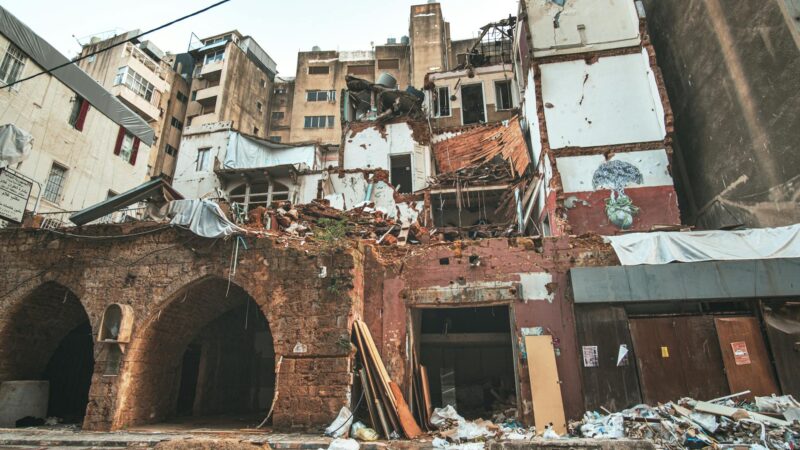
Today, the Lebanese lira has lost over 98% of its value against the US dollar. An Israeli ground invasion that began on March 2, 2026 has added an estimated $11 billion in destruction to a country that was already in freefall. More than 1,300 people have been killed since the ground operation started. Some 1.1 million Lebanese — nearly one-fifth of the population — have been displaced from their homes. The International Organization for Migration warns many may never return.
This is not a story of poor economic management alone. This is a story of a people betrayed by their ruling class and battered by external aggression. In this comprehensive report from The Middle East Insider, we trace the full arc of Lebanon’s currency collapse, from its roots in 2019 to the devastation of April 2026.

Timeline of the Lebanese Lira Collapse: 2019 to 2026
| Period | Exchange Rate (LBP/USD) | Decline | Key Event |
|---|---|---|---|
| Pre-2019 | 1,507.5 | — | Official peg maintained since 1997 |
| October 2019 | 2,000 | -25% | October 17 uprising; banking crisis begins |
| March 2020 | 3,500 | -57% | Eurobond default + COVID-19 pandemic |
| August 2020 | 8,000 | -81% | Beirut port explosion — 2,750 tons ammonium nitrate |
| June 2021 | 15,000 | -90% | Political vacuum; electricity and fuel collapse |
| January 2023 | 47,000 | -96.8% | First official rate adjustment |
| October 2023 | 89,500 | -98.3% | Escalation on southern front begins |
| April 2026 | 89,500+ | -98.3%+ | Israeli ground invasion + $11B in destruction |
What this timeline reveals is a country that never had a moment to recover. Each new crisis arrived before the last had been absorbed. The Lebanese people were never given a chance to rebuild — not after the banking collapse, not after the explosion, not after the political paralysis. And now, not after the invasion.
The Triple Crisis: Financial Collapse + Political Paralysis + New War
Pillar One: The Financial and Banking Collapse
Lebanon’s financial crisis was not an accident. For decades, the country operated on a model that was structurally unsustainable. The central bank, Banque du Liban (BDL), offered exceptionally high interest rates to attract dollar deposits from Lebanese citizens and the diaspora. Commercial banks then lent these deposits back to BDL and to the Lebanese government through bonds. The system worked only as long as new deposits kept flowing in — the classic characteristics of a Ponzi scheme.
When deposit inflows slowed in 2019 due to regional instability and declining confidence, the entire structure collapsed. Banks had lent approximately $75 billion to BDL through so-called “financial engineering” operations and another $17 billion to the government through Eurobonds. When the government defaulted on its Eurobond payments in March 2020 — the first sovereign default in Lebanese history — it became clear that this money could not be recovered.
The consequences for ordinary depositors were devastating. Since October 2019, Lebanese banks have imposed informal capital controls, preventing depositors from accessing their dollar savings. Those who can withdraw receive Lebanese lira at rates far below market value, effectively losing 75-85% of their deposit’s worth with each transaction. An estimated $72 billion in deposits remains effectively frozen — wealth that has been destroyed in all but name.
The scenes that followed became iconic symbols of the crisis: armed citizens storming bank branches, demanding their own money at gunpoint. Dozens of such incidents have occurred since 2022. These were not criminals — they were teachers, parents, cancer patients, people who needed their own savings for treatment or tuition. The fact that such acts drew public sympathy rather than condemnation tells you everything about the depth of institutional betrayal in Lebanon.
Pillar Two: Chronic Political Paralysis
In any economic crisis, government action is critical. Fiscal reform, monetary stabilization, structural adjustment — these require political will and institutional capacity. Lebanon has neither. The country’s confessional political system, which distributes power among religious sects, has produced a ruling class more interested in protecting sectarian patronage networks than in governing.
Lebanon went two full years without a president (October 2022 to January 2024). Caretaker governments with limited mandates cycled through power. The International Monetary Fund laid out a clear roadmap for recovery: restructure the banking sector, pass capital controls legislation, audit BDL, reform the electricity sector. The political elite refused to implement any of it because every reform threatened someone’s patronage network.
President Joseph Aoun, who took office in early 2024, brought some hope of breaking the deadlock. But the renewed Israeli military operations shifted priorities entirely to security and humanitarian response, pushing economic reform further down the agenda. The fundamental problem remains: Lebanon’s political structure is incapable of producing the consensus needed for painful but necessary reforms.
Pillar Three: The 2026 War and $11 Billion in Destruction
The Israeli ground invasion that began on March 2, 2026 transformed Lebanon’s economic crisis into a full-spectrum national catastrophe. The military escalation along the southern border had been building since October 2023, with daily exchanges of fire between Israeli forces and Hezbollah. But the decision to launch a ground operation brought destruction on a scale Lebanon had not seen since the 1982 invasion.
As of April 2026, the confirmed toll includes:
- Over 1,300 killed since the ground operation began
- Thousands wounded, many with permanent injuries
- $11 billion in estimated infrastructure damage
- Bridges, roads, and highways destroyed, isolating entire regions
- Hospitals and schools damaged across multiple areas
- Power stations and water facilities struck, worsening an already collapsed utility system
- 1.1 million displaced — nearly one-fifth of the population
The critical context is that this destruction was inflicted on infrastructure that was already failing. Lebanon could not provide reliable electricity or water to its citizens before the war. The additional damage has pushed the country’s service delivery capacity to near-zero in affected areas. Entire communities in the south have been rendered uninhabitable.
What the Exchange Rate Means for Daily Life
Macroeconomic figures matter, but they only tell part of the story. What does a 98% currency collapse actually mean for a Lebanese family trying to survive?
Wages: The minimum wage stands officially at 9 million Lebanese lira per month (after multiple adjustments). At current exchange rates, this equals roughly $100. Before the crisis, the minimum wage of 675,000 lira was worth $450. Real purchasing power has fallen by more than 75%.
Food: A basic food basket for a family of five now costs approximately 4-5 million lira per week. This means a family earning minimum wage cannot afford adequate nutrition for a full month. The UN estimates that over 80% of Lebanon’s population now lives below the poverty line — a staggering figure for a country that was classified as upper-middle income just seven years ago.
Healthcare: Lebanon has suffered severe medicine shortages since 2020. Available medications have increased in price by factors of 10 to 20. Cancer patients and those with chronic conditions face impossible choices between treatment and food. Many hospitals have closed or operate at minimal capacity due to power shortages and staff emigration.
Education: Private schools, which formed the backbone of Lebanese education, have raised tuition to levels most families cannot afford. The Lebanese University (the only public university) has been paralyzed by faculty strikes, as professors’ salaries no longer cover their commuting costs. Thousands of students have dropped out entirely.
Electricity: Electricité du Liban provides one to two hours of power per day at best. Private generators, which most Lebanese depend on, cost prohibitive amounts. Many families live without electricity for extended periods daily, affecting food storage, medical equipment, heating, and basic quality of life.
The Banking Sector Collapse: How Lebanese Wealth Evaporated
To fully understand Lebanon’s tragedy, you must understand what happened to its banking sector. Lebanon’s banks were not just financial institutions — they were the foundation of the national identity. “Switzerland of the East” was not just a slogan; it reflected a genuine pride in a banking system that was seen as the most sophisticated in the Arab world.
The reality, as we now know, was a house of cards. Commercial banks held deposits of approximately $170 billion. Of this, roughly $75 billion had been placed with BDL through financial engineering operations that paid artificially high returns. Another $17 billion was invested in government Eurobonds. When both the central bank and the government became unable to honor these obligations, the money simply ceased to exist in any practical sense.
The absence of a formal capital controls law meant that banks imposed their own arbitrary restrictions. Wealthy depositors with political connections were able to transfer billions abroad in the early days of the crisis — a scandal that remains largely uninvestigated. Ordinary depositors, meanwhile, watched their life savings become inaccessible. Retirement funds, children’s education savings, emergency reserves — all locked behind bank doors that remain shut to this day in April 2026.
No serious accountability has been pursued. Former BDL Governor Riad Salameh, who oversaw the financial engineering operations, faces legal proceedings in multiple European countries but has not been held to account domestically. The banking sector’s losses have been effectively transferred to depositors, who bear the burden while bank shareholders and the political class remain largely untouched. This is not a financial crisis — it is organized theft on a national scale.
Displacement Crisis: 1.1 Million Uprooted
The Israeli ground invasion added a devastating humanitarian dimension to Lebanon’s economic catastrophe. More than 1.1 million Lebanese have been displaced from their homes since March 2026. The IOM has warned that many of these displaced families will be unable to return for years, given the scale of destruction in their home areas.
Where have the displaced gone?
- Beirut and suburbs: Absorbed the largest numbers, but the city itself has been subject to repeated airstrikes. Rents have skyrocketed.
- Northern Lebanon (Tripoli, Akkar): Relatively safer, but already among Lebanon’s poorest regions with minimal absorption capacity.
- Mount Lebanon (Chouf, Metn): Mountain communities have taken in displaced families but face infrastructure limits.
- Syria: In a painful irony, Lebanese citizens are now fleeing to Syria — a country whose refugees Lebanon hosted for over a decade.
- Abroad: Those with the means have left for Turkey, Europe, and the Gulf states.
Conditions for the displaced are dire. Thousands are sheltering in schools converted to emergency housing. Overcrowding, inadequate sanitation, food shortages, and lack of medical care threaten a secondary health crisis. Children have lost their entire school year. Pregnant women lack access to proper maternal care. The psychological trauma — particularly for children who have experienced bombing — will have effects lasting decades.
Brain Drain: Lebanon’s Most Permanent Loss
Perhaps the most enduring damage Lebanon is suffering is not physical but human. Since 2019, hundreds of thousands of Lebanon’s most educated and skilled citizens have emigrated permanently — doctors, engineers, university professors, entrepreneurs, and young graduates. This brain drain deprives the country of the human capital it needs for any future recovery.
Multiple estimates suggest that over 300,000 Lebanese emigrated permanently between 2019 and 2025. The 2026 war has triggered an additional wave that is difficult to quantify because much of it is happening through informal channels. Lebanon’s medical sector has been particularly hard hit: an estimated 40% of doctors have left the country since 2019, creating a healthcare vacuum at the worst possible time.
Primary destinations:
- Gulf states (UAE, Saudi Arabia, Kuwait): Traditional destination for Lebanese professionals, offering proximity and established communities
- Canada and Australia: Receiving significant numbers through skilled immigration programs
- France: Historical and linguistic ties make it a preferred destination
- West Africa: Some Lebanese are reconnecting with established Lebanese communities in Côte d’Ivoire, Nigeria, and Senegal
The impact is twofold. First, Lebanon loses expertise that cannot be easily replaced — surgeons, software engineers, professors who built the country’s educational reputation. Second, the nature of diaspora remittances changes as emigrants establish permanent lives abroad rather than planning eventual returns. The relationship shifts from temporary separation to permanent departure.
Diaspora Remittances: Lebanon’s Remaining Lifeline
With virtually every other economic pillar destroyed, diaspora remittances have become Lebanon’s primary — arguably only — significant source of hard currency. Estimated at $6-7 billion annually, remittances now exceed tourism revenue, foreign direct investment, and export earnings combined. They are, in the most literal sense, keeping Lebanon alive.
But the remittance landscape has transformed dramatically since 2019:
- Transfer channels: The vast majority of remittances now flow through money transfer companies like OMT and Western Union rather than banks. The banking system has lost all public trust.
- Usage: Remittances are consumed almost entirely on basic necessities — food, medicine, rent — rather than investment or savings. This sustains survival but does not build economic recovery.
- Cash economy: Most families keep received dollars in cash at home (the “mattress dollar” phenomenon) and convert small amounts to lira as needed for daily expenses.
- Exchange rate impact: Remittance flows provide a steady dollar supply to the parallel market, which has helped prevent even further lira depreciation.
The risk now is that the new war may increase remittances in the short term (as diaspora families send emergency support) but decrease long-term flows as emigrants lose hope that Lebanon will ever stabilize enough to warrant sustained financial commitment. For a country dependent on diaspora goodwill for basic survival, this erosion of hope is an existential threat.
Comparing Lebanon to the World’s Worst Currency Collapses
To understand where Lebanon stands in global context, it helps to compare its currency collapse with other historic cases:
| Country | Period | Currency Decline | Primary Cause | Recovery Status |
|---|---|---|---|---|
| Zimbabwe | 2007-2009 | 99.99%+ | Money printing + land seizures | Adopted USD (never truly recovered) |
| Venezuela | 2016-present | 99.99%+ | Oil collapse + corruption + sanctions | Still unrecovered |
| Argentina | 2018-2024 | ~95% | Chronic inflation + external debt | Partial dollarization under Milei |
| Lebanon | 2019-present | 98.3%+ | Banking collapse + corruption + war | No recovery in sight |
| Turkey | 2018-2024 | ~85% | Unorthodox monetary policy | Partial stabilization after rate hikes |
What makes Lebanon unique among these cases is the compounding of crises. Zimbabwe suffered hyperinflation but did not have its capital devastated by an explosion and then face a ground invasion. Venezuela collapsed economically but maintained territorial integrity. Argentina has chronic inflation but functioning institutions. Lebanon combines elements of all these disasters simultaneously — and adds a military invasion on top. No country in modern history has faced this specific combination of financial, political, and military catastrophe at once.
International Aid: $1.1 Billion with Strings Attached
The international community has pledged a $1.1 billion reconstruction fund for Lebanon. On paper, this sounds significant. In reality, it represents just 10% of the estimated $11 billion in war damage alone — before accounting for the pre-existing economic collapse. And the money comes with conditions that Lebanon’s political class has historically refused to meet.
Key conditions include:
- Banking reform: Restructure the financial sector and resolve the frozen deposits issue
- Financial transparency: Complete audits of BDL and commercial banks
- Governance: Anti-corruption measures and judicial independence
- Electricity sector reform: A credible plan for sustainable power generation
These conditions are reasonable in principle. The problem is that Lebanon’s political establishment has spent six years demonstrating its unwillingness to implement any of them. The World Bank had also approved a loan for Lebanon, but renewed violence disrupted its disbursement. The deeper issue is that the international community’s “reform for money” approach, while understandable, effectively punishes ordinary Lebanese citizens for the failures of their political class. Displaced families cannot wait for banking reforms to receive a tent and food.
Future Scenarios: Where Does Lebanon Go from Here?
Optimistic Scenario: Slow Rebuilding (15% probability)
In this scenario, a ceasefire holds and Israeli forces gradually withdraw. The Lebanese government accepts international conditions and begins serious banking reform. The IMF approves a support program. Reconstruction funds begin flowing. The lira stabilizes at a low but steady level. Displaced families begin returning. The country needs 10-15 years to return to 2019 economic levels — which were themselves far below Lebanon’s potential.
Why this is unlikely: There are no real indications that Lebanon’s political class is ready for genuine reform, and the war shows no signs of ending soon. The regional dynamics, particularly the ongoing Iran conflict, add further complexity.
Realistic Scenario: Stagnation and Slow Deterioration (55% probability)
This is the most likely outcome. A fragile ceasefire that holds imperfectly. Cosmetic reforms that do not address root causes. Limited reconstruction funding that is partially lost to corruption. The dual-currency system continues (lira officially, dollar in practice). Brain drain continues. Lebanon becomes a functionally failed state that persists — like Somalia or Yemen — sustained by international aid and remittances rather than productive economy.
What this means for citizens: Daily life that is difficult but relatively stable. Adaptation to a new reality of widespread poverty. Complete dependence on cash dollars for meaningful transactions. A generation that grows up expecting nothing from the state.
Pessimistic Scenario: Total Collapse (30% probability)
In this scenario, the war expands or the ceasefire fails completely. Security chaos spreads. Remaining institutions collapse. Additional mass displacement. The lira loses all remaining value and exits circulation entirely (forced dollarization). Poverty reaches 90%+ of the population. An acute food crisis requires direct international humanitarian intervention. Lebanon requires emergency management, like post-conflict reconstruction in Iraq or Afghanistan.
What could trigger this: Expansion of the regional confrontation (especially given the ongoing Iran war), complete withdrawal of international organizations due to security conditions, or political fragmentation that prevents any governance at all.
What Lebanon Needs for Recovery
Regardless of which scenario unfolds, certain steps are prerequisites for any meaningful recovery:
First: End the war. No economic reform is possible under bombardment. This is a precondition for everything that follows. The international community must press for a permanent ceasefire and full Israeli withdrawal from Lebanese territory.
Second: Restructure the banking sector. The fate of frozen deposits must be resolved transparently. Banks that cannot survive must be closed or merged. Protection of small depositors must be an absolute priority — the burden cannot continue falling entirely on ordinary citizens while bank shareholders and the political class remain untouched.
Third: Reform governance. Accountability for those responsible for the financial collapse. Judicial independence. Genuine anti-corruption measures. Without accountability, there is no trust. Without trust, there is no investment.
Fourth: A national energy plan. The electricity sector is the single largest drain on public finances. Lebanon needs massive investment in renewable energy and natural gas to provide affordable, reliable power — a basic requirement for any economic activity.
Fifth: Reverse the brain drain. Programs to encourage diaspora return — tax incentives, investment facilitation, security guarantees. Human capital is more important than financial capital for Lebanon’s recovery.
Sixth: Economic diversification. The old model of a banking-and-services economy cannot be rebuilt. Lebanon needs productive sectors — agriculture, light manufacturing, technology, sustainable tourism — that create real value rather than just recycling deposits.
The Truth That No One Wants to Say
What happened and is happening to Lebanon is not a natural disaster. It is the direct result of a corrupt political class that exploited the country for decades, and a military aggression that has no regard for international law or civilian life. The Lebanese people — historically known for their entrepreneurship, education, and cultural contributions — are paying the price for crimes they did not commit.
The Lebanese mother standing in line for hours to buy bread did not steal depositors’ money. The doctor treating wounded patients without electricity did not plan this war. The student who dropped out of university because her family can no longer afford bus fare did not vote for the financial engineering that gutted the central bank. These are real victims who deserve real solidarity — not solidarity conditioned on reforms they have no power to implement.
Lebanon needs justice — justice for depositors whose savings were stolen, justice for civilians whose homes were bombed, and justice for an entire generation whose future was taken away. Until that justice is achieved, the Lebanese lira will remain what it has become: a piece of paper carrying numbers that mean nothing.
Stay Informed on the Lebanon Crisis
At The Middle East Insider, we cover the Lebanese crisis daily. Follow us for:
- Daily updates on the Lebanese lira exchange rate
- Weekly analysis of economic and political developments
- Comprehensive coverage of Lebanese and regional economics
- Daily gold prices as a hedge against currency collapse
- Latest updates on regional conflicts
The Impact on Children and Education: A Lost Generation
Among the most tragic dimensions of Lebanon’s crisis is its impact on children and young people. An entire generation of Lebanese is growing up under conditions their parents and grandparents never experienced — without reliable electricity, without regular schooling, and without any visible hope for a better future.
The numbers are staggering. UNICEF estimates that over 700,000 Lebanese children have been directly affected by the combined economic crisis and war. Many have lost an entire school year due to displacement or school closures. Others have been forced into child labor to help their families survive — children as young as ten or twelve selling goods on streets or working in informal workshops.
Teachers themselves are in crisis. Many have emigrated in search of livable wages. Those who remain work with low morale and salaries that no longer cover basic living expenses. Public schools have shut down for weeks at a time due to teacher strikes. Private schools that once provided world-class education have become unaffordable for most families, with annual tuition rising from a few million lira (once equivalent to thousands of dollars) to tens of millions of lira that families simply cannot pay.
The psychological toll is no less severe than the material one. Children who have witnessed bombing, displacement, and death suffer from post-traumatic stress disorder with virtually no mental health support available given the healthcare system’s collapse. These children are Lebanon’s future — and if they do not receive the care and education they deserve, any future recovery will be incomplete and distorted. International organizations running education programs for displaced children report overwhelming demand and insufficient resources. For every child reached, several more are left behind.
Healthcare: From Regional Excellence to Near-Collapse
Lebanon’s healthcare system was once ranked among the best in the Arab world. Beirut’s hospitals served as medical reference centers for patients from Gulf states, Iraq, and Jordan. Lebanese doctors trained at the world’s finest universities and returned to serve their country, creating a medical infrastructure that was a genuine source of national pride.
Today, that system is in advanced stages of collapse. An estimated 40% of doctors have left Lebanon since 2019. Major hospitals have closed entire departments due to staff shortages, medication unavailability, and equipment failures. Those doctors who remain work under impossible conditions — operating rooms without reliable electricity, essential medications unavailable, medical equipment broken down with no spare parts available.
Chronic medications — for blood pressure, diabetes, heart disease, and cancer — have become either unavailable or priced far beyond what ordinary citizens can afford. Tragic stories repeat daily: patients dying because a medication that cost a few dollars was not available. Dialysis patients unable to afford their sessions. Cancer patients forced to stop chemotherapy because the drugs have run out. The war has compounded this catastrophe further, with hospitals in the south and Bekaa Valley damaged by strikes, medical teams working under fire, and thousands of wounded requiring care from an already exhausted system. International organizations like Médecins Sans Frontières and the Red Cross are making heroic efforts, but they cannot substitute for a collapsed national health system.
Civil Society: A Glimmer of Hope in the Darkness
Despite the overwhelming bleakness, there is one bright spot that deserves recognition: Lebanese civil society. In the absence of effective state action, civil society organizations and grassroots initiatives have stepped forward to fill the void. Charitable associations distribute food packages. Volunteer education initiatives offer free lessons to displaced children. Volunteer doctors provide free consultations in displacement shelters.
Lebanese youth — despite all the despair — are innovating solutions. Digital fundraising platforms. Cooperative economic initiatives. Small businesses operating in dollars and providing income for families. These initiatives do not solve the macro crisis, but they keep hope alive and prove that the Lebanese people are capable of resilience and creativity even in the darkest circumstances.
The diaspora also plays a pivotal role, not only through financial remittances but through community support networks. Groups in Canada, Australia, France, and the Gulf organize continuous relief campaigns. Some expatriates return temporarily to volunteer in relief efforts. This cross-border solidarity is one of Lebanon’s most important intangible assets — a social infrastructure that no bombing can destroy.
Lessons for the Arab World
Lebanon’s crisis is not merely a local tragedy — it is a cautionary tale for every country in the region. The lessons are clear:
First: A banking system without genuine, independent oversight poses an existential risk. What happened in Lebanon can happen in any country where political interests control the financial sector. Central banks must be truly independent — not just on paper.
Second: Economies that depend on a single sector are fragile. Lebanon over-relied on banking and services. Oil-dependent Arab states face a similar structural vulnerability — what happens when oil runs out or demand declines? Economic diversification is not a luxury but a survival imperative. Our economic analyses cover this topic extensively.
Third: Chronic political corruption can destroy any economy, no matter how strong. Lebanon was not a poor country — it had exceptional human resources and a vibrant economy. Corruption and patronage consumed everything.
Fourth: Foreign currency reserves are the safety valve. When Lebanon’s reserves ran dry, the currency collapsed immediately. Every Arab country must maintain sufficient reserves to cover months of imports — and these reserves must be managed transparently and conservatively.