The Paradox of a Price Cut: When Lowering Fuel Costs Actually Makes Everything Worse
On March 8, 2026, the government of Pakistan announced a reduction in petrol prices. The Prime Minister appeared on national television, flanked by his finance team, and declared that despite the global oil crisis triggered by the Iran conflict, his government would shield the Pakistani people from the full impact. Prices at the pump would go down. It was a moment designed for headlines, and it got them. For approximately eighteen hours, the government basked in public approval. And then, the next morning, the same government announced a price hike that exceeded the original cut, making petrol more expensive than it had been before the so-called relief. The whiplash was not just economic; it was political, psychological, and, for millions of Pakistanis living on the edge of poverty, potentially catastrophic.
This is a story that no major Western outlet has covered in depth. The Iran war dominates front pages with missile strikes and diplomatic maneuvering, with oil price charts and naval standoffs in the Strait of Hormuz. But the real human cost of this conflict is being paid not in Tehran or Washington, but in the markets of Karachi, the fuel queues of Lahore, the rice paddies of Bangladesh, and the tea plantations of Sri Lanka. The Iran war’s ripple effect on South Asian economies is the most underreported dimension of the most consequential military conflict of the 2020s.
The 24-Hour Fiasco: A Blow-by-Blow Account
To understand the Pakistan petrol price debacle, you need to understand the timeline with precision, because the sequence of events reveals the impossible position that developing nations find themselves in when great powers go to war.

By Day 10 of the Iran conflict (March 8, 2026), oil prices had been above $100/barrel for over a week. Pakistan, which imports virtually all of its crude oil, was hemorrhaging foreign exchange reserves at a rate of approximately $300 million per week above normal levels. The Pakistani rupee, already one of the weakest currencies in Asia, was under severe pressure. Street protests over fuel prices had begun in Karachi and were spreading to other cities.
The Prime Minister’s office, facing a political crisis on top of an economic one, negotiated a $2 billion emergency loan from the International Monetary Fund. The loan, disbursed with unusual speed, was ostensibly for “balance of payments support” but everyone understood its real purpose: to fund a fuel subsidy that would buy the government time and political breathing room.
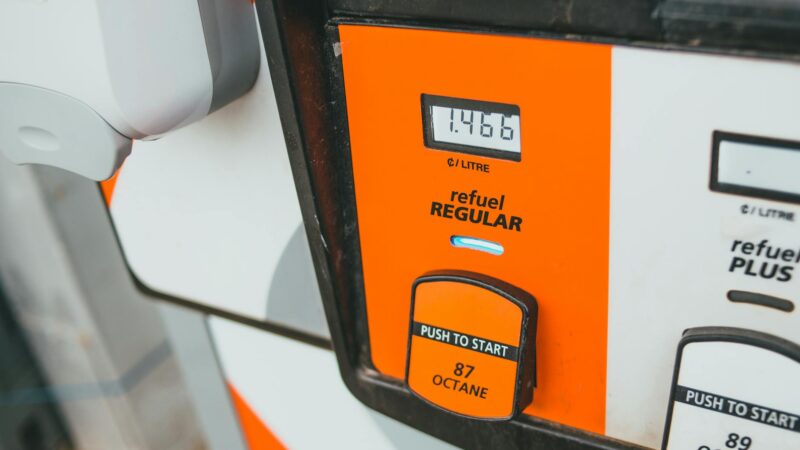
At 6:00 PM local time on March 8, the government announced a reduction of 15 Pakistani rupees per liter in petrol prices, bringing the price from approximately 310 to 295 rupees per liter. The announcement was timed for the evening news cycle and received saturation coverage on Pakistani media. Social media flooded with (mostly skeptical) reactions, but the immediate political effect was achieved: the protests paused.
The mathematics, however, were unforgiving. At the subsidized price of 295 rupees per liter, the government was absorbing approximately 30 rupees per liter in subsidy costs. Pakistan consumes roughly 30 million liters of petrol per day. That translates to a daily subsidy cost of approximately 900 million rupees ($3.2 million), or roughly $96 million per month. With the IMF loan of $2 billion, the subsidy could theoretically be maintained for about 20 months, but only if oil prices stabilized and the rupee held steady. Neither condition was met.
Overnight, oil prices ticked up to $124/barrel as the Natanz facility strike sent shock waves through energy markets. The rupee, already weak, dropped another 1.5% against the dollar in overnight trading. By morning, the subsidy cost had increased by approximately 20%, and the finance ministry’s calculations showed the $2 billion loan would be exhausted in 12-15 months rather than 20, leaving Pakistan in an even deeper fiscal hole.
At 10:00 AM on March 9, less than 16 hours after the price cut, the government announced a “revised pricing framework” that raised petrol prices by 25 rupees per liter, from 295 to 320 rupees. This was not just a reversal of the previous night’s cut; it was a net increase of 10 rupees per liter above the pre-cut price. The finance minister, appearing ashen-faced before reporters, explained that “global market conditions” necessitated the adjustment.
The public reaction was fury. Protests erupted immediately in Karachi, Lahore, Islamabad, Peshawar, and Multan. Petrol stations were besieged by motorists trying to fill up before further increases. Several stations ran out of fuel entirely as panic buying took hold. Transport operators announced a strike, threatening to halt the movement of goods and people across the country. In Karachi, Pakistan’s largest city and economic hub, traffic ground to a halt as rickshaw and taxi drivers blocked major intersections.
Why Pakistan Is Uniquely Vulnerable
The petrol price fiasco was not merely a failure of political communication. It exposed structural vulnerabilities in the Pakistani economy that make it uniquely susceptible to external energy shocks, vulnerabilities that exist, in varying degrees, across much of South Asia.
Total Oil Import Dependence
Pakistan produces only about 15% of its domestic oil needs, importing the rest, predominantly from Saudi Arabia, the UAE, and Kuwait, all of whose exports transit the Strait of Hormuz. This near-total import dependence means that Pakistan has no buffer against global oil price shocks. When oil goes up, Pakistan pays immediately, in full, with no domestic production to offset the cost.
To make matters worse, Pakistan has virtually no strategic petroleum reserve. While wealthy nations maintain reserves covering 90-130 days of imports, Pakistan’s emergency stocks cover approximately 20 days at best. This means the country has no ability to ride out a short-term price spike by drawing down reserves; every price increase is felt at the pump almost immediately.
The Exchange Rate Multiplier
Oil is priced in US dollars. Pakistan buys oil in US dollars. But Pakistani consumers and businesses earn and spend in Pakistani rupees. When the dollar strengthens or the rupee weakens (both of which happen during geopolitical crises), the effective cost of oil in local currency increases even if the dollar price stays the same. During the Iran crisis, the rupee depreciated approximately 8% against the dollar in the first month, meaning that even a hypothetical stabilization in oil prices would still have resulted in higher pump prices for Pakistani consumers.
This exchange rate effect is a double penalty for developing nations. They face higher commodity prices (due to global supply disruption) and weaker currencies (due to capital flight from emerging markets during crises) simultaneously. The combined effect can be devastating: Pakistan’s effective oil import cost increased by approximately 85% in local currency terms during the first month of the conflict, compared to a roughly 68% increase in dollar terms.
The Fiscal Impossibility
Pakistan’s government operates under severe fiscal constraints. The country’s debt-to-GDP ratio exceeds 75%, annual debt servicing costs consume approximately 40% of federal revenue, and the tax base is notoriously narrow (fewer than 2% of Pakistanis file income tax returns). In this context, fuel subsidies are fiscally toxic: they consume enormous resources, disproportionately benefit the middle and upper classes (who consume more fuel), and crowd out spending on education, healthcare, and infrastructure.
Yet fuel subsidies are also politically essential. In a country where 40% of the population lives below the poverty line and another 30% hovers just above it, fuel price increases trigger cascading effects on food prices, transport costs, and the cost of virtually everything. Governments that raise fuel prices without adequate social protection risk street protests, political instability, and, in Pakistan’s volatile political environment, potential regime change.
The $2 billion IMF loan illustrated this impossibility perfectly. The fund’s conditions required Pakistan to eventually remove the subsidy and implement “market-based pricing,” meaning the very loan designed to fund the subsidy was conditional on eliminating it. This is the fundamental contradiction at the heart of IMF crisis lending to developing nations: the institution provides short-term relief while demanding long-term policies that make the short-term pain worse.
The Food Price Cascade
In wealthy nations, fuel costs are an inconvenience. In Pakistan, they are a matter of survival. The mechanism is straightforward but devastating: higher fuel prices increase the cost of transporting food from farms to markets, the cost of operating agricultural machinery, and the cost of petroleum-based fertilizers. These increases are passed through to consumers in the form of higher food prices.
During the first month of the Iran conflict, food prices in Pakistan increased by an estimated 15-20%, according to data from the Pakistan Bureau of Statistics and independent monitoring organizations. The increases were not uniform: wheat flour, the staple of the Pakistani diet, rose by approximately 18%. Cooking oil increased by 22%. Rice, both for domestic consumption and export, rose by 15%. Fresh vegetables, which require refrigerated transport, increased by as much as 25% in some markets.
For a family earning the median Pakistani income of approximately 50,000 rupees per month ($175 at current exchange rates), food already consumed 45-50% of household spending before the crisis. A 15-20% increase in food prices means an additional 3,750-5,000 rupees per month, an amount that for many families represents the difference between three meals a day and two, or between keeping children in school and sending them to work.
The World Food Programme (WFP) issued an alert on March 20, 2026, warning that the combination of fuel price increases and food inflation was pushing an estimated 8 million additional Pakistanis into “food insecurity,” the diplomatic term for not having enough to eat. The WFP’s assessment was particularly alarming because Pakistan was already dealing with the aftermath of devastating floods in 2022 that had destroyed agricultural land and displaced millions, many of whom had not fully recovered.
The South Asian Ripple: Bangladesh, Sri Lanka, and Beyond
Pakistan’s story is dramatic because of the 24-hour price reversal, but it is not unique. Across South Asia, the Iran war’s energy shock has produced similar crises, each shaped by local conditions but driven by the same fundamental vulnerability: dependence on imported oil from a region now at war.
Sri Lanka: Back to the Brink
Sri Lanka’s economic collapse of 2022, when the country literally ran out of foreign currency and could not import fuel, food, or medicine, was supposed to be a cautionary tale that would never be repeated. The IMF bailout, the painful reforms, the political upheaval, all of it was meant to put the country on a sustainable path. The Iran war has tested that path to its limits.
When oil prices surged past $100/barrel, Sri Lanka’s barely recovered foreign reserves (approximately $5 billion, compared to near-zero in mid-2022) began depleting at an alarming rate. By Day 17 of the conflict, the government declared a fuel emergency, reinstating the rationing system that Sri Lankans had hoped was behind them. Queues reappeared at fuel stations, with wait times of 4-6 hours reported in Colombo.
Sri Lanka’s crisis is particularly bitter because the country had been making genuine progress. GDP growth had returned, inflation had fallen from over 60% to single digits, and the IMF was planning to disburse additional tranches of its bailout package. The Iran war, an event entirely beyond Sri Lanka’s control, has derailed this recovery and raised the specter of a second economic collapse.
Bangladesh: The Rice Harvest at Risk
Bangladesh, the world’s eighth most populous country, is one of the most densely populated nations on earth and one of the most vulnerable to energy price shocks. The country imports all of its oil, has minimal strategic reserves, and faces a unique agricultural vulnerability: the upcoming Boro rice harvest, which accounts for approximately 55% of annual rice production, depends on diesel-powered irrigation pumps.
When diesel prices surged following the Iran conflict, the government faced an impossible choice: subsidize diesel for farmers (at enormous fiscal cost) or allow market pricing that would make irrigation unaffordable for millions of small farmers. Bangladesh chose a middle path, rationing diesel for agricultural use and prioritizing farm deliveries, but the rationing itself created distribution problems. Reports from rural areas indicated that some farmers received their diesel allocations too late for optimal planting, threatening yields.
The potential loss of even 10% of the Boro rice harvest would have cascading effects not just in Bangladesh but throughout the global rice market. Bangladesh is both a major producer and consumer of rice, and any domestic shortfall would increase imports, driving up prices for other rice-importing nations across Africa and the Middle East. The Iran war, through its effect on diesel prices in Bangladesh, may end up affecting food security in countries as distant as Senegal and Madagascar.
India: The Giant Absorbs the Shock (But at a Cost)
India, with its $3.5 trillion economy, massive strategic reserves, and diversified energy mix, is far better positioned to weather the Iran war’s energy shock than its smaller neighbors. But “better positioned” does not mean unaffected. India imports approximately 85% of its crude oil, with about 60% of that coming from the Persian Gulf. The price shock has increased India’s oil import bill by an estimated $4-5 billion per month, adding inflationary pressure to an economy that was already grappling with sticky food prices.
India’s response has been characteristically pragmatic. Delhi has increased purchases of discounted Russian oil (itself a controversial move given Western sanctions on Russia), drawn modestly from strategic reserves, and raised domestic fuel prices by amounts large enough to cover part of the increased cost but small enough to avoid triggering mass protests. The state-owned oil companies are absorbing the remainder, which will eventually show up as fiscal costs.
India’s diplomatic stance has reflected its economic interests. Delhi has been conspicuously neutral in the Iran conflict, declining to condemn either side while offering humanitarian assistance and contributing naval vessels to the Strait of Hormuz escort coalition. This neutrality has drawn criticism from the United States but has preserved India’s relationships with Iran (a crucial energy supplier), the Gulf states (home to 9 million Indian workers whose remittances are a vital source of foreign exchange), and the broader Non-Aligned Movement.
Nepal and Myanmar: The Invisible Crises
The smallest and poorest South Asian economies face the most severe impacts with the least resources to respond. Nepal, a landlocked country that imports all of its fuel through India, has faced acute shortages as India has prioritized domestic supply. Petrol prices in Kathmandu have increased by approximately 35%, and cooking gas (LPG) prices have risen even more sharply, forcing some families to revert to firewood, with implications for deforestation and indoor air pollution.
Myanmar, already in the grip of a civil war that has shattered its economy, has seen fuel prices double. The military government has imposed price controls that have predictably led to black market fuel trading at even higher prices. Humanitarian organizations report that fuel shortages are hampering the delivery of aid to conflict-affected populations, adding a humanitarian dimension to the economic crisis.
The IMF Paradox: Rescue That Reinforces Vulnerability
The International Monetary Fund’s role in the South Asian energy crisis deserves particular scrutiny, not because the institution is acting in bad faith but because its structural approach to crisis lending may be making things worse.
The IMF has responded to the energy shock with emergency lending to several affected nations: $2 billion to Pakistan, $500 million to Sri Lanka (additional to the existing bailout), $300 million to Bangladesh. These are significant sums that have prevented the worst-case scenario of sovereign default and complete economic collapse. But each loan comes with conditions that require the recipients to implement “market-based pricing” for fuel, meaning the removal of subsidies that shield the poorest consumers from global price shocks.
The logic behind this conditionality is economically sound in isolation: subsidies distort markets, encourage overconsumption, and drain fiscal resources. But the timing is brutal. Requiring developing nations to remove fuel subsidies during the worst oil price shock in years is akin to requiring a drowning person to learn proper swimming technique before throwing them a life preserver. The policy may be correct in the long run, but the short-term human cost is measured in hunger, illness, and death.
Alternative approaches exist. Targeted cash transfers to the poorest households can provide social protection without the market distortion of universal subsidies. But building the targeting infrastructure — identifying the poorest households, establishing payment mechanisms, preventing fraud — takes years in countries with limited administrative capacity. During an acute crisis, broad subsidies are the only tool that works at speed, however imperfect.
The deeper problem is structural. The Bretton Woods institutions (the IMF and World Bank) were designed in 1944 for a world in which developing nations would gradually integrate into the global economy under favorable conditions. Today’s reality is different: developing nations are fully integrated into a global economy whose shocks they cannot control and whose benefits they capture only partially. When a war in the Persian Gulf sends oil prices to $130/barrel, a Pakistani factory worker bears the cost through higher food prices just as surely as an American commuter bears the cost through higher gasoline prices, but the Pakistani worker has no social safety net, no savings, and no government with the fiscal capacity to help.
What the Numbers Tell Us
| Country | Oil Import Dependence | Strategic Reserve (Days) | Fuel Price Increase | Food Price Increase | Additional People in Food Insecurity |
|---|---|---|---|---|---|
| Pakistan | ~85% | ~20 | +26% | +15-20% | ~8 million |
| Sri Lanka | ~100% | ~30 | +30% | +12-18% | ~2 million |
| Bangladesh | ~100% | ~15 | +22% | +10-15% | ~5 million |
| India | ~85% | ~65 | +12% | +8-10% | ~15 million |
| Nepal | ~100% (via India) | ~10 | +35% | +18-22% | ~1.5 million |
The Missing Coverage: Why No One Is Writing About This
The Iran war’s impact on South Asian economies is arguably the largest underreported story of 2026. Tens of millions of people are being pushed into food insecurity. Economies that were on fragile recovery paths are being derailed. Political instability is growing. And yet, the major international outlets, the New York Times, the BBC, CNN, Reuters, have devoted barely a fraction of their Iran coverage to this dimension of the crisis.
Several factors explain the coverage gap. First, the military and diplomatic drama of the Iran conflict itself is absorbing editorial bandwidth. Missile strikes, naval battles, and peace negotiations are inherently more “newsworthy” by traditional media standards than gradual economic deterioration in countries already associated with poverty. Second, the South Asian impact is diffuse and incremental, harder to capture in a headline or a 90-second television segment than a single dramatic event. Third, and most uncomfortably, the affected populations are overwhelmingly brown, Muslim, and poor — demographics that receive systematically less media attention in Western outlets than Western populations affected by the same crisis.
This coverage gap has real consequences. Without media attention, there is less political pressure on wealthy nations and international institutions to provide adequate assistance. Without public awareness, there is less charitable giving to organizations working on the ground. And without a documented record, the historical narrative of the Iran war will be incomplete, focused on the military and diplomatic dimensions while the human cost borne by the world’s poorest people fades from memory.
Egypt and the Middle East: Not Immune
The South Asian energy crisis has parallels in the Middle East itself, particularly in Egypt. While Egypt is a modest oil producer and benefits from Suez Canal revenues (which have been volatile but not collapsed), the country imports the majority of its wheat and has faced food price pressures similar to those in South Asia.
The Egyptian pound has depreciated under the combined pressure of the regional security crisis and higher import costs. Gold prices in Egypt have surged, with 21-karat gold exceeding 4,600 EGP per gram (approximately $104.50/gram at current exchange rates) as Egyptians once again turn to the yellow metal as a hedge against currency erosion. The Central Bank of Egypt has maintained high interest rates to defend the pound, but this creates its own economic costs by making borrowing more expensive for businesses and consumers.
Egypt’s position is complicated by its dual role as a Suez Canal state and a major food importer. The canal revenues provide crucial foreign currency, but the security environment in the Red Sea (affected by Houthi attacks) has reduced traffic volumes. Meanwhile, wheat prices have increased by approximately 12% globally, adding to Egypt’s food import bill. The net effect is a squeeze from both sides: reduced income and increased costs.
Lebanon, already in the midst of a multi-year economic collapse, has been further devastated by the conflict’s expansion to its territory. The Lebanese pound, which had stabilized somewhat, has resumed its decline. Fuel shortages, which had eased in 2024-2025, have returned. The country’s already overwhelmed humanitarian situation has deteriorated further as internal displacement from Israeli military operations in the south adds to the burden.
Policy Responses: What Could Be Done Differently
The South Asian energy crisis is not inevitable. It is the product of choices — choices made decades ago about energy infrastructure, choices made by international institutions about lending conditions, and choices being made now about how to allocate the costs of conflict. Different choices could produce different outcomes.
Immediate: Emergency energy financing without destructive conditionality. The international community should provide emergency energy financing to affected developing nations without requiring the simultaneous removal of fuel subsidies. A time-limited subsidy, funded by concessional lending, combined with a commitment to phase out subsidies over a defined period after the crisis passes, would provide protection without creating fiscal dependency.
Short-term: Strategic reserve assistance. Wealthy nations and oil-producing Gulf states should establish a mechanism to provide strategic petroleum reserve access to vulnerable developing nations during crises. The current system, where IEA members (predominantly wealthy nations) coordinate reserve releases, does nothing for countries like Pakistan and Bangladesh that have no reserves to release.
Medium-term: Accelerated energy diversification. The crisis demonstrates the urgency of energy diversification for South Asian economies. Investments in solar, wind, and hydroelectric power reduce dependence on imported oil and are increasingly cost-competitive. Pakistan, with its abundant solar resources in Sindh and Balochistan, could generate a significant portion of its electricity from solar at costs below imported fossil fuel equivalents, but has underinvested in the sector for decades.
Long-term: Reform of the global financial safety net. The international financial architecture needs fundamental reform to provide developing nations with adequate insurance against external shocks they cannot control. This could include automatic disbursement mechanisms triggered by commodity price spikes, debt standstill provisions during crises, and a reallocation of IMF Special Drawing Rights to the nations that need them most.
The Human Cost: Stories Behind the Statistics
Statistics describe the scale of the crisis; stories describe its reality. In Karachi, a rickshaw driver named in media reports as Ahmed told the Dawn newspaper that his daily earnings had dropped from approximately 2,500 rupees to 1,500 rupees because passengers were taking fewer rides, while his fuel costs had increased by 800 rupees per day. “I used to eat three times a day,” he said. “Now I eat twice. My children eat twice. This is what war means for people like us.”
In Colombo, a tea plantation worker described how the cooking gas shortage had forced her family to cook over firewood, causing respiratory problems for her youngest child. In Dhaka, a rice farmer explained that late delivery of rationed diesel meant he could only irrigate half his fields, potentially cutting his harvest, and his family’s income, in half.
These stories are multiplied by millions across South Asia. They are the invisible casualties of the Iran war, people who will never appear in any casualty count but whose lives have been materially diminished by a conflict fought thousands of kilometers from their homes, by governments that never consulted them, over issues they may barely understand.
Conclusion: The War’s Longest Shadow
The Iran war will eventually end. The missiles will stop. The diplomats will sign agreements. The Strait of Hormuz will reopen fully. Oil prices will stabilize. And when the post-war histories are written, they will focus on military operations, diplomatic negotiations, nuclear agreements, and great power competition.
But the longest shadow of this war will not be cast in Tehran or Washington or Istanbul. It will be cast in the slums of Karachi, the villages of Bangladesh, the markets of Colombo, and the farms of Nepal. It will be measured not in destroyed buildings or depleted nuclear facilities but in children who went hungry, women who couldn’t afford medicine, farmers who lost their harvests, and families who fell from precarious stability into destitution.
Pakistan’s 24-hour petrol price whiplash is a small story in the grand narrative of the Iran conflict. But it encapsulates the fundamental injustice of modern warfare: the people who bear the heaviest costs are invariably those with the least power, the least voice, and the least responsibility for the decisions that led to the crisis. Until this injustice is addressed, not as an afterthought but as a central concern of international policy, every war in the Middle East will continue to visit its greatest suffering on those who can least afford it.
This article will be updated as economic data from the affected countries continues to be released. Bookmark for the most comprehensive coverage of the Iran war’s economic ripple effects across South Asia.
Sources: Pakistan Bureau of Statistics, International Monetary Fund, World Food Programme, World Bank, Dawn (Pakistan), Reuters, Al Jazeera, Central Bank of Sri Lanka, Bangladesh Bureau of Statistics. Oil prices are Brent Crude in USD/barrel. Gold prices in USD/gram and EGP/gram as noted. Exchange rates are approximate as of the date of publication.