Introduction: The War of Numbers
Six weeks have passed since the United States and Israel launched their war on Iran. Six weeks of airstrikes, missiles, drones, and ground invasions. The question that every citizen — in the Middle East and around the world — should be asking is simple and brutal: How many people have actually been killed?
The answer depends on whom you ask. Official figures from all parties — Iran, the United States, Israel, and the UAE — are contested by independent organizations, investigative journalists, and eyewitnesses. Every government has its reasons for minimizing or inflating numbers: Iran inflates to win international sympathy, America minimizes to avoid domestic opposition, and Israel ignores the civilians it kills in Lebanon.
In this report, we place official figures side by side with what independent sources report — the Human Rights Activists News Agency (HRANA), The Intercept’s investigation, and international humanitarian organizations — to give you the picture closest to truth. Because behind every number is a human being who lived, dreamed, and loved.

The Timeline: Week by Week
Week One (February 28 — March 6): The Initial Shock
The war began at dawn on February 28 with surprise US-Israeli strikes launched without warning. Initial targets included Iranian command and control centers, IRGC headquarters, and air defense systems. But the most shocking strike targeted the residence of Supreme Leader Ayatollah Ali Khamenei, who was killed instantly along with his security detail and several senior officials.
In the first days, Iran was in a state of shock. But the IRGC — built on a decentralized structure precisely for scenarios like this — regained its footing with remarkable speed. Ballistic missiles began flying toward US bases in Qatar, Bahrain, and Kuwait, and toward Israel and the UAE. The first American soldiers were killed this week — the Pentagon acknowledged only five, but independent military sources spoke of no fewer than eight.
In Iran, hundreds died in the initial strikes — most were military personnel, but civilians living near military targets were among them. Iran’s Health Ministry announced 412 dead, while HRANA documented 643 deaths including at least 187 civilians.
Week Two (March 7-13): Escalation and Invasion
This week saw two pivotal developments. First: the Israeli ground operation in southern Lebanon beginning March 2, which dramatically expanded the war’s scope. The IDF claimed it was targeting only Hezbollah positions, but reality on the ground told a different story — entire villages were leveled, hundreds of families displaced under bombardment.
Second: the intensification of Iranian strikes on the UAE. Abu Dhabi, which had assumed it was beyond the direct line of fire, found itself under a barrage of ballistic missiles and drones. The Emirati air defense system — comprising THAAD and Patriot batteries — performed with high efficiency but could not intercept everything. Seven people were killed and over eighty wounded in this week’s attacks alone.
In Iran, US-Israeli strikes on military infrastructure continued. But independent reports began indicating that “collateral damage” — civilians killed “by accident” — was escalating at an alarming rate. Residential neighborhoods near IRGC bases sustained significant damage. Hospitals began struggling to accommodate the wounded.
Week Three (March 14-20): War of Attrition
The war settled into an attrition pattern. Major strikes decreased, but continuous operations — daily airstrikes, rocket fire, special operations raids — continued claiming lives. This week, the Pentagon announced three additional soldiers killed in a missile attack on Al Udeid base in Qatar. But The Intercept’s later investigation revealed that American casualties in this single incident were significantly higher than officially stated.
In Lebanon, the death toll reached 800. Israeli occupation forces had pushed deep into the south, with fierce battles raging in Bint Jbeil, Maroun al-Ras, and other areas. Most hospitals in southern Lebanon had shut down — either from shelling or lack of medical supplies.
Week Four (March 21-27): The Strait Closes
The defining event of this week was the closure of the Strait of Hormuz on March 27. But militarily, the bleeding continued. Fighting expanded geographically: the Houthis intensified attacks from Yemen, Iraqi militias launched operations against US bases in Iraq, and Hezbollah fired rockets at settlements in northern Israel despite the ongoing ground operation.
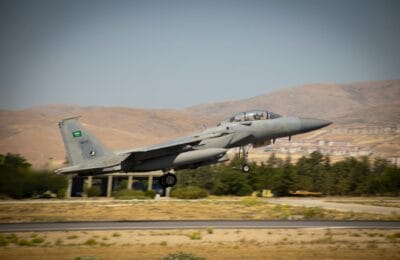
This week, Iranian defenses shot down an American F-15 over Fars province. The pilot — who remained missing for days before being rescued — became a symbol of American vulnerability. The Pentagon attempted to downplay the incident, but it triggered a wave of concern in Congress about the level of risk US service members face.
Week Five (March 28 — April 3): Under Siege
With the strait closed, the war transformed from a purely military confrontation into a global economic crisis. But the fighting did not stop. American strikes focused on IRGC positions linked to strait operations. Iran responded by escalating attacks on the UAE and US bases.
In Lebanon, the death toll surpassed 1,000. International humanitarian organizations began warning of a humanitarian catastrophe in southern Lebanon as food and medical supplies were cut off from large areas. The UN High Commissioner for Refugees described the situation as “rapidly deteriorating beyond our capacity to respond.”
Week Six (April 4-5): The Major UAE Attack
April 4 witnessed the most violent Iranian attack on the UAE since the war began: 23 ballistic missiles and 56 drones launched in a single wave. Emirati defenses intercepted most of them, but some got through. Six killed and 120 wounded in a single day. Al Dhafra Air Base — which hosts American forces — was among the targets.
As of this report’s writing on the evening of April 5, all sides are exchanging threats of unleashing “hell” if escalation continues. The deadline approaches. And the numbers keep climbing.
Casualty Table: Official Numbers vs. Independent Counts
| Country | Killed (Official) | Killed (Independent) | Wounded (Official) | Wounded (Independent) | Independent Source |
|---|---|---|---|---|---|
| Iran | 2,076 | 3,114 | ~6,000 | ~9,500 | HRANA |
| United States | 13 | 15+ | 365 | 520+ | The Intercept |
| Israel | 19 | 19-23 | ~180 | ~220 | Media reports |
| UAE | 13 | 13-17 | 217 | 280+ | Medical sources |
| Lebanon | 1,300+ | 1,500+ | ~4,200 | ~5,500 | Lebanese Red Cross |
| Total | ~3,421 | ~4,671+ | ~10,962 | ~16,020+ |
The gap between official and independent figures — approximately 1,250 dead and 5,000 wounded — is not a statistical margin. These are human lives deliberately hidden from official records for purely political reasons. Every side lies for its own purposes, and the real victims pay the price twice: once with their bodies and once with the denial of their existence.
Iran: 3,114 Dead and the Civilian Question
What the Government Says
Iran’s Health Ministry officially reports 2,076 killed since the war began. The government classifies the vast majority as “martyrs” — a term that encompasses both military and civilian dead in official Iranian discourse — without providing a clear breakdown of proportions.
State media focuses on images of destroyed military installations and stories of “heroic resistance,” while minimizing discussion of civilian casualties. Acknowledging large numbers of civilian dead could undermine morale and raise questions about the regime’s ability to protect its people.
What Independent Sources Say
The Human Rights Activists News Agency (HRANA) — an NGO based outside Iran that relies on an extensive network of sources inside the country — has documented 3,114 deaths. HRANA’s breakdown is the most critical data point in this conflict:
| Category | Number (HRANA) | Percentage |
|---|---|---|
| Military (IRGC + regular army) | 1,487 | 47.8% |
| Civilians in strike zones | 843 | 27.1% |
| Civilians (collateral — adjacent residential areas) | 511 | 16.4% |
| Unclassified (missing under rubble) | 273 | 8.7% |
The shocking figure here is that at least 1,354 civilians — 43.5 percent of all those killed — are non-combatants. These are factory workers near military bases, residents of adjacent neighborhoods, families who were in the wrong place at the wrong time. The Pentagon claims its strikes are “precise” and that “collateral damage” is minimal. The numbers say otherwise.
One story encapsulates the tragedy: on March 11, a US airstrike targeted an IRGC headquarters in Isfahan. The guided bomb hit its target, but the explosion also destroyed an elementary school 300 meters away. Eleven children and three teachers were killed. The Pentagon did not comment on the incident. Iranian state media used it for propaganda. And eleven children will never come home.
The United States: The Gap Between Official and Real
What the Pentagon Says
The Department of Defense officially reports 13 American soldiers killed and 365 wounded since operations began. The Pentagon classifies these losses as “within expectations” for an operation of this scale and notes that “the vast majority of injuries are minor.”
The Pentagon spokesperson repeats at every press conference that “American forces are performing with distinction” and that “the casualty rate is historically low.” The message is clear: this is a war Americans can accept because the human cost is “reasonable.”
What The Intercept Investigation Says
In a lengthy investigation published on April 1, 2026, The Intercept — known for its investigative reporting on military and intelligence affairs — revealed that official numbers do not reflect reality. The investigation, built on testimony from current and former military officials and leaks from within the Defense Department, reached the following conclusions:
First: Misleading injury classification. The Pentagon classifies many serious injuries — including traumatic brain injuries from blast waves — as “minor” or does not include them in official figures at all. This tactic is not new — it was used in Iraq and Afghanistan — but its scale in this war is greater than before. Soldiers who sustained concussive blast injuries that will affect them for the rest of their lives are simply not counted.
Second: Hidden dead. The investigation indicates that the actual number of American dead is no fewer than 15 — and possibly more — compared to the official figure of 13. The discrepancy comes from soldiers killed in covert operations that were never announced, or whose deaths were classified as “not related to combat operations” — a bureaucratic designation that allows them to be excluded from war statistics.
Third: The real wounded. The actual number of wounded Americans exceeds 520 — 42 percent higher than the official figure of 365. Many were evacuated to military hospitals in Germany and were not included in theater-of-operations statistics. The distinction between “theater casualties” and “total casualties” is how the Pentagon keeps its public numbers manageable.
One military source told the outlet: “We are losing people and sustaining serious injuries, and the American public doesn’t know the real scale. This isn’t new — we did the same thing in Iraq — but the difference is that this war is faster and more violent, and the numbers will eventually come out.” The Pentagon’s response to the investigation was boilerplate: “We reject these unfounded claims and affirm that our figures are accurate and transparent.”
The UAE Under Fire: Interception Numbers and the Human Cost
Perhaps no one expected the United Arab Emirates — a country known for its skyscrapers and luxury tourism — to become an actual warzone. But that is precisely what has happened. Since the war began, the UAE has endured multiple waves of Iranian attacks with ballistic missiles and suicide drones.
Interception Statistics
| Date | Ballistic Missiles | Drones | Interception Rate | Casualties |
|---|---|---|---|---|
| March 3-10 | 8 | 22 | ~87% | 7 killed, 83 wounded |
| March 11-20 | 5 | 15 | ~90% | 0 killed, 14 wounded |
| March 21-31 | 4 | 11 | ~93% | 0 killed, 0 wounded |
| April 4 (single day) | 23 | 56 | ~91% | 6 killed, 120 wounded |
| Total | 40 | 104 | ~90% | 13 killed, 217 wounded |
Several critical observations emerge from these numbers. First: a 90 percent interception rate sounds impressive, but the remaining 10 percent means that hypersonic ballistic missiles reached their targets. Each warhead weighs hundreds of kilograms. A single successful hit on a populated area is a mass casualty event. Second: the April 4 attack represented a qualitative escalation — 23 ballistic missiles in a single wave indicates Iran is attempting to overwhelm Emirati defenses through saturation. Third: Al Dhafra Air Base — hosting American aircraft — has been a repeated target. The Pentagon has not confirmed any American casualties in the UAE, but local sources suggest otherwise.
The impact on daily life in the Emirates is real and growing. Air raid sirens have become commonplace in Abu Dhabi and Dubai. Shelters in modern residential buildings — originally built for earthquake contingencies — are being used as missile shelters. Schools have been temporarily closed. Foreign companies have begun relocating employees. Expatriates — who make up 88 percent of the UAE’s population — are living in a state of sustained anxiety. Some have left; many more are considering it.
Lebanon: 1,300 Dead and the Invasion Continues
The Israeli invasion of southern Lebanon that began on March 2 is the deadliest since the 2006 war. But the difference this time is that the world is preoccupied with Iran, giving Israel a wide margin to operate with greater freedom and less scrutiny.
Lebanese Casualties
| Category | Number |
|---|---|
| Total killed | 1,300+ |
| Of whom civilians | ~820 (63%) |
| Of whom Hezbollah fighters | ~350 |
| Of whom children | ~190 |
| Displaced | ~450,000 |
| Homes destroyed | ~8,500 |
| Health facilities damaged | 23 |
Sixty-three percent of Lebanese dead are civilians — women, children, elderly people, and families with no connection to Hezbollah. At least 190 children have been killed in five weeks. 450,000 displaced people have lost their homes. This is not a “limited operation against Hezbollah” as the Israeli military claims — it is a war on an entire people.
The Lebanese Red Cross reports it cannot access large areas of the south due to continuous bombardment. Rescue teams cannot recover bodies from under rubble. Southern hospitals have shut down or are operating at bare minimum capacity. Medicines and medical supplies have run out in several areas. Doctors are performing surgeries without anesthesia. The stories emerging from field hospitals read like dispatches from a different century.
The international community has issued statements of “concern” — but nothing concrete. The Security Council is paralyzed. The Arab League issued a statement. And Lebanon’s children keep dying.
The Houthis and the Yemeni Front
Ansar Allah (the Houthis) have declared themselves part of the “axis of resistance” and have launched five missiles at Israel since the war began. No Israeli casualties from these missiles have been reported — most were likely intercepted or fell in open areas — but the threat remains active and significant.
The Houthis possess an arsenal of ballistic missiles and drones that proved their effectiveness in the 2019 Aramco attacks and in disrupting Red Sea shipping. If the war escalates after tomorrow’s deadline expires, the Houthis are likely to intensify their attacks — not only on Israel but on American interests in the Red Sea and Indian Ocean.
American responses targeting Yemen have been limited so far. Washington does not want to open an additional front while its hands are full with Iran. But this calculus could change if the Houthis succeed in executing a major attack that produces casualties. The Houthis represent the unpredictable variable in this conflict — a non-state actor with state-level weapons capabilities and nothing to lose.
The F-15 Pilot: A Rescue Story from Inside Iran
In one of the war’s most dramatic moments, an American F-15 was shot down over Iranian territory. The pilot survived ejection and spent several days hiding inside Iran before a special operations team succeeded in extracting him in a complex and dangerous rescue mission.
The story — revealed by American media — carries multiple implications. First: Iranian air defenses are not completely destroyed as the Pentagon claims — they remain capable of downing America’s most advanced aircraft. Second: rescue operations behind enemy lines carry enormous risks — any mistake would have given Iran an American prisoner of war, a negotiating card of incalculable value. Third: the incident sparked a congressional debate about the level of risk facing American service members — a debate the White House would prefer to avoid.
The rescued pilot has not been publicly identified, and details of the rescue operation remain classified. But the mere fact that an F-15 — one of the most capable fighter jets in the US arsenal — was shot down punctures the narrative of overwhelming American air superiority.
Comparison with Previous US Wars: The Pace of Casualties
To understand this war’s casualties in context, it is useful to compare with recent American wars in the same region:
| War | Duration | US Dead | Monthly Rate | First 6 Weeks Rate |
|---|---|---|---|---|
| Iraq (2003-2011) | 8 years | 4,431 | ~46 | ~139 (Mar-Apr 2003) |
| Afghanistan (2001-2021) | 20 years | 2,461 | ~10 | ~12 (Oct-Nov 2001) |
| Iran (2026) | 6 weeks | 13 (official) / 15+ (independent) | ~9-11 (independent) | 15+ (full period) |
The comparison reveals several truths. The pace of American casualties in the Iran war is higher than Afghanistan but significantly lower than the opening weeks of the Iraq invasion. The critical difference is that the Iran war — so far — is primarily an air campaign with no American ground forces on Iranian soil. If it were to become a ground war — a scenario most analysts consider unlikely — casualties would multiply tenfold or more.
But the more important comparison is not American dead — who represent a small minority of total casualties — but total dead across all fronts. In the first six weeks of the 2003 Iraq invasion, an estimated 7,000 Iraqis were killed. In the first six weeks of the 2026 Iran war, independent sources have documented over 4,600 dead across all fronts. The pace is terrifying — and the war is still in its early stages. If the April 6 deadline triggers escalation, these numbers could double within weeks.
What Independent Sources Report vs. Official Narratives
Non-Governmental Organizations
HRANA: The most detailed source for documenting Iranian casualties. It relies on a network of field sources — doctors, rescue workers, activists, victims’ relatives — and verifies each case before documenting it. Its figures are 50 percent higher than official Iranian numbers. The organization says the real numbers may be higher even than its estimates because entire areas of Iran have been cut off from communications.
Doctors Without Borders (MSF): They have teams in Lebanon and have issued multiple reports on the catastrophic situation in southern hospitals. They describe the situation as “the worst humanitarian crisis we have witnessed in Lebanon in decades.” They are unable to access Iran.
International Committee of the Red Cross: Has issued repeated appeals to all parties to respect international humanitarian law. Their reports reference “serious violations” without naming a specific party — but the details clearly point to strikes on civilian areas by all sides.
Investigative Journalism
The Intercept: As discussed, their investigation into the Pentagon’s concealment of real casualty numbers is the most important and detailed reporting on this aspect of the war. It relies on sources within the US military and leaks from the Defense Department.
BBC Arabic: The BBC’s verification team is analyzing satellite imagery and published video to assess the scale of destruction. Their reports indicate that some residential areas in Iran have sustained far greater damage than officially acknowledged.
Al Jazeera: Has reporters on the ground in Lebanon and intensive coverage of events. Their reports from southern Lebanon describe scenes “resembling an earthquake” in entire villages.
Why Every Side Lies
Each government has clear incentives to distort figures:
Iran minimizes military dead to project that its capabilities remain intact, while inflating — in certain contexts — civilian numbers to win international sympathy. The contradiction is evident to anyone who looks closely.
The United States minimizes its numbers to avoid domestic opposition. American public opinion is highly sensitive to soldier casualties — especially after the Iraq and Afghanistan experiences. Every announced American death erodes support for the war.
Israel focuses on its own military losses to build a victim narrative, while virtually ignoring the numbers of Lebanese civilians it kills — or classifying them all as “Hezbollah human shields.”
The UAE publishes its figures with relative transparency but emphasizes interception success over losses — the message is “we are prepared and protecting our people” rather than “we are under fire.”
The Human Dimension: Behind the Numbers
Hospitals
In Iran, hospitals in cities near military targets — Isfahan, Shiraz, Bandar Abbas — are operating far beyond capacity. There are shortages of basic medications due to intensified sanctions. Doctors are working shifts stretching to 40 consecutive hours. Surgeries are performed under suboptimal conditions. Reports describe shortages of blood bags, anesthetics, and antibiotics. The healthcare system, already strained by years of sanctions, is approaching collapse in frontline areas.
In Lebanon, the situation is worse. Bint Jbeil government hospital closed after being shelled. Marjayoun hospital is operating at a fraction of its capacity. The wounded are transported to Sidon and Beirut — journeys that can take hours under bombardment. Some wounded die en route. Field hospitals set up by international organizations are overwhelmed.
Displacement
In Iran, there are no official displacement figures, but UN estimates suggest between 500,000 and one million people have left their areas — mostly from coastal cities near the Gulf. In Lebanon, 450,000 are displaced from the south — some for the second or third time in their lives. Schools, mosques, and churches in Beirut and Sidon have been converted into overcrowded shelters. Families sleep on classroom floors. Children have no access to education. The displacement, like the war itself, has no end date in sight.
Infrastructure
In Iran, power stations and water desalination plants have been damaged — either directly or as collateral damage. Areas in Bandar Abbas and Bushehr suffer frequent electricity and water outages. In Lebanon, major roads and bridges in the south have been destroyed, isolating entire villages and preventing aid delivery. The infrastructure damage will take years and billions of dollars to repair — assuming the war ends soon, which is far from guaranteed.
What Does All This Tell Us?
After six weeks, several fundamental truths can be drawn:
First: This war has produced approximately 4,700 dead and 16,000 wounded according to the highest independent estimates. This is in just six weeks. If the war continues and escalates — especially after tomorrow’s deadline — these numbers could double within weeks.
Second: Civilian casualties constitute an alarming proportion. In Iran alone, 43 percent of the dead are civilians according to HRANA. In Lebanon, the proportion is higher: 63 percent. Any talk of “precision strikes” and “minimal collateral damage” is misleading at best, dishonest at worst.
Third: All sides are manipulating the numbers. No official figure from any party can be trusted without cross-referencing with independent sources. This applies to Iran just as it applies to the Pentagon and Israel. The fog of war is real, but much of the confusion is manufactured.
Fourth: The humanitarian dimension — collapsing hospitals, displaced families, dead children, destroyed infrastructure — far exceeds what news headlines convey. War is not numbers on a screen — it is millions of human beings whose lives are being shattered daily.
In our complete timeline of the Iran war, we documented every day since the conflict began. In our Week 5 analysis, we examined the latest military developments. In our report on the F-15 shoot-down, we provided details of the dramatic rescue operation. And we recommend reviewing our investigation into potential war crimes for the full legal context.
Editor’s Note: The figures in this report reflect the best available information as of the evening of April 5, 2026. Casualty numbers change daily and may be significantly higher than any current estimate due to the difficulty of accessing combat zones. We will continuously update this report as new information becomes available. Because every number deserves to be documented — because behind every number is a human being.