The Paradox of Destruction as Strategy: When the Threat Itself Becomes the Crime
There is a peculiar moral calculus at work when a head of state publicly threatens to bomb a nation “back to the Stone Age.” The phrase itself — borrowed from General Curtis LeMay’s infamous suggestion about Vietnam, a war that ended in American defeat — carries the weight of historical failure. But more than historical irony, President Trump’s April 2026 threat to systematically destroy Iran’s bridges, power plants, water treatment facilities, and civilian infrastructure raises questions that transcend the immediate conflict and touch the foundations of international humanitarian law.
Can a president order the deliberate destruction of infrastructure that sustains civilian life? What does international law actually say? What are the strategic consequences of such a campaign? And what happens when the world’s most powerful military explicitly threatens to target the systems that keep a nation of 88 million people alive?
These are not theoretical questions. They are urgent, real, and have consequences measured in human lives. This analysis presents both sides — the American strategic rationale and the legal, humanitarian, and Iranian perspectives — because understanding all dimensions is the only path to honest analysis.

What Trump Said: The Specific Threats
The Statements
In a series of statements over the past week — delivered through press conferences, social media posts, and reported comments to advisors that were subsequently leaked — President Trump has escalated his rhetoric about the Iran campaign to levels that have alarmed legal scholars, allied governments, and humanitarian organizations worldwide.
The key statements include:
- “If Iran doesn’t come to the table, we will bomb every bridge, every power plant, every piece of infrastructure they have. We will send them back to the Stone Age. We’ve done it before and we’ll do it again.” (Press conference, April 1, 2026)
- “Their bridges? Gone. Their electricity? Gone. Their water treatment? Gone. That’s how you end a war — you make it impossible for them to function as a country.” (Social media post, April 2, 2026)
- Reports from senior officials indicate the president has directed military planners to prepare target packages for systematic destruction of Iranian civilian infrastructure, including electrical grid components, water purification systems, highway bridges, telecommunications towers, and railway infrastructure.
These statements are significant not merely as political rhetoric but because they come from the commander-in-chief of the military forces currently conducting operations against Iran. Presidential statements about targeting carry operational implications — they signal intent to military planners, shape rules of engagement, and create expectations among both American forces and the Iranian adversary.
The Historical Echo
Trump’s “Stone Age” rhetoric deliberately or inadvertently echoes several historical precedents, none of them encouraging:
General Curtis LeMay on Vietnam: The original “bomb them back to the Stone Age” comment came from LeMay, who advocated for unrestricted bombing of North Vietnam. The US ultimately did conduct massive bombing campaigns (Operation Rolling Thunder, Operation Linebacker), which failed to achieve their strategic objectives and contributed to one of America’s most consequential foreign policy defeats.
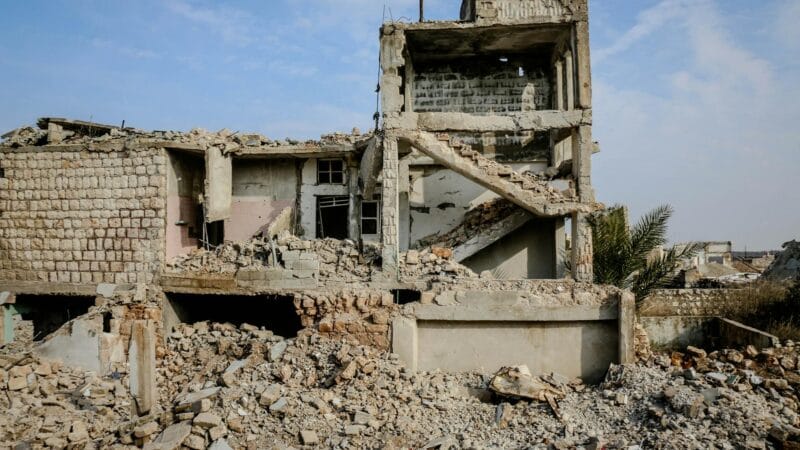
Iraq 1991: During the Gulf War, US-led coalition forces deliberately targeted Iraqi electrical infrastructure, water treatment systems, and bridges. A post-war UN assessment described the damage as reducing Iraq to “a pre-industrial age.” The resulting humanitarian crisis contributed to the deaths of an estimated 100,000+ Iraqi civilians in the years following the war, primarily from waterborne diseases and lack of medical care.
Serbia 1999: NATO forces targeted Serbian electrical grid and infrastructure during the Kosovo campaign, plunging millions of civilians into darkness and creating humanitarian hardship that lasted months after the conflict ended.
In each case, the deliberate targeting of civilian infrastructure produced humanitarian catastrophe without achieving the clean strategic victory that planners promised. The pattern is remarkably consistent: infrastructure destruction creates civilian suffering, generates international condemnation, strengthens the targeted population’s resolve, and ultimately complicates rather than advances the attacking side’s strategic objectives.
The Legal Framework: What International Law Actually Says
The Core Principles
International humanitarian law (IHL), also known as the laws of armed conflict, establishes clear rules about what can and cannot be targeted during military operations. These rules are not suggestions or aspirational guidelines — they are binding legal obligations that apply to all parties in an armed conflict, including the United States.
The four fundamental principles of IHL relevant to infrastructure targeting are:
1. Distinction: The principle of distinction requires parties to an armed conflict to distinguish at all times between civilian objects and military objectives. Attacks may only be directed against military objectives. Civilian objects — which include infrastructure used primarily by civilians — are protected from direct attack. (Additional Protocol I, Articles 48, 52)
2. Proportionality: Even when attacking a legitimate military objective, the expected civilian harm must not be excessive in relation to the concrete and direct military advantage anticipated. This means that destroying a bridge used by both military and civilian traffic must be weighed against the civilian cost. (Additional Protocol I, Article 51(5)(b))
3. Precaution: Parties must take all feasible precautions to minimize civilian harm when conducting attacks. This includes choosing means and methods of warfare that minimize incidental civilian damage. (Additional Protocol I, Article 57)
4. Protection of Objects Indispensable to Civilian Survival: Article 54 of Additional Protocol I specifically prohibits attacks on “objects indispensable to the survival of the civilian population,” including foodstuffs, agricultural areas, crops, livestock, drinking water installations, and irrigation works. While Article 54 does not explicitly list power plants and bridges, their destruction directly impacts water purification, food storage, medical care, and heating/cooling — making them functionally indispensable to civilian survival.
The Dual-Use Problem
The most complex legal question involves “dual-use” infrastructure — facilities that serve both military and civilian purposes. A bridge carries both military vehicles and civilian traffic. A power plant supplies electricity to both military installations and hospitals. A telecommunications network transmits both military communications and civilian emergency calls.
Under IHL, dual-use objects can be legitimate military targets if they make an “effective contribution to military action” and their destruction offers a “definite military advantage.” However, even when a dual-use object qualifies as a military objective, the proportionality principle still applies: the civilian cost of destroying it must not be excessive relative to the military benefit.
Trump’s statements suggest a campaign of systematic infrastructure destruction that goes far beyond targeting specific dual-use facilities for defined military advantage. The stated goal — to make it “impossible for them to function as a country” — explicitly targets the civilian dimension of infrastructure, which is precisely what international law prohibits.
The Expert Consensus
More than 100 international law experts — including professors at Harvard, Yale, Oxford, and the Sorbonne; former International Criminal Court judges; former UN Special Rapporteurs; and retired military lawyers from multiple countries — have signed an open letter addressed to the US government and the international community. The letter states unequivocally that:
- The deliberate, systematic destruction of civilian infrastructure constitutes a violation of the Geneva Conventions and customary international humanitarian law.
- If carried out, such a campaign would constitute war crimes under Article 8 of the Rome Statute of the International Criminal Court.
- If the destruction is conducted as part of a widespread or systematic attack directed against the Iranian civilian population, it could constitute crimes against humanity under Article 7 of the Rome Statute.
- Individual criminal responsibility attaches to those who order, plan, or execute such attacks, including military commanders and civilian leaders.
- The fact that Iran’s military also uses some of this infrastructure does not automatically make it a lawful target when the primary impact of destruction falls on the civilian population.
The letter concludes: “The publicly stated intention to destroy the infrastructure upon which 88 million Iranian civilians depend for electricity, clean water, food storage, medical care, and basic transportation represents a threat to commit acts that international law unambiguously prohibits. We call on all parties to respect the laws of armed conflict and to protect civilian life and infrastructure.”
The American Strategic Rationale: Understanding the Other Side
The Administration’s Position
It is important, in the interest of fair analysis, to understand the strategic logic behind the administration’s position, even when that position raises serious legal concerns. The administration’s argument, as articulated by senior officials speaking on background, rests on several pillars:
Coercion theory: The administration argues that threatening (and potentially executing) infrastructure destruction creates pressure that brings adversaries to the negotiating table. The theoretical framework is that by raising the cost of continued resistance beyond what the adversary is willing to bear, you achieve capitulation without the need for ground invasion or regime change.
Dual-use justification: Administration lawyers argue that much of the infrastructure in question — power plants, bridges, telecommunications — serves military purposes and therefore qualifies as legitimate military objectives under IHL. They contend that Iran’s military is deeply integrated into the country’s civilian infrastructure, making clean separation impossible.
Historical precedent: Officials point to the 1991 Gulf War and the 1999 Kosovo campaign as precedents for infrastructure targeting that achieved strategic objectives (Iraq’s withdrawal from Kuwait, Serbia’s acceptance of a Kosovo peace agreement) without resulting in prosecution of American military personnel.
Frustration with limited options: After five weeks of a campaign focused on military targets, Iran has not capitulated, its air defenses remain partially effective (as the F-15 shootdown demonstrated), and there is no viable path to ground operations. Infrastructure targeting is seen by some hawks as the only remaining tool to increase pressure short of nuclear weapons.
The Critique of the Strategic Rationale
Each of these arguments has significant weaknesses that both military strategists and legal experts have identified:
Coercion theory’s track record is poor. According to analysis published by Al Jazeera, historical evidence overwhelmingly suggests that bombing civilian infrastructure hardens rather than breaks civilian resolve. The London Blitz strengthened British determination. Allied bombing of German cities did not break German morale. American bombing of North Vietnam did not achieve capitulation. Israeli bombardment of Lebanon in 2006 did not defeat Hezbollah. The assumption that Iran — a country with a revolutionary identity built on resistance to external pressure — will capitulate under infrastructure bombardment contradicts virtually every historical example.
Dual-use classification has limits. While some infrastructure genuinely serves dual purposes, the systematic destruction of an entire nation’s electrical grid, water systems, and transportation network cannot be justified on dual-use grounds. The primary users and victims of such destruction are civilians, not military forces.
Historical precedent cuts both ways. While no US officials were prosecuted for infrastructure targeting in 1991 or 1999, the humanitarian consequences of those campaigns were devastating and are now widely cited as cautionary examples of the dangers of infrastructure warfare. The post-Gulf War humanitarian crisis in Iraq contributed directly to the deaths of tens of thousands of civilians and generated lasting international criticism of the United States.
Strategic alternatives exist. Military strategists, including retired US generals, have argued that more targeted approaches — focused on military-specific infrastructure, command and control nodes, and weapons production facilities — can achieve legitimate military objectives without the humanitarian catastrophe and legal liability of systematic civilian infrastructure destruction.
The Iranian Perspective: The View From the Target
Iran’s Official Response
Iran’s government has responded to Trump’s threats with a combination of condemnation, defiance, and strategic messaging aimed at both domestic and international audiences.
Iranian Foreign Minister has described the threats as “a public confession of intent to commit war crimes against the Iranian people” and has formally protested to the United Nations Secretary-General, calling for an emergency Security Council session to address the US president’s explicit threats against civilian infrastructure.
Supreme Leader Ayatollah Khamenei, in a public address, stated: “The American president threatens to destroy our bridges and our power plants — the infrastructure built by Iranian workers, engineers, and taxpayers over decades. This is not a threat against a government. It is a threat against a people. And the people of Iran do not surrender to threats.”
The IRGC has framed Trump’s statements as justification for its own military posture, arguing that a president who threatens to deliberately destroy civilian infrastructure has revealed the true nature of the American campaign: not a limited military operation, but an attempt to destroy Iran as a functioning nation-state.
The Humanitarian Reality
To understand what Trump’s threats mean in practical terms, consider the immediate consequences of destroying Iran’s civilian infrastructure:
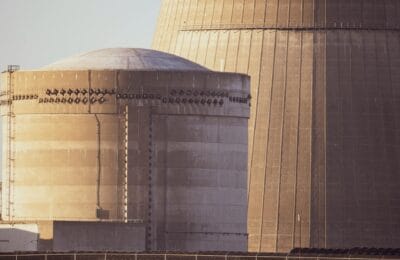
Power grid: Iran’s electrical grid serves 88 million people. Destroying it eliminates refrigeration (destroying food supplies and medications), lighting, heating and cooling (Iran experiences both extreme heat and extreme cold), water pumping, hospital equipment, and communications. The elderly, the young, and the chronically ill are most vulnerable — estimated at 15-20 million Iranians who depend on electricity for medical devices, temperature regulation, or food preservation.
Water systems: Modern water treatment and distribution depends entirely on electrical pumping and chemical treatment. Without power, water treatment plants cease functioning within hours. Within days, urban populations of tens of millions would lose access to safe drinking water. Waterborne diseases — cholera, typhoid, dysentery — would follow within weeks, primarily affecting children and the elderly.
Bridges: Iran’s mountainous geography makes bridges critical not just for transportation but for access to food, medical care, and markets. Destroying bridges isolates communities, prevents humanitarian aid delivery, and cuts off rural populations from the urban centers where hospitals and food distribution networks are concentrated.
Healthcare: Iranian hospitals, already strained by casualties from five weeks of airstrikes, depend on reliable electricity, water, and transportation infrastructure. Destroying these systems would effectively collapse the healthcare system, turning treatable injuries and illnesses into death sentences.
The combined effect of systematic infrastructure destruction would be, as one humanitarian organization’s assessment stated, “a man-made humanitarian catastrophe affecting tens of millions of people, with a mortality impact that could dwarf the direct casualties from military operations by orders of magnitude.”
The International Response: A World Divided
Allied Discomfort
Trump’s threats have created significant discomfort among America’s traditional allies, many of whom have provided varying degrees of support to the Iran campaign but draw a clear line at the deliberate targeting of civilian infrastructure.
The European Union’s High Representative for Foreign Affairs issued a statement noting that “the deliberate destruction of civilian infrastructure is incompatible with international humanitarian law and the values that the transatlantic alliance is built upon.” This carefully worded rebuke reflects European alarm at the direction of the campaign without fully breaking with Washington.
The United Kingdom, America’s closest military ally, has been notably cautious. While not directly criticizing the president, British officials have emphasized through various channels that UK support for the Iran campaign is contingent on compliance with international humanitarian law — a conditional statement that implicitly acknowledges the risk that Trump’s threats, if carried out, would cross that line.
According to The Wall Street Journal, several allied nations have privately communicated to Washington that they would be compelled to publicly distance themselves from the campaign — and potentially withdraw intelligence and logistical support — if systematic infrastructure targeting begins.
The Global South Response
Nations outside the Western alliance system have been more blunt. China called the threats “barbaric and in flagrant violation of international law.” Russia described them as “state terrorism.” The African Union expressed “grave concern.” The Arab League issued a statement warning that “the deliberate destruction of civilian infrastructure in any nation sets a precedent that threatens the security of all nations.”
The Non-Aligned Movement, representing 120 member states, called for an emergency session of the UN General Assembly to address the threats, arguing that “the public announcement of intent to destroy civilian infrastructure constitutes a threat to international peace and security.”
The United Nations
UN Secretary-General has called the threats “deeply troubling” and has reminded all parties to the conflict of their obligations under international humanitarian law. The UN High Commissioner for Human Rights has been more direct, stating that “the deliberate destruction of infrastructure essential to civilian survival is prohibited under international law, regardless of the military objectives sought.”
Several UN member states have called for Security Council action, but the prospect of a meaningful resolution is limited by the US veto power — a structural feature of the Security Council that effectively prevents the body from acting against the interests of any permanent member.
The Military Perspective: What Commanders Think
Professional Military Concerns
Within the US military establishment, Trump’s infrastructure threats have generated significant concern, though much of it is expressed privately due to the chain of command’s constraints on public dissent. Retired senior officers, however, have been more forthcoming.
Retired General David Petraeus, speaking at a think tank event, noted that “infrastructure campaigns historically create more problems than they solve. They generate civilian resentment, complicate post-conflict reconstruction, and provide adversaries with propaganda that strengthens their narrative.” While not directly criticizing the president, the implication was clear.
Active-duty military lawyers (Judge Advocate General corps officers) are known to review all target nominations for compliance with the laws of armed conflict. These legal reviews serve as a critical check on targeting decisions and have historically prevented strikes on targets that would violate IHL. However, the effectiveness of this review process depends on the willingness of senior leadership to accept legal advice — a dynamic that can be strained when political pressure pushes toward more aggressive targeting.
The practical military challenge is also significant. Destroying Iran’s entire infrastructure would require a massive, sustained bombing campaign consuming thousands of precision-guided munitions — weapons that are already being consumed at high rates in the current campaign and that take months to replenish. The munitions expenditure required for systematic infrastructure destruction would potentially deplete US weapons stocks to levels that compromise readiness for other contingencies worldwide.
The Counter-Argument From Hawks
Not all military voices oppose infrastructure targeting. Hawks within the Pentagon and the broader national security establishment argue that the current approach — focusing on military targets while leaving civilian infrastructure largely intact — has failed to produce the desired outcome. Iran has not capitulated, its military capabilities remain partially intact, and the conflict appears to be settling into an attritional pattern that could last months or years.
From this perspective, infrastructure targeting is not wanton destruction but strategic necessity — the application of maximum pressure to force a resolution before the conflict’s costs (economic, political, human) become unsustainable for the United States. Advocates point to the eventual success of infrastructure-focused campaigns in the Gulf War and Kosovo as evidence that the approach can work.
This argument has significant adherents in Congress and among hawkish commentators, creating political support for the president’s position. The debate between hawks who see infrastructure targeting as necessary escalation and those who see it as illegal and counterproductive is one of the most consequential internal policy disputes of the conflict.
The Egyptian and Regional Perspective
For Egypt, which has maintained careful neutrality while advocating for diplomatic resolution, Trump’s infrastructure threats represent a dangerous escalation that could destabilize the entire region. Cairo’s concern is multifaceted:
Humanitarian: Egypt, as a major recipient of US military and economic aid and simultaneously a country with deep ties to the broader Muslim world, is deeply uncomfortable with the spectacle of a US president threatening to destroy the civilian infrastructure of a Muslim-majority nation. The humanitarian implications resonate strongly with the Egyptian public.
Precedential: If the deliberate destruction of civilian infrastructure becomes an accepted tool of warfare, the precedent affects every country in the region. What happens to Iran today could happen to any nation tomorrow.
Strategic: A humanitarian catastrophe in Iran would generate massive refugee flows, regional instability, and economic disruption that would inevitably affect Egypt and its neighbors.
Lebanon views the threats with particular alarm, as any major escalation against Iran increases the risk of the conflict expanding to include Hezbollah — a scenario that could devastate Lebanon’s already fragile infrastructure and economy.
Palestine, once again, finds its cause marginalized as international attention focuses on the Iran conflict. Palestinian leaders have drawn parallels between Trump’s threats against Iranian infrastructure and the destruction of Palestinian civilian infrastructure in Gaza and the West Bank, arguing that both reflect a pattern of disregard for civilian life in the pursuit of military objectives.
What Happens If the Threats Are Carried Out: A Scenario Analysis
The Humanitarian Catastrophe
If Trump’s threats are executed — systematic destruction of Iran’s power grid, water systems, bridges, and civilian infrastructure — the humanitarian consequences would be catastrophic and long-lasting. Based on analysis of previous infrastructure campaigns and Iran’s specific vulnerabilities:
- Immediate impact: Loss of electrical power nationwide within 48-72 hours. Hospitals operating on backup generators until fuel runs out (typically 3-7 days). Water treatment failure in major cities within 24-48 hours of power loss.
- Short-term (weeks): Food spoilage due to loss of refrigeration. Waterborne disease outbreaks in urban areas. Medical supply chain collapse. Communication breakdown as cellular and internet infrastructure fails.
- Medium-term (months): Widespread malnutrition as food distribution networks collapse. Epidemic-level waterborne disease. Excess mortality estimated at tens of thousands, primarily among children, the elderly, and the chronically ill.
- Long-term (years): Reconstruction of destroyed infrastructure would take years and cost hundreds of billions of dollars. The economic damage would set Iran back decades. The humanitarian toll could reach hundreds of thousands of excess deaths over a multi-year period.
The Strategic Blowback
Paradoxically, the destruction that Trump threatens would likely undermine rather than advance American strategic objectives:
Iranian resilience: History consistently shows that infrastructure destruction hardens civilian resolve rather than breaking it. Iranians, whose national identity is built on resistance to foreign pressure, would likely rally around the government rather than demanding surrender.
International isolation: Systematic infrastructure destruction would likely cause most US allies to distance themselves from the campaign, potentially withdrawing intelligence and logistical support. The coalition, already fragile, could collapse.
Legal liability: While the US does not recognize ICC jurisdiction, the documentation of systematic infrastructure destruction would create lasting legal exposure for military commanders and political leaders. This liability would persist indefinitely and could affect travel, diplomacy, and future proceedings.
Reconstruction burden: If the conflict eventually ends and the US seeks a stable, functioning Iran as a regional outcome, the destruction of infrastructure creates a massive reconstruction burden that the US would face pressure to fund — repeating the pattern of Iraq, where post-war reconstruction costs dwarfed the cost of military operations.
The Moral Dimension: What Kind of Power Does America Want to Be?
Ultimately, the debate over Trump’s infrastructure threats is not just about legality or strategy — it is about identity. What kind of power does the United States want to be? The answer to that question, more than any tactical calculation, will determine the long-term consequences of the choices made in the coming weeks.
A United States that deliberately destroys the infrastructure that keeps 88 million people alive — that cuts off their electricity, contaminates their water, collapses their hospitals, and isolates their communities — is a very different country from the one that has historically positioned itself as a champion of human rights, democratic values, and the rule of law.
The phrase “back to the Stone Age” is not just rhetoric. It is a description of what life looks like without electricity, clean water, modern medicine, and functioning transportation. It is a description of mass suffering inflicted deliberately on a civilian population. And it is, under international law, a description of a war crime.
This does not mean that Iran bears no responsibility for the conflict or that Iranian actions have not violated international law. Iran’s own military operations, support for proxy forces, and threats against regional neighbors all raise serious legal and moral questions. But the illegality of one side’s conduct does not authorize the other side to commit its own violations. This is a foundational principle of international humanitarian law: the obligations of IHL apply to all parties at all times, regardless of what the adversary does.
Conclusion: The Line That Must Not Be Crossed
There are lines in warfare that, once crossed, cannot be uncrossed. The deliberate, systematic destruction of civilian infrastructure is one of them. The Geneva Conventions exist precisely to establish these lines — to say that even in the horror of war, certain acts are beyond the pale.
President Trump’s threats to bomb Iran “back to the Stone Age” — to destroy its bridges, power plants, and water systems — describe a campaign that international law prohibits, that military history suggests will fail to achieve its objectives, and that would cause humanitarian suffering on a massive scale.
The 100+ legal experts who have signed the open letter are not anti-American activists or pro-Iranian sympathizers. They are scholars and practitioners of the legal frameworks that the United States itself helped create after World War II — the Geneva Conventions, the Nuremberg principles, the United Nations Charter. Their warning is not political; it is professional. The law is clear. The consequences of violating it are predictable. And the moral responsibility belongs to those who give the orders.
The world is watching. History is recording. And the decisions made in the coming days will define not just the outcome of this conflict, but the kind of international order that emerges from it.