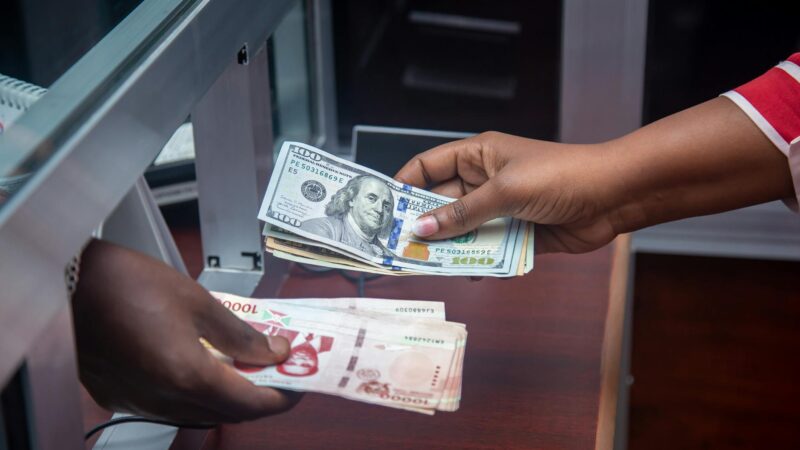
Egyptian Pound Down 8.3% in One Month: Full Analysis of the Fastest Decline of 2026
In the span of a single month, the Egyptian pound has fallen 8.29% against the US dollar, pushing the exchange rate to 54.35 EGP per dollar. This is not just a number on a trading screen — it is a direct hit to household budgets, grocery bills, medicine costs, and the daily cost of living for over 120 million Egyptians. In this comprehensive analysis from The Middle East Insider, we break down why the pound is falling, what it means for daily life, how gold and stocks are responding, and what the three most likely scenarios are for Q2 2026.
USD/EGP Exchange Rate — April 2026 Data
| Period | USD/EGP Rate | Change |
|---|---|---|
| Today (April 5, 2026) | 54.35 | +0.18% from prior session |
| 1 week ago | ~53.20 | +2.16% |
| 1 month ago (March 2026) | ~50.19 | +8.29% |
| 3 months ago (January 2026) | ~51.50 | +5.53% |
| 1 year ago (April 2025) | ~50.54 | +7.54% |
| 2 years ago (April 2024) | ~48.50 | +12.06% |
What stands out in these numbers is that nearly all of the year-over-year decline (7.54%) occurred in just the last month (8.29%). The pound was relatively stable for most of the preceding period, then dropped sharply. The key question: is this a temporary correction or the beginning of a new depreciation wave?
Why Is the Egyptian Pound Falling Now? The Real Drivers
1. The Iran War and Oil Price Surge
The primary driver behind the pound’s recent decline is the surge in global oil prices triggered by the military escalation with Iran. Egypt is a net energy importer — it buys more oil and petroleum products than it sells. Every additional dollar per barrel of oil translates into hundreds of millions of dollars in additional annual import costs.

With Brent crude surpassing $100/barrel amid regional tensions, Egypt’s fuel import bill has expanded significantly. This increases demand for dollars in the domestic market and pressures foreign currency reserves. Remember that Egypt subsidizes domestic fuel prices — the government absorbs the difference between global and local prices, so every increase in global prices means an additional burden on the national budget.
2. Hot Money Outflows
Regional instability drives foreign investors to pull capital from emerging markets and redirect it to safe havens like US Treasury bonds and gold. Egypt had benefited in recent months from “hot money” inflows — short-term investments in government debt instruments attracted by high interest rates. But as regional risks have escalated, some of this capital has begun flowing out.
Hot money is a double-edged sword: when it enters, it boosts reserves and supports the currency. When it exits, it drains dollar liquidity and pressures the pound. Egypt’s reliance on these volatile capital flows leaves the economy vulnerable to sudden reversals triggered by events entirely outside its control.
3. Expanding Import Bill
Egypt imports approximately 60% of its food consumption — particularly wheat, cooking oils, sugar, and meat. Rising global commodity prices, combined with supply chain disruptions from regional tensions, increase dollar demand for import financing. As the world’s largest wheat importer, any rise in global wheat prices hits Egypt’s balance of payments directly.
4. Declining Tourism Revenue
Tourism accounts for roughly 12% of Egypt’s GDP and is a critical source of foreign currency. The regional tensions — the war with Iran, the invasion in Lebanon, and the ongoing situation in Gaza — have negatively affected bookings despite the fact that Egypt itself remains completely safe and unaffected by these conflicts.
The unfortunate reality of global tourism is that many European and Asian travelers view the “Middle East” as a single block and avoid the entire region when tensions rise. Estimates suggest tourist arrivals fell 15-25% in Q1 2026 compared to the same period in 2025. Each empty hotel room means fewer dollars entering the economy. The tourism sector employs millions of Egyptians — from hotel workers to tour guides to shop owners in tourist areas — and its decline has ripple effects across the entire economy.
5. External Debt Service Pressure
Egypt carries a significant external debt burden, and scheduled repayments require dollars. With each decline in the pound’s value, the effective burden of this debt in local currency terms increases. This creates a vicious cycle: the falling pound increases debt burden, which pressures foreign reserves, which pressures the pound further.
Impact on Daily Life: What 8.3% Really Means for Egyptian Households
Food Prices
Egypt imports roughly 60% of its food. Each 1% decline in the pound translates to approximately 0.7-1% increase in imported food prices. With an 8.3% decline in one month, expect meaningful price increases in the coming weeks — particularly for cooking oils, sugar, rice, imported meat, and dairy products.
Subsidized bread is insulated (subsidies absorb the shock), but everything else rises. A monthly supermarket bill of 5,000 EGP a month ago may now cost 5,400-5,500 EGP — an additional 400-500 EGP for exactly the same items. For families already stretched thin, this is not a statistical abstraction; it means cutting meals, switching to cheaper substitutes, or going without.
Fuel and Transportation
While fuel is partially subsidized, the combination of rising global prices and a weaker pound makes a domestic fuel price increase more likely at the next review. Higher fuel costs flow through to public and private transportation, and to the cost of transporting goods — meaning they raise the price of virtually everything, even domestically produced items.
Electronics and Vehicles
Imported products — phones, electronics, appliances, and cars — rise in price roughly in proportion to the pound’s decline. An iPhone 16 selling for 75,000 EGP will soon cost 81,000 EGP or more. Imported vehicles will see similar increases. Even locally assembled products that rely on imported components will face price pressure.
Rent
In upscale areas and new developments, many rental contracts are dollar-linked or adjusted with exchange rate movements. Even in areas using pound-denominated leases, landlords are raising prices to compensate for lost purchasing power. This pressure intensifies with each depreciation wave.
Gold Prices in Egypt — April 2026: The Hedge Egyptians Are Buying
Every time the pound weakens, demand for gold surges as Egyptians seek to preserve their savings. Current prices show why many consider gold the best store of value available:
| Karat | Price (EGP/gram) | Monthly Change | Common Use |
|---|---|---|---|
| 24K | ~5,000 EGP | +12% | Bars and investment |
| 21K | ~4,300 EGP | +12% | Jewelry (most traded) |
| 18K | ~3,700 EGP | +12% | Jewelry and accessories |
| 14K | ~2,900 EGP | +12% | Budget jewelry |
| Gold Pound (8g, 21K) | ~34,400 EGP | +12% | Popular savings vehicle |
Note that gold prices in EGP rose approximately 12% in the past month — more than the pound’s 8.3% decline. This is because the global gold price in dollars also rose due to regional tensions. The result: anyone who bought gold a month ago gained 12% in EGP terms in just 30 days.
However, an important caveat: gold is not a guaranteed profit. Prices fluctuate, and buying at elevated prices carries risk if global prices correct. Gold is a long-term store of value, not a short-term speculation tool. Follow our daily gold analysis on our gold price page for informed decision-making.
The Stock Market Paradox: EGX Up 46% While the Pound Drops
One of the most striking features of Egypt’s current economic landscape is the stock market’s exceptional performance alongside the currency’s decline. The EGX 30 index has reached 46,679 points — up 46.37% year-over-year. How is this possible? Does a rising stock market not indicate economic health?
The reality is more nuanced:
First: Inflation inflates asset values. When a currency loses value, the price of everything rises — including stocks. Listed companies own real assets (factories, real estate, inventory) whose pound-denominated value increases as the currency weakens. So a 46% rise in the index does not necessarily mean companies became more productive or profitable — a significant portion of this gain is simply a reflection of the pound’s decline.
Second: Stocks serve as an inflation hedge. Many Egyptian investors view equities as an alternative to watching their cash erode in bank accounts. Rather than holding depreciating pounds, they buy shares in companies that own real assets. This investment demand pushes stock prices higher independently of fundamental performance.
Third: Exporters genuinely benefit. Companies that earn revenue in dollars but pay costs in pounds see their local-currency profits increase when the pound falls. This genuinely lifts their share prices based on improved earnings.
The sobering truth: If you calculate the EGX’s performance in dollar terms rather than pounds, the real gains are lower. An index that rose 46% in pounds during a year when the pound fell 7.5% delivered approximately 36% in dollar terms — still strong, but not the headline number.
The BRICS Strategy: Can Egypt Reduce Dollar Dependency?
In a significant development, Egypt’s foreign minister met with Russian President Putin to discuss strengthening cooperation within the BRICS framework and expanding the use of local currencies in bilateral trade. This is not mere diplomacy — it signals a strategic shift toward reducing the dollar’s dominance over Egypt’s economy.
What BRICS means for Egypt:
BRICS now includes Brazil, Russia, India, China, South Africa, plus new members including Egypt, the UAE, Ethiopia, Iran, and Saudi Arabia. The stated goal is to build a more balanced global economic system less dependent on the US dollar.
For Egypt, BRICS membership opens several doors:
- Local currency trade: Instead of using dollars to buy goods from China or India, Egypt could theoretically trade in EGP against the Chinese yuan or Indian rupee. This reduces dollar demand and eases currency pressure.
- New Development Bank: The BRICS bank offers loans with better terms than Western institutions and without the usual political conditions.
- Central bank cooperation: Egypt is calling for stronger cooperation among BRICS central banks to create alternative payment mechanisms to the US-dominated SWIFT system.
Is this realistic in the short term?
Honestly, reducing dollar dependency is a long and complex process. Most of Egypt’s foreign trade is still priced in dollars. Global oil prices are in dollars. Egyptian debt instruments are dollar-denominated. Transforming the system requires years, possibly decades. But BRICS membership is a strategic step in the right direction, even if it does not produce immediate exchange rate relief.
Remittances: The Dual Impact of a Weaker Pound
Remittances from Egyptians working abroad represent one of the country’s most important foreign currency sources — approximately $22-24 billion annually. The pound’s decline affects these flows in two opposing ways:
Positive effect: An Egyptian worker in the Gulf sending $1,000 monthly delivered 50,190 EGP to their family a month ago. Today, the same $1,000 delivers 54,350 EGP — an extra 4,160 EGP for the identical dollar amount. This means greater purchasing power for remittance recipients (assuming prices have not yet fully adjusted).
Negative effect: A weaker pound means that Egyptians abroad need fewer dollars to cover the same expenses in EGP. This could reduce total dollar remittances over the medium term. Additionally, economic instability encourages some expatriates to delay transfers while waiting for a better rate — behavior that reduces dollar inflows and increases pressure on the pound.
The critical policy point: Egypt urgently needs to channel remittances through official banking channels rather than the informal market. Narrowing the gap between official and parallel market rates is the key to achieving this.
Central Bank Response: Walking a Tightrope
The Central Bank of Egypt faces a difficult equation with no easy answers:
Option 1: Raise interest rates. This attracts foreign capital and supports the pound, but raises borrowing costs for businesses and individuals, slowing economic growth. Egyptian interest rates are already among the highest in the region.
Option 2: Intervene in the forex market. Sell dollars from reserves to support the pound. But this depletes the foreign reserves the country needs for essential imports. The lesson of 2022-2023 was clear: artificial exchange rate intervention fails over the medium term.
Option 3: Let the market work. Allow the pound to depreciate until it reaches natural equilibrium. Painful in the short term but the most sustainable approach. The CBE appears to be following this path — a managed float that permits gradual depreciation with intervention only to prevent sharp crashes.
An additional concern: Egypt’s agreement with the IMF requires exchange rate flexibility. Excessive intervention to fix the pound could jeopardize this agreement and delay disbursement of remaining tranches from the $8 billion loan program.
Three Scenarios for the Egyptian Pound in Q2 2026
Scenario 1: Relative Stability — USD/EGP Between 53-56 (40% probability)
In this scenario, regional tensions ease somewhat, oil prices pull back slightly, and the CBE maintains a tight monetary stance. Remittances continue normally. Tourism partially recovers as summer approaches. The pound stabilizes around current levels with limited fluctuations.
What it means for you: Prices rise an additional 5-8% then stabilize. Budget pressure continues but becomes manageable through adaptation.
Scenario 2: Further Decline — USD/EGP Reaches 58-62 (35% probability)
This occurs if the Iran war escalates and oil prices exceed $120/barrel, if significant hot money exits the market, or if the IMF tranche disbursement is delayed. The pound continues weakening, breaking the 60 EGP barrier by end of June 2026.
What it means for you: A new wave of inflation. Food prices rise an additional 15-20%. Severe pressure on the middle class. The CBE may be forced to raise interest rates again.
Scenario 3: Surprise Recovery — USD/EGP Returns to 50-52 (25% probability)
Possible if a comprehensive regional ceasefire occurs, a major foreign investment deal materializes (similar in scale to the Ras El-Hekma deal), or oil prices drop sharply. Restored confidence attracts hot money back and supports the pound strongly.
What it means for you: Price stabilization. Relative improvement in purchasing power. But this scenario depends on external factors beyond Egypt’s control.
Practical Advice: How to Protect Your Savings
These are general considerations, not professional financial advice. Consult a financial advisor before making significant decisions.
Gold: The Traditional Haven
Advantages: Has historically preserved value. Liquid (easily sold). Culturally understood and accepted in Egypt. Rose 12% in EGP terms in just one month.
Disadvantages: Generates no periodic income (no dividends or interest). Subject to global price volatility. The buy-sell spread (making charges for jewelry) reduces returns on frequent trading. Currently elevated prices may mean buying near a peak.
Recommendation: If considering gold, buy bars (24K) to avoid high making charges. Do not put all your savings in gold — diversification matters. Follow daily gold prices to time your purchases wisely.
Egyptian Stock Market (EGX): Growth with Risk
Advantages: 46% annual return (in EGP). Strong Egyptian companies listed across sectors. Inflation protection since stocks represent real assets. Dividend payments from select companies.
Disadvantages: High volatility — the market can lose 10-20% in weeks. Requires knowledge and monitoring. Not suitable for money you need in the short term.
Recommendation: If you are a beginner, consider index funds or mutual funds rather than individual stocks. Only invest money you can afford to lose. Do not panic-sell during market dips. Read our economic analysis to understand market trends.
US Dollars: The Direct Hedge
Advantages: Direct protection against pound depreciation. High liquidity. Globally accepted.
Disadvantages: Generates no return (unless held in a dollar deposit). Buying large amounts pressures the exchange market. May lose value if conditions improve.
Recommendation: Keep a reasonable portion of your savings in dollars as insurance. Do not speculate on exchange rate movements — this carries high risk. Buy from banks, not the black market.
Real Estate: The Fixed Asset
Advantages: Tangible asset that retains value. Can generate rental income. High housing demand in Egypt (120 million population).
Disadvantages: Requires significant capital. Low liquidity (selling takes time). Market bubble risks.
Bottom line: No single option is perfect. The best strategy is diversification — some gold, some stocks, some dollars, some fixed assets. The proportions depend on your financial situation, goals, and risk tolerance.
Comparing the Egyptian Pound to Other Emerging Market Currencies
| Currency | Monthly Change | Annual Change | Primary Driver |
|---|---|---|---|
| Egyptian Pound (EGP) | -8.29% | -7.54% | Oil prices + regional war + hot money |
| Turkish Lira (TRY) | -2.1% | -12% | Chronic inflation + monetary policy |
| South African Rand (ZAR) | -1.5% | -5% | Economic weakness + energy crisis |
| Indian Rupee (INR) | -0.8% | -3% | High oil + growth slowdown |
| Argentine Peso (ARS) | -3.5% | -25% | Hyperinflation + Milei reforms |
The pound’s monthly decline (8.29%) is the highest among these currencies by a significant margin. However, on an annual basis, the pound’s performance (-7.54%) is better than the Turkish lira (-12%) and the Argentine peso (-25%). This suggests the recent drop was sharp and concentrated — perhaps a delayed correction — and may not continue at this pace.
Government Economic Initiatives Running in Parallel
Alongside monetary policy, the Egyptian government is pursuing several economic initiatives:
Banha Investment Zone: The Prime Minister has been touring a new industrial investment zone in Banha, aimed at attracting manufacturing investment and creating employment. This is part of a broader strategy to diversify the economy and increase exports — a structural fix that could reduce long-term dollar demand.
Naval Modernization: Plans for naval fleet modernization in 2026 include defense contracts that may attract technology transfers and defense sector investment.
Nabil Fahmy’s Arab League Nomination: The nomination of former Foreign Minister Nabil Fahmy as the next Arab League Secretary General reflects Egypt’s growing regional influence.
These initiatives matter for the medium term but do not address the immediate exchange rate pressure. What the pound needs now is a combination of regional stability (outside Egypt’s control) and smart monetary policy (in the Central Bank’s hands).
The Bottom Line: What You Need to Know Right Now
The Egyptian pound’s 8.3% decline in one month is concerning but not catastrophic. Egypt is not Lebanon — institutions are functioning, the Central Bank has tools at its disposal, and the real economy (120 million consumers, the Suez Canal, tourism potential, remittance flows) provides a solid foundation. But the challenges are real and regional pressures are ongoing.
What you should do:
- Do not panic — sharp declines are often followed by stabilization periods
- Diversify your savings across gold, stocks, dollars, and real estate
- Reduce unnecessary spending, especially on imported goods
- If you earn in dollars (remittances or freelancing), take advantage of the favorable rate
- Stay informed — the coming weeks are critical
At The Middle East Insider, we will continue tracking the exchange rate, gold prices, and stock market performance daily to help you make informed decisions. Egypt is stronger than a passing crisis — but caution and knowledge are your best allies in this period.
Suez Canal Revenue and Trade Impact
The Suez Canal is one of Egypt’s most important sources of foreign currency, generating over $9 billion in recent years. However, regional tensions continue to affect shipping traffic. Houthi attacks in the Red Sea — though somewhat diminished — still push some shipping companies to use the longer and more expensive Cape of Good Hope route.
Every vessel that bypasses the Suez Canal represents hundreds of thousands of dollars in lost transit fees. Estimates suggest Q1 2026 canal revenues declined 10-15% year-over-year. This revenue shortfall directly pressures the balance of payments and weakens the pound’s position. The irony is that while the canal itself remains perfectly safe and operational, the perception of regional risk is enough to divert traffic.
On the other hand, the pound’s decline makes canal transit fees relatively cheaper in other currencies (fees are denominated in dollars and Special Drawing Rights), which could encourage some companies to return to the Egyptian waterway. But this effect is limited since the decision is driven more by security calculations than economics.
Inflation: The Silent Enemy of Egyptian Household Budgets
Inflation is the real-world translation of currency depreciation at the household level. When the pound loses 8.3% of its value, you do not feel it when exchanging currency — you feel it standing in front of the supermarket shelf.
Egypt’s official inflation rate exceeds 30% on an annual basis. But the inflation experienced by ordinary citizens is significantly higher because the official index includes subsidized goods (like bread) that bring down the average. If you look specifically at meat, poultry, dairy, and cooking oils — the items families actually consume daily — real inflation exceeds 40%.
The next inflation wave will appear within 2-4 weeks. That is the time merchants need to import new goods at the new exchange rate and distribute them through markets. So even if you do not notice a dramatic difference today, prepare for meaningful increases by late April and early May 2026.
Practical tip: If there are staple goods you can safely stock up on (rice, oil, sugar, canned goods), buying now at current prices may be a smart move before the next wave of increases hits retail shelves.
The Freelance Economy: A Silver Lining in the Pound’s Decline
Paradoxically, the pound’s decline creates genuine opportunities for a growing segment of Egyptians: freelancers and digital economy workers. An Egyptian working through platforms like Upwork or Fiverr, or providing services to international clients, earns in dollars — and every decline in the pound means higher income in local currency terms.
Egypt has become one of the most important freelance hubs in the Arab world. Egyptian software developers, designers, content writers, and translators compete at attractive rates for international clients while earning excellent incomes by local standards. A freelance developer earning $2,000 monthly now takes home over 108,000 EGP — a salary that competes with senior executive positions in many Egyptian companies.
But this opportunity requires investment in skills and education. The Egyptian government has launched several initiatives to train youth in digital skills — a step in the right direction. The future belongs to those who can earn in dollars and spend in pounds. For Egypt’s young population (with a median age under 25), this is not just an economic opportunity — it is potentially transformative for the entire economy if scaled effectively.
Real Estate: Bubble or Safe Haven?
Egyptian real estate has experienced a significant price boom in recent years. Many Egyptians consider property the best investment — “stone never loses value” goes the popular saying. But is this still true under current conditions?
The reality is that property prices in Egypt have surged dramatically — some areas have seen prices double within two years. But this increase has been driven by several factors that may not persist: flight from inflation, genuine demand from wealthy segments, and speculative activity. The question is whether the average citizen looking for housing can afford these prices.
Concerns about a genuine property bubble are legitimate. Massive real estate projects in the New Administrative Capital and new urban developments are being built and priced at astronomical figures — but actual occupancy in many of them remains low. If the economy slows further or interest rates rise (increasing mortgage costs), we could see a price correction.
The advice: real estate is a good investment if you are buying for actual residence or for rental income in areas with genuine demand. Speculating on properties in incomplete new developments is high-risk in the current environment.