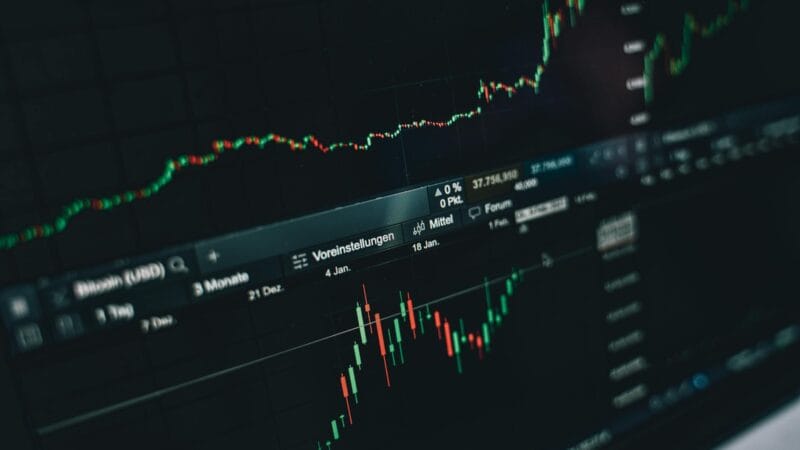
Bitcoin at $67K and Gold at Record Highs: The Truth Nobody Wants to Hear
In April 2026, investors across the Middle East and beyond are staring at a market divergence that leaves no room for interpretation: Bitcoin is bleeding at $67,097, down sharply from the $73,000-$74,000 range it traded at just weeks ago, while gold soars at historic, all-time highs of $150.66 per gram ($4,686 per ounce). This divergence is not a temporary market blip — it is a definitive verdict from global markets on one of the biggest marketing narratives in cryptocurrency history: the myth of “digital gold.”
For years, Bitcoin advocates promoted the idea that the world’s largest cryptocurrency was a modern alternative to gold — a digital safe haven that would protect wealth during crises, wars, and geopolitical turmoil. They argued that its limited supply of 21 million coins made it superior to gold as an inflation hedge. They claimed that decentralization shielded it from government interference. But the Iran war just subjected those claims to the harshest test imaginable — and the results are devastating for the Bitcoin-as-safe-haven thesis.
Side-by-Side Performance Table: Bitcoin vs Gold in 2026
| Time Period | Bitcoin (BTC) | Gold ($/gram) | Winner |
|---|---|---|---|
| Current Price (Apr 5, 2026) | $67,097 | $150.66/gram | — |
| 1-Week Change | -4.2% | +2.8% | Gold |
| 1-Month Change | -8.7% | +7.3% | Gold |
| 3-Month Change | -11.5% | +18.9% | Gold |
| Year-to-Date | -14.3% | +24.6% | Gold |
The numbers do not lie. Across every timeframe — one week, one month, three months, and year-to-date — gold has dramatically outperformed Bitcoin. This is not a random fluctuation but a clear, consistent pattern that reflects a fundamental shift in how global investors behave during genuine crises.

The “Digital Gold” Narrative — What It Claimed and How War Tested It
The digital gold narrative gained real institutional traction in 2020, when major corporations like MicroStrategy and Tesla began buying Bitcoin as a treasury reserve asset. The pitch was simple and seductive: Bitcoin shares gold’s scarcity (limited supply) but surpasses it in portability, divisibility, and ease of storage. Fidelity published a 2021 report suggesting Bitcoin “could be a better store of value than gold.” ARK Invest projected a $1 million price target by 2030 based largely on this thesis.
But what happened during the Iran crisis exposed the enormous gap between theory and reality. When military tensions escalated in the region, investors did not behave as Bitcoin bulls predicted. They did not rush to buy “digital gold” — they did the exact opposite: they sold Bitcoin and bought real gold. The reason? Because in moments of genuine panic, Bitcoin behaves like a high-risk asset, not a safe haven.
This is not opinion — it is what the data says. The correlation coefficient between Bitcoin and the Nasdaq composite reached 0.78 during Q1 2026, the highest level since 2022. This means Bitcoin moves with technology stocks, not with gold. When stocks fall on war fears, Bitcoin falls with them. When gold rises as a safe haven, Bitcoin goes the other direction.
Why Gold Won: Three Decisive Factors
1. Unprecedented Central Bank Demand
According to the latest data from the World Gold Council, central banks around the world purchased more than 290 tonnes of gold in Q1 2026 alone — a 35% increase over the same period last year. China alone added 58 tonnes, India 42 tonnes, and Turkey 28 tonnes. Even central banks in Gulf states — which had historically been conservative about increasing gold reserves — have started buying noticeably more.
The motivation is clear: in a world of escalating geopolitical tensions and declining trust in the dollar as the sole reserve currency, gold remains the one asset that needs no one’s permission to hold. It cannot be frozen by sanctions, does not depend on internet connectivity or electricity, and does not collapse if a trading platform gets hacked. These are simple advantages, but they have become decisive in the world of 2026.
By contrast, not a single central bank in the world has announced purchasing Bitcoin as a reserve asset. Even El Salvador — the only country that adopted Bitcoin as legal tender — significantly reduced its exposure after accumulating losses. The message is clear: the institutions responsible for protecting sovereign wealth do not trust Bitcoin as a store of value during crises.
2. Centuries of Crisis Track Record vs Just 17 Years
Gold’s status as a safe haven is not a theory — it is a fact proven over thousands of years. From ancient Egyptian civilization to both World Wars to the 2008 financial crisis to the 2020 pandemic, gold has repeatedly demonstrated that it rises when everything else falls. This is not an emotional belief — it is a documented statistical pattern across every major crisis in modern history.
Bitcoin, by contrast, was born in 2009 and has only been through a limited number of major crises. In every single one — from the COVID shock of March 2020 (when it crashed 50% in a single day) to the Ukraine war of 2022 (when it dropped 35% in a month) to the current Iran crisis — it behaved like a risk asset, not a safe haven. Three crises, three failures. That is not bad luck — that is a pattern.
3. Intrinsic Value vs Consensus Value
Gold has real industrial applications: electronics, medicine, aerospace, jewelry. This gives it a price floor even if investment demand declines. Bitcoin has no intrinsic value outside of user consensus that it is worth something. This does not mean it is worthless — but it means its value is more fragile in moments of panic, when everything gets repriced from scratch.
Why Bitcoin Fell: A Deep Analysis
Risk-Off Environment
When a major regional war like the Iran crisis erupts, institutional investors automatically switch to risk-off mode. This means selling high-volatility assets — with cryptocurrencies at the top of the list — and buying traditional “safe” assets like gold, US Treasury bonds, the Japanese yen, and the Swiss franc. This behavior is not emotional but systematic: hedge funds and major institutions have automated models that automatically reallocate assets based on volatility indices and geopolitical risk indicators.
Correlation With Tech Stocks
One of Bitcoin’s biggest problems is its growing correlation with technology stocks. During Q1 2026, Bitcoin moved in tandem with the Nasdaq on 78% of trading days. This means investors treat it as a high-risk tech stock, not a safe haven. When tech stocks retreat on war and recession fears — as happened in March and April 2026 — Bitcoin falls right alongside them.
Liquidity Concerns
During crises, liquidity in cryptocurrency markets dries up far faster than in traditional markets. Bid-ask spreads widen, and large sell orders cause significant slippage. During the first week of the Iran crisis, major exchanges including Binance and Coinbase saw liquidations exceeding $2.3 billion in 48 hours. This type of forced liquidation accelerates declines and turns moderate pullbacks into crashes.
Institutional Buyers Absent in Crises
The major financial institutions that entered the Bitcoin market during 2024-2025 — such as BlackRock and Fidelity’s ETFs — were not active buyers during the crisis. In fact, ETF flow data shows net outflows of $1.8 billion during March 2026. Institutions buy Bitcoin when the mood is optimistic but sell or step aside when crises intensify. This is textbook behavior for risk assets, not safe havens.
Institutional Behavior: Who Is Buying Gold vs Who Is Buying Bitcoin?
The distinction between buyers reveals a fundamental truth. Gold buyers in 2026 include: central banks (the largest buyer), sovereign wealth funds, insurance companies, pension funds, and individual investors in emerging markets (especially China, India, Egypt, and Turkey). These are “smart money” buyers seeking long-term protection.
Bitcoin buyers in 2026 include: hedge funds (for short-term speculation), tech companies, individual investors in developed markets (especially the US and Europe), and leveraged traders. These are buyers seeking high returns while accepting high risk — the exact opposite of the safe-haven definition.
The most important difference: not a single central bank in the world holds Bitcoin as an official reserve. By contrast, central banks collectively hold more than 36,000 tonnes of gold worth over $5.4 trillion. That alone summarizes the difference between an asset that has proven itself over centuries and one that is still searching for its identity.
GCC Crypto Regulatory Landscape
United Arab Emirates
The UAE — specifically Dubai — positioned itself as a global crypto hub through the Virtual Asset Regulatory Authority (VARA), established in 2022. But in 2026, the UAE has begun tightening oversight significantly. New rules include: requiring exchanges to segregate client assets from their own, higher capital reserve requirements, and stricter restrictions on promoting cryptocurrencies through social media. This tightening came after several fraud cases targeting Emirati investors in fake cryptocurrency projects.
A recent VARA report shows that cryptocurrency trading volume in the UAE declined 18% in Q1 2026 compared to Q4 2025, attributed partly to the new regulations and partly to the price decline driven by the Iran crisis.
Saudi Arabia
The Saudi position remains more conservative. The Saudi Arabian Monetary Authority (SAMA) has not licensed any platform for retail cryptocurrency trading to date. While the Kingdom is exploring blockchain technology for institutional purposes — particularly the Aber project for central bank digital currencies — it does not encourage citizens to invest in Bitcoin. The latest Capital Market Authority statement from March 2026 reiterated that “cryptocurrency trading carries high risks and is not subject to regulatory protection in the Kingdom.”
Bahrain
Bahrain has taken a middle position through the Central Bank of Bahrain, which issued a comprehensive digital asset regulatory framework in 2019. This framework is considered among the most mature in the region, covering: platform licensing, consumer protection, anti-money laundering, and governance requirements. However, the Bahraini market remains small compared to the UAE.
The Egyptian Perspective: Gold in EGP vs Bitcoin
For the Egyptian investor — a critical audience for this analysis — the picture is even clearer. The Egyptian pound declined 8.29% this month alone, meaning any dollar-denominated asset gains additional value in local currency terms. But the gap between gold and Bitcoin remains stark even after exchange rate adjustment.
The price of 21-karat gold (the most commonly traded in Egypt) reached record levels exceeding 5,400 Egyptian pounds per gram in April 2026. An Egyptian investor who bought gold at the start of the year has earned returns exceeding 35% in Egyptian pounds — meaning they beat both inflation and currency depreciation simultaneously. This return is not theoretical but tangible: every Egyptian who owns gold feels the difference in their purchasing power.
By contrast, an Egyptian investor who put money into Bitcoin at the start of 2026 faces a double loss: Bitcoin itself fell 14.3% in dollar terms, though the pound’s depreciation partially cushions the blow in local currency terms. Nevertheless, returns remain far below gold’s. The conclusion is clear: in a weak-currency environment with geopolitical tensions, gold is the superior choice for the Egyptian investor — not Bitcoin.
There is another important factor in the Egyptian context: accessibility. Gold is available in virtually every neighborhood — jewelry shops are ubiquitous from Alexandria to Aswan. The Central Bank of Egypt has also launched gold-linked deposit certificates. By contrast, buying Bitcoin requires an account on an international trading platform, and most platforms do not fully serve the Egyptian market. This makes gold more practical and accessible for the average Egyptian investor.
For our comprehensive analysis of record gold prices in April 2026, our coverage of the Iran crisis impact on oil markets, and our guide to investing in the Egyptian stock market, follow the links.
Bitcoin Forecast for the Rest of April and Q2 2026
Despite the current weak performance, a number of analysts expect a partial Bitcoin recovery in the coming weeks. Forecasts range between $71,500 and $74,000 by end of April, conditional on no further military escalation and improved risk appetite in global markets.
Factors that could support recovery:
- The 2024 Halving Effect: Historically, the halving’s positive impact on price begins 12-18 months after the event. This means the April-June 2026 period could see the start of a supply-driven rally as new coin issuance remains constrained.
- ETF Infrastructure: Despite recent outflows, the institutional infrastructure remains in place. Any improvement in market sentiment could quickly reverse flows back to positive.
- Technical Support: The $65,000 level represents strong support based on the 200-day moving average. As long as the price remains above this level, the medium-term trend remains bullish.
However, significant downside risks remain:
- A new military escalation in the Iran crisis could push Bitcoin below $60,000.
- Additional regulatory tightening — particularly if the US imposes new restrictions on trading platforms.
- Rising US Treasury yields, which reduce the appeal of non-yielding assets like Bitcoin.
Gold Forecast and the Critical April 6 Deadline
Gold stands at a critical juncture as the April 6 deadline approaches — a date linked to negotiations regarding the Iran situation. If negotiations fail or tensions escalate, gold is poised to easily breach $155 per gram ($4,820 per ounce). If a diplomatic breakthrough occurs, we could see a corrective pullback to the $140-$145 per gram range.
Over the medium term (Q2 2026), the trend remains powerfully bullish. Supporting factors include: continued central bank purchases, expectations of US interest rate cuts in the second half of 2026, and persistent geopolitical tensions even if the Iran crisis de-escalates. Goldman Sachs has raised its year-end 2026 gold forecast to $160 per gram (approximately $4,980 per ounce).
Portfolio Allocation Advice for MENA Investors
Based on the analysis above, here is a suggested portfolio allocation framework — with the caveat that this is not binding financial advice but a framework for thinking:
Conservative Investor (Low Risk)
| Gold (physical or funds) | 30-35% |
| Government bonds and deposits | 30-35% |
| Equities (Gulf and Egyptian markets) | 20-25% |
| Real estate/REITs | 10-15% |
| Bitcoin and cryptocurrencies | 0-2% |
Balanced Investor
| Gold | 20-25% |
| Equities (diversified) | 35-40% |
| Bonds and deposits | 15-20% |
| Real estate | 10-15% |
| Bitcoin and cryptocurrencies | 3-5% |
Aggressive Investor (High Risk)
| Equities (growth and tech) | 40-50% |
| Gold | 15-20% |
| Bitcoin and cryptocurrencies | 10-15% |
| Alternative assets | 10-15% |
| Bonds | 5-10% |
The key takeaway: even in the most aggressive portfolio, Bitcoin should not exceed 15% of total assets. For conservative investors — the most appropriate category for most Middle Eastern investors given current conditions — it should not exceed 2%. Gold, by contrast, deserves a much larger allocation in every scenario.
Historical Comparison: Bitcoin vs Gold Across Past Crises
COVID-19 Crisis (March 2020)
On March 12, 2020 — known as “Black Thursday” in the cryptocurrency world — Bitcoin crashed from approximately $7,900 to $3,800 in less than 24 hours, a decline exceeding 50%. Gold during the same period fell only 12% — and even that decline was temporary, as gold went on to reach record highs within months. Critically, gold’s decline was driven by forced selling to cover margin calls, not by a loss of confidence in it as a safe haven.
The lesson: in moments of extreme panic, Bitcoin behaves like a high-risk asset that gets sold first, while gold holds up and then recovers quickly.
Ukraine War (February-March 2022)
When Russia invaded Ukraine on February 24, 2022, gold immediately rose 6% within one week to reach $2,043 per ounce. Bitcoin? It oscillated wildly: it rose 3% on the first day (giving bulls brief hope), then crashed 35% over the following month as global recession fears intensified.
The most important observation: even in Ukraine itself — where Bitcoin was supposedly a substitute for a disrupted banking system — most refugees resorted to carrying physical cash and gold, not Bitcoin. This reveals the gap between narrative and reality on the ground.
The Iran Crisis (2026) — The Harshest Test Yet
The current crisis is the harshest test yet because it: (1) occurs in a region vital to global energy supplies, (2) involves a direct threat to the Strait of Hormuz through which 20% of the world’s oil passes, (3) intersects with US-China tensions and shifts in the global order. In this more dangerous context, Bitcoin’s performance has been its worst compared to previous crises — strengthening the conclusion that cryptocurrency is not a safe haven.
| Crisis | Bitcoin Performance | Gold Performance | Gap |
|---|---|---|---|
| COVID-19 (March 2020) | -50% (1 day) | -12% (temporary) | Gold better by 38 points |
| Ukraine (Feb 2022) | -35% (1 month) | +6% (1 week) | Gold better by 41 points |
| Iran (Mar-Apr 2026) | -14.3% (YTD) | +24.6% (YTD) | Gold better by 39 points |
Expert Opinions From Both Sides
Gold Safe-Haven Proponents
Nouriel Roubini, renowned economist: “The Iran crisis proved what I have been saying for years — Bitcoin is not digital gold, it is digital gambling. In every real crisis, people return to what they have known for 5,000 years: gold.”
Mohamed El-Erian, Chief Economic Advisor at Allianz: “What we are seeing is a correction of expectations. Bitcoin is an interesting asset from a technological perspective, but calling it a safe haven was always a marketing exaggeration. The data now proves that conclusively.”
A Gulf-based economist: “The Arab investor understands the value of gold instinctively. Our grandparents carried gold when they migrated or fled wars — they did not carry digital tokens. That inherited wisdom has been validated once again.”
Bitcoin Defenders
Michael Saylor, MicroStrategy Chairman: “The current pullback is temporary. Bitcoin needs more time to prove itself as a store of value. After 50 years, it will be clear that Bitcoin is the best savings asset in history.”
Cathie Wood, ARK Invest CEO: “Looking at Bitcoin’s performance over a few weeks during a crisis is shortsighted. Over 5 years, Bitcoin has outperformed gold by more than 300%. Temporary crises do not change the long-term trajectory.”
A Dubai-based crypto analyst: “The Gulf market needs diversification. Yes, gold won this round. But Bitcoin is still in its infancy. After five more years of institutional maturation, the picture will be completely different.”
What This All Means for the Arab Investor
The most important message from this analysis is not that Bitcoin is bad or that it will disappear — the message is that it needs to be placed in the right category. Bitcoin is not a substitute for gold and is not a safe haven. It is a high-volatility speculative asset that can deliver excellent returns during optimistic periods but collapses during fearful ones. Treating it on that basis — rather than on the basis of marketing promises — is the key to smart investing.
For the Egyptian investor specifically: given the weakness of the pound, rising inflation, and regional uncertainty, gold is the undisputed first choice. A small allocation (2-5%) to Bitcoin as a long-term speculation is acceptable, but this should be money you can afford to lose entirely.
For the Gulf investor: with stable currencies pegged to the dollar, there is less pressure to hedge against currency depreciation. But diversification remains important, and gold deserves a larger place in the portfolio than most Gulf investors currently give it. Over-exposure to cryptocurrencies — as some young investors in the UAE and Saudi Arabia are doing — is risky, especially in an unstable geopolitical environment.
Technical Analysis: Key Bitcoin Support and Resistance Levels
From a technical analysis perspective, Bitcoin stands at a critical crossroads in April 2026. The 50-day moving average currently trades at $69,800 — above the current price of $67,097 — meaning short-term momentum is negative. Meanwhile, the 200-day moving average sits at $65,200 and still forms strong support that has not been broken.
Key resistance levels to watch: $69,000 (50-day moving average), $71,500 (recent March high), and $74,000 (major psychological and technical resistance). Support levels include: $65,000 (200-day moving average), $62,500 (horizontal support from January 2026), and $60,000 (the most important psychological support).
The Relative Strength Index (RSI) currently reads 38 — in the near-oversold zone but not yet at levels that historically signal an imminent bounce (typically below 30). The MACD indicator shows a bearish crossover that began in mid-March and continues, reinforcing the negative short-term outlook.
Trading volume tells a concerning story as well: selling volume has exceeded buying volume at a ratio of 1.4 to 1 over the past two weeks, indicating that selling pressure remains dominant. However, there is one positive signal: volume on down days has begun gradually declining, which could suggest “seller exhaustion” and the potential formation of a nearby bottom.
Alternative Cryptocurrencies (Altcoins): Did They Outperform Bitcoin?
The picture grows darker when we examine alternative cryptocurrencies. Ethereum (ETH) — the second-largest cryptocurrency — has fallen more than Bitcoin, declining approximately 19% year-to-date. Solana (SOL) has lost 22%, and Cardano (ADA) has dropped more than 25%. The general rule during crises: the smaller and less liquid the cryptocurrency, the steeper the decline.
This pattern reinforces the argument against cryptocurrencies as a whole as safe havens — not just Bitcoin. In a risk-off environment, investors sell altcoins first (highest risk), then Bitcoin (relatively lowest risk within the digital asset class), then tech stocks. This sequence proves that the market classifies all cryptocurrencies as high-risk assets, regardless of their size or “reputation.”
The only exception is stablecoins like USDT and USDC that maintained their dollar peg — but these are not investments but tools for holding digital dollar value, fundamentally different from Bitcoin and other cryptocurrencies.
Mining Costs and Energy Prices: Pressure on Bitcoin
Another factor pressuring Bitcoin in 2026 is rising mining costs due to high energy prices linked to the Iran crisis. The cost to mine a single Bitcoin has risen to between $45,000 and $55,000 on average globally — and in some regions with expensive energy, it exceeds $60,000. This means miner profit margins are shrinking dangerously at current prices.
When mining profitability declines, some smaller miners are forced to sell their Bitcoin inventory to cover operating costs — adding additional selling pressure to the market. This negative feedback loop (price decline leads to lower mining profitability leads to miner selling leads to further price decline) is one reason Bitcoin corrections tend to be more violent and rapid compared to gold pullbacks.
Gold, by contrast, does not suffer from this dynamic. Gold’s all-in sustaining cost (AISC) is approximately $40-45 per gram ($1,250-$1,400 per ounce), meaning producers enjoy enormous profit margins at current prices of $150.66 per gram. This wide margin means gold mining companies will not be forced to sell their production in distressed conditions, supporting price stability.
Global Regulatory Tightening and Bitcoin’s Future
The regulatory dimension cannot be ignored in analyzing Bitcoin’s decline. In 2026, regulatory efforts are accelerating worldwide at an unprecedented pace. The European Union has begun fully implementing the MiCA regulation, imposing strict disclosure and capital requirements on trading platforms and issuers. In the United States, the SEC under its new leadership continues pursuing platforms operating without full licensing.
In Asia, Hong Kong and Singapore have imposed new restrictions on margin cryptocurrency trading, while South Korea has tightened anti-money laundering rules related to digital assets. Japan — one of the first countries to regulate cryptocurrencies — has raised capital gains tax rates on crypto trading profits.
All these regulatory moves add burden to the cryptocurrency ecosystem: higher compliance costs for companies, more restrictions on users, and a less “free” environment than decentralization advocates expected. This does not mean regulation is bad — it may be necessary to protect investors — but it weakens one of Bitcoin’s fundamental arguments: “freedom from government interference.”
The Real Digital Gold: Gold ETFs
While Bitcoin has failed to be “digital gold,” gold exchange-traded funds (ETFs) have actually succeeded in being the most practical digital version of gold investing. The SPDR Gold Shares fund (GLD) — the world’s largest gold fund — saw net inflows exceeding $8 billion in Q1 2026, among the highest levels in its history.
For investors in the Middle East, gold ETFs offer the best of both worlds: the ease of digital trading with the security of physical gold as the underlying asset. No need to store gold bars or worry about security, and no need to pay large bid-ask spreads as with gold jewelry purchases. These funds are available through most international trading platforms and are easily accessible to Gulf and Egyptian investors.
The irony here is striking: Bitcoin advocates claimed it was the modern way to own “digital gold.” But gold ETFs do this better — they are backed by real gold, regulated by supervisory authorities, and do not suffer from the violent volatility that plagues Bitcoin. If your goal is to own gold in a modern digital way, the answer already exists — and its name is not Bitcoin.
The Bottom Line: Numbers Don’t Lie
In April 2026, the truth is simple and needs no embellishment: gold has once again proven itself as a genuine safe haven, while Bitcoin has proven it is a speculative asset that behaves like a high-risk tech stock. The performance gap is not marginal — it approaches 39 percentage points year-to-date. That is an enormous divergence that cannot be dismissed or explained away by normal volatility.
Will Bitcoin recover? Possibly. Could it deliver good returns in the second half of 2026? Perhaps. But is it a safe haven that protects your wealth during wars and crises? The definitive answer based on all available data: no. Anyone who insists otherwise is ignoring the numbers in favor of faith — and that is not investing, it is gambling.