10 Safest Countries to Travel Right Now in 2026: The Middle East Isn’t All a War Zone
When many people hear “Middle East” in 2026, the first things that come to mind are war, conflict, and danger. Western media — from CNN to BBC to every 24-hour news cycle — presents the entire region as one continuous war zone. The result? Millions of travelers avoid the region entirely, missing out on exceptional tourism experiences in some of the safest countries on the face of the Earth.
The reality is dramatically different. In our ranking of the 10 safest countries to travel in 2026 — built on the Global Peace Index, crime statistics, and official travel advisories — three Middle Eastern countries rank prominently: Oman, Qatar, and the UAE. These nations aren’t just safe — they’re safer than many Western countries that nobody thinks twice about visiting. You’re statistically more likely to be a victim of crime in Paris, London, or New York than in Muscat, Doha, or Dubai.
In this comprehensive guide, we present the full list with detailed analysis of each destination — why it’s safe, what you can do there, and how much a trip will cost you.

Methodology: How We Built This Ranking
We relied on three primary data sources to rank countries:
| Source | What It Measures | Weight |
|---|---|---|
| Global Peace Index (GPI) 2026 | Conflict levels, societal safety, militarization | 40% |
| Crime Statistics (Numbeo) | Crime rates, theft, violence against tourists | 30% |
| Official Travel Advisories | Government classifications from US, UK, Australia | 30% |
We focused specifically on tourist safety — not overall political stability. Some countries may be politically stable but suffer from high crime rates affecting tourists. Others may have regional instability but maintain perfectly safe tourist zones. Our ranking reflects the actual experience of a traveler on the ground.
The Complete List: 10 Safest Countries to Travel in 2026
1. Iceland — Safest on Earth (As Always)
Global Peace Index: #1 | Crime rate: Near zero | Daily cost: $200-350
Iceland tops the world’s safest country list for the seventeenth consecutive year. In a country with no military, where police don’t carry firearms, and where the annual murder rate is typically less than one — safety isn’t just a feature, it’s a national identity. The 380,000 residents live in a society so trusting that parents routinely leave babies sleeping in strollers outside cafes.
Why visit in 2026: Northern Lights (September-March), natural hot springs, safely viewable active volcanoes, and landscapes found nowhere else on Earth. The recently opened highland road through the interior offers access to previously unreachable volcanic terrain.
Traveler tip: The only danger in Iceland is the weather. Bring warm layers even in summer — conditions change rapidly, and hypothermia is the one genuine risk for unprepared tourists.
2. Oman — The Middle East’s Hidden Jewel
Global Peace Index: #5 | Crime rate: Very low | Daily cost: $80-180
Oman is the biggest surprise on this list for many travelers — but not for anyone who knows the region. The Sultanate has skillfully maintained neutrality in regional conflicts, including the 2026 Iran war. Oman maintains good diplomatic relations with all parties — Iran, Saudi Arabia, and the West — making it a genuine oasis of peace in a turbulent neighborhood.
Why Oman is so safe:
- Violent crime rate against tourists: effectively zero
- No terrorism incidents in its modern history
- Omani culture is built on guest respect — hospitality isn’t just a custom, it’s a national value
- The government invests heavily in safe tourist infrastructure
- Omani police are exceptionally friendly and helpful to tourists — multiple international surveys rate them among the most approachable law enforcement in the world
What to do in Oman:
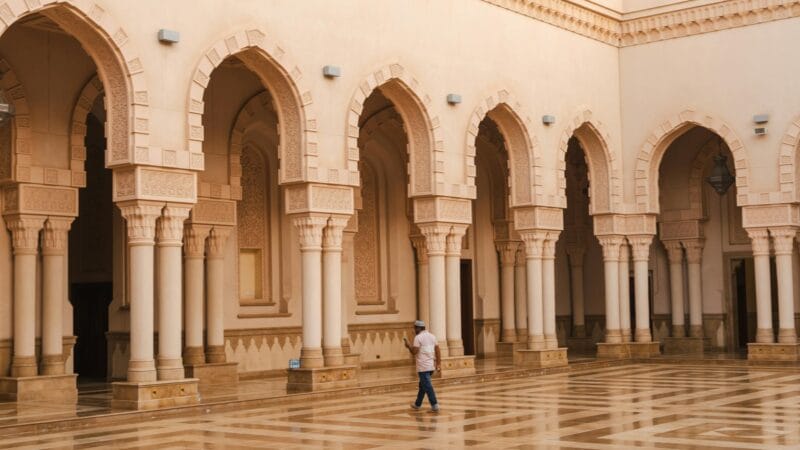
- Muscat: Sultan Qaboos Grand Mosque (one of the world’s most beautiful), Mutrah Souq (traditional market with incredible spices and frankincense), Royal Opera House
- Nizwa: Historic fort and the weekly goat market — an authentic experience you won’t find anywhere else on Earth
- Sharqiya Sands: Desert camping under stars you’ll never see in any city, with Bedouin-style hospitality
- Musandam: The “Norway of Arabia” — stunning fjords and dolphin-watching boat trips
- Salalah: The Khareef season (July-September) when the region transforms into a green paradise from monsoon mists
Cost: Oman is significantly cheaper than the UAE and Qatar. A 4-star hotel runs $80-120/night. A meal at a local restaurant costs $5-10. Car rental $30-50/day. Comfortable daily budget: $120-180 per person. This makes it not just one of the safest but one of the best-value destinations on this entire list.
3. Qatar — Ultra-Safety With World-Class Infrastructure
Global Peace Index: #12 | Crime rate: Among the lowest globally | Daily cost: $150-300
After successfully hosting the 2022 World Cup, Qatar cemented its position as a world-class tourist destination. The infrastructure built for the tournament — a modern metro system, luxurious hotels, Hamad International Airport (rated the world’s best) — now serves tourists year-round, creating a seamless travel experience few destinations can match.
Why Qatar is so safe:
- Crime rates among the lowest of any country globally
- Massive investment in security infrastructure and surveillance
- Neutral foreign policy that insulates the country from targeting
- Small, cohesive society that’s easier for security services to monitor
What to do in Qatar: National Museum of Qatar (architectural masterpiece by Jean Nouvel), Souq Waqif (traditional market with restaurants and galleries), The Pearl (luxury island development), desert safaris and dune bashing, Katara Cultural Village, Museum of Islamic Art (I.M. Pei’s final masterwork).
4. New Zealand — Paradise at the End of the Earth
Global Peace Index: #2 | Crime rate: Low | Daily cost: $150-250
New Zealand combines absolute safety with breathtaking natural beauty that has no parallel anywhere on Earth. The country is geographically distant from any international conflict, and the society is exceptionally welcoming to visitors. If you’re seeking a “escape from the world” trip, this is the ultimate destination — the Lord of the Rings filming locations are real, and they’re even more spectacular in person.
What to do: World-class hiking trails (Milford Track, Routeburn Track), adventure sports in Queenstown (bungy jumping was invented here), Maori culture experiences, Lord of the Rings filming locations in Matamata and Wellington, whale watching in Kaikoura, geothermal wonders in Rotorua.
5. Japan — Safety + Unmatched Culture
Global Peace Index: #9 | Crime rate: Among the lowest globally | Daily cost: $100-200
Japan is a country where you can leave your bag in a cafe and return an hour later to find it untouched. Safety in Japan isn’t just the absence of crime — it’s an entire societal culture built on respect, order, and collective responsibility. In 2026, the weak yen has made Japan 30% cheaper for international travelers — a historic opportunity to visit one of the world’s most fascinating countries at a significant discount.
What to do: Tokyo (technology meets tradition in the world’s largest metropolitan area), Kyoto (temples, gardens, and geisha districts), Osaka (Japan’s food capital — street food alone justifies the trip), Hiroshima (history and peace), rural hot spring towns (onsen culture), cherry blossom season (late March-April).
6. United Arab Emirates — The Safe Future
Global Peace Index: #23 | Crime rate: Very low | Daily cost: $150-400
The UAE continues to defy expectations in 2026. Despite the Iran war unfolding a few hundred kilometers away, Dubai and Abu Dhabi operate with complete normalcy — hotels are full, restaurants thrive, and exhibitions and conferences proceed without interruption. The gap between perceived risk and actual risk is wider here than perhaps any destination in the world.
Why the UAE is safe despite regional war:
- One of the world’s most sophisticated security infrastructures, with AI-powered surveillance and rapid response capabilities
- Sufficient geographic distance from the theater of operations
- Balanced diplomatic relationships with all parties
- Advanced air defense systems (THAAD and Patriot batteries)
- Zero security incidents related to the war on UAE soil
What to do in the UAE: Burj Khalifa and Dubai Mall, Museum of the Future (an experience unlike anything else on Earth), Sheikh Zayed Grand Mosque in Abu Dhabi (stunning in photos, transcendent in person), Louvre Abu Dhabi, Liwa Desert safari, Ras Al Khaimah mountain adventures, Dubai Frame, Al Fahidi Historical Neighborhood.
7. Portugal — Europe at Reasonable Prices
Global Peace Index: #6 | Crime rate: Low | Daily cost: $80-150
Portugal has become the favorite European destination for anyone seeking safety, beauty, and reasonable prices. Lisbon and Porto are among Europe’s most beautiful cities — colorful, walkable, and filled with history — while the Algarve coast offers some of the continent’s finest beaches at a fraction of the cost of the French Riviera or Amalfi Coast.
What to do: Old Lisbon (iconic Tram 28 through medieval streets), Porto and the Douro Valley wine region, Algarve beaches and dramatic sea caves, Sintra (fairy-tale palaces nestled in misty forests), Azores Islands (mid-Atlantic adventure with whale watching and volcanic hot springs).
8. Singapore — The World’s Most Orderly City
Global Peace Index: #8 | Crime rate: Very low | Daily cost: $150-300
Singapore is living proof that safety and diversity can coexist. In a city-state where residents speak four official languages and practice dozens of religions, the crime rate is among the lowest in the world. Strict laws and consistent enforcement make walking the streets at 3 AM completely safe — a claim few major cities anywhere can make.
What to do: Gardens by the Bay (the Supertree Grove at night is magical), Marina Bay Sands (iconic architecture and infinity pool), the Arab Quarter (Kampong Glam — ironically one of the best places to experience Arab culture outside the Middle East), Chinatown, Sentosa Island, the legendary hawker food centres that earned Michelin stars.
9. Switzerland — Eternal Neutrality
Global Peace Index: #11 | Crime rate: Low | Daily cost: $250-450
Switzerland has been neutral since 1815 — over 200 years. This neutrality isn’t just a policy but a national identity that has kept the country out of every major conflict of the modern era. In the turbulent world of 2026, Switzerland remains an oasis of stability, precision, and safety.
What to do: The Alps (Interlaken, Zermatt, Jungfrau — three of the most spectacular mountain destinations on Earth), Lake Geneva and Lausanne, Old Town Zurich, panoramic train journeys (the Glacier Express and Bernina Express are bucket-list experiences), chocolate and cheese factory visits that are far more engaging than they sound.
Warning: Switzerland is extremely expensive. A simple restaurant meal costs $30-50. An average hotel runs $200-300/night. Budget carefully — but the experience is worth every franc.
10. Slovenia — Europe’s Hidden Gem
Global Peace Index: #7 | Crime rate: Very low | Daily cost: $70-130
Slovenia is Europe’s best-kept secret. A small country (2 million people) that combines Alpine mountains, Adriatic coastline, ancient forests, and stunning caves — in an area smaller than New Jersey. Lake Bled alone is worth the trip — a turquoise alpine lake with a church-topped island that looks like it was designed by a fairy-tale illustrator.
What to do: Lake Bled (one of the world’s most photographed lakes), Postojna Cave (the world’s most visited show cave, with a train running through it), charming capital Ljubljana (car-free center designed by Jože Plečnik), Piran coastline (Venetian-style architecture on the Adriatic), Soča Valley (turquoise river that’s paradise for kayakers and photographers).
Why the Middle East Isn’t All Dangerous: Dismantling the Myth
The following table illustrates the gap between global perception and reality:
| Country | Actual Safety Level | What People Think | Reality |
|---|---|---|---|
| Oman | Very safe | “It’s in the Middle East = dangerous” | Safer than France, UK, and USA |
| Qatar | Very safe | “Near Iran” | Lower crime than any European capital |
| UAE | Safe | “War nearby” | Dubai operates completely normally |
| Jordan | Safe | “Next to Syria and Iraq” | Stable country with royal tourist protection |
| Egypt | Relatively safe | “Revolutions and chaos” | Good tourist safety with standard precautions |
| Bahrain | Safe | “Tiny island near Iran” | Safe and welcoming tourist environment |
The problem isn’t the region — it’s the media coverage. When something negative happens in any Arab country, it leads global headlines. But when life is normal and safe — which is the case most of the time in most countries — nobody writes about it. This creates a systematically distorted perception that Al Jazeera has documented in its analysis of Western media coverage of the Middle East.
Safety Tips for Travelers in 2026
General Tips
- Check travel advisories from your government before booking — situations change rapidly in 2026
- Buy comprehensive travel insurance — especially important this year when uncertainty is higher than normal
- Register with your embassy when traveling to any country — this facilitates evacuation if necessary
- Keep digital copies of your passport, visa, and insurance documents in cloud storage
- Use a VPN when connecting to public WiFi networks — identity theft doesn’t take a vacation
- Download offline maps before arriving — internet may not always be available
Middle East-Specific Tips
- Respect local culture: Wear modest clothing when visiting mosques and religious sites — long pants and covered shoulders are standard
- Avoid military photography: Don’t photograph government buildings or military installations — this is taken seriously everywhere in the region
- Alcohol: Available in licensed hotels and restaurants in UAE, Qatar, Oman, and Bahrain. Prohibited in Saudi Arabia and Kuwait
- Ramadan: If visiting during Ramadan, avoid eating and drinking in public during daylight hours — it’s both law and courtesy
- Bargaining: Expected and welcomed in traditional souqs — start at half the asking price and negotiate with a smile
Cost Comparison: Daily Budget by Destination
| Destination | Budget | Mid-Range | Luxury | Best Time to Visit |
|---|---|---|---|---|
| Iceland | $200 | $300 | $500+ | June-August |
| Oman | $80 | $150 | $300+ | October-March |
| Qatar | $150 | $250 | $500+ | November-March |
| New Zealand | $150 | $220 | $400+ | December-February |
| Japan | $100 | $180 | $350+ | March-May, Oct-Nov |
| UAE | $150 | $280 | $600+ | October-April |
| Portugal | $80 | $130 | $250+ | May-October |
| Singapore | $150 | $250 | $450+ | Year-round |
| Switzerland | $250 | $380 | $600+ | Jun-Sep (summer), Dec-Mar (ski) |
| Slovenia | $70 | $120 | $200+ | May-September |
Best value for money: Oman, Slovenia, and Portugal deliver exceptional experiences at reasonable budgets. Japan with the weak yen is also an outstanding value proposition in 2026.
Destinations to Avoid in 2026
While most of the world remains safe for travel, several destinations should be avoided as of April 2026:
- Yemen: Active armed conflict with no tourist infrastructure
- Iran: Active conflict zone — all tourism suspended
- Parts of Syria: Ongoing instability in some regions despite relative calm in others
- Parts of Iraq: Security concerns in certain areas, though Kurdistan Region is generally safe
- Eastern Libya: Political instability and security vacuum
- Ukraine: Ongoing conflict in eastern and southern regions
Important: This list changes rapidly. Always check your government’s latest travel advisories before booking any trip. Situations that are stable today can deteriorate quickly, and vice versa.
Why You Should Travel Despite Global Uncertainty
In the uncertain world of 2026, travel might seem like an unnecessary risk. But the opposite is true — and here’s why traveling matters more now than ever:
- Travel breaks stereotypes: Every person who visits Oman or Qatar returns with a completely different picture of the Middle East than what they’d been told by media. First-hand experience is the most powerful antidote to misinformation.
- Travel supports local economies: Countries like Egypt, Oman, and Jordan depend on tourism. Your visit directly helps millions of families who have nothing to do with any conflict — and who welcome you with genuine warmth.
- Prices are lower: Other people’s fear means lower prices for you. Hotels, flights, and experiences are significantly cheaper than normal in many destinations because demand has dropped based on misperception rather than actual risk.
- Experiences are more authentic: Fewer tourists means more authentic, less crowded experiences. You’ll have world-class sites closer to yourself and more genuine interactions with locals.
As the Financial Times recently noted: “The gap between perceived travel risk and actual travel risk has never been wider than in 2026. Smart travelers are exploiting this gap, finding extraordinary value and experience in destinations the fearful are avoiding.”
Conclusion
The world is safer than you think — and the Middle East especially so. Oman, Qatar, and the UAE aren’t just safe — they offer tourism experiences that rival anything in the world. Combined with Iceland, New Zealand, Japan, Portugal, Singapore, Switzerland, and Slovenia, you have 10 destinations you can travel to with complete confidence in 2026.
Don’t let fear stop you from discovering the world. Travel smart, respect local cultures, and enjoy the journey. As Bloomberg’s travel editor put it: “The best trips of 2026 will be to the places most people are too afraid to visit — but shouldn’t be.”
The world is waiting.
Frequently Asked Questions
What are the safest countries to travel to in 2026?
Based on Global Peace Index, crime statistics, and travel advisory analysis: Iceland, Oman, Qatar, New Zealand, Japan, UAE, Portugal, Singapore, Switzerland, and Slovenia. Three Middle Eastern countries rank in the top 10.
Is it safe to travel to the Middle East in 2026?
Safety varies dramatically by country. Oman, Qatar, UAE, Bahrain, and Jordan are among the safest countries globally — with violent crime rates lower than most Western European nations. Egypt is generally safe with standard precautions. Lebanon and Iraq carry higher risk. Iran and Yemen are not recommended.
Is Oman safe for tourists in 2026?
Oman is one of the safest countries in the world for tourists. The sultanate maintains strict neutrality, has virtually zero violent crime against tourists, no terrorism history, and a deeply hospitable culture. It’s currently recommended as a top safe destination by multiple travel authorities.
Is it safe to visit Dubai and UAE during the Iran war?
Yes. The UAE is geographically distant from the conflict zone, maintains sophisticated security infrastructure, and has experienced zero security incidents related to the war. Dubai continues operating normally with full hotel occupancy, ongoing events, and uninterrupted flight schedules.
What countries should travelers avoid in 2026?
Based on current advisories (April 2026): avoid Yemen (active conflict), Iran (active conflict zone), parts of Syria (ongoing instability), parts of Iraq (security concerns), and eastern Libya (political instability). Always check your government’s latest advisories before booking.
Is Egypt safe for tourists in 2026?
Egypt is generally safe for tourists, particularly in major tourist areas like Cairo, Luxor, Sharm el-Sheikh, and Hurghada. The government provides visible security at tourist sites. The Iran war has not directly affected tourist areas, and tourism declined only 12% in Q1 2026, with Gulf tourism actually increasing 20%.
Last Updated: April 3, 2026