The Paradox of the Gulf’s Quietest Country Making the Most Noise
There is a delicious irony unfolding in the Gulf in 2026: while Dubai spends billions on the world’s tallest buildings, largest malls, and most extravagant entertainment complexes—all designed to attract the global spotlight—a growing number of the expats who actually live and work in the region are quietly packing their bags and heading four hours southeast to Muscat, the capital of a country that has built its entire identity on being the opposite of Dubai.
Oman does not have the tallest anything. It does not host Formula One races or pay $300 million for a footballer. Its capital city, Muscat, has building height restrictions that ensure the Sultan Qaboos Grand Mosque remains the most prominent structure on the skyline. And yet, in the quiet corners of expat Facebook groups, in the WhatsApp chats of professionals evaluating their next career move, and in the spreadsheets of families calculating where their money goes furthest, Muscat is the name that keeps appearing with increasing frequency.
This is not a story about a city that is “trying to be the next Dubai.” Muscat is explicitly, deliberately, and proudly not trying to be Dubai. This is a story about why that distinction has become its greatest asset—and why the expats choosing Muscat in 2026 may be the smartest decision-makers in the Gulf.

The Cost of Living Revolution: Where Your Money Actually Goes Further
Let us begin with the factor that is driving the most conversions from Dubai to Muscat: money. Not earnings—which are indeed lower in Oman—but what you actually keep after the bills are paid. The math, once you do it honestly, is startling.
Rent: The Biggest Difference
Housing is where the Muscat advantage is most dramatic. Compare equivalent properties:
| Property Type | Dubai (AED/year) | Muscat (OMR/year) | Dubai (USD/year) | Muscat (USD/year) | Savings |
|---|---|---|---|---|---|
| 2BR apartment (good area) | 80,000-130,000 | 3,600-6,000 | $21,800-35,400 | $9,360-15,600 | 50-60% |
| 3BR apartment (premium) | 120,000-200,000 | 5,400-9,600 | $32,700-54,500 | $14,040-24,960 | 50-55% |
| 3BR villa (compound) | 150,000-250,000 | 6,000-12,000 | $40,800-68,100 | $15,600-31,200 | 55-60% |
| 4BR villa (standalone) | 200,000-350,000 | 7,200-14,400 | $54,500-95,300 | $18,720-37,440 | 60-65% |
These numbers are not abstract. For a family paying AED 180,000 ($49,000) for a three-bedroom villa in a decent Dubai compound, moving to Muscat and renting a comparable property for OMR 8,400 ($21,840) means saving approximately $27,000 per year on rent alone. Over a five-year posting, that is $135,000 in additional savings or investment capacity.
Beyond Rent: The Full Cost Picture
The savings extend well beyond housing:
- Groceries: 15-25% cheaper in Muscat. A weekly family shop that costs AED 800-1,000 in Dubai costs approximately OMR 80-100 ($208-260) in Muscat.
- Dining out: A mid-range restaurant meal for two costs approximately $30-50 in Muscat versus $50-80 in Dubai. High-end dining is 30-40% cheaper.
- School fees: International school fees in Muscat average 30-50% less than Dubai equivalents. A school charging $15,000-20,000/year in Muscat would charge $25,000-35,000 in Dubai.
- Healthcare: Private healthcare consultations and procedures are generally 20-40% cheaper in Oman.
- Utilities: Electricity and water are subsidized in Oman, though this is gradually changing. Monthly utility bills are typically 20-30% lower than Dubai.
- Transportation: No Salik (road toll) charges. Fuel prices are comparable. Car insurance tends to be cheaper.
The Savings Calculation
A mid-level expat professional in Dubai earning AED 25,000/month ($6,800) might save $1,000-1,500/month after all expenses. The same professional in Muscat, earning OMR 1,500/month ($3,900)—which is 43% less—might save $1,200-1,800/month because expenses are so much lower. The lower salary produces higher savings. This arithmetic is what drives the Muscat migration.
Quality of Life: The Things Money Cannot Buy
If cost of living were the only factor, many affordable cities would attract expats. What makes Muscat’s proposition genuinely compelling is that the lower costs come with a quality of life that many expats rank higher than Dubai’s.
Natural Beauty: Oman’s Unfair Advantage
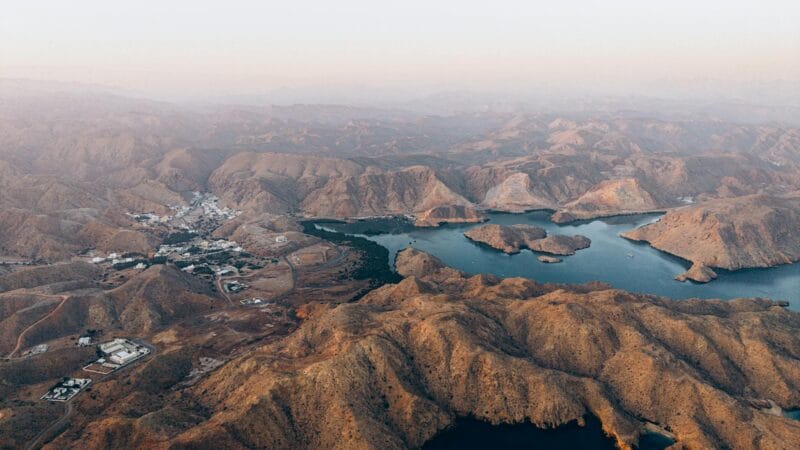
Oman is, by almost any measure, the most naturally beautiful country in the Gulf. While Dubai has engineered its landscape through sheer willpower and capital, Oman’s landscape is a geological gift: the Hajar Mountains rise dramatically behind Muscat, their craggy peaks framing the city against a turquoise coastline that stretches for hundreds of kilometers in both directions.
For outdoor-oriented expats, this is transformative. Weekend activities in Muscat include:
- Wadi hiking: Dozens of accessible wadis (valleys with seasonal rivers) within an hour of Muscat, offering swimming, hiking, and camping in stunning natural settings
- Diving and snorkeling: The Daymaniyat Islands Nature Reserve offers world-class diving, and Oman’s coast hosts healthy coral reefs, sea turtles, and diverse marine life
- Mountain adventures: Jebel Akhdar (Green Mountain) and Jebel Shams (Sun Mountain) offer cooler temperatures, dramatic scenery, and traditional Omani villages
- Beach access: Unlike Dubai, where many of the best beaches are attached to hotels or developments, Oman has hundreds of kilometers of accessible, uncrowded public beaches
- Desert experiences: The Wahiba Sands (Sharqiya Sands) offer authentic desert camping and dune driving within 2-3 hours of Muscat
- Dolphin watching: Spinner dolphins are regularly spotted off the Muscat coast, and whale watching is possible during certain seasons
In Dubai, a family weekend often means a mall, a brunch, or a beach club. In Muscat, a family weekend might mean hiking through a wadi to a natural swimming pool, snorkeling over a coral reef, or camping under stars in the desert—all within a two-hour drive of the city, all free or nearly free. This lifestyle difference is, for many families, worth more than any salary premium. Learn more about Oman’s natural attractions at the Experience Oman tourism portal.
Community and Culture: The Human Dimension
The word that appears most frequently when expats describe life in Muscat is “community.” The smaller expat population—estimated at 1.5-2 million in Oman versus 3+ million in Dubai—creates a different social dynamic. In Dubai, the sheer scale means that social circles can be fragmented and transient. In Muscat, expat communities are smaller, tighter, and more interconnected.
Several cultural factors enhance this community feeling:
- Omani hospitality: Omanis are widely regarded as the most welcoming and friendly people in the Gulf. Interactions with locals are warm, genuine, and frequent—a contrast to Dubai, where many expats report minimal interaction with Emirati nationals.
- Pace of life: Muscat moves at a deliberately slower pace. Traffic is manageable, crowds are rare, and there is a pervading sense of calm that many expats describe as “the thing they didn’t know they needed.”
- Authenticity: Oman has consciously preserved its cultural identity. Traditional architecture, Omani dress, cultural festivals, and the souks (markets) offer genuine cultural experiences rather than the curated, tourist-oriented experiences common in Dubai.
- Safety: Oman consistently ranks among the world’s safest countries. Crime is extremely rare, and the social environment is notably peaceful.
The Economy: Oman’s Vision 2040 and What It Means for Expats
The most common concern from expats considering Muscat is economic: “Is there enough opportunity?” The honest answer is nuanced—Oman’s economy is smaller than Dubai’s, but it is growing in ways that create genuine opportunities for the right people.
Economic Fundamentals
- GDP: Approximately $100-110 billion (2026 estimate), growing at 3-5% annually
- Population: Approximately 5 million (including expats)
- Oil dependency: Declining. Oil and gas contributed approximately 35-40% of GDP in 2026, down from 50%+ a decade ago
- Inflation: Moderate, approximately 2-3%
- Currency: Omani Rial (OMR), pegged to the US dollar at approximately 1 OMR = $2.60
- Income tax: Zero personal income tax (same as UAE)
Vision 2040: Oman’s Transformation Plan
Oman’s Vision 2040 is the country’s long-term economic diversification strategy, and understanding it is essential for any expat considering a move. Key focus areas include:
Tourism: Oman is investing heavily in sustainable, high-end tourism. Major projects include luxury resort developments in Musandam, Dhofar, and along the coastline, eco-tourism initiatives leveraging Oman’s natural assets, and cultural tourism centered on the country’s rich heritage. The tourism sector is targeted to contribute 6-10% of GDP by 2030.
Logistics and Ports: The Special Economic Zone at Duqm (SEZAD) is Oman’s most ambitious economic project—a massive industrial and logistics hub on the Arabian Sea coast. With a deep-water port, dry dock, industrial area, and free zone, Duqm is positioning itself as a strategic logistics link between Asia, Africa, and Europe. For logistics and supply chain professionals, this represents genuine career opportunity.
Mining and Manufacturing: Oman has significant mineral resources (copper, chromite, marble, limestone) and is developing downstream industries. Manufacturing free zones offer incentives for companies establishing production facilities.
Technology and Innovation: The Oman Technology Fund and various government initiatives are building a modest but growing tech ecosystem. Muscat’s technology sector is small but offers opportunities for entrepreneurs and specialists willing to help build an emerging market.
Fisheries and Agriculture: Oman’s long coastline and agricultural traditions support growing investment in fisheries, aquaculture, and food production—sectors that are less glamorous than tech but offer stable, long-term employment.
Where to Live in Muscat: Neighborhood Guide for Expats
Muscat is a linear city, stretching approximately 50 kilometers along the coast between mountains and sea. Understanding its geography is essential for choosing the right area.
Qurum and Shatti Al Qurum
The expat heartland. Qurum and its beachfront extension, Shatti Al Qurum, is where the highest concentration of expat families lives. Home to the Royal Opera House Muscat, Qurum Natural Park, and a long public beach, this area offers the best combination of international amenities, dining, and residential quality.
- Rent (3BR apartment): OMR 500-800/month ($1,300-2,080)
- Rent (3BR villa): OMR 700-1,200/month ($1,820-3,120)
- Key amenities: Qurum City Centre mall, Markaz Al Bahja, restaurants, beaches
- International schools: Several within 15-20 minutes
Al Mouj (The Wave)
Premium waterfront living. Al Mouj Muscat is an integrated tourism complex offering luxury apartments, townhouses, and villas on an artificial island/waterfront development. It is the closest thing Muscat has to a Dubai-style development, with a marina, golf course (Greg Norman-designed), restaurants, and beach access.
- Rent (2BR apartment): OMR 450-700/month ($1,170-1,820)
- Rent (3BR townhouse): OMR 700-1,100/month ($1,820-2,860)
- Purchase: 2BR apartment from approximately OMR 75,000-120,000 ($195,000-312,000)
- Key feature: Expats can purchase freehold property, potentially qualifying for residency
Muscat Hills
Golf, views, and family living. Another ITC development, Muscat Hills offers an 18-hole golf course, residential villas and apartments, and stunning mountain views. It is quieter than Al Mouj and attracts families seeking space and tranquility.
- Rent (3BR villa): OMR 600-1,000/month ($1,560-2,600)
- Purchase: Villas from approximately OMR 150,000-300,000 ($390,000-780,000)
Madinat Al Sultan Qaboos (MQ)
Central location, established community. MQ is one of Muscat’s oldest and most established residential areas, offering larger villas, mature gardens, and a central location close to embassies and government offices. The area has a slightly dated feel compared to newer developments but offers character and spaciousness that newer areas lack.
- Rent (4BR villa): OMR 600-1,000/month ($1,560-2,600)
- Character: Tree-lined streets, large plots, quiet residential atmosphere
Al Ghubra and Azaiba
Affordable and convenient. These adjacent areas offer more affordable housing options while remaining close to the commercial areas of Muscat. Many mid-range expats live here, with good access to supermarkets, schools, and the airport.
- Rent (2BR apartment): OMR 250-400/month ($650-1,040)
- Rent (3BR villa): OMR 400-700/month ($1,040-1,820)
International Schools in Muscat
Education options are a critical factor for expat families, and Muscat’s international school scene, while smaller than Dubai’s, offers good quality at significantly lower costs.
Top International Schools
- The American International School of Muscat (TAISM): American curriculum, one of the oldest and most prestigious international schools in Oman. Fees: approximately OMR 4,000-8,000/year ($10,400-20,800).
- The British School Muscat (BSM): British curriculum through to IGCSE and A-Levels. Strong academic reputation. Fees: approximately OMR 3,500-7,000/year ($9,100-18,200).
- ABA International School: French bilingual program with IB curriculum. Fees: approximately OMR 3,000-6,000/year ($7,800-15,600).
- Muscat International School: IB World School offering PYP, MYP, and DP. Fees: approximately OMR 3,000-7,000/year ($7,800-18,200).
- Indian schools (Indian School Muscat, others): CBSE curriculum. Very affordable at OMR 500-1,500/year ($1,300-3,900).
Compared to Dubai, where international school fees can reach $25,000-35,000/year, Muscat’s international schools offer significant savings—often $10,000-15,000/year per child—without a dramatic quality difference. For school comparisons and enrollment information, see resources from the Oman Observer.
Healthcare in Oman: What Expats Need to Know
Oman’s healthcare system is a mix of government-funded facilities and private hospitals, with quality that is generally good and improving.
Key Healthcare Facilities
- Sultan Qaboos University Hospital: The country’s premier teaching hospital, offering tertiary care across all specialties.
- Royal Hospital: Major government hospital in Muscat with broad specialty coverage.
- Muscat Private Hospital: Well-regarded private facility popular with expats.
- Starcare Hospital: Modern private hospital with good general and specialist services.
- Badr Al Samaa Group: Multiple locations offering affordable private healthcare.
Health Insurance
Oman has implemented mandatory health insurance for expats, with employers required to provide coverage. Most expat health insurance plans cover private healthcare with reasonable co-pays. Premiums are generally lower than in the UAE, reflecting lower healthcare costs overall.
For serious medical conditions requiring highly specialized treatment, some expats travel to Dubai, India, or Thailand. However, the majority of healthcare needs—including maternity, pediatrics, minor surgery, and chronic disease management—can be met within Muscat’s healthcare system.
The Social Scene: What Expat Life Actually Looks Like in Muscat
Let us be honest about this: if your ideal weekend involves rooftop brunches, nightclub hopping, and celebrity chef restaurants, Muscat is not for you. The city’s social scene is quieter, smaller, and more community-oriented than Dubai’s. But for many expats, this is precisely the point.
What Muscat Offers
- Restaurant scene: Muscat has a growing restaurant scene, though much smaller than Dubai’s. You will find excellent Lebanese, Indian, Turkish, and Omani cuisine, along with a growing number of international restaurants. What Muscat’s restaurants lack in variety, they often make up for in value and authenticity.
- Cultural offerings: The Royal Opera House Muscat hosts world-class performances and is architecturally stunning. The National Museum of Oman, Bait Al Zubair museum, and Mutrah Souk offer rich cultural experiences.
- Beach and outdoor lifestyle: Muscat’s social life revolves around the outdoors—beach barbecues, wadi trips, diving excursions, camping, and mountain hikes. For families and outdoor enthusiasts, this is ideal.
- Community events: Expat clubs and organizations (Muscat Rugby Club, sailing clubs, hash running groups, national societies) provide structured social activities and are excellent for building friendships.
- Alcohol: Available in licensed hotels, restaurants, and through a personal liquor license system. The system is more restrictive than Dubai’s but functional for moderate drinkers.
What Muscat Does Not Offer
- Large-scale concerts and entertainment events (though some are growing under Vision 2040 cultural initiatives)
- The breadth of international dining found in Dubai
- A late-night social scene comparable to Dubai’s
- Theme parks and mega-entertainment complexes
- International sporting events on Dubai’s scale
Career and Business Opportunities: The Honest Assessment
Career opportunity is where the Dubai-Muscat comparison becomes most nuanced. Dubai’s economy is larger, more diverse, and offers more positions across more industries. This is an undeniable advantage for career-focused expats.
Where Muscat Has Opportunities
- Oil and gas: Oman remains a significant hydrocarbons producer, and Petroleum Development Oman (PDO) and other operators employ thousands of expats in technical and managerial roles.
- Education: International schools and universities hire teaching and administrative staff, with lower competition than Dubai for quality positions.
- Healthcare: The expanding healthcare sector recruits international medical professionals across specialties.
- Tourism and hospitality: As Oman’s tourism sector grows, opportunities in hotel management, tour operations, and related services are increasing.
- Logistics (Duqm): The SEZAD development is creating engineering, logistics, and management roles.
- Banking and finance: Omani banks and financial institutions hire expat professionals, particularly in risk management, compliance, and technology.
- Entrepreneurship: Oman’s smaller market can be advantageous for entrepreneurs, as competition is less intense and government support for SMEs is growing.
Omanization: Understanding the Policy
Oman’s Omanization policy (similar to Saudi Nationalization and UAE Emiratization) requires companies to employ Omani nationals in certain percentages of their workforce. This policy affects expat hiring, particularly in mid-level administrative and support roles. However, technical specialists, senior managers, and professionals in sectors where Omani talent is scarce continue to find employment opportunities. Understanding Omanization is essential for any expat job search—certain sectors have higher quotas than others, and positions that require specialized expertise are less affected. For business setup information, consult the Invest Oman portal.
Muscat vs. Dubai: Side-by-Side Comparison
Here is a comprehensive comparison table to help you evaluate the two cities across key factors:
| Factor | Muscat | Dubai | Advantage |
|---|---|---|---|
| Rent (3BR apartment) | $14,000-25,000/year | $33,000-55,000/year | Muscat (50-60% cheaper) |
| School fees (international) | $8,000-18,000/year | $15,000-35,000/year | Muscat (40-50% cheaper) |
| Dining out (mid-range, 2 people) | $30-50 | $50-80 | Muscat (30-40% cheaper) |
| Salary (mid-level) | $2,600-6,500/month | $4,000-10,000/month | Dubai (30-50% higher) |
| Income tax | 0% | 0% | Equal |
| Safety | Excellent | Excellent | Slight edge: Muscat |
| Natural environment | Exceptional | Limited | Muscat (significantly) |
| Entertainment | Limited | Exceptional | Dubai (significantly) |
| Career opportunities | Moderate | Extensive | Dubai |
| Cultural authenticity | High | Moderate | Muscat |
| Community feel | Strong | Fragmented | Muscat |
| Public transport | Limited | Good (metro) | Dubai |
| International flights | Growing | Extensive | Dubai |
| Weekend activities (outdoor) | Exceptional | Limited | Muscat |
| Weekend activities (indoor) | Limited | Exceptional | Dubai |
Who Should Choose Muscat Over Dubai
Based on our analysis, certain expat profiles are particularly well-suited to Muscat:
Families prioritizing savings and quality of life: If your goal is to save money while providing your family with a safe, outdoor-oriented, community-driven lifestyle, Muscat is objectively the better choice. The combination of lower costs and higher quality of life (in non-entertainment dimensions) is compelling.
Outdoor enthusiasts: If your idea of a perfect weekend involves mountains, wadis, diving, or desert camping rather than shopping malls and brunches, Muscat is the clear winner in the Gulf.
Couples or singles seeking authenticity: If you want to experience genuine Gulf Arab culture rather than the internationalized, commercialized version, Oman offers cultural immersion that Dubai cannot match.
Pre-retirement expats: Expats in their 50s and early 60s who want a few more years of tax-free earnings in a peaceful, beautiful environment often find Muscat ideal for their final overseas posting.
Oil and gas professionals: The sector remains Oman’s economic backbone, and positions often come with generous packages including housing, schooling, and flights.
People who have “done” Dubai: A significant percentage of Muscat’s expat community consists of people who lived in Dubai for several years and actively chose Muscat as an alternative—knowing exactly what they were trading and what they were gaining.
Who Should Stay in Dubai
Equally important is being honest about who should not choose Muscat:
- Career climbers in finance, tech, or consulting: Dubai’s economy offers vastly more opportunities for advancement in these sectors.
- Entertainment and nightlife seekers: If an active social calendar with diverse options is essential to your happiness, Muscat will disappoint.
- Frequent international travelers: Dubai’s airport connectivity is unmatched in the region. Muscat’s airport has fewer direct routes.
- People who need constant stimulation: Muscat’s pace is slower by design. If you interpret “quiet” as “boring,” this is not your city.
Practical Tips for Making the Move
For expats seriously considering the Muscat move, here are practical steps:
- Visit first: Spend a week in Muscat before committing. The pace, scale, and atmosphere are very different from Dubai, and you need to experience it personally.
- Network before arriving: Join expat groups on Facebook (“Expats in Muscat” and similar groups) and LinkedIn. The Muscat expat community is friendly and helpful to newcomers.
- Negotiate your package carefully: While base salaries may be lower, many Omani employers offer comprehensive packages including housing, school fees, annual flights, and health insurance that close the gap with Dubai offers.
- Understand Omanization: Research how Omanization quotas affect your specific industry and role before accepting a position.
- Consider property purchase: If you plan to stay long-term, the ITC property option (Al Mouj, Muscat Hills, etc.) can be a smart financial move, offering both a home and a residency pathway at prices far below Dubai equivalents.
- Prepare for driving: Muscat has limited public transport. A car is essential. Traffic is generally better than Dubai, but the city’s linear layout means some commutes can be long.
- Embrace the pace: The single biggest adjustment for Dubai-to-Muscat movers is the pace. Things move more slowly in Oman—bureaucratically, commercially, and socially. This is not inefficiency; it is a cultural value. Adapting to it, rather than fighting it, is the key to thriving.
The Bigger Picture: What the Muscat Migration Tells Us
The growing number of expats choosing Muscat over Dubai tells us something important about what people actually value when they have the freedom to choose. Dubai has succeeded spectacularly at being the biggest, the tallest, the fastest, the most. It has built a global brand through superlatives and spectacle. And for many people—particularly young professionals seeking career acceleration and entertainment—that is exactly what they want.
But the Muscat migration suggests that a significant and growing segment of the expat population has reached a different conclusion. They have discovered that the things that matter most for long-term happiness—community, nature, safety, financial security, cultural richness, and a pace of life that allows you to actually enjoy your life rather than merely endure it—are often found in the places that are not trying to be the biggest or the tallest.
Oman has understood this intuitively. Its entire national strategy is built not on competing with Dubai’s spectacle but on offering something Dubai fundamentally cannot: authenticity, tranquility, and a relationship between people and landscape that no amount of engineering can replicate.
The expats who are choosing Muscat in 2026 are not rejecting modernity or ambition. They are redefining what those words mean. And in doing so, they are discovering what the Omani people have known for centuries: that the most valuable things in life are not the most visible, and that the quietest revolution is often the most profound.
Muscat will not replace Dubai. It does not want to. But for the growing number of expats who have realized that what they need is not more spectacle but more substance, Oman’s capital is not just an alternative—it is the answer.