The Paradox of Oil Wealth Funding a Post-Oil Future
Here is a paradox that would confuse any economist from a generation ago: the world’s largest oil exporter is betting $100 billion that the future belongs not to petroleum, but to processors. Saudi Arabia, a nation whose very identity has been shaped by crude oil for nearly a century, is now making the single largest sovereign artificial intelligence investment in history. The Kingdom is not simply diversifying; it is attempting to rewrite the rules of the global technology order from the desert up.
While Silicon Valley debates regulation and Europe struggles with AI governance frameworks, Riyadh is building. Data centers stretching across thousands of hectares. GPU clusters rivaling those of the world’s largest hyperscalers. Strategic chip partnerships that give the Kingdom a seat at the most exclusive table in global technology. This is not a press release strategy or a vanity project. This is a calculated, infrastructure-first approach to becoming the undisputed AI hub of the Middle East, Africa, and South Asia.
The numbers are staggering. The strategic vision is audacious. And the execution, according to multiple industry sources and project timelines, is already well underway. In this comprehensive analysis, we break down every dimension of Saudi Arabia’s AI megabet: the money, the infrastructure, the partnerships, the talent pipeline, the risks, and what it all means for the global technology landscape in 2026 and beyond.

The $100 Billion Blueprint: Where the Money Is Going
PIF’s AI Allocation Strategy
The Public Investment Fund, Saudi Arabia’s $930 billion sovereign wealth fund, has emerged as the primary engine of the Kingdom’s AI ambitions. According to disclosures and confirmed investment rounds, PIF has allocated a dedicated AI and digital infrastructure fund exceeding $40 billion, with additional commitments flowing through subsidiary vehicles, co-investment partnerships, and project finance structures.
The investment is distributed across several pillars. First, physical infrastructure accounts for approximately 45% of total spending, covering data center construction, power generation for computing facilities, cooling systems engineered for desert climates, and fiber optic backbone networks. Second, compute hardware, primarily GPU procurement and cluster assembly, represents roughly 25% of spending. Third, software and platform investments, including stakes in AI companies, foundation model development, and enterprise AI tools, account for about 20%. The remaining 10% flows into human capital: universities, training programs, research labs, and talent recruitment.
This allocation is deliberate. Saudi Arabia learned from the experiences of other nations that tried to build AI ecosystems without adequate physical infrastructure. As one senior PIF advisor explained to Bloomberg, “You cannot run world-class AI on world-class ambition alone. You need the steel, the silicon, and the power.”
The Investment Timeline: 2024-2030
| Phase | Period | Investment (Est.) | Key Focus |
|---|---|---|---|
| Phase 1: Foundation | 2024-2025 | $18-22 billion | Land acquisition, initial data center builds, GPU procurement, partnerships signed |
| Phase 2: Scale | 2025-2027 | $35-40 billion | Major data center campuses operational, GPU clusters at scale, first sovereign LLM |
| Phase 3: Ecosystem | 2027-2029 | $25-30 billion | AI startup ecosystem, enterprise adoption, government AI integration |
| Phase 4: Export | 2029-2030 | $15-20 billion | AI services exported regionally, chip supply chain investments, global positioning |
The phased approach reflects lessons learned from other Saudi megaprojects. Rather than announcing everything at once and struggling with simultaneous execution, the AI strategy is being rolled out in waves, each building on the infrastructure and learning of the previous phase.
Data Center Megaprojects: Building the Physical AI
The DataVolt NEOM Partnership
Perhaps no single deal better illustrates Saudi Arabia’s AI infrastructure ambitions than the DataVolt-NEOM agreement. DataVolt, a Saudi-founded sustainable data center company, has secured a multi-billion dollar contract to build a massive data center campus within the NEOM megaproject zone in northwestern Saudi Arabia.
The NEOM data center campus is designed to be one of the most advanced and sustainable computing facilities on Earth. Key specifications include over 200 megawatts of initial computing capacity, expandable to 500 megawatts. The facility will be powered entirely by renewable energy, primarily solar and wind from NEOM’s dedicated clean energy grid. Advanced liquid cooling systems are engineered specifically for the region’s desert climate, reducing energy consumption by up to 40% compared to traditional air cooling. The campus features direct fiber connections to submarine cable landing stations on the Red Sea coast, providing low-latency links to Europe, Africa, and Asia.
DataVolt’s founder has emphasized that the NEOM facility is not just a data center but a “compute oasis” designed to attract global AI companies seeking both powerful infrastructure and renewable energy credentials. In an era when AI’s carbon footprint is under increasing scrutiny, a solar-powered GPU cluster in the desert offers a compelling proposition.
Riyadh’s Data Center Corridor
Beyond NEOM, Riyadh is emerging as the Kingdom’s primary data center hub. The capital is seeing the construction of what insiders call the “Data Center Corridor,” a series of facilities stretching along the northern outskirts of the city. Major projects in this corridor include the Aramco-Google Cloud facility, a joint venture between Saudi Aramco and Google Cloud to build a hyperscale data center serving both enterprise and government clients. There is also the STC Data Center Campus, where Saudi Telecom Company is building a 100-megawatt facility focused on edge computing and 5G-connected AI applications. Additionally, the PIF-owned Cloud Computing Company (operating under the Alam brand) is constructing a sovereign cloud facility designed to host government data and AI models under Saudi data residency requirements.
According to industry tracker Reuters, Saudi Arabia’s total data center capacity is projected to reach 1.5 gigawatts by 2028, up from approximately 300 megawatts in 2024. This five-fold increase would make the Kingdom the largest data center market in the Middle East, surpassing the UAE.
Jeddah and the Red Sea Digital Hub
Jeddah is being positioned as the Kingdom’s international data connectivity hub, leveraging its proximity to critical submarine cable systems. New data centers in the Jeddah area are designed to serve as landing points for AI workloads from Africa and South Asia, markets where Saudi Arabia sees significant growth potential. The Red Sea Digital Hub initiative involves at least three major data center builds within 50 kilometers of the Jeddah coastline, all connected to multiple submarine cable systems.
GPU Clusters and Compute Power: The Hardware Arms Race
NVIDIA Partnership and GPU Procurement
Saudi Arabia has secured one of the largest GPU procurement agreements outside of the United States. Through a combination of direct purchases and strategic partnerships, the Kingdom is assembling GPU clusters that rival those of major American hyperscalers.
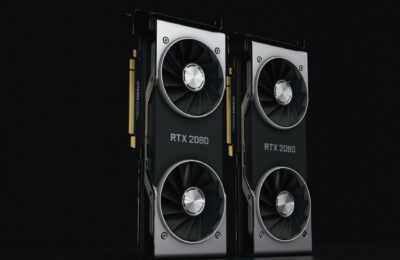
The numbers are remarkable. Saudi entities have procured or ordered an estimated 30,000 to 50,000 NVIDIA H100 GPUs, with additional orders for the newer H200 and Blackwell-generation chips. These GPUs are being deployed across multiple data center locations, with the largest concentration in the Riyadh Data Center Corridor. Saudi Arabia is believed to be the largest single buyer of NVIDIA enterprise GPUs in the MENA region, and among the top ten globally.
The relationship with NVIDIA goes beyond simple procurement. In 2025, NVIDIA CEO Jensen Huang visited Riyadh and announced a deepened partnership that includes NVIDIA providing technical expertise for cluster design, software optimization (including CUDA frameworks and NeMo toolkits for large language model training), and workforce training programs. NVIDIA is also establishing a regional engineering office in Riyadh.
Compute Capacity Comparison: Saudi Arabia vs. Regional Peers
| Metric | Saudi Arabia (2026 Est.) | UAE (2026 Est.) | Qatar (2026 Est.) | Egypt (2026 Est.) |
|---|---|---|---|---|
| Total GPU Count (enterprise) | 40,000-50,000 | 20,000-25,000 | 5,000-8,000 | 2,000-3,000 |
| Data Center Capacity (MW) | 800-1,000 | 600-700 | 150-200 | 100-150 |
| AI Investment (cumulative) | $60B+ | $20B+ | $5B+ | $2B+ |
| Sovereign LLM | In development | Falcon (operational) | Planned | Planned |
| Major Cloud Partnerships | Google, Oracle, AWS | Microsoft, AWS, Google | Microsoft | AWS, Oracle |
Beyond NVIDIA: Diversifying the Chip Supply
Aware of the geopolitical risks of depending on a single chip supplier, Saudi Arabia is pursuing a diversification strategy. This includes investments in AMD’s MI300X accelerators for specific workloads, exploration of custom ASIC development for inference tasks (following the model of Google’s TPUs), discussions with emerging chip designers including Cerebras and Groq for specialized AI computing hardware, and long-term feasibility studies on domestic semiconductor fabrication, though this remains a decade-level ambition.
The chip diversification strategy reflects a sophisticated understanding of the global semiconductor landscape. US export controls on advanced chips to China have demonstrated how quickly geopolitics can disrupt technology supply chains. Saudi Arabia wants to ensure it has multiple pathways to advanced compute, regardless of how international relations evolve.
The Sovereign AI Strategy: Models, Platforms, and Applications
Building a Saudi Large Language Model
Perhaps the most ambitious element of Saudi Arabia’s AI strategy is the development of a sovereign large language model. While the UAE launched Falcon through the Technology Innovation Institute in Abu Dhabi, Saudi Arabia is taking a different approach: building a model specifically optimized for Arabic language understanding, cultural context, and government applications.
The Saudi sovereign LLM project, reportedly codenamed internally, is being developed by a team of over 200 researchers and engineers. The model is being trained on a curated dataset of Arabic text that includes Classical Arabic, Modern Standard Arabic, and Gulf dialect, as well as multilingual capabilities in English, Urdu, Hindi, and other languages spoken by the Kingdom’s diverse population.
The sovereign LLM is intended to serve multiple purposes: powering government services and citizen-facing applications in natural Arabic, processing and analyzing Arabic-language documents, media, and communications, providing the foundation for enterprise AI applications across Saudi businesses, and serving as the base model for Arabic AI applications across the broader MENA region.
AI Applications Across Sectors
Saudi Arabia’s AI investment is not limited to infrastructure for its own sake. The Kingdom has identified specific sectors where AI will be deployed to drive economic transformation.
In healthcare, AI-powered diagnostic tools are being deployed across Saudi hospitals, with a focus on radiology, pathology, and genomics. The Ministry of Health has partnered with AI companies to develop predictive models for disease surveillance and hospital resource optimization. Early results show a 23% improvement in early cancer detection rates at pilot facilities.
In energy, Saudi Aramco is deploying AI across its operations, from predictive maintenance on drilling equipment to optimization of refinery processes. Aramco’s AI budget alone is estimated at $1.5 billion annually. The company has built one of the largest industrial AI platforms in the world, processing data from millions of sensors across its operations.
In education, the Ministry of Education is piloting AI tutoring systems in schools across the Kingdom. These systems adapt to individual student learning patterns and provide instruction in Arabic. The pilot covers 500 schools and is expected to expand nationwide by 2027.
In smart cities, NEOM itself is designed as an AI-native city where artificial intelligence manages everything from traffic flow to energy distribution to waste management. The city’s digital twin, a virtual replica updated in real time, will be one of the most complex AI applications ever deployed in an urban environment.
In financial services, Saudi banks are deploying AI for fraud detection, credit scoring, and customer service. The Saudi Central Bank (SAMA) has established a regulatory sandbox for AI-powered financial products, attracting over 40 fintech companies to test AI-driven solutions.
The Talent Pipeline: Building Human Capital for AI
The Skills Gap Challenge
For all its infrastructure spending, Saudi Arabia faces a significant challenge: there are not enough AI-skilled workers in the Kingdom to fully utilize the technology being deployed. This talent gap is perhaps the biggest risk to the success of the $100 billion AI strategy.
Current estimates suggest Saudi Arabia needs approximately 30,000 additional AI specialists by 2028 to operate and maximize the return on its AI investments. This includes machine learning engineers, data scientists, AI researchers, prompt engineers, AI ethicists, and technical project managers. The Kingdom currently has an estimated 5,000 to 7,000 AI professionals.
The Multi-Pronged Talent Strategy
To address this gap, Saudi Arabia is pursuing several parallel initiatives. The KAUST AI Research Center has been expanded with $2 billion in additional funding, making it one of the best-resourced AI research institutions in the world. King Abdullah University of Science and Technology is now offering full scholarships for AI-focused PhDs, attracting global talent.
The Tuwaiq Academy, Saudi Arabia’s flagship coding bootcamp, has added specialized AI tracks and graduated over 3,000 students in 2025 alone. The academy offers intensive 16-week programs in machine learning, natural language processing, and computer vision.
The Kingdom has also launched the AI Premium Residency program, offering fast-track residency permits to AI professionals willing to relocate to Saudi Arabia. The program includes tax-free income, housing allowances, and research funding. Over 1,200 applications were received in the first quarter of 2026 alone.
Corporate training programs are being mandated across government entities and major Saudi corporations. Aramco, STC, SABIC, and other large employers are each training thousands of employees in AI literacy and application.
Geopolitics of AI: Saudi Arabia’s Strategic Positioning
Between Washington and Beijing
Saudi Arabia’s AI ambitions exist within a complex geopolitical context. The United States and China are engaged in an intensifying technology competition, with AI at its center. US export controls limit the sale of advanced chips to China and, to varying degrees, to other nations. Saudi Arabia must navigate these restrictions carefully.
The Kingdom has been largely successful in maintaining access to US-origin AI technology, including NVIDIA’s most advanced GPUs. This access is partly due to Saudi Arabia’s strategic importance as a US ally in the region, but also because the Kingdom has provided assurances about technology security and end-use restrictions. Saudi Arabia has committed that advanced AI chips will not be re-exported and has implemented monitoring frameworks to satisfy US regulators.
At the same time, Saudi Arabia maintains significant technology relationships with China. Chinese companies including Huawei and Alibaba Cloud have substantial operations in the Kingdom. Saudi Arabia has been careful to structure its AI infrastructure in a way that keeps US and Chinese technology on separate tracks, avoiding the commingling that would trigger US sanctions concerns.
This balancing act is one of the most delicate aspects of Saudi Arabia’s AI strategy. As reported by the Wall Street Journal, the Kingdom is effectively building two parallel but separate technology ecosystems: one aligned with US standards and technology, and one incorporating Chinese capabilities.
Regional AI Leadership
Within the Gulf and broader Middle East, Saudi Arabia’s AI investment is creating a new dimension of regional competition. The UAE, which had an early lead in AI governance and foundational models through its Falcon project, is now facing a competitor with significantly deeper pockets and larger infrastructure.
However, the relationship is not purely competitive. There are areas of collaboration, including shared standards for Arabic NLP, joint research through the Gulf Cooperation Council, and cooperative approaches to AI regulation. The GCC AI Working Group, established in 2025, has brought together representatives from all six member states to develop common frameworks.
For Egypt, Jordan, and other Arab nations with strong technical talent but limited capital, Saudi Arabia’s AI investment represents both an opportunity and a challenge. On one hand, Saudi data centers will provide affordable cloud computing that these nations’ startups can leverage. On the other hand, the brain drain risk is real: top AI talent from Cairo, Amman, and Beirut is being recruited to Riyadh with packages these countries cannot match.
Risks and Challenges: What Could Go Wrong
Execution Risk
Saudi Arabia has a mixed track record with megaprojects. While some Vision 2030 initiatives have been delivered on time, others have faced delays, scope reductions, or outright cancellation. The AI strategy’s $100 billion price tag is enormous, and execution across multiple simultaneous projects is inherently challenging.
The construction timeline for data centers is aggressive. Building a 200-megawatt data center campus in the NEOM desert requires not just the facility itself, but roads, power lines, water supply, worker housing, and fiber optic cables. Any delay in one element cascades through the entire project schedule.
Energy Demands
AI computing is extraordinarily power-hungry. Training a large language model can consume as much electricity as a small city uses in a month. Saudi Arabia has abundant energy, but there is a tension between using that energy for AI and the Kingdom’s commitment to reducing carbon emissions.
The renewable energy angle is critical here. Saudi Arabia is building massive solar and wind capacity, partly to power its AI infrastructure with clean energy. But the gap between renewable energy deployment and data center commissioning must be carefully managed. If data centers come online before the renewable capacity is ready, they will be powered by natural gas, undermining the sustainability narrative.
Return on Investment
The fundamental question is whether $100 billion in AI investment will generate adequate returns. The global AI market is growing rapidly, but it is also becoming increasingly competitive. Saudi Arabia is entering a market where US, Chinese, and European companies have significant head starts in software, models, and applications.
The investment case rests on several assumptions. First, that the Middle East and Africa AI market will grow to $50 billion or more by 2030. Second, that Saudi Arabia can capture a dominant share of this regional market. Third, that infrastructure investment will attract AI companies and startups to the Kingdom. Fourth, that AI will meaningfully improve productivity across Saudi industries, generating economic returns that justify the investment.
If these assumptions hold, the returns could be transformational. If they do not, Saudi Arabia will have built expensive infrastructure that sits underutilized, a risk that some analysts have already flagged.
Regulatory and Ethical Considerations
AI governance is an emerging field globally, and Saudi Arabia’s approach is still developing. The Saudi Data and Artificial Intelligence Authority (SDAIA) has published AI ethics principles and a regulatory framework, but enforcement and implementation are ongoing.
Key issues include data privacy protections for Saudi citizens whose data is used to train AI models, transparency requirements for AI systems used in government decision-making, liability frameworks for AI-caused errors in healthcare, finance, and transportation, and workforce displacement management as AI automates jobs across the economy.
The Competitive Landscape: How Saudi Arabia Stacks Up Globally
Global AI Investment Comparison
| Country/Entity | AI Investment (2024-2030 Est.) | Focus Area | Key Advantage |
|---|---|---|---|
| United States | $500B+ | Full spectrum | Talent, ecosystem, incumbency |
| China | $300B+ | Full spectrum | Data volume, state coordination |
| Saudi Arabia | $100B+ | Infrastructure, regional hub | Capital, energy, strategic location |
| UAE | $30B+ | Models, governance, applications | Early mover, talent attraction |
| United Kingdom | $25B+ | Research, safety | Academic excellence, regulation |
| France | $15B+ | Sovereign AI | Mistral, European leadership |
| India | $15B+ | Applications, services | Talent pool, scale |
Saudi Arabia’s $100 billion commitment places it firmly in the top three globally for AI investment, behind only the United States and China. This is a remarkable position for a nation that had virtually no AI infrastructure five years ago.
What This Means for the Region: Opportunities and Implications
For Gulf Economies
Saudi Arabia’s AI investment will reshape the technology landscape across the Gulf Cooperation Council. Smaller GCC nations like Bahrain, Kuwait, and Oman are likely to become consumers of Saudi AI infrastructure rather than building their own. This creates a hub-and-spoke model with Riyadh at the center.
For the UAE, the dynamic is more competitive. Abu Dhabi and Dubai have their own substantial AI ambitions and will not cede regional leadership without a fight. The likely outcome is a two-hub model, with Saudi Arabia leading in infrastructure and compute, while the UAE leads in AI applications, governance, and startup ecosystems.
For Egypt and the Broader Arab World
Egypt, with its large population of technical graduates and growing tech startup scene, stands to benefit significantly from Saudi AI investment. Egyptian AI engineers are being recruited by Saudi entities, and Egyptian startups can access Saudi cloud computing resources. However, Egypt must also develop its own AI capacity to avoid becoming purely a talent supplier.
The broader Arab world, including countries like Jordan, Morocco, and Tunisia, will increasingly look to Saudi AI infrastructure as the foundation for their own digital transformation. This gives Saudi Arabia significant soft power influence, the ability to shape technological standards and digital norms across the region.
For Global Tech Companies
For NVIDIA, Google, Microsoft, Oracle, and other global technology companies, Saudi Arabia represents one of the most lucrative markets in the world. The combination of massive government spending, limited domestic competition, and willingness to pay premium prices makes the Kingdom an ideal customer. However, these companies must navigate US export control compliance, Saudi localization requirements, and the geopolitical sensitivities of operating in the region.
Timeline: Key Milestones to Watch
| Date | Milestone | Significance |
|---|---|---|
| Q2 2026 | First NEOM data center phase operational | Proves execution capability in challenging environment |
| Q3 2026 | Sovereign LLM beta launch | Tests Saudi Arabic AI capabilities against Falcon |
| Q4 2026 | Riyadh Data Center Corridor reaches 500MW | Establishes Saudi as MENA’s largest compute market |
| 2027 | AI Premium Residency program reaches 5,000 participants | Validates talent attraction strategy |
| 2027 | Saudi AI applications deployed across 50% of government services | Demonstrates domestic ROI |
| 2028 | First Saudi AI companies achieve unicorn status | Proves ecosystem development |
| 2030 | Vision 2030 AI targets assessed | Ultimate scorecard for the strategy |
The Bottom Line: A Bet the Kingdom Cannot Afford to Lose
Saudi Arabia’s $100 billion AI investment is, at its core, an existential bet. The Kingdom knows that oil revenues will eventually decline, whether in ten years or thirty. The question is not whether to diversify, but how fast and how effectively. AI represents perhaps the single most important technology of the 21st century, and Saudi Arabia has decided it would rather spend too much than too little to secure its place in the AI-powered future.
The strategy has real strengths. The money is there. The political will is there. The infrastructure is being built at remarkable speed. The partnerships with global tech leaders are in place. And the strategic location between Europe, Africa, and Asia gives Saudi Arabia a genuine advantage as a compute hub.
But the challenges are equally real. Execution risk on simultaneous megaprojects. A talent gap that money alone cannot close overnight. Geopolitical complexities that could restrict access to critical technology. And the fundamental uncertainty of whether infrastructure investment alone can create a thriving AI ecosystem.
What is clear is that Saudi Arabia’s AI bet will reshape the Middle East’s technology landscape regardless of whether it fully succeeds. The data centers being built today will serve the region for decades. The talent being attracted will create knowledge spillovers. The computing capacity will enable AI applications that no other MENA nation could support independently.
For investors, technologists, and policymakers watching the global AI race, Saudi Arabia can no longer be ignored. The Kingdom has bought its way to the table. Now it must prove it can play.
Related Articles
- Technology Coverage at The Middle East Insider
- Business and Investment Analysis
- Markets and Economic Data
Frequently Asked Questions
How much is Saudi Arabia investing in AI?
Saudi Arabia is investing over $100 billion in artificial intelligence through its Public Investment Fund (PIF) and related sovereign initiatives. This includes direct investments in data centers, GPU clusters, AI startups, and strategic partnerships with global tech giants like NVIDIA, Google, and Microsoft.
What is the DataVolt NEOM deal?
DataVolt signed a landmark agreement to build a sustainable, large-scale data center campus within the NEOM megaproject zone. The facility will use renewable energy sources including solar and wind, positioning NEOM as a green AI hub.
Why is Saudi Arabia pivoting to AI and technology?
Saudi Arabia’s Vision 2030 strategy aims to diversify the economy away from oil dependence. AI and technology represent high-growth sectors that can create jobs, attract talent, and generate non-oil revenue.
How does Saudi Arabia’s AI investment compare to the UAE?
Saudi Arabia’s $100B+ commitment is the largest AI investment in the Middle East, exceeding the UAE’s substantial but smaller-scale programs. While the UAE has focused on governance and specialized applications, Saudi Arabia is building massive physical infrastructure.
What GPU clusters is Saudi Arabia building?
Saudi Arabia is constructing some of the world’s largest GPU clusters, with tens of thousands of NVIDIA H100 and next-generation GPUs deployed across Riyadh, Jeddah, and NEOM.
Will Saudi Arabia manufacture its own AI chips?
While not yet manufacturing domestically, Saudi Arabia has entered strategic partnerships to secure chip supply chains and is exploring semiconductor fabrication feasibility studies with long-term ambitions for domestic production.