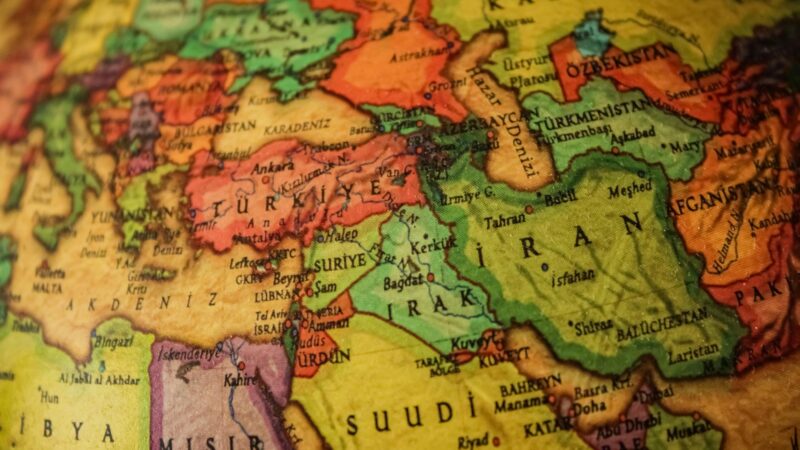
The Middle East sits at the crossroads of three continents — a region of 17 countries spanning from Turkey in the northwest to Oman in the southeast, home to over 400 million people, roughly 60% of the world’s proven oil reserves, and some of the fastest-growing economies on Earth.
This reference guide provides a complete, up-to-date overview of every Middle East country in 2026 — including the GCC nations, the Levant, North Africa’s Middle Eastern states, and Iran.
All Middle East Countries: Quick Reference Table
| Country | Capital | Population (2026) | GDP (Nominal, 2025) | Currency |
|---|---|---|---|---|
| Saudi Arabia | Riyadh | 37.5M | $1.1T | Saudi Riyal (SAR) |
| UAE | Abu Dhabi | 10.5M | $530B | Dirham (AED) |
| Qatar | Doha | 3.0M | $250B | Riyal (QAR) |
| Kuwait | Kuwait City | 4.9M | $165B | Dinar (KWD) |
| Bahrain | Manama | 1.6M | $45B | Dinar (BHD) |
| Oman | Muscat | 5.3M | $105B | Rial (OMR) |
| Iraq | Baghdad | 44.5M | $265B | Dinar (IQD) |
| Iran | Tehran | 89.0M | $400B | Rial (IRR) |
| Turkey | Ankara | 86.0M | $1.1T | Lira (TRY) |
| Egypt | Cairo | 107.0M | $400B | Pound (EGP) |
| Israel | Jerusalem* | 9.9M | $530B | Shekel (ILS) |
| Jordan | Amman | 11.5M | $50B | Dinar (JOD) |
| Lebanon | Beirut | 5.6M | $20B | Pound (LBP) |
| Syria | Damascus | 23.0M | $12B | Pound (SYP) |
| Yemen | Sana’a | 34.0M | $22B | Rial (YER) |
| Palestine | Ramallah | 5.5M | $18B | Multiple |
| Cyprus | Nicosia | 1.3M | $32B | Euro (EUR) |
*Jerusalem’s status is disputed. Populations are estimates for 2026. GDP figures are approximate nominal values.

The GCC Countries
The Gulf Cooperation Council (GCC) comprises six oil-rich nations on the Arabian Peninsula: Saudi Arabia, UAE, Qatar, Kuwait, Bahrain, and Oman. Together they hold roughly 30% of global proven oil reserves and manage sovereign wealth funds worth over $4 trillion.
In 2026, the GCC economies are shaped by:
- Record oil revenues from $100+ Brent crude prices driven by the Iran war
- Vision 2030 diversification in Saudi Arabia, with mega-projects like NEOM and The Line
- Dubai’s real estate resilience despite regional conflict
- Abu Dhabi’s tech and AI investments through ADIA, Mubadala, and ADQ
The Conflict Zone: Iran, Iraq, Yemen, Syria
Four Middle Eastern nations are directly affected by active conflicts in 2026:
Iran is engaged in open war with the US and Israel since February 27, 2026. The conflict has shut down the Strait of Hormuz, sent oil prices above $100, and reshaped global energy markets.
Iraq faces collateral economic damage from the Hormuz closure, which prevents its oil exports. Kuwait faces the same challenge.
Yemen is involved through Houthi forces, who have escalated attacks on Red Sea shipping in solidarity with Iran.
Syria continues post-conflict reconstruction with limited international support.
The Region by the Numbers (2026)
- Total population: ~400 million
- Combined GDP: ~$5 trillion
- Oil reserves: ~60% of global proven reserves
- Natural gas reserves: ~45% of global proven reserves
- Youngest population: Yemen (median age 19)
- Highest GDP per capita: Qatar ($85,000+)
- Fastest growing economy: Saudi Arabia (Vision 2030 investments)
- Most diverse economy: UAE (oil is <30% of GDP)
Frequently Asked Questions
How many countries are in the Middle East?
There are 17 countries commonly classified as Middle Eastern: Saudi Arabia, UAE, Qatar, Kuwait, Bahrain, Oman, Iraq, Iran, Turkey, Egypt, Israel, Jordan, Lebanon, Syria, Yemen, Palestine, and Cyprus. Some definitions include or exclude Turkey, Egypt, and Cyprus.
What are the GCC countries?
The GCC (Gulf Cooperation Council) consists of 6 countries: Saudi Arabia, UAE, Qatar, Kuwait, Bahrain, and Oman. Read our complete GCC guide for more details.
What is the richest country in the Middle East?
By GDP per capita, Qatar is the richest at approximately $85,000+. By total GDP, Saudi Arabia and Turkey lead at ~$1.1 trillion each. See our Richest Countries in the Middle East ranking.
What is the largest country in the Middle East?
By area: Saudi Arabia (2.15 million km²). By population: Egypt (107 million). By economy: Saudi Arabia and Turkey (both ~$1.1 trillion GDP).