|—|—|—|—|
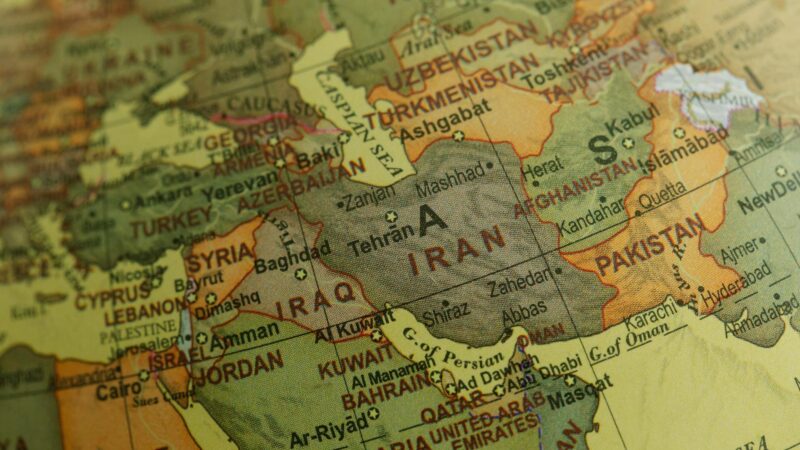
| Saudi Arabia | Riyadh | 36.0 million | $1.27 trillion | World’s largest oil exporter |
| Iran | Tehran | 92.4 million | $401 billion | Region’s most populous nation after Egypt |
| Iraq | Baghdad | 46.1 million | $268 billion | OPEC’s second-largest producer |
| Turkey | Ankara | 86.0 million | $1.13 trillion | NATO member, bridges Europe and Asia |
| UAE | Abu Dhabi | 10.3 million | $552 billion | Global business and tourism hub |
| Egypt | Cairo | 111.0 million | $395 billion | Largest Arab country by population |
| Qatar | Doha | 2.7 million | $219 billion | Highest GDP per capita in the region |
| Kuwait | Kuwait City | 4.9 million | $160 billion | Sovereign wealth fund est. 1953 |
| Oman | Muscat | 4.7 million | $105 billion | Strategic location on Strait of Hormuz |
| Bahrain | Manama | 1.6 million | $44 billion | Financial services hub, smallest GCC state |
| Jordan | Amman | 11.5 million | $50 billion | Key diplomatic mediator |
| Lebanon | Beirut | 5.6 million | $22 billion | Multi-confessional political system |
| Israel | Jerusalem | 9.9 million | $530 billion | Advanced tech and innovation economy |
| Palestine | Ramallah (admin.) | 5.5 million | $19 billion | Territories in West Bank and Gaza |
| Syria | Damascus | 23.2 million | $11 billion | Economy devastated by civil conflict |
| Yemen | Sanaa | 35.0 million | $22 billion | Ongoing humanitarian crisis |
| Cyprus | Nicosia | 1.3 million | $32 billion | EU member, sometimes grouped with region |
Note: GDP figures are IMF estimates for 2024-2025. Population figures are UN and national census estimates.
For a ranking of the wealthiest nations in the region, see our guide to the richest countries in the Middle East.

Subregions
The Middle East is often broken into subregions that share political, economic, or cultural ties:
- Gulf Cooperation Council (GCC): Saudi Arabia, UAE, Qatar, Kuwait, Bahrain, Oman. These six monarchies form a political and economic bloc anchored by oil wealth. See our full breakdown of GCC countries.
- The Levant (Mashreq): Syria, Lebanon, Jordan, Palestine, and Israel. Historically a crossroads of civilizations, this subregion has been shaped by conflict, displacement, and complex religious demographics.
- North Africa (Maghreb overlap): Egypt is the primary North African country included in most Middle East definitions. Libya, Tunisia, Algeria, and Morocco are sometimes grouped under the broader MENA (Middle East and North Africa) framework.
- The Northern Tier: Turkey and Iran. Neither is Arab, and both have distinct linguistic and ethnic identities (Turkish and Persian, respectively), but both exert enormous influence on regional politics.
Arab Countries List
Not all Middle Eastern countries are Arab, and not all Arab countries are in the Middle East. The Arab League comprises 22 member states bound by the Arabic language and shared cultural heritage. The Middle Eastern Arab states include Saudi Arabia, Iraq, UAE, Qatar, Kuwait, Bahrain, Oman, Jordan, Lebanon, Syria, Yemen, Palestine, and Egypt. Turkey, Iran, Israel, and Cyprus are in the Middle East but are not Arab countries.
Political Systems
The Middle East contains a wide spectrum of governance structures, from absolute monarchies to parliamentary republics, theocratic systems, and states in political transition.
Monarchies
Six of the Gulf states operate as monarchies. Saudi Arabia is an absolute monarchy under the Al Saud family, with King Salman and Crown Prince Mohammed bin Salman (MBS) directing sweeping economic and social reforms. The UAE is a federation of seven emirates, each governed by a ruling family, with Abu Dhabi’s Al Nahyan family holding the presidency. Qatar’s Al Thani dynasty, Kuwait’s Al Sabah family, Bahrain’s Al Khalifa family, and Oman’s Al Said dynasty each lead constitutional or absolute monarchies with varying degrees of elected advisory councils. Jordan and Morocco (outside the core Middle East) also operate as constitutional monarchies.
Republics and Other Systems
Turkey is a presidential republic. Iran operates as an Islamic republic with a Supreme Leader (currently Ali Khamenei) who holds ultimate authority above the elected president. Iraq and Lebanon are parliamentary republics, though Lebanon’s system is built on a confessional power-sharing arrangement among its religious communities. Israel is a parliamentary democracy. Syria, Egypt, and Yemen have republican constitutions, though political realities on the ground often diverge from formal structures.
For deeper analysis of how these systems interact, see our Middle East geopolitics guide.
The Oil Economy
Oil is the single most important economic force in the modern Middle East. The discovery of petroleum in the early twentieth century — first in Iran (1908), then Iraq, Bahrain, Saudi Arabia, Kuwait, and the rest of the Gulf — transformed sparsely populated desert territories into some of the wealthiest states on earth within a few decades.
OPEC and Market Control
The Organization of the Petroleum Exporting Countries (OPEC) was founded in 1960 by five countries, including Saudi Arabia, Iran, Iraq, and Kuwait. Today, OPEC and its expanded alliance OPEC+ coordinate production quotas that influence global oil prices. Middle Eastern members account for roughly 67 percent of OPEC’s total proven reserves, giving the region unmatched leverage over energy markets.
Saudi Aramco, the Saudi state oil company, is the world’s most profitable corporation and the backbone of the kingdom’s economy. It produces approximately 9 million barrels per day and was partially listed on the Saudi stock exchange in 2019.
The Petrodollar System
Since the 1970s, global oil has been predominantly traded in U.S. dollars — a framework known as the petrodollar system. This arrangement has given oil-exporting Middle Eastern states deep ties to the U.S. financial system and has been a cornerstone of the dollar’s status as the world’s reserve currency. In recent years, some nations have explored trading oil in other currencies, though the dollar remains dominant.
Sovereign Wealth Funds
Gulf states have channeled decades of oil revenue into sovereign wealth funds — state-owned investment vehicles that deploy capital globally. The region’s SWFs collectively manage over $4.7 trillion in assets. The largest include Saudi Arabia’s Public Investment Fund (PIF) at over $1.1 trillion, Abu Dhabi’s ADIA at approximately $1.1 trillion, and Qatar’s QIA at over $530 billion. These funds invest in everything from global tech companies to European football clubs to domestic mega-projects.
Post-Oil Transition
With global energy transition accelerating, Gulf economies are racing to diversify. Saudi Arabia’s Vision 2030 is the most ambitious program, aiming to reduce the kingdom’s dependence on oil revenue by building new industries in tourism, entertainment, technology, and manufacturing. The UAE has pursued a similar strategy for over two decades, establishing Dubai as a global commercial hub. For in-depth analysis of these economic transformations, see our guides to the Saudi Arabia economy and UAE economy.
Islam and Society
Islam is the dominant religion across the Middle East, practiced by the vast majority of the population in every country except Israel. It shapes legal systems, business practices, social norms, and daily life to varying degrees depending on the country.
Sunni and Shia Islam
The two major branches of Islam — Sunni and Shia — trace their split to a seventh-century succession dispute following the death of the Prophet Muhammad. Sunni Muslims, who comprise roughly 85-90 percent of the global Muslim population, recognized the elected caliphs as legitimate successors. Shia Muslims believe leadership should have passed through the Prophet’s bloodline, specifically through his cousin and son-in-law Ali.
In the Middle East, the distribution is more balanced than global figures suggest:
- Shia-majority countries: Iran (~90-95%), Iraq (~65%), Bahrain (~70%)
- Significant Shia minorities: Lebanon (~40-45% of population), Kuwait (~25-30%), Yemen (~35-45%, Zaydi Shia), Saudi Arabia (~10-15%, concentrated in the Eastern Province)
- Sunni-majority countries: Saudi Arabia, UAE, Qatar, Egypt, Turkey, Jordan, Syria (pre-conflict demographics)
This sectarian geography underpins many of the region’s political alliances and rivalries, particularly the competition between Sunni-led Saudi Arabia and Shia-led Iran.
Islamic Finance
Islamic finance is a banking and investment system that operates in compliance with Sharia (Islamic law). Its core principles prohibit interest (riba), excessive speculation (gharar), and investment in industries considered harmful (alcohol, gambling, tobacco). Instead, Islamic financial products use profit-sharing arrangements, leasing structures, and asset-backed securities called sukuk. The global Islamic finance industry is valued at over $4 trillion, with the GCC and Malaysia as its two largest markets.
Sharia Law Across the Region
Sharia’s role in governance exists on a broad spectrum. Saudi Arabia historically applied a strict interpretation of Sharia as the basis for its legal system, though recent reforms under Vision 2030 have codified commercial and personal status laws. Iran’s legal code is rooted in Shia jurisprudence overseen by clerical authorities. Countries like the UAE and Qatar apply Sharia primarily in family law (marriage, divorce, inheritance) while using civil and commercial codes for business. Turkey is constitutionally secular, having separated religion from the state under Ataturk’s reforms in the 1920s. Lebanon’s legal system is a patchwork of religious courts for personal status matters across its 18 recognized sects, with civil law governing everything else.
Daily Life and Customs
Ramadan, the Islamic holy month of fasting from dawn to sunset, reshapes daily rhythms across the region. Business hours shift, social gatherings center around iftar (the evening meal breaking the fast), and public eating during daylight hours is restricted in many countries. Halal dietary laws, which govern permissible food and preparation methods, are standard across the region. Hospitality is a deeply embedded cultural value, and practices like offering coffee to guests carry social significance far beyond the beverage itself.
Key Geopolitical Dynamics
The Middle East is one of the most geopolitically consequential regions on earth. Its conflicts and alliances ripple outward, affecting global energy prices, migration patterns, security frameworks, and international diplomacy.
Major Rivalries and Alliances
The Saudi-Iranian rivalry is the region’s defining geopolitical axis. Saudi Arabia leads a coalition of Sunni-majority Gulf states aligned with the United States, while Iran maintains influence through allied militias and political movements in Iraq, Syria, Lebanon (Hezbollah), and Yemen (Houthis). A Chinese-brokered diplomatic agreement in 2023 restored Saudi-Iranian diplomatic relations, though structural tensions remain.
Turkey operates as an independent power, balancing NATO membership with regional ambitions. It maintains military presence in northern Syria and Iraq, has expanded its influence across North Africa, and competes with Saudi Arabia and the UAE for leadership of the Sunni Muslim world.
Israel’s strategic position has shifted significantly with the Abraham Accords, normalization agreements signed in 2020 between Israel and the UAE, Bahrain, Sudan, and Morocco. These accords broke decades of Arab consensus against formal ties with Israel and opened channels for trade, tourism, and security cooperation. A potential Saudi-Israeli normalization would further reshape the region’s diplomatic architecture.
Conflict Zones
The region’s ongoing conflicts include the civil war aftermath in Syria, instability in Yemen, political fragmentation in Libya, and the Israeli-Palestinian conflict. Each of these situations involves multiple regional and international actors, making resolution exceptionally difficult.
For a comprehensive analysis of these dynamics, see our Middle East geopolitics guide.
The Modern Transformation
Across the Gulf and beyond, the Middle East is undergoing a rapid modernization push that is reshaping economies, societies, and the region’s global image.
Saudi Arabia’s Vision 2030
Vision 2030 is Saudi Arabia’s national transformation program, launched in 2016 under Crown Prince Mohammed bin Salman. Its objectives include reducing oil dependence, growing the private sector, developing tourism and entertainment industries, and increasing women’s workforce participation. Landmark initiatives include the $500 billion NEOM mega-city on the Red Sea coast, the Red Sea Global tourism development, and the Qiddiya entertainment complex near Riyadh. The program has already delivered visible changes: cinemas have opened, women can drive, and tourist visas are now available.
The UAE Model
The UAE, particularly Dubai and Abu Dhabi, pioneered the Gulf’s diversification playbook. Dubai transformed itself from a trading port into a global hub for finance, logistics, tourism, and real estate. Abu Dhabi has invested in culture (the Louvre Abu Dhabi), technology (Masdar City), and advanced industries. The UAE economy now derives less than 30 percent of GDP from oil, making it the most diversified in the Gulf.
Technology and Innovation
The region has emerged as a significant player in technology investment. Gulf sovereign wealth funds are among the largest investors in global AI, clean energy, and fintech. Saudi Arabia has committed over $100 billion to AI infrastructure. The UAE launched a Ministry of Artificial Intelligence in 2017 — the first country in the world to do so. Israel’s “Startup Nation” ecosystem produces more startups per capita than almost any other country. Across the Gulf, smart city initiatives, digital government services, and e-commerce platforms are expanding rapidly.
Social Reforms
Social liberalization is advancing at different speeds across the region. Saudi Arabia has opened entertainment venues, relaxed gender segregation rules, and welcomed international sporting events. The UAE and Bahrain have introduced personal status law reforms and expanded protections for foreign workers. At the same time, political freedoms remain constrained in many countries, and reforms are largely top-down initiatives driven by ruling governments rather than grassroots movements.
Essential Glossary
The following terms appear frequently in coverage of the Middle East. Understanding them provides a working vocabulary for navigating the region’s politics, economics, and culture.
| Term | Definition |
|---|---|
| GCC | Gulf Cooperation Council. Political and economic alliance of Saudi Arabia, UAE, Qatar, Kuwait, Bahrain, and Oman. Read more |
| OPEC | Organization of the Petroleum Exporting Countries. Cartel that coordinates oil production and pricing. Read more |
| OPEC+ | Expanded alliance including OPEC members plus Russia, Kazakhstan, and other producers |
| Sharia | Islamic law derived from the Quran and Hadith, applied to varying degrees across the region |
| Sunni | The larger of Islam’s two main branches, comprising ~85-90% of Muslims worldwide |
| Shia | The second-largest branch of Islam, dominant in Iran, Iraq, and Bahrain |
| Sukuk | Islamic bonds — asset-backed securities compliant with Sharia law. Read more |
| Halal | “Permissible” in Arabic, most commonly applied to food prepared according to Islamic dietary rules |
| Haram | “Forbidden” in Arabic, the opposite of halal |
| Wasta | An Arabic term for using personal connections or influence to get things done — a powerful social mechanism |
| PIF | Public Investment Fund. Saudi Arabia’s sovereign wealth fund, managing over $1.1 trillion. Read more |
| ADIA | Abu Dhabi Investment Authority. One of the world’s largest sovereign wealth funds |
| Petrodollar | The system of trading oil in U.S. dollars, linking Gulf oil wealth to the American financial system. Read more |
| Vision 2030 | Saudi Arabia’s national economic diversification strategy. Read more |
| NEOM | A planned $500 billion smart city on Saudi Arabia’s Red Sea coast. Read more |
| Abraham Accords | 2020 normalization agreements between Israel and several Arab states. Read more |
| Majlis | A traditional gathering or council for discussion, still central to Gulf governance and social life |
| Emirate | A political territory ruled by an emir (prince/commander). The UAE consists of seven emirates |
| Fatwa | A formal ruling or interpretation on Islamic law issued by a qualified religious scholar |
| Kafala | A sponsorship system historically used to regulate migrant labor in Gulf states, now undergoing reform |
Frequently Asked Questions
How many countries are in the Middle East?
There is no single official count because the definition of “Middle East” varies by source. The most commonly cited core list includes 17-18 countries: Saudi Arabia, UAE, Qatar, Kuwait, Bahrain, Oman, Iraq, Iran, Turkey, Syria, Lebanon, Jordan, Israel, Palestine, Yemen, Egypt, and sometimes Cyprus. Broader definitions that include North Africa expand the list further. International organizations such as the UN, World Bank, and IMF each use slightly different groupings.
What is the difference between Sunni and Shia Islam?
The split originated in the seventh century over the question of who should succeed the Prophet Muhammad as leader of the Muslim community. Sunnis accepted Abu Bakr, the Prophet’s companion, as the first caliph, while Shia Muslims believed leadership should have remained within the Prophet’s family through Ali ibn Abi Talib. Over the centuries, the two branches developed distinct theological traditions, legal schools, and religious practices. Today, Sunni Muslims make up roughly 85-90 percent of the global Muslim population, while Shia Muslims comprise 10-13 percent, with their largest concentrations in Iran, Iraq, and Bahrain.
Why is oil so important to the Middle East economy?
The Middle East holds approximately 48 percent of the world’s proven oil reserves and accounts for roughly one-third of global production. Oil revenue has funded the rapid development of Gulf states from undeveloped territories to modern economies within a single generation. Organizations like OPEC give the region’s producers collective leverage over global energy markets. Oil exports also created the petrodollar system, which ties Gulf finances to the global monetary system. However, with the global energy transition accelerating, Gulf states are investing heavily in economic diversification through programs like Vision 2030 and the development of sovereign wealth funds.
What are the Abraham Accords?
The Abraham Accords are a series of normalization agreements signed in 2020 between Israel and several Arab states, beginning with the UAE and Bahrain, followed by Sudan and Morocco. These agreements established formal diplomatic relations, opened direct flights, and enabled trade and investment between Israel and the signatory countries. The accords represented a significant departure from the longstanding Arab consensus that normalization with Israel should be conditional on resolving the Israeli-Palestinian conflict. The potential expansion of the accords to include Saudi Arabia remains one of the most consequential diplomatic developments being discussed in the region.
Is the Middle East safe to visit?
The Middle East encompasses a wide range of security environments. Gulf countries such as the UAE, Qatar, Oman, Bahrain, and Saudi Arabia have very low crime rates and well-developed tourism infrastructure. The UAE alone welcomed over 25 million tourists in 2024. Jordan and Egypt are established tourist destinations with well-traveled circuits (Petra, the Pyramids). Turkey and Israel also receive millions of visitors annually. Conversely, countries experiencing active conflict or instability — such as Yemen, Syria, and parts of Iraq — are not suitable for tourism. As with any region, consulting your government’s travel advisories before planning a trip is advisable.
Key Takeaways
- The Middle East encompasses 17-18 countries with a combined population exceeding 400 million, spanning multiple ethnic groups, languages, religions, and political systems.
- Oil remains the economic engine, with the region holding roughly half the world’s proven reserves. OPEC and Saudi Aramco are central to global energy markets.
- The GCC countries — Saudi Arabia, UAE, Qatar, Kuwait, Bahrain, and Oman — are the economic powerhouses of the region, with sovereign wealth funds managing over $4.7 trillion in assets.
- Islam shapes governance and daily life across the region, though its application ranges from Saudi Arabia’s historically strict framework to Turkey’s constitutional secularism.
- Geopolitical dynamics are defined by the Saudi-Iranian rivalry, the Abraham Accords reshaping Arab-Israeli relations, and major-power involvement from the United States, China, and Russia.
- The region is in the middle of a historic transformation: Vision 2030, the NEOM mega-project, the UAE’s diversification model, and massive technology investments signal a deliberate move beyond oil dependence.
- Understanding the Middle East requires grasping its diversity — no single narrative applies to a region that spans secular republics and absolute monarchies, war zones and luxury tourism destinations, ancient traditions and cutting-edge innovation.
This is a pillar page in The Middle East Insider’s Explainers & Reference silo. For deeper analysis, explore our detailed guides: What Is OPEC? | GCC Countries List | Vision 2030 Explained | What Is NEOM? | Islamic Finance Explained | Petrodollar System Explained | Abraham Accords Explained | Sovereign Wealth Funds in the Middle East | Saudi Aramco Explained